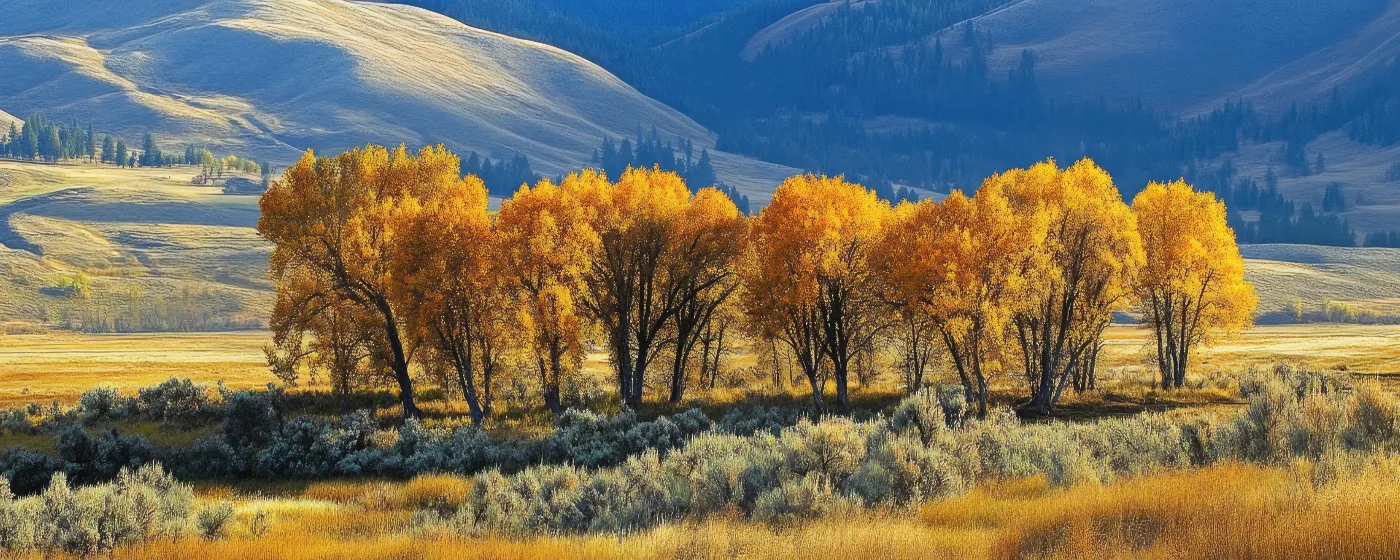
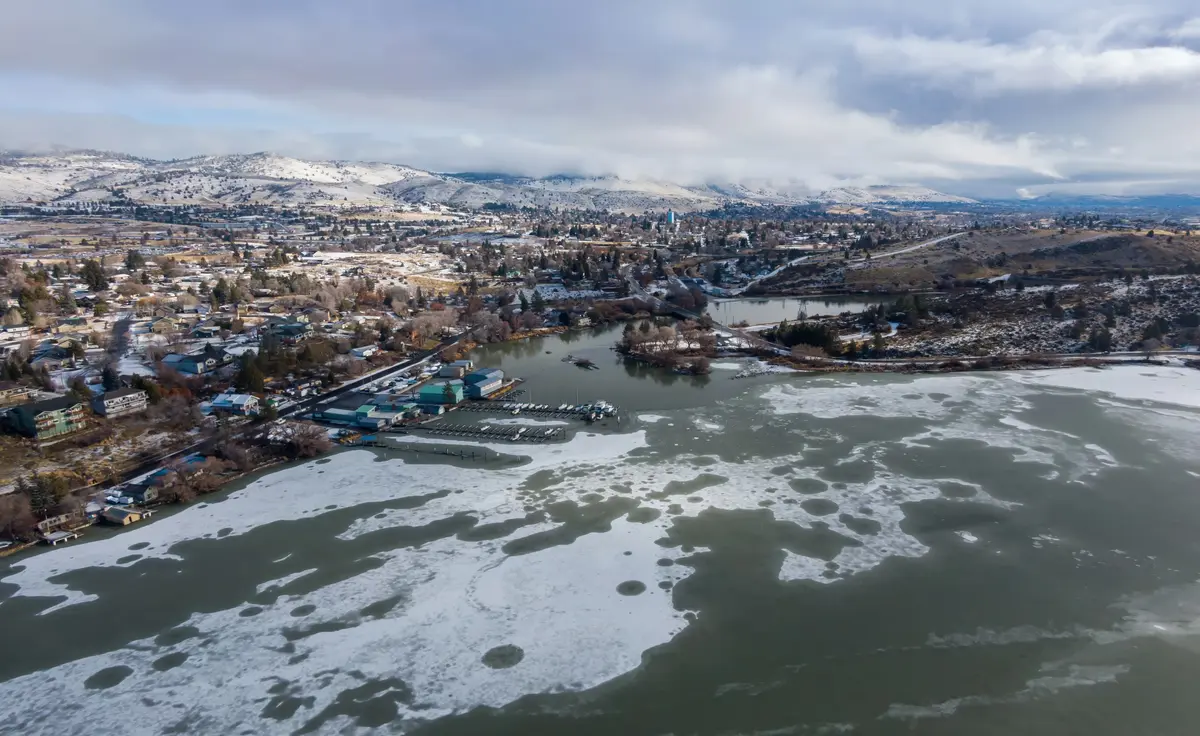
Maybe you've been priced out of Bend or Medford and someone mentioned Klamath Falls. Maybe you've driven through on US-97 and thought it looked quieter, sunnier, and more manageable than you expected. The honest answer is: for a specific kind of retiree, it genuinely is all three. The city of 22,174 sits at the edge of Upper Klamath Lake in Oregon's high desert, far enough from the Willamette Valley to feel like a different state, but close enough to Medford — about 75 minutes away — to stay connected to a regional hub when you need it.
The economic and civic backbone here is more substantial than the population suggests. Sky Lakes Medical Center operates inside city limits and anchors the healthcare picture in a way that matters enormously for retirees. Oregon Tech draws students and faculty who keep the cultural and intellectual life of the city punching above its weight. The Klamath Falls Farmers Market, a modest but loyal downtown fixture, and the Winter Wings Festival each February — one of the oldest birding events in the country — give the year a rhythm that longtime residents actually show up for. This is not a retirement community in the resort sense; it is a functioning small city where retirees happen to fit very well.
The cost case for Klamath Falls is real and specific. The overall cost of living sits noticeably below the Oregon state average — a meaningful gap for anyone relocating from Portland, Eugene, or the Rogue Valley. The typical home price was $310,786 as of July 2026 (Zillow Home Value Index), a figure that stands well below what most Oregon metros are asking. Oregon fully exempts Social Security from state income tax, which helps on a fixed income, though pension and IRA distributions face the state's regular graduated rates. With 218 sunny days a year, the climate earns the city's nickname — the Sunshine City of Oregon — and the flat terrain around downtown and the Link River Trail makes staying active genuinely accessible even as mobility changes.
Whether you're seriously considering a move or just starting to map out the options, the sections below cover Klamath Falls's retirement appeal and honest limitations — healthcare access, the retiree budget and tax picture, walkability and community life, downsizing inventory, and how the city stacks up against nearby retirement destinations in southern Oregon.
Why Retirees Are Choosing Klamath Falls
The retirees who thrive here tend to share a few things: they want a real hospital nearby, they are done paying coastal or metro prices, and they would rather have a big lake and an eagle flyover than a walkable downtown full of boutiques. Klamath Falls delivers on all three. The typical home price of $310,786 (July 2026, Zillow Home Value Index) is low enough that a retiree selling a home in Medford, Bend, or virtually anywhere in California can often arrive debt-free and still have capital left over. For more on how that purchase pencils out against a fixed income, the cost-of-living page has the full breakdown.
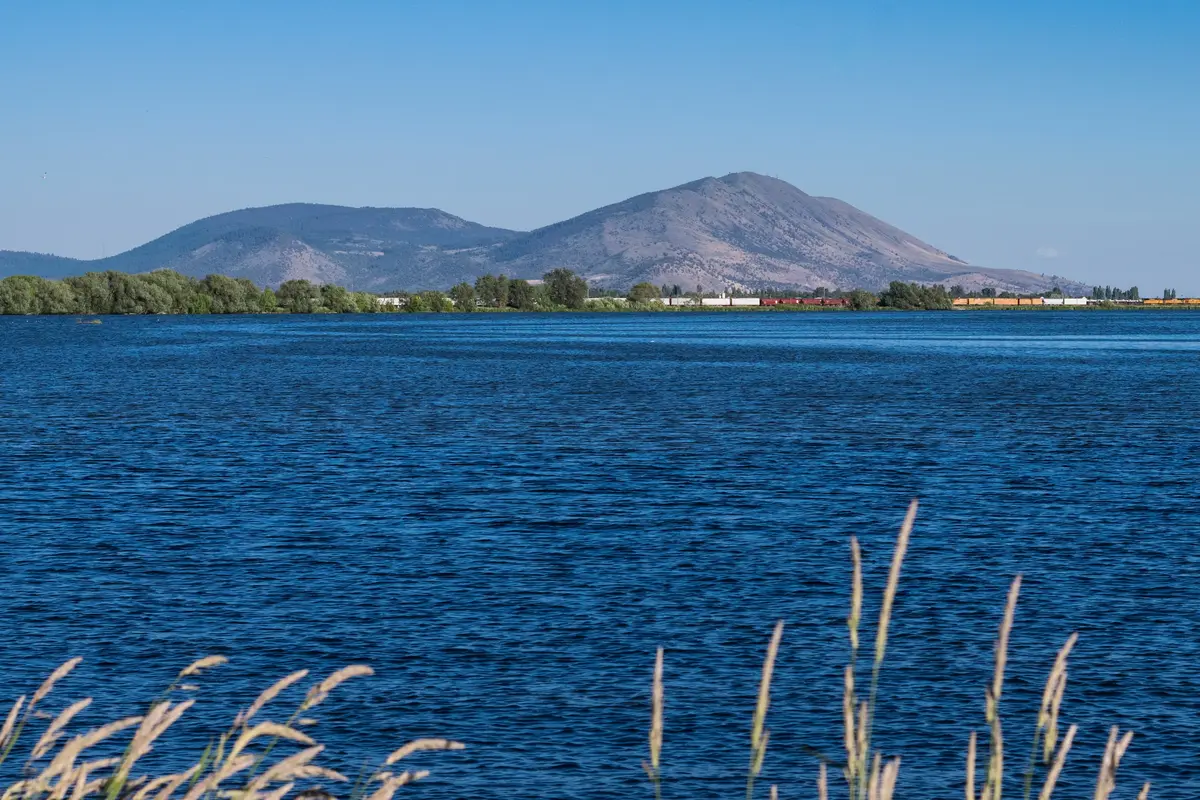
The outdoor piece is not incidental. Upper Klamath Lake — Oregon's largest body of water, stretching nearly 30 miles long — sits immediately northwest of the city. The Klamath Basin hosts the largest wintering population of bald eagles in the lower 48 states. Retirees who came for the price often stay for the wildlife. The Link River Trail connects the two lakes with a flat, paved path that works for walkers at every fitness level.
The honest caveat: if you are counting on walkable errands, weekend arts programming, or proximity to major medical specialists without a drive, Klamath Falls will test your patience. The city is genuinely small, the cultural calendar is modest, and advanced specialty care beyond what Sky Lakes Medical Center offers means a trip to Medford or beyond. Retirees who need urban amenities or who want a thriving 55+ social scene with organized activities and peer programming will find the options limited here. But retirees who want affordability, sunshine, wildlife, and a functioning community hospital in town — this is a city worth taking seriously.
Healthcare & Medical Access in Klamath Falls
Sky Lakes Medical Center is the anchor of this entire conversation. It is a community-owned, internationally accredited, 176-bed acute-care teaching hospital — and critically, it is the only hospital in a 10,000-square-mile area covering south-central Oregon and northeastern California. For a city of 22,174, that is a serious piece of infrastructure, and it is the single most important healthcare fact for any retiree weighing this move.
The depth of services at Sky Lakes goes well beyond what most similarly sized cities can offer. The hospital operates a Level III trauma center, a Cancer Treatment Center, a Center for Total Joint and Spine Care (the first program on the West Coast designated as a Center for Advanced Recovery by Stryker Performance Solutions), primary care and specialty clinics, a home health agency, and SkyCare — a walk-in immediate care clinic for non-emergency needs. The Center for Total Joint and Spine Care is particularly relevant for retirees: joint-replacement surgery handled locally, with a nationally recognized recovery program, means you are not driving to Medford or Portland for a procedure that commonly comes up in the 60s and 70s.
Sky Lakes is also affiliated with Oregon Health & Science University through the Cascades East Family Medicine residency program. That affiliation brings academic-medicine-level care into the building — a meaningful upgrade for a community hospital in a city this size.
The honest limitation is at the specialist tier. Cardiology subspecialties, neurosurgery, transplant programs, and complex oncology cases that require a Level I or II trauma center will mean traveling. Medford's regional medical complex — about 75 minutes away — is the practical referral destination for most of those situations. Retirees managing a complex, multi-specialist condition should think carefully about how often that drive would realistically happen. For most retirees in good baseline health, Sky Lakes is genuinely sufficient day-to-day; for those already navigating serious illness, the distance to higher-level care is a real factor to weigh.
The Retiree Budget in Klamath Falls
Oregon's treatment of Social Security income is straightforward and favorable: the state fully exempts Social Security and Railroad Retirement benefits from state income tax. If Social Security is your primary income source, the state is essentially not touching it. That is a meaningful advantage over states that tax Social Security distributions at full rates.
The picture is less clean for other retirement income. Pension distributions, 401(k) withdrawals, and IRA income are taxed at Oregon's regular graduated rates — 4.75% at the lower end, rising to 9.9% at the top. A small Retirement Income Credit that once partially offset those taxes for lower-income seniors was sunset after tax year 2025 and cannot be claimed for 2026 or later. Retirees drawing primarily from pre-tax retirement accounts should factor Oregon's income tax into the budget honestly.
The property tax picture is genuinely favorable. Klamath Falls carries an effective property tax rate of approximately 0.66% — well below the national average and low even by Oregon standards. On a home at the city's typical price point, that rate keeps annual tax obligations modest. Oregon also offers a property-tax deferral program for homeowners age 62 or older with household income up to $60,000: the state pays county property taxes on your behalf, recording a lien at simple interest that is repaid when the home is sold. Eligibility requires five years of continuous ownership and occupancy before applying. For a retiree on a fixed income who owns their home outright, this program can meaningfully ease cash-flow pressure.
Day-to-day costs on a fixed income are where Klamath Falls earns the most points. Groceries, utilities, and everyday services run noticeably below Oregon norms. The Klamath Falls Farmers Market is a practical source of local produce during the warm months. A retiree budget that would feel stretched in Bend or Eugene typically breathes more easily here.
Looking to buy in Klamath Falls? Estimate your payment.
Enter your numbers to see an estimated monthly mortgage payment.
Estimate only. Excludes HOA fees and mortgage insurance. The interest rate above is a starting point, not a quoted rate — replace it with your own to see real numbers. Insurance is a flat placeholder, not a Klamath Falls quote.
Walkability, Community & Staying Active in Klamath Falls
The Walkability Reality
Downtown Klamath Falls is one of the flatter and more compact small-city downtowns in southern Oregon. Shops, services, and the historic district are close enough together that a retiree living near the center can cover a reasonable number of errands on foot. That said, Klamath Falls is still a car-dependent city overall — most neighborhoods beyond the downtown core require driving for daily needs. If genuine car-free living matters to you, plan to live specifically in or very near downtown.
The Link River Trail is the standout active-living asset: a flat, paved, roughly one-mile path connecting Lake Ewauna and Upper Klamath Lake. It is accessible for walkers and slower-pace cyclists, lined with birdwatching opportunities, and genuinely beautiful. Retirees with mobility considerations who visited once on a good-weather day and fell in love with it should know that it is a real, year-round amenity — not a seasonal highlight.
Community Life and Social Fabric
The Winter Wings Festival each February draws birders from across the country to celebrate the Klamath Basin's bald eagle concentration — one of the largest gatherings of these birds in the lower 48 states. For retirees who love wildlife and nature, this is the kind of event that builds a social calendar around a genuine local phenomenon rather than a manufactured one.
Moore Park, along the lakeshore, is where the city gathers on warm afternoons. The Favell Museum houses one of the most significant collections of Native American art and Western memorabilia in the region — a destination worth knowing about if you have visiting family or a personal interest in regional history. For outdoor recreation options beyond the trail system, see the parks and recreation page.
The social scene for retirees is modest but real. Oregon Tech's presence brings lectures, events, and a general intellectual energy that a purely residential small city would lack. Independent coffee shops and casual dining spots around downtown provide the kind of daily gathering points that make a place feel like a community rather than just a location. What Klamath Falls does not have is the organized, peer-group retirement social infrastructure — the clubs-within-clubs, the activity directors, the structured programming — that a larger retirement-focused city provides. Retirees who are naturally self-directed and community-oriented tend to plug in; those who need an institution to organize their social life may find it harder.
Right-Sizing: Downsizing in Klamath Falls
No 55+ communities were found in Klamath Falls. That is worth stating plainly at the outset, because retirees who expect the age-restricted, amenity-rich, HOA-managed community model will need to look elsewhere or build a different picture of what retirement housing looks like here.
What the market does offer is a stock of single-level homes — ranch-style construction from the postwar decades through the 1980s is common throughout neighborhoods like Sunset Village, Altamont, and Pacific Terrace. For a retiree downsizing from a large family home, Klamath Falls is a reasonable market to find a well-maintained single-level three-bedroom without competing against a deep pool of buyers at inflated prices. The neighborhoods page has more detail on the character and housing stock of each area.
Running Y Ranch, on the southern edge of the city, represents the closest thing to a planned community in the Klamath Falls market. It includes a mix of single-family homes and cluster housing near a golf course, with a more intentional community design than the rest of the city. It is not age-restricted, but the quieter, lower-maintenance lifestyle it implies draws a disproportionate share of retirees and empty nesters.
Condos and patio homes exist in limited but real supply, particularly closer to downtown. For a retiree who wants to eliminate yard maintenance entirely, options are there — they just require patience in a smaller inventory market. Assisted living and independent senior living facilities operate in the city as well, though those are a distinct category from owner-occupied downsizing. Memory care is among the larger line items to plan for if that transition is on the horizon, and Klamath Falls's assisted living costs tend to run below what Portland-metro facilities charge — a meaningful advantage for retirees on fixed incomes.
The practical advice for anyone serious about downsizing here: get specific about which features matter most — single-level, attached garage, low-maintenance lot, proximity to Sky Lakes Medical Center — and be prepared to move when the right home appears, because the overall inventory in this price range is not deep enough to wait indefinitely.
Klamath Falls vs Nearby Retirement Destinations
| City | Cost vs Klamath Falls | Primary Hospital | Walkability | Senior Living Depth | Overall Retirement Fit |
|---|---|---|---|---|---|
| Klamath Falls, OR | Anchor | Sky Lakes Medical Center (in city, 176-bed) | Flat downtown core; car needed for most errands | Assisted living present; no 55+ communities found | Strong value, solid hospital, modest social scene |
| Medford, OR | Noticeably pricier | Major regional medical complex with Level II trauma | More commercial density; still largely car-dependent | Multiple 55+ and active-adult communities | Better for specialty care access and social infrastructure |
| Ashland, OR | Significantly pricier | Relies on Medford for hospital care | Genuinely walkable historic downtown | Some senior-living options; limited 55+ supply | Best for arts-focused retirees with larger budgets |
| Bend, OR | Much pricier | St. Charles Medical Center (regional hub) | Mixed; some walkable areas, mostly car-dependent | Growing 55+ inventory but expensive | Outdoor lifestyle is strong; affordability is not |
| Chiloquin, OR | Noticeably lower | Relies on Sky Lakes in Klamath Falls | Minimal; very rural, car essential | Very limited senior living options | Maximum quiet and affordability; minimal services |
| Merrill, OR | Noticeably lower | Relies on Sky Lakes in Klamath Falls | Minimal; small agricultural town | Essentially none | Best for retirees who want rural simplicity near the city |
Medford is the clear winner on healthcare depth and organized senior-living options, but that advantage comes at a substantially higher price point for housing. Ashland is a compelling lifestyle choice for retirees drawn to theater, walkability, and a strong arts scene — if the budget can handle it. Bend offers the most dramatic outdoor lifestyle in Oregon but has largely priced itself out of reach for retirees on fixed incomes.
Chiloquin and Merrill represent genuine affordability, but both depend on Klamath Falls for hospital access and most services — so a retiree in either town is effectively choosing Klamath Falls's healthcare network while living with significantly fewer local amenities. For most retirees, Klamath Falls itself hits the better balance: real hospital, real cost savings, and enough community to sustain a satisfying daily life.
Local Expert Takeaway: Klamath Falls earns its place on any honest Oregon retirement shortlist for one reason the numbers don't fully capture: Sky Lakes Medical Center is a 176-bed teaching hospital with a joint-replacement program, a cancer center, and an OHSU residency affiliation — all inside a city where the typical home costs well under $350,000 and the effective property tax rate is approximately 0.66%. That combination is nearly impossible to find elsewhere in Oregon. The trade-off is real: no 55+ communities, a modest social calendar, and specialist care that eventually means a drive to Medford. But for a retiree who owns their health story, wants 218 sunny days a year, and would rather watch bald eagles over Upper Klamath Lake than pay coastal prices, this city makes a compelling case.
Quick Takeaways & FAQs
✅ Sky Lakes Medical Center — a 176-bed, OHSU-affiliated teaching hospital with a nationally recognized joint-replacement program — sits inside city limits, which is exceptionally rare for a city of 22,174.
⚠️ No 55+ communities were found in Klamath Falls, and the organized senior social infrastructure that larger retirement markets offer simply isn't here yet.
📍 Oregon fully exempts Social Security from state income tax, and the state's property-tax deferral program lets homeowners 62 and older defer annual tax bills until the home sells — two tools that can meaningfully extend a fixed-income budget.
Is Klamath Falls a good place to retire on Social Security?
What hospital serves retirees in Klamath Falls?
Are there any 55+ communities or active-adult neighborhoods in Klamath Falls?
How does Oregon tax retirement income for Klamath Falls residents?
How does Klamath Falls compare to Medford or Ashland for retirement?
Moving to Oregon?
Tell us what you need help with and we'll connect you with local resources.
