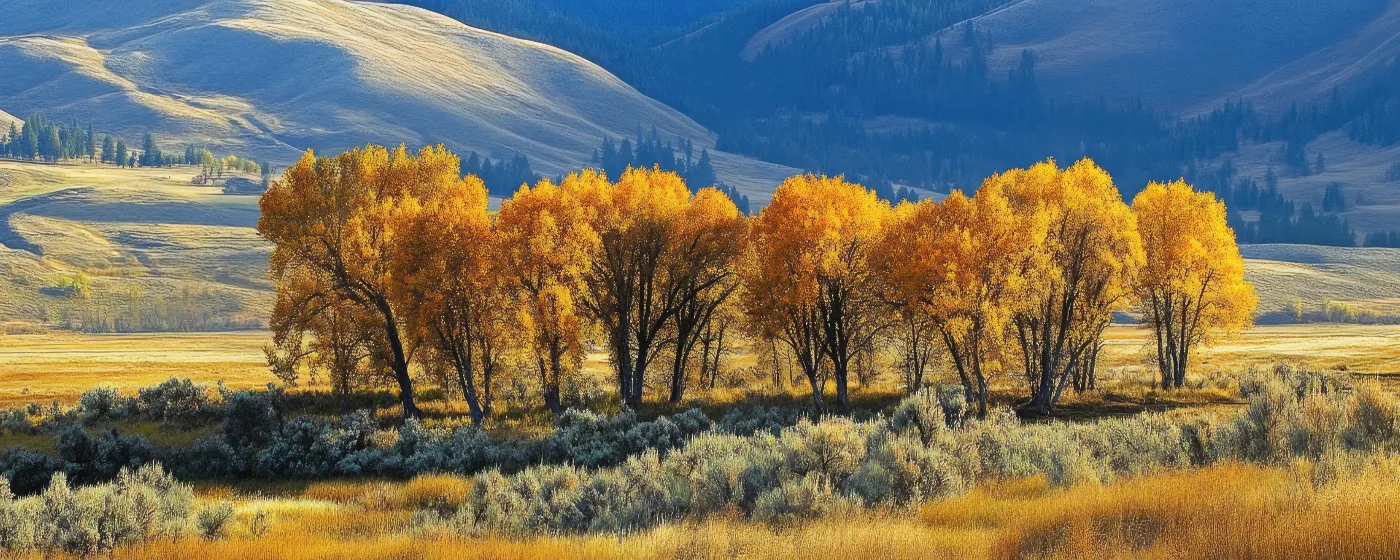
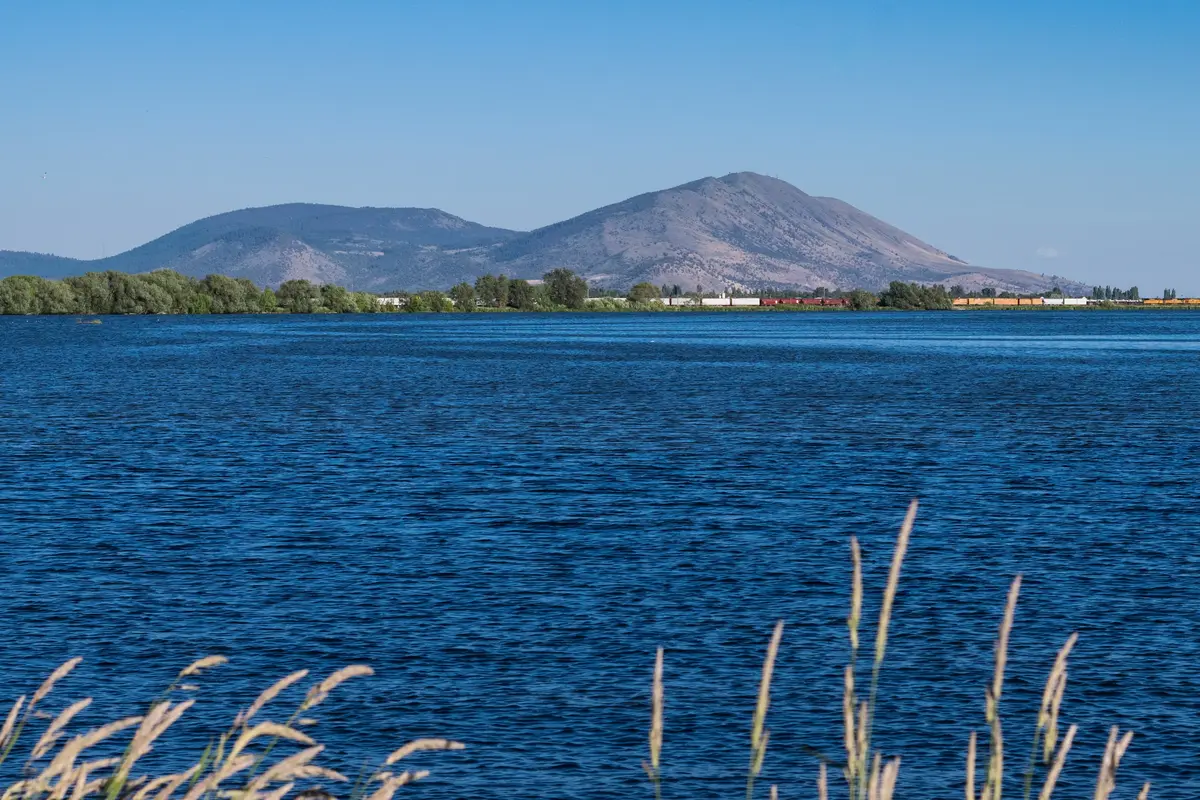
You're probably not moving to Klamath Falls because someone talked you into it. You looked at what your rent or mortgage payment is buying you in California, ran the numbers on what the same money gets you 350 miles north of San Francisco, and started paying attention. Klamath Falls sits about 25 miles above the California–Oregon border, accessible via US-97, which makes it one of the first genuinely affordable Oregon cities in the path of the northbound Californian. At 4,000 feet of elevation in a high-desert basin, it is not a suburb of anything — it is a self-contained city of 22,174 with its own economy, its own lake, and a cost structure that looks almost foreign to anyone arriving from the coast.
The economic backbone here is three things: education, healthcare, and public-sector employment. Oregon Institute of Technology — the only polytechnic university in the Pacific Northwest — anchors the city's identity and supplies a steady professional population. Klamath County School District and Klamath Falls City Schools together are among the larger employers. Agriculture, timber, and Kingsley Field Air National Guard Base fill out the rest of the picture. That mix means Klamath Falls is not a boom town and not a retirement enclave — it is a working-class regional hub that happens to sit next to Upper Klamath Lake, 133 square miles of open water, and within easy reach of Crater Lake National Park.
The cost picture is the main reason Californians show up. Groceries, utilities, and everyday services run below what most California households are used to paying — a genuine daily difference, not just a housing headline. The typical home price of $310,786 (Zillow Home Value Index, July 2026) is a fraction of what the same dollar buys in most California markets. Oregon has no sales tax at all, and the commute inside Klamath County averages about 14 minutes — a figure that sounds made up to anyone who has sat on a Bay Area freeway.
The sections below break down the California-to-Klamath Falls comparison in detail: home prices and property taxes, the income and sales tax picture, everyday cost of living, what the climate and lifestyle actually deliver, and the honest trade-offs that don't show up on a spreadsheet.
The Home Price Gap — and What It Actually Means
The number that stops most Californians mid-scroll is the typical home price: $310,786 as of July 2026. Set that against California's statewide typical home value of $773,735 (Zillow Home Value Index), and you are looking at a gap that is not a rounding error — it is a structural difference in what a housing market produces when there is no tech-sector salary premium compressing against a constrained supply.
What that gap translates to in practice depends on where in California you are leaving. California's statewide typical home value means many buyers there are competing for anything livable, building little equity, or simply renting indefinitely. In Klamath Falls, the same budget that buys a starter condo in many California cities buys a three-bedroom house on a real lot — often with a garage and mountain views. That is not marketing language; it is arithmetic.
Entry-level homes here start below the city-wide typical, and the neighborhoods range from the established residential areas around Altamont and Nob Hill to newer construction in Running Y Ranch. The city is small enough that almost nothing is far from the lake or the trails, which means buyers aren't paying a walkability or location premium the way they would in a larger Oregon city.
One thing to model before you arrive: Klamath Falls's median household income of $46,693 sits below the income level needed to carry the typical home at current prices. That affordability gap is real, and it matters if you are arriving without California equity to deploy. If you are selling a California home and rolling proceeds into a Klamath Falls purchase, you are in a fundamentally different position than a local first-time buyer — your California equity is your down payment advantage, and it is a meaningful one.
The Property Tax Reset Californians Don't Always Anticipate
If you have owned your California home for more than a few years, Proposition 13 has almost certainly kept your assessed value — and your tax bill — well below what a new buyer would pay. Moving to Klamath Falls resets that entirely. Every new purchase in Oregon is assessed at current market value with no growth cap on assessments the way Prop 13 works.
The effective property tax rate in Klamath Falls runs approximately 0.66%. For context, California's effective property tax rate of 0.71% is the statewide average — but that average is suppressed by long-tenured owners paying on decades-old assessed values. A California homeowner paying on a Prop 13 assessment from 2005 is paying on a fraction of current value; a new buyer in Klamath Falls pays on the full purchase price, but at a rate that is still modest in absolute terms. On a $310,786 home, the annual tax bill is well under $2,200 — a figure the cost-of-living page breaks down alongside other carrying costs.
The net result for most California movers: property taxes are not the shock they expect. The shock, if there is one, is usually the income tax picture — which is more complicated.
Oregon's Taxes — the Trade-offs That Don't Fit on a Bumper Sticker
Oregon has no sales tax. Zero, for any purchase, anywhere in the state. California's statewide base sales tax rate of 7.25% applies before local additions — and those local additions push the combined average well above the base rate in most California counties. For a household spending meaningfully on taxable goods in a year, the savings from crossing the border are real and immediate.
Income tax is where the picture gets more nuanced, and any Californian who reads "Oregon's top rate is only 9.9%" and stops there is making a planning mistake. California's top state income tax rate of 13.3% applies only to the highest earners — incomes well into the millions. Oregon's top rate of 9.9% kicks in at $125,000 for single filers and $250,000 for joint filers. Many six-figure earners who would have paid a lower California marginal rate find themselves at Oregon's ceiling faster than they expected.
Oregon does offer one meaningful offset: qualifying taxpayers can subtract a portion of their federal income taxes paid from Oregon taxable income. That federal subtraction disproportionately benefits low- and moderate-income earners and phases out entirely for joint filers with federal AGI above $290,000. If your household income lands below that threshold, the deduction meaningfully reduces your Oregon tax burden — and combined with the zero sales tax, the overall picture often favors Oregon even when the marginal rate comparison looks unflattering.
The Right Way to Model This
The honest answer is that income tax comparison between California and Oregon is not a simple win for either state at most income levels. It depends on your filing status, your income, your deductions, and how your first partial-year return gets handled — because you will owe taxes in both states in the year you move. A CPA familiar with partial-year state returns is worth consulting before you make the move, not after.
What you can count on, structurally: no sales tax on every purchase, a property tax rate that is modest in absolute terms, and day-to-day costs — groceries, utilities, services — that run noticeably below what most California households have been paying. The cost-of-living page covers the full picture, including utilities and grocery costs.
Everyday Cost of Living — What Changes, What Doesn't
Groceries, utilities, and everyday services in Klamath Falls run below Oregon's Willamette Valley average — and well below what most California households are used to. This is not just a housing story. The absence of sales tax, combined with lower baseline costs for food and utilities, adds up to a meaningful shift in what a paycheck actually covers month to month.
Rent tells part of the story for those who arrive before buying. A typical two-bedroom in Klamath Falls runs $1,190–$1,450 per month. That range covers most of the city's rental stock, from older apartments near downtown to newer units in the Altamont area. For a household arriving from coastal California, that figure tends to produce a moment of genuine disbelief.
Healthcare access for routine needs is covered locally, though the honest trade-off is that specialist care may require the drive to Medford or beyond. That is a real logistical consideration for households with ongoing medical needs, and it is worth factoring into the overall picture.
What Californians Are Surprised By
Most people expect the housing savings. Fewer people are prepared for the lifestyle recalibration that comes with a city of 22,174. Klamath Falls does not have the restaurant density or retail selection of a larger Oregon city. A serious shopping trip means driving out of town, and anything the local shops don't carry you will be ordering online. That is not a complaint from locals — it is a fact of life that most residents have fully internalized — but it catches California arrivals off guard around month three.
The commute, on the other hand, tends to be a genuine and lasting upgrade. An average of about 14 minutes to work inside the county is not a talking point; it is a measurable return of time that compounds daily. People who spent years on a California freeway describe the local commute as one of the changes they feel most viscerally.
A weekly farmers market, a handful of independent coffee shops, and a casual dining scene fill the role that a much larger commercial district would play elsewhere. The local food and coffee options have genuine character — covered more fully in the neighborhoods guide.
Looking to buy in Klamath Falls? Estimate your payment.
Enter your numbers to see an estimated monthly mortgage payment.
Estimate only. Excludes HOA fees and mortgage insurance. The interest rate above is a starting point, not a quoted rate — replace it with your own to see real numbers. Insurance is a flat placeholder, not a Klamath Falls quote.
Climate, Outdoors, and the Physical Reality of Klamath Falls
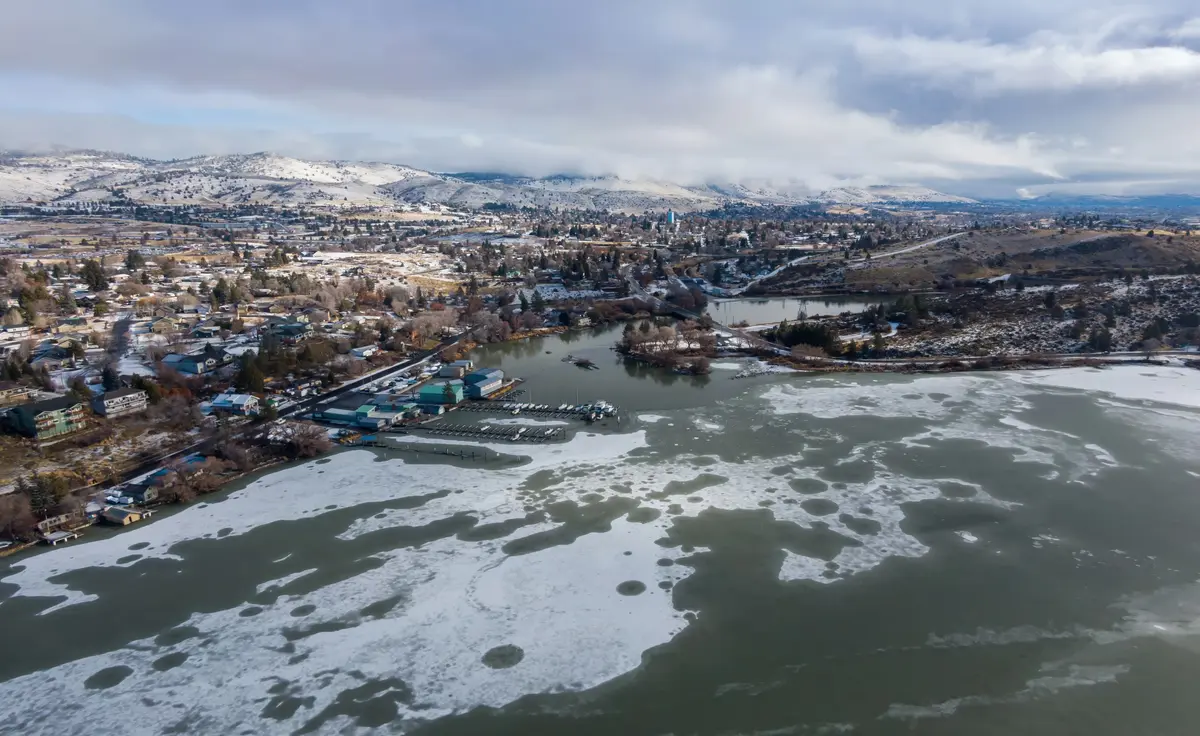
Klamath Falls sits at roughly 4,000 to 4,100 feet of elevation in a high-desert basin. That elevation matters. Summers are warm and genuinely dry — peak temperatures around 82°F in July — with 218 sunny days a year. Californians leaving the coast tend to love the summers immediately. The winters are the part that requires honest preparation: lows near 25°F in December, real snow accumulation, and cold that is drier and sharper than what most California coastal residents have experienced.
This is not ski-resort cold dressed up for tourism. It is high-desert winter, and the city does not shut down for it — residents are accustomed to it — but moving from the Central Valley or the Bay Area without ever having lived at elevation and in genuine winter is a real adjustment. People who move from the coast and find themselves reconsidering almost always cite February as the month things turned.
The Outdoor Access That Changes the Calculation
Upper Klamath Lake borders the city to the north. At 133 square miles, it is the largest natural lake west of the Great Salt Lake, and it is not a backdrop — it is where people actually spend time. The Link River Trail connects the lake to the city's southern edge, and Moore Park anchors the recreational side of the waterfront.
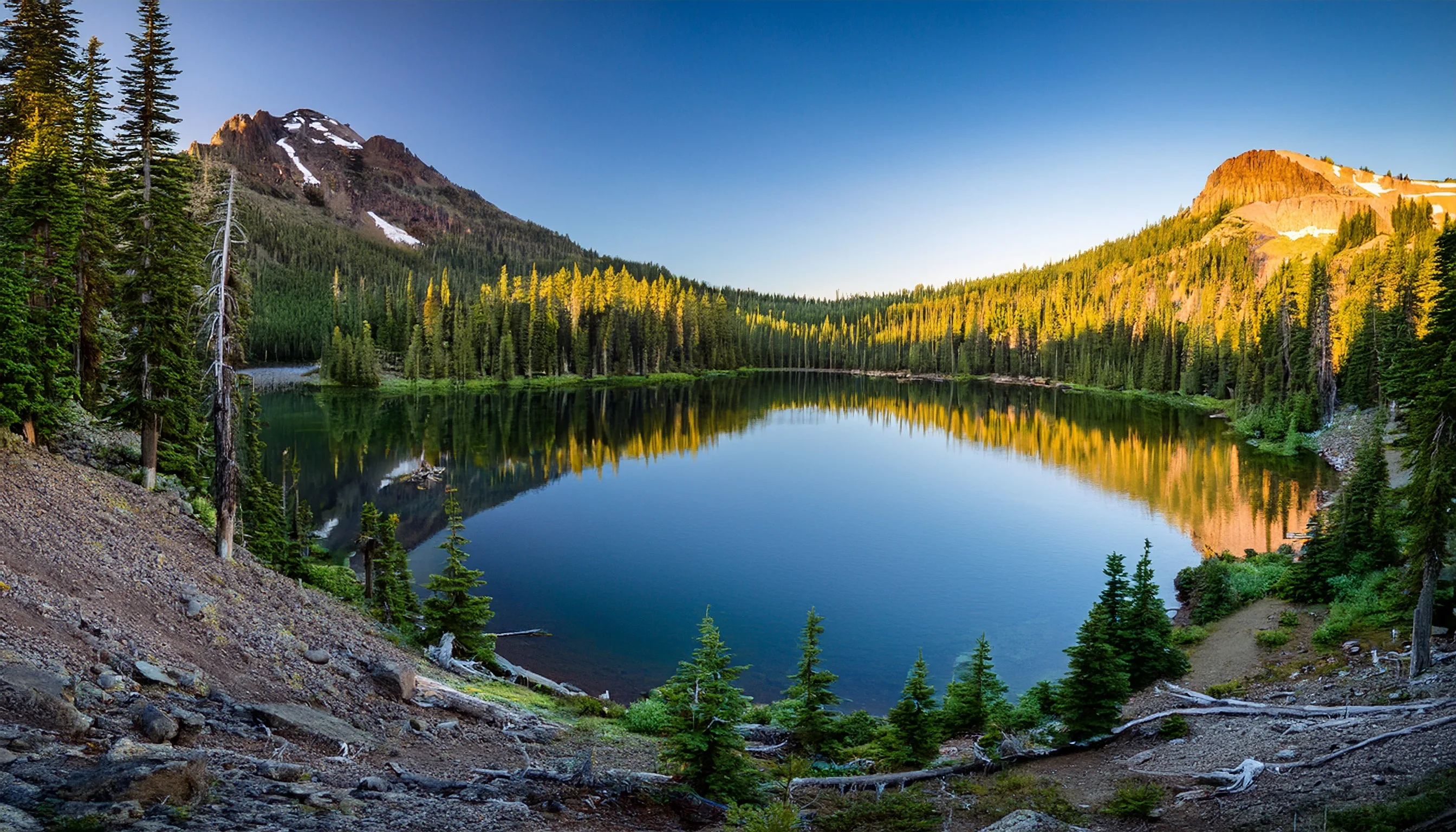
Beyond the lake, the Klamath Basin gives residents access to more than 82 lakes and streams and over 150,000 acres of wildlife refuges. Crater Lake National Park is within reach for a day trip. For a Californian who has been driving hours to reach outdoor recreation, the proximity of that kind of landscape — walkable or within a short drive — is one of the more disorienting and welcome changes. The parks and recreation page covers the trail network and outdoor options in full.
The outdoor access also shapes who moves here and stays. Remote workers, outdoor enthusiasts, and people who want a smaller social footprint tend to settle in quickly. People who want a cultural calendar comparable to a larger city — live music venues, a restaurant scene with real range, professional sports — tend to find the adjustment harder than they expected.
The Honest Trade-offs — What You Are Actually Giving Up
The people who move here and stay will tell you the financial case is real. The savings on housing, the absence of sales tax, the low property tax rate, the short commute — those are structural facts about this place. But the people who move here and leave within two years tend to have underestimated something specific, and it is worth naming it directly.
Klamath Falls is geographically isolated. The nearest major airport — Rogue Valley International-Medford (MFR) — is about 75 miles away. That drive is not a trivial inconvenience when you are flying back to California for family events four or five times a year, or when you need to reach it on short notice. The city is well-positioned on US-97 and sits within the broader West Coast corridor, but the practical reality is that most things requiring scale — a major medical specialist, a large commercial airport, a university hospital, a regional shopping center — require committing to about 75 minutes to Medford.
The Social Recalibration
California cities, even mid-size ones, tend to produce a kind of ambient anonymity. Klamath Falls does not. A city of 22,174 where the same names appear on school boards, at city council meetings, and behind the counter at local businesses is a fundamentally different social environment. For some people that is the entire point. For others it is the thing nobody warned them about.
The safety page covers crime statistics in detail, and the schools page addresses Klamath Falls City Schools, which holds a B- rating, according to Niche. Parents with school-age children should read both before making a final decision — the district picture is more nuanced than a single letter grade suggests, and the active OSAA athletics programs and community involvement around local schools are part of the honest picture too.
The bottom line for a California mover: Klamath Falls rewards people who are moving toward something specific — lower costs, outdoor access, a shorter workday, a smaller community — rather than simply fleeing something expensive. The finances almost always work out. The lifestyle fit is the variable. For the right household, this city delivers something genuinely difficult to find on the West Coast at this price point. For the wrong one, it is a long drive back to I-5.
Local Expert Takeaway: The California-to-Klamath Falls move makes the most financial sense for households arriving with California equity — the gap between California's statewide typical home value of $773,735 and Klamath Falls's $310,786 (July 2026) is wide enough that many buyers can purchase outright or carry a minimal mortgage. Oregon's zero sales tax is an immediate, daily savings. The income tax picture deserves a CPA's attention before you move, not after. And the 218 sunny days a year, the 14-minute average commute, and Upper Klamath Lake at the city's doorstep are real — but February at 4,000 feet is also real, and the city's geographic isolation is not something that resolves over time. Know what you're trading before you make the offer.
Quick Takeaways & FAQs
✅ Klamath Falls carries no sales tax and a typical home price of $310,786 (July 2026) — a fraction of California's statewide typical home value of $773,735, giving California equity holders significant purchasing power on arrival.
⚠️ Oregon's income tax brackets are compressed, and the 9.9% top rate kicks in at $125,000 for single filers — lower than California's 13.3% ceiling but reached faster; model your specific income with a CPA before you move.
📍 The nearest major airport is Rogue Valley International-Medford (MFR), about 75 miles away — a meaningful logistical reality for Californians who expect to fly home regularly.
How much cheaper is Klamath Falls than California for housing?
Does Oregon really have no income tax advantage over California?
What is the property tax situation in Klamath Falls for a California buyer?
Is Klamath Falls a good fit for remote workers from California?
What surprises California movers most about Klamath Falls after six months?
Moving to Oregon?
Tell us what you need help with and we'll connect you with local resources.
