What Is Living in Roseburg, Oregon Like?
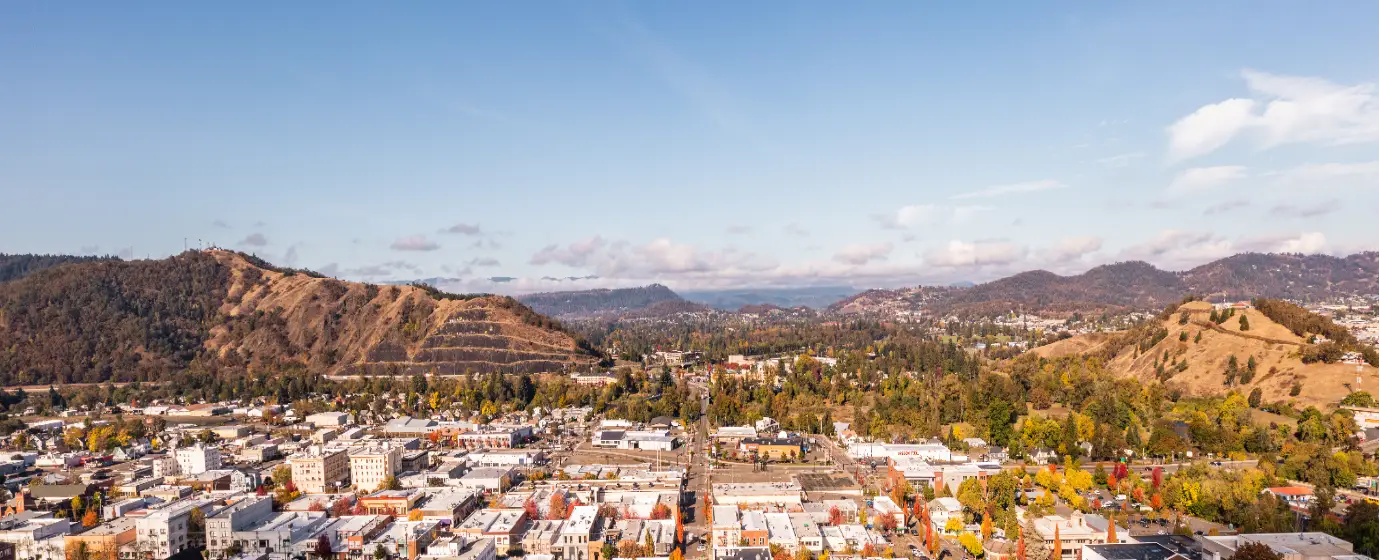
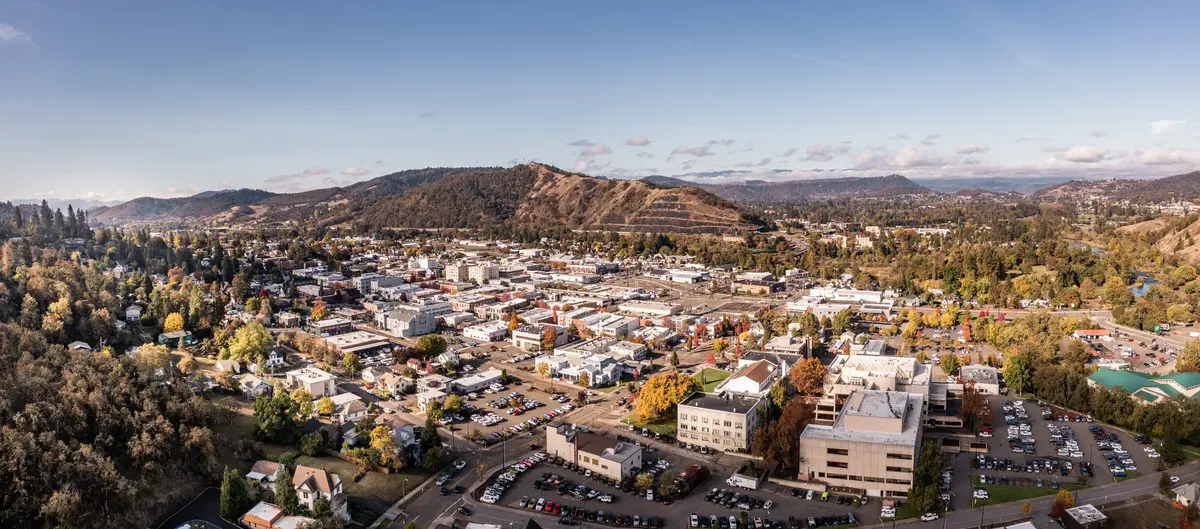
Maybe you've been priced out of the Willamette Valley and someone mentioned Roseburg. Maybe your employer is tied to federal land management, timber, or healthcare and this part of southern Oregon keeps coming up. Either way, the first thing people notice when they actually arrive is that Roseburg doesn't feel like a city that's trying to be somewhere else — it is solidly itself. It sits at 479 feet in the Umpqua River Valley, with I-5 running through the middle and the South Umpqua River defining the geography as much as any road does. The valley funnels outdoor access in every direction: the North Umpqua corridor via OR-138 to the east, wine country spreading across the hills, and a drive-through animal park in nearby Winston that locals treat as entirely normal. What shapes daily life here isn't a single industry or a single neighborhood — it's the combination of being the commercial and government hub for a 5,000-square-mile county while still feeling, in most pockets, like a town of 23,795.
The economic backbone is a triangle: timber, healthcare, and public-sector employment. Roseburg Forest Products is headquartered here and has committed to major capital investment across its Oregon operations. A major regional health system and the VA Roseburg Healthcare System together account for more than 15% of local employment, drawing medical professionals and supporting a significant veteran population — roughly 11% of residents have served. Douglas County government, the City of Roseburg, Roseburg Public Schools, and Umpqua Community College round out the reliable employment base. The people who move here fall into recognizable groups: early-career workers in healthcare or government, remote workers stretching their dollars from Portland or the Bay Area, retirees drawn by the VA and the cost of living, and families putting down roots in a place where the school district holds a B- rating, according to Niche, and youth sports still draw real crowds on Friday nights.
The cost-of-living case for Roseburg is straightforward. The typical home price sits at $368,343 (Zillow Home Value Index, July 2026) — noticeably below what most Oregon metro markets ask — and Oregon's lack of a state sales tax means what you see on the tag is what you pay. The effective property tax rate of approximately 0.65% is among the lower rates in the Pacific Northwest. The trade-off is real: a serious shopping trip or a specialist medical appointment often means leaving town, and the drive to Eugene takes about 70 minutes via I-5. What you gain is 182 sunny days a year in a valley that the Oregon Wine Board recognizes as the state's oldest fine wine region, with more than two dozen wineries within easy reach and Crater Lake less than two hours east on OR-138. For the full picture on costs, the cost of living page breaks down taxes, groceries, and utilities in detail.
Whether you're weighing a move seriously or just starting to research, the sections below cover why people are choosing Roseburg right now, what daily life actually looks like, the housing market, getting around, and where locals spend their time on weekends.
Roseburg at a Glance
Looking to buy in Roseburg? Estimate your payment.
Enter your numbers to see an estimated monthly mortgage payment.
Estimate only. Excludes HOA fees and mortgage insurance. The interest rate above is a starting point, not a quoted rate — replace it with your own to see real numbers. Insurance is a flat placeholder, not a Roseburg quote.
Why Are People Moving to Roseburg?
The honest answer is price — but it's more specific than that. People aren't moving to Roseburg just because it's affordable; they're moving because it's affordable relative to what it actually offers. You get a county-seat city with real civic infrastructure, a genuine outdoor recreation corridor, and a job market anchored by institutions that don't evaporate in a downturn.
The Employment Anchor
Roseburg's largest employers are the kind that plant roots: a major regional health system, the VA Roseburg Healthcare System, Douglas County government, the City of Roseburg, Roseburg Public Schools, and Umpqua Community College. Healthcare alone accounts for more than 15% of local employment — a share that has grown steadily and shows no sign of reversing given the region's aging demographics.
Roseburg Forest Products, headquartered in the city, has invested heavily in its Oregon operations and received a Business Oregon grant in 2023 to support a components facility and MDF plant expansion near Dillard. Federal public-land agencies add another layer of stable public-sector employment that many timber-and-mill towns in southern Oregon lack.
For remote workers, the calculus is simpler: a $368,343 typical home price (July 2026) buys a lot more house than what the same income affords in the Willamette Valley, and OR-99 keeps you connected to smaller communities without requiring a freeway every time.
Who's Actually Moving Here
Retirees — particularly veterans and people relocating from California, Washington, and the Portland metro — have been a steady in-migration group. The combination of VA services, Oregon's lack of a state sales tax, and a lower cost of living makes Roseburg a logical destination for people leaving higher-cost markets. For more on the retirement picture, the retiring in Roseburg page covers senior-living options and lifestyle considerations in full.
Families with school-age children come for the housing price and stay because the smaller city scale means their kids aren't lost in a massive district. With 5,365 students enrolled in 2025-26 across Roseburg Public Schools, class sizes remain manageable, and the district's standing — a B- rating, according to Niche — reflects a functional if not exceptional system. The schools page has the full breakdown on individual campuses and boundary details.
The Honest Tradeoff
People who move here from Portland sometimes underestimate how much of their weekend routine quietly depended on urban density — the specialty grocery, the Saturday afternoon museum visit, the concert venue. Roseburg has real cultural anchors, including the Douglas County Museum of Natural and Cultural History with its collection of more than 7,500 items on Oregon natural history. But it is not a city where you accidentally stumble into the thing you needed. You plan, or you drive.
What Daily Life Feels Like in Roseburg
Six months after moving here, the thing people mention most is the pace — not as a complaint, but as an adjustment. Roseburg operates on a different rhythm than any Oregon city north of it on I-5. Errands get done quickly because traffic rarely compounds them. The river is always ten minutes away.
The Geographic Reality
The South Umpqua River isn't just scenery — it's a practical divider. Neighborhoods on the west side of the river, like Hucrest and West Harvard, have a quieter, more established feel. The areas east of downtown, along OR-99, carry more commercial traffic and feel more utilitarian. Understanding which side of town suits your daily routine matters more than most buyers realize before they start touring homes. The neighborhoods page maps these divides in detail.
What Locals Know
The Umpqua Valley Farmers' Market and the Roseburg Saturday Market are where the city's social fabric shows up most clearly on a warm morning. These aren't tourist attractions — they're where longtime residents and newcomers actually meet each other, buy local produce, and find out what's happening in town. For families with kids, the question of activities tends to answer itself quickly: Stewart Park and Riverfront Park anchor outdoor time, the river provides the summer social calendar, and Umpqua Community College adds a cultural dimension most towns this size don't have.
Roseburg's designation as an Oregon Heritage All-Star Community — one of nine statewide — reflects something real about how the city approaches its built history. The Mill-Pine Historic District downtown has four National Register historic districts within city limits, and two nonprofits formalized in fall 2025 are actively partnering with the Oregon Main Street Network and the Ford Family Foundation to reinvest in the commercial core. Downtown is a work in progress, but it's a work in progress with organizational backing.
The Seasonal Surprise
New residents from the coast or the Portland area consistently underestimate how warm and dry Roseburg summers get. The valley traps heat, and late July through August regularly sees temperatures that catch people off guard when they moved here for the mild Pacific Northwest reputation. With 182 sunny days a year, you get more sun than most of western Oregon — which is a genuine quality-of-life plus for nine months and a reason to install ceiling fans before June.
The wine country access is something locals treat casually and newcomers find remarkable. The Umpqua Valley is Oregon's oldest fine wine AVA, with HillCrest Vineyard established near Roseburg in 1961 as Oregon's first continuously operating estate winery. On any weekend afternoon, a half-hour drive puts you in the middle of working vineyards producing everything from Pinot Noir to Tempranillo — the latter pioneered commercially in the Pacific Northwest by Abacela, in this valley.
The Roseburg Housing Market Right Now
The typical home price in Roseburg is $368,343 (Zillow Home Value Index, July 2026). That figure puts Roseburg well below what buyers encounter in the Portland metro, in Eugene, and — for people relocating from California — in a different category entirely. For a fuller comparison of what that price means against Oregon's cost of living more broadly, see the cost of living page.
The effective property tax rate runs approximately 0.65%, which is on the lower end for Oregon. Oregon's lack of a state sales tax means buyers from California or Washington don't face an additional retail adjustment when they arrive.
What the Market Actually Looks Like
Roseburg is not a frenzied market, but well-priced homes in established neighborhoods don't sit long. The inventory that moves fastest tends to be in the mid-range — updated single-family homes in neighborhoods like Edenbower and Garden Valley that check the practical boxes for families relocating for work. Entry-level inventory exists here in a way it genuinely doesn't in many Oregon cities, which is part of what draws first-time buyers who've been priced out elsewhere.
Some pockets of the city carry higher price points than the typical figure suggests, while others — particularly older stock closer to downtown — come in well below it. The overall range is wider than buyers used to tighter urban markets expect. For neighborhood-level character and housing types, the best neighborhoods page covers each area in detail.
Typical rent runs $1,420–$1,730 for a two-bedroom, with the city-wide typical rent at $1,542 per month (Zillow, July 2026). That makes renting a reasonable bridging option for people who want to get a feel for the city before committing to a neighborhood — a strategy that locals who moved here from larger cities often recommend.
Roseburg Neighborhoods
Roseburg has several distinct areas — each with its own character and appeal. Here’s a breakdown to help you narrow down where to focus your home search.
🏡 Hucrest
Hucrest sits on the quieter west side of the South Umpqua River and draws buyers who want an established residential feel away from the commercial traffic of OR-99. The housing stock is a mix of mid-century ranches and modest single-family homes, and the neighborhood's elevation gives some streets a more open, hillside character than the valley floor.
🏠 Garden Valley
Garden Valley is one of Roseburg's more sought-after areas for families, with a suburban feel, newer construction mixed among established homes, and relatively quick access to both I-5 and the commercial corridors that handle daily errands. It tends to attract buyers relocating for work who want a practical, clean neighborhood without the downtown complications.
🌳 West Harvard
West Harvard occupies the elevated terrain west of the city center and carries a quieter, slightly more removed character that appeals to buyers prioritizing calm over convenience. Streets here feel genuinely residential, and the proximity to the river corridor without being directly on the commercial strip is a draw for those who want outdoor access without the noise.
🏘 Edenbower
Edenbower is one of the city's newer residential growth areas and attracts families and buyers who want updated housing stock in a well-organized neighborhood layout. The area has a clean, livable feel, with easy access to schools and the commercial corridors that handle day-to-day life without requiring a long drive.
🏔 Downtown Roseburg (Mill-Pine Historic District)
The Mill-Pine Historic District is the most architecturally interesting part of Roseburg, with four National Register historic districts within city limits and a downtown that is actively investing in its future through partnerships with the Oregon Main Street Network. Buyers here trade yard space and suburban predictability for walkable streets, older character homes, and proximity to the city's cultural institutions and the riverfront.
🌆 Melrose
Melrose stretches into the rural-residential fringe southwest of the city and suits buyers who want more land and a country feel without fully leaving Roseburg's orbit. The character here is distinctly spread out — properties tend to be larger, neighbors fewer, and the connection to the city's commercial core requires deliberate driving rather than a quick trip.
Pros & Cons of Living in Roseburg
The Pros
- Home prices well below national and Oregon urban averages
- Mild, sunny Mediterranean-style climate for the Pacific Northwest
- Abundant outdoor recreation on the North and South Umpqua Rivers and nearby wine country
- Regional hub with hospital, community college, and I-5 access
The Cons
- Property crime rates run well above national and state averages, especially auto theft
- School district ratings and test scores trail state benchmarks
- Limited high-wage/tech job base compared to Willamette Valley or Central Oregon
Getting Around & Commuting in Roseburg
You need a car here. That's the short answer, and it's worth stating plainly before anything else. Roseburg has some on-foot access in the downtown core and along the riverfront paths, but routine errands — groceries, school drop-off, appointments — require driving for the vast majority of residents. Planning your home purchase around proximity to your specific daily destinations matters more in a city like this than it would in a denser metro.
The Highway Framework
Several routes define how Roseburg connects to the wider region. I-5 is the north-south spine, carrying the freight traffic that signals Roseburg's role as a commercial hub and providing the primary link to Eugene to the north and Medford to the south. OR-99, which parallels I-5 through much of the city, handles the local commercial traffic and connects through smaller communities at a slower pace. OR-138 — the North Umpqua Highway — heads east through the river canyon toward Diamond Lake and Crater Lake National Park, doubling as the recreational artery that makes Roseburg a genuine outdoor base rather than just a pass-through stop.
Commute Realities
Within the city, the commute picture is genuinely simple. Getting from a residential neighborhood to a major employer rarely takes more than fifteen minutes, and the I-5 interchange areas near downtown can collect congestion during morning and afternoon windows — but nothing that resembles what commuters in Portland or Eugene manage daily.
The long-distance commute is the real variable. The drive to Eugene is about 70 minutes via I-5 — manageable once or twice a week, grinding as a daily round trip. A meaningful share of Roseburg's workforce drives toward Eugene for specialized employment, medical appointments, or the airport, and that drive is worth road-testing during rush hour before you decide how often you can stomach it.
The nearest major airports are Eugene Airport (EUG) at approximately 75 miles and Medford Airport (MFR) at approximately 98 miles. Most residents use Eugene for domestic travel and Medford when nonstop routes make it worth the extra distance. Flying anywhere with a connection requires planning a half-day around the airport run in either direction.
For Remote Workers
Roseburg's remote-work story has strengthened as internet infrastructure has improved across the Umpqua Valley. A growing share of newer arrivals work entirely remotely and have chosen the city specifically to avoid the commute math. If your employer is in another state or fully distributed, the commute question largely disappears — and the value proposition of a $368,343 (July 2026) typical home price becomes even harder to argue with.
| Destination | Approximate Drive | Primary Route | Notes |
|---|---|---|---|
| Eugene, OR | About 70 minutes | I-5 North | Major employer hub, airport (EUG) |
| Medford, OR | About 75 minutes | I-5 South | Airport (MFR), regional medical |
| Diamond Lake | About 75 minutes | OR-138 East | Recreation corridor |
| Crater Lake Rim | About 115 minutes | OR-138 East | Seasonal access; plan the season |
| Sutherlin, OR | About 15 minutes | I-5 North | Neighboring community |
| Winston, OR | About 10 minutes | OR-99 South | Wildlife Safari; small-town feel |
Schools in Roseburg
Families relocating to Roseburg have public, private, and higher-education options nearby. Here’s a quick overview.
🎓 School District
Roseburg Public Schools serves K–12 students across Roseburg and the surrounding area. Rated B- (source: Niche.com).
🏆 Graduation Rate
The 4-year high-school graduation rate here is approximately 75.9%.
📚 Higher Education
Oregon’s public universities — the University of Oregon, Oregon State University, and Portland State University — offer four-year degrees statewide, with a network of 17 community colleges providing two-year and workforce programs.
🌐 Online Learning
Oregon State University Ecampus and Portland State University Online offer fully accredited online degrees for remote learners across the state.
Safety in Roseburg
A quick look at how Roseburg compares on the numbers that matter most when weighing a neighborhood or a move.
🛡 Violent Crime
Approximately 2.4 per 1,000 residents.
🔒 Property Crime
Approximately 38.5 per 1,000 residents.
Compared to the most recent national figures from the Bureau of Justice Statistics (2024), Roseburg’s violent crime is below the national average (about 3.7 per 1,000), and property crime is above the national average (about 18.4 per 1,000).
Against Oregon as a whole, Roseburg’s violent crime is roughly two-thirds of the state average, and property crime is about one and a half times the state average (Bureau of Justice Statistics, Crime Known to Law Enforcement, 2024 (tables 2 and 3)).
Crime rates can vary a lot within a single city, so the citywide numbers above are only a starting point. Some neighborhoods in Roseburg run well below these averages, while others run higher — the kind of block-by-block detail that matters most when you’re actually choosing where to live. The full guide below breaks it down neighborhood by neighborhood.
Working in Roseburg
Roseburg’s largest employers span several industries — here are some of the anchors of the local job market.
🏥 Mercy Medical Center
Healthcare
🏛 Douglas County
Municipal government
🎓 Roseburg Public Schools
Education
🎓 Umpqua Community College
Education
🏛 City of Roseburg
Municipal government
Parks & Recreation in Roseburg
Some of the outdoor spaces that shape everyday life in Roseburg.
🌱 Stewart Park
🌱 Riverfront Park
🌱 South Umpqua River waterfront
Roseburg residents don’t have to go far for green space — spots like Stewart Park and Riverfront Park are part of everyday life here, whether that’s a morning walk, a weekend hike, or just somewhere to unwind outside. The full guide below covers more of what Roseburg has to offer for parks and outdoor recreation.
Retiring in Roseburg
Roseburg draws retirees for its balance of amenities, outdoor access, and cost. Here’s what to weigh.
🌤 Climate
Roseburg's valley location gives it more sun than most of western Oregon — 182 sunny days a year — with warm, dry summers and mild, wet winters that rarely produce significant snow. Spring and fall are extended and genuinely pleasant. The summer heat in the valley can surprise retirees expecting the cool coastal Oregon climate they may have visited.
🍴 Lifestyle
The pace suits retirement well: a walkable riverfront, a weekly farmers market, wine country day trips, and a community events calendar anchored by Graffiti Weekend and Roseburg Beer Week. The Douglas County Museum of Natural and Cultural History provides genuine cultural depth, and Umpqua Community College brings lectures and programming that keep the intellectual calendar active.
🏚 55+ Communities
Roseburg has several smaller-scale manufactured and mobile home communities within city limits, including Woodland Hills Senior Estates, Riverview Estates Manufactured Home Park, Northpark Mobile Village, Neptune Mobile Park, Littlebrook Mobile Home Park, Shadow Ranch Mobile Park, and Green Meadow Trailer Park. These are practical, affordable options rather than large amenity-heavy developments — buyers seeking resort-style active-adult communities will need to look at larger markets.
✈ Getting Around
Most daily errands require a car, and Roseburg's internal traffic is light enough that driving rarely compounds itself the way it does in larger cities. Eugene Airport (EUG) is approximately 75 miles north and serves as the primary gateway for flights; Medford Airport (MFR) at approximately 98 miles is the alternative for routes that serve it directly.
🏛 Oregon Taxes for Retirees — What to Know
- Social Security is not taxed — Oregon does not tax Social Security or Railroad Retirement benefits. Any amount included in your federal adjusted gross income is subtracted back out on the Oregon return.
- But other retirement income IS taxed — This is the trade-off that surprises people moving from Washington or Texas. Pension distributions and 401(k)/IRA withdrawals are taxed as ordinary income at Oregon’s regular rates — there is no blanket retirement-income exclusion.
- Graduated income tax — Oregon has four brackets — 4.75%, 6.75%, 8.75% and 9.9%. The 4.75% rate covers the first $10,000 of taxable income for a single filer ($20,000 filing jointly); the 8.75% rate starts at $125,000 ($250,000 jointly); and the top 9.9% rate applies above $250,000 ($500,000 jointly).
- No sales tax — Oregon levies no general sales tax.
- Property taxes, with senior deferral — Oregon’s Senior and Disabled Property Tax Deferral lets qualifying homeowners have the state pay their county property taxes, with a lien recorded against the home. The 2026 household income limit is $70,000, and deferred balances accrue 6% simple interest — it defers the bill rather than forgiving it.
- Estate tax — the one to plan for — Oregon has its own estate tax with a $1 million filing threshold — far below the federal exemption, and NOT indexed for inflation, so it reaches more estates every year in real terms. Retirement accounts and a long-held home count toward the taxable estate, so estates that feel modest can cross the line without the owner expecting it.
- No inheritance tax — Oregon has no separate inheritance tax and no gift tax.
Tax laws change frequently and individual situations vary. This is general information, not tax advice — always consult a qualified Oregon tax professional or CPA for personalized retirement tax planning.
Weekends & Local Favorites in Roseburg
Roseburg's weekend culture is built around the river, the surrounding landscape, and a food-and-drink scene that punches above its weight for a city of 23,795. The best of it rewards people who slow down enough to notice it.
Where Locals Eat and Drink
The dining scene is anchored by a handful of well-regarded local spots. Brix Grill draws the dinner-out crowd with a menu that takes its ingredients seriously. Rodeo Steakhouse & Grill is the kind of place that has filled a dining room for years without needing to explain itself. Jersey Lilly holds a loyal following for its casual, unpretentious approach. True Kitchen + Bar brings a more modern sensibility to the Roseburg dining conversation. And Old Soul Pizza has become a genuine local institution — the kind of spot where regulars have a usual order and newcomers figure out theirs quickly.
For coffee, the options are more than people from outside the city expect. My Coffee, Gathering Grounds Coffee House, Cascades Coffee House, Java Run Stephens, and Java Run Green give the city a real independent coffee culture — enough that you rarely feel like you need to drive somewhere else for a good morning cup.
The Outdoor Weekend
Stewart Park and Riverfront Park along the South Umpqua River are where Roseburg gathers on warm days — these are not decorative green spaces but genuinely active parks that anchor neighborhood life. The river itself defines the summer social calendar: floating from Amacher Park down to River Forks Park is a local tradition that draws families and groups every season.
OR-138 east of the city opens the North Umpqua River corridor — 33.8 miles of fly-fishing-only water, Class IV whitewater, and the 79-mile North Umpqua Trail that draws hikers and mountain bikers across a range of fitness levels. Susan Creek Falls is one of the closer payoffs along that corridor, reachable without a full-day commitment. Diamond Lake sits roughly 76 miles east on OR-138, and Crater Lake is not much farther — both realistic day trips when the season cooperates.
Wildlife Safari in nearby Winston is the kind of attraction that residents stop mentioning to friends from out of state because they forget it's unusual: a drive-through animal park that's been drawing families from across the Pacific Northwest for decades.
Community Anchors
The Umpqua Valley Farmers' Market and the Roseburg Saturday Market run through the growing season and function as the city's most reliable social commons. The annual events calendar adds Roseburg Beer Week and Graffiti Weekend — a classic car show that draws participants and spectators from well beyond Douglas County — as two of the events locals actually look forward to.
The Douglas County Museum of Natural and Cultural History, holding the largest collection of Oregon natural history on display, is worth an afternoon for anyone serious about understanding where this valley came from — its collection of more than 7,500 items covers the Umpqua River Valley from pre-contact through the Oregon Trail era and beyond. The Umpqua Valley wine country, recognized as Oregon's oldest fine wine AVA, wraps the social and agricultural character of the region together in a way that makes weekend exploration feel genuinely local rather than touristy.
Local favorites in Roseburg
Restaurants
- Brix Grill
- Rodeo Steakhouse & Grill
- Jersey Lilly
- True Kitchen + Bar
- Old Soul Pizza
Outdoors
- Stewart Park
- Riverfront Park
- South Umpqua River
- Susan Creek Falls
- Wildlife Safari (nearby Winston)
Coffee
- My Coffee
- Gathering Grounds Coffee House
- Cascades Coffee House
- Java Run Stephens
- Java Run Green
Farmers Markets
- Umpqua Valley Farmers' Market
- Roseburg Saturday Market
Top Things Locals Say About Roseburg
The best intel about a city comes from the people who actually live there. Here’s what Roseburg residents say when newcomers ask the questions everyone’s thinking.
“I knew Roseburg was more affordable than Eugene, but I didn't realize how different the scale would feel until we'd been here a few months. I can drive from Edenbower to my office in under ten minutes on the worst day. That alone changed how I feel about the week.”
— Recent Roseburg home buyer
“What's the most surprising thing about living in Roseburg?”
How fast you settle into the river as your default. Stewart Park and Riverfront Park are things people mention in passing when you're buying, but once you're here you realize the South Umpqua is just where you go — on weekday evenings, on weekends, whenever you need to decompress. Nobody told me that would become the center of my week.
“What do locals love most about Roseburg?”
The combination of the outdoor access and actually being able to afford a house here. OR-138 east of town is the best commute in Oregon if your destination is a fly-fishing hole or a trailhead. And the wine country in the hills is something most people outside of southern Oregon still don't know about — which, honestly, is part of what makes it good.
“What should newcomers to Roseburg know?”
Plan your big shopping trips. There is real retail in Roseburg, but if you need something specific — specialty grocery, a particular home-improvement item, anything you'd normally browse in a large-format store — factor in the drive. People who get frustrated here are usually the ones who didn't fully commit to that mental shift from living in a larger city. The other thing: summers are hotter than the 'mild Pacific Northwest' reputation suggests. The valley holds heat.
“How much do you need a car in Roseburg?”
Every day, for almost everything. The downtown core and the riverfront paths are manageable on foot once you're in them, but getting there from a residential neighborhood and handling any routine errand means driving. Remote workers who telecommute full-time find the car dependency least disruptive — your car sits in the driveway most of the day and you drive it when you choose to. For people commuting daily, OR-99 and I-5 are your main arteries and both are generally fast within the city itself.
Cities Near Roseburg
Other communities near Roseburg worth a look — each with its own character and price point.
| City | Distance | Best For | Vibe | Median Rent | Median Buy |
|---|---|---|---|---|---|
| Sutherlin | 12 mi | Value-seekers & quieter pace | Small-town, residential, uncomplicated | $1,300 | $339,954 |
| Winston | 7 mi | Families & extra elbow room | Rural-adjacent, laid-back, affordable | $1,200 | $306,408 |
| Myrtle Creek | 18 mi | Budget buyers & rural lifestyle | Small, unpretentious, river-close | $1,150 | $287,827 |
More Helpful Guides for Roseburg
Going deeper on Roseburg? Our blog series covers everything from first-time buying to retiring here — explore the guides below.
Local Expert Takeaway: Roseburg is the right fit if you're moving for value and you're honest with yourself about the trade-offs: you'll have a shorter commute inside the city than anywhere north of Grants Pass, a home price well below Oregon's metro markets, and an outdoor corridor that starts where the pavement ends on OR-138. What you won't have is the walkable density or the specialist retail of a larger city. The people who thrive here are the ones who treat the river as their backyard, know which local coffee shop fits their morning pace, and build their weekend around the North Umpqua or the wine country hills rather than waiting for urban density to show up.
Quick Takeaways & FAQs
✅ The typical home price of $368,343 (July 2026) makes Roseburg one of the more accessible county-seat cities in Oregon, with entry-level inventory that has largely disappeared from Willamette Valley markets.
⚠️ Property crime runs noticeably above both the state and national averages — a real factor worth researching neighborhood by neighborhood before choosing where to buy.
📍 The Umpqua Valley is Oregon's oldest fine wine AVA, and HillCrest Vineyard — established near Roseburg in 1961 — is Oregon's oldest continuously operating estate winery, making weekend wine touring a genuinely local pursuit rather than a drive to somewhere else.
Is Roseburg, Oregon a good place to live?
What is the cost of living in Roseburg, Oregon?
What are the best neighborhoods in Roseburg, OR?
What are the major employers in Roseburg, Oregon?
How far is Roseburg from Eugene and Portland?
Helpful Links for Moving to Roseburg
Moving to Oregon?
Tell us what you need help with and we'll connect you with local resources.
