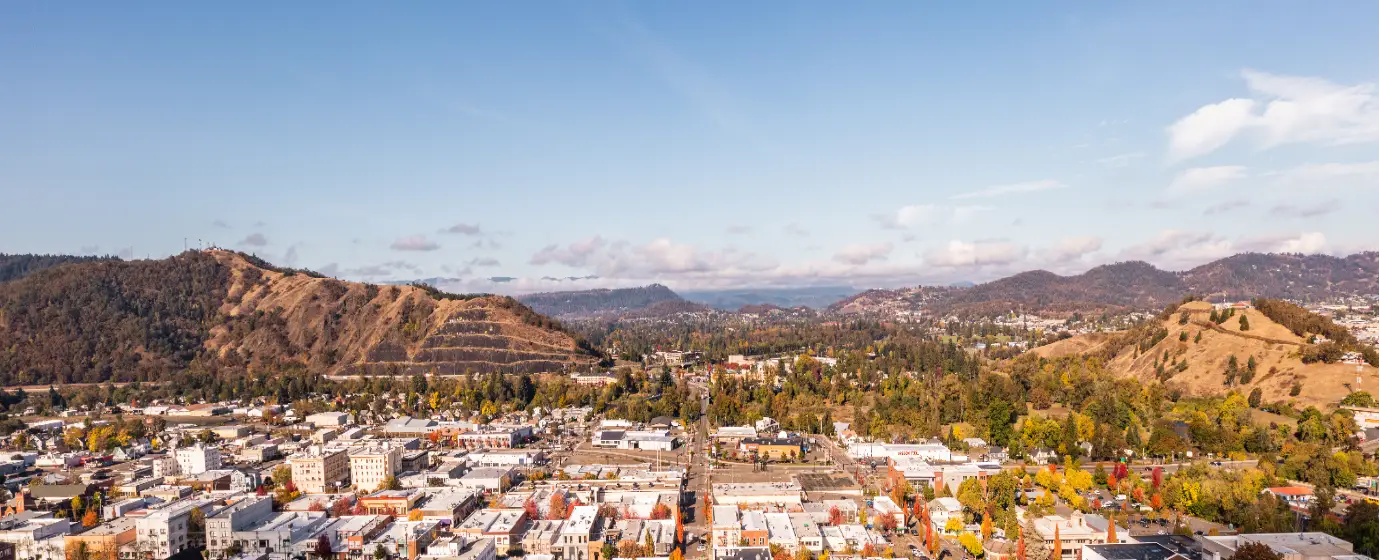
Most people who move to Roseburg from a larger city have the same moment about three weeks in: they drive past Stewart Park on a Tuesday afternoon, see a family picnicking by the South Umpqua River, a few cyclists on the paved loop, and someone casting from the bank — and they realize this isn't a park they'll visit once. It's where the city actually lives. Roseburg sits in the South Umpqua River valley at the southern end of the Willamette Valley corridor, where I-5 traces the river south toward the Cascades. That geography isn't incidental — it's the reason the city's park system is shaped the way it is, and why outdoor recreation here operates at a scale that routinely surprises newcomers.
With 182 sunny days a year, the outdoor window is longer than most of western Oregon allows. The city of 23,795 punches well above its size on recreation infrastructure: a 236-acre regional park, two rivers that converge just outside city limits, and OR-138 heading east into one of the most waterfall-dense corridors in the state. The Umpqua Valley isn't a place people move to for nightlife — it's a place they move to because they want to kayak in the morning and still make it to work at Mercy Medical Center or the school district by nine.
Cost of living plays a role in who shows up here. The typical home price in Roseburg was $368,343 as of July 2026 — well below what the same square footage would cost in Eugene or Medford — which means families stretching their budget can still land near the river. The outdoor amenities aren't gated behind an expensive zip code. Stewart Park, Riverfront Park, the South Umpqua waterfront, and the trail system are all free, and they're interwoven with neighborhoods in a way that makes daily recreation genuinely easy rather than aspirational.
Whether you're weighing a move or just trying to understand what weekends actually look like here, the sections below cover Roseburg's signature parks, its river recreation, the day-trip corridor along OR-138, and the seasonal quirks that shape outdoor life in the valley.
Stewart Park and Riverfront Park: The City's Outdoor Core
Stewart Park is the kind of place that makes a city's recreation budget look efficient. At 236 acres along the South Umpqua River, it holds more than most regional parks twice its size: the Roseburg Municipal Golf Course, Umpqua Valley Tennis facilities, the Roseburg American Legion Baseball fields, a concrete skate park, a butterfly garden, and an antique steam locomotive that children have been climbing on for decades. It is not a passive greenspace — it is an active, layered facility that serves golfers, youth athletes, skaters, and people who just want to watch the river from the bank.
The spine connecting it all is a 2.6-mile paved loop, part of the broader Roseburg Bicycle Pedestrian System. The trail encircles the golf course, passes near the VA hospital, threads through the Riverside Park Disc Golf Course, and ends at the Roseburg Duck Pond. On a dry spring morning, the loop is genuinely busy — walkers with dogs, cyclists, parents with strollers — in a way that signals how central the park is to daily life rather than just weekend visits.
What Happens at the Halfshell
The Nichols Halfshell amphitheater at Stewart Park anchors the city's summer cultural calendar. The Music on the Halfshell concert series brings free outdoor performances through the warm months, and Movies in the Park runs on summer evenings in June. Both draw crowds from across the valley, and both are free. Newcomers often discover these events by accident — a neighbor mentions it, or they notice the lawn chairs appearing — and quickly make them a fixture of the season.
Riverfront Park: Smaller, Quieter, Newly Improved
Riverfront Park covers about 20.8 acres and feels deliberately different from Stewart Park's busy energy. Mature Douglas fir, Ponderosa pine, madrone, and oak form a canopy that keeps the park shaded and cool even in July. The main bike trail here connects Stewart Park to the downtown core, making it a practical commute corridor as much as a recreation space. An 18-hole disc golf course is woven through the trees, well-used enough that a casual afternoon round often means navigating around regulars.
In July 2026, the city opened a new TRACK Trail at Riverfront Park, developed with Oregon Parks Forever and Kids in Parks. The free, self-guided trail is designed specifically for children and families — a structured way to move through the park, learn something about the landscape, and encounter the native ecology without it feeling like a lesson. It's the kind of addition that matters for families with young kids who want the park to do a little more than just exist.
| Park | Size | Key Features | Best For |
|---|---|---|---|
| Stewart Park | 236 acres | Golf course, tennis, baseball, skate park, butterfly garden, amphitheater, duck pond loop | Families Nature |
| Riverfront Park | ~20.8 acres | Disc golf, forested trails, TRACK Trail, bike connection to downtown | Families Walkable |
| South Umpqua Riverfront | Linear corridor | Swimming, fishing, kayaking, wildlife watching, beach access | Nature Outdoors |
| River Forks Park | Confluence area | Where the North and South Umpqua Rivers meet; fishing and riverside access | Nature Quiet |
| Riverside Park Disc Golf | Within trail loop | 18-hole disc golf course integrated into the park trail system | Value |
| Roseburg Municipal Golf Course | Within Stewart Park | Full 18-hole course inside a regional park setting | Value |
The Umpqua Rivers: Swimming, Fishing, and What the Water Actually Offers
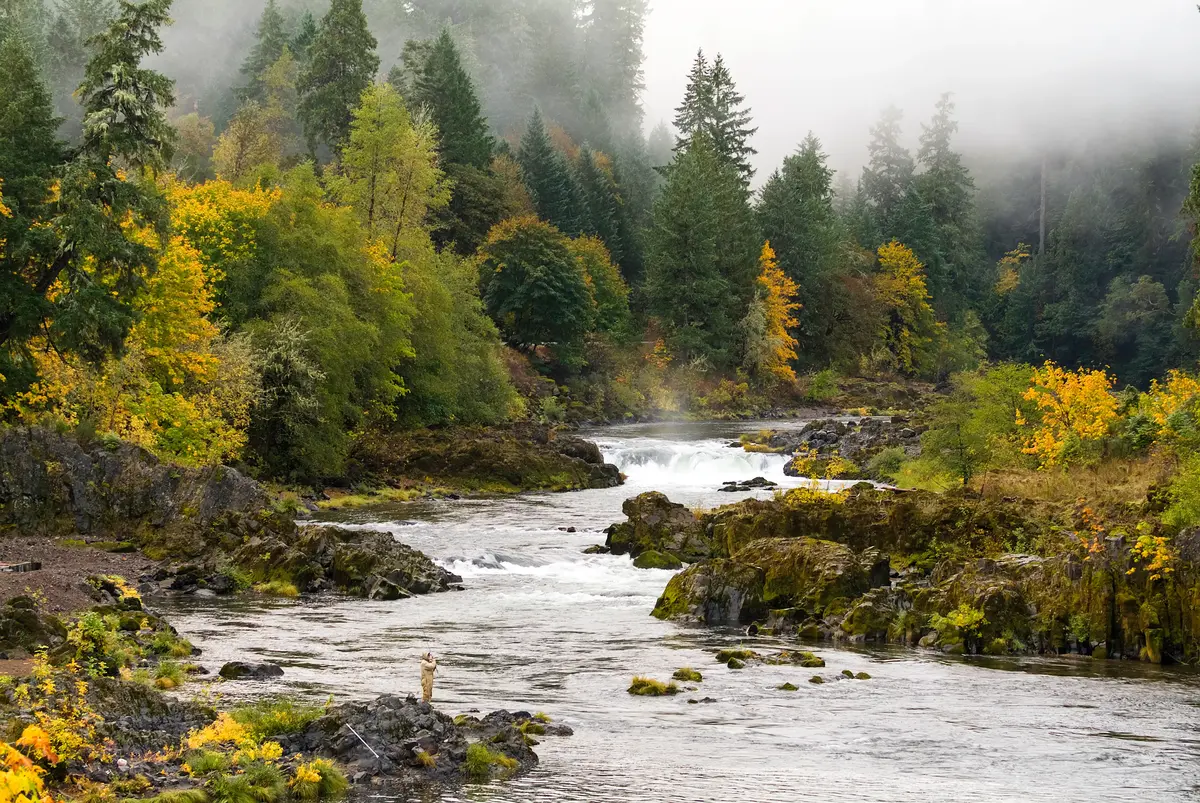
The South Umpqua River doesn't run past Roseburg — it runs through it. That distinction matters. You're not driving to reach the water; you're already on it whenever you're in Stewart Park or walking the riverfront trail. During warmer months the river draws swimmers to the gravel bars, kayakers putting in for day floats, and anglers working the edges for salmon and steelhead. The city's stretch of the South Umpqua is also reliable for wildlife: blue herons and egrets are common enough to stop being exciting, bald eagles less so, and osprey diving for fish are a standard afternoon entertainment from the riverbank.
Where the Rivers Meet
About a mile west of the city, the North Umpqua converges with the South Umpqua at River Forks Park. Together they form the main Umpqua River — one of only four Oregon rivers that run the full distance from the Cascades to the Pacific Ocean. The confluence is a significant geographic fact: it means Roseburg sits at the downstream end of two distinct river systems, each with its own recreation character.
The South Umpqua is the more accessible of the two for casual summer use — floatable, swimmable in calm stretches, easy to reach from the city's park system. The North Umpqua is more serious water. Congress designated it a Wild and Scenic River in 1988, and 33.8 miles of it are fly-fishing-only waters. That designation attracts serious anglers from across the Pacific Northwest, and the fly-fishing community around Roseburg is tight-knit and particular about its water. Whitewater kayakers and rafters also use the North Umpqua through summer, though the technical sections require more experience than the casual South Umpqua floats closer to town.
What Newcomers Don't Expect
The honest seasonal reality: the rivers are at their best from late May through September. Water levels and temperatures outside that window make swimming impractical and floating inadvisable on most reaches. Fall fishing picks up, but the summer recreation window, while long by Oregon coastal standards, has real edges. People who move here imagining year-round river swimming find the shoulder seasons shorter than they anticipated. On the other side of that: 182 sunny days a year means the window that does exist is genuinely long, and the combination of sun and accessible water is something most small Oregon cities can't match.
OR-138 East: Waterfalls, Wild Rivers, and Day Trips Into the Cascades
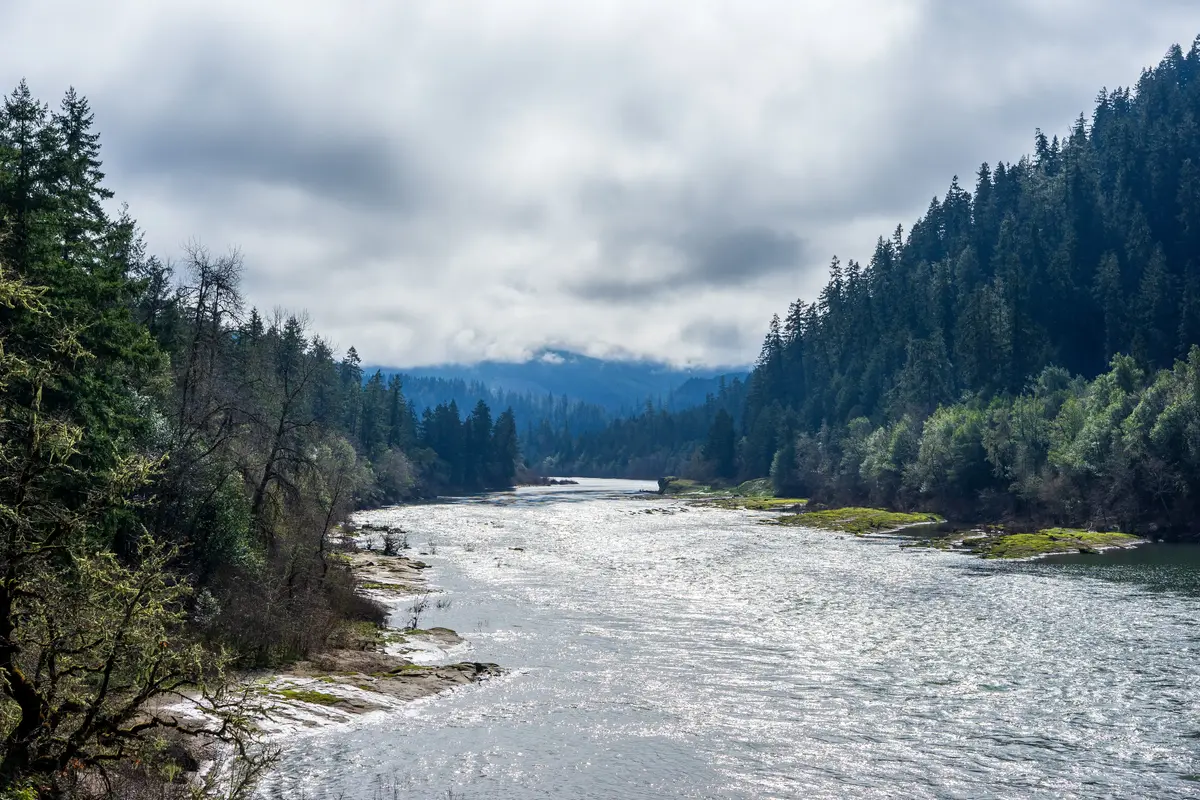
The single most consequential road for Roseburg's outdoor life isn't I-5 — it's OR-138, the North Umpqua Highway, heading east from the city into the Cascades. This corridor carries more recreation per mile than almost anywhere in southern Oregon, and locals treat it the way Bay Area residents treat Highway 1: a road you drive for its own sake, not just to get somewhere.
The Highway of Waterfalls
OR-138 passes more than a dozen waterfalls along the North Umpqua River corridor, enough that the route has earned the name Oregon's Highway of Waterfalls. The named stops span the range from easily accessible to genuinely remote. Deadline Falls, where steelhead and Chinook salmon leap upstream, is a spectacle timed to the fish run rather than the season. Steamboat Falls and Toketee Falls sit further east and require more driving, but Toketee in particular — a 120-foot two-tiered drop into a basalt gorge — is the kind of waterfall that makes people rearrange their Saturday.
Susan Creek Falls: The Closest Day Hike
The most approachable waterfall day hike from Roseburg is Susan Creek Falls, about 29 miles east via OR-138. The Bureau of Land Management trail covers roughly 1.4 miles out and back, ends at a 60-foot waterfall, and continues to the Susan Creek Indian Mounds — a historic site that adds some context to an otherwise straightforward hike. One important caveat: the trail is currently open but has not been fully restored following the 2020 Archie Creek Fire. Hikers should check current conditions before heading out, and expectations about the surrounding forest should be calibrated accordingly. What was a lush, shaded corridor before the fire looks different now.
Beyond the Waterfalls
Further east along OR-138, the Umpqua National Forest opens up to camping, mountain biking, rock climbing, off-roading, and in winter, skiing and cross-country skiing. The full outdoor recreation menu available within a day's drive of Roseburg — hiking, kayaking, tubing, rafting, fly fishing, foraging, birding — is the kind of list that gets cited in relocation conversations and then quietly confirmed in the first year of actually living here. The access is real, and it doesn't require a long drive to find it.
| Destination | Distance via OR-138 | Activity | Notes |
|---|---|---|---|
| Susan Creek Falls | ~29 miles east | Hiking, waterfall | 1.4-mile out-and-back; open but not fully restored post-2020 fire |
| Deadline Falls | ~30+ miles east | Wildlife watching, fishing | Salmon and steelhead leap upstream seasonally |
| Steamboat Falls | ~40 miles east | Waterfall, scenic drive | Roadside access; part of the Highway of Waterfalls |
| Toketee Falls | ~60 miles east | Hiking, waterfall | Two-tiered basalt gorge; among the most photographed in Oregon |
| Umpqua National Forest | Variable, east on OR-138 | Camping, mountain biking, skiing, off-roading | Full four-season recreation access |
| North Umpqua River (upper) | Along OR-138 | Fly fishing, rafting, kayaking | 33.8 miles of Wild and Scenic, fly-fishing-only designation |
Looking to buy in Roseburg? Estimate your payment.
Enter your numbers to see an estimated monthly mortgage payment.
Estimate only. Excludes HOA fees and mortgage insurance. The interest rate above is a starting point, not a quoted rate — replace it with your own to see real numbers. Insurance is a flat placeholder, not a Roseburg quote.
Weekends & Local Favorites: Wildlife Safari, the Farmers Market, and Where Roseburg Actually Gathers
Stewart Park is where the city shows up during the week. On weekends, the social geography expands. The Umpqua Valley Farmers' Market and the Roseburg Saturday Market draw a weekly crowd of regulars, and the combination of local produce, craft vendors, and the relaxed Saturday pace gives both markets a community-anchor function that goes beyond shopping. They're where neighbors run into each other, where newcomers start recognizing faces, and where the informal social calendar of the city gets set.
Wildlife Safari in Winston
About ten minutes south of Roseburg off I-5, in the neighboring city of Winston, Wildlife Safari is a 600-acre, AZA-accredited drive-through wildlife park. Hundreds of animals — elephants, giraffes, lions, rhinos, zebras — roam large open habitats that you drive through at a slow pace with your windows cracked. It operates 363 days a year. For families with school-age children who've just moved here, Wildlife Safari tends to be the first thing they discover that makes Roseburg feel genuinely different from other small Oregon cities. It's close enough to be a casual Tuesday afternoon rather than a planned excursion.
The Dining and Coffee Scene Around the Parks
After a morning on the river or the Stewart Park loop, the options for refueling are concentrated in a handful of well-regarded local spots. For coffee, Gathering Grounds Coffee House, My Coffee, Cascades Coffee House, and the Java Run locations on Stephens and Green all draw regulars. On the food side, Brix Grill, True Kitchen + Bar, Old Soul Pizza, Jersey Lilly, and Rodeo Steakhouse & Grill cover the range from casual post-hike lunch to a proper sit-down dinner. These places matter not just because the food is good but because they're where the outdoor community reconvenes — the post-round golfer, the Saturday market regular, the family who just came back from Susan Creek Falls.
What Six Months In Teaches You
Newcomers consistently underestimate how much the OR-138 corridor changes their weekend life. In year one, most people make it to Susan Creek Falls, maybe Toketee, and leave it at that. By year two, they have a mental map of pull-offs, fishing holes, and camp spots that takes a while to build and that they don't share freely. The outdoor life here has a learning curve, and the people who get the most out of it are the ones who treat the first year as an orientation rather than an arrival.
The honest downside: the city's neighborhoods vary in their proximity to the trail system, and not every part of Roseburg is equally close to the recreational core. If walkable access to Stewart Park or the river trail matters to your daily routine, that geography should factor into where you look — see the neighborhoods guide for the specific areas closest to the park system.
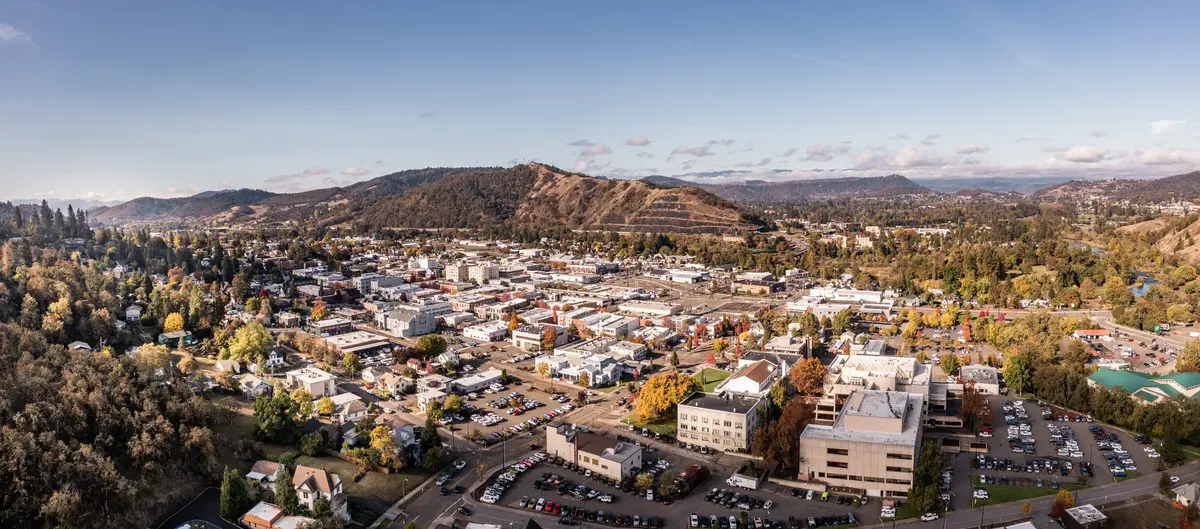
Local Expert Takeaway: Roseburg's outdoor infrastructure is built into the city rather than adjacent to it. The South Umpqua River runs through Stewart Park, the trail system connects the park to downtown Riverfront Park, and OR-138 puts a dozen waterfall hikes within a morning's drive. What makes this work at a city of 23,795 is that the amenities are free, dense, and genuinely used — the Halfshell concerts, the river floats, the disc golf course — not curated attractions but the actual daily and weekend life of the valley.
Quick Takeaways & FAQs
✅ Stewart Park's 236 acres along the South Umpqua River include a golf course, tennis facilities, skate park, amphitheater, and a paved 2.6-mile trail loop — all free to use and genuinely central to daily life in Roseburg.
⚠️ The outdoor window is real but seasonal: river swimming and floating peak from late May through September, and the OR-138 trail corridor around Susan Creek Falls is still recovering from the 2020 Archie Creek Fire.
📍 OR-138 east of Roseburg — Oregon's Highway of Waterfalls — passes more than a dozen waterfalls, the Wild and Scenic North Umpqua River, and the Umpqua National Forest, all within a half-day's drive from the city.
What is Stewart Park in Roseburg, and what can you do there?
Can you swim or kayak in the South Umpqua River near Roseburg?
How far is Susan Creek Falls from Roseburg, and is the trail open?
What is Wildlife Safari, and is it worth visiting from Roseburg?
What outdoor day trips are accessible from Roseburg via OR-138?
Moving to Oregon?
Tell us what you need help with and we'll connect you with local resources.
