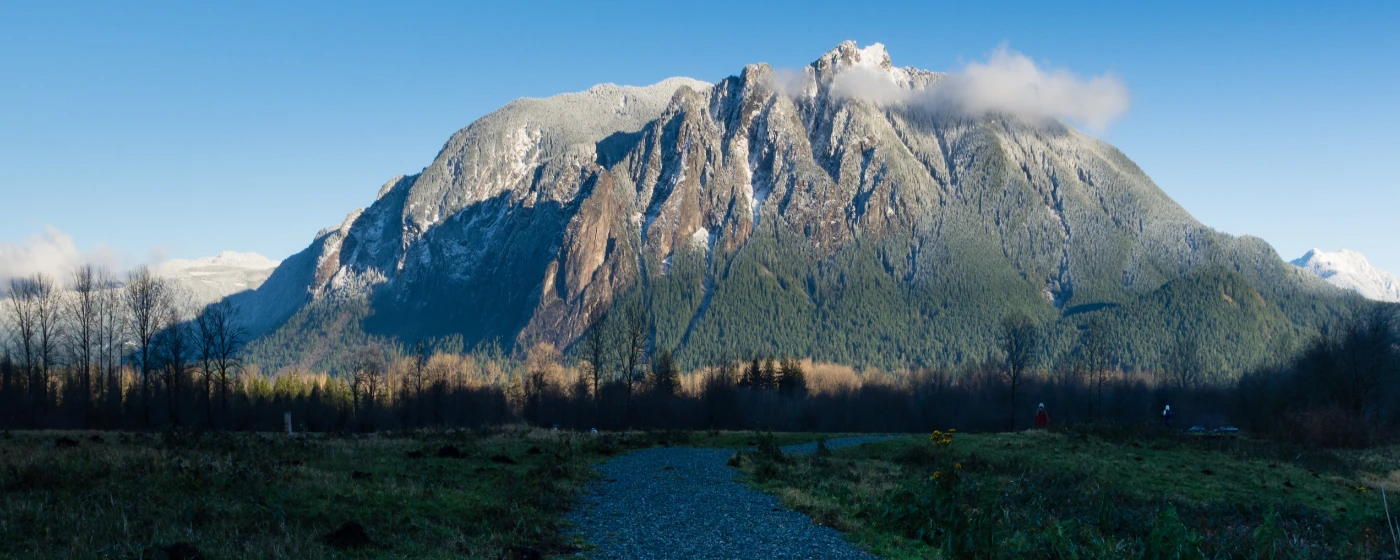
Maybe you've been priced out of the Bay Area or Los Angeles, or your tech job went remote and suddenly a Cascade foothills community 30 miles east of Seattle started making sense. North Bend sits at the foot of Mount Si along I-90, one of the most direct corridors into the Eastside tech corridor, and its combination of forest access and a genuine small-town main street is genuinely unlike anything in Southern California's inland suburbs. What nobody tells you before you move is this: the house is cheaper than Marin County, but it is still a $1.2 million market. The trade-off with California is real — it just doesn't look the way you expect.
The community's economic backbone is the Eastside tech corridor, with most North Bend households commuting roughly 45 minutes via I-90 to major employers in Redmond and Seattle. The Snoqualmie Valley School District holds an A rating, according to Niche, which matters enormously to families relocating from parts of California where strong public schools either required a specific zip code or a private-school tuition bill. The North Bend Premium Outlets, a QFC, and the U.S. Forest Service Ranger Station round out the local employment picture — this is not a city with a diversified downtown job market; most people work elsewhere and come home to the mountains.
On cost of living, North Bend registers at approximately 124.7% of the national average by the Council for Community and Economic Research index, with a housing sub-index of 199 — nearly double the national baseline. Compared to coastal California metros, day-to-day spending on groceries and utilities runs noticeably lower, though your monthly housing cost is unlikely to shrink dramatically unless you're coming from Sacramento or the Inland Empire. The single largest financial shift for most Californians isn't the home price — it's the state income tax, or rather the absence of one. Washington levies no personal income tax on wages, a fact that reframes the math on every offer you write.
Whether you're getting ready to make an offer or still researching from a California living room, the sections below break down the tax picture, the home price comparison, the cost-of-living shift, what surprised other California transplants, and the honest downsides nobody puts in the listing description.
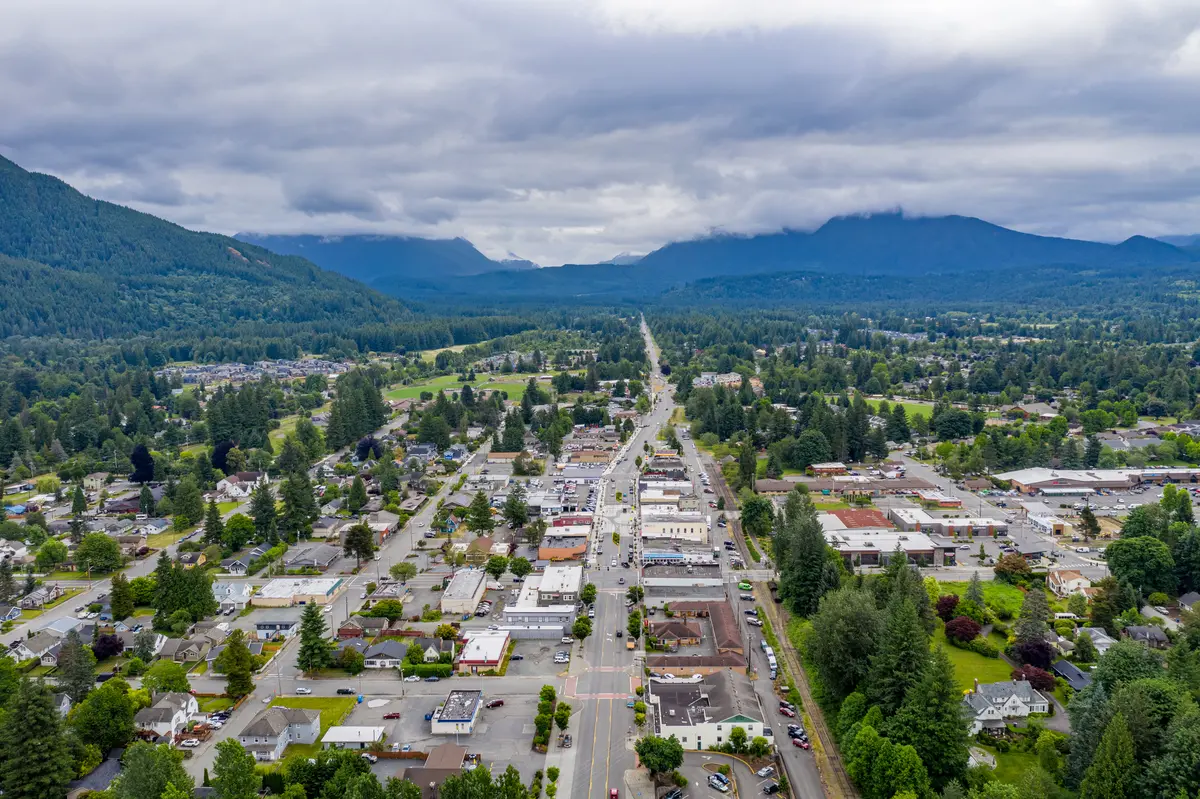
The Tax Picture: What You Actually Keep in Washington
Washington state levies no personal income tax on wages or salaries. For a California household earning $200,000, that single fact is worth more than any closing-cost negotiation.
California's top marginal rate hits 13.3% — the highest of any state. Even middle-income earners in the Bay Area commonly land in the 9.3% or higher bracket. In Washington, those dollars stay in your paycheck from day one.
| Tax Type | California | Washington (North Bend) | Net Effect for a Relocating Buyer |
|---|---|---|---|
| State income tax (wages) | Up to 13.3% | 0% | Significant annual gain for most earners |
| State sales tax (base) | 7.25% base | 6.5% base | WA base slightly lower; local add-ons vary |
| Combined sales tax (local) | 9–10.75% in many CA cities | 9.2% in North Bend (2026) | Roughly comparable |
| Grocery purchases | Taxable at local rate | Exempt from state portion | Meaningful household savings over a year |
| Retirement income (401k, IRA, pension) | Taxed as ordinary income | Not taxed at state level | Advantage for older relocating households |
| Capital gains (long-term) | Taxed as ordinary income at up to 13.3% | 7% on long-term capital gains above a $278,000 standard deduction for 2025, rising to 9.9% on gains above $1,000,000 | WA rate lower, but non-zero — plan ahead |
The sales tax picture is more nuanced than the headline comparison suggests. North Bend's combined rate is 9.2% in 2026 — comparable to what you were paying in many California cities — but the grocery exemption offsets a meaningful share of everyday spending.
The Capital Gains Caveat Californians Miss
If you're selling an appreciated California home or an equity portfolio before moving, Washington taxes 7% on long-term capital gains above a $278,000 standard deduction for 2025, rising to 9.9% on gains above $1,000,000. This catches a lot of California sellers who assume the no-income-tax state is also a no-capital-gains state. It isn't — plan the timing of your sale accordingly.
The 2028 High-Earner Change
Beginning January 1, 2028, Washington will impose a 9.9% income tax on adjusted gross income above $1 million for individuals and married filers, enacted through Senate Bill 6346. For most relocating households this is irrelevant. For dual-income tech couples at the top of Eastside pay scales, it's worth factoring into a longer horizon. Washington still has no income tax on wages below that threshold through at least the end of 2027.
Home Prices: The California Comparison You Actually Need
The median sold price in North Bend is $1,287,230 (Redfin, May 2026). That number will feel either like a relief or a gut punch depending entirely on where in California you're coming from.
How the Numbers Stack Up by California Origin
| Where You're Coming From | Typical Market Context | North Bend at $1,287,230 | What Changes |
|---|---|---|---|
| San Francisco / Marin County | Median homes routinely above $1.4–1.8M | Noticeably below SF proper | More land, more square footage per dollar |
| San Jose / South Bay | Median $1.3–1.5M in many zip codes | Roughly comparable | No state income tax is the real financial shift |
| Los Angeles (Westside) | Similar or higher median | Close to parity on price | Dramatically different commute pattern and density |
| San Diego (coastal) | Median in the $950,000–$1.2M range | Modestly above SD median | Income tax elimination partially offsets gap |
| Sacramento / Inland Empire | Median $450K–$650K range | Significantly higher | Price shock is real; income tax savings help over time |
| Orange County (inland) | Median $900K–$1.1M | Modestly above OC inland | Washington tax structure changes the monthly math |
The honest read: if you're coming from coastal California, North Bend isn't going to feel like a bargain on sticker price. What it offers is more acreage, a highly rated public school district at no extra cost, and a property tax rate of 0.83% — meaningfully below California's effective rates in most high-value markets. See the full cost-of-living breakdown at North Bend's cost-of-living page.
What the Property Tax Rate Actually Means
California's Proposition 13 caps assessed-value increases for existing owners — but a buyer purchasing at today's prices gets assessed at today's market value in both states. At 0.83%, North Bend's effective rate is competitive with what a new buyer actually pays in most California coastal counties once assessed at market. The difference is that Washington has no state income tax layered on top.
What the Market Feels Like on the Ground
Entry-level in North Bend — older construction on smaller lots or properties needing updates — starts in the $850,000–$950,000 range. Above that, the market climbs toward and past the median depending on lot size, condition, and proximity to open space. For a detailed look at how different areas of North Bend compare on character and price, the best neighborhoods guide has the full breakdown.
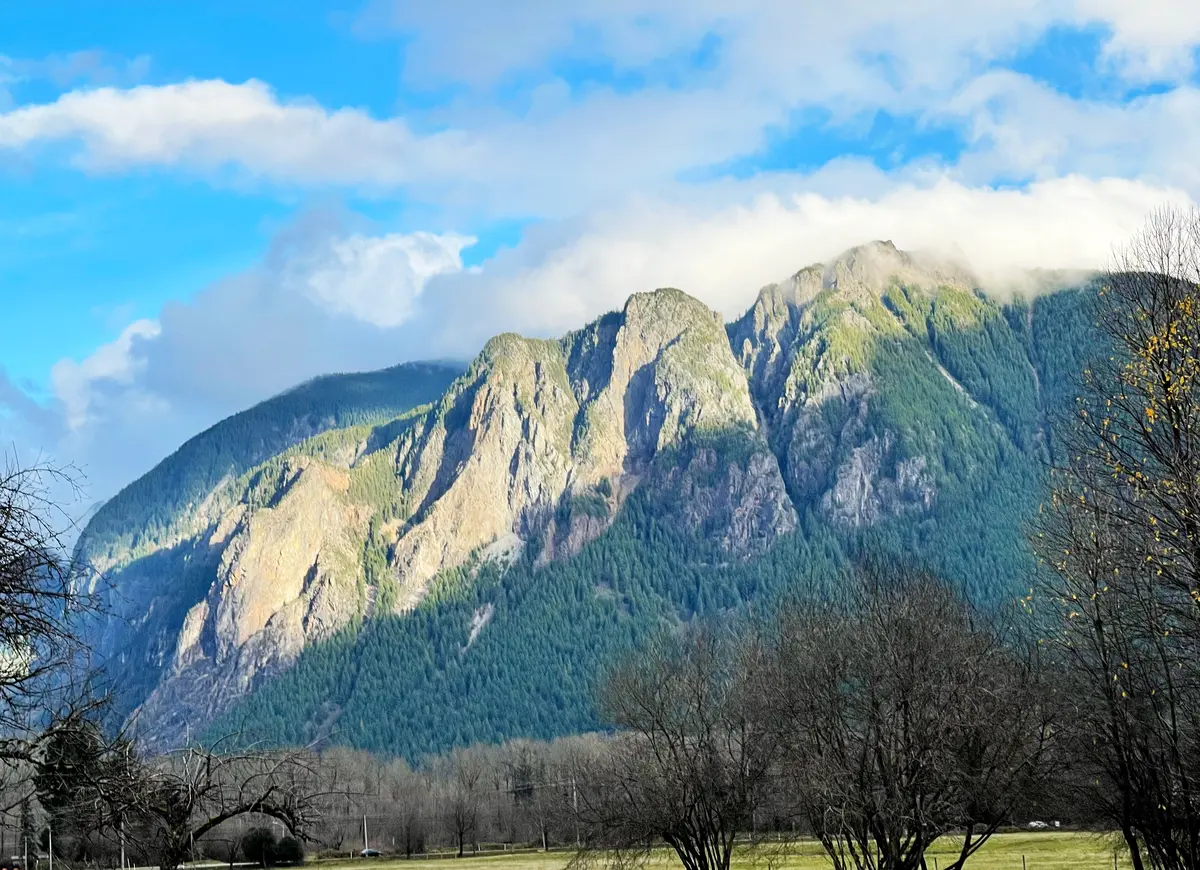
Day-to-Day Cost Shifts: The Grocery Run, the Commute, and the Real Surprises
The income tax math is clean and dramatic. The rest of the cost-of-living comparison is messier — and more honest.
What Costs More Than You Expect
Groceries in North Bend run noticeably above the national average — the C2ER grocery index sits at 130 — which surprises Californians who assume only housing and taxes are inflated in the Pacific Northwest. The QFC on Bendigo Boulevard is your primary full-service option in town; the nearest Trader Joe's is in Issaquah, about 15 minutes west on I-90. Building and shipping costs also add up: contractors and remodelers in the Cascade foothills carry rate premiums that Bay Area transplants find familiar but Sacramento or Inland Empire buyers find jarring.
Utilities run at roughly 110% of the national baseline — meaningfully above average but significantly below what California's coastal utilities have become for households running heat pumps or EV chargers. The cost-of-living detail on utilities lives on the cost-of-living page.
What Costs Less — or Disappears Entirely
Health insurance premiums in Washington run noticeably below California's ACA marketplace averages for comparable coverage. The honest catch is geographic: routine care is accessible locally, but specialist and advanced care requires driving toward the Eastside or Seattle. For most families this is a non-issue week to week; for households managing chronic conditions, it's worth mapping out before you close.
Private school spending is the cost that quietly disappears for a lot of California families. The Snoqualmie Valley School District's strong district-wide performance means parents who were paying $25,000–$40,000 annually in tuition at California independents can redirect that entirely. That math alone changes what monthly housing payment is sustainable.
The Seasonal Surprise Nobody Mentions
I-90 over Snoqualmie Pass closes for avalanche control or accidents multiple times each winter. For most North Bend residents this is background noise — you're commuting west toward Seattle, not east over the pass. But if you have family in Eastern Washington or are planning ski weekends at Suncadia, a Tuesday morning closure that adds three hours to a drive is genuinely part of life here. It's not a dealbreaker; it's just not on any California cost-of-living spreadsheet.
Looking to buy in North Bend? Estimate your payment.
Enter your numbers to see an estimated monthly mortgage payment.
Estimate only. Excludes HOA fees and mortgage insurance. The interest rate above is a starting point, not a quoted rate — replace it with your own to see real numbers. Insurance is a flat placeholder, not a North Bend quote.
What California Transplants Actually Notice After Six Months
The first thing most Bay Area transplants say around month three: the traffic is better and the access to trails is better, but the town is much smaller than it looked on Google Maps. North Bend's population is just over 8,000 people. The North Bend Way corridor — home to The North Bend Bakery on W North Bend Way and the North Bend Bar & Grill on the east end — is the town's entire downtown commercial stretch. Weekend mornings at the bakery have a regulars culture that takes about a year to break into but feels genuinely different from anything in a California suburb of this price point.
What the Small-Town Scale Actually Means
North Bend has no movie theater, no Whole Foods, no Target within city limits. The North Bend Premium Outlets draws serious retail traffic from across the region, but it's outlet shopping — not a substitute for the everyday urban convenience most Californians are used to. Issaquah, about 15 miles west, is where most errands that can't be done online actually happen.
Families with school-age kids adjust to this faster than single adults do. The Snoqualmie Valley School District's strong academic standing means school becomes its own community infrastructure — the soccer leagues, the school events, the Friday-night sports under lights — and that calendar fills a lot of the social space that a denser California suburb would fill with restaurants and bars. For couples without kids, the adjustment is more real: if you need urban energy more than once a week, plan to drive for it.
Why People Leave — the Honest Version
The two most common reasons California transplants eventually leave North Bend are the gray skies and the isolation. Western Washington's overcast season runs roughly November through April, with many days that never fully brighten. Californians from the Bay Area underestimate this more than those from the Pacific Northwest already know to expect it. And the isolation is real: North Bend is beautiful and quiet, and after two or three winters some households discover they need more people, more noise, and more options than a town of 8,000 on the edge of a national forest provides. That's not a criticism — it's a self-selection filter worth sitting with before you write the offer.
What Would Not Be Recommended to a New Buyer
Don't buy in North Bend assuming you'll use the Snoqualmie Pass ski areas as your primary winter recreation without testing the I-90 corridor in February first. The drive to Summit at Snoqualmie looks straightforward on paper. On a Saturday morning after a storm dump, with chains-required conditions and thousands of other Eastside households making the same trip, it's a two-hour crawl each way. Some families love it anyway. Others stop going after the first winter. Know which kind you are before the mountain becomes a significant line item in how you justified the purchase price.
The Bottom Line: Is North Bend the Right Move from California?
The case for the move is specific and strong for a narrow profile: a dual-income household with at least one remote-friendly or Eastside tech job, school-age children, and a genuine preference for outdoor access over urban density. For that household, North Bend delivers a top-rated school district, no state income tax on wages, a 0.83% property tax rate, and 30 miles of direct I-90 access to Mount Si, the Iron Horse Trail, and the Cascade foothills — at a home price that is comparable to or below what the same income level would face in the Bay Area or Seattle's Eastside suburbs.
The Case Against, Stated Plainly
If you're coming from Sacramento, the Inland Empire, or San Diego's inland communities, the median price of $1,287,230 is a significant step up, and the income tax savings take years to offset the gap. If you need urban density, cultural events, or daily restaurant variety within walking distance, this is the wrong market — Issaquah or Bellevue will serve you better. And if six months of gray skies sounds manageable but three or four winters of it sounds like a mental health issue, factor that in honestly before you commit to a seven-figure purchase in a market where discretionary buyers sometimes find they've priced themselves out of a quick exit.
The Numbers at a Glance
| Factor | North Bend Reality | Verdict for California Buyers |
|---|---|---|
| State income tax on wages | 0% (Washington) | Major advantage vs. California's up to 13.3% |
| Median sold home price | $1,287,230 (May 2026) | Relief from SF/Marin; parity or above vs. SD/IE |
| Effective property tax rate | 0.83% | Competitive with CA new-purchase effective rates |
| School district | Snoqualmie Valley SD, A rating (Niche) | Eliminates private school cost for many families |
| Combined sales tax | 9.2% (groceries exempt) | Roughly comparable to most CA cities |
| Commute to Eastside tech corridor | ~45 min via I-90 | Workable for 4-day or hybrid schedules |
| Urban amenity access | Issaquah 15 min, Seattle 45 min | Drive-dependent; not walkable in-town |
| Outdoor access | Mount Si, Iron Horse Trail, Cascades | Exceptional; a genuine differentiator |
For the full picture on neighborhoods, see the best neighborhoods guide. For schools, the North Bend schools page covers the Snoqualmie Valley district in detail. And if you're working through the buying process itself, the first-time homebuyer page covers loan programs and down-payment options available in Washington State.

Local Expert Takeaway: The income tax elimination is real and substantial — a household earning $200,000 in California and paying 9–13% in state taxes will see a meaningful annual increase in take-home pay the day they move to North Bend. But the move works best for a specific kind of buyer: someone whose job is already on the Eastside or remote, who is genuinely drawn to Mount Si's trailhead two miles from downtown, and who finds The North Bend Bakery on W North Bend Way and a quiet Sunday morning more appealing than a dense restaurant row. If that's you, the math and the lifestyle align. If you need the city to come to you, Issaquah or Bellevue will make you happier at a comparable price.
Quick Takeaways & FAQs
✅ Washington's zero state income tax on wages is a structural, ongoing financial advantage over California that starts the moment you move — no phase-in, no income cap for most households.
⚠️ North Bend's median sold price of $1,287,230 (May 2026) means this is not a budget escape from California's coastal markets — it's a lifestyle trade, not a price trade.
📍 The North Bend Bakery on W North Bend Way has operated for over 90 years and is the kind of institution that tells you immediately whether a small-town main street fits your life or frustrates it.
Do I pay state income tax if I move from California to North Bend, Washington?
Will I save money on my home purchase moving from California to North Bend?
What is the sales tax rate in North Bend and how does it compare to California?
Is there a Washington state capital gains tax I should know about before selling my California home?
What surprises California transplants most about living in North Bend?
Moving to Washington?
Tell us what you need help with and we'll connect you with local resources.
