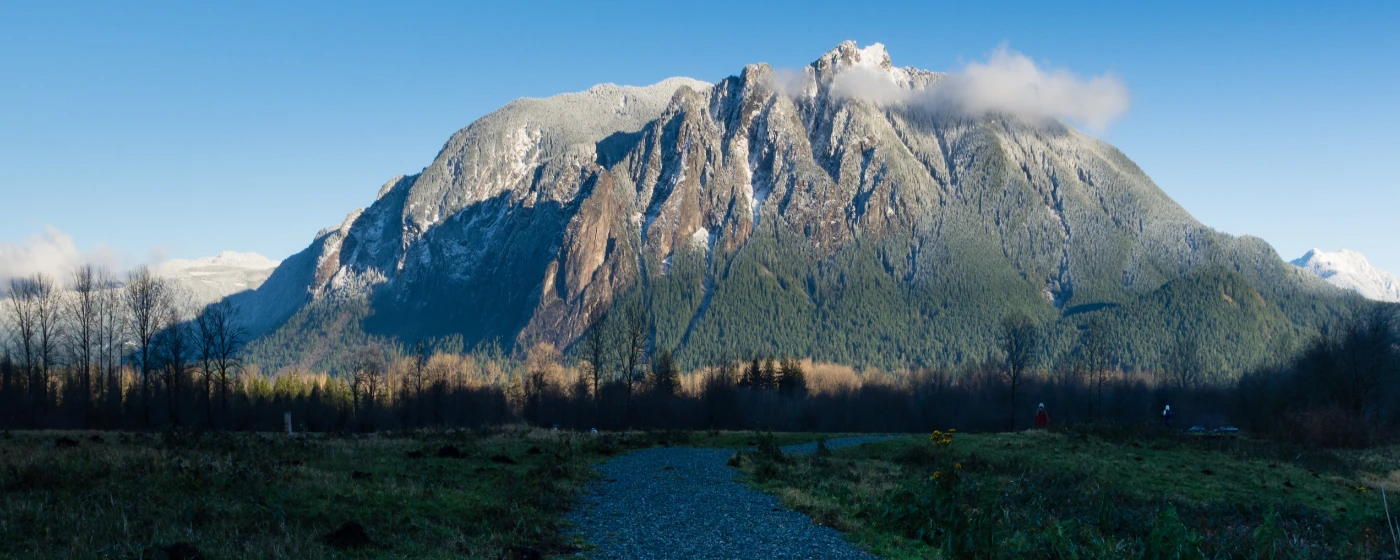
You've probably seen North Bend described as a mountain town with a short commute to Seattle. That framing is technically accurate and practically misleading. The commute is real — I-90 puts Bellevue's tech corridors roughly 35 minutes west on a good morning — but the city is hemmed in by Mount Si to the north, Rattlesnake Mountain to the south, state forest land in every direction, and the Snoqualmie River's forks cutting through the valley floor. That geography isn't a backdrop. It's a constraint that makes every buildable lot rarer and every existing home more contested than the address alone would suggest. With roughly 1.85 months of housing supply and homes averaging around 10 days on market as of early 2026, hesitation here costs you the house.
The Snoqualmie Valley School District holds an A rating, according to Niche, and serves both North Bend and neighboring Snoqualmie, which means the school boundary doesn't separate these cities the way it does elsewhere — it actually keeps buyers cross-shopping both. North Bend wins that comparison on lot size, trail access, and a more established small-town feel. The median household income runs to $175,109, and the buyer pool reflects it: Eastside tech workers, remote-eligible professionals, and outdoor-lifestyle households who've done the math and decided the extra miles are worth the extra square footage and the view from the kitchen window. The city's median sold price reached $1,287,230 as of May 2026, which means this is not a market where you stumble into a deal.
Daily life here orbits I-90 Exit 31 (downtown) and Exit 32 (Riverbend and the southeastern neighborhoods). The North Bend Premium Outlets anchors the western edge of town and provides practical retail access most mountain communities lack entirely. Twede's Cafe on W North Bend Way — the filming location for the Twin Peaks Double R Diner, operating since 1941 — is where you end up on Saturday morning whether you planned to or not. The Iron Horse Trail and Snoqualmie Valley Trail give non-drivers real infrastructure, and the Mount Si trailhead draws enough traffic that parking on busy summer weekends becomes its own community grievance. For a fuller picture of who thrives here and what daily life actually looks like, that page goes deeper.
Whether you're choosing between a downtown bungalow and a forested lot on the valley road, or trying to figure out what Riverbend is and why it matters, the sections below break down North Bend's neighborhoods, price bands, buyer types, common mistakes, and where renters actually land in this market.
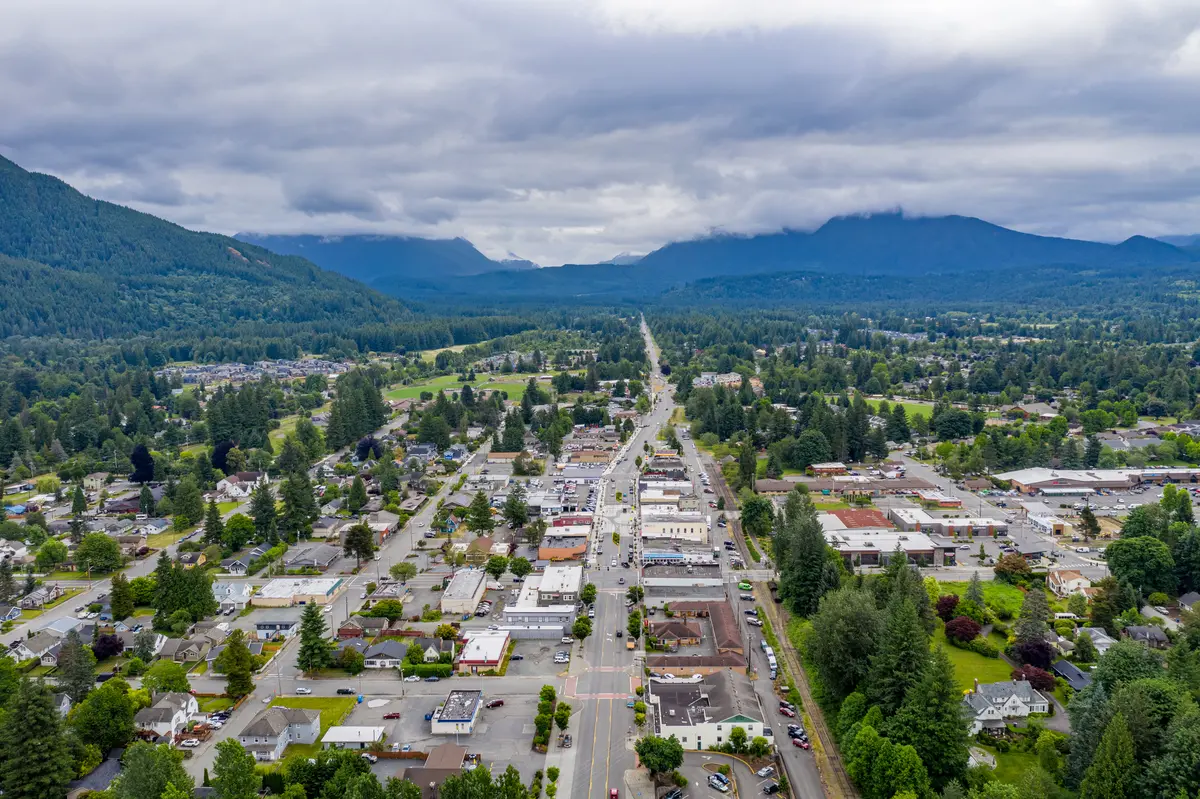
The North Bend Reality
I-90 is the axis everything else is organized around. North of the freeway, you get the historic grid — downtown, the trailheads, and the older residential streets that were here before the city grew. The neighborhoods on the freeway's south side, reachable via Exit 32, include Riverbend and the newer suburban areas where the most conventional, comparable-driven real estate transactions happen. That divide is the first thing to understand before you start scheduling tours.
The second thing: North Bend runs two parallel pricing systems. Downtown-adjacent neighborhoods and planned subdivisions price the way any suburban market does — square footage, age, condition, recent comps. But properties along the valley roads east of town price on acreage, floodplain status, well and septic condition, and mountain view corridors. Buyers who apply suburban pricing logic to a valley-road property — or vice versa — end up either overpaying or losing to a better-prepared offer. A local agent who works North Bend specifically (not just the broader Eastside) is not optional here.
The third reality is that the Snoqualmie Valley School District boundary doesn't create the kind of neighborhood hierarchy you'd find in a larger city. Because Snoqualmie shares the same district, school quality doesn't change when you cross the city line — which means buyers debating North Bend versus Snoqualmie are genuinely weighing lifestyle and lot character rather than school outcomes. North Bend tends to win on lot size and trail proximity; Snoqualmie tends to win on newer planned-community finishes and slightly faster freeway access at Exit 25.
Neighborhoods at a Glance
| Neighborhood | Best For | Price Range | Vibe |
|---|---|---|---|
| Downtown North Bend | Walkable First-Time | $850,000–$1.2M | Historic small-town grid; walk to cafés and the outlets |
| Riverbend | Families Commuter | $1.1M–$1.5M | Suburban subdivision on the freeway's south side; private parks, golf course nearby |
| Tanner | Families School | $1.0M–$1.4M | Established residential; quiet streets close to downtown amenities |
| Si View | Views Nature | $1.2M–$1.8M | Elevated lots with Mount Si backdrops; sought-after and tight on inventory |
| North Bend Uplands & Reserve | Nature Quiet | $1.1M–$1.6M | Nature-reserve adjacency; hiking trails at the doorstep |
| Cascade Canyon | Privacy Views | $1.3M–$2.0M+ | Larger lots, forested setting, serious mountain proximity |
| Tannerwood | Luxury Families | $1.4M–$2.2M | Upscale planned community; larger homes, manicured streetscapes |
| Forest Service/Mt. Si | Privacy Nature | $900K–$1.8M+ | Rural valley-road properties; acreage, well/septic, wide price spread |
Best Neighborhood by Buyer Type
| Buyer Type | Best Neighborhood | Why |
|---|---|---|
| First-Time Buyer | Downtown North Bend | Entry-level price points (relative to the city median), walkable errands, and conventional financing conditions make this the most accessible starting point. |
| Luxury Buyer | Tannerwood | The most polished planned community in North Bend, with larger footprints, finished streetscapes, and the strongest comps for high-end resale. |
| Walkability Seeker | Downtown North Bend | Twede's Cafe, a brewery on Main Ave S, the library, and the North Bend Premium Outlets are all reachable on foot — rare in a city this small and mountainous. |
| Families with Kids | Riverbend | Private neighborhood parks, a golf course corridor for evening walks, and suburban lot sizes that work for trampolines and backyard sports. |
| Commuters | Riverbend | Exit 32 puts you on I-90 westbound faster than any other neighborhood, which matters when you're doing this five days a week. |
| Large-Lot Buyers | Forest Service/Mt. Si | The valley-road properties east of downtown are the only places in North Bend where genuine acreage is still attainable. |
| Renters | Tanner | The most consistent supply of rental homes in an established neighborhood — closer to downtown than Riverbend without the full suburban distance from daily life. |
Looking to buy in North Bend? Estimate your payment.
Enter your numbers to see an estimated monthly mortgage payment.
Estimate only. Excludes HOA fees and mortgage insurance. The interest rate above is a starting point, not a quoted rate — replace it with your own to see real numbers. Insurance is a flat placeholder, not a North Bend quote.
Most Popular Neighborhoods in North Bend
1. Downtown North Bend
The historic grid along North Bend Way and Bendigo Boulevard holds the city's most walkable concentration of daily life — Twede's Cafe (open since 1941), the North Bend Premium Outlets two minutes west, and a brewery on Main Ave S within easy walking distance. Homes here tend to be older, which means more character and more deferred-maintenance risk; a pre-inspection is more essential here than in any newer neighborhood. Prices generally run $850,000–$1.2M, making this the closest thing to an entry point in a city where entry-level is a relative concept.
Best for: First-time buyers, walkability seekers, and anyone who wants to live where the city actually happens.
2. Riverbend
Reachable via Exit 32 on the freeway's south side, Riverbend is North Bend's most conventionally suburban neighborhood — planned streets, private parks, and a golf course corridor just outside the Urban Growth Area boundary. The Snoqualmie Valley Trail threads under the freeway and connects you to downtown by bike or on foot, which softens the sense of separation. The catch is that I-90 noise is audible on the north-facing lots closest to the on-ramp, so orientation matters when you're touring. Prices typically range $1.1M–$1.5M.
Best for: Families with kids, daily commuters to Bellevue, and buyers who want suburban predictability with mountain surroundings.
3. Tanner
Tanner sits in the established residential core between downtown and the foothills, with streets that feel genuinely settled rather than recently platted. It's close enough to North Bend Way to walk downtown without being in the tourist foot-traffic zone, and the lot sizes run larger than you'd expect for the proximity to services. The downside is limited turnover — when a Tanner home comes to market, it goes fast, often over asking, and buyers who haven't already toured the neighborhood tend to miss the window. Expect to pay $1.0M–$1.4M.
Best for: Parents with school-age children, buyers who want established neighborhood character, and anyone who values proximity to downtown without being in it.
4. Si View
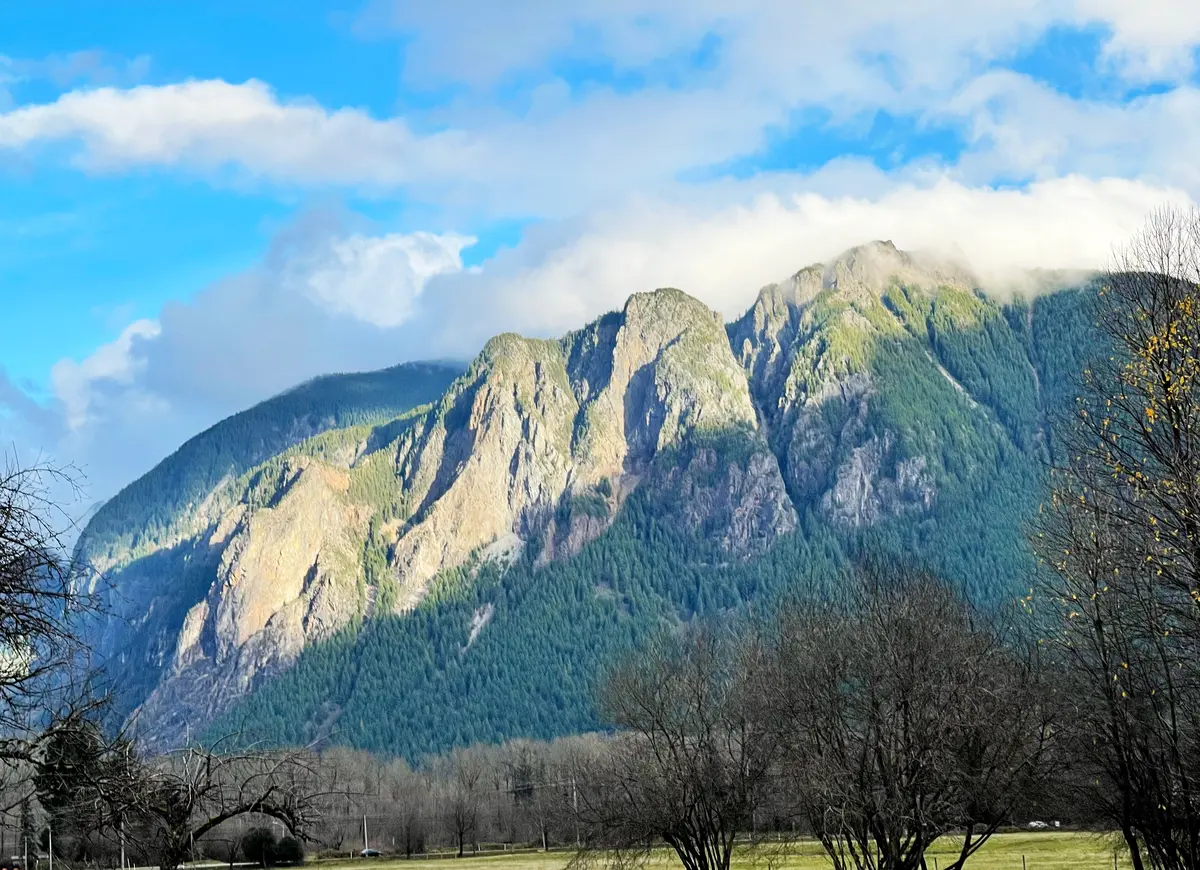
Si View earns its name — the sightlines to Mount Si from elevated lots here are among the best in the city, and the neighborhood's position on the northern slope gives it a sense of space that the valley floor can't match. Inventory is consistently tight because the geography limits how much can be built, and sellers know it. If you're touring a Si View home with a compromised view corridor — trees or a roofline blocking the mountain — that's worth factoring into your offer, because the view premium is real and the comps assume it. Prices run $1.2M–$1.8M.
Best for: View-driven buyers, nature-oriented households, and anyone willing to pay for a backyard that frames one of the most recognizable peaks in the Cascade Range.
5. North Bend Uplands & Reserve
This neighborhood delivers the closest thing to a nature-reserve lifestyle within the city limits — hiking trail access is literal steps away, and the reserve adjacency keeps one side of the neighborhood permanently undeveloped. The quiet here is genuine rather than marketed, but it comes with a longer drive to groceries and the daily errands that are walkable from downtown. For remote workers or anyone whose lifestyle doesn't depend on proximity to services, the trade-off lands clearly in the Uplands' favor. Prices range $1.1M–$1.6M.
Best for: Remote workers, outdoor-lifestyle households, and buyers who want nature access as a daily reality rather than a weekend drive.
6. Cascade Canyon
Cascade Canyon pushes into the foothills in a way that feels distinctly different from the valley neighborhoods — larger lots, heavier tree cover, and a mountain proximity that starts to feel rural even though you're still within city limits. The downside is distance: getting to I-90 from the canyon roads takes more time than the map suggests, especially in winter when morning ice on the approach roads is a seasonal fact of life newcomers reliably underestimate. Prices run $1.3M–$2.0M+, with the upper end going to acreage parcels with creek frontage.
Best for: Privacy seekers, buyers wanting larger forested lots, and households whose daily schedule can absorb a slightly longer approach to the freeway.
7. Tannerwood
Tannerwood is North Bend's most finished planned community — larger homes, consistent architectural standards, and a streetscape that reads upscale from the moment you turn in. It's the neighborhood that attracts buyers coming from Eastside planned communities who want the mountain setting but aren't ready to give up the neighborhood polish. The catch is that the planned-community aesthetic cuts both ways: you get the consistency, but you also get the HOA restrictions and the relative homogeneity that comes with it. Expect to pay $1.4M–$2.2M at the top of the North Bend residential market.
Best for: Luxury buyers, families upgrading from Eastside neighborhoods, and anyone who wants the highest-finish product North Bend has to offer.
8. Forest Service/Mt. Si
The valley-road properties in the eastern corridors beyond town operate by a different set of rules than every other North Bend neighborhood. Pricing here is driven by acreage, water rights, floodplain status, and the condition of well and septic systems — not bedroom count and recent comps. A café and bar along the valley road gives this stretch a social anchor it otherwise lacks. The price spread ($900K–$1.8M+) is wide because the properties are genuinely varied; a two-acre parcel with a creek view and a renovated farmhouse is a fundamentally different asset than a flat-lot fixer closer to the road.
Best for: Acreage buyers, buyers prioritizing land over finishes, and anyone with the patience and expertise to navigate rural property due diligence.
Common Mistakes Buyers Make in North Bend
Applying Suburban Pricing Logic to Valley-Road Properties
The most costly mistake in this market is using downtown-adjacent comps to value a property on the rural valley-road corridors east of town. Those homes price on acreage, floodplain designation, and well and septic condition — not finished square footage. An inspector who knows suburban construction but has never evaluated a well and septic system is not adequate due diligence for a Forest Service/Mt. Si area property.
Underestimating the I-90 Morning Window
The 35-minute Bellevue commute is real — during the express-lane window, which doesn't open at the same time every morning. Buyers who tour on weekends and assume the Saturday drive time represents the Monday commute are consistently surprised in month two. If your job has a fixed start time and no schedule flexibility, test the commute from your specific target neighborhood during a Tuesday or Wednesday rush before you're under contract.
Ignoring Floodplain Status on Snoqualmie River-Adjacent Lots
Several properties in Riverbend and along the valley roads sit within or adjacent to FEMA-mapped floodplain zones tied to the Snoqualmie River's forks. This affects insurability, what you can build or add, and resale. The listing may not surface this prominently — a King County GIS flood map check should happen before you get emotionally attached to a property, not after.
Waiting for Inventory to Improve
North Bend is hemmed in by federal forest land, the river, and Rattlesnake Mountain. There is no developable land pipeline that will meaningfully increase supply. Buyers who put off a decision expecting the market to soften and produce more choices are generally waiting for something the geography won't allow. At roughly 1.85 months of supply, this is structurally a seller's market — not a cycle that will correct itself when rates drop.
Best Areas to Rent in North Bend
| Area | Ideal For | Typical Rent Range | Trade-off |
|---|---|---|---|
| Downtown North Bend | Walkable First-Time Renter | $2,200–$3,000/mo | Older housing stock; limited apartment supply means high competition for anything that lists |
| Tanner | Families Quiet | $2,800–$3,800/mo | Single-family rentals dominate; turnover is slow and listings disappear quickly |
| Riverbend | Commuters Families | $3,000–$4,200/mo | Exit 32 access is the draw; I-90 noise on north-facing lots is the downside |
| North Bend Uplands & Reserve | Nature Quiet | $2,600–$3,600/mo | Trail access is unmatched; longer drive to groceries and daily errands |
| Forest Service/Mt. Si | Privacy Long-Term Renter | $2,400–$4,500/mo | Wide range reflects wide property variation; rural infrastructure (well, septic) requires tenant awareness |
North Bend's rental market is thin by design — most housing stock is owner-occupied single-family, and the city's constrained geography limits what can be added. If you're renting while deciding whether to buy, moving quickly on any listing that fits your needs is the correct strategy; waiting a week to decide is usually waiting to lose it.

Local Expert Takeaway: North Bend's geography is its defining constraint as a real estate market. You're not choosing between neighborhoods the way you would in a flat suburb with an expanding inventory pipeline — you're choosing between the city's two pricing systems (conventional-suburban vs. rural-valley) and the lifestyle implications that come with each. A buyer who wants on-foot access and the Twin Peaks diner on a Saturday morning looks at downtown and Tanner. A buyer who wants acreage and a creek in the backyard looks at the Forest Service/Mt. Si corridor and accepts the due-diligence complexity that comes with it. Tannerwood and Si View serve the buyers in between who want the mountain setting without giving up finished quality. Know which system you're buying into before you fall in love with a listing.
Quick Takeaways & FAQs
✅ North Bend's location between Mount Si, Rattlesnake Mountain, and the Snoqualmie River forks creates permanently constrained inventory — giving sellers a structural advantage that is unlikely to change regardless of rate movements.
⚠️ Valley-road properties in the Forest Service/Mt. Si area price on acreage, floodplain status, and well/septic condition rather than standard comparables — applying suburban pricing logic here is the most common and costly mistake buyers make.
📍 Twede's Cafe on W North Bend Way, open since 1941 and the filming location for Twin Peaks' Double R Diner, is the social anchor of downtown — where locals reliably end up on weekend mornings.
What is the most affordable neighborhood in North Bend, WA?
Which North Bend neighborhood has the best views of Mount Si?
Is Riverbend a good neighborhood for families in North Bend?
How does renting in North Bend work — is there much available?
What's the difference between buying in North Bend versus neighboring Snoqualmie?
Moving to Washington?
Tell us what you need help with and we'll connect you with local resources.
