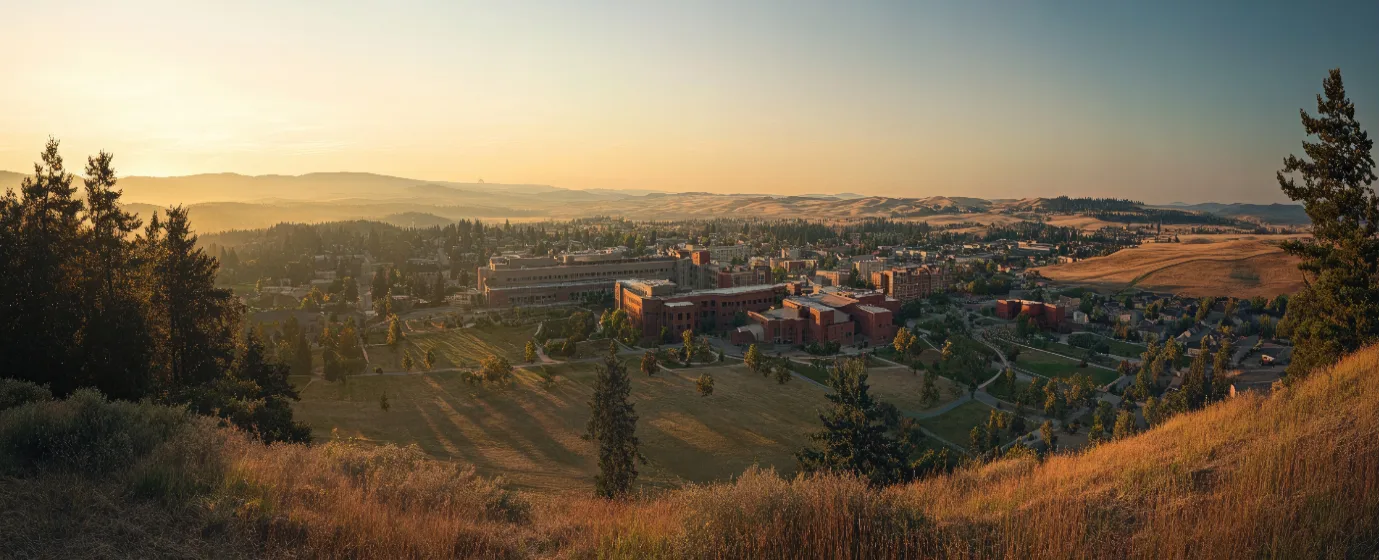
What Is Living in Pullman, Washington Like?
Maybe you got a faculty offer from Washington State University. Maybe Schweitzer Engineering Laboratories recruited you, and you're wondering what life looks like in a small city on the eastern edge of Washington's wheat country. Or maybe you've priced out of Spokane and someone mentioned the Palouse. Whatever brought you here, the first thing to understand about Pullman is that the university doesn't just employ people — it defines the city's rhythm, its demographics, its housing supply, and what happens downtown on a Tuesday night versus a WSU home game Saturday. Getting clear on whether that energy works for you is the most important question this guide can help you answer.
Washington State University's Pullman campus enrolled 16,248 students in fall 2025, making it the largest WSU campus and the engine behind nearly every major economic force in the city. WSU is an R1 research university with an endowment of $800.3 million, which means stable institutional employment and a constant pipeline of researchers, staff, and visiting faculty looking for housing. Schweitzer Engineering Laboratories — known locally as SEL — is the other anchor, headquartering its global power-systems engineering operation right here and employing hundreds of high-wage engineers who buy homes and stay for decades. Whitman County government and the city's own healthcare infrastructure round out the employer base. The Pullman School District holds an A rating, according to Niche, drawing families who want strong public schools in a town that doesn't feel like a sprawling suburb.
Housing in Pullman is meaningfully more accessible than in most Pacific Northwest cities — the Zillow Home Value Index (ZHVI) placed the typical home value at $429,145 in June 2026, which sits well below comparable university towns in the region. Washington's lack of a state income tax helps purchasing power further. The catch is that roughly 69% of households rent rather than own, the student population skews the median age to 23.2 years, and the nearest big-box retail corridor is roughly 75–84 miles away in Spokane. Daily life here is walkable near campus, quieter in the residential neighborhoods rolling across the Palouse hills, and genuinely tied to the seasons — harvest in August changes the smell of the entire region, and WSU game days in September and October transform the city completely.
Whether you're considering a move or just researching the area, the sections below break down Pullman's job market and who the city suits best, what daily life feels like on the ground, the current housing market, how getting around actually works, and where locals spend their weekends.
Pullman at a Glance
Looking to buy in Pullman? Estimate your payment.
Enter your numbers to see an estimated monthly mortgage payment.
Estimate only. Excludes HOA fees and mortgage insurance. The interest rate above is a starting point, not a quoted rate — replace it with your own to see real numbers. Insurance is a flat placeholder, not a Pullman quote.
Why Are People Moving to Pullman?
The clearest path to Pullman is a job offer from WSU or SEL. Nearly every long-term owner-occupant in this city has one of those two anchors — or works in the support ecosystem that surrounds them.
The Institutional Backbone
Washington State University is not simply a large employer. It is the reason Pullman has a symphony, a performing arts series, a farmers market, and an international research community in a city of 33,000. Faculty and staff positions span everything from agricultural science to computer engineering, and the university's R1 classification means ongoing research grants that stabilize employment even in lean budget years.
Schweitzer Engineering Laboratories fills a different economic role. SEL engineers tend to buy homes, put down roots, and stay for decades — they're the owner-occupant layer that anchors neighborhoods like Military Hill and the Grand Avenue corridor. The company's headquarters presence means Pullman punches well above its population in professional-wage jobs for an eastern Washington city of its size.
Who Actually Moves Here
| Buyer / Renter Type | What Draws Them | Best Fit |
|---|---|---|
| WSU faculty & staff | Stable employment, campus proximity, strong public schools | School Walkable |
| SEL engineers | High-wage private-sector jobs, ownership culture, quiet neighborhoods | Families Quiet |
| Graduate students & postdocs | Proximity to campus, lower rents than comparable university cities | Renter Transit |
| Remote workers (WSU-adjacent) | No state income tax, Palouse landscape, lower cost vs. western WA | Value Nature |
| First-time buyers from western WA | Entry-level prices, strong schools, tight-knit community feel | First-Time School |
| Families relocating from larger metros | Safety, school quality, slower pace, outdoor access on the Palouse | Families Quiet |
The profile that struggles here is someone who needs a diverse private-sector job market — Pullman's economy is essentially dual-anchored, and if neither WSU nor SEL fits your field, options thin out quickly.
The Trade-Off You Should Name Before You Sign
Isolation is real. Spokane is roughly 75–90 minutes northwest on US-195, and that's where you go for an IKEA run, a specialist medical appointment, or a major concert. Newcomers who underestimate the distance from large-city amenities often recalibrate their expectations around month four — not unhappily, but noticeably.
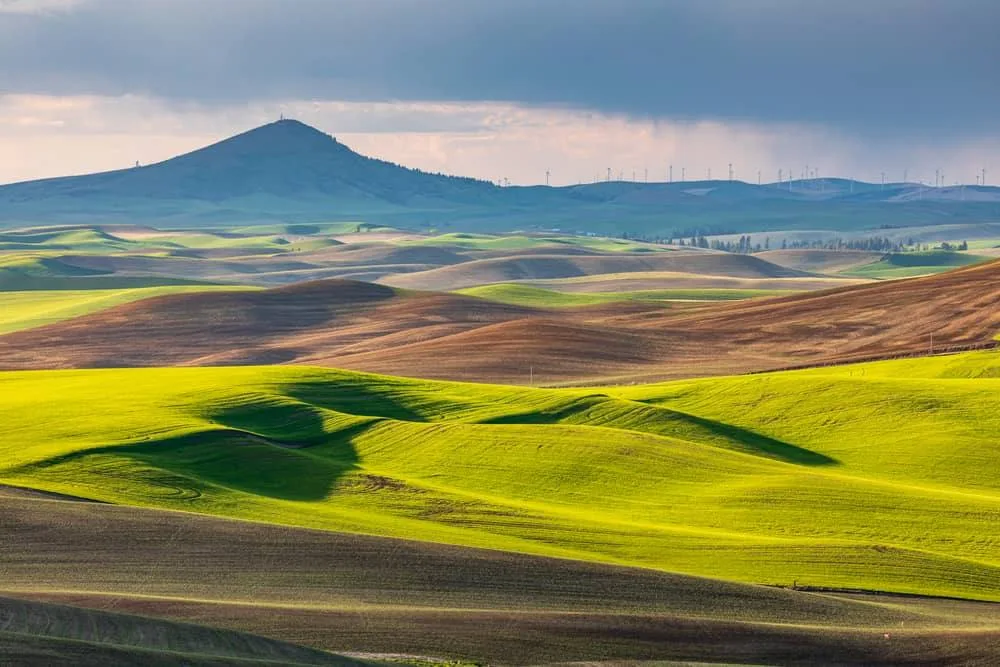
What you get in exchange is a community where neighbors actually know each other, and where the Palouse landscape — rolling wheat hills that turn gold in August — is legitimately one of the more beautiful agricultural landscapes in the American West.
What Daily Life Feels Like in Pullman
Living here is nothing like passing through. The hills are steeper than they look on a map, the campus is woven directly into the city's street grid, and the rhythm of the academic calendar shapes everything from restaurant hours to parking availability.
The Geographic Reality
Pullman is built across a series of ridges and draws — College Hill sits above campus to the north, Sunnyside stretches along the southern slopes, and the Grand Avenue corridor runs north-south as the city's commercial spine. The terrain means a five-minute drive can feel longer when you're climbing. Newcomers often discover their preferred grocery route within a week and stick to it for years.
The neighborhood character guide goes deep on the geographic divides, but the short version is this: proximity to campus and elevation above the valley floor are the two variables that shape daily convenience most.
The Seasonal Quirks Nobody Mentions
Pullman gets genuine winter. Snow arrives in November and can linger through February, and the Palouse hills that look lovely in October require actual preparation — all-wheel drive is not a luxury here, it's the standard local expectation. Harvest season in late July through August brings combines onto US-195 and a particular golden-dust smell that everyone who has lived here can instantly recall.
WSU home game days between September and November are a category of their own. When the Cougars host at Martin Stadium, the city's population effectively doubles for a weekend. Traffic on Stadium Way and the approaches to campus backs up hours before kickoff. Longtime residents either embrace this as the city's great communal event or schedule their weekend errands around it — there is no middle position.
Where Locals Actually Gather
Reaney Park along the South Fork of the Palouse River is the neighborhood gathering point for the south side of town — weekend soccer games, the farmers market, and summer concerts all land here. On the north end, the area around campus draws the after-work crowd to the handful of independent restaurants and bars along Grand Avenue.
South Fork Public House on South Grand Avenue is a reliable local spot for a weeknight beer and a burger without the undergraduate energy of the bars closer to campus. Cougar Country Drive-In on North Grand Avenue has been feeding Pullman since 1973 — under new ownership since April 2025, but the hand-cut fries and the milkshakes remain a genuine local institution.
The Honest Downside of Daily Life
Grocery options are limited compared to what most transplants from larger cities expect. There is no Trader Joe's or Whole Foods — the nearest is in Spokane, and groceries in Pullman cost more than the national average as a result. Families adapt by building Spokane supply runs into their monthly calendar. It becomes normal, but it takes adjustment.
The Pullman Housing Market Right Now
Pullman's market moves differently than most Pacific Northwest cities because its demand base is institutional rather than speculative. WSU hires, SEL grows, and new buyers appear — but the city's geography and limited new construction keep supply tight in a predictable, steady way.
Where Prices Stand
The Zillow Home Value Index placed Pullman's typical home value at $429,145 in June 2026, up 3.0% over the prior year — a measured pace that reflects the market's stability rather than the dramatic swings seen in western Washington metros. For full context on how that sits relative to regional costs and what it means for your budget, see the cost of living breakdown.
New construction remains limited by Pullman's hilly terrain, existing zoning, and the simple fact that flat, developable land close to campus doesn't exist in quantity. That constraint supports prices in well-located neighborhoods even when broader market conditions soften.
Market Pace and Inventory
As of early 2026, homes in Pullman were selling in roughly 52 days and closing at approximately 98.44% of list price — a balanced market, not a frenzied one. Inventory sits at around 3.3 months of supply, which means buyers have real choices without the pressure-cooker dynamic common in Boise or Seattle.
The renter-to-owner split is striking: approximately 69% of Pullman households rent, driven by the student population. That means the owner-occupied market is a relatively small, stable slice — homes in family-oriented neighborhoods don't turn over frequently, and when a well-maintained house near a good elementary school comes available, it moves.
What to Know Before You Search
The student-rental market and the owner-occupant market operate almost in parallel here. A property that looks like a bargain near campus may have been a student rental for a decade and carry the maintenance history that implies. Buyers who focus their search on the residential neighborhoods away from the core student corridors — areas like Military Hill, Sunnyside, and the Grand Avenue corridor further south — tend to find cleaner inventory with more stable long-term neighbors.
For a closer look at neighborhood character and what each part of town feels like on the ground, the best neighborhoods guide covers the full picture.
Pullman Neighborhoods
Pullman has several distinct areas — each with its own character and appeal. Here’s a breakdown to help you narrow down where to focus your home search.
🏡 College Hill
College Hill sits on the ridge directly above the WSU campus, making it the most walkable neighborhood in the city for faculty and staff — but the same proximity means student rentals are woven into the residential fabric, and the energy on game days and end-of-semester nights reflects it. Families who want to walk to campus without living in a student corridor typically look at the quieter streets toward the northern edge of the hill.
🏠 Downtown Pullman
Downtown is the compact commercial core where Main Street meets Grand Avenue, lined with independent restaurants, coffee shops, and the Pullman Depot Heritage Center — a walkable hub that draws students and permanent residents in equal measure during the academic year. Owner-occupied housing options are limited here, making it primarily a renters' and visitors' zone rather than a family neighborhood.
🌳 Sunnyside
Sunnyside spreads across the southern slopes below the main ridge, offering more single-family residential character than the areas immediately adjacent to campus, with a mix of longtime owners and newer families. The terrain is gentler on this side, and the neighborhood's distance from the student-heavy corridors gives it a noticeably quieter weekday feel.
🏘 Military Hill
Military Hill is where many SEL engineers and mid-career faculty put down permanent roots — it has the feel of a genuine owner-occupant neighborhood, with well-maintained homes and neighbors who tend to stay for years rather than semesters. The elevated position gives some streets long views over the surrounding Palouse hills.
🏔 Pioneer Hill
Pioneer Hill occupies one of the city's secondary ridgelines and tends to attract buyers looking for a quieter residential experience without sacrificing reasonable access to campus and downtown. The housing stock skews toward mid-century single-family homes that offer more square footage per dollar than comparable properties closer to the university core.
🌆 Grand Avenue area
The Grand Avenue corridor runs north-south as the city's main commercial spine, and the residential streets branching off it — particularly south of downtown — offer a practical mix of walkable access to restaurants and services alongside owner-occupied housing that isn't dominated by student rentals. South Fork Public House anchors the southern end of this stretch as a community gathering point for permanent residents.
Pros & Cons of Living in Pullman
The Pros
- Strong
- top-ranked school district
- stable university- and tech-anchored economy
- low crime relative to national averages
- affordable cost of living compared to Western Washington
The Cons
- Housing and rental market heavily shaped by WSU student demand
- limited big-city amenities and long drive to a major metro
- harsh winters with heavy snowfall
Getting Around & Commuting in Pullman
Pullman is a driving city with a genuinely useful transit system layered on top — a combination that works well for WSU employees and students but requires a car for most permanent residents.
Within the City
Pullman Transit operates free bus service for WSU students, staff, and faculty (Cougar Card required), and the fall 2025 service restructuring added Express Routes across campus and a redesigned Airport Route with 15-minute connections to Pullman-Moscow Regional Airport on weekdays. For non-affiliated residents, the bus network covers the main corridors but doesn't reach every neighborhood — a car remains necessary for the hills south of campus and for grocery runs.
Walkability near campus is genuine. The area around College Hill, downtown, and the main Grand Avenue stretch can be navigated on foot for daily errands. The terrain is the variable — Pullman's hills mean a ten-minute flat walk can become a twenty-minute climb, and winter ice on those same slopes keeps even committed pedestrians in their cars from December through February.
Getting to Spokane and Beyond
The honest commute reality: Pullman is not a bedroom community. Spokane is roughly 90 minutes northwest on US-195 — a beautiful drive through the Palouse in summer, a demanding one in a January snowstorm. People who work in Pullman and live in Pullman are the norm; people who commute to Spokane daily are uncommon, and the ones who try it typically stop within a year.
For air travel, Pullman-Moscow Regional Airport (PUW) serves the immediate area with connections to Seattle-Tacoma International Airport, making west-side travel manageable without driving to Spokane International. The Starline Collection seasonal charter shuttle provides an additional Spokane airport connection for those who need it.
The Moscow Factor
Moscow, Idaho sits just 8 miles east of Pullman on US-270 — a ten-minute drive that many Pullman residents make several times a week. The two cities share a regional identity, a transit corridor, and the Pullman-Moscow Regional Airport. Some families split their shopping and dining across both cities without thinking much about the state line.
| Destination | Typical Drive Time | Notes |
|---|---|---|
| Moscow, ID | ~10 minutes | US-270; shared regional identity, University of Idaho campus |
| Colfax, WA | ~25 minutes | US-195 north; Whitman County seat |
| Pullman-Moscow Regional Airport (PUW) | ~10 minutes | Serves Seattle; redesigned Airport Route connects weekdays |
| Spokane, WA | ~90 minutes | US-195; nearest major retail, medical specialists, concerts |
| Spokane International Airport (GEG) | ~100 minutes | Starline charter shuttle option seasonally available |
| Palouse, WA | ~20 minutes | WA-272 north; small town, significant farmland scenery |
US-195 is the city's lifeline to the rest of Washington, and its condition in winter — particularly the stretch south of Colfax — is something every new resident should experience before they have to drive it in January.
Schools in Pullman
Families relocating to Pullman have public, private, and higher-education options nearby. Here’s a quick overview.
🎓 School District
Pullman School District serves K–12 students across Pullman and the surrounding area. Rated A (source: Niche.com).
🏆 Graduation Rate
The 4-year high-school graduation rate here is approximately 93.8%.
📚 Higher Education
Washington’s public universities — the University of Washington, Washington State University, and Western Washington University — offer four-year degrees statewide, with a network of 34 community and technical colleges (SBCTC) providing two-year and workforce programs.
🌐 Online Learning
University of Washington Continuum College and Washington State University Online offer fully accredited online degrees for remote learners across the state.
Safety in Pullman
A quick look at how Pullman compares on the numbers that matter most when weighing a neighborhood or a move.
🛡 Violent Crime
Approximately 2 per 1,000 residents.
🔒 Property Crime
Approximately 10 per 1,000 residents.
Compared to the FBI’s most recent national data (2024), Pullman’s violent crime is below the national average (about 3.6 per 1,000), and property crime is below the national average (about 17.6 per 1,000).
Against Washington as a whole, Pullman’s violent crime is roughly two-thirds of the state average, and property crime is roughly a third of the state average (Bureau of Justice Statistics, Crime Known to Law Enforcement, 2024 (tables 2 and 3)).
Crime rates can vary a lot within a single city, so the citywide numbers above are only a starting point. Some neighborhoods in Pullman run well below these averages, while others run higher — the kind of block-by-block detail that matters most when you’re actually choosing where to live. The full guide below breaks it down neighborhood by neighborhood.
Working in Pullman
Pullman’s largest employers span several industries — here are some of the anchors of the local job market.
🎓 Washington State University
Higher education
💼 Schweitzer Engineering Laboratories
Power systems protection/engineering
🏥 Pullman Regional Hospital
Healthcare
🏛 Whitman County government
Public sector
Parks & Recreation in Pullman
Some of the outdoor spaces that shape everyday life in Pullman.
🌱 Reaney Park
Pullman residents don’t have to go far for green space — spots like Reaney Park are part of everyday life here, whether that’s a morning walk, a weekend hike, or just somewhere to unwind outside. The full guide below covers more of what Pullman has to offer for parks and outdoor recreation.

Retiring in Pullman
Pullman draws retirees for its balance of amenities, outdoor access, and cost. Here’s what to weigh.
🌤 Climate
Pullman gets four distinct seasons — warm, dry summers that are genuinely pleasant, a colorful fall, and real winters with snow that arrives in November and can persist into February. Spring comes gradually, with the Palouse wheat fields greening up through March and April. All-wheel drive and a tolerance for occasional road closures on US-195 are practical requirements.
🍴 Lifestyle
Retirees in Pullman benefit disproportionately from WSU's cultural programming — performing arts at Beasley, lectures, and museum events fill the calendar year-round at prices well below major metro venues. Reaney Park and the Paradise Creek trail system offer accessible outdoor activity close to the residential neighborhoods. The city is quiet enough to feel restful without feeling isolated.
🏚 55+ Communities
Pullman's senior housing options are limited compared to larger cities — the city's population skews young, and purpose-built active-adult communities are sparse. Most retirees here buy in established owner-occupant neighborhoods like Military Hill or the Grand Avenue corridor and integrate into the broader community rather than a separate adult enclave. The nearby regional healthcare infrastructure supports aging in place reasonably well.
✈ Getting Around
A personal vehicle is essential for retirees in Pullman — the terrain and the distance from major services make car-free living impractical outside the immediate campus area. Pullman-Moscow Regional Airport is about 10 minutes away and serves Seattle, making west-side medical trips manageable. Spokane's full range of specialists and services is roughly 90 minutes northwest via US-195.
🏛 Washington Taxes for Retirees — What to Know
- No state income tax — Washington does not tax personal income, so Social Security, pensions, and 401(k)/IRA withdrawals are all untaxed at the state level. There is no state return to file and no retirement exclusion to claim — the rate is simply zero.
- Military and public pensions — Because there is no income tax, military retirement pay and public-employee pensions are untaxed at the state level along with everything else.
- Sales tax is the tradeoff — The state sales tax is 6.5%, and local add-ons bring the combined rate in Pullman to 8.2% (Washington State Department of Revenue, Q3 2026 local sales & use tax rate table, July 2026). Groceries and prescription drugs are exempt.
- Property taxes, with senior relief — The effective property tax rate is roughly 0.9%. Homeowners 61+ (or unable to work due to disability, or a qualifying disabled veteran) who own and occupy their home may qualify for a reduction. Income limits are set against each county’s median household income, so the threshold differs by county — check with your county assessor. A separate deferral program is available for those who don’t qualify for the exemption.
- Capital gains tax — but not on retirement income — Washington taxes 7% on long-term capital gains above a $278,000 standard deduction for 2025, rising to 9.9% on gains above $1,000,000. Retirement accounts and real estate sales are both exempt. It therefore does not reach ordinary retirement income or the sale of a home.
- Estate tax — the one to plan for — Unlike most no-income-tax states, Washington has its own estate tax. For deaths on or after July 1, 2026, the exemption is $3 million with graduated rates topping out at 20%. Retirement accounts count toward the taxable estate, so long-time homeowners with sizable balances can cross the line without expecting to.
- No inheritance tax — Washington has no inheritance tax, and no gift tax.
- WA Cares payroll premium — Working Washingtonians pay 0.58% of gross wages into the WA Cares Fund, the state long-term care program, with no income cap. It applies to W-2 wages, so retirees who have stopped working do not pay it — but anyone relocating while still employed will see it. The private-insurance opt-out closed at the end of 2022 and is not available to new applicants; the remaining exemptions are narrow (living outside Washington, military spouses, certain visa holders, and veterans with a 70%+ service-connected rating).
- The Oregon border effect — Oregon has no sales tax, so Washington residents near the river — Vancouver, Camas, Washougal, Longview — often cross over for large purchases. Washington use tax technically applies to goods brought back for use in-state, though it is rarely enforced on ordinary personal purchases.
Tax laws change frequently and individual situations vary. This is general information, not tax advice — always consult a qualified Washington tax professional or CPA for personalized retirement tax planning.
Weekends & Local Favorites in Pullman
The mistake newcomers make is assuming a small city means a quiet social life. Pullman runs on WSU's calendar, and when the university is active, the city has more going on per capita than most places its size.
Campus as a Community Amenity
The WSU campus — red brick and basalt set into the rolling Palouse topography — is open to the public in a way that makes it a genuine weekend destination. The Jordan Schnitzer Museum of Art, the WSU Planetarium, and Beasley Performing Arts Coliseum host events that draw the broader community, not just students and faculty. Residents who lean into the campus calendar find themselves at chamber music performances, international film screenings, and visiting lecturer events that would cost significantly more in a larger city.
WSU home game days at Martin Stadium are an experience that defines fall in Pullman. The Cougars' games are legitimately well-attended regional events, and the pregame energy along the campus perimeter is the city's closest equivalent to a street festival.
The Outdoors Right Outside Town
The Palouse is underrated as a hiking and cycling landscape. Kamiak Butte County Park, about 15 miles north of downtown, offers a forested ridge hike with panoramic views over the wheat fields that surprises most newcomers used to thinking of eastern Washington as flat and featureless. The Paradise Creek trail system runs through the city itself and connects several of the residential neighborhoods to Reaney Park.
For more developed outdoor recreation, the full picture is on the parks and recreation page — but the short version is that trail access within the city is better than its size would suggest.
Food, Drink, and the Downtown Scene
Downtown Pullman's restaurant and bar scene orbits the intersection of Main Street and Grand Avenue, with the density of options increasing during the academic year and thinning noticeably in July when students leave. Independent coffee shops near campus fill up with laptops and study groups from mid-morning through early evening. South Fork Public House on South Grand Avenue draws a more mixed crowd — faculty, SEL engineers, and off-campus residents looking for something quieter than the Main Street bars on a Thursday night.
Cougar Country Drive-In on North Grand Avenue is the local counter-service institution. Order at the window, eat in your car, and understand that you are participating in a Pullman ritual that predates most of the buildings around it.
What People Don't Expect
After six months here, most transplants say the same thing: the community is smaller and more interconnected than they anticipated. You will run into your kid's teacher at the farmers market, your department chair at Reaney Park, and your neighbor at the same Sunday afternoon WSU event. For people who moved from anonymous metros, this takes adjustment — it's not suffocating, but it is genuinely different from living in a city where you can disappear into a crowd.
Top Things Locals Say About Pullman
The best intel about a city comes from the people who actually live there. Here’s what Pullman residents say when newcomers ask the questions everyone’s thinking.
“I knew the campus would be part of the deal, but I didn't expect how much the academic calendar would run my entire life — when school's in session, the city feels alive in a way that's hard to describe, and then July hits and it's a completely different place. I actually love both versions now, but that first summer genuinely caught me off guard.”
— Recent Pullman home buyer
“What's the most surprising thing about living in Pullman?”
How interconnected everything is. You think you're moving to a small city, but you don't realize how small until you run into your neighbor, your kid's principal, and your department colleague all at Reaney Park on the same Saturday afternoon. Coming from a larger metro, it takes a few months to stop feeling surprised by it and start enjoying it.
“What do locals love most about Pullman?”
The access to WSU's campus events is genuinely underrated. Theater productions, visiting researchers, the farmers market, Cougar athletics — it all happens here, and a lot of it is either free or inexpensive. People also develop a real attachment to the Palouse landscape once the seasons start cycling. The August harvest light on the wheat hills is something you start planning your weekends around.
“What should newcomers to Pullman know?”
Get all-wheel drive before your first winter, not after. The hills in neighborhoods like College Hill and Sunnyside are manageable in fall but genuinely treacherous when they ice over in January. Also, build a monthly Spokane trip into your routine from the start — trying to source everything locally works for staples but breaks down quickly for specialty items and medical specialists.
“Can you live in Pullman without a car?”
If you work on the WSU campus and live within a mile or two of it, you can get surprisingly far without a car — Pullman Transit's free service (Cougar Card required) covers the main corridors, and the redesigned Airport Route now connects to Pullman-Moscow Regional Airport on weekdays. But for residents further from campus, or for anyone who needs to shop beyond what's available in town, a car is a practical necessity. The terrain alone makes cycling a committed athletic choice rather than a casual commuting option.
Cities Near Pullman
Other communities near Pullman worth a look — each with its own character and price point.
| City | Distance | Best For | Vibe | Median Rent | Median Buy |
|---|---|---|---|---|---|
| Moscow, ID | 8 mi | University of Idaho families & walkable downtown | College-town energy, arts-forward, close-knit | $1,300 | $485,490 |
| Colfax, WA | 17 mi | County-seat stability & rural acreage buyers | Quiet, agricultural, deep-rooted community | $950 | $285,000 |
| Palouse, WA | 15 mi | Small-town buyers seeking rural character | Tiny, scenic, historic grain-town feel | $900 | $275,000 |
More Helpful Guides for Pullman
Going deeper on Pullman? Our blog series covers everything from first-time buying to retiring here — explore the guides below.
Local Expert Takeaway: Pullman rewards people who move here for a specific reason — a WSU position, an SEL role, or a deliberate choice to raise a family in a tight-knit, university-anchored community. The housing price sits well below comparable university towns, the school district is consistently well-regarded, and the Palouse landscape is genuinely beautiful. The honest catch is the distance from Spokane, the limited retail, and the way WSU game weekends and summer breaks make the city feel like two different places in the same year. Visit in October when the Cougars are home and the wheat fields have turned, then visit again in July when the students are gone — if you like both versions, you'll do well here.
Quick Takeaways & FAQs
✅ WSU and Schweitzer Engineering Laboratories together create one of the most stable dual-anchor employment bases of any small city in eastern Washington — job security here is real.
⚠️ The nearest major retail corridor is roughly 75–84 miles away in Spokane, and monthly supply runs become a standard part of life for most Pullman households.
📍 Cougar Country Drive-In on North Grand Avenue has been feeding Pullman since 1973 — it's the kind of local institution that tells you everything about how the city sees itself.
Is Pullman, WA a good place to live if you don't work at WSU?
What is the typical home price in Pullman, WA?
How far is Pullman from Spokane, and is the commute realistic?
How are the schools in Pullman, WA?
What is it like to live in Pullman during football season?
Helpful Links for Moving to Pullman
Moving to Washington?
Tell us what you need help with and we'll connect you with local resources.
