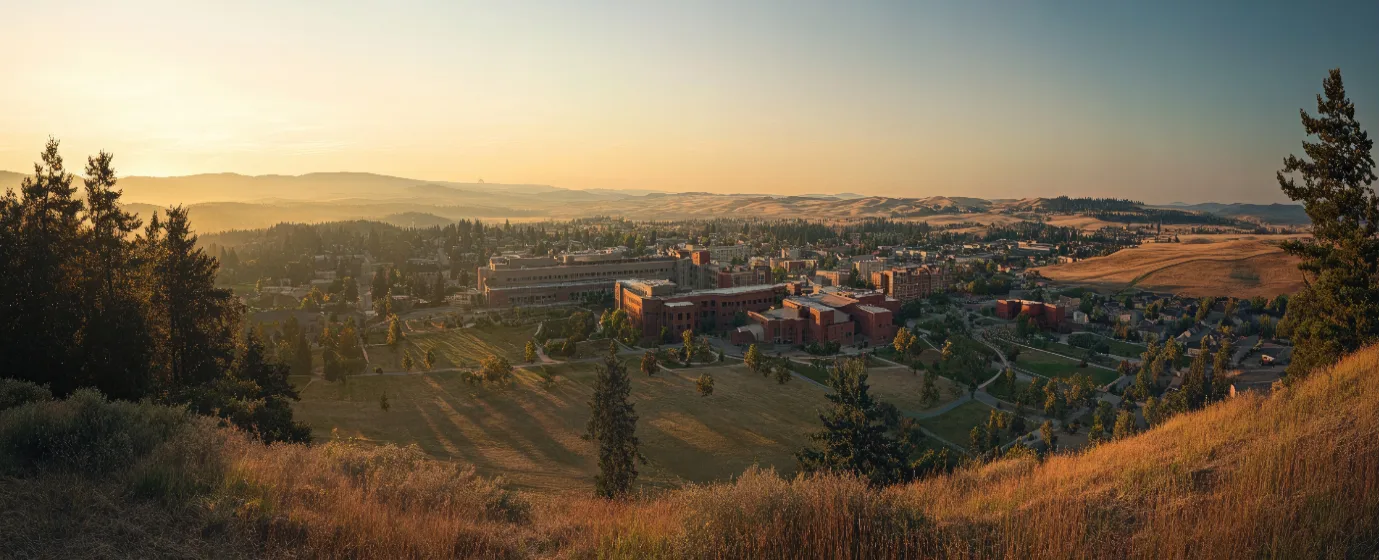
People who move to Pullman expecting a quiet college town surrounded by flat farmland usually discover something else by their first summer: a city that takes its outdoor spaces seriously. The rolling Palouse hills aren't just a backdrop — they're the physical architecture that shapes where trails go, where neighborhoods spill into green space, and why a 7-mile paved corridor connecting Pullman to Moscow, Idaho has become one of the most-used pieces of infrastructure in Whitman County. Washington State University's campus sits at the heart of it all, and the energy of 20,000 students on bikes and on foot has pushed the city to invest in connected, year-round recreation in ways that larger cities sometimes don't bother with.
The city's parks system is modest in acreage but deliberately designed. Reaney Park, the oldest public green space in Pullman, punches well above its 1.64 acres — it holds the city's only outdoor swimming pools, an updated playground, and serves as the anchor for the two biggest community events of the warm-weather calendar. Kruegel Park, at 25 acres on the northwest side, handles the organized-sport load: baseball, soccer, and six tennis courts. Sunnyside Park adds a pond and walking trails for the neighborhood crowd. What ties it together is the trail network — 16 miles of city paths that funnel directly onto the Bill Chipman Palouse Trail and from there into a cross-border non-motorized corridor reaching all the way to Moscow's Latah Trail.
Day-to-day outdoor life here costs almost nothing extra. The Chipman Trail is free, lit by Palouse daylight most of the year, and busy enough that you'll recognize the same faces on your morning run within a few weeks. The seasonal rhythm is real, though — Pullman winters arrive early and linger, and the window between October and April narrows outdoor recreation to the hardiest trail users. Locals who thrive here generally build a year-round relationship with the trails rather than waiting for perfect weather. Those who don't tend to feel the winter more acutely than they expected.
Whether you're considering a move or just researching what daily life looks like here, the sections below cover Pullman's signature parks, the Bill Chipman Palouse Trail in detail, seasonal recreation and signature events, and the day-trip options beyond city limits.
Pullman's Signature Parks: What's Here and What Each Does
Three parks carry most of the recreational weight in Pullman, and each fills a different role. Understanding that split matters before you start comparing neighborhoods — a house near Kruegel Park gives you organized-sport fields; one near Sunnyside gives you a pond and walking space; proximity to Reaney Park puts you closest to the city's only outdoor swimming.
| Park | Size / Location | Key Features | Best For |
|---|---|---|---|
| Reaney Park | 1.64 acres, 690 NE Reaney Way | Lap pool, dive pool, splash pad, playground (updated 2023), horseshoe pit, gazebo with BBQ grills | Families Walkable |
| Kruegel Park | 25 acres, 500 NW Greyhound Way | Baseball fields, soccer field, 6 tennis courts, trail system, playground | Families Nature |
| Sunnyside Park | One of the city's larger parks, Sunnyside area | Walking trails, pond, open sports space, reservable shelter | Quiet Families |
| Disc Golf Course | Integrated into city park system | 18-hole par-3 layout, designed alongside other park uses | Nature |
| Skate Park / Wetland Zone | Near Reaney Park, direct trail link | Skate park, wetland area, river benches, walking path, restrooms | Walkable |
| Chipman Trail Trailhead Zone | Pullman trailhead, NE corridor | ADA restrooms, bike racks, Birdhouse Depot interpretive station, emergency phone | Nature Transit |
What Makes Reaney Park Worth Knowing
Reaney Park is small enough to cross in three minutes but dense with amenities that larger parks spread across ten times the acreage. The outdoor lap pool and dive pool are the only public outdoor swimming options in the city — the kind of facility that becomes a genuine summertime hub rather than an afterthought. Two Washington State champion Ohio Buckeye trees planted in 1915 still anchor one corner of the park, which gives you some sense of how long this green space has been part of the neighborhood's rhythm.
The playground equipment was updated in 2023, which matters practically for parents with young children. The gazebo shelter can be reserved with BBQ grills and power access — useful for the kind of low-key outdoor gathering that a college town with a lot of transient residents actually needs.
Kruegel's Role as the Sports Anchor
At 25 acres on Greyhound Way, Kruegel Park absorbs organized recreation that Reaney simply can't. Six tennis courts is a meaningful number for a city of 33,000 — you can reliably find an open court on a weekday evening without the wait that plagues busier metros. For youth league activity and organized programs, see the schools page for the full picture.
The Bill Chipman Palouse Trail: Pullman's Most-Used Recreation Asset
The Chipman Trail is the kind of infrastructure that quietly shapes how people think about a place. It's a 7-mile paved rail-trail running east from Pullman to Moscow, Idaho, built on the former Union Pacific Columbia & Palouse Railroad right-of-way. The surface is smooth enough for road bikes and inline skates, the grade is gentle enough for strollers, and the wildlife corridor along Paradise Creek makes it interesting enough to keep coming back to.
The Route Itself
The trail follows Paradise Creek for most of its length, crossing it twelve times on original railroad bridges — wooden-decked spans that are old enough to feel historical but maintained well enough to use daily. The elevation gain from Pullman to the eastern terminus near Moscow's Perimeter Road is roughly 180 feet, which means the return trip west is a gentle, sustained downhill. Most people don't notice it going east; they definitely notice it coming home.
At the Pullman trailhead, the Birdhouse Depot interpretive station introduces you to the bird life along Paradise Creek before you've walked 100 meters. The creek corridor supports hawks, falcons, and magpies, plus more than 100 species overall. Birders who move here from more manicured suburban environments are often surprised by how much wildlife a mid-size university town can sustain.
What the Trail Connects
The Chipman Trail doesn't end at Moscow. It links eastward to the 11-mile Latah Trail, creating a continuous non-motorized corridor across the state line. Combined with Pullman's internal 16-mile city trail network — which feeds directly onto the Chipman — you can move through a significant portion of two cities on foot or by bike without touching a road. That's the kind of connectivity that regional trail systems spend decades trying to build.
Stewardship of the trail is shared among Pullman, Moscow, Washington State University, the University of Idaho, and Whitman County — which explains why it's maintained as consistently as it is. Two rest areas with ADA-accessible restrooms, three emergency phones, and benches at regular intervals make it genuinely usable for people who aren't hardcore athletes. It's a federal Millennium Trail designation and part of the Rails-to-Trails program.
The Honest Winter Reality
Open dawn to dusk year-round sounds great until January. Pullman winters bring sustained cold and occasional snow and ice on the trail surface. The city does not heat-treat the Chipman the way it salts roads, so icy stretches between December and March are common. Locals who use the trail year-round either switch to trail-running shoes with traction or accept that some mornings the route is a walk rather than a run. Nobody who moved here from a warmer climate describes this as a dealbreaker — but several say they underestimated it in year one.
Seasonal Recreation and Signature Events
Pullman's outdoor calendar has a hard peak and a long shoulder. Summer is short, genuinely warm, and packed. The window from late May through September is when the pools open, the trail fills with cyclists, and Reaney Park becomes a legitimate community gathering point two or three evenings a week. What you do with October through April determines whether you feel like you've moved somewhere lively or somewhere isolated.
Summer: Pools, Concerts, and the Lentil Festival
The Reaney Park Concert Series runs on summer evenings as a free outdoor event — the kind of thing that works because Reaney is small enough that you're never far from the stage regardless of where you plant your blanket. It's a local institution for families and for the student population that stays through summer session.
The National Lentil Festival has been held at Reaney Park every August since 1989. The 2026 edition was scheduled for August 22. At first glance it sounds like a quirky regional fair; in practice it draws visitors from across the Palouse and beyond, with a grand parade, the Legendary Lentil Cook-Off, a 5K run/walk, live music, a beer garden, and a children's area. The hook is real: the Palouse region produces roughly 18% of all U.S. lentils, so the agricultural connection isn't marketing — it's the actual local industry being celebrated. If you move here before August, don't miss it.
Fall: WSU Game Days and Trail Season's Peak
College football Saturdays at Martin Stadium transform the city in a way that's hard to fully explain until you've lived through one. The Chipman Trail empties as tailgates fill parking lots, then refills postgame with people walking off the afternoon. For trail runners and cyclists, September and early October before the weather turns is the best time of year — Palouse harvest light, minimal rain, and the rolling hills visible from the trail's high points are exceptional.
Winter and Spring: What Locals Actually Do
The disc golf course integrated into the park system gets quiet use through winter from players who don't mind layers. Indoor recreation at WSU's recreational facilities is open to community members in some capacities — worth investigating when you arrive. South Fork Public House on S Grand Ave draws a crowd on cold evenings when outdoor options are limited, and it's close enough to the trail system that it functions as a natural end point for a fall or early-spring walk. The skate park near Reaney stays technically accessible year-round, though usage drops sharply by November.
Spring arrives more slowly than newcomers expect. By the time the pools open for the season, most residents have already built back into outdoor routines — the shoulder season between February and April rewards people who are willing to layer up and use the Chipman Trail in light rain rather than wait for a perfect day that may not come until May.
Looking to buy in Pullman? Estimate your payment.
Enter your numbers to see an estimated monthly mortgage payment.
Estimate only. Excludes HOA fees and mortgage insurance. The interest rate above is a starting point, not a quoted rate — replace it with your own to see real numbers. Insurance is a flat placeholder, not a Pullman quote.
Day Trips and Recreation Beyond City Limits
Pullman's geographic position in the southeastern corner of Washington puts some genuinely dramatic landscape within range for a day trip, even if the city itself sits on agricultural plateau rather than mountain terrain. The recreation picture changes substantially once you're willing to drive 90 minutes or more.
Palouse Falls State Park
About 90 minutes northwest of Pullman, Palouse Falls drops 198 feet into a basalt canyon — one of the more geologically dramatic landscapes in the Pacific Northwest, and Washington's official state waterfall. The park has viewpoints, picnic areas, and trails along the canyon rim. It's not a long hike, but the scale of the canyon tends to surprise first-time visitors who drove through flat wheat fields to get there. Early spring, when the snowmelt is at its peak, produces the heaviest flow and the most dramatic views.
Moscow and the Latah Trail Connection
Moscow, Idaho sits 8 miles east on US-95, connected to Pullman by the Chipman Trail itself. The University of Idaho campus anchors Moscow's own trail system, and the combined Chipman-Latah corridor gives you access to 18-plus miles of non-motorized path across the state line. Moscow's farmers market runs on Saturdays through the growing season and supplements what Pullman's own downtown offers — many Pullman residents treat it as a regular weekend errand rather than a day trip.
The Broader Palouse and Whitman County
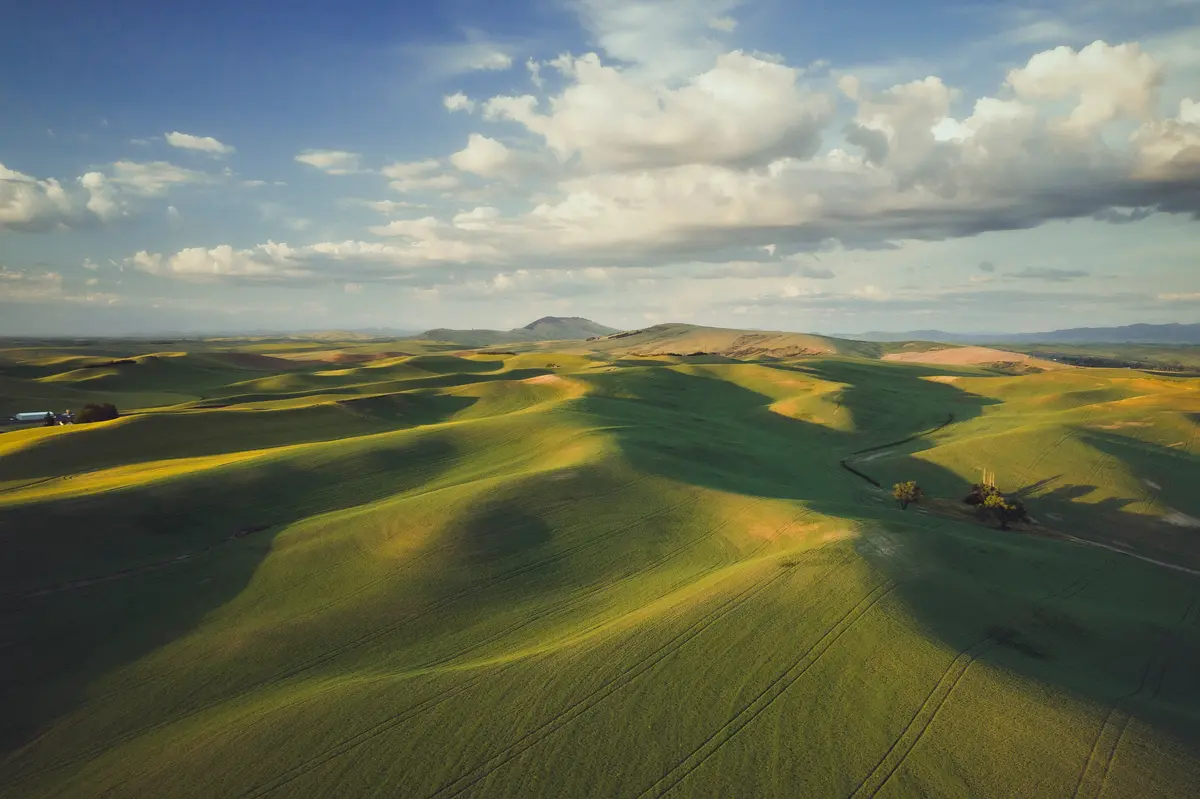
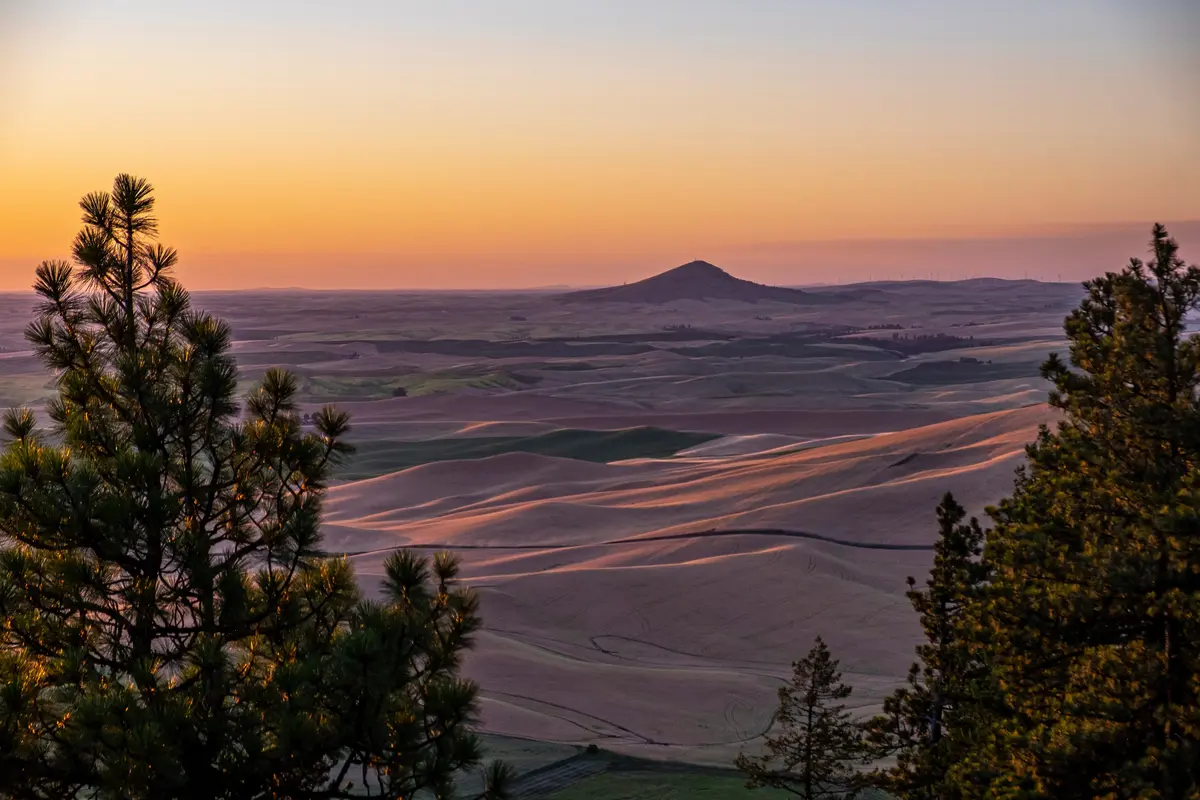
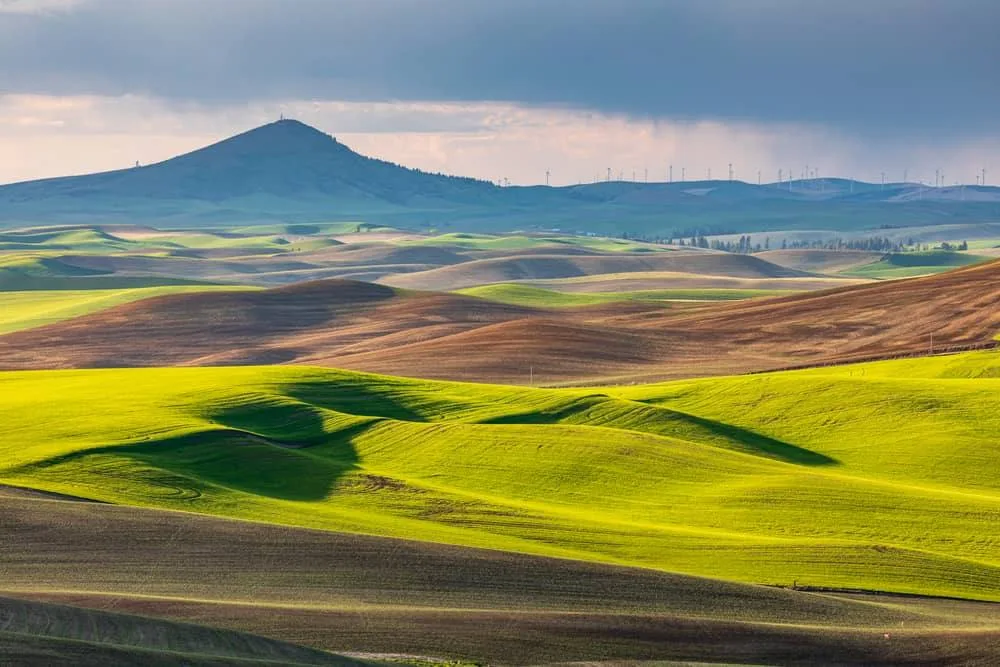
The Palouse region's rolling hills look most extraordinary in late May and June, when the winter wheat turns a particular shade of green before harvest. Several county roads northwest of Pullman — the Steptoe Butte area in particular — are popular drives and hikes with views across miles of uninterrupted Palouse farmland. Steptoe Butte State Park, about 45 minutes north, sits at 3,612 feet and offers a paved road to the summit with panoramic views that are a genuine surprise given how flat much of the surrounding terrain appears from road level.
Spokane, roughly 90 minutes north on US-195, gives access to Riverside State Park, the Centennial Trail along the Spokane River, and the full range of urban amenities that Pullman's size can't support. Most Pullman residents make the Spokane run for a specific purpose — a concert, a Costco trip, a medical appointment — rather than for outdoor recreation specifically. But knowing that the access exists changes how isolated Pullman feels in practice.
What the Parks Master Plan Signals
The city completed a new Parks, Recreation, and Open Space Master Plan in 2025, following a full community needs assessment conducted in 2024–2025. A document like that gets written when a city has identified gaps it intends to close over the following decade. For anyone buying in Pullman with a longer time horizon, that plan is worth reading — it signals where investment is prioritized and which parks are likely to see upgrades before the next plan cycle begins.
Local Expert Takeaway: The Bill Chipman Palouse Trail is Pullman's single best recreational asset, and it's free. Locals who use it regularly — commuting to Moscow, running the Paradise Creek corridor, or just walking the first mile to the Birdhouse Depot interpretive station — build a relationship with the city that people who only use it occasionally don't. Pair that trail habit with a summer evening at the Reaney Park Concert Series and you'll understand what daily outdoor life in Pullman actually looks like, which is more connected and more communal than the agricultural setting suggests from the outside.
Quick Takeaways & FAQs
✅ The Bill Chipman Palouse Trail connects Pullman to Moscow, Idaho across 7 miles of paved, year-round trail built on original railroad bridges over Paradise Creek.
⚠️ Pullman winters arrive early and linger — the Chipman Trail can be icy from December through March, and newcomers consistently underestimate this in their first year.
📍 The National Lentil Festival has filled Reaney Park every August since 1989, drawing on the Palouse region's role producing roughly 18% of all U.S. lentils — it's a genuine local institution, not a tourist invention.
Is the Bill Chipman Palouse Trail open in winter?
Does Pullman have outdoor swimming pools?
How long is the Bill Chipman Palouse Trail and where does it start?
When is the National Lentil Festival in Pullman?
What outdoor recreation is within a day trip of Pullman?
Moving to Washington?
Tell us what you need help with and we'll connect you with local resources.
