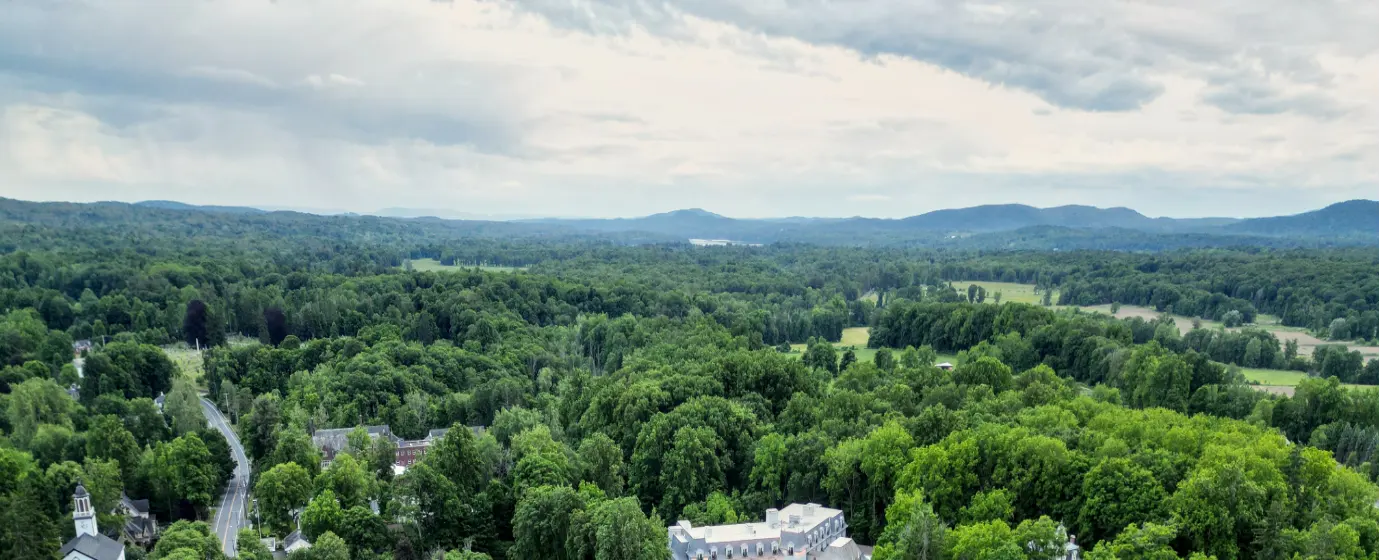
What Is Living in Centralia, Washington Like?
Maybe you've been priced out of the Olympia market and someone mentioned Centralia — or you spotted it on a map and noticed it sits almost exactly halfway between Portland and Seattle on I-5. Either way, the first thing that surprises most newcomers isn't the price of a house or the drive to work. It's that the city has a real story — founded by George Washington, a freed Black man, making it one of the few cities in the entire Pacific Northwest with a Black founder. Banners of Washington now line the main street, and August 15 is officially Centralia's Founder's Day. That history gives the downtown a sense of identity that purely suburban I-5 corridor towns rarely manage.
The economy here runs on a genuine mix of sectors. Centralia College — a public community college enrolling roughly 4,840 students — is both a major employer and a cultural anchor, keeping a younger population cycling through the city. Sierra Pacific Industries represents the wood products manufacturing tradition that has defined Lewis County for generations. The Port of Centralia's three industrial campuses alone employ approximately 3,145 workers and generate over $1 billion in combined economic output. A major regional health system, the Centralia School District, and Lewis County government round out the employment base — meaning the city isn't dependent on a single industry in the way that some small Washington towns are.
The cost of living index sat at 91.4 in late 2024, below the national average of 100, and housing remains noticeably more affordable than in the Puget Sound corridor to the north. The Zillow Home Value Index put the typical home at $399,303 as of May 2026 — a figure that would be a footnote in conversations about Olympia or Tacoma pricing. Fort Borst Park, the Seminary Hill Natural Area, and easy access to outdoor recreation across Lewis County define what weekends look like for most residents. The trade-off is that Centralia is still a small city of around 18,800 people, and the amenity set reflects that.
Whether you're seriously considering a move or just starting your research, the sections below break down Centralia's neighborhoods, housing market, commute patterns, employer landscape, and what daily life actually feels like once you've unpacked.
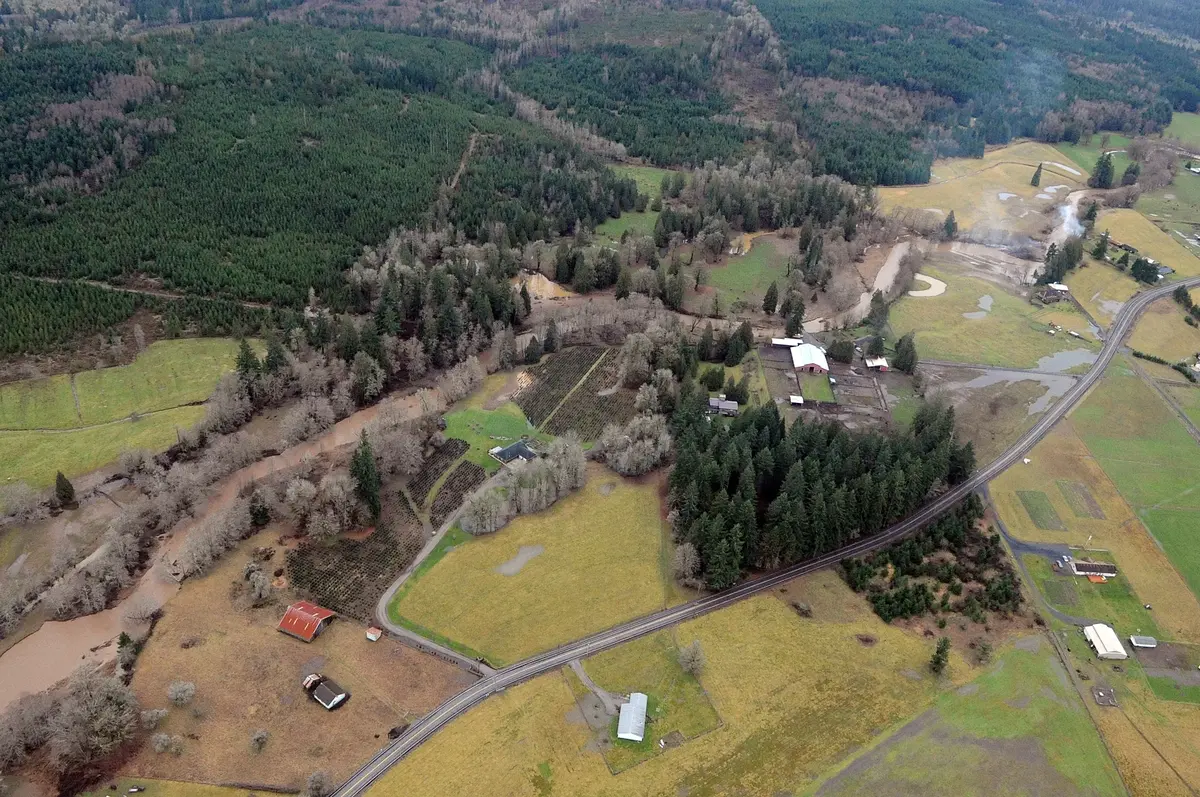
Centralia at a Glance
Looking to buy in Centralia? Estimate your payment.
Enter your numbers to see an estimated monthly mortgage payment.
Estimate only. Excludes HOA fees and mortgage insurance. The interest rate above is a starting point, not a quoted rate — replace it with your own to see real numbers. Insurance is a flat placeholder, not a Centralia quote.
Why Are People Moving to Centralia?
The simplest answer: Centralia is one of the last genuinely affordable cities with Interstate 5 access in western Washington. When prices in Olympia, Tacoma, and the greater Seattle metro push buyers further south, Centralia is often where the math finally starts to work.
The I-5 Position
Sitting roughly midway between Portland and Seattle — about 1.5 hours from each — Centralia functions as a regional hub for Lewis County in a way that its population alone wouldn't suggest. The city draws workers, students, and shoppers from a wide radius. That regional pull also means the job base is broader than a town of 18,800 typically supports.
Who Actually Moves Here
| Buyer Type | What Draws Them | Best Fit |
|---|---|---|
| Olympia commuters priced out of the capital area | Housing cost roughly 25–30 miles south of Olympia | Commuter |
| First-time buyers | Entry-level homes still exist; one of the few markets in western WA where they do | First-Time |
| Remote workers from Portland or Seattle | Half the price, same I-5 spine, Amtrak access | Transit Value |
| Families with school-age children | Affordable single-family homes, Fort Borst Park, small-town pace | Families |
| Centralia College employees and staff | Walk or short drive to campus; tight-knit college-adjacent neighborhood feel | School |
| Nature-first buyers | Seminary Hill Natural Area, quick access to the Cascade Range foothills and the coast | Nature |
The honest caveat: people who move here expecting a scaled-down Olympia sometimes leave disappointed. Centralia is its own thing — a working industrial and college town with a historic downtown, not a satellite suburb.
The Founder's Day Factor
Centralia's identity has been visibly reinvested in recent years. The formal designation of Founder's Day in 2023 and the Downtown Centralia Association's active programming signal a city that is actively trying to make its core worth coming to. That matters for property owners: downtowns with genuine programming hold value differently than those without it.
What Daily Life Feels Like in Centralia
Day-to-day life in Centralia moves at a pace that takes some adjustment if you're coming from a larger metro. The city is compact enough that most errands happen within a few miles of wherever you live — but it is not a walkable city in the urban sense of that word.
The Downtown Reality
The Historic Downtown Centralia District is listed on the National Register of Historic Places, and the brick-facade streetscape along Tower Avenue is genuinely distinctive. The McMenamins Olympic Club Hotel and Theater — a McMenamins property in a restored 1908 building — anchors the entertainment side of downtown and draws visitors from across Lewis County. The Centralia Factory Outlets bring regional retail traffic, which keeps the commercial corridor more active than many comparable small-city downtowns.
The College Town Layer
Centralia College's roughly 4,840 enrolled students give the city an energy that arrives each fall and shapes local culture in small but real ways. The college is woven into the commercial fabric of downtown — not just sitting on the edge of it — with programming and events that keep the connection between campus and city active throughout the academic year.
What Surprises People at Six Months
Newcomers from west of the Cascades tend to underestimate the rain. Centralia sits in a valley that collects weather in a way that even nearby Chehalis sometimes avoids — long stretches of grey from October through March are the norm, not the exception. The locals who thrive here have made peace with it; the ones who leave usually haven't.
The other thing that takes adjustment: the poverty rate here is approximately 19.6%, and the median household income of $56,219 means the community economic spread is wide. The neighborhood you buy in shapes your daily experience considerably — more than the city-wide numbers suggest. See the full neighborhood breakdown for the geographic detail that matters.
Where Locals Actually Gather
Fort Borst Park — the city's largest green space, with athletic fields, a playground, and a historic farmhouse — functions as the de facto community living room on any dry weekend. The park along the Skookumchuck River draws walkers and families throughout the year. Downtown on summer evenings, the area around the McMenamins Olympic Club on N Tower Ave tends to pull a mixed-age crowd that reflects how varied the city's demographics actually are.
The Centralia Housing Market Right Now
Centralia's housing market has cooled measurably from its 2021–2022 peak, and buyers in 2026 are operating in a notably different environment than those who purchased during the frenzy. That shift cuts both ways.
Where Prices Stand
The Zillow Home Value Index for Centralia stood at $399,303 as of May 2026, up 1.7% over the prior year. That figure puts Centralia noticeably below median values in the Olympia and Tacoma markets, which is precisely what draws price-conscious buyers south on I-5. Some areas of the city command meaningfully more than that city-wide figure; others come in well below it — see the neighborhoods page for the geographic breakdown.
Market Pace
The pace tells an interesting story right now. The Zillow data suggests homes are going to pending in around 19 days, but on-the-ground reporting from early 2026 shows many homes sitting in the 62–81 day range — a reflection of rising inventory across Washington state that has pushed availability close to pre-pandemic levels. This is a market where a well-priced home in the right condition moves; an overpriced listing sits.
What Buyers Should Know
Centralia's effective property tax rate of approximately 0.71% is among the more moderate rates in western Washington, and Washington's lack of a state income tax is a factor that draws buyers from Oregon and other income-tax states. For full cost-of-living context — including rent ranges and utility costs — the cost of living page goes deeper.
This is genuinely one of the few markets in western Washington where first-time buyers can find entry-level single-family homes without going to rural areas with no services. That access point is real — but it comes with the school district and community economics context described elsewhere in this guide.
Centralia Neighborhoods
Centralia has several distinct areas — each with its own character and appeal. Here’s a breakdown to help you narrow down where to focus your home search.
🏡 Downtown/Historic District
The brick-facade blocks of Tower Avenue put walkable errands, the McMenamins Olympic Club, and the downtown Amtrak depot within a short stroll — making this the most on-foot-accessible part of the city. It suits buyers who want to be part of Centralia's active downtown revival and don't need a large yard.
🏠 Edison
Edison is an established residential area with a mix of older single-family homes that appeals to buyers looking for neighborhood character without downtown density. It sits close enough to the core to keep errands easy while offering a quieter residential pace.
🌳 Salzer Creek
The Salzer Creek area takes its name from the creek corridor that runs through it, giving parts of the neighborhood a greener, more natural feel than the city's more central blocks. Families who want space and a sense of distance from commercial corridors tend to look here first.
🏘 Seminary Hill
Seminary Hill sits adjacent to the Seminary Hill Natural Area, which means trail access is measured in walking minutes rather than a drive. The elevated position gives some properties views down into the valley, and the proximity to preserved forest sets it apart from Centralia's flatter neighborhoods.
🏔 Logan
Logan is a mid-city residential neighborhood with a practical, working-family character — closer to local schools and everyday services than the more edge-of-city areas. It tends to attract buyers who want straightforward single-family homes without a premium for views or trail proximity.
🌆 Cooks Hill
Cooks Hill sits on the elevated northeast edge of the city, where the terrain opens up and lot sizes tend to be more generous than in the flatter central neighborhoods. It attracts buyers who want a bit of separation from the urban core while staying within a short drive of downtown and I-5.
Pros & Cons of Living in Centralia
The Pros
- Home prices well below Seattle/Portland metro averages
- walkable historic downtown with antique shops and dining
- central I-5 location roughly equidistant to Seattle and Portland
- strong outdoor access via the Chehalis and Skookumchuck rivers
The Cons
- Property crime rate runs well above national and state averages
- local school district ranks in the bottom half of Washington districts academically
- limited public transit means a car is essentially required
Getting Around & Commuting in Centralia
Centralia's location on I-5 is its single greatest geographic asset — and I-5 is also the source of its most consistent daily friction. Understanding how those two facts interact is the starting point for anyone evaluating whether life here works for their commute.
The Olympia Corridor
The most common long-distance commute from Centralia runs north to Olympia — approximately 25 miles and 27 minutes under normal conditions. In practice, the stretch of I-5 between Centralia and the Olympia interchange backs up reliably during the state capital's morning and afternoon peak periods. Buyers who plan to commute to Olympia five days a week should drive that route during rush hour before making an offer — not on a Saturday afternoon.
SR 507: The Alternate Spine
State Route 507 runs parallel to I-5 and serves as the primary surface street through Centralia's core, connecting the city to Chehalis to the south and to the communities north toward Tenino. The city's 2025 Transportation Master Plan identifies both I-5 and SR 507 as the primary state highway facilities within the city. For local errands, SR 507 is often faster than I-5 — but it concentrates traffic at predictable choke points through downtown.
Transit: More Than You'd Expect
Twin Transit (Lewis County Transit) runs six fixed routes with hourly service, connecting Centralia neighborhoods to shopping centers, Centralia College, and medical facilities across the city and into neighboring Chehalis. For a city of 18,800, that is a functional transit network — not a replacement for a car, but a real option for car-free days or for workers whose job sites sit along the routes.
The Amtrak Factor
Amtrak Cascades service stops at Centralia's downtown depot — and this is more useful than most people expect before they move here. Rail connections run north to Olympia, Tacoma, and Seattle, and south to Portland and Eugene. For remote workers who need to be in Seattle two or three days a week, the train from Centralia is a genuinely comfortable and time-competitive option, particularly compared to driving I-5 through Tacoma during peak hours.
| Destination | Mode | Typical Travel Time | Notes |
|---|---|---|---|
| Olympia | Car (I-5) | ~27 min off-peak | Can stretch 45–60 min in AM/PM rush |
| Chehalis | Car or Twin Transit | ~10 min / ~20 min transit | Effectively one metro area |
| Tacoma | Car (I-5) | ~60 min off-peak | Heavily variable; I-5 north of Olympia congests |
| Seattle | Car (I-5) | ~1.5 hrs off-peak | Plan for 2–2.5 hrs in peak traffic |
| Seattle | Amtrak Cascades | ~2–2.5 hrs | Downtown depot; no driving stress |
| Portland | Car (I-5) | ~1.5 hrs off-peak | South commute is generally lighter than north |
| Portland | Amtrak Cascades | ~1.5–2 hrs | Useful for periodic trips; not daily commute frequency |
The city's 2025 Transportation Master Plan flags gaps in pedestrian and bicycle infrastructure — so if you're planning to walk or bike for daily errands, your experience will depend heavily on which neighborhood you land in.
Schools in Centralia
Families relocating to Centralia have public, private, and higher-education options nearby. Here’s a quick overview.
🎓 School District
Centralia School District serves K–12 students across Centralia and the surrounding area. Rated C- (source: Niche.com).
🏆 Graduation Rate
The 4-year high-school graduation rate here is approximately 73.5%.
📚 Higher Education
Washington’s public universities — the University of Washington, Washington State University, and Western Washington University — offer four-year degrees statewide, with a network of 34 community and technical colleges (SBCTC) providing two-year and workforce programs.
🌐 Online Learning
University of Washington Continuum College and Washington State University Online offer fully accredited online degrees for remote learners across the state.
Safety in Centralia
A quick look at how Centralia compares on the numbers that matter most when weighing a neighborhood or a move.
🛡 Violent Crime
Approximately 3 per 1,000 residents.
🔒 Property Crime
Approximately 27 per 1,000 residents.
Compared to the FBI’s most recent national data (2024), Centralia’s violent crime is below the national average (about 3.6 per 1,000), and property crime is above the national average (about 17.6 per 1,000).
Against Washington as a whole, Centralia’s violent crime is about the same as the state average, and property crime is about the same as the state average (Bureau of Justice Statistics, Crime Known to Law Enforcement, 2024 (tables 2 and 3)).
Crime rates can vary a lot within a single city, so the citywide numbers above are only a starting point. Some neighborhoods in Centralia run well below these averages, while others run higher — the kind of block-by-block detail that matters most when you’re actually choosing where to live. The full guide below breaks it down neighborhood by neighborhood.
Working in Centralia
Centralia’s largest employers span several industries — here are some of the anchors of the local job market.
🎓 Centralia College
Education
🏥 Providence Centralia Hospital
Healthcare
🏭 Sierra Pacific Industries
Wood products manufacturing
🎓 Centralia School District
Education
🏛 Lewis County government
Public administration
Parks & Recreation in Centralia
Some of the outdoor spaces that shape everyday life in Centralia.
🌱 Fort Borst Park
Centralia residents don’t have to go far for green space — spots like Fort Borst Park are part of everyday life here, whether that’s a morning walk, a weekend hike, or just somewhere to unwind outside. The full guide below covers more of what Centralia has to offer for parks and outdoor recreation.
Retiring in Centralia
Centralia draws retirees for its balance of amenities, outdoor access, and cost. Here’s what to weigh.
🌤 Climate
Centralia sits in a Lewis County valley that collects Pacific moisture reliably — expect long grey stretches from October through March, with mild temperatures that rarely dip below freezing or climb above the mid-80s. Summers are genuinely pleasant, with dry spells that make Fort Borst Park and the surrounding trails the center of outdoor life. Retirees who've made peace with overcast winters find the mild shoulder seasons — particularly September and May — among the most livable months in the entire I-5 corridor.
🍴 Lifestyle
The Historic Downtown District and the McMenamins Olympic Club Hotel and Theater provide a cultural anchor that gives the city more weekend texture than its size would suggest. A handful of independent restaurants and cafés along Tower Avenue handle the daily dining needs, and the Centralia Factory Outlets cover most regional retail. For retirees interested in the arts, Centralia College regularly presents performing arts and gallery events that are open to the community.
🏚 55+ Communities
The Centralia and Chehalis area — often treated as a single market by buyers — has senior living options ranging from independent living communities to assisted care facilities. The lower cost of living relative to the greater Puget Sound region makes fixed-income budgets stretch further here than in most of western Washington. For the full picture on senior housing and healthcare access, the retiring page goes into detail.
✈ Getting Around
Most retirees in Centralia drive — the city is compact, parking is straightforward, and I-5 access puts medical specialists in Olympia or Tacoma within 30–60 minutes. Twin Transit's hourly bus routes provide a car-free option for routine errands and medical office visits within the city. The Amtrak Cascades stop at the downtown depot is a genuine bonus for retirees who want to visit family in Seattle or Portland without highway driving.
🏛 Washington Taxes for Retirees — What to Know
- No state income tax — Washington does not tax personal income, so Social Security, pensions, and 401(k)/IRA withdrawals are all untaxed at the state level. There is no state return to file and no retirement exclusion to claim — the rate is simply zero.
- Military and public pensions — Because there is no income tax, military retirement pay and public-employee pensions are untaxed at the state level along with everything else.
- Sales tax is the tradeoff — The state sales tax is 6.5%, and local add-ons bring the combined rate in Centralia to 8.4% (Washington State Department of Revenue, Q3 2026 local sales & use tax rate table, July 2026). Groceries and prescription drugs are exempt.
- Property taxes, with senior relief — The effective property tax rate is roughly 0.9%. Homeowners 61+ (or unable to work due to disability, or a qualifying disabled veteran) who own and occupy their home may qualify for a reduction. Income limits are set against each county’s median household income, so the threshold differs by county — check with your county assessor. A separate deferral program is available for those who don’t qualify for the exemption.
- Capital gains tax — but not on retirement income — Washington taxes 7% on long-term capital gains above a $278,000 standard deduction for 2025, rising to 9.9% on gains above $1,000,000. Retirement accounts and real estate sales are both exempt. It therefore does not reach ordinary retirement income or the sale of a home.
- Estate tax — the one to plan for — Unlike most no-income-tax states, Washington has its own estate tax. For deaths on or after July 1, 2026, the exemption is $3 million with graduated rates topping out at 20%. Retirement accounts count toward the taxable estate, so long-time homeowners with sizable balances can cross the line without expecting to.
- No inheritance tax — Washington has no inheritance tax, and no gift tax.
- WA Cares payroll premium — Working Washingtonians pay 0.58% of gross wages into the WA Cares Fund, the state long-term care program, with no income cap. It applies to W-2 wages, so retirees who have stopped working do not pay it — but anyone relocating while still employed will see it. The private-insurance opt-out closed at the end of 2022 and is not available to new applicants; the remaining exemptions are narrow (living outside Washington, military spouses, certain visa holders, and veterans with a 70%+ service-connected rating).
- The Oregon border effect — Oregon has no sales tax, so Washington residents near the river — Vancouver, Camas, Washougal, Longview — often cross over for large purchases. Washington use tax technically applies to goods brought back for use in-state, though it is rarely enforced on ordinary personal purchases.
Tax laws change frequently and individual situations vary. This is general information, not tax advice — always consult a qualified Washington tax professional or CPA for personalized retirement tax planning.
Weekends & Local Favorites in Centralia
Centralia is not a destination city in the way that Olympia or Bellingham function for visitors — but for residents, weekends here have a rhythm that most newcomers come to appreciate within the first year.
Fort Borst Park
This is where Centralia residents spend their weekend mornings. The park sits along the Skookumchuck River and includes athletic fields, a covered picnic shelter, a playground, and a historic farmhouse on the grounds. On any dry Saturday between April and October, the park fills with families, dog walkers doing river-trail loops, and enough people that you'll run into neighbors you didn't know you had.
Seminary Hill Natural Area
A short drive from most of the city, Seminary Hill is a forested preserve with trails that put you above the valley floor quickly enough to feel like you've left town entirely. It's a meaningful outdoor resource for a city this size — the kind of place that doesn't show up in relocation brochures but becomes part of weekly life within months of moving here.
The Downtown Experience
The Historic Downtown Centralia District rewards an afternoon of wandering in a way that newer commercial strips don't. The McMenamins Olympic Club Hotel and Theater hosts films, live events, and the kind of casual dining that makes the downtown feel occupied rather than merely preserved. A handful of independent restaurants and cafés along Tower Avenue round out the options for a weeknight out without a drive to Olympia.
Day Trips That Define Life Here
Part of what makes Centralia work for outdoor-oriented residents is what's reachable from it. The drive toward the Cascade Range foothills via SR 7 puts genuine wilderness within 90 minutes. The Washington coast is roughly the same distance heading west. Residents who find the city itself quiet on weekends often just leave for the day and come back — a pattern I-5 access enables in a way that more remote small cities can't match.
For parks, trails, and outdoor recreation detail, the parks and recreation page covers the full picture of what's available on foot and within a short drive.
Top Things Locals Say About Centralia
The best intel about a city comes from the people who actually live there. Here’s what Centralia residents say when newcomers ask the questions everyone’s thinking.
“I knew the commute to Olympia would be a factor, but I didn't realize how much the Amtrak stop would change my week. I drive in maybe twice a month now and take the train the other days — it completely changed the math on whether Centralia made sense for us.”
— Recent Centralia home buyer
“What's the most surprising thing about living in Centralia?”
The downtown is more alive than it looks from the freeway. Most people blow through on I-5 and assume there's nothing there — then they walk Tower Avenue on a Friday evening and realize there's actual history in those buildings and real businesses making a go of it. The McMenamins Olympic Club alone surprises a lot of people who were expecting a sleepy main street.
“What do locals love most about Centralia?”
The position. You're genuinely in the middle of everything — an hour and a half from Seattle, an hour and a half from Portland, an hour from the coast, a couple of hours from the Cascade Range foothills. Fort Borst Park handles your weekend mornings, and Seminary Hill handles your need to feel like you're in nature without a two-hour drive. For what you pay to live here, the access to everything around you is hard to beat.
“What should newcomers to Centralia know?”
Drive your commute route at actual commute time before you buy. The I-5 north toward Olympia can be deceptively smooth on a Saturday when you're house-hunting and genuinely slow on a Tuesday at 7:45 a.m. Also: the weather from October through March is relentlessly grey. People from outside the Pacific Northwest tend to underestimate how persistent that feels — not just rainy, but low-ceiling and dark for weeks at a stretch. SR 507 through town is usually faster for local errands than getting on and off the freeway.
“Can you live in Centralia without a car?”
Technically yes, more easily than in most Lewis County towns. Twin Transit's six routes cover the main corridors with hourly service, and the Amtrak stop in the historic district gives you regional rail access without a car. In practice, most residents drive — the city's pedestrian and bicycle infrastructure has documented gaps, and a lot of the residential areas require a car for routine grocery runs. If you work on a Twin Transit route or on the Centralia College campus, car-free life is genuinely manageable. For everyone else, a car remains close to essential.
Cities Near Centralia
Other communities near Centralia worth a look — each with its own character and price point.
| City | Distance | Best For | Vibe | Median Rent | Median Buy |
|---|---|---|---|---|---|
| Chehalis | 6 mi | Families seeking new construction | Quieter, slightly more suburban feel | $1,300 | $464,000 |
| Napavine | 10 mi | Rural-edge buyers wanting space | Small, tight-knit, agricultural edge | $1,250 | $380,000 |
| Winlock | 15 mi | Budget buyers, rural lifestyle | Very small, slow-paced, rural | $1,150 | $360,058 |
More Helpful Guides for Centralia
Going deeper on Centralia? Our blog series covers everything from first-time buying to retiring here — explore the guides below.
Local Expert Takeaway: Centralia is best understood as a working city with a genuine identity — not a suburb that grew too big, and not a rural outpost trying to become a town. The Amtrak depot, Centralia College, the Port of Centralia's industrial base, and the George Washington founder story give it more texture than its size suggests. Buyers who do well here are usually those who've driven the I-5 commute to Olympia at 7:30 a.m. on a weekday, walked the Historic Downtown District on a rainy Tuesday, and still said yes. Those who struggle are often comparing Centralia to a larger city it was never meant to be.
Quick Takeaways & FAQs
✅ Centralia's Zillow Home Value Index of $399,303 (May 2026) makes it one of the most accessible entry points for homeownership remaining in western Washington.
⚠️ Centralia School District holds a C- rating, according to Niche, and the poverty rate of approximately 19.6% means neighborhood selection within the city matters more than the city-wide numbers imply.
📍 Amtrak Cascades stops at Centralia's downtown depot — making rail commutes to Olympia, Tacoma, Seattle, and Portland a genuine alternative to driving I-5.
Is Centralia, WA a good place to live?
How far is Centralia from Olympia?
What is the housing market like in Centralia, WA?
What are the major employers in Centralia, WA?
Does Centralia have public transit?
Helpful Links for Moving to Centralia
Moving to Washington?
Tell us what you need help with and we'll connect you with local resources.
