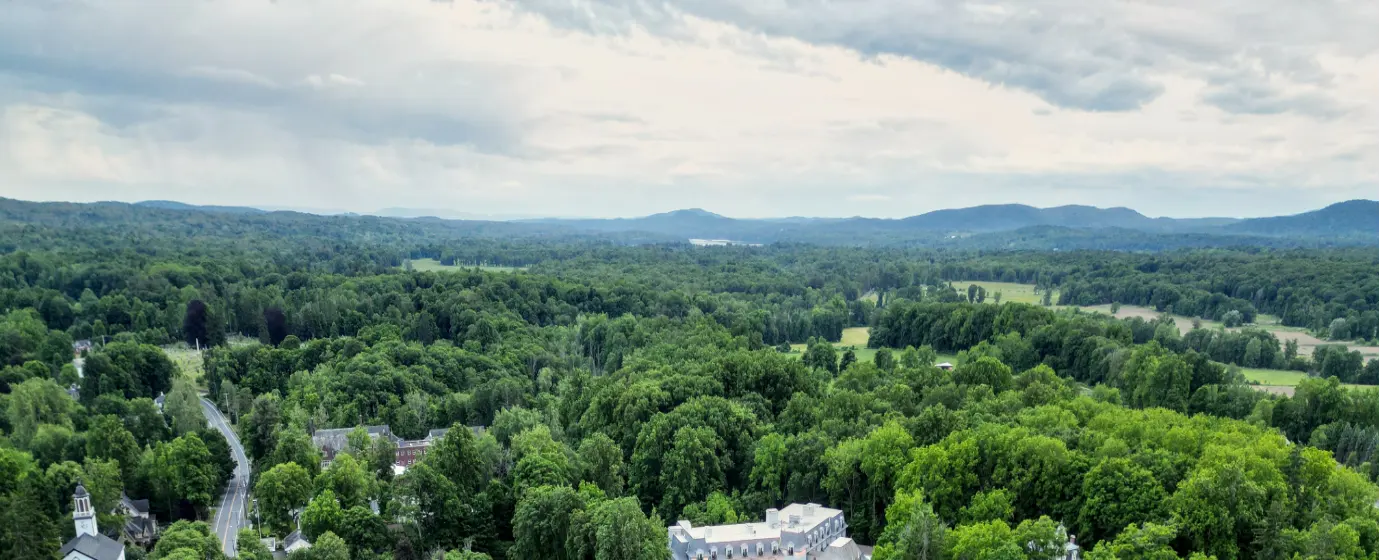
People researching Centralia often hit a wall of contradictory signals. Online crime maps light up the downtown core in amber and red, while neighbors in Seminary Hill and Cooks Hill describe streets quiet enough that kids ride bikes until dark. Neither picture is wrong — but neither is the whole story. Centralia sits at the junction of I-5 and US-12 in Lewis County, about 30 minutes south of Olympia, and that highway access that makes it a practical place to live is also the same corridor that brings transient traffic through the commercial strips. Understanding that geographic tension is the first step to reading the city's safety numbers honestly.
The headline figure is this: Centralia's violent crime rate is 3 per 1,000 residents (district-reported, FBI NIBRS 2023 data). That puts it roughly on par with Washington State's own rate and with the national average — not a city that should trigger alarm bells, but not one to dismiss with a wave either. Property crime at 27 per 1,000 is the number that genuinely warrants attention, particularly for newcomers arriving from smaller towns or rural areas where vehicle theft and shoplifting are far rarer. The good news is that both figures are moving in the right direction, and the trend is sustained, not a one-year blip.
What six months of living here tends to reveal — something no crime index will show you — is that Centralia's safety experience is intensely block-by-block. The stretch of Harrison Avenue near the Centralia Factory Outlets feels different from Salzer Creek Road on a weekday evening. Seminary Hill Natural Area backs up to one of the calmer residential pockets in the city. Knowing those distinctions matters more than any single composite score. This guide walks through what the data actually says, where within the city it clusters, what the Centralia Police Department is doing about it, and what practical steps new residents take to settle in confidently.
Whether you're deciding on a specific neighborhood or just trying to get an honest read before committing to Lewis County, the sections below break down Centralia's crime statistics in full context, the neighborhood-level safety picture, recent enforcement trends, and the community programs that residents actually use.
Centralia Crime Rate in Context: Violent and Property Crime by the Numbers
The single most useful thing you can do with Centralia's crime figures is compare them to something real — not just a color on a map. Here's what the data looks like set against state and national benchmarks.
| Geography | Violent Crime (per 1,000) | Property Crime (per 1,000) | Data Year |
|---|---|---|---|
| Centralia, WA | 3.0 | 27.0 | FBI NIBRS, 2023 |
| Washington State | ~3.3 | Not benchmarked here | FBI UCR, 2024 |
| United States (national) | ~3.6 | Not benchmarked here | FBI, 2024 |
| Centralia trend (property crime) | — | Down 32% year-over-year | FBI NIBRS, 2023 |
| Centralia trend (total crime) | — | Down 29% year-over-year | FBI NIBRS, 2023 |
| Centralia calls for service (H1 2025 vs H1 2024) | — | Down 7% (6,680 vs 7,196) | CPD town hall, July 2025 |
CrimeGrade.org summarizes it cleanly: Centralia's violent crime rate is as safe as the Washington State average and as safe as the national average. That places Centralia in the 33rd percentile nationally — meaning roughly two-thirds of American cities of comparable size have higher violent crime rates.
The property crime figure of 27 per 1,000 deserves its own sentence. That's the number doing the most work in any negative perception of Centralia, and it's real — not inflated by methodology. But the direction matters: a 32% single-year drop in property crime, on top of a broader three-year decline in calls for service, indicates a city moving the right way rather than one stuck in a pattern.
What the Percentile Actually Means
Being in the 33rd percentile nationally on violent crime means Centralia is solidly average — not a standout in either direction. For a working-class city of roughly 18,800 people on a major interstate corridor, that's a reasonable baseline. Cities that see far worse violent crime typically share two traits Centralia doesn't have to the same degree: concentrated poverty in dense housing and minimal police-community engagement. Neither fully describes what's happening here.
Washington State's overall crime rate dropped 14.1% between 2023 and 2024, though state violent crime — particularly aggravated assault — remains somewhat elevated compared to national recovery patterns since the pandemic. Centralia's trajectory, with calls for service declining each of the last three years, is tracking ahead of the state trend rather than behind it.
Where Crime Concentrates in Centralia: A Neighborhood-Level Picture
Crime in Centralia is not evenly distributed. Newcomers who treat the city as a single risk zone make the same mistake as those who dismiss it entirely — both miss what's actually happening on the ground.
The Southwest Corridor: Where Residents Feel Safest
CrimeGrade.org's neighborhood-level analysis consistently identifies the southwest portion of Centralia as the area residents consider safest. That broadly aligns with Seminary Hill, Cooks Hill, and the quieter sections of Logan — residential streets with more owner-occupancy, deeper lot sizes, and less through-traffic from I-5 and Harrison Avenue. If your priority is a calmer block, the southwest side is where most longtime locals would point you first. For a deeper look at how these areas compare on character and amenities, see the full neighborhoods breakdown.
Downtown and the Harrison Avenue Corridor
Downtown Centralia — the Historic District listed on the National Register of Historic Places — is where the city's most interesting daytime energy lives, and also where the bulk of property crime tends to cluster. The stretch connecting the Historic Centralia Train Depot north through Tower Avenue sees more foot traffic, more commercial activity, and correspondingly more shoplifting, vehicle incidents, and nuisance calls. This doesn't make it dangerous in a violent-crime sense — it's a commercial corridor, not a residential pocket — but it's a different environment from Seminary Hill at dusk.
Edison and Washington's Addition
These are established working-class neighborhoods that sit between the downtown core and the quieter southwest. Property crime risk here is moderate — higher than Cooks Hill, lower than the immediate commercial strip. Residents in Washington's Addition who have active Neighborhood Watch blocks consistently report feeling more connected to what's happening on their street, which matters more day-to-day than any aggregate statistic.
Salzer Creek and Scammon Creek: The Fringe Areas
The creek-corridor neighborhoods on Centralia's edges have a mixed profile. Lower density and distance from the commercial spine reduce exposure to the property crimes that dominate the city's statistics, but the relative isolation also means slower police response times and less informal street-level surveillance. Families who move to Salzer Creek tend to love the space and resent the distance from everything else — a trade-off worth understanding before you decide on a neighborhood.
What Locals Know That the Map Doesn't Show
The practical reality is that most of Centralia's property crime is opportunistic: unlocked vehicles, unsecured garages, and retail theft. Violent crime — at 3 per 1,000 — is relatively rare and does not define daily experience in most residential blocks. The fear of crime in Centralia often runs ahead of the actual rate, partly because the city's size means incidents circulate quickly on local social media. A car prowl in Edison shows up in a Facebook group read by people in Seminary Hill, which shapes perception more than the FBI data does.

The Trend Line: What Centralia's Recent Enforcement Data Shows
Raw crime rates tell you where things stand. Trend data tells you where they're going. Centralia's recent enforcement picture is meaningfully more encouraging than the static numbers suggest.
Three Years of Declining Calls for Service
Centralia Police Department's own town hall data from July 2025 shows calls for service dropped 7% in the first half of 2025 — 6,680 calls versus 7,196 in the same period of 2024 — and that this is the third consecutive year of decline. That's not a data artifact or a reporting change. It reflects fewer incidents generating calls, which is the most direct available measure of day-to-day public order.
Property-crime subcategories are moving in the same direction: shoplifting down 29%, criminal trespass down 15%, and recovered stolen vehicles down 38% in the same half-year comparison. Recovered stolen vehicles dropping that sharply typically signals either fewer thefts occurring in the first place, or vehicles being returned before a recovery call is needed — either reading is positive.
Active Warrant Enforcement: Reading It Correctly
One figure from the same July 2025 town hall report deserves careful reading: Centralia PD served 456 felony or misdemeanor warrants in the first half of 2025, up 15% from 395 in the same period of 2024. Some residents see that number and interpret it as a sign of rising crime. The opposite read is more accurate: increased warrant service, paired with declining calls for service, is a signature of a department clearing its backlog — working through outstanding warrants on people already identified rather than responding to new incidents. It is an enforcement activity indicator, not a new-crime indicator.
Washington State's Broader Context
Washington State's overall crime rate fell 14.1% between 2023 and 2024, though the Washington Association of Sheriffs and Police Chiefs has noted that state violent crime — particularly aggravated assault — remains somewhat elevated against national recovery patterns post-pandemic. Centralia tracking ahead of even the state's improving trend line is the strongest data-supported argument for the city's safety trajectory being genuine rather than statistical noise.
Looking to buy in Centralia? Estimate your payment.
Enter your numbers to see an estimated monthly mortgage payment.
Estimate only. Excludes HOA fees and mortgage insurance. The interest rate above is a starting point, not a quoted rate — replace it with your own to see real numbers. Insurance is a flat placeholder, not a Centralia quote.
How the Centralia Police Department Operates and What It Means for Residents
Department philosophy shapes daily life more than any individual metric. Centralia PD operates explicitly as a Community Oriented Policing agency — a designation that's meaningful here because it's reflected in specific programs, not just a mission statement on a wall.
Neighborhood Watch: Block-by-Block Organization
CPD runs a formal Neighborhood Watch program built around resident-led block groups coordinated directly with the department. This isn't a suggestion to download an app — it's organized block captains, periodic meetings, and a direct communication channel to CPD. Residents who participate consistently describe it as the single most effective thing they've done to improve their felt sense of safety, independent of what the crime rate actually is on their street.
The Citizens' Academy runs 10 to 12 weekly evening sessions and is designed to give residents a genuine inside look at how the department works — dispatch, patrol, investigations, use-of-force policy. Graduates of the academy frequently return to their neighborhoods and start new block watch groups, which is exactly the feedback loop the department is trying to create.
What This Means If You're New to the City
If you're moving to Centralia and want to get grounded fast, attending a Citizens' Academy session or connecting with your block's Neighborhood Watch captain is more useful than spending three hours reading crime heat maps. The heat maps show you aggregated past data. Your block captain knows which three houses on your street have been targeted, which nights are quietest, and who to call that isn't 911 for a non-emergency nuisance issue.
CPD's strategic direction was last formally updated by its Strategic Planning Committee in January 2024, which signals a department that reviews its own performance rather than operating on autopilot. For a city of Centralia's size and budget, that level of documented self-assessment is genuinely notable.
What the Department Can't Fix
Community Oriented Policing works best in neighborhoods with stable, engaged residents — which is another argument for the southwest side of the city, where owner-occupancy rates tend to be higher and block-group formation is more consistent. In areas with higher rental turnover, the watch programs have thinner coverage and the feedback loop is slower. That gap is honest, and it's the reason neighborhood selection still matters even within a relatively safe mid-sized city.
Practical Safety Guidance for Centralia Newcomers
Data puts the risk in proportion. These practical steps close the gap between knowing the numbers and actually living comfortably.
Vehicle Security: The Most Common Exposure
Across Centralia's property crime subcategories, vehicle-related offenses — prowls, thefts, and catalytic converter incidents — account for the largest share of what residents actually experience. Recovered stolen vehicles falling 38% in the first half of 2025 is good news, but the baseline remains real. Locking your vehicle every time, every location, is the single highest-return habit for newcomers. This is especially true near the Centralia Factory Outlets corridor and along Harrison Avenue, where commercial foot traffic creates cover for opportunistic crime that doesn't exist in quieter residential blocks.
Home Security Basics That Pay Off Here
Centralia's property crime profile is predominantly opportunistic rather than targeted. Exterior lighting on motion sensors, visible security cameras at entry points, and a secured garage are the standard deterrents that shift the risk-reward calculation for someone casing a block. These aren't unique to Centralia — but in a city where the property crime rate is the primary concern, they address the actual exposure rather than the theoretical one.
Connecting Before You Arrive
Contact Centralia PD's community liaison before or immediately after your move to ask about Neighborhood Watch coverage in your specific block. The city's website at cityofcentralia.com lists the Neighborhood Watch program under the Police Department section. If your block doesn't have an active group, CPD will help you start one — graduates of the Citizens' Academy are specifically trained for this. It takes one engaged resident per block to anchor a group, and that resident is often the one who just moved in and hasn't been worn down by assuming it won't work.
Seasonal Awareness: What Newcomers Don't Expect
One thing people don't anticipate until their first full winter here: the stretch of downtown near the McMenamins Olympic Club Hotel and Theater picks up a different energy during wet-season evenings, when foot traffic concentrates indoors and the adjacent blocks see more loitering than in summer. It's not dangerous in any meaningful statistical sense — but it surprises people who visited Centralia in July and are calibrated to that version of the city. Knowing the seasonal rhythm matters when you're deciding how late to stay downtown and whether to walk or drive home from an evening out.
One Block-Level Reality Check
If you're seriously narrowing down a street, spend time on it during a weekday evening, not a Saturday afternoon. Saturday afternoons in Centralia's residential neighborhoods all look fine. Weekday evenings — after school, before dinner — are when the actual character of a block reveals itself: who's outside, whether neighbors acknowledge each other, whether cars are locked and garages closed. That thirty-minute visit will tell you more than any crime map at the census-tract level. Good Buzz Brewing Co. on S Gold St sits in a section of the city that draws a consistent, neighborhood-regular crowd — the kind of foot traffic that signals a block where people know each other, which is itself a form of informal safety infrastructure.
Local Expert Takeaway: Centralia's violent crime rate sits at 3 per 1,000 — roughly matching Washington State and the national average — and property crime, while the real headline concern at 27 per 1,000, has dropped 32% in a single year with three consecutive years of declining calls for service confirming the trend is real. The southwest side of the city, including Seminary Hill and Cooks Hill, consistently comes up as the quietest residential territory; downtown and the Harrison Avenue commercial corridor are where property crime concentrates but where violent crime remains low. The Centralia Police Department's Neighborhood Watch and Citizens' Academy aren't decorative programs — residents who plug into them within their first month describe a qualitatively different experience of the city than those who stay isolated. Opportunistic vehicle crime is the practical exposure to prepare for; a locked car and a motion-sensing light address the majority of what newcomers actually encounter.
Quick Takeaways & FAQs
✅ Centralia's violent crime rate of 3 per 1,000 is on par with Washington State and national averages — and property crime dropped 32% in a single reporting year, confirmed across three years of declining police calls for service.
⚠️ Property crime at 27 per 1,000 remains the genuine concern, concentrated along the Harrison Avenue commercial corridor and downtown core rather than in the city's quieter southwest residential neighborhoods.
📍 CPD's Citizens' Academy — 10 to 12 weekly evening sessions open to any resident — is the fastest way to understand your specific block's risk profile and connect with the Neighborhood Watch infrastructure already operating in many areas.
Is Centralia, WA a safe place to live?
Which neighborhoods in Centralia have the lowest crime?
How does Centralia's crime rate compare to the rest of Washington State?
What type of crime is most common in Centralia, WA?
What is the Centralia Police Department doing to reduce crime?
Moving to Washington?
Tell us what you need help with and we'll connect you with local resources.
