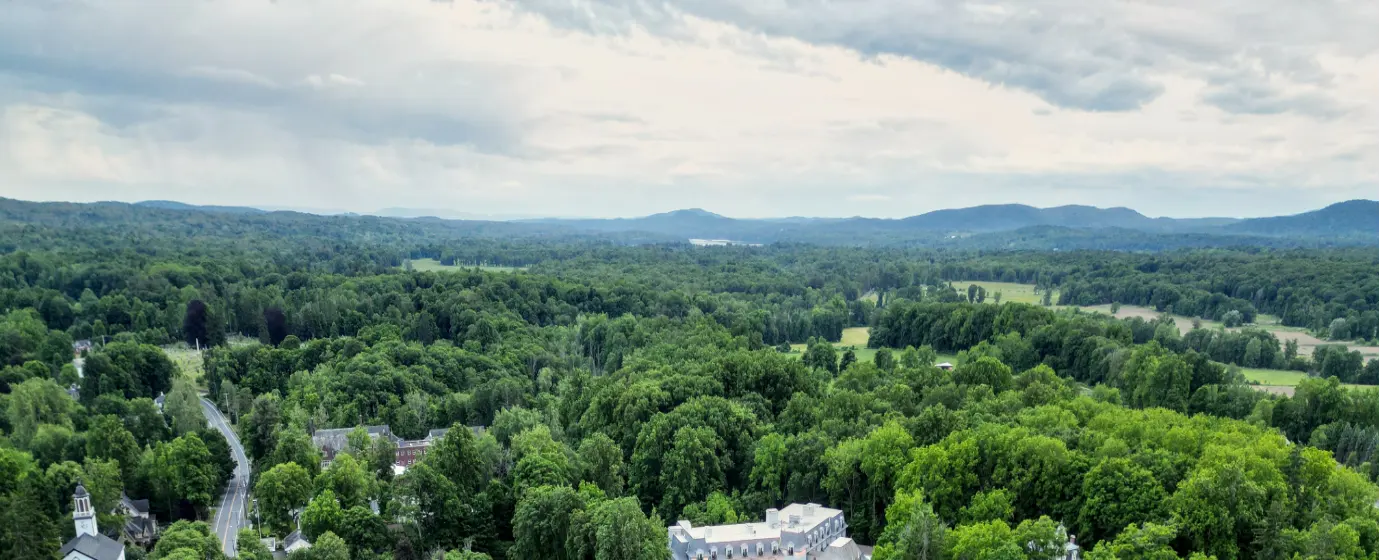
Your California paycheck just got a raise — and you haven't negotiated anything. That's the first thing most Californians notice after moving to Washington state, and it's not subtle. Centralia sits on Interstate 5 near the midpoint between Seattle and Portland, a small city of roughly 18,800 people where the phrase "starter home" still means something. What surprises newcomers isn't just the price tags — it's realizing they can own a house on a normal salary, drive to work without white-knuckling a freeway for an hour, and grab breakfast at Berry Fields Cafe on S Pearl St without spending $22 on avocado toast.
The economic backbone here is a mix of public institutions and industry that most coastal Californians don't expect. Centralia College anchors the city's educational identity, the school district employs hundreds, and the Port of Centralia's three industrial campuses support approximately 3,145 workers with wages and benefits estimated at $239 million as of 2025. Sierra Pacific Industries remains a significant presence in wood products manufacturing. For remote workers who left the Bay Area or Los Angeles because they no longer needed to be there, Centralia offers Olympia's state-government job market about 30 minutes north — close enough to commute, far enough to afford a yard. For a full picture of the local employer landscape, see the living in Centralia guide.
The cost difference versus California is not marginal — it's structural. The Zillow Home Value Index (ZHVI) for Centralia stood at $399,303 as of May 2026, a figure that puts genuine homeownership within reach for households that were permanently priced out of Sacramento, let alone the Bay Area. The property tax rate runs 0.71%, and the state collects zero income tax on wages. Daily costs — groceries, utilities, gas — track noticeably below what you were spending in California. For a deeper look at the full cost picture, the cost of living page breaks it down category by category.
Whether you're coming from Fresno or the Central Valley, being priced out or simply fed up, the sections below walk through the California-to-Centralia comparison on home prices, taxes, and lifestyle — and what nobody tells you before you sign the lease.
The Home Price Reality Check
The number that stops most California buyers cold is $399,303 — Centralia's Zillow Home Value Index as of May 2026, up 1.7% year-over-year. That is not the entry-level price. That is the middle of the market.
In the Los Angeles area, a comparable midpoint sits close to $900,000. Even in inland California markets like Fresno or Bakersfield — cities where Californians move to escape coastal prices — the median is noticeably higher than what Centralia is asking. Coming from any of those markets, the Centralia figure lands as almost implausible until you start touring homes and realize the square footage is real.
Homes here pended in around 19 days on average as of the May 2026 data, which means the market has real demand — but it is not the frenzied multiple-offer environment you were navigating in California. You can schedule a second showing. You can get an inspection. You can negotiate.
What the Numbers Actually Mean for Your Budget
If you sold a California home and are bringing equity north, you are likely arriving with a substantial down payment by Centralia standards. That changes your monthly picture dramatically. A California buyer carrying $300,000 in equity into a $400,000 purchase is looking at a very different loan balance than what they left behind.
The effective property tax rate of 0.71% is the other number worth sitting with. On Centralia's $399,303 median, that works out to approximately $2,835 per year. California's Proposition 13 kept rates artificially low for long-term owners, but buyers who purchased in the last decade in California often saw effective rates closer to 1.1–1.2% on purchase price — on homes costing two to three times as much. The annual tax bill in Centralia will feel modest by comparison regardless of where in California you're coming from.
The catch worth naming honestly: Centralia is not a high-appreciation market. It is a stability market. If you are moving here expecting to flip your way to wealth in five years the way some California buyers did between 2015 and 2022, reset that expectation. The 1.7% year-over-year gain reflects a market that moves steadily rather than explosively. For buyers who want to own without gambling, that is a feature. For buyers chasing appreciation, it is a trade-off.
For neighborhood-level character and what distinguishes areas like Seminary Hill from Logan or Cooks Hill, see the best neighborhoods guide — this page doesn't break down area-by-area price bands, but that one does.
The Tax Equation: Washington vs. California
This is where the math becomes impossible to ignore. California imposes a graduated state income tax with brackets running from 1% to 12.3%, plus a 1% Mental Health Services Tax on income above $1 million — making the effective top marginal rate 13.3%, the highest of any U.S. state. Washington collects zero state income tax on wages or salaries. Not a low rate. Zero.
On a household income of $120,000 — roughly double Centralia's median but common for remote workers relocating from California — the California state income tax bill runs somewhere in the range of $10,000–$12,000 per year depending on deductions and filing status. In Washington, that same household owes nothing at the state level. That is a real, recurring raise that compounds every year you live here.
| Tax Category | California | Washington (Centralia) |
|---|---|---|
| State income tax (wages) | 1%–12.3% (top rate 13.3% with surcharge) | $0 — no state income tax |
| State income tax (retirement income) | Fully taxed as ordinary income | $0 — pensions, 401(k), IRA, Social Security all exempt |
| Capital gains (long-term) | Taxed as ordinary income — up to 13.3% | 7% excise tax on gains above $278,000 (2025); real estate excluded |
| Property tax (effective rate) | ~1.0%–1.2% on recent purchase price (varies) | 0.71% effective rate |
| State sales tax | 7.25% base (local additions vary) | 8.4% combined (6.5% state + 1.9% local, as of Jan 2026) |
| State estate / inheritance tax | No state estate tax | Washington estate tax applies above $2.193M (2025 exemption) |
The one place Washington costs more on paper is sales tax. Centralia's combined rate of 8.4% runs higher than California's base 7.25% — though many California counties stack local taxes that push their totals well above 9%. If you're moving from a high-local-tax California county, the gap may be smaller than it looks.
The Millionaire Caveat
In March 2026, Washington Governor Ferguson signed legislation that will impose a 9.9% state income tax on household income above $1 million, effective January 1, 2028. Income below that threshold remains entirely untaxed at the state level. If you are relocating on a professional or remote salary under $1 million, this change has no effect on your tax picture for the foreseeable future. If you're arriving with significant investment income above that level, it is worth having a CPA model out the 2028 implications — but for the vast majority of Californians moving to Centralia, Washington's tax advantage over California remains very large.
The Retirement Angle
Washington does not tax retirement income of any kind. Pensions, 401(k) distributions, IRA withdrawals, and Social Security benefits are all exempt at the state level. California taxes all of those as ordinary income. For anyone retiring into Centralia with a fixed income stream, the difference between those two tax treatments over a 20-year retirement is not trivial — it is one of the most financially meaningful aspects of this move.
What Californians Are Actually Leaving Behind
Most California transplants spend the first six months in Centralia in a low-grade state of disbelief. Not because the city is perfect — it isn't — but because the financial pressure that defined daily life in California simply lifts. The mortgage exists, but it doesn't devour the budget. There is a month-end surplus where there wasn't one before.
What you are leaving behind, honestly: density of culture, year-round warm weather, and a certain kind of social scene built around proximity to millions of people. Centralia has roughly 18,800 residents. There is no equivalent of a beachside promenade, no Michelin-starred restaurant row, no standing-room startup happy hour. The dining scene runs toward independent spots — a bagel café on Kresky Avenue, a café and bakery on S Pearl St — rather than a deep restaurant bench.
What Surprises People After Six Months
The rain is real. Western Washington's overcast season runs from October through April with a persistence that Californians consistently underestimate on paper and consistently overestimate in practice once they're in it. It is not dramatic rain — it is grey, low, and relentless in a way that took some transplants two full winters to make peace with.
The slower pace of commercial development also catches people off guard. Centralia has the Centralia Factory Outlets along I-5 and a Historic Downtown District on the National Register of Historic Places, but it does not have the retail density of a California suburb of comparable size. The nearest Trader Joe's is not in Centralia. If that specific kind of grocery access matters to you, that is worth knowing before you move.
What People Move OUT For
After a few years, the families who leave Centralia tend to leave for two reasons: school performance and career ceiling. The Centralia School District holds a C- rating, according to Niche, and it is worth taking seriously if you have school-age children — see the schools page for the full breakdown. And while remote work has expanded the career options significantly, professionals in specialized fields can find themselves driving to Olympia or further for meaningful opportunities. The city's median household income of $56,219 reflects a local economy that is not wealthy by Pacific Coast standards, and workers whose earning potential outpaces the local job market sometimes find the financial math shifts over time.
Health insurance premiums tend to run noticeably below what Californians were paying, though routine care options are more limited than in a large California metro — you will drive farther for specialist care, and that trade-off is worth building into your decision.
Looking to buy in Centralia? Estimate your payment.
Enter your numbers to see an estimated monthly mortgage payment.
Estimate only. Excludes HOA fees and mortgage insurance. The interest rate above is a starting point, not a quoted rate — replace it with your own to see real numbers. Insurance is a flat placeholder, not a Centralia quote.
Daily Life in Centralia: The Ground-Level Picture
Fort Borst Park is where Centralia actually gathers. The 189-acre park along the Skookumchuck River is the city's outdoor living room — soccer fields, trails, and a historical site — and on a dry Saturday you'll find more of the city's social life there than anywhere else. For a full picture of what the parks system offers, see the parks and recreation page.
The Historic Downtown District along Tower Avenue has real bones. McMenamins Olympic Club Hotel and Theater — a genuine Pacific Northwest institution — anchors the entertainment end of downtown in a building that dates to 1908. Independent shops and the occasional weekend farmers market fill out the streetscape. It is not a thriving urban core by California standards, but it is a functional, walkable downtown with character that many California suburbs of equal size lack entirely.
The I-5 Rhythm
Living in Centralia means living with Interstate 5. The freeway is both the city's greatest asset and its defining physical reality. Everything that connects Centralia to Olympia, to Portland, to Seattle runs through that corridor. The Centralia Factory Outlets sit right on the interchange, which means a steady flow of pass-through traffic on weekends that locals either ignore or navigate around on backroads. Buyers who want quiet tend to look away from the I-5 corridor; the Seminary Hill Natural Area on the city's south side is the clearest example of what that separation looks like in practice.
The Commute Trade-Off
Olympia is approximately 30 minutes north on I-5, which puts state government jobs, a larger retail footprint, and a more established arts scene within reach without living in a city where you can't afford a house. Many Centralia households run one commuter to Olympia and one remote worker — a combination that makes the location genuinely functional rather than merely affordable. For commute detail and traffic patterns, the living in Centralia guide covers that ground.
Rainy City Bagel Shop on Kresky Avenue has become the kind of neighborhood morning anchor that Californians recognize immediately — the place where regulars have a usual order and the line moves fast. Berry Fields Cafe on S Pearl St fills a similar role for the lunch and dessert crowd. Two spots don't make a food scene, but they do make a start.
Should You Actually Make This Move?
The honest case for moving to Centralia from California is almost entirely financial, and that is not a knock on the city. Financial freedom is a real quality-of-life outcome. When your housing costs drop by half and your state income tax bill drops to zero, the stress level of daily life changes in ways that are hard to fully appreciate until you've lived it for a year.
The case is strongest for remote workers whose income is tied to California salaries but whose presence is no longer required there. You keep the income, eliminate the income tax, and buy a house at a fraction of what you sold in California. The math is difficult to argue with.
| Factor | Strong Fit for Centralia | Weaker Fit for Centralia |
|---|---|---|
| Work situation | Remote work, self-employed, retirement | Requires dense local job market in specialized field |
| Housing priority | Own a home, have space, stable payment | Maximum appreciation / short-term investment |
| School-age children | Willing to research schools, consider private options | District rating is a dealbreaker without research |
| Lifestyle expectations | Outdoors, slower pace, community feel | Dense urban amenities, restaurant depth, cultural calendar |
| Weather tolerance | Comfortable in grey, wet winters | Needs sunshine most of the year |
| Tax profile | W-2 earner or retiree under $1M income | High investment income over $278K in capital gains annually |
If you have school-age children, do the homework before you commit to a specific neighborhood. School boundaries in Centralia matter, and the district's overall rating masks variation at the building level. The schools page breaks down what that rating means in practice.
The Realistic Timeline
Most California buyers who move to Centralia go through a predictable arc: disbelief at prices, relief at closing, adjustment to pace, and — around month eight — a reckoning with what they actually miss. The ones who stay long-term are the ones who decided, in advance, that what they were gaining was more important than what they were giving up. That is a personal calculation, but it is a calculation worth making before you pack the truck rather than after.
The buying process in Washington has its own mechanics and timeline considerations that differ from California — for detail on that side of the transaction, the first-time homebuyer page covers the Washington-specific process. For crime and safety context, the safety page has the current figures and what they mean for different parts of the city.
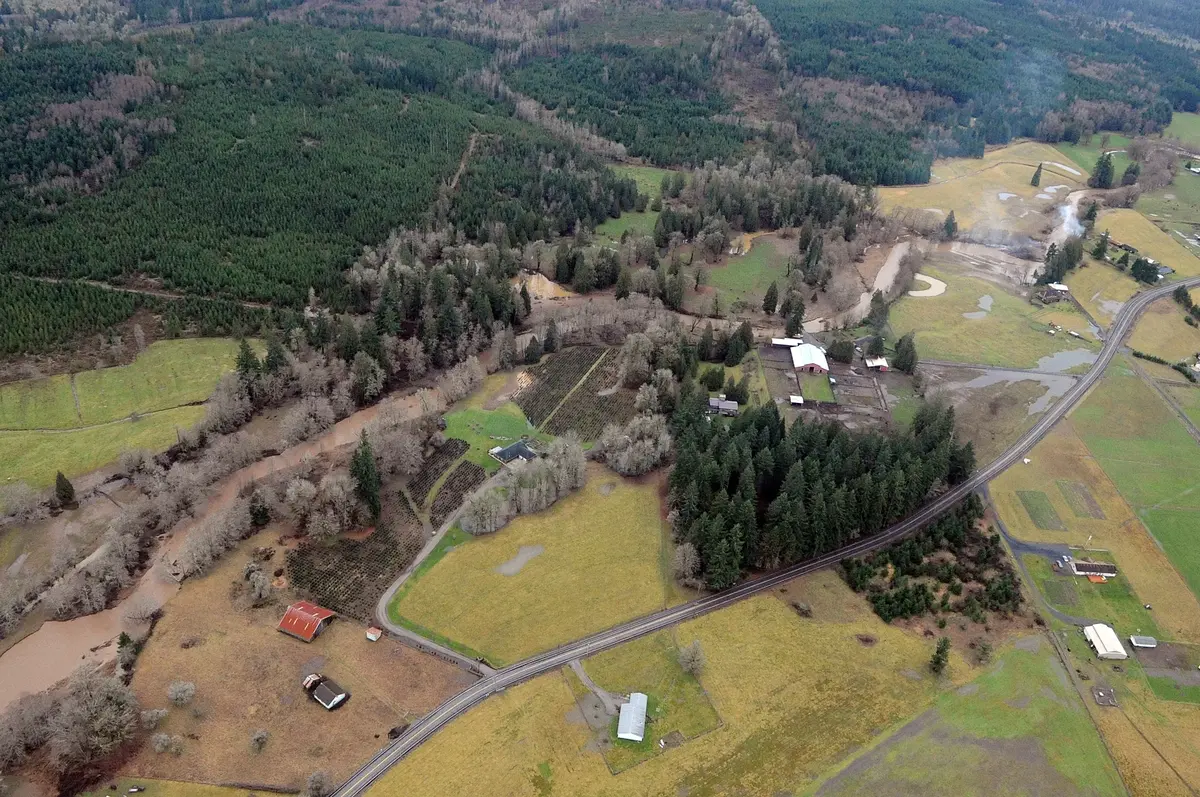
Local Expert Takeaway: Californians who move to Centralia and stay tend to say the same thing: they didn't fully believe the numbers until they were living inside them. A $399,303 median home price, zero state income tax on wages, and a 0.71% property tax rate are not small-print asterisk items — they are the structural reality of daily financial life here. The honest trade-offs are real too: grey winters from October through April, a school district that requires due diligence, and a slower commercial scene than any California city of comparable size. But for remote workers, retirees, and families who were spending 50–60% of take-home pay on housing in California, the Centralia math frequently changes the conversation entirely. Start a weekend morning at Berry Fields Cafe on S Pearl St, drive out to Seminary Hill, and walk the Historic Downtown District before you decide — the city tends to make its own case once you're standing in it.
Quick Takeaways & FAQs
✅ Washington collects zero state income tax on wages, a structural financial advantage over California that compounds every year you live here.
⚠️ The Centralia School District holds a C- rating, according to Niche — families with school-age children should research individual school boundaries and consider private options before committing to a neighborhood.
📍 Homes in Centralia pended in around 19 days on average (May 2026), which means you can typically schedule a second showing and request an inspection — a very different experience from California's recent market.
How much cheaper is buying a home in Centralia compared to California?
Does Washington state have an income tax?
What is the property tax rate in Centralia, WA?
Is Centralia's sales tax higher than California's?
What do California transplants tend to miss most after moving to Centralia?
Moving to Washington?
Tell us what you need help with and we'll connect you with local resources.
