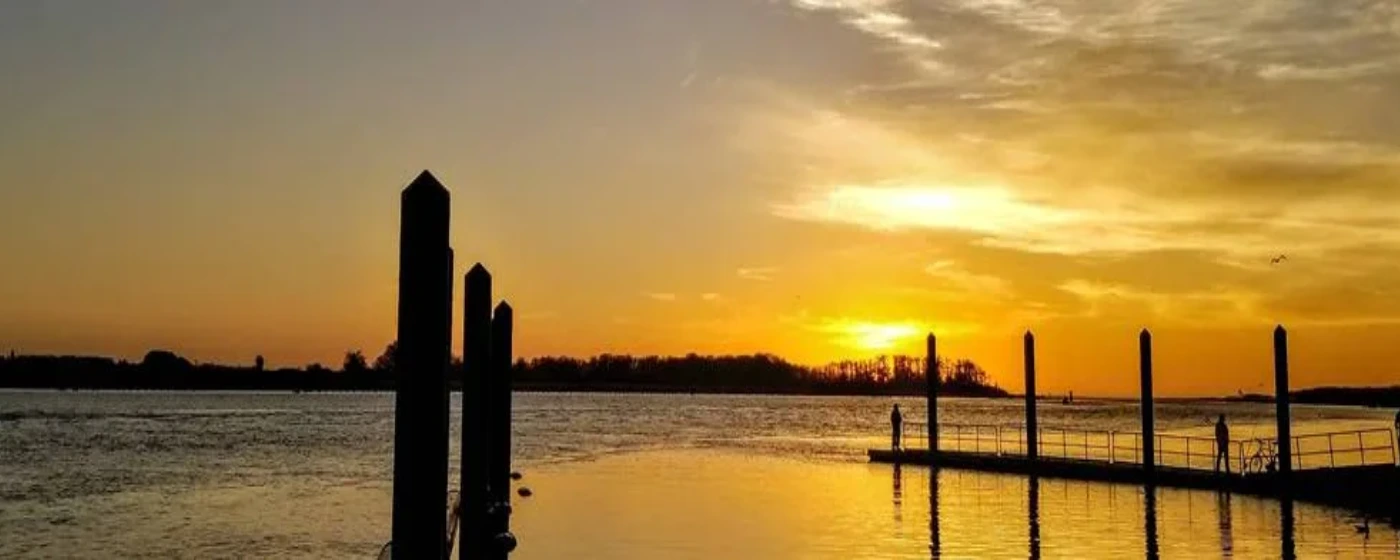
What Is Living in Aberdeen, Washington Like?
Maybe you've been priced out of Olympia or Tacoma and someone mentioned Aberdeen as a place where your budget still buys a real house. Maybe your employer — the Port of Grays Harbor, Ocean Spray, or one of the region's industrial anchors — is pulling you west. Either way, the first thing to understand about Aberdeen is that it sits at a genuine crossroads: the mouth of the Chehalis and Wishkah rivers where they empty into Grays Harbor, roughly 50 miles west of Olympia on US-12 and US-101. Elevation is nearly zero — literally 3 feet — and the Pacific weather system runs the show. Rain is not a quirk here; it is the baseline condition of life on the southwestern Olympic Peninsula.
Aberdeen is the economic hub of Grays Harbor County, and its employment landscape is more diverse than outsiders expect. The Port of Grays Harbor moves significant cargo — from log exports to grain — and anchors the shipping and logistics sector. Sierra Pacific Industries keeps the region's timber tradition alive. Ocean Spray's cranberry processing cooperative represents the agricultural side of the local economy. A major regional health system rounds out the employer picture as one of the largest single workplaces in the county. The Aberdeen School District serves families throughout the city, with a WIAA-member high school as the district flagship. The city's motto is a deliberate tribute to Kurt Cobain, who grew up here; the cultural identity that phrase represents is genuine, not a marketing slogan.
Aberdeen's cost-of-living index sat at 88.4 in late 2024 — meaningfully below the U.S. average — and it shows in home prices that would look almost fictional to someone coming from the Puget Sound corridor. The Zillow Home Value Index stood at $253,790 as of July 2026, placing Aberdeen among the most affordable tracked markets in all of Washington state. Day-to-day life has a working-class, unhurried quality: weekend trips to the coast are under an hour, Olympic National Park trails are within easy reach, and the Wishkah and Chehalis rivers define both the geography and the recreational rhythm of the city. What Aberdeen doesn't offer is the restaurant density or urban amenity set of a larger city — and longtime residents will tell you plainly that those are the compromises you accept.
Whether you're considering a move or just researching the area, the sections below break down Aberdeen's neighborhoods, housing market, employers, daily commute, and what life here actually looks and feels like on the ground.
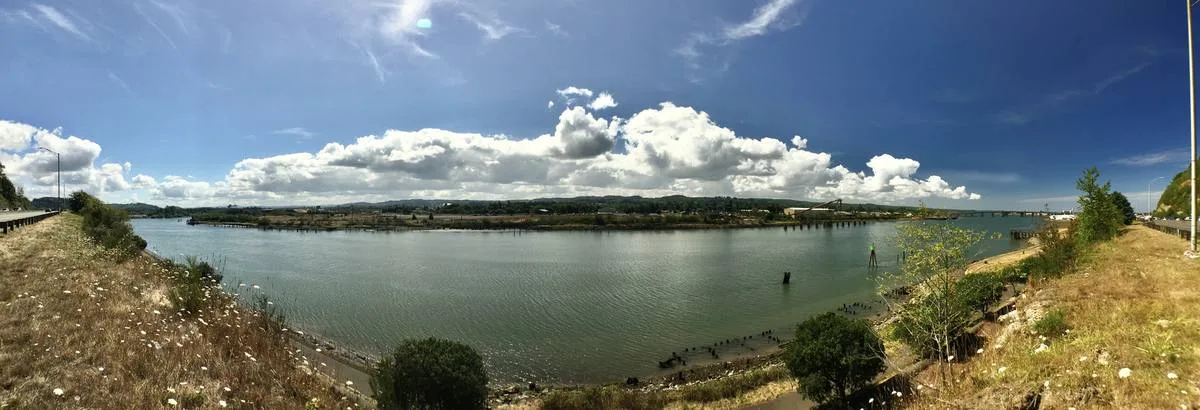
Aberdeen at a Glance
Looking to buy in Aberdeen? Estimate your payment.
Enter your numbers to see an estimated monthly mortgage payment.
Estimate only. Excludes HOA fees and mortgage insurance. The interest rate above is a starting point, not a quoted rate — replace it with your own to see real numbers. Insurance is a flat placeholder, not a Aberdeen quote.
Why Are People Moving to Aberdeen?
Aberdeen draws two distinct groups of movers: people who already work in Grays Harbor County and are finally ready to buy instead of rent, and remote workers or retirees who looked at a Washington state map, saw the Olympic Peninsula, and did the math on what their housing dollar could do here versus anywhere else west of the Cascades.
The Employment Foundation
The Port of Grays Harbor is the city's industrial spine. It handles bulk agricultural exports — grain and wood products chief among them — along with energy cargo, and it remains an active commercial shipping terminal that employs directly and supports a broader logistics ecosystem in the area. Sierra Pacific Industries represents the timber and lumber manufacturing tradition that built this region, and its continued presence matters to the blue-collar employment base. Ocean Spray's cranberry cooperative facility reflects the agricultural character of the broader Grays Harbor lowlands.
Walmart operates a store here that serves as both a major retail employer and a practical anchor for daily errands across a county with limited retail density. A major regional health system is one of the largest single employers in the county, and healthcare jobs consistently draw credentialed workers from elsewhere in western Washington who find that Aberdeen's housing prices let them build equity faster than they could in Olympia or Tumwater.
The Affordability Pull
People who have watched Olympia's median home price climb over the past decade notice Aberdeen in a specific way: it's roughly 55 minutes west on US-12, but prices are a fraction of what comparable square footage runs in Thurston County. That commute math works for some households and doesn't for others — but for those willing to make the drive or work remotely, Aberdeen represents genuine ownership at a price point that has largely disappeared from the I-5 corridor.
The city's poverty rate of approximately 23.8% is honest context that any newcomer should hold alongside the affordability narrative. Aberdeen has real economic stress, concentrated in specific pockets, and the gap between the city's median household income of $52,195 and housing prices is part of why that stress persists. Moving here for affordability is legitimate; pretending the surrounding community doesn't have challenges is not.
The Cultural Pull
A smaller but real segment of people who move to Aberdeen do so partly because of what the city represents culturally. The Kurt Cobain Memorial Park and the Kurt Cobain Childhood Home Museum attract visitors, but they also signal something about the city's self-image: Aberdeen doesn't try to be something it isn't. The International Mermaid Museum is genuinely one of a kind. The Lady Washington tall ship docks here. These are not manufactured amenities — they're the accumulated character of a place that has been through a lot and is honest about it.
| Who Moves to Aberdeen | Primary Draw | Best Fit? |
|---|---|---|
| Port & industrial workers | Proximity to Port of Grays Harbor, Sierra Pacific, Ocean Spray | Commuter |
| Healthcare workers | Regional health system jobs; affordable ownership vs. Olympia | Value |
| Remote workers | Low home prices, Olympic Peninsula access, slower pace | Nature Value |
| First-time buyers priced out of I-5 corridor | One of WA's lowest median home prices | First-Time |
| Outdoor-focused households | Pacific coast under 1 hr, Olympic NP trails nearby | Nature |
| Retirees on fixed income | Below-average cost of living, coastal proximity | Quiet Value |
Aberdeen genuinely suits people who value authenticity and affordability over polish — and tends to disappoint buyers who want the walkable downtown restaurant scene of a larger city without the price tag that comes with it.
What Daily Life Feels Like in Aberdeen
Six months in, newcomers from the east side of the Cascades almost universally say the same thing: they didn't understand what 60 inches of annual rainfall actually means until they lived through a November here. It's not dramatic — no blizzards, no ice storms — just a persistent, low-grade grey that runs from October through April and requires a specific psychological adjustment. People who thrive in Aberdeen learn to treat rain as neutral weather and build an indoor-outdoor life accordingly.
The Everyday Rhythm
Daily errands in Aberdeen are functional rather than scenic. Grocery runs happen at the Walmart Supercenter on US-12 or at one of the smaller independent markets scattered across the city. The downtown core along E Heron Street and E Wishkah Street has genuine character — a longtime bar and grill on E Heron St is the kind of place where you'll run into port workers and locals after a shift, and an independent coffee roaster on E Wishkah St is where the morning laptop crowd settles in. For something closer to a craft dining experience, a New American restaurant on E Wishkah brings an approach that would hold its own in a city several times Aberdeen's size.
Aberdeen's downtown is compact and genuinely walkable within its own footprint, but the city as a whole is car-dependent. The Aberdeen Art Center is an active cultural anchor near downtown, offering classes and exhibitions that draw a consistent community of locals. Sam Benn Memorial Park provides one of the better green-space gathering points inside city limits.
What Locals Actually Do on Weekdays
The working week here runs on harbor industry hours. Early morning traffic on US-101 and US-12 reflects shift workers heading to the port, the mills, and the hospital. The pace outside of those commute windows is genuinely unhurried — a quality that draws some people and frustrates others in equal measure.
What surprises people most after six months isn't the rain — it's how much of their social life centers on things they do outside the city. The coast is 30 minutes west. Lake Quinault is under an hour north. The Wishkah River corridor gets used year-round by people who fish, kayak, or just need to get outside. Aberdeen residents are often more outdoorsy in practice than the city's industrial character suggests at first glance.
The Trade-Off Worth Naming
Aberdeen has a notable property crime rate — roughly 30 incidents per 1,000 residents — and certain blocks, particularly in the downtown core late at night, require the same situational awareness you'd apply in any smaller city with visible economic distress. This isn't a reason not to move here; it is a reason to look carefully at specific streets and blocks when choosing where to live, and to visit in person rather than buying based solely on photos and price. The full safety breakdown covers this at the neighborhood level.
The Aberdeen Housing Market Right Now
Aberdeen's Zillow Home Value Index stood at $253,790 as of July 2026 — a number that requires a second look for anyone tracking Washington state real estate, because it sits at the affordable end of any statewide comparison. Redfin's trailing-90-day median sale price through May 2026 came in at $243,000, down about 6.5% year-over-year, with homes averaging 49 days on market. That pace — nearly seven weeks to contract — signals a buyer's market dynamic where negotiating room exists and multiple-offer frenzies are the exception, not the rule.
What that price range actually buys here would cost substantially more in Olympia or Tacoma: older Craftsman bungalows with original character, mid-century ramblers on full lots, and occasional larger homes near the water. Some areas of the city command noticeably higher prices than others — proximity to the harbor and elevation above the river plain both factor in — but the full neighborhood breakdown lives on the Best Neighborhoods page.
The rental market reflects the same affordability story. Median gross rent was approximately $1,113 per month as of 2024, well below what renters pay in most of western Washington. For a complete look at rents, property tax rates, and the full cost-of-living picture, see the cost of living page.
Inventory in Aberdeen moves slowly enough that buyers here rarely feel the pressure to waive contingencies or skip inspections — a meaningful practical difference from the Puget Sound market. Older housing stock dominates the city, which means inspections matter more, not less: deferred maintenance, moisture intrusion, and aging electrical panels are recurring findings in a city where homes were built before modern building codes and have lived through decades of heavy rainfall.
Aberdeen Neighborhoods
Aberdeen has several distinct areas — each with its own character and appeal. Here’s a breakdown to help you narrow down where to focus your home search.
🏡 Downtown
Aberdeen's commercial and cultural core, centered on E Heron and E Wishkah streets, where the Aberdeen Art Center, waterfront access, and the city's handful of independent restaurants and cafés concentrate. It suits buyers who want to walk to daily life and don't mind the tradeoff of a neighborhood that has visible urban roughness alongside its genuine character.
🏠 South Aberdeen
South Aberdeen sits across the Chehalis River from downtown and has a quieter, more residential feel, with a mix of older single-family homes on established lots. It's a practical choice for families and buyers who want more distance from the downtown core while staying within easy reach of US-12.
🌳 East Aberdeen
East Aberdeen stretches along the US-12 corridor and has some of the city's most accessible housing for first-time buyers, with older stock on flat terrain close to the main commercial corridor. The area's proximity to US-12 makes the Olympia commute as straightforward as it gets within city limits.
🏘 North Aberdeen
North Aberdeen climbs away from the river plain and offers some of the city's higher-elevation residential streets, which come with better drainage and slightly more separation from the industrial waterfront. Housing here ranges from modest mid-century homes to larger properties with views toward the harbor.
🏔 Paradise Harbor
Paradise Harbor is a quieter, waterfront-adjacent pocket that attracts buyers who want proximity to the harbor and the Wishkah River corridor without being in the thick of downtown. It has a neighborhood-within-a-city feel that's harder to find elsewhere in Aberdeen.
🌆 Bel-Aire
Bel-Aire is one of Aberdeen's more established residential areas, with mid-century single-family homes and a settled, quieter character that appeals to families and buyers looking for stability over urban proximity. It sits away from the busiest commercial corridors and has a consistently neighborhood feel.
Pros & Cons of Living in Aberdeen
The Pros
- Very affordable home prices compared to the rest of Washington
- Working waterfront with genuine maritime/timber heritage and Nirvana/grunge history
- Gateway location to Olympic National Park and Pacific beaches
- Small-town pace with a real
- unpolished character
The Cons
- Crime rates run notably higher than state and national averages
- Persistently wet
- gray winters with limited sunshine
- Below-average household incomes and a struggling local job base tied to legacy timber/fishing industries
Getting Around & Commuting in Aberdeen
Aberdeen's geography makes its commute patterns easy to read. US-12 is the primary east-west spine, connecting the city to Olympia roughly 55 minutes away in normal conditions. US-101 runs north-south and is the route to Hoquiam, the coast, and eventually the Olympic Peninsula. Within the city, E Wishkah Street and E Heron Street carry most of the downtown traffic, and the Chehalis and Wishkah rivers create real routing constraints — there are limited bridge crossings, and they matter during peak hours.
The Olympia Commute Reality
A 55-minute commute to Olympia sounds manageable until you do it five days a week in winter. US-12 through the Chehalis River valley can slow significantly in fog and heavy rain, and there's no train or transit alternative for that route. People who make this drive routinely tend to use the time productively — podcasts, audiobooks, work calls — and most say they adjusted within a few months. The ones who move back to the I-5 corridor typically cite commute fatigue as the primary reason, usually after the first full winter.
Local Getting Around
Within Aberdeen and the immediate Grays Harbor area, Grays Harbor Transit operates bus routes connecting Aberdeen, Hoquiam, and points east toward Elma and Montesano. It's a functional system for workers without cars and for basic errands, but it won't replace a vehicle for most households. The city's infrastructure investment in recent years — including the North Aberdeen Bridge Project completed in 2025 and the six-year transportation plan approved in early 2026 — reflects a city trying to catch up on deferred road and bridge maintenance.
Key Routes and Chokepoints
| Destination | Route | Typical Drive Time | Notes |
|---|---|---|---|
| Hoquiam | US-101 / Simpson Ave | 5–8 min | Effectively contiguous — no real commute |
| Cosmopolis | US-101 S | 5–10 min | Quick, but bridge crossings matter |
| Pacific coast | SR-109 W via US-101 | 25–35 min | Popular weekend run; no traffic issues |
| Montesano | US-12 E | 20–25 min | County seat; courthouse, services |
| Olympia | US-12 E to I-5 | 50–60 min | Fog and rain add time in winter |
| Tacoma | US-12 to I-5 N | 90–105 min | Long daily commute; better for hybrid schedules |
| Seattle | US-12 to I-5 N | 2–2.5 hrs | Not a practical daily commute |
The honest commute picture: Aberdeen works well for people employed locally or in the Hoquiam-Cosmopolis cluster, reasonably well for Olympia-area jobs on a hybrid schedule, and becomes genuinely difficult for anyone commuting to Tacoma or Seattle daily. That limitation is the single factor most likely to determine whether Aberdeen fits your life — answer it before you make an offer.
Schools in Aberdeen
Families relocating to Aberdeen have public, private, and higher-education options nearby. Here’s a quick overview.
🎓 School District
Aberdeen School District serves K–12 students across Aberdeen and the surrounding area. Rated C (source: Niche.com).
🏆 Graduation Rate
The 4-year high-school graduation rate here is approximately 79.9%.
📚 Higher Education
Washington’s public universities — the University of Washington, Washington State University, and Western Washington University — offer four-year degrees statewide, with a network of 34 community and technical colleges (SBCTC) providing two-year and workforce programs.
🌐 Online Learning
University of Washington Continuum College and Washington State University Online offer fully accredited online degrees for remote learners across the state.
Safety in Aberdeen
A quick look at how Aberdeen compares on the numbers that matter most when weighing a neighborhood or a move.
🛡 Violent Crime
Approximately 4 per 1,000 residents.
🔒 Property Crime
Approximately 30 per 1,000 residents.
Compared to the FBI’s most recent national data (2024), Aberdeen’s violent crime is above the national average (about 3.6 per 1,000), and property crime is above the national average (about 17.6 per 1,000).
Against Washington as a whole, Aberdeen’s violent crime is somewhat above the state average, and property crime is somewhat above the state average (Bureau of Justice Statistics, Crime Known to Law Enforcement, 2024 (tables 2 and 3)).
Crime rates can vary a lot within a single city, so the citywide numbers above are only a starting point. Some neighborhoods in Aberdeen run well below these averages, while others run higher — the kind of block-by-block detail that matters most when you’re actually choosing where to live. The full guide below breaks it down neighborhood by neighborhood.
Working in Aberdeen
Aberdeen’s largest employers span several industries — here are some of the anchors of the local job market.
🏥 Grays Harbor Community Hospital
Healthcare
💼 Port of Grays Harbor
Shipping/logistics
💼 Sierra Pacific Industries
Lumber
🛒 Walmart
Retail
🛒 Ocean Spray
Cranberry cooperative/food processing
Parks & Recreation in Aberdeen
Some of the outdoor spaces that shape everyday life in Aberdeen.
🌱 Kurt Cobain Memorial Park
🌱 Sam Benn Memorial Park
Aberdeen residents don’t have to go far for green space — spots like Kurt Cobain Memorial Park and Sam Benn Memorial Park are part of everyday life here, whether that’s a morning walk, a weekend hike, or just somewhere to unwind outside. The full guide below covers more of what Aberdeen has to offer for parks and outdoor recreation.
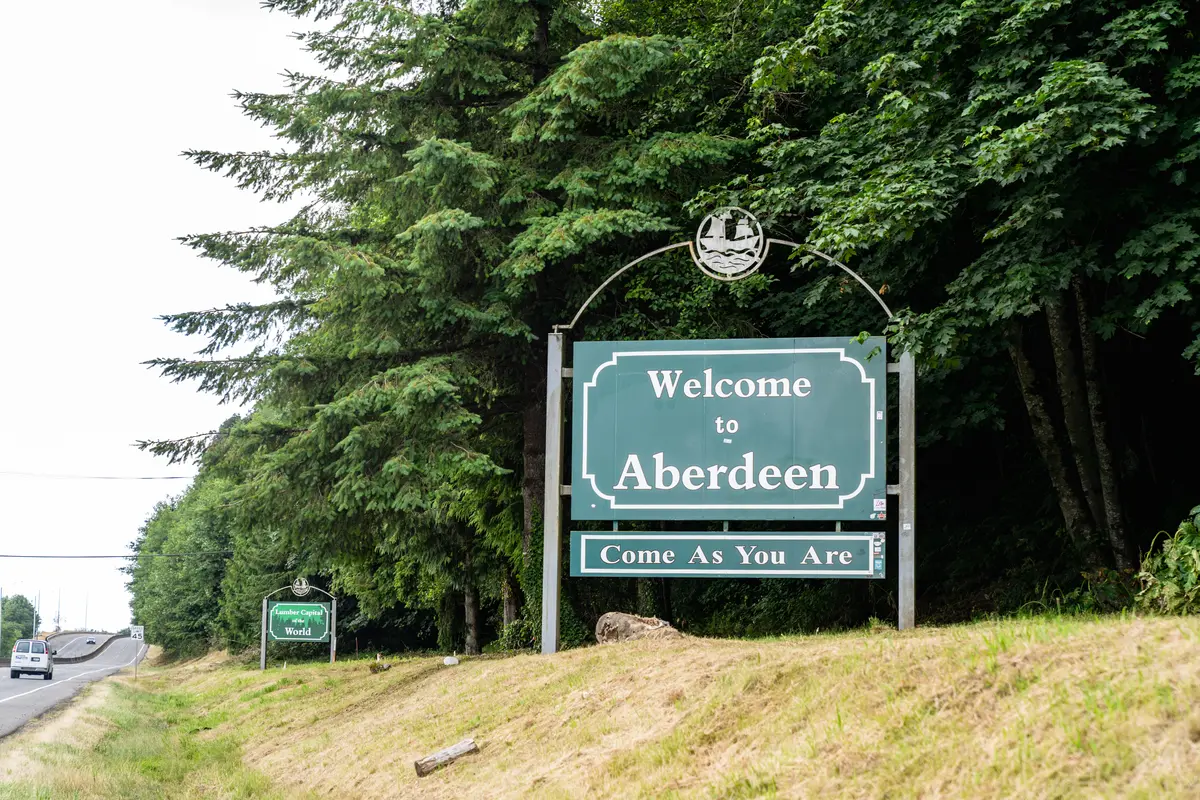
Retiring in Aberdeen
Aberdeen draws retirees for its balance of amenities, outdoor access, and cost. Here’s what to weigh.
🌤 Climate
Aberdeen's climate is mild year-round — temperatures rarely drop below freezing or climb above 80°F — but rainfall is persistent and substantial, averaging around 60 inches annually. Winters are grey and damp rather than cold and icy, which many retirees find more manageable than inland winters. Summers are genuinely pleasant, with long days and cool evenings.
🍴 Lifestyle
Retirement in Aberdeen centers on the outdoors: fishing and paddling on the Wishkah, day trips to the Pacific coast for clamming season, and access to Olympic National Park trails within an hour's drive. Dining options are modest but genuine, and the Aberdeen Art Center and the International Mermaid Museum provide consistent cultural programming.
🏚 55+ Communities
Aberdeen has senior housing and assisted-living options within the city and in neighboring Hoquiam and Montesano, though the area doesn't have large-scale purpose-built active-adult communities in the style of some larger markets. The combination of low home prices and below-average cost of living makes the area attractive for retirees on fixed incomes. For healthcare and senior living details, see the Aberdeen retiring page.
✈ Getting Around
Aberdeen is a car-dependent city, and most retirees here drive. Grays Harbor Transit provides local bus service for those who don't. The nearest commercial airport is in Olympia (about 55 minutes east on US-12), with Seattle-Tacoma International Airport roughly two hours away for major flights. Within the city, most daily destinations are within a 10-minute drive.
🏛 Washington Taxes for Retirees — What to Know
- No state income tax — Washington does not tax personal income, so Social Security, pensions, and 401(k)/IRA withdrawals are all untaxed at the state level. There is no state return to file and no retirement exclusion to claim — the rate is simply zero.
- Military and public pensions — Because there is no income tax, military retirement pay and public-employee pensions are untaxed at the state level along with everything else.
- Sales tax is the tradeoff — The state sales tax is 6.5%, and local add-ons bring the combined rate in Aberdeen to 9.08% (Washington State Department of Revenue, Q3 2026 local sales & use tax rate table, July 2026). Groceries and prescription drugs are exempt.
- Property taxes, with senior relief — The effective property tax rate is roughly 0.9%. Homeowners 61+ (or unable to work due to disability, or a qualifying disabled veteran) who own and occupy their home may qualify for a reduction. Income limits are set against each county’s median household income, so the threshold differs by county — check with your county assessor. A separate deferral program is available for those who don’t qualify for the exemption.
- Capital gains tax — but not on retirement income — Washington taxes 7% on long-term capital gains above a $278,000 standard deduction for 2025, rising to 9.9% on gains above $1,000,000. Retirement accounts and real estate sales are both exempt. It therefore does not reach ordinary retirement income or the sale of a home.
- Estate tax — the one to plan for — Unlike most no-income-tax states, Washington has its own estate tax. For deaths on or after July 1, 2026, the exemption is $3 million with graduated rates topping out at 20%. Retirement accounts count toward the taxable estate, so long-time homeowners with sizable balances can cross the line without expecting to.
- No inheritance tax — Washington has no inheritance tax, and no gift tax.
- WA Cares payroll premium — Working Washingtonians pay 0.58% of gross wages into the WA Cares Fund, the state long-term care program, with no income cap. It applies to W-2 wages, so retirees who have stopped working do not pay it — but anyone relocating while still employed will see it. The private-insurance opt-out closed at the end of 2022 and is not available to new applicants; the remaining exemptions are narrow (living outside Washington, military spouses, certain visa holders, and veterans with a 70%+ service-connected rating).
- The Oregon border effect — Oregon has no sales tax, so Washington residents near the river — Vancouver, Camas, Washougal, Longview — often cross over for large purchases. Washington use tax technically applies to goods brought back for use in-state, though it is rarely enforced on ordinary personal purchases.
Tax laws change frequently and individual situations vary. This is general information, not tax advice — always consult a qualified Washington tax professional or CPA for personalized retirement tax planning.
Weekends & Local Favorites in Aberdeen
Aberdeen's weekend gravitational pull runs in two directions simultaneously: inward toward the small but genuine downtown culture, and outward toward the coast and the mountains that surround the city on three sides. Most residents do both, and the rhythm of alternating between a morning coffee on E Wishkah and an afternoon on a trail in Olympic National Park is genuinely available here in a way it wouldn't be in most affordable markets.
Downtown Aberdeen
The city's downtown corridor along E Wishkah and E Heron streets is compact but worth exploring. A longtime bar and grill on E Heron St has been part of Aberdeen's social fabric long enough to be woven into the local identity — it's the kind of place where you'll run into port workers, high school sports fans after a game, and newcomers all at the same bar. The independent coffee roaster on E Wishkah is where mornings start for a consistent cross-section of the city.
The Aberdeen Art Center hosts rotating exhibitions and ongoing classes that attract a consistent creative community. The International Mermaid Museum is genuinely one of a kind — not an ironic attraction, but a serious and curated collection that draws visitors from across the Pacific Northwest and has become a point of local pride. For tall-ship history, the Lady Washington docks in Grays Harbor and periodically offers public sails; seeing her under full sail from the waterfront is one of those Aberdeen moments that doesn't photograph well but sticks with you.
The Kurt Cobain Connection
The Kurt Cobain Memorial Park and the Kurt Cobain Childhood Home Museum draw visitors from across the country, but they've also given Aberdeen a framework for understanding its own identity. The city's motto is a tribute to Cobain, and it reflects a real local attitude toward people who don't fit neatly into a category. If you're moving here partly because of the cultural ethos that phrase represents, that instinct is correct.
Getting Out of Town
The Pacific coast is Aberdeen's backyard: roughly 30 minutes west, with hard-packed beach driving, clamming season, and dune access that draws Aberdeen families nearly year-round. Lake Quinault and the Quinault Rain Forest are under an hour north on US-101 — old-growth Douglas fir and Sitka spruce at a scale that makes the drive worthwhile on any clear-ish day. The Wishkah River corridor within the city itself gets consistent use for fishing and paddling, and Sam Benn Memorial Park provides a reliable local gathering point without requiring a drive. For a full picture of trails, parks, and outdoor access, see the parks and recreation page.
What Aberdeen doesn't have on weekends: a multiplex cinema, a mall, a brewery district, or the kind of restaurant density that makes spontaneous dining-out decisions easy. Those are real gaps. Families with kids who need structured entertainment options often find themselves driving to Olympia or Centralia on weekends, and that's a routine that gets old faster than the drive time suggests it will.
Top Things Locals Say About Aberdeen
The best intel about a city comes from the people who actually live there. Here’s what Aberdeen residents say when newcomers ask the questions everyone’s thinking.
“I knew the rain was coming, but I didn't realize how much of my social life would end up outdoors anyway — clamming on the coast on a grey Saturday, or just walking the Wishkah corridor after work. You stop waiting for sun and just go.”
— Recent Aberdeen home buyer
“What's the most surprising thing about living in Aberdeen?”
Most people expect to miss the city amenities, and they do — but the bigger surprise is how quickly the rivers and the coast fill that gap. The Wishkah runs right through the city, and you can be on a beach or under old-growth trees at Lake Quinault in under an hour. Aberdeen's outdoors access is genuinely underrated by people who haven't lived here.
“What do locals love most about Aberdeen?”
The honesty of the place. Aberdeen doesn't pretend to be something it isn't. Downtown on E Wishkah and E Heron has real character — independent coffee in the morning, a longtime local bar in the evening, the Aberdeen Art Center if you want something cultural. It's a small city that knows what it is and doesn't apologize for it.
“What should newcomers to Aberdeen know?”
Learn the bridge crossings before you need them. The Chehalis and Wishkah rivers cut through the city and there are limited spots to cross, which matters during the morning shift-change traffic near the port. Also: buy quality rain gear immediately, not eventually. The locals who seem unbothered by the weather have simply stopped fighting it.
“Can you live in Aberdeen without a car?”
Technically yes — Grays Harbor Transit runs routes connecting Aberdeen to Hoquiam, Cosmopolis, and east toward Montesano. For basic errands within the city, it's functional. But for most households, especially anyone commuting to work outside the immediate Aberdeen-Hoquiam area or accessing the coast and mountains, a car is a practical necessity. Aberdeen is not a walkable city in the way that phrase is usually meant.
Cities Near Aberdeen
Other communities near Aberdeen worth a look — each with its own character and price point.
| City | Distance | Best For | Vibe | Median Rent | Median Buy |
|---|---|---|---|---|---|
| Hoquiam | 2 mi | Workers, value buyers, established neighborhoods | Quiet, older housing, low-key | $1,300 | $230,000 |
| Cosmopolis | 3 mi | Small-town feel, proximity to Aberdeen | Tiny, peaceful, industrial edge | $1,350 | $240,000 |
| Montesano | 10 mi | Families, county-seat services, quieter living | Small-town, forested, slower pace | $1,400 | $280,000 |
More Helpful Guides for Aberdeen
Going deeper on Aberdeen? Our blog series covers everything from first-time buying to retiring here — explore the guides below.
Local Expert Takeaway: Aberdeen is genuinely one of Washington's most affordable places to own a home, and that's not a hedge — the Zillow Home Value Index at $253,790 (July 2026) is real, and so is what it buys. But affordability here comes packaged with a working-class city that has visible economic stress, a property crime rate worth taking seriously, and a US-12 commute to Olympia that tests people in their first winter. If you can work locally or remotely, start your mornings at an independent café on E Wishkah, and treat an hour of drizzle as a reasonable price for Olympic National Park access, Aberdeen will reward you. If you need an Olympia paycheck five days a week and want downtown amenities within walking distance, the math gets harder fast.
Quick Takeaways & FAQs
✅ Aberdeen's Zillow Home Value Index of $253,790 (July 2026) makes it one of the most affordable homeownership markets in Washington state — real equity-building for local and remote workers.
⚠️ The US-12 commute to Olympia runs 50–60 minutes in normal conditions but stretches noticeably in winter fog and rain — it's the single biggest lifestyle variable for households with I-5 corridor jobs.
📍 Aberdeen's motto is a genuine tribute to Kurt Cobain, and the city's character — unhurried, unpretentious, working-class — really does match it.
Is Aberdeen, WA a safe place to live?
What is the average home price in Aberdeen, WA?
What are the major employers in Aberdeen, WA?
How far is Aberdeen, WA from Olympia?
What is Aberdeen, WA known for?
Helpful Links for Moving to Aberdeen
Moving to Washington?
Tell us what you need help with and we'll connect you with local resources.
