
Maybe you've been priced out of Sacramento, or you looked at a paycheck stub one too many times and noticed how much of it California keeps. Aberdeen, Washington sits at the eastern edge of Grays Harbor near the mouth of the Chehalis River — a small city of roughly 17,000 people on the Olympic Peninsula, two hours southwest of Seattle and about 55 minutes from Olympia. It is not a tech-corridor suburb or a retiree resort town. What it is, for a specific kind of California transplant, is genuinely affordable in ways that coastal California stopped being a decade ago.
The city's economic foundation runs on industries that have been here for generations: timber, shipping through the Port of Grays Harbor, food processing at Ocean Spray's cranberry cooperative, and retail anchored by large national employers. The Aberdeen School District serves the community's families, and the region's largest employer is a healthcare organization that has been part of the city's economy for decades. People who move here from California tend to fall into two camps: those chasing a specific outdoor lifestyle — the Olympic Peninsula's rain forests, coastline, and rivers are at the doorstep — and those who simply did the math and realized their California equity could buy them a paid-off house here.
The cost difference is not subtle. Aberdeen's typical home value sits at $253,790 (Zillow Home Value Index, July 2026) — see the full cost-of-living breakdown for how that ripples through everyday expenses. The lifestyle adjustment cuts both ways: you gain financial breathing room, temperate summers that rarely push past 72°F, and a genuinely slower pace. What you give up is the California sun, urban amenity density, and the kind of specialist care network that larger metro areas take for granted. Health insurance premiums run noticeably below what most Californians pay, though you will drive farther for specialized treatment.
Whether you're seriously weighing the move or still in early research mode, the sections below break down what the California-to-Aberdeen comparison actually looks like on taxes, home prices, climate, daily life, and the honest trade-offs that spreadsheets tend to leave out.
The Home Price Reality: What California Equity Buys Here
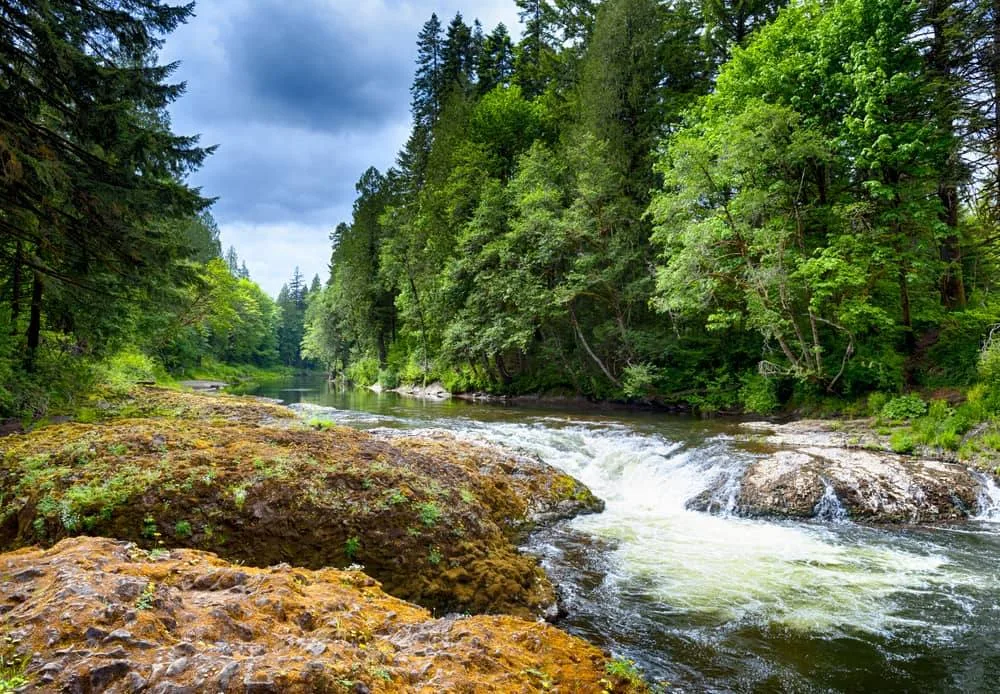
California's statewide median home price sits at approximately $785,000. Aberdeen's typical home value is $253,790 (Zillow Home Value Index, July 2026). That gap isn't a rounding error — it's a fundamentally different relationship with ownership.
For most Californians, the math works like this: sell a modest house in the Central Valley or a condo in the Bay Area, arrive in Aberdeen with meaningful equity, and either buy outright or carry a very small mortgage. That scenario plays out here regularly enough that locals notice the pattern.
What the Numbers Look Like Side by Side
| Metric | Aberdeen, WA | California (Statewide) |
|---|---|---|
| Typical / Median Home Price | $253,790 (ZHVI, Jul 2026) | ~$785,000 (2026) |
| Effective Property Tax Rate | ~0.90% | ~0.76% |
| State Income Tax | None (wages) | Up to 13.3% |
| Combined Sales Tax Rate | 9.08% | 7.25% (base) |
| Capital Gains Tax | 7% on long-term capital gains above a $278,000 standard deduction for 2025, rising to 9.9% on gains above $1,000,000 | Up to 13.3% (as ordinary income) |
| 2BR Rent (state avg.) | ~$1,695/month | ~$2,150/month |
Aberdeen's property tax rate is modestly higher than California's effective rate — approximately 0.90% versus roughly 0.76% — but that difference barely registers against the underlying price gap. The dollar amount you pay in annual property tax on an Aberdeen home is a fraction of what you'd pay on a California one at the lower rate.
One thing to understand about neighborhood character in Aberdeen before you start touring: the city's areas vary meaningfully in feel, from the walkable downtown core to quieter residential pockets along the water. The neighborhoods guide explains the geographic divides that matter most to buyers.
Entry-level homes in Aberdeen exist at price points that California transplants sometimes assume are typos. Older construction and fixer-uppers trade well below the city median. Move-in-ready homes with updated kitchens and decent square footage sit in the mid-$200,000s to low-$300,000s. If you're arriving with $400,000 or more from a California sale, you are not a buyer who needs to compromise here.
Taxes: The Income Tax Win — and the Catches
Washington state levies no income tax on wages or salaries. For a California household earning $150,000 a year, that single fact can represent more than $10,000 annually that stays in your pocket instead of going to Sacramento.
California's progressive income tax tops out at 13.3% — 12.3% plus a 1% Mental Health Services Tax that kicks in above $1 million. It applies to wages, capital gains, and investment income alike. Washington has none of that for wage earners, full stop.
The Capital Gains Nuance
Washington taxes 7% on long-term capital gains above a $278,000 standard deduction for 2025, rising to 9.9% on gains above $1,000,000. California taxes capital gains as ordinary income at rates up to 13.3%. For most families selling a primary residence and moving — not investors harvesting large annual gains — Washington's structure is substantially more favorable.
What High Earners Should Know
A new Washington law (ESSB 6346), signed in March 2026, will impose a 9.9% income tax on household income above $1 million starting January 1, 2028. If you're a high-earning California transplant moving for the income tax advantage, that development is worth tracking. Wage earners below that threshold are entirely unaffected through at least 2027, and even the new law applies only above $1 million — still a dramatically narrower net than California's top rate.
Sales Tax: The Trade-Off You Feel at the Register
Aberdeen's combined sales tax rate is 9.08%, noticeably higher than California's 7.25% base rate. Washington leans on sales tax to fund state services precisely because it foregoes income tax. Groceries and prescription drugs are exempt from Washington sales tax, which softens the daily impact. But on a car purchase, appliances, or furniture, you'll feel the difference.
For the full picture on property taxes, utility costs, and everyday expenses, see the Aberdeen cost-of-living page.
Climate: 76 Inches of Rain and What That Actually Means
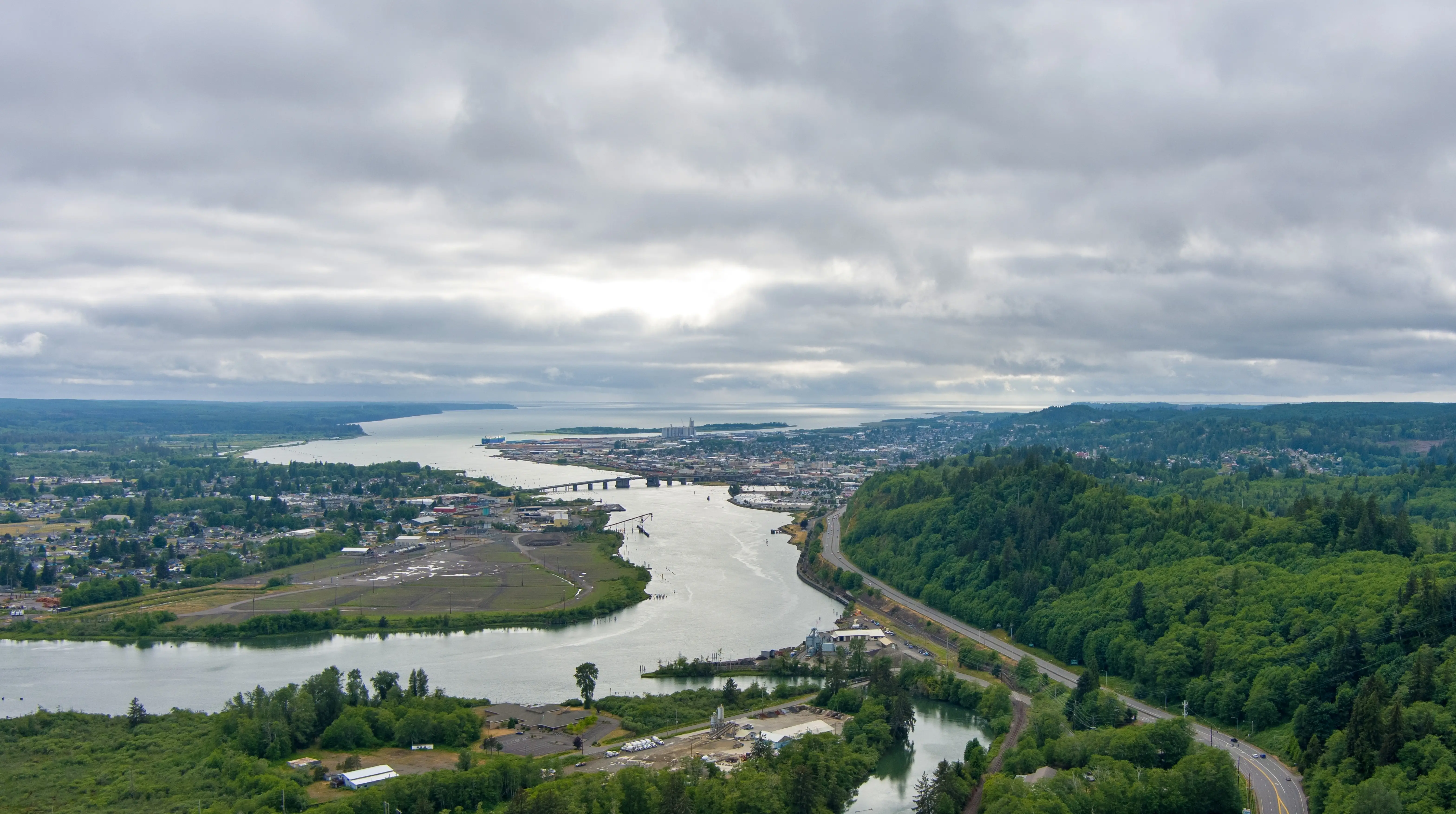
Aberdeen averages approximately 76 inches of rain per year. The U.S. annual average is 38 inches. You are not moving to a place that gets a little more rain than you're used to — you are moving to one of the wettest cities in the continental United States.
The wet season runs October through March. During those months, overcast skies and steady rain are the default. This is not the dramatic, tropical downpour that Southern California occasionally gets — it's persistent, low-grade grey. Newcomers from San Diego or the Bay Area almost universally underestimate how much this affects mood and daily habits in year one.
What Locals Know About the Rhythm
The flip side is real. July and August in Aberdeen are genuinely lovely — highs averaging 70–72°F, rarely breaking 79°F, with actual sunshine. You will not need air conditioning. Californians who spent summers in the Central Valley or Inland Empire often describe Aberdeen summers as a revelation.
Winter is mild in temperature — snow accumulation averages only about 1 inch per year, and hard freezes below 28°F are rare. You're not trading California sun for Minnesota cold. You're trading it for grey and damp, which is a different adjustment entirely.
The Six-Month Surprise
Most California transplants handle the first autumn fine. It feels like novelty. By February of year one, the novelty has worn off completely. Locals who have watched this pattern play out consistently say the same thing: the people who stay long-term are the ones who find reasons to be outside anyway — hiking the rain forest trails of the Olympic Peninsula, fishing the Chehalis River, or kayaking Grays Harbor. The people who move out cite the weather more than anything else. That's an honest data point worth sitting with before you commit.
Aberdeen's outdoor access — the Olympic National Park boundary, the Pacific coast beaches, and the river system — is explored in depth on the parks and recreation page.
Looking to buy in Aberdeen? Estimate your payment.
Enter your numbers to see an estimated monthly mortgage payment.
Estimate only. Excludes HOA fees and mortgage insurance. The interest rate above is a starting point, not a quoted rate — replace it with your own to see real numbers. Insurance is a flat placeholder, not a Aberdeen quote.
Daily Life: What Aberdeen Is Like to Actually Live In
Aberdeen is a working-class port city with a real identity. It's the birthplace of Kurt Cobain — Kurt Cobain Memorial Park and the Cobain Childhood Home Museum draw visitors year-round — and it wears that heritage without self-consciousness. The International Mermaid Museum and the Lady Washington tall ship (when she's in port at the Grays Harbor Historical Seaport) give the city a texture that larger Washington suburbs entirely lack.
The honest version of daily convenience in Aberdeen looks like this: you have a Walmart, a handful of independent restaurants and bars, and reasonable access to basic services. What you don't have is the density of dining, entertainment, or retail that California metros normalize. Californians who moved from within five miles of a Trader Joe's will make a longer drive or rethink their habits.
Where People Actually Gather
The Breakwater Seafoods & Chowder House on S F Street is the kind of place that becomes part of your weekly routine — fresh local seafood, straightforward, nothing pretentious. A bar and grill scene exists along the main commercial corridors for those who want a low-key Friday evening out. Sam Benn Memorial Park is where families with kids spend weekend afternoons. The Aberdeen Art Center anchors a small but genuine local arts community.
The Commute Reality
If you're working remotely, Aberdeen's location is fine. If you're commuting to Olympia — the closest mid-sized city with a broader job market — budget roughly 55 minutes each way. That commute doesn't have a good workaround; US-12 east is your primary option. See the living in Aberdeen page for more on the local economy and who the city tends to suit long-term.
School quality is a common question from families arriving from California districts. The Aberdeen School District serves the city, and the schools page covers what district-reported data and local experience actually look like. First-time buyers navigating the financing side of the purchase — particularly those using California equity proceeds — should review the homebuyer guide for Washington-specific program options.
Who This Move Makes Sense For — and Who Should Reconsider
The case for moving to Aberdeen from California is straightforward for a specific profile: remote worker or retiree with California equity, drawn to the Olympic Peninsula's outdoor life, comfortable with small-city amenity levels, and genuinely unbothered by sustained grey weather. For that person, the financial math is hard to argue with.
| Buyer / Mover Type | Aberdeen Fit | The Honest Trade-Off |
|---|---|---|
| Renters Escaping CA Costs | Strong — rents run noticeably below California averages | Fewer amenities; weather adjustment is real |
| First-Time Buyers | Strong — entry-level homes exist at accessible prices | Local job market is limited; income matters |
| Outdoor Lifestyle Seekers | Excellent — Olympic Peninsula access is immediate | Rain season runs six months; plan accordingly |
| Olympia Commuters | Possible — 55 min each way on US-12 | No commute alternatives; long-term fatigue is common |
| Families with Kids | Moderate — affordable, safe enough, slower pace | School district rating; limited youth programming variety |
| Equity-Rich CA Sellers | Excellent — cash or near-cash buyers in this market | Lifestyle downshift from major metro is significant |
The move tends to disappoint buyers who expect Aberdeen to feel like a smaller version of where they came from. It won't. The downtown is not a boutique-lined main street; it's a working port town with gaps in its commercial fabric and a history of economic challenge.
What You Would Not Do
You would not buy in Aberdeen sight unseen based on the price alone. The difference between a block that feels fine and one that carries real safety concerns is meaningful in a city this size — the safety page breaks down the crime picture honestly. And you would not assume that California's real estate norms apply here: disclosure customs, inspection practices, and closing timelines in Washington have their own rhythm that California buyers consistently underestimate.
The people who thrive here moved with a clear-eyed picture of what they were getting. The people who leave within two years are usually the ones who focused entirely on the price and not enough on the rain.

Local Expert Takeaway: California transplants who do best in Aberdeen arrive having already made peace with two things: the rain that runs from October through March without apology, and a daily life where the nearest equivalent of their old Saturday-morning routine is probably in Olympia, not around the corner. What Aberdeen gives back is real — a $253,790 home price that lets equity from a modest California sale translate to genuine ownership, a zero-state-income-tax paycheck (for wage earners), and an Olympic Peninsula backyard that no California suburb can match. Grab chowder at Breakwater Seafoods & Chowder House on S F Street, walk to Kurt Cobain Memorial Park, and ask yourself honestly whether the grey sky bothers you. If it doesn't, the math here is nearly impossible to beat.
Quick Takeaways & FAQs
✅ Washington levies no state income tax on wages — for a typical California household, that alone can mean thousands of dollars more per year staying in your pocket.
⚠️ Aberdeen averages around 76 inches of rain annually; the six-month wet season from October through March is the single most common reason California transplants ultimately move back.
📍 Aberdeen's typical home value is $253,790 (Zillow Home Value Index, July 2026) — California equity from even a modest home sale can translate to outright ownership or a dramatically smaller mortgage here.
Is Washington state really no income tax, and does that apply if I move to Aberdeen?
How far is Aberdeen from Seattle, and is it a realistic commute?
Will my California down payment and buying experience translate to buying a home in Aberdeen?
What is Aberdeen's sales tax, and is it really higher than California's?
Is Aberdeen safe enough for a family moving from California?
Moving to Washington?
Tell us what you need help with and we'll connect you with local resources.
