What Is Living in Tumwater, Washington Like?
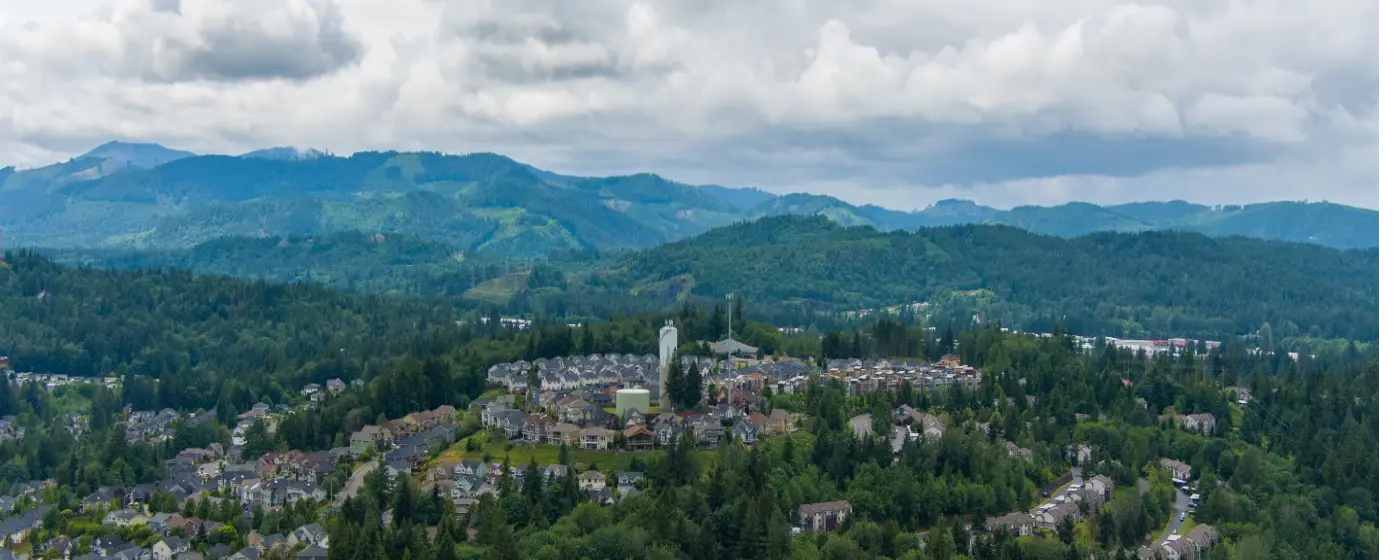
You've probably driven through Tumwater without realizing it — the exit off I-5 between Olympia and the long stretch south toward Centralia, a quick glimpse of smokestacks and a river gorge before the freeway pulls you onward. What that drive-by hides is that Tumwater is the oldest permanent Anglo-American settlement on Puget Sound, a city with a median household income of $95,212, a growing population that has expanded nearly 10% since 2020, and home prices noticeably below what you'd find in Seattle's orbit. It sits where the Deschutes River empties into Budd Inlet — the southernmost finger of Puget Sound — pressed directly against the state capital of Olympia to the north. The I-5 corridor is the spine of daily life here: it connects you north to Joint Base Lewis-McChord and Tacoma, and south toward nothing in particular, which is precisely the point for people who want access without the chaos.
The single largest employer in Tumwater's economy is the State of Washington itself. Because Olympia is the capital, state government agencies fill office parks and downtown buildings throughout the metro, and Tumwater captures a significant share of those jobs. The Tumwater School District serves the city and holds a B rating, according to Niche — solid, consistent, and not a reason to avoid the city if you're relocating with school-age children. Beyond government, Cabela's outdoor sporting goods anchors a major retail corridor along Capitol Boulevard, the Craft District's collection of independent breweries and distilleries has made the old Olympia Brewery site into a genuine destination, and Confederated Tribes-affiliated enterprises add hospitality employment to the mix. The people moving here are largely state workers, military families stationed at JBLM who want more space than Tacoma offers, and renters across Thurston County who are ready to buy.
The Zillow Home Value Index puts Tumwater's typical home price at $531,134 as of May 2026 — well below the Seattle metro median and meaningfully more affordable than nearby Olympia's most desirable pockets. That relative value is one of Tumwater's strongest selling points. Day-to-day life is shaped by Tumwater Falls Park and Tumwater Historical Park, both free and both sitting along the Deschutes River gorge within city limits. Intercity Transit runs 21 bus routes connecting Tumwater to Olympia, Lacey, and express connections north toward Sound Transit, logging over four million annual rides in 2024. Rural Transit adds zero-fare service south to Rochester, Rainier, and Tenino. The city is not walkable in the traditional sense — a car is essential for most errands — but the outdoor access and transit bones are better than the city's size would suggest.
Whether you're considering a move or just researching the area, the sections below break down Tumwater's key employers and economy, what daily life actually looks like, the current housing market, how commuting works, and where locals spend their weekends.
Tumwater at a Glance
Looking to buy in Tumwater? Estimate your payment.
Enter your numbers to see an estimated monthly mortgage payment.
Estimate only. Excludes HOA fees and mortgage insurance. The interest rate above is a starting point, not a quoted rate — replace it with your own to see real numbers. Insurance is a flat placeholder, not a Tumwater quote.
Why Are People Moving to Tumwater?
The honest answer is usually one of three things: a state government job, a JBLM assignment, or getting priced out of somewhere north and realizing Tumwater still has room. Most people don't pick Tumwater because they fell in love with it on Instagram. They pick it because it makes financial and practical sense — and then they discover they actually like it.
The Government Economy That Anchors Everything
Because Washington's capital sits directly on Tumwater's northern border, state agency employment is the single biggest force shaping who lives here and how stable the local economy runs. Budget cycles matter to this city in a way they don't in a tech-driven market. State employment tends to be recession-resistant, which is part of why Tumwater's housing market stayed competitive even when national markets softened.
Beyond government, Cabela's on Capitol Boulevard draws regional retail traffic and employs hundreds. The Craft District — built on the bones of the old Olympia Brewery — has become one of the more interesting economic stories in the region, with independent breweries and distilleries that attract both tourists and locals. Confederated Tribes-affiliated enterprises add a hospitality and services layer to the employment base. A major regional health system operates in the broader metro and is one of the area's largest employer categories, though that fact gets its full treatment on the Tumwater retiring page.
Who Actually Moves Here
| Buyer Type | What Draws Them | Best Fit |
|---|---|---|
| State employees | Short commute to state agency campuses, stable income matches Tumwater prices | Commuter |
| JBLM military families | 40-minute drive to base, more space than Tacoma neighborhoods allow | Families Value |
| Thurston County renters stepping up | Prices more attainable than Olympia's westside, same amenities | First-Time |
| Remote workers from Seattle | Traded the commute for a mortgage they can actually afford | Value Nature |
| Parents with school-age children | Tumwater School District's consistent district rating, smaller-city pace | School Quiet |
| Early retirees / downsizers | No income tax in Washington, walkable falls and river parks | Views Transit |
The city's growth rate of roughly 1.49% annually is steady without being frenetic — Tumwater is expanding, not exploding, which keeps the community feel more intact than in faster-growing suburbs to the north.
The Brewery District Bet
The redevelopment happening around the old Olympia Brewery campus is worth watching if you're thinking long-term. EPA and Washington State Department of Ecology grants are actively funding brownfield assessment and remediation along the Brewery District and Capitol Boulevard Corridor. That kind of public investment in cleanup and planning typically precedes the kind of mixed-use development that raises surrounding property values over five to ten years.
It's not a guarantee — brownfield timelines slip, and city-driven redevelopment projects often take longer than announced. But the trajectory is toward more amenities in that corridor, not fewer.
What Daily Life Feels Like in Tumwater
Tumwater doesn't have a downtown in the conventional sense. Capitol Boulevard is the main commercial artery — a mix of national retailers, service businesses, and the occasional local spot — and it functions more as a suburban corridor than a walkable main street. Most residents drive for groceries, drive for coffee, and drive for dinner. That's not a knock; it's just the reality of a city this size in the Pacific Northwest.
What Locals Don't Tell You Until Month Three
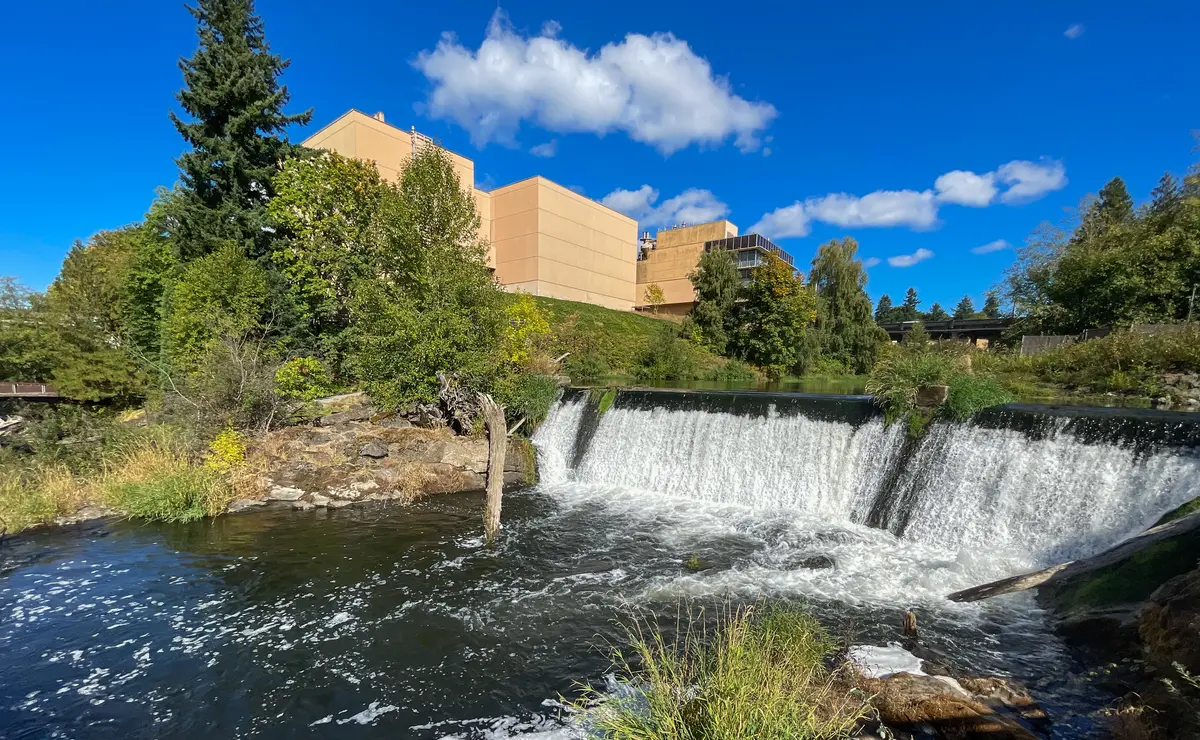
Newcomers consistently underestimate how much the falls become part of daily life. Tumwater Falls Park — free, 15 acres, open along the Deschutes River gorge — becomes the default Tuesday-evening walk and the first place you take visiting family. It's open until 8 p.m. in summer, which means after-dinner light on the river gorge is a genuine weeknight option. The 17-acre Tumwater Historical Park just below the falls adds paved, wheelchair-accessible trails and river access. For a city of under 30,000, the public green space is genuinely impressive, and it's fully explored on the parks and recreation page.
What does surprise people: the off-season park closing time of around 4:30 p.m. hits hard in November when it gets dark before 5. First winter here, newcomers often show up for their usual walk and find the gates closed. Build the seasonal schedule into your routine early.
Where Families Actually Gather
Pints Barn draws a mix of locals for food and drinks in a casual setting. Tumwater Taco Company has built a following among families and after-work crowds who want something quick and good. The Craft District breweries along the old Olympia Brewery site have become the city's closest thing to a neighborhood gathering spot — specifically for evenings when you want to linger rather than dine quickly.
The honest trade-off: Tumwater lacks the independent restaurant density that Olympia's westside offers. If curated dining variety is a priority, expect to drive ten minutes north at least a few nights a month. Most longtime residents treat Olympia's restaurant scene as their extended backyard and don't consider it a hardship.
The Seasonal Reality
Western Washington's rain reputation is well-earned, and Tumwater is no exception. The stretch from November through February is genuinely gray — overcast with frequent drizzle and occasional hard rain, but rarely severe cold or snow. Summers are the trade-off payoff: long days, temperatures in the 70s, and low humidity that makes outdoor living feel effortless from June through September. Most residents who struggled through their first winter say the same thing by summer: they understand now why people are so protective of the Pacific Northwest's seasons.
School district specifics and boundary details are on the Tumwater schools page; safety context lives on the safety page.
The Tumwater Housing Market Right Now
The Zillow Home Value Index for Tumwater sits at $531,134 as of May 2026, up 0.6% over the prior year — modest appreciation that signals a stable, competitive market rather than a speculative one. That figure is meaningfully more attainable than Seattle's metro median, and it's also below Olympia's most sought-after westside neighborhoods, which is why buyers priced out of both often land here.
Redfin scores Tumwater's market at 74 out of 100, rating it "Very Competitive." In practice, that means desirable homes — particularly those with updated kitchens, larger lots, or proximity to the falls corridor — routinely attract multiple offers and go pending in roughly 11 days. Hot listings have sold for approximately 1% above list price. This is not a market where you browse casually for three months and then make a low offer.
Some parts of Tumwater command higher prices than others — elevated neighborhoods and those closest to green space tend to run above the city-wide figure, while more industrial-adjacent areas offer relative value. The full neighborhood breakdown is on the best neighborhoods page.
Washington's effective property tax rate in Tumwater runs approximately 0.96% — below the national average and one of the cleaner parts of the ownership math here. The state also has no personal income tax, which factors meaningfully into the total cost of living for anyone relocating from a state that does. The complete tax and cost-of-living picture is on the cost of living page.
Inventory moves fast enough that preparation matters more than patience in this market. What a buyer should actually do about that is covered on the first-time homebuyer page — this section just tells you what you're walking into.
Tumwater Neighborhoods
Tumwater has several distinct areas — each with its own character and appeal. Here’s a breakdown to help you narrow down where to focus your home search.
🏡 Tumwater Hill
Tumwater Hill sits on elevated terrain southwest of Capitol Boulevard with established tree cover and a mix of mid-century and updated homes — it's the neighborhood most associated with families who want proximity to the falls trail without being on a flat commercial grid. The hillside location gives some properties genuine views and keeps through-traffic lower than the valley below.
🏠 New Market
New Market occupies a central position near Tumwater's commercial core along Custer Way and Capitol Boulevard, making it practical for residents who want quick access to services, the Craft District, and I-5 without committing to a longer drive from quieter outskirts. The housing stock is diverse, ranging from older bungalows to more recent infill.
🌳 Tumwater Airport
The Tumwater Airport area sits on the city's western edge near the small general-aviation airport, offering a more spread-out, semi-rural feel compared to neighborhoods closer to Capitol Boulevard. It tends to attract buyers who want larger parcels and fewer neighbors while staying within city limits.
🏘 Trosper
Trosper runs along Trosper Road — one of the city's active transportation corridor improvement zones — putting residents close to Capitol Boulevard retail, I-5 on-ramps, and Tumwater's commercial services. It's a practical, no-frills location that suits commuters who prioritize access over neighborhood character.
🏔 Autumn Ridge
Autumn Ridge is a quieter subdivision-style area on Tumwater's south end that draws families with school-age children looking for newer construction and more of a residential pace. The streets are calmer than the Capitol Boulevard corridor, and the neighborhood's relative distance from I-5 noise is a genuine selling point.
🌆 Black Lake/Mottman-Black Lake
The Black Lake and Mottman-Black Lake area wraps around the western edge of the city near the lake itself, offering a more nature-adjacent feel with water access for fishing and recreation just outside the door. It appeals to buyers who want the outdoor character of the Puget Sound region built into their immediate surroundings rather than as a weekend drive.
Pros & Cons of Living in Tumwater
The Pros
- Deep Pacific Northwest history with landmarks like Tumwater Falls and the old Olympia Brewery
- Close proximity to Olympia and state government jobs
- Growing craft beer and distilling scene in the Brewery District
- Access to parks
- waterfalls
- and Puget Sound outdoor recreation
The Cons
- Property crime rates run notably above national and state averages
- Gray
- rainy winters with relatively few annual sunny days
- Home prices have climbed well above national medians despite being a smaller city
Getting Around & Commuting in Tumwater
Tumwater's location is genuinely one of its structural advantages. Sitting at the I-5 corridor's southern Puget Sound gateway, the city places commuters within roughly 10 minutes of central Olympia and state agency campuses, and within practical daily-driving range of Joint Base Lewis-McChord — a commute that runs about 35 to 45 minutes under normal conditions northbound on I-5.
The I-5 Reality
I-5 northbound toward Olympia and JBLM moves well for most of the day. The problem corridor is the Tumwater Boulevard / I-5 interchange during morning peak hours — the city is actively installing roundabouts along Trosper Road, Capitol Boulevard, and E Street specifically to address the delays that have built up as the population has grown. Those improvements are underway now, which means construction friction in the near term and better flow once they're complete.
Capitol Boulevard is the other daily chokepoint. It's the city's main commercial artery, and the signal timing through the retail corridor between Trosper Road and Custer Way creates real delays during the 7–9 a.m. and 4:30–6:30 p.m. windows. Locals who commute into Olympia's state agency buildings often use surface streets through the Tumwater Hill area to skip the Capitol Boulevard backup entirely.
Transit That Actually Works
Intercity Transit runs 21 routes through Thurston County with annual ridership of over four million trips in 2024 — those are not token numbers for a small metro. The system links Tumwater directly to Olympia, Lacey, and Yelm, and offers express connections north to Lakewood and Sound Transit for riders making the longer haul toward Tacoma and Seattle without a car.
Rural Transit (rT) extends zero-fare service south and east to Rainier, Tenino, Rochester, Bucoda, and the Confederated Tribes of the Chehalis Reservation. For households with one car or residents who want to cut transportation costs, the combination of Intercity Transit and Rural Transit is legitimately useful in ways that most small cities this size can't offer.
Amtrak daily service runs from Lacey's Centennial Station — a short drive from Tumwater — with trains to Portland and Seattle. It's not a substitute for a daily commute north, but it's a real option for occasional trips that would otherwise mean driving I-5 through Tacoma.
Driving Distance Context
| Destination | Typical Drive | Notes |
|---|---|---|
| Olympia (state agency campuses) | ~10 min | I-5 or Capitol Blvd surface route |
| Joint Base Lewis-McChord | ~35–45 min | Northbound I-5; varies heavily with traffic |
| Lacey (Centennial Station / Amtrak) | ~15 min | US-101 or I-5 east |
| Tacoma | ~50–65 min | I-5 northbound; congestion-dependent |
| Seattle (downtown) | ~90–110 min | I-5; realistic only off-peak or remote days |
| Yelm | ~25 min | SR-510 east; rural highway |
| Sea-Tac Airport | ~75–90 min | I-5 north; budget extra time morning flights |
The honest commute reality: Tumwater works well for anyone whose employment anchor is in the Olympia-to-JBLM corridor. It starts working against you if your daily destination is north of Tacoma — that drive, five days a week, accumulates into a real quality-of-life cost.
Schools in Tumwater
Families relocating to Tumwater have public, private, and higher-education options nearby. Here’s a quick overview.
🎓 School District
Tumwater School District serves K–12 students across Tumwater and the surrounding area. Rated B (source: Niche.com).
🏆 Graduation Rate
The 4-year high-school graduation rate here is approximately 90.6%.
📚 Higher Education
Washington’s public universities — the University of Washington, Washington State University, and Western Washington University — offer four-year degrees statewide, with a network of 34 community and technical colleges (SBCTC) providing two-year and workforce programs.
🌐 Online Learning
University of Washington Continuum College and Washington State University Online offer fully accredited online degrees for remote learners across the state.
Safety in Tumwater
A quick look at how Tumwater compares on the numbers that matter most when weighing a neighborhood or a move.
🛡 Violent Crime
Approximately 2 per 1,000 residents.
🔒 Property Crime
Approximately 25 per 1,000 residents.
Compared to the FBI’s most recent national data (2024), Tumwater’s violent crime is below the national average (about 3.6 per 1,000), and property crime is above the national average (about 17.6 per 1,000).
Against Washington as a whole, Tumwater’s violent crime is roughly two-thirds of the state average, and property crime is about the same as the state average (Bureau of Justice Statistics, Crime Known to Law Enforcement, 2024 (tables 2 and 3)).
Crime rates can vary a lot within a single city, so the citywide numbers above are only a starting point. Some neighborhoods in Tumwater run well below these averages, while others run higher — the kind of block-by-block detail that matters most when you’re actually choosing where to live. The full guide below breaks it down neighborhood by neighborhood.
Working in Tumwater
Tumwater’s largest employers span several industries — here are some of the anchors of the local job market.
🏛 State of Washington agencies
Government
🎓 Tumwater School District
Education
🛒 Cabela's
Retail
🛒 Craft District breweries and distilleries
Food & beverage
🏥 Confederated Tribes-affiliated enterprises
Hospitality
Parks & Recreation in Tumwater
Some of the outdoor spaces that shape everyday life in Tumwater.
🌱 Tumwater Falls Park
🌱 Tumwater Historical Park
Tumwater residents don’t have to go far for green space — spots like Tumwater Falls Park and Tumwater Historical Park are part of everyday life here, whether that’s a morning walk, a weekend hike, or just somewhere to unwind outside. The full guide below covers more of what Tumwater has to offer for parks and outdoor recreation.
Retiring in Tumwater
Tumwater draws retirees for its balance of amenities, outdoor access, and cost. Here’s what to weigh.
🌤 Climate
Tumwater delivers mild Pacific Northwest weather — cool, rainy winters with temperatures rarely dipping below freezing, and dry, comfortable summers in the low-to-mid 70s. The gray stretch from November through February is real and long, but it comes without ice storms or extreme cold. Summers reward patience: June through September is some of the most livable outdoor weather in the country.
🍴 Lifestyle
Retirees lean heavily on Tumwater Falls Park and the Deschutes River trail network for daily exercise without a gym membership. The Craft District's tasting rooms offer casual social venues within city limits, and Olympia's performing arts venues, farmers markets, and independent restaurants are a 10-minute drive north. The pace is unhurried without feeling isolated.
🏚 55+ Communities
Tumwater and the broader Thurston County area have active-adult and senior-living communities serving the region, with options ranging from independent living to assisted care. The county's overall senior-services infrastructure is bolstered by the proximity to Olympia's services and a major regional health system operating in the metro — full details are on the retiring page.
✈ Getting Around
Most retirees drive — Capitol Boulevard and I-5 access make errand-running straightforward during off-peak hours. Intercity Transit offers a practical alternative for trips into Olympia and Lacey without parking hassles. Sea-Tac Airport is roughly 75 to 90 minutes north on I-5, realistic for occasional travel without requiring a connection through a regional hub.
🏛 Washington Taxes for Retirees — What to Know
- No state income tax — Washington does not tax personal income, so Social Security, pensions, and 401(k)/IRA withdrawals are all untaxed at the state level. There is no state return to file and no retirement exclusion to claim — the rate is simply zero.
- Military and public pensions — Because there is no income tax, military retirement pay and public-employee pensions are untaxed at the state level along with everything else.
- Sales tax is the tradeoff — The state sales tax is 6.5%, and local add-ons bring the combined rate in Tumwater to 9.8% (Washington State Department of Revenue, Q3 2026 local sales & use tax rate table, July 2026). Groceries and prescription drugs are exempt.
- Property taxes, with senior relief — The effective property tax rate is roughly 0.9%. Homeowners 61+ (or unable to work due to disability, or a qualifying disabled veteran) who own and occupy their home may qualify for a reduction. Income limits are set against each county’s median household income, so the threshold differs by county — check with your county assessor. A separate deferral program is available for those who don’t qualify for the exemption.
- Capital gains tax — but not on retirement income — Washington taxes 7% on long-term capital gains above a $278,000 standard deduction for 2025, rising to 9.9% on gains above $1,000,000. Retirement accounts and real estate sales are both exempt. It therefore does not reach ordinary retirement income or the sale of a home.
- Estate tax — the one to plan for — Unlike most no-income-tax states, Washington has its own estate tax. For deaths on or after July 1, 2026, the exemption is $3 million with graduated rates topping out at 20%. Retirement accounts count toward the taxable estate, so long-time homeowners with sizable balances can cross the line without expecting to.
- No inheritance tax — Washington has no inheritance tax, and no gift tax.
- WA Cares payroll premium — Working Washingtonians pay 0.58% of gross wages into the WA Cares Fund, the state long-term care program, with no income cap. It applies to W-2 wages, so retirees who have stopped working do not pay it — but anyone relocating while still employed will see it. The private-insurance opt-out closed at the end of 2022 and is not available to new applicants; the remaining exemptions are narrow (living outside Washington, military spouses, certain visa holders, and veterans with a 70%+ service-connected rating).
- The Oregon border effect — Oregon has no sales tax, so Washington residents near the river — Vancouver, Camas, Washougal, Longview — often cross over for large purchases. Washington use tax technically applies to goods brought back for use in-state, though it is rarely enforced on ordinary personal purchases.
Tax laws change frequently and individual situations vary. This is general information, not tax advice — always consult a qualified Washington tax professional or CPA for personalized retirement tax planning.
Weekends & Local Favorites in Tumwater
The weekend rhythm in Tumwater tends to center on the Deschutes River corridor first and Capitol Boulevard's commercial strip second. On a Saturday morning in June, the trail through Tumwater Falls Park fills with walkers, dogs, and the occasional family with a stroller — the paved paths through Tumwater Historical Park handle wheels easily, which makes this a genuinely multi-generational space.
The Craft District as Social Anchor
The old Olympia Brewery site along Custer Way has been evolving into the Craft District — a cluster of independent breweries and distilleries that has become Tumwater's closest equivalent to a neighborhood hub. An evening here means wandering between tasting rooms, which is a different experience than a single-destination bar night. It draws both locals and visitors from Olympia and Lacey, which keeps the energy varied without feeling like a tourist trap.
The Henderson House Museum and Tumwater Historical Park sit adjacent to each other at the confluence of the Deschutes and Capitol Lake — the kind of spot that locals take for granted and visitors immediately photograph. The setting is genuinely striking: the 1905 Henderson House surrounded by mature trees, within earshot of the falls upstream.
Where to Eat and Drink
Tumwater Taco Company has become a go-to for quick, good food that doesn't require a reservation. Pints Barn works for casual evenings with a group. For a wider restaurant selection, expect to drive into Olympia — the independent dining scene on Olympia's 4th Avenue and downtown core is genuinely good, and most Tumwater residents fold it into their regular rotation without thinking of it as a separate city.
Outdoor Access Beyond the Falls
The Deschutes River corridor extends well beyond city limits for kayakers and anglers. Black Lake, just west of the city, is a genuine local fishing spot — bass and perch, flat water, and far less crowded than any lake closer to Olympia proper. The regional trail network connects into Tumwater from multiple directions, and the Capitol State Forest to the southwest opens up mountain biking and hiking within a 20-minute drive. A deeper look at the outdoor recreation picture is on the parks and recreation page.
One thing newcomers discover quickly: Tumwater has a strong culture of showing up for WIAA high school athletics. Friday night football at Tumwater High School draws a real community crowd — it's one of the social anchors that makes this feel less like a suburb and more like a town that has a sense of itself.
Top Things Locals Say About Tumwater
The best intel about a city comes from the people who actually live there. Here’s what Tumwater residents say when newcomers ask the questions everyone’s thinking.
“I knew the commute to the state agency buildings would be easy — 10 minutes, no problem. What I didn't expect was that the Deschutes River trail would become my entire social life. I'm down there three evenings a week. Nobody warned me how much a free park could change a neighborhood.”
— Recent Tumwater home buyer
“What's the most surprising thing about living in Tumwater?”
How much the falls matter. Tumwater Falls Park sounds like a municipal amenity — something you visit once and check off the list. Instead, it becomes your default decompression spot. The trail down the Deschutes gorge is maybe a mile and a half, it's free, and it's genuinely beautiful. People who move here from bigger cities are often caught off guard by how often they use it.
“What do locals love most about Tumwater?”
The combination of price and access. You're paying less than you would in Olympia's westside or Lacey's newer subdivisions, and you're still within 10 minutes of Olympia's state agency campuses, 15 minutes of Lacey's retail corridor, and a short drive from Black Lake for fishing or the Capitol State Forest for trails. The Craft District along Custer Way has become a legitimate evening destination — tasting rooms within walking distance of each other, which is not something most small cities pull off.
“What should newcomers to Tumwater know?”
Don't try to cross Capitol Boulevard between 7:30 and 8:30 in the morning if you have any alternative route. The signal timing through the commercial corridor backs up in ways that feel disproportionate to the city's size. Locals heading to state agency offices often cut through Tumwater Hill via surface streets to sidestep it entirely. Also: the parks close early in winter — closer to 4:30 p.m. — and that catches people off guard when they show up for their usual walk in November and find the gates locked.
“Can you live in Tumwater without a car?”
You can commute into Olympia without one — Intercity Transit's coverage is genuinely good for the county's size, and the system logs millions of rides annually. But living car-free for groceries, weekend activities, and the scattered errands that make up daily life is genuinely difficult. The city's layout along Capitol Boulevard is built around driving. Households with one car who use transit for the work commute find it workable; fully car-free is a stretch unless you're very close to a transit corridor and willing to plan every trip.
Cities Near Tumwater
Other communities near Tumwater worth a look — each with its own character and price point.
| City | Distance | Best For | Vibe | Median Rent | Median Buy |
|---|---|---|---|---|---|
| Olympia | 3 mi | Arts, dining, walkable urban feel | Capitol city energy, independent culture | $1,650 | $513,590 |
| Lacey | 6 mi | New construction, retail access, families | Fast-growing, suburban, well-serviced | $1,750 | $476,918 |
| Yelm | 18 mi | Rural land, larger lots, lower prices | Small-town, agricultural, spread out | $1,600 | $456,305 |
More Helpful Guides for Tumwater
Going deeper on Tumwater? Our blog series covers everything from first-time buying to retiring here — explore the guides below.
Local Expert Takeaway: Tumwater's value proposition is clearest for anyone whose job is in the Olympia-to-JBLM corridor and who wants a real park within walking distance of their front door. Tumwater Falls Park and the Deschutes River gorge make the outdoor access feel outsized for a city this size. The Craft District is still maturing, Capitol Boulevard traffic at rush hour is genuinely frustrating, and the restaurant scene leans on nearby Olympia to fill the gaps. But for a state worker or military family comparing options in Thurston County, Tumwater delivers more space, more nature, and a more attainable price point than the alternatives — without asking you to give up much beyond a walkable main street.
Quick Takeaways & FAQs
✅ Tumwater Falls Park is a free, 15-acre river gorge park open until 8 p.m. in summer — the kind of everyday outdoor access that usually costs extra in Pacific Northwest markets.
⚠️ Capitol Boulevard is the city's main commercial artery and a genuine bottleneck during morning and evening peak hours — if your commute crosses it, budget extra time.
📍 The old Olympia Brewery site is being redeveloped as the Craft District, with EPA-funded brownfield cleanup underway along Capitol Boulevard — a long-term investment worth watching if you're buying near that corridor.
Is Tumwater a good place to live for state government workers?
How far is Tumwater from Joint Base Lewis-McChord?
What is the typical home price in Tumwater, WA?
Can you get around Tumwater without a car?
What are the best neighborhoods in Tumwater for families?
Helpful Links for Moving to Tumwater
Moving to Washington?
Tell us what you need help with and we'll connect you with local resources.
