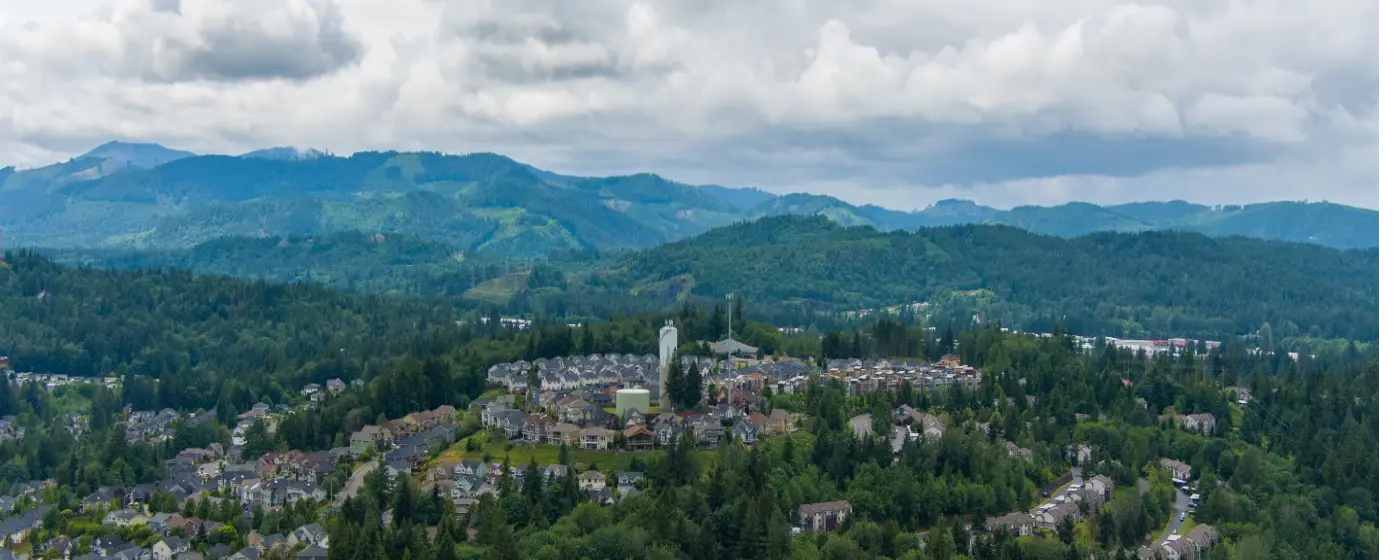
Most people researching Tumwater come in expecting a generic Pacific Northwest suburb. What they don't expect is that the crime picture here is genuinely more complicated than a single headline number — not because Tumwater is dangerous, but because the gap between its violent crime story and its property crime story is wide enough that you need to understand both before you can make a real judgment. Tumwater sits in southern Thurston County, hugging I-5 just south of Olympia, and that corridor geography shapes the city's safety profile as much as any policing strategy.
The short version: violent crime here is low by nearly any comparison. Tumwater's violent crime rate of 2 per 1,000 residents comes in well below both Washington state and national benchmarks, based on FBI UCR-derived data. Property crime is a different conversation — at 25 per 1,000 residents, it runs above the national average, though it remains below the Washington state average, which itself trends high. The headline crime figure that deserves the most attention is auto theft, which has historically been Tumwater's most elevated subcategory relative to national peers. That said, Washington state led the nation in auto-theft reduction in 2024, with car thefts dropping 32% year-over-year — the largest single-year decrease of any state, per the National Insurance Crime Bureau — and Tumwater's own numbers reflect that broader downward trend.
The trajectory matters as much as the snapshot. The overall crime rate in Tumwater fell 24% in 2024 compared to 2023, following a multi-year pattern of declining violent and property crime. Resident sentiment on Nextdoor — where package theft and road-safety concerns still surface — generally reflects a community that considers itself safe, even if not crime-free. The Craft District along Capitol Boulevard S, with spots like Tumwater Taco Co. and SweetLee's Ice Cream drawing regular foot traffic, signals the kind of neighborhood investment that tends to correlate with improved public safety over time.
Whether you're considering a move to Tumwater Hill, Black Lake, or somewhere closer to the Deschutes River corridor, the sections below break down the city's crime statistics, neighborhood-level safety variation, the auto-theft question in full, and what the data means for someone actually choosing where to live here.
Tumwater Crime Rates at a Glance: How the Numbers Stack Up
The Two-Part Crime Story
Tumwater's violent crime rate and its property crime rate tell genuinely different stories, and conflating them produces the wrong conclusion in either direction.
| Crime Category | Tumwater (per 1,000) | Washington State Avg | National Avg | Tumwater vs. State |
|---|---|---|---|---|
| Violent Crime | 2.0 | ~3.3 | ~3.7 | Notably lower |
| Property Crime | 25.0 | ~29–31 | ~19–20 | Below state; above national |
| Overall Crime Trend (2024 vs. 2023) | −24% | Declining | Declining | Faster drop than state |
| Violent Crime YoY Change | −17% | Mixed | Mixed | Favorable |
| Property Crime YoY Change | −18% | Mixed | Mixed | Favorable |
| Est. per-resident crime cost | $499/yr | ~$610/yr | ~$464/yr | Below state norm |
The estimated per-resident cost of crime — a CrimeGrade metric that weights crime severity and frequency — lands at $499 per year, noticeably below the Washington state average even though it runs slightly above the national figure.
What the Violent Crime Rate Actually Means
Tumwater's violent crime rate is approximately 1.67 times lower than the Washington state average and roughly 1.84 times lower than the national average, based on 2024 FBI data. For a city of about 27,800 people positioned along a major interstate corridor, that's a number worth taking seriously — not as a guarantee, but as a genuine indicator of day-to-day safety.
The property crime rate is the honest counterweight. At 25 per 1,000, it's elevated compared to many small cities nationally. Understanding what kind of property crime drives that number is more useful than the rate alone — which the auto-theft section below addresses directly.
Neighborhood Safety in Tumwater: Where the Differences Actually Live
The Southwest-to-South Gradient
Tumwater isn't uniformly safe or uniformly risky — the city's geography creates a real gradient that residents notice and that the data supports. The southwest portion of the city consistently ranks as the safest, while areas closer to the I-5 corridor and the southern commercial strip show higher crime concentrations. According to CrimeGrade analysis, the chance of being a crime victim varies from roughly 1 in 34 in the southwest to 1 in 17 in the south — a meaningful difference within a single small city.
For a fuller look at how these areas compare in character and price, the Tumwater neighborhoods guide covers each in detail.
| Neighborhood / Area | General Safety Profile | Primary Crime Concern | Best For |
|---|---|---|---|
| Tumwater Hill | Among the safer residential zones | Occasional property crime | Families Quiet |
| Black Lake / Mottman-Black Lake | Quieter, lower-density feel | Vehicle break-ins near trailheads | Nature Privacy |
| Autumn Ridge | Residential, generally calm | Package theft (reported by residents) | Families |
| New Market | Mixed — closer to commercial activity | Property crime elevated near I-5 | Commuter |
| Tumwater Airport Area | Industrial buffer; less residential | Auto theft risk higher | Value |
| Trosper | Moderate — transitional zone | Property crime; some vehicle theft | First-Time |
| Deschutes / River Corridor | Quieter near Tumwater Falls Park | Minimal residential crime reported | Nature Quiet |
| Littlerock | Rural edge; very low crime density | Lowest concern overall | Privacy Quiet |
What Locals Actually Talk About
On Nextdoor and in neighborhood conversations, two concerns come up repeatedly: package theft from porches and worries about vehicle break-ins near trailhead parking areas around Black Lake and Tumwater Falls Park. Neither rises to the level of serious violent crime — but both are real enough that residents on Tumwater Hill have organized informal porch-camera networks and coordinate delivery timing.
The areas that feel most different day-to-day are the blocks immediately adjacent to the I-5 commercial strip along Capitol Boulevard and the older stretches near the Tumwater Airport area. If you're choosing between two neighborhoods and one sits closer to that corridor, that proximity is worth factoring in when evaluating property crime exposure — particularly for vehicle security.
Auto Theft: Tumwater's Honest Weak Spot
The Number That Stands Out
If you dig into Tumwater's property crime breakdown, motor vehicle theft is the subcategory that stands out most sharply relative to national peers. NeighborhoodScout's analysis of FBI UCR data placed Tumwater's auto-theft rate among the higher figures nationally, with approximately a 1-in-317 chance per resident per year — a rate that reflects the city's I-5 corridor position more than any specific neighborhood failing.
This isn't unique to Tumwater. The Puget Sound region has dealt with elevated auto-theft rates for years, driven in part by organized theft networks that operate along interstate corridors. Tumwater, sitting at the southern gateway of that corridor, has historically absorbed more than its share of that regional pattern.
The Trend Is Genuinely Improving
Washington state led the nation in auto-theft reduction in 2024, recording a 32% year-over-year drop — the largest single-year decrease of any state, per the National Insurance Crime Bureau. Tumwater's own property crime figures moved in the same direction, declining 18% year-over-year in the most recent comparable period. That's a meaningful shift, not just statistical noise.
The practical implication: a car left unlocked or with valuables visible near the commercial strip or airport area still represents real risk. Residents who park in the Tumwater Falls Park lot or near trailheads along the Deschutes corridor report more break-ins than those in purely residential zones like Tumwater Hill or Autumn Ridge. Covered or garage parking in the higher-risk zones remains the most effective mitigation — and it's worth asking specifically about parking arrangements before settling on any address near Capitol Boulevard S.
What This Means in Practice
The auto-theft picture is the single most important thing to understand before dismissing Tumwater's property crime rate as abstract. It's concentrated, it's geographically patterned, and it's improving — but it's real. Anyone parking a vehicle outdoors near the I-5 commercial zone regularly should treat that as a known variable, not a surprise.
Looking to buy in Tumwater? Estimate your payment.
Enter your numbers to see an estimated monthly mortgage payment.
Estimate only. Excludes HOA fees and mortgage insurance. The interest rate above is a starting point, not a quoted rate — replace it with your own to see real numbers. Insurance is a flat placeholder, not a Tumwater quote.
Police Coverage and Response: The Officer Ratio Question
Fewer Officers Than the National Average — But Context Matters
Tumwater has 31 sworn police officers, producing a ratio of approximately 1.7 officers per 1,000 residents. That sits 19.9% below the Washington state average and 46.6% below the national average, based on 2024 FBI data.
That gap sounds stark until you add the statewide context: Washington has maintained the lowest law enforcement officer-per-capita ratio of any state in the nation for 13 consecutive years, at just 1.35 commissioned officers per 1,000 residents statewide, according to statewide law enforcement association data published by Axios Seattle in July 2024. Tumwater's 1.7 ratio actually runs above the statewide baseline — the comparison to the national average reflects a regional reality rather than a Tumwater-specific staffing failure.
What Lower Officer Ratios Actually Produce Here
The real-world effect isn't typically longer response times to violent incidents — it shows up in lower-priority property crime follow-up. Residents who report package theft or a vehicle break-in frequently describe receiving a case number more readily than an in-person investigator. That's consistent with what under-resourced departments across the region experience, and it's worth calibrating expectations around.
For serious incidents, Tumwater PD can also coordinate with Thurston County Sheriff's Office and, given the proximity to Olympia, mutual-aid resources are available. The city's violent crime rate being low means the highest-stakes calls aren't straining that capacity regularly. The property-crime response gap is real but narrower than the officer-ratio gap alone would suggest.
Community-Level Responses
Where formal coverage has gaps, Tumwater residents have filled some of them informally. Neighborhood watch activity on Tumwater Hill and in Autumn Ridge is organized enough that new residents tend to get introduced to it within weeks of moving in. Nextdoor serves as the real-time alert system for the city — porch-camera footage of package theft and license plate sightings circulate quickly enough that it functions as a meaningful deterrent in established residential areas.
Living Here: What the Safety Picture Actually Feels Like Day to Day
The Six-Month Surprise
Most people who move to Tumwater from a larger metro — particularly from west of the Cascades — are genuinely surprised by how calm daily life feels. The violent crime rate is low enough that it rarely intrudes on routine. What newcomers don't expect is how quickly they internalize the property-crime habits that long-term residents treat as second nature: never leaving anything visible in a parked car, using package lockers when available, and paying attention to which parking areas along the Deschutes corridor feel exposed after dark.
None of that rises to the level of anxiety. It's closer to the same mental adjustment that anyone moving to a corridor city makes — a recalibration of what "leaving the car unlocked" means when you're adjacent to an interstate route rather than deep in a residential neighborhood.
Where People Gather and What That Says
The Craft District along Capitol Boulevard S is the clearest indicator of where Tumwater's civic confidence currently sits. Tumwater Taco Co., SweetLee's Ice Cream, and Wines by the Valley all operate in a stretch that, five years ago, felt transitional at best. The fact that independent food and beverage businesses are opening and sustaining along that corridor signals something real about how residents and visitors experience the area in practice — not as an unsafe zone to avoid, but as an emerging local destination.
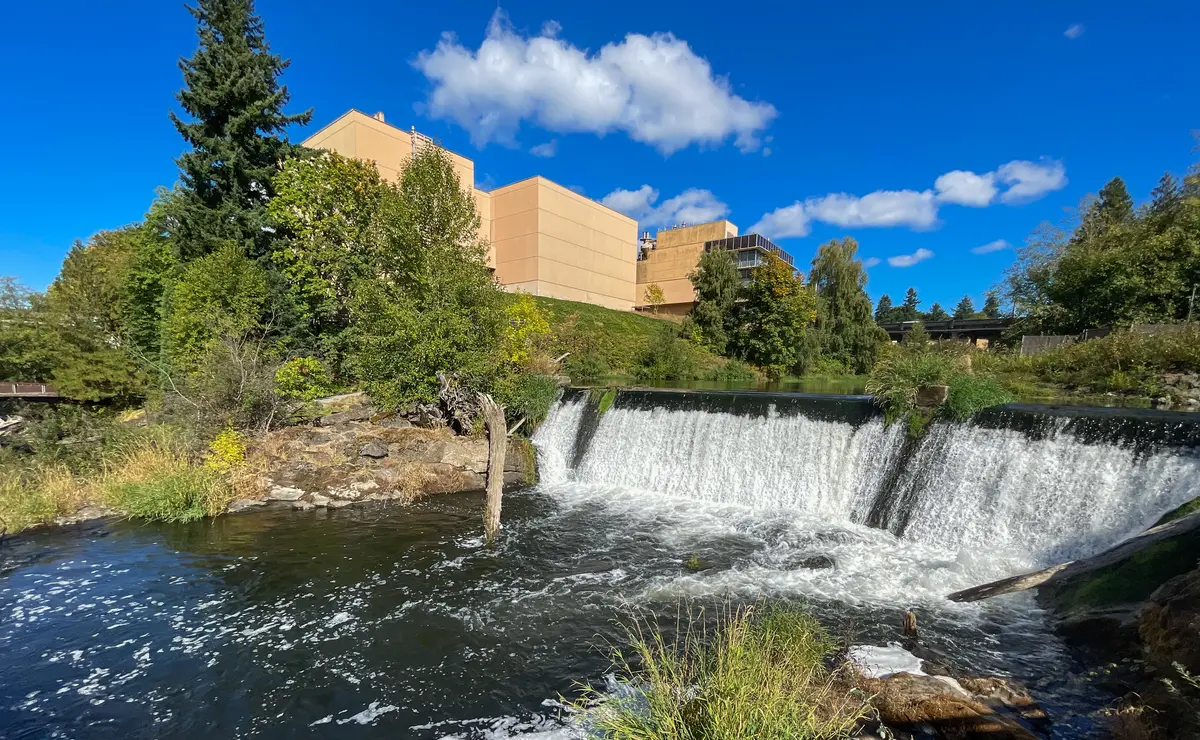
Tumwater Falls Park and the Tumwater Historical Park near the Old Brewhouse draw consistent foot traffic from families across the city. Both areas have active use throughout the day and feel genuinely safe — the trailhead parking caveat applies at Tumwater Falls after dark, but daytime use is not a concern residents raise.
Who Tends to Leave — and Why
The residents who move out of Tumwater rarely cite crime as a primary driver. The more common reasons involve the limited retail and service options compared to Olympia or Lacey, or the desire for more walkable streets in areas where on-foot access is still car-dependent. Property crime frustration — specifically repeated vehicle break-ins — does push some renters in the higher-risk zones toward Tumwater Hill or away from the city entirely, but that group is specific rather than typical. For most people who choose Tumwater deliberately, the safety profile matches or exceeds what they expected.
Local Expert Takeaway: Tumwater's violent crime rate is genuinely low — well below state and national benchmarks — and the overall trend line has been moving in the right direction for five consecutive years. The property crime rate, driven heavily by auto theft along the I-5 commercial corridor, is the honest asterisk. If you're choosing between addresses near the Capitol Boulevard strip and something quieter on Tumwater Hill or toward the Black Lake area, the safety data gives you a real reason to factor that distinction into your decision. Residents in the established residential zones — Tumwater Hill, Autumn Ridge, the Deschutes corridor near the falls — consistently describe feeling safe in day-to-day life. The Craft District's growth along Capitol Blvd S, anchored by spots like Tumwater Taco Co., is a reasonable signal that the corridor is improving, not declining.
Quick Takeaways & FAQs
✅ Tumwater's violent crime rate of 2 per 1,000 residents sits well below both Washington state and national averages — one of the clearest safety strengths in the South Puget Sound area.
⚠️ Property crime, particularly auto theft near the I-5 commercial corridor, is the real concern here — at 25 per 1,000 residents, it runs above the national average, and visible valuables in parked cars remain a genuine target.
📍 The southwest corner of Tumwater — roughly the Tumwater Hill and Black Lake areas — is where crime risk is lowest, with victimization odds roughly half those of the southern commercial zone.
Is Tumwater, WA a safe place to live?
Which Tumwater neighborhoods have the lowest crime rates?
How does Tumwater's crime rate compare to Olympia and Lacey?
Is auto theft a serious problem in Tumwater?
Does Tumwater have enough police officers to respond quickly?
Moving to Washington?
Tell us what you need help with and we'll connect you with local resources.
