
Nearly four in ten Warrenton residents are seniors — a figure that puts this small coastal city in a different category than most Oregon towns its size. With 6,327 people, Warrenton sits where the Columbia River meets the Pacific Ocean, anchored on the north by Fort Stevens State Park and connected to Astoria, the region's commercial and medical hub, by a quick drive. For retirees who moved here from larger metros, the first six months tend to produce the same observation: the pace is slower than you planned for, the fog is more persistent than the brochures suggested, and the community is tighter than you expected. All three turn out to be features, not bugs — but only if you genuinely want a small-town coastal life rather than a coastal backdrop to a busier one.
The draw is real. Warrenton's typical home price of $505,967 (Zillow Home Value Index, July 2026) sits noticeably below what retirees are fleeing in the Bay Area or the Seattle suburbs, and Oregon's cost-of-living profile has a retirement-friendly quirk: no statewide sales tax. The Warrenton-Hammond School District 30 holds a B+ rating, according to Niche — relevant only if grandchildren visit, but it signals a stable, invested community. Major local employers include the school district, the city, Fred Meyer, and Astoria Forest Products, with Columbia Memorial Hospital anchored in Astoria, about 5 miles away. That proximity matters enormously for anyone thinking through healthcare access decade by decade.
Daily life here is shaped by the outdoors and the water in ways that genuinely suit active retirees. The Warrenton Waterfront Trail along the Columbia River offers flat, low-impact walking with views of passing cargo ships. Coffenbury Lake and Fort Stevens State Park are minutes away for birdwatching, cycling, and easy hiking. The trade-off is the weather: Warrenton averages 126 sunny days a year, which is among the lower counts on the West Coast. Winters are mild by inland standards but grey for months at a stretch. Retirees who thrive here tend to be outdoors people who find the mist atmospheric rather than oppressive.
Whether you're seriously considering Warrenton for retirement or comparing it against nearby coast towns, the sections below break down healthcare access, the retiree tax picture, walkability and community, downsizing options, and how the city stacks up against Astoria, Gearhart, and Seaside.
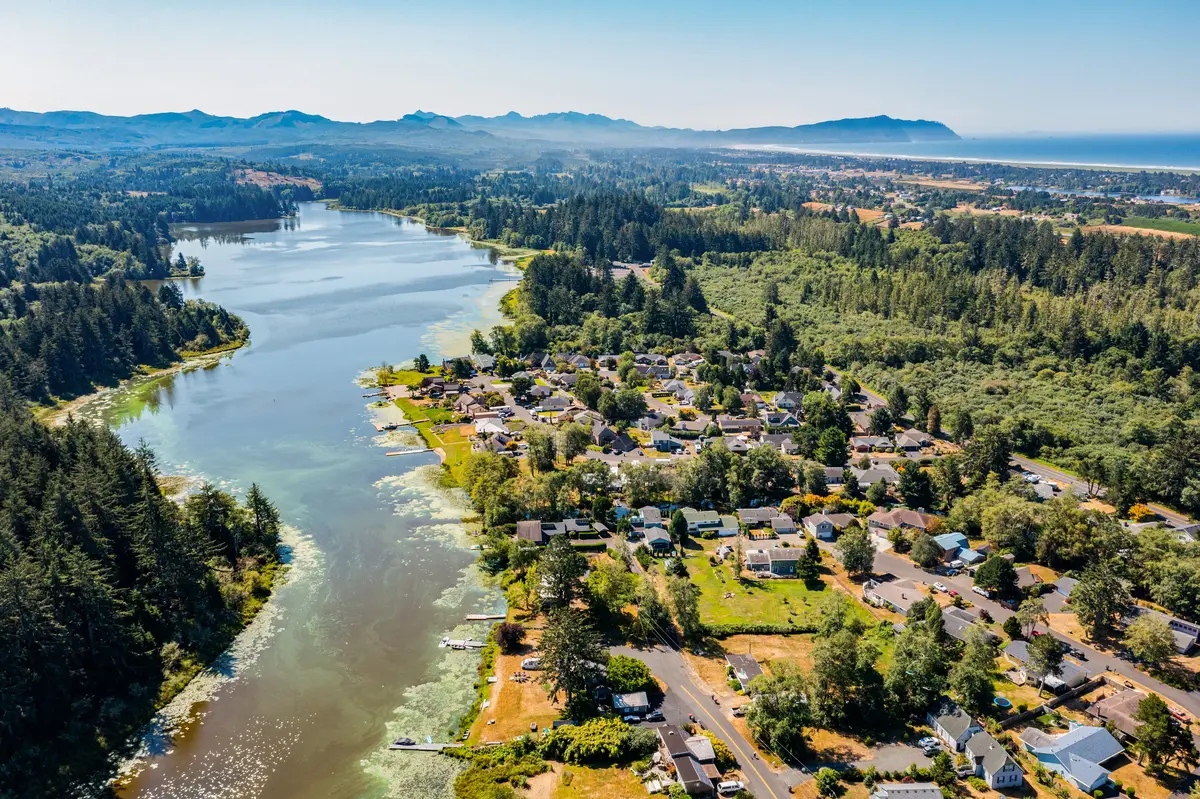
Why Retirees Are Choosing Warrenton
Approximately 38% of Warrenton's population is seniors — and that concentration isn't accidental. The city offers something relatively rare on the Oregon Coast: a real downtown within reach of daily errands, a tight social fabric, and a price point that doesn't require liquidating everything you own. The typical home price of $505,967 (July 2026) is meaningfully below what comparable coastal living costs in California or the Pacific Northwest's larger metros, and the community's size means you recognize faces at the Fisherman and Farmers Market within a few months of arriving.
Warrenton fits retirees who want proximity to nature as a daily reality, not a weekend excursion. Fort Stevens State Park is practically in the backyard. The Columbia River and the Pacific are both within minutes. If your retirement picture involves morning walks, fishing, birdwatching, and a low-key social calendar, this place delivers all of it without the tourist-town pricing that Cannon Beach or Manzanita carry.
Who should look elsewhere: retirees who need a dense network of medical specialists within a short drive, those who want walkable urban amenities — a concert hall, a broad restaurant scene, a major transit system — or anyone who finds grey winters genuinely hard on their mood. Warrenton is a small city of 6,327 people. The advanced healthcare and the cultural programming that many retirees eventually need are in Astoria or, for major procedures, Portland — and Portland International Airport (PDX) is about 92 miles away.
Healthcare & Medical Access in Warrenton
The Closest Hospital
Columbia Memorial Hospital in Astoria is the nearest hospital, about 5 miles from Warrenton. It is a critical access hospital — the federal designation for rural facilities that serve as the safety net for their communities — and it covers more ground than that classification might suggest. Emergency care, inpatient and outpatient surgery, cardiology, orthopedic surgery, specialty clinics, and rehabilitation therapy are all on site.
Columbia Memorial Hospital has also built a technology infrastructure uncommon for its size: it has been recognized nationally as one of the most digitally advanced critical access hospitals in the country and holds a formal partnership with Oregon Health & Science University (OHSU), which gives the hospital a connection to Portland's academic medical system for case consultation and specialist coordination.
The Honest Distance-to-Advanced-Care Reality
For routine care, urgent care, and most specialist visits, the Astoria location works well. For complex cardiac procedures, major oncology treatment, or neurosurgery, the realistic destination is OHSU in Portland — roughly 100 miles by road. That drive matters more at 80 than at 65. Retirees with serious or evolving health conditions should think carefully about whether a one-to-two-hour drive to advanced care fits their realistic ten-to-twenty-year picture, not just their current one.
Northwest Senior and Disability Services operates a Warrenton office and provides support programs for older adults across Clatsop County — transportation assistance, in-home services, and social programming — which meaningfully extends the practical healthcare support network beyond what the hospital alone offers.

The Retiree Budget in Warrenton
Oregon's Tax Posture for Retirees
Oregon fully exempts Social Security benefits from state income tax, regardless of income level. That is a meaningful advantage for retirees whose income is primarily Social Security. The picture changes significantly for pension income, traditional IRA withdrawals, and 401(k) distributions: Oregon taxes all of those at its regular graduated income-tax rates, which climb to 9.9% — one of the highest top rates in the country. If a substantial share of your retirement income comes from a pension or pre-tax accounts, Oregon's state income tax is a real cost that belongs in your planning conversation.
Oregon has no statewide sales tax. On a fixed income, that adds up every month across groceries, clothing, and household goods — categories where a sales tax of 7–9% in other states takes a quiet but consistent bite.
Property Taxes and the Deferral Option
Warrenton's effective property tax rate is approximately 0.69% — well below the national average and a genuine structural advantage for retirees on fixed incomes. Oregon also operates a Property Tax Deferral Program for qualifying senior homeowners: the state pays your property taxes to the county directly, and the accumulated amount — plus 6% annual non-compounding interest — is repaid when the home is sold or the owner moves. The household income limit to qualify in 2026 is $70,000, which aligns closely with Warrenton's median household income. For retirees whose income falls near or below that threshold, the program can meaningfully reduce month-to-month housing costs during retirement.
Day-to-Day Cost of Living
Groceries and fuel on the northern Oregon Coast carry a modest premium over inland Oregon prices — the logistics of a coastal location show up at the register. A serious shopping run typically means driving into Astoria or planning ahead. For the full cost-of-living picture including utilities, transportation, and how Warrenton compares to nearby markets, see the cost-of-living page.
Looking to buy in Warrenton? Estimate your payment.
Enter your numbers to see an estimated monthly mortgage payment.
Estimate only. Excludes HOA fees and mortgage insurance. The interest rate above is a starting point, not a quoted rate — replace it with your own to see real numbers. Insurance is a flat placeholder, not a Warrenton quote.
Walkability, Community & Staying Active in Warrenton
Getting Around on Foot
Downtown Warrenton is genuinely walkable for a small coastal city — flat terrain, a compact commercial core, and proximity to the waterfront make on-foot errands reasonable within a several-block radius. The Warrenton Waterfront Trail along the Columbia River is the standout daily-use amenity: flat, paved, and lined with river views and the occasional freighter passing through. For retirees whose active life centers on daily walking, this trail delivers without requiring a car or a park fee.
Beyond downtown, most of Warrenton requires a vehicle. The Surf Pines and Cullaby Lake areas, for instance, are quiet and scenic but not walkable to services. If car-free living is a priority, a home in or adjacent to the downtown core is the practical choice.
Senior Services and Social Life
Northwest Senior and Disability Services maintains a local presence in Warrenton with programming and support for older adults across Clatsop County — a meaningful resource for retirees who want structured social programming or need help navigating services as their needs evolve.
The Fisherman and Farmers Market is a genuine community gathering point during the warmer months — the kind of place where the social fabric of a small city is most visible. Fort Stevens State Park draws a steady community of walkers, cyclists, and birdwatchers, and the informal social networks that form around those activities are real. Cullaby Lake offers low-key fishing and kayaking for retirees looking for gentle outdoor activity without driving far. The city is small enough that showing up consistently at the same places produces real connections within a season or two.
What Newcomers Discover After Six Months
Much of Warrenton's social life runs through the park, the waterfront, the market, and the local casual dining and coffee scene rather than through a single centralized calendar. Northwest Senior and Disability Services provides the institutional anchor, while the informal networks — the regulars on the waterfront trail, the faces at the farmers market, the fishing crowd at Cullaby Lake — fill the rest. Retirees who show up regularly find the community remarkably welcoming; the connections tend to build through repetition rather than formal introduction.
Right-Sizing: Downsizing in Warrenton
The Single-Level Inventory Reality
Warrenton's housing stock skews toward single-family homes built across several decades, with a mix of ranches and two-story Craftsman-style houses. Single-level homes do exist and are the natural target for downsizing retirees, but inventory is limited in a city of 6,327 — when a move-in-ready single-level home comes on the market at the right price, it tends not to sit. Buyers looking specifically for single-level, low-maintenance living should be prepared to move quickly or work with a local agent to track pre-market opportunities.
Patio homes and condominiums are sparse compared to larger coastal markets. Warrenton does not have the condo-tower inventory that a city like Seaside or a larger resort town might offer. Retirees prioritizing a lock-and-leave lifestyle with minimal exterior maintenance may find the options narrower than expected and may need to look at Astoria for a broader selection.
55+ Communities and Assisted Living
Clatsop Care Memory Community, licensed by Oregon, operates in Warrenton with capacity for up to 32 residents. For independent-to-assisted living on a larger scale, Clatsop Care Retirement Village in Astoria offers a fuller continuum — a short drive that many Warrenton retirees make when their care needs evolve. Retirees planning for a long retirement arc should factor in that in-city options for structured senior living are more limited than in larger coastal cities, and that the next step up in care likely means relocating to Astoria.
For a closer look at the neighborhoods where single-level homes and lower-maintenance properties concentrate, the neighborhoods page breaks down each area's housing character in detail.
Warrenton vs Nearby Retirement Destinations
| City | Cost vs Warrenton | Primary Hospital | Walkability | Senior Living Depth | Overall Retirement Fit |
|---|---|---|---|---|---|
| Warrenton | Anchor | Columbia Memorial Hospital (Astoria, ~5 mi) | Flat downtown core; car needed beyond it | One memory care facility in city; broader options in Astoria | Strong for outdoors-focused, low-key lifestyle |
| Astoria | About the same | Columbia Memorial Hospital (on-site) | Walkable historic core; hilly terrain | Broader — more assisted living and independent living options | Better for cultural life and hospital proximity |
| Gearhart | Noticeably higher | Columbia Memorial Hospital (~20 mi) | Very limited — small, golf-oriented community | Minimal in-city options | Best for affluent retirees wanting quietude and golf |
| Seaside | Somewhat lower | A regional hospital in-city | Stronger — tourist-oriented downtown with on-foot access | Moderate — more senior housing options than Warrenton | Good for retirees wanting more walkable services and lower entry price |
| Hammond | About the same | Columbia Memorial Hospital (~6 mi) | Very limited — small, residential community | Minimal | Best as a quiet, low-density alternative to Warrenton proper |
| Svensen | About the same | Columbia Memorial Hospital (~10 mi) | Rural — car essential for all errands | Minimal | Best for retirees prioritizing land and privacy over services |
Astoria is the most direct upgrade on healthcare proximity and cultural programming — you lose almost nothing on cost and gain a hospital on your doorstep and a more active arts and restaurant scene. Seaside offers a somewhat lower entry price and a more walkable tourist downtown, but its seasonal character can feel thin in the off-months. Gearhart appeals to a narrow slice: retirees with a larger budget who want extreme quiet and a golf-centered lifestyle, and who are comfortable with limited services nearby. Hammond and Svensen are essentially Warrenton-adjacent choices for those who want even more space and privacy, at the cost of any walkable infrastructure at all.
For most retirees weighing the northern Oregon Coast, the real decision is between Warrenton and Astoria. Warrenton is quieter, slightly more residential in character, and has the easier flat terrain for daily walking. Astoria has the hospital, the hills, the Victorian streetscapes, and more to do on a weekday afternoon. Both are serious, livable options — the right call depends almost entirely on how much your daily life will revolve around healthcare access and cultural programming versus outdoor routine and simplicity.
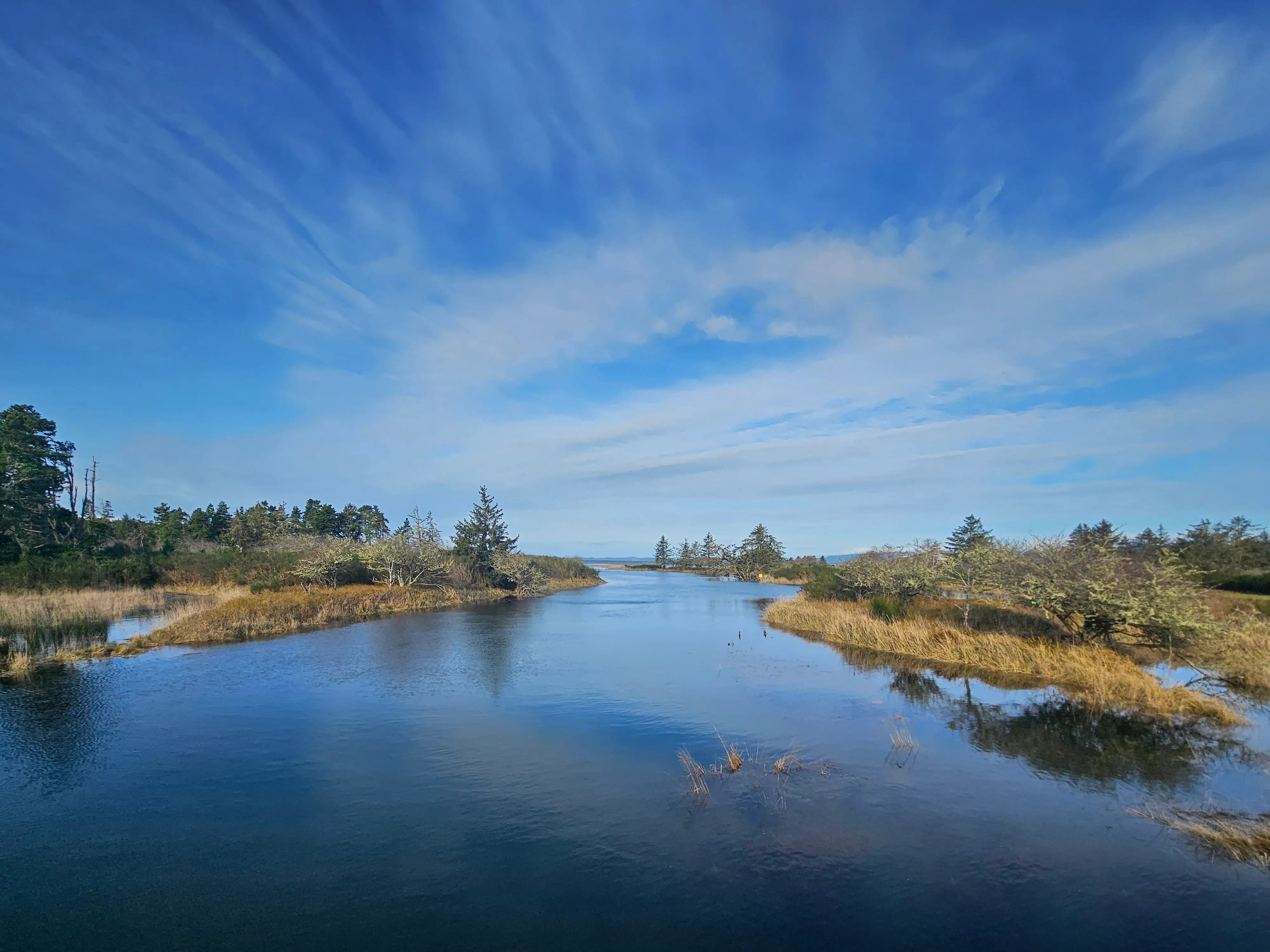
Local Expert Takeaway: Warrenton is one of the few places on the Oregon Coast where the retirement math actually works — a real community of long-term residents, a flat waterfront trail suited to daily walking, and a home price that doesn't demand you sell your prior life to afford it. The gap to fill is healthcare depth: Columbia Memorial Hospital in Astoria handles most needs capably, but the drive to OHSU in Portland for advanced care is real and worth building into your decade-by-decade planning. Retirees who land here and stay tend to be the ones who showed up at the Fisherman and Farmers Market, started walking the Warrenton Waterfront Trail regularly, and let the community come to them through the informal networks that form around Fort Stevens and the waterfront rather than waiting for a single structured social calendar.
Quick Takeaways & FAQs
✅ Oregon fully exempts Social Security from state income tax, and Warrenton's effective property tax rate of approximately 0.69% is well below the national average — a meaningful structural advantage for retirees on fixed incomes.
⚠️ Single-level home inventory is limited in a city of 6,327, and the drive to advanced medical care at OHSU in Portland is roughly 100 miles — factors that matter more the further into retirement you plan.
📍 Approximately 38% of Warrenton's population is seniors, which means the support network for older adults — from Northwest Senior and Disability Services to the informal communities around Fort Stevens and the waterfront trail — is more developed than the city's small size alone would suggest.
Is Warrenton, Oregon a good place to retire?
Does Oregon tax retirement income?
What hospital serves Warrenton, Oregon?
Are there 55+ communities or senior living options in Warrenton?
How does Warrenton compare to Seaside or Astoria for retirement?
Moving to Oregon?
Tell us what you need help with and we'll connect you with local resources.
