
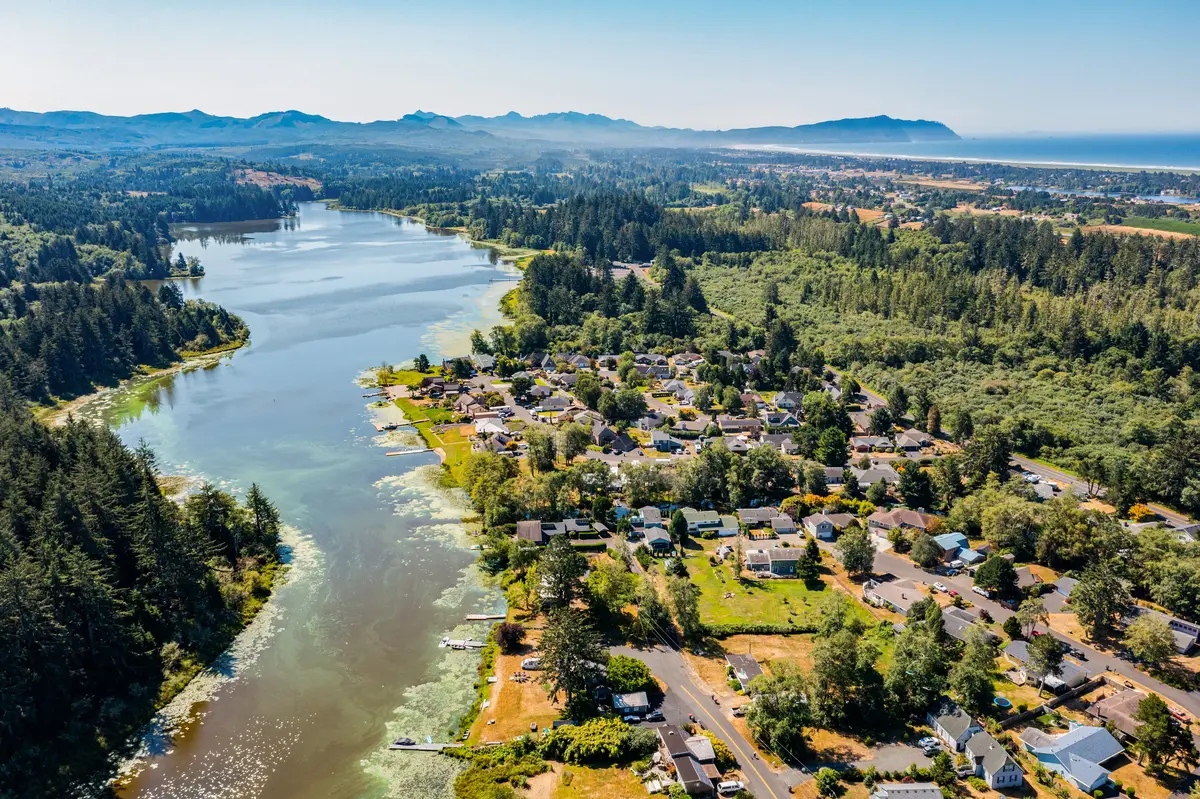
Most Californians who end up in Warrenton weren't looking for it specifically. They were looking for an Oregon Coast town where a house purchase didn't require a seven-figure budget, where the fog rolling off the Pacific felt like a feature rather than a bug, and where the pace of daily life was genuinely different — not just marketed that way. Warrenton sits at the northern tip of the coast, tucked between the Columbia River and the ocean, connected to the wider world by US-101 and, most practically, by the fact that Astoria is about 12 minutes away. It is a working port town, not a resort town, and that distinction shapes everything about what it costs and feels like to live here.
The economic core here isn't tech or finance — it's maritime. The Port of Warrenton is one of the most active fishing ports on the Oregon Coast, with crab, salmon, and tuna processing providing industrial employment alongside the marina and seafood facilities. The Warrenton-Hammond School District 30 serves a population of 6,327, with 841 students enrolled in 2025-26, and the district holds a B+ rating, according to Niche. Beyond the port and the school district, the City of Warrenton itself, Fred Meyer, and Astoria Forest Products anchor the local job base. A meaningful share of residents now work remotely or commute to Astoria — a pattern that has made Warrenton increasingly attractive to buyers priced out of coastal California who want ocean proximity without giving up a professional income.
The home price picture is where most Californians stop scrolling and start calling. The typical home value in Warrenton sits at $505,967 as of July 2026 — noticeably below California's statewide typical home value of $773,735. That gap is real purchasing power, and it shows up in the kind of house you can actually buy. Oregon eliminates sales tax entirely, which adds up faster than most people expect. What surprises people is the income tax structure, which this guide addresses directly — because the popular narrative that Oregon is a low-tax state is only partially true, and the exceptions matter a great deal depending on what you earn.
Whether you're relocating for remote work, retirement planning, a career change, or simply the compulsion to live somewhere the tide comes in twice a day, the sections below cover the full California-to-Warrenton comparison: home prices, taxes, what the lifestyle actually costs, what the town feels like after the novelty wears off, and what Californians consistently get wrong before they arrive.
The Home Price Reality: What Your California Equity Actually Buys
The headline is straightforward. Warrenton's typical home value stood at $505,967 as of July 2026. California's statewide typical home value of $773,735 means you are arriving with a significant structural advantage — if you are selling a California property and converting that equity into a Warrenton purchase, the math can work dramatically in your favor.
What that looks like in practice: the kind of home that would carry a seven-figure price tag in most coastal California markets — three bedrooms, a garage, a yard, proximity to the water — is achievable here closer to the city-wide typical figure. Neighborhoods like Surf Pines and the Cullaby Lake area offer distinct characters and housing stock worth exploring, as do the more established residential pockets near Downtown Warrenton and Hammond. For more on how neighborhoods compare in character and housing stock, the Warrenton neighborhoods guide goes deeper on each area.
One thing long-tenured California homeowners need to think through carefully: Proposition 13 has likely kept your current California property tax well below what a new buyer would pay on the same house. Oregon's assessed value cap is 3% annually rather than California's 2%, and there is no Prop 13 reset protection. Warrenton's effective property tax rate is 0.69% — nearly identical to California's statewide effective rate of approximately 0.70% for new buyers on paper. But if you have owned your California home for 15 or 20 years, your effective rate on that property is almost certainly far lower than 0.70%, and you will see a meaningful increase when you purchase in Warrenton at current market value.
That is not a reason to hesitate — it is a reason to run the actual numbers rather than assuming property taxes will stay flat. For a full breakdown of how Oregon property taxes work in Clatsop County, see the Warrenton cost of living page.
What the Affordability Gap Actually Means
Warrenton's median household income of $70,670 sits below what's needed to comfortably carry the typical home at current prices — a real tension the local market lives with. That gap is worth understanding before you arrive, because it shapes who your neighbors are and what the local economy can sustain.
For a California buyer arriving with equity, that affordability tension works in your favor: you are entering a market where you are competing against a smaller pool of cash-flush buyers than you were in California. Well-priced homes here attract serious attention, but it is not the frenzied environment that defined most California coastal markets in recent years.
Oregon's Tax Structure: The Full Picture, Not Just the Sales Tax Headline
Everyone who has researched Oregon from California has heard the same two facts: no sales tax, and lower home prices. Both are true. What is less often discussed is the income tax structure, which is where Oregon's tax picture gets genuinely complicated for California transplants — and where the popular narrative breaks down.
Sales Tax: The Clear Win
Oregon has no state or local sales tax at all. California's statewide base sales tax rate of 7.25% — with local additions pushing the combined average to roughly 8.99% — means that a household spending $40,000 a year on taxable goods is effectively paying over $3,600 annually in sales tax that simply does not exist in Oregon. For a family buying furniture, appliances, vehicles, and everyday goods in the first year of a new home, this savings is immediate and tangible.
Income Tax: The Counterintuitive Part
Here is what most people don't know before they move: for middle- and upper-middle-income earners, Oregon's income tax can run higher than California's — not lower. Oregon's top bracket of 9.9% kicks in at $125,000 for single filers and $250,000 for joint filers. California's top state income tax rate of 13.3% applies only to the highest earners — those in seven-figure income territory. A household earning $150,000 to $300,000 in Oregon may face a higher state income tax bill than they were paying in California, once you account for where those brackets actually start.
Oregon does offer one meaningful offset: the state allows taxpayers to subtract a portion of federal income taxes paid from Oregon taxable income. This benefit matters most for low- and moderate-income earners. It phases out at higher incomes and disappears entirely for joint filers with federal adjusted gross income of $290,000 or more.
The practical takeaway: if you earn under roughly $100,000, Oregon's overall tax picture is likely favorable compared to California. If you earn significantly more — especially in the $150,000–$400,000 range — run the numbers with an Oregon-licensed CPA before assuming you are moving to a lower-tax state. The sales tax savings are real, but they may not offset a higher income tax bill at that income level.
Property Tax: Comparable Rates, Different Structure
Warrenton's effective property tax rate of 0.69% sits just below California's effective rate for new buyers. On paper, these are nearly identical. The structural difference is what matters: California's Proposition 13 freezes assessed value at purchase price with a 2% annual cap, while Oregon limits annual assessed value increases to 3% but tracks market values more closely. If you have owned your California home for many years and have been benefiting from a suppressed assessment, expect your Oregon property tax to feel noticeably higher — not because the rate is higher, but because the assessed value will reflect what you actually paid.
| Tax Category | Warrenton, OR | California (Statewide) | What It Means for You |
|---|---|---|---|
| Sales Tax | 0% — none | California's statewide base sales tax rate of 7.25% (avg. combined ~8.99%) | Immediate savings on every major purchase |
| Top Income Tax Rate | 9.9% (kicks in at $125K single / $250K joint) | California's top state income tax rate of 13.3% (seven-figure earners only) | Middle earners may pay MORE in Oregon, not less |
| Effective Property Tax Rate | 0.69% of assessed value | ~0.70% for new buyers (Zillow ZHVI basis); often 1.1%–1.3% with local bonds | Comparable for new buyers; long-tenured CA owners will see an increase |
| Assessment Cap | 3% per year (Oregon law) | 2% per year (Prop 13) | Oregon assessments track the market more closely over time |
| Federal Tax Deduction | Partial subtraction allowed (phases out above $290K AGI joint) | Not applicable | Modest benefit for moderate-income Oregon filers |
* ZHVI = Zillow Home Value Index. California effective rate sources: USTax.tools, August 2026; CountryTaxCalc.com, June 2026.
The bottom line is that Oregon's tax environment rewards the median household — especially one with significant consumer spending — but it is not a blanket tax cut for every income level. Run your specific numbers before you commit.

What Daily Life Actually Costs: Beyond the Headline Numbers
Home prices and taxes are the framework, but daily life costs are where the comparison gets personal. Warrenton is a small coastal town of 6,327 people, and that size shapes what is available locally and what requires a trip.
Groceries, Retail, and the No-Sales-Tax Dividend
The commercial strip along US-101 serves as the north coast's retail hub. Fred Meyer handles most household staples, and the absence of sales tax means every trip to the store costs less than the same cart would in California — on a full grocery run, this is a modest but real difference. For a serious shopping trip beyond what the local corridor offers, you are driving out of town; plan accordingly and budget for the occasional longer errand run.
Utilities and Housing Costs
Oregon's utility costs — electricity in particular — generally run below California's rates, though a coastal home has its own demands: heating costs matter here, and the damp climate means wood moisture and ventilation are real maintenance considerations that inland buyers don't always budget for. For a full utilities comparison, the cost of living page covers the specifics.
Healthcare Costs
Health insurance premiums in Oregon typically run noticeably below what California residents pay, which provides meaningful monthly relief for self-employed buyers or those not covered by an employer plan. The honest trade-off is that a city of this size means driving farther for specialist and advanced care than you were accustomed to in most California markets — routine care is accessible, but plan ahead for anything more specialized.
The Rent Alternative
If you are not ready to buy immediately after relocating, Warrenton's typical 2-bedroom rent range of $1,530–$1,860 per month gives you time to learn the market without overcommitting. That range is noticeably below what comparable coastal rentals carry in California, and it makes the transition period financially manageable for most households.
The Weather Cost Nobody Mentions
Warrenton averages 126 sunny days a year. That is not a typo, and it is not a complaint — it is a fact that experienced Oregon Coast residents absorb and newcomers often underestimate. The marine climate is mild and green, and the fog and rain are part of the landscape's character. But if you are arriving from San Diego or the Central Valley expecting to trade California sun for Oregon price relief while keeping the weather, that calculation doesn't work here. Heating, rain gear, and a fundamentally different relationship with outdoor time are part of the actual cost of living on the north coast.
Looking to buy in Warrenton? Estimate your payment.
Enter your numbers to see an estimated monthly mortgage payment.
Estimate only. Excludes HOA fees and mortgage insurance. The interest rate above is a starting point, not a quoted rate — replace it with your own to see real numbers. Insurance is a flat placeholder, not a Warrenton quote.
What Californians Get Wrong — And What Surprises Them at Six Months
Two patterns show up consistently among Californians who have made this move, and both are worth hearing before you finalize anything.
The Income Tax Shock
The most common financial surprise is the first Oregon tax return. Buyers who moved expecting a significant tax cut — because that's the story they heard — find that at professional income levels, Oregon's income tax is not dramatically lower than California's, and for some earners in the $150,000–$300,000 range, it runs higher. The sales tax savings are real and substantial. The income tax story is more complicated, and discovering that in April of your first Oregon year is not the time to learn it. Talk to an Oregon CPA before you close.
The Isolation Adjustment
Warrenton is genuinely small. After six months, Californians who moved from dense metros often describe the same realization: there is no equivalent of a Saturday afternoon spent wandering a neighborhood with a dozen restaurant options, a weekend farmers market, and a coffee shop on every corner. The Fisherman and Farmers Market fills some of that social-gathering role seasonally, and the local dining and coffee scene — places like Arnie's Cafe, Uptown Cafe, Battery 245, The Hideaway Cafe & Bar, The Nest by Dough Dough, Mé Latte Espresso, and Dave's Bread Shed — is more than many people expect from a town this size. But it is a different texture of social life, centered more around the waterfront, Fort Stevens State Park, and the rhythms of a port town than around the kind of urban density most Californians are wired for.
The people who thrive here made a deliberate choice: they wanted a coastal town that is still a real working town, not a vacation destination that charges vacation prices. If that's the trade you're making, Warrenton delivers. If you're hoping it will eventually feel more like a polished California beach resort, that's a different move entirely.
What You Would Not Do
If you are moving for lifestyle reasons — the coast, the fishing, the slower pace — do not buy the first house you see along US-101 without spending a week here across different weather conditions. The north coast in February is not the north coast in July, and the light, the wind, and the psychological weight of a dark, wet winter are things that only become real when you have lived them. Many buyers who left within two years did so not because of the taxes or the prices — but because 126 sunny days a year turned out to be a harder adjustment than a spreadsheet can predict.
The Bottom Line: Who This Move Makes Sense For
Warrenton is a strong move for a specific kind of California buyer, and an honest mismatch for others. Getting clear on which category you're in before you sign anything is the whole point of this guide.
This Move Works Well If You Are:
- A remote worker with California-level income who wants to convert California equity into Oregon coastal ownership and reduce your housing cost without reducing your income. The tax picture is nuanced, but the housing delta is real.
- A household earning under roughly $100,000 who will see a genuine, comprehensive tax reduction compared to California — lower housing costs, no sales tax, and an income tax structure that runs favorably at moderate income levels.
- A buyer who wants a working port town rather than a resort town — someone drawn to the fishing culture, the wildlife refuges, the shipwreck at Peter Iredale beach, and Fort Stevens State Park as a backyard rather than a destination.
- A California equity seller who can bring significant cash to the purchase, reducing or eliminating the income-to-home-price gap that makes this market difficult for local buyers.
Think Carefully If You Are:
- A high-income earner expecting a tax cut. California's top state income tax rate of 13.3% applies only to the highest earners, while Oregon reaches 9.9% at a much lower threshold. The sales tax savings are real; the income tax savings may not be, at your income level.
- A long-tenured California homeowner with a suppressed Prop 13 assessment. Your property tax will increase when you buy in Oregon — not because Warrenton's rate is high, but because you will be assessed at your actual purchase price with a 3% annual cap rather than the frozen basis you have been living on.
- Someone who needs urban density, frequent specialist care, or a deep restaurant and arts scene within walking distance. Astoria is about 12 minutes away and fills some of that gap, but this is a small coastal community and it lives like one.
The case for this move is real and specific. So is the case for thinking twice. The Californians who make it work come in knowing exactly what they are choosing — and what they are giving up.

Local Expert Takeaway: Warrenton is not a lifestyle upgrade in every direction — it is a trade. You get a real coastal Oregon home at a price point that California simply doesn't offer, zero sales tax, and a working port town where Fort Stevens State Park and the Peter Iredale wreck are genuinely ten minutes away. What you give up is density, guaranteed sunshine, and the assumption that moving to Oregon automatically means lower income taxes. If you're a remote worker arriving with California equity, this market rewards you. If you're expecting Warrenton to feel like a smaller, cheaper version of coastal California — it won't, and that's worth knowing before you fall in love with a house on the water.
Quick Takeaways & FAQs
✅ Warrenton's typical home value of $505,967 (July 2026) sits noticeably below California's statewide typical home value of $773,735, making equity-conversion from a California sale a genuine financial lever.
⚠️ Oregon's 9.9% income tax bracket kicks in far earlier than California's top rate — many middle- to upper-income earners end up paying more state income tax in Oregon, not less, and should verify this with an Oregon CPA before relocating.
📍 Warrenton averages 126 sunny days a year — plan the move accordingly, and spend at least a few days here in the off-season before committing to the north coast lifestyle.
Is Warrenton, Oregon actually cheaper than California after you account for all taxes?
How does Oregon's property tax compare to what I was paying in California under Prop 13?
What is the job market like for someone moving from California to Warrenton?
What do Californians wish they had known before moving to Warrenton?
How do Warrenton's schools compare to what California families are used to?
Moving to Oregon?
Tell us what you need help with and we'll connect you with local resources.
