
Sherwood surprises people who assume a small Oregon town on the far side of the Portland Metro means affordable. At a population of 20,500, it feels more like a prosperous suburb than a rural outpost — and the price tag reflects that. The city's overall cost of living runs approximately 40% above the national average, driven by a housing market shaped by proximity to Portland, excellent schools, and a consistent pattern of households trading up from the city proper. OR-99W is the main artery in and out, and the commute reality — about 30 minutes to Portland with no light-rail connection — shapes both where people buy and what they spend on transportation.
The economic picture is one of relative stability. The Sherwood School District 88J, which holds an A rating according to Niche, is the city's largest employer and a primary reason families choose this address over adjacent ones. The City of Sherwood itself is a significant employer, and residents with professional careers typically commute to larger employment centers. The median household income sits at $109,966 — healthy by any measure, and yet noticeably below what is needed to carry the typical home here at current prices. That gap is the defining tension of Sherwood's cost story.
What helps at the margins is what Oregon does differently. There is no sales tax, anywhere in the state, which genuinely changes the math on groceries, clothing, and large purchases. Utility costs run slightly below the national average. The effective property tax rate of 0.84% is restrained by national standards — a function of Washington County's assessed-value structure more than any local policy. What does not help: transportation costs run roughly 24% above national norms, grocery prices come in 7–10% above average, and the entry price for homeownership requires a serious down payment or dual income, often both.
Whether you are deciding between renting and buying, comparing Sherwood against Tigard or Newberg, or just trying to build an honest monthly budget before signing anything, the sections below break down each major cost category — housing, everyday expenses, nearby-city comparisons, and the full Oregon tax picture — so you can see what this city actually costs to live in.

What It Really Costs to Live in Sherwood
Sherwood is not a budget alternative to Portland. It is a premium suburb with premium prices — and buyers who arrive expecting otherwise tend to recalibrate fast. The typical home price sits at $629,598 (Zillow Home Value Index, July 2026), which places Sherwood well above the Oregon statewide median and in roughly the same range as its nearest neighbors Tigard and Tualatin. Newberg, about fifteen miles southwest, comes in noticeably lower — a fact worth knowing if the commute trade-off is acceptable.
What drives the number is a combination of school quality, lot sizes, newer construction stock, and the psychological premium of a city that still feels contained and knowable. Sherwood has the feel of a place that residents chose deliberately, and that deliberateness is priced in. The city's overall cost of living running 40% above the national average is not an aberration — it is the predictable result of high housing costs layered onto elevated transportation and grocery expenses.
The honest overall posture: Sherwood costs more than most of Oregon, sits at the same level as adjacent Washington County suburbs, and offers less price relief than Portland-adjacent cities that are currently drawing more buyer interest. The case for paying it rests almost entirely on the schools, the safety picture — explored more fully at the Sherwood safety page — and the quieter pace that comes with a city this size. If those matter to you, the premium holds up. If they do not, the money goes further elsewhere.
Housing: Rent vs Buy in Sherwood
Buying in Sherwood means entering a market where the typical home price of $629,598 (July 2026) is already out of reach for a household earning the city's own median income without a substantial down payment. The gap between what a median-income household earns and what the typical home requires is approximately $61,000 in annual qualifying income — meaning most single-income buyers are stretching, and the market functionally runs on dual incomes or equity from a prior home sale.
Entry-level ownership — older construction, smaller footprints, less-finished lots — starts meaningfully below that median figure, but not by enough to change the math dramatically. If you want to understand where entry-level inventory tends to cluster within the city, the Sherwood neighborhoods guide covers that in detail. The useful shorthand: there is an entry point here, but it requires a down payment that most first-time buyers will find significant.
The effective property tax rate of approximately 0.84% is one of the more buyer-friendly pieces of this picture. Washington County's assessed-value structure keeps that rate restrained relative to many West Coast markets. It does not offset the purchase price, but it does mean the ongoing carrying cost of ownership is less punishing than the sticker price implies.
Renting is genuinely common among younger households and recent arrivals still deciding whether to commit. The typical two-bedroom rent runs $2,350–$2,860, with a city-wide typical rent of $2,555 per month (Zillow, July 2026). That is a real number — not dramatically lower than a mortgage payment on a starter home — which is why many renters here are using the time to build a larger down payment rather than delaying the decision indefinitely. Renting makes most sense for people in Sherwood for a defined period, or those who moved from a market where they did not have equity to bring with them.
The Affordability Reality
Sherwood's median household income of $109,966 is strong in absolute terms. In context, it is not enough. The city's homeownership profile skews toward households that arrived with existing equity, dual professional incomes, or both. That is the honest reality of this market, and it is worth understanding before you build a budget around a Sherwood address.

Everyday Costs Beyond Housing in Sherwood
| Category | Typical Monthly Cost | Notes |
|---|---|---|
| Housing (typical rent) | $2,555/mo | City-wide typical rent. Buying? Use the calculator above for a mortgage estimate. |
| Utilities | $190–$270/mo | Electricity, gas, water, sewer, trash |
| Groceries | $560–$780/mo | Food at home, household of 2–3 |
| Transportation & Gas | $200–$340/mo | Fuel, and transit where it is a real option |
| Phone & Internet | $110–$185/mo | Mobile plan plus home broadband |
| Misc / Discretionary | $250–$480/mo | Dining out, entertainment, subscriptions |
Non-housing figures are estimates for a household of two to three, not a sourced index; housing is the city-wide typical rent (Zillow ZORI, July 2026). Refreshed with the rest of the city data.
Sherwood sits in the Willamette Valley's rain shadow but still logs a genuine Pacific Northwest winter — grey, wet, and mild enough that home heating is a real monthly expense rather than a regional emergency. Portland General Electric serves the area, and electricity costs run well below the national average — a function of the Pacific Northwest's hydropower infrastructure that has kept rates relatively contained even as energy costs have risen nationally. Despite overall electricity expenses rising since 2020, driven partly by data-center demand across the state, total utility costs still run about 4% below the national average, a modest but real offset to the city's elevated housing line.
Car ownership is not optional for most Sherwood residents. TriMet operates two bus lines into the city — Line 94 connecting to Tigard and Line 97 providing rush-hour service toward Tualatin, Lake Oswego, and Barbur Transit Center — but no MAX light rail reaches Sherwood, and coverage is limited enough that a household without a car will find daily life genuinely difficult. Transportation costs run approximately 24% above the national average, reflecting both commute distances and the cost of maintaining at least one vehicle per adult. Grocery prices run 7–10% above the national average, consistent with the broader Portland Metro pattern. The silver lining — and it is a real one — is that Oregon's complete absence of sales tax means the grocery bill, the clothing run, and the electronics purchase all come in exactly at the sticker price. No rounding up at checkout.
Looking to buy in Sherwood? Estimate your payment.
Enter your numbers to see an estimated monthly mortgage payment.
Estimate only. Excludes HOA fees and mortgage insurance. The interest rate above is a starting point, not a quoted rate — replace it with your own to see real numbers. Insurance is a flat placeholder, not a Sherwood quote.
Sherwood vs Nearby Cities: Cost Comparison
| City | Typical Home Price | Typical Rent | Cost vs Sherwood |
|---|---|---|---|
| Sherwood (this city) | $629,598 | $2,555/mo | — |
| Tigard | $607,011 | $1,850/mo | 4% lower |
| Tualatin | $635,314 | $1,890/mo | About the same |
| Newberg | $535,028 | $2,159/mo | 15% lower |
Source — home prices: Zillow ZHVI, July 2026; rent: Zillow ZORI, July 2026. Nearby-city figures are the same series, refreshed together.
Sherwood sits at roughly the same price level as Tigard and Tualatin, while Newberg offers a noticeably lower entry point for buyers willing to accept a longer or different commute pattern — the table below breaks down the full picture across home prices, rent, and relative cost difference.
Taxes & the Bottom Line for Sherwood
Oregon's Income Tax: The Number That Surprises People
Oregon runs a progressive income tax with four brackets ranging from 4.75% to 9.9%. That top marginal rate — one of the highest in the country — kicks in for single filers above $125,000 and married joint filers above $250,000. For a household at or above Sherwood's median income, real exposure to Oregon's upper brackets is a planning reality, not a hypothetical.
The trade-off is well-established: Oregon collects no sales tax, making it one of only five states in that category. For everyday spending — groceries, clothing, appliances, cars — the absence of sales tax is a genuine financial offset. It will not make up the full difference for a high earner, but it meaningfully reduces the sting of the income tax rate on daily consumption.
Property Tax: One of the Better Numbers in This Picture
The effective property tax rate of approximately 0.84% reflects Washington County's assessed-value framework, which caps how quickly taxable value can rise relative to market value. Oregon's statewide average effective rate sits close to that same figure, meaning Sherwood is close to — and very slightly above — the state norm. For a home at the price level discussed in section one, this structure keeps annual property tax materially lower than comparable-value homes in states with higher effective rates.
Who Sherwood Fits — and Who It Tends to Stretch
Sherwood fits buyers who have equity to bring, incomes in the dual-professional range, and a genuine reason to prioritize the school district and the quieter suburb feel over price-point flexibility. It is a reasonable fit for households who have been priced out of Lake Oswego or West Linn but still want the same general profile of neighborhood and school quality.
It tends to stretch single-income households, first-time buyers without family equity assistance, and remote workers whose income is calibrated to lower-cost markets. The city is also a more expensive base than Newberg for buyers whose work or lifestyle does not require the shorter Portland commute. Oregon's high income tax rate is worth modeling carefully before committing — particularly for households with incomes that land in the upper brackets. The full employer and economic picture for the city is covered on the living in Sherwood guide; for buyers navigating financing options, the first-time homebuyer page covers the mechanics.
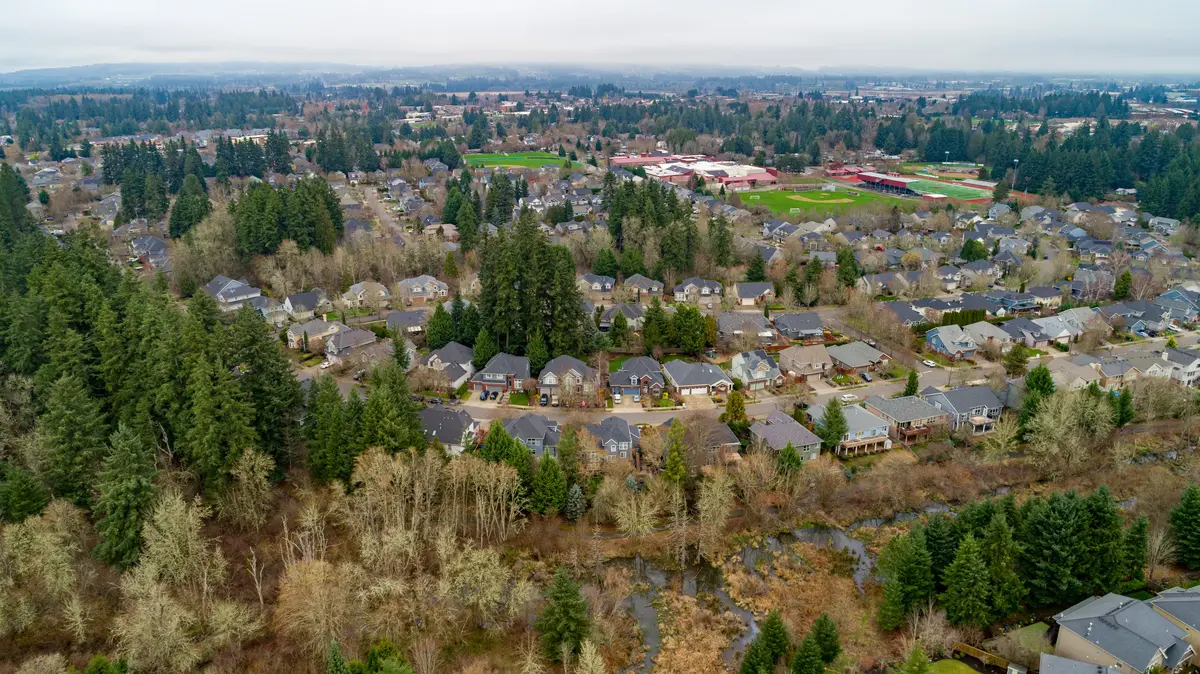
Local Expert Takeaway: Sherwood's cost story is really a housing story. The schools, the safety, the parks along Cedar Creek Trail and out at the Tualatin River National Wildlife Refuge — those are genuinely good. But the price of entry is real, and the gap between Sherwood's median household income and what it actually takes to buy the typical home here is wider than most people expect before they start looking. Oregon's lack of sales tax helps at the margins, the property tax rate is reasonable, and utilities are not the problem. The variable that determines whether Sherwood works for a given budget is almost always how much equity you are bringing in and whether there are two incomes behind the mortgage.
Quick Takeaways & FAQs
✅ Sherwood's effective property tax rate of approximately 0.84% is restrained for a Portland Metro suburb, keeping ongoing ownership costs lower than the purchase price alone would suggest.
⚠️ Oregon's top income tax rate of 9.9% is among the highest in the country and applies at income levels that many Sherwood households reach — budget for it before you move.
📍 TriMet's Line 94 and Line 97 reach Sherwood, but no MAX light rail does — virtually every household needs at least one car, which pushes transportation costs roughly 24% above the national average.
Is Sherwood, Oregon expensive to live in?
How much does it cost to rent in Sherwood, Oregon?
Does Oregon have a sales tax, and does it help with the cost of living in Sherwood?
What is the property tax rate in Sherwood, Oregon?
How does Sherwood compare in cost to nearby cities like Tigard, Tualatin, and Newberg?
Moving to Oregon?
Tell us what you need help with and we'll connect you with local resources.
