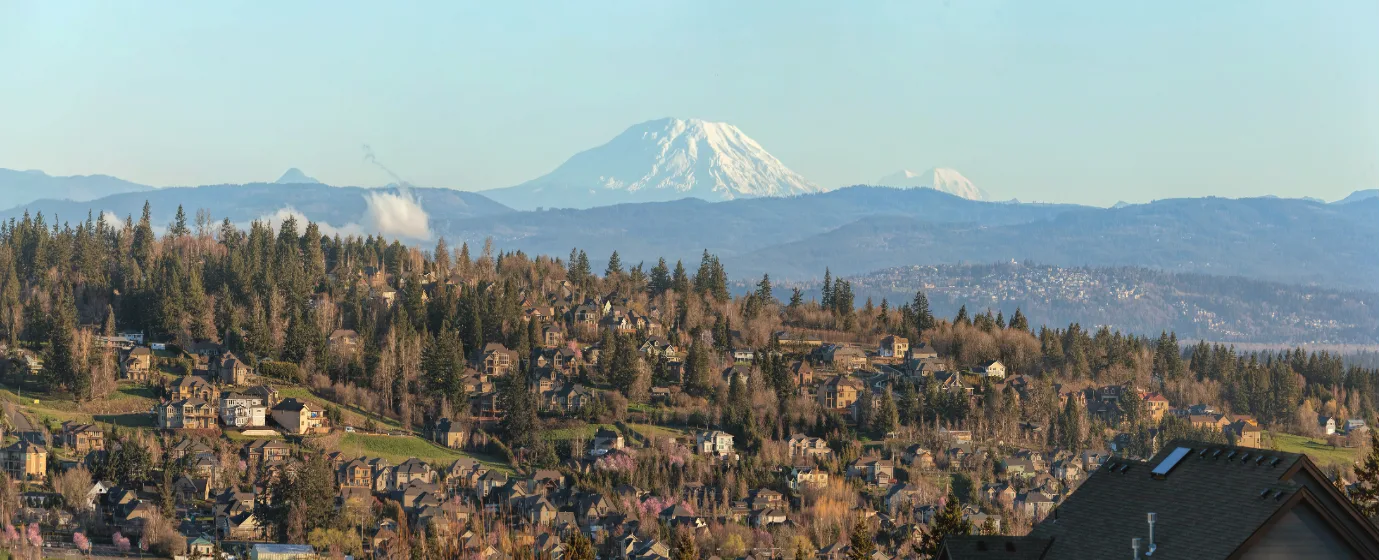
You've done the spreadsheet. Happy Valley checks real boxes — low crime relative to the Portland core, green space within walking distance, and a quiet suburban feel that most Oregon cities closer to the city limit can't offer. What the spreadsheet doesn't show is the terrain. Happy Valley is genuinely hilly, most of its residential streets require a car, and the typical home price of $686,520 (Zillow Home Value Index, July 2026) sits well above what a median income alone can carry. For retirees arriving with equity from a more expensive market, that price is workable. For those trying to stretch a fixed income from scratch, it narrows the options quickly.
The draw is real, though. Happy Valley sits in Clackamas County on the southeast edge of the Portland metro, a city of 26,738 with the feel of a well-finished suburb that still has working farmland and forested ridgelines visible from its parks. Kaiser Permanente Sunnyside Medical Center is about 3 miles away — the closest full-service hospital in Clackamas County, and the only facility in the county with a heart surgery program. For retirees who put healthcare access near the top of their list, that proximity is a legitimate selling point. Portland International Airport is about 14 miles out, keeping travel to family manageable.
Daily life here is suburban in the most literal sense: most errands require a car, the commercial center is anchored by Clackamas Town Center rather than a walkable main street, and the Pacific Northwest climate means 142 sunny days a year — a figure that surprises newcomers used to sunnier marketing. Oregon's tax structure adds some texture, particularly around Social Security (fully exempt from state income tax) and property tax deferral programs available to seniors 62 and older. The overall cost of living runs meaningfully above the national average, driven almost entirely by housing.
Whether you're comparing Happy Valley against Portland, Milwaukie, Oregon City, or somewhere farther afield, the sections below break down what retiring here actually looks like: healthcare depth, the retiree tax picture, how active and social the community is, what downsizing inventory exists, and an honest side-by-side with nearby alternatives.
Why Retirees Are Choosing Happy Valley
The retirees who land in Happy Valley and stay tend to share a few things in common: they want safety and green space without trading away metro-level healthcare and airport access, they're arriving with significant equity, and they have no interest in the density or street-level noise of closer-in Portland neighborhoods. Happy Valley delivers on all three.
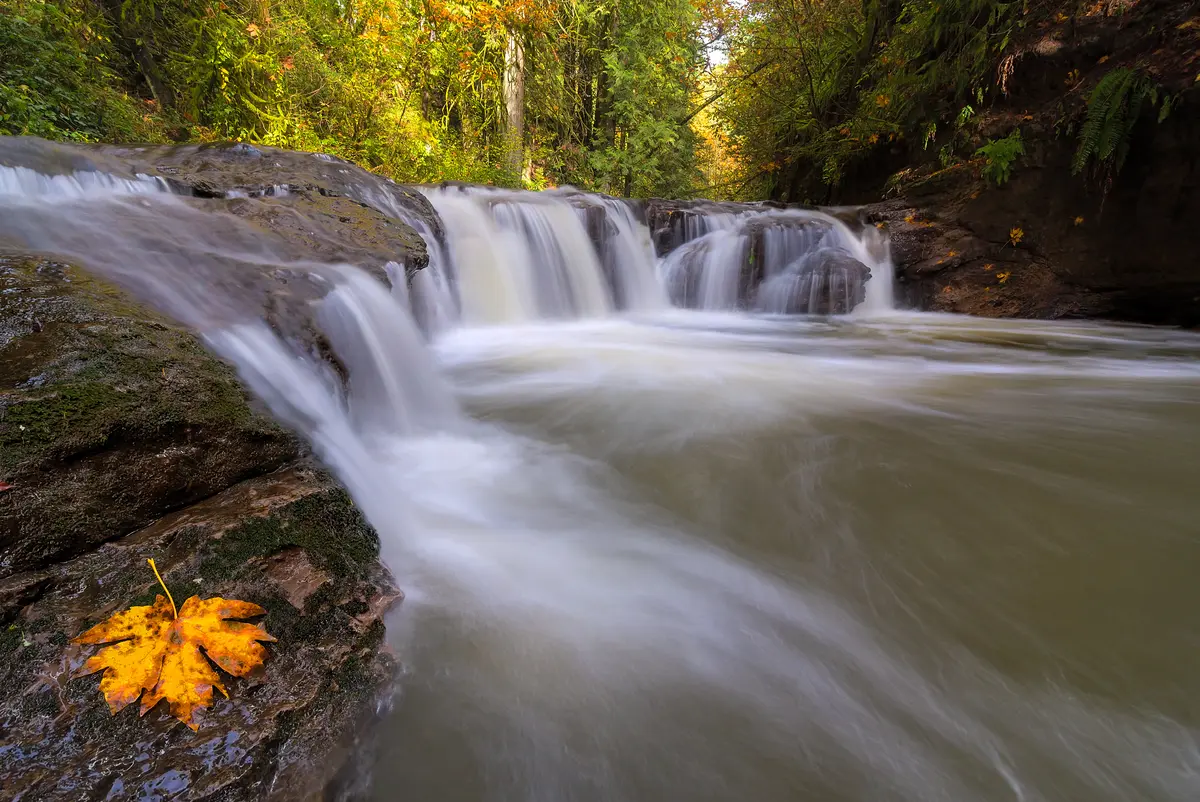
The city's crime profile sits below the state violent crime rate of 3.3 per 1,000 residents — an area many families and older buyers consider meaningfully safe — and the North Clackamas Parks and Recreation District puts roughly 50 parks and green spaces within reach. Mount Talbert Nature Park and Scouters Mountain Nature Park are the standouts: forested, hikeable, and genuinely close to residential streets. For a retiree who wants a morning walk that feels like wilderness rather than a sidewalk loop, that's not something every suburb can offer. See the parks and recreation page for the full trail rundown.
The honest counterargument: Happy Valley is not a good fit for retirees who need or want to live car-free. The hills are real, the distances are real, and the walkable-to-errands zone is concentrated near Clackamas Town Center rather than spread across the city. Retirees on a tighter fixed income will also find the entry point steep — the typical home price of $686,520 (July 2026) reflects a market where the cost of living is driven primarily by housing. If your equity from a prior home covers a comfortable purchase here, Happy Valley makes a lot of sense. If you're starting over on a modest retirement income, Milwaukie or Oregon City will stretch further.
Healthcare & Medical Access in Happy Valley
The Anchor Hospital
Kaiser Permanente Sunnyside Medical Center is about 3 miles from most Happy Valley addresses — close enough that many residents have driven it in under ten minutes outside of peak traffic. It is a not-for-profit general care hospital licensed for 233 beds, has operated continuously since 1975, and holds a distinction that matters specifically to retirees: it is the only facility in Clackamas County with a heart surgery program. That's not a marketing claim — it means cardiac surgery doesn't require a cross-town transfer to Portland.
For Kaiser Permanente members, Sunnyside functions as a full integrated care hub: primary care, cardiology, orthopedics, oncology, and specialist referrals all coordinated within the same system. For retirees on Medicare Advantage plans that operate within the Kaiser network, this proximity translates into real logistical ease — fewer trips to multiple facilities for ongoing care.
The Distance-to-Advanced-Care Reality
Kaiser Sunnyside handles a wide range of inpatient and surgical needs, but for highly specialized care — complex neurosurgery, transplant programs, certain cancer subspecialties — Portland's major academic medical systems are the realistic destination. That's roughly a 25-to-35-minute drive depending on traffic and the specific facility. For retirees whose current health is stable, that distance is unremarkable. For anyone managing a serious or complex condition already, it's worth mapping against the specific care team they need before committing to Happy Valley.
The broader Clackamas area also has outpatient clinics, urgent care centers, and specialist offices that have expanded in step with the suburb's growth. The region is not underserved — but it is not a medical district, and the full depth of tertiary care sits in Portland, not here.
The Retiree Budget in Happy Valley
Oregon's Tax Picture for Retirees
Oregon fully exempts Social Security retirement benefits from state income tax at every income level. For retirees whose primary income is Social Security, that is a meaningful and clean break — no partial exemption, no income phase-out. It's one of the more straightforward benefits Oregon offers older residents.
The picture changes for retirees drawing from 401(k), IRA, or pension accounts. Oregon taxes those at the state's full graduated rates, starting at 4.75%. Worth noting: the Oregon Retirement Income Credit, which previously offered limited relief to low-income seniors 62 and older, ended after tax year 2025 and cannot be claimed for 2026 or later. Retirees who had factored that credit into their income projections should revisit the math.
Oregon has no statewide sales tax, which softens everyday expenses and makes budgeting on a fixed income more predictable. The state does levy its own estate tax, with a $1 million exemption that is not indexed for inflation — relevant for homeowners whose primary asset is a home that has appreciated significantly.
Property Taxes and the Deferral Option
Happy Valley's effective property tax rate runs approximately 1.13%. That sits in a moderate range relative to national benchmarks, though on a home at the typical price level it represents a real annual line item. Oregon homeowners 62 or older may qualify for the state's property tax deferral program, which covers the tax obligation on their behalf and records a lien at 6% simple interest, repaid when the home is sold or the owner passes. Household income must not exceed $60,000 in the qualifying year — a threshold that many retirees drawing primarily from Social Security may meet.
The engine's mortgage calculator below this section will give you a payment estimate at current rates. For the full breakdown of how Oregon's income, property, and sales tax structure affects a household budget, see the cost of living page.
Looking to buy in Happy Valley? Estimate your payment.
Enter your numbers to see an estimated monthly mortgage payment.
Estimate only. Excludes HOA fees and mortgage insurance. The interest rate above is a starting point, not a quoted rate — replace it with your own to see real numbers. Insurance is a flat placeholder, not a Happy Valley quote.
Walkability, Community & Staying Active in Happy Valley
The Geographic Reality
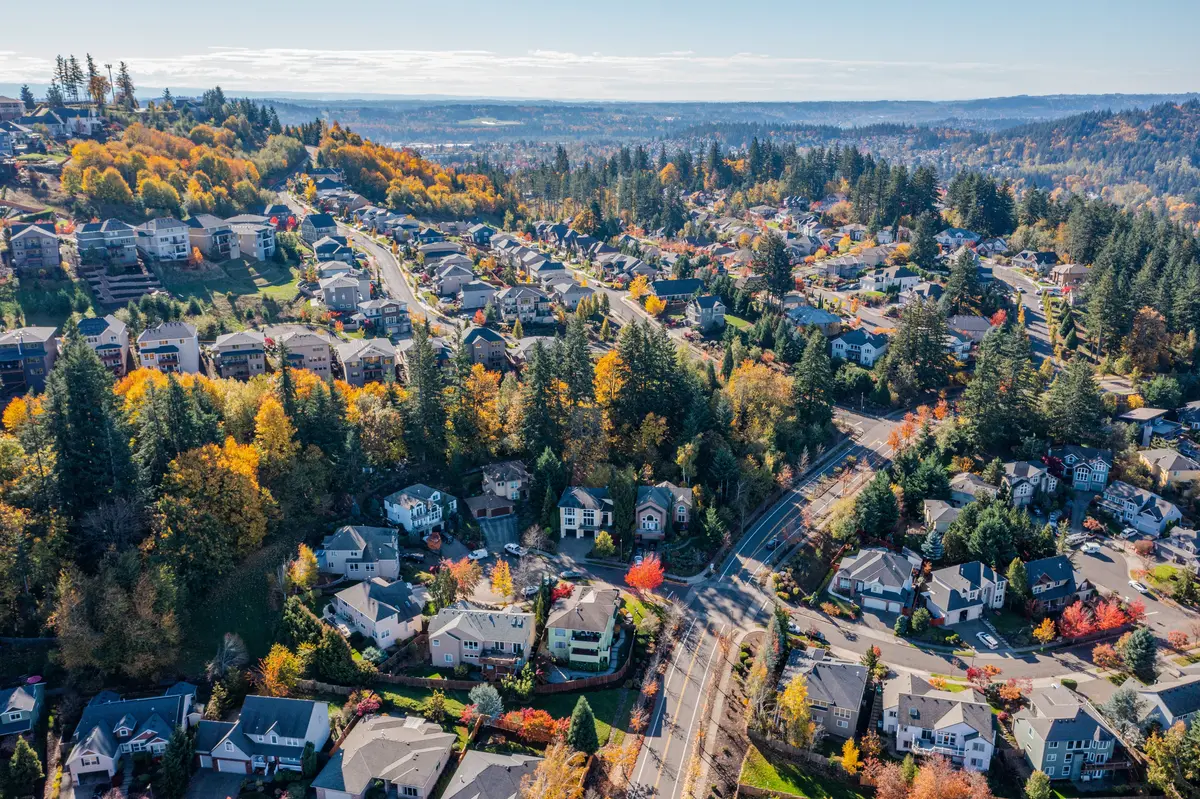
Happy Valley is hilly, and that shapes everything about getting around on foot. In the residential neighborhoods that sit up on the ridgelines — Scouters Mountain, Happy Valley Heights, parts of Rock Creek — walkability to daily errands is limited. You are not walking to a grocery run from most of these streets. The exception is the zone closer to Clackamas Town Center, where the terrain flattens and retail density picks up considerably. Near that commercial corridor, the on-foot access is genuinely useful.
For retirees prioritizing mobility independence, the key question is which part of Happy Valley you land in. The transit picture adds some options: the Clackamas Town Center Transit Center serves as the southern terminus of the MAX Green Line and connects to multiple TriMet bus routes, meaning Portland and the broader metro are reachable without a car from that access point. But most of Happy Valley's residential fabric still runs on a drive-first model.
Active Outdoor Life
Where Happy Valley earns its reputation is trail access. Mount Talbert Nature Park and Scouters Mountain Nature Park are within city limits and offer real hiking — forested terrain, elevation gain, wildlife habitat, and viewpoints that don't require driving anywhere. A trail connection running through Southern Lites Park to Happy Valley Park covers roughly 4.7 miles and is well-used by morning walkers and older residents who make it a daily circuit. For retirees who measure quality of life by morning walks and afternoon rambles, this is a genuine asset.
Community and Social Life
Happy Valley runs a consistent calendar of community events: summer concerts, movies in the park, Harvest Fest, a Fourth of July Festival, and the Happy Valley Fun Run. These aren't incidental — they're the recurring rhythm that gives a suburb its social texture. The city is not a retirement destination in the organized-community sense, but residents who show up consistently tend to find their people. Volunteering through the North Clackamas Parks and Recreation District or the city's civic programs is a common on-ramp for retirees building a social life here. For parks detail beyond what's covered here, the parks and recreation page has the full picture.
Right-Sizing: Downsizing in Happy Valley
What the Inventory Actually Looks Like
Happy Valley's housing stock skews toward larger, newer single-family homes built for growing families — four-bedroom colonials and craftsman-style houses on sloped lots are the dominant form. Single-level living exists but requires deliberate searching. Ranch-style homes and true main-floor-primary layouts are available, particularly in some of the flatter pockets near Clackamas Town Center and in the established parts of the Sunnyside corridor, but they compete for a limited pool and tend to move when priced well.
Patio homes and attached housing represent a smaller slice of the market than in dedicated retirement markets. Condos exist near the commercial areas but are not abundant at the price points that feel right-sized for downsizers coming off a larger single-family home. Buyers willing to be patient find the inventory — it's not a futile search — but if a single-level home is a firm requirement, expect to make tradeoffs on location or timeline.
55+ Communities
No 55+ communities were found in Happy Valley. The city does not have age-restricted residential communities within its limits. Assisted living and memory care options are present in the area for those who need a higher level of support, but these are not the same as the 55+ planned communities some retirees are specifically looking for. If a dedicated age-restricted neighborhood is a priority, the search will need to extend to neighboring communities in the broader Clackamas County and Portland metro area.
For retirees open to a conventional home without the 55+ amenity structure — a well-maintained single-level, a patio home, or a newer townhome that reduces exterior maintenance — Happy Valley's inventory is workable. The key is being specific about what single-level and low-maintenance actually mean to you before starting the search. For neighborhood character and what each part of the city feels like to live in, the neighborhoods page has the detailed breakdown.
Happy Valley vs Nearby Retirement Destinations
| City | Cost vs Happy Valley | Primary Hospital | Walkability | Senior Living Depth | Overall Retirement Fit |
|---|---|---|---|---|---|
| Happy Valley | Anchor | Kaiser Sunnyside (~3 mi), county's only heart surgery | Car-dependent; trails strong | Assisted living present; no 55+ communities | Strong for equity-rich, outdoor-oriented retirees |
| Milwaukie | Noticeably lower | Kaiser Sunnyside and regional options a short drive | More walkable core; flatter terrain | Some senior housing options; modest depth | Good value play; less green space than Happy Valley |
| Oregon City | Somewhat lower | Providence Willamette Falls nearby | Compact historic downtown; walkable core | Broader senior living inventory than Happy Valley | Best for retirees wanting a genuine downtown feel |
| Clackamas | Somewhat lower | Kaiser Sunnyside very close; unincorporated area | Car-dependent; retail-heavy | Limited; mostly assisted care | Functional but lacks community character |
| Gresham | Noticeably lower | Legacy Mount Hood Medical Center nearby | Transit-connected; walkable in parts | More senior housing variety | Affordable metro access; feels more urban |
| Portland | Pricier overall; neighborhood-dependent | OHSU, Providence, Legacy — full academic depth | Genuinely walkable in many neighborhoods | Deepest senior living market in the metro | Best for car-free retirees or those needing specialist care |
Milwaukie is the clearest cost alternative for retirees priced out of Happy Valley who still want to stay close to Kaiser Sunnyside — the terrain is gentler and the price point is noticeably lower. Oregon City is the better call for retirees who want a real downtown: coffee, a riverfront, and daily errands on foot rather than by car. Portland wins outright on healthcare depth and walkability, but costs more and delivers a very different daily texture than Happy Valley's suburban quiet. Gresham offers the lowest price point in this group while retaining metro transit access, though the retirement amenity landscape is thinner.
Happy Valley's specific advantage — the proximity to Kaiser Sunnyside, the trail network inside city limits, and the low crime environment — is real and hard to replicate exactly in any of the surrounding cities. The catch is equally honest: no 55+ communities, a car-dependent layout for most of the city, and a home price that assumes meaningful equity. If those tradeoffs work for your situation, Happy Valley is a serious contender in the Portland metro retirement picture.
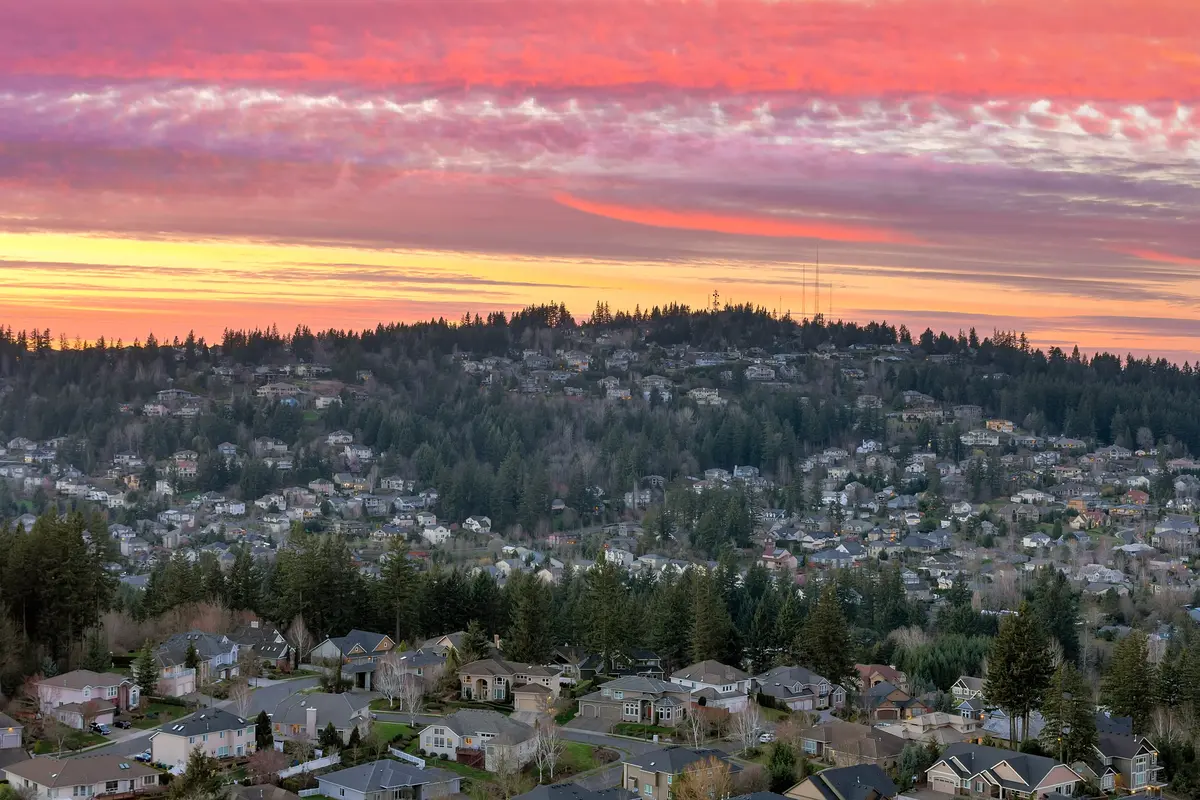
Local Expert Takeaway: Happy Valley's retirement case rests on three things that are genuinely harder to find together elsewhere in the Portland metro: a full-service hospital with cardiac surgery about 3 miles out, forested trails at Mount Talbert and Scouters Mountain within city limits, and a crime environment that tracks below state averages. The catch retirees underestimate is the terrain — most of the city's residential fabric is hilly, car-dependent, and built for families with kids rather than older adults looking to age in place without a vehicle. If you're arriving with enough equity to absorb a market-rate home and your health allows for trail walking rather than requiring flat, strollable sidewalks, Happy Valley holds up well. If you need a walkable downtown or a 55+ community structure, the search belongs in Oregon City or the closer-in Portland neighborhoods.
Quick Takeaways & FAQs
✅ Kaiser Permanente Sunnyside Medical Center — the only hospital in Clackamas County with a cardiac surgery program — is about 3 miles from most Happy Valley addresses.
⚠️ No 55+ communities exist within Happy Valley's city limits, and most residential streets require a car; retirees prioritizing walkability or age-restricted community living should look at Oregon City or Portland neighborhoods instead.
📍 Oregon fully exempts Social Security from state income tax, but the Oregon Retirement Income Credit for low-income seniors 62+ ended after tax year 2025 and is no longer available.
Is Happy Valley a good place to retire on a fixed income?
Does Oregon tax Social Security or retirement account income?
What hospital is closest to Happy Valley, and what specialties does it offer?
Are there any 55+ or active adult communities in Happy Valley?
Can I get around Happy Valley without a car as a retiree?
Moving to Oregon?
Tell us what you need help with and we'll connect you with local resources.
