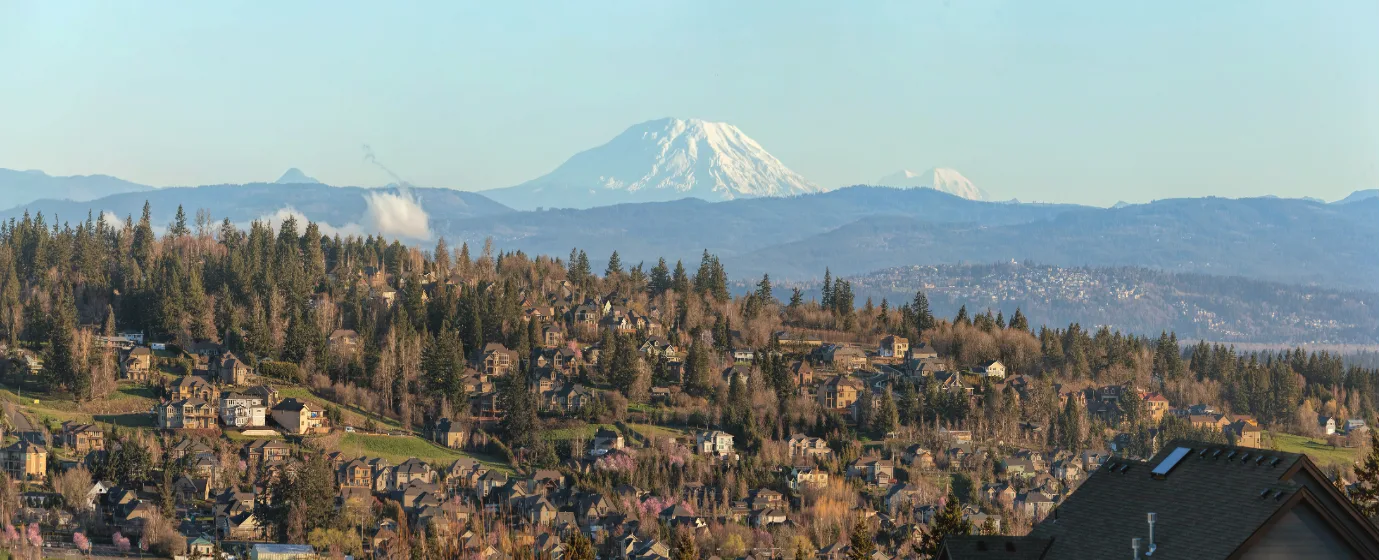
California residents who have looked seriously at Happy Valley tend to have the same reaction: it costs less than they expected, feels safer than they feared, and rains considerably more than they wanted. All three of those things are true, and none of them is the whole story. Happy Valley is a city of 26,738 people tucked into the hills southeast of Portland, connected to downtown by OR-212 and OR-224, and sitting squarely in Clackamas County — a detail that turns out to matter enormously for your tax bill. It is the fastest-growing corner of the Portland metro, built around cul-de-sacs, nature parks, and newer construction that looks more like suburban Sacramento than urban Portland.
The city's growth has been intentional and sustained. Happy Valley has grown by over 18,000 residents — roughly 400% — since 2000, fueled by pro-growth city leadership and steady annexation of surrounding hillside land. The North Clackamas School District serves the area and holds a B rating, according to Niche. Major employers include the school district itself, the City of Happy Valley, Clackamas County, and a regional health network. A lot of residents commute out — Portland, Clackamas, and the broader metro are all within reach — and a growing share work remotely. The average household size is 3.2 persons, well above the Oregon average of 2.5, which tells you something about who moves here: families with kids, two-income professional households, and people who want a yard and a good school zone without paying Portland property taxes.
On the cost side, Happy Valley sits meaningfully below California's overall price level. The typical home value here is $686,520 as of July 2026 — compared with California's statewide typical home value of $773,735 (Zillow Home Value Index). The gap is real, though it is not the dramatic cliff some Californians expect. What actually moves the needle most is Oregon's zero sales tax, the absence of Multnomah County's local income surcharges, and property taxes that don't behave the way Californians assume they do — all of which this guide walks through in detail.
Whether you are comparing neighborhoods, trying to understand what your California equity buys here, or just trying to figure out whether you will actually like living in a suburb that gets 142 sunny days a year, the sections below cover Happy Valley's housing market, tax picture, daily lifestyle, and the honest trade-offs that show up after month six.
The Home Price Reality: What California Equity Gets You Here
Happy Valley's typical home value is $686,520 as of July 2026 — below California's statewide typical home value of $773,735 (Zillow Home Value Index). That gap is real and meaningful, but it comes with context: Happy Valley is not a budget suburb. Entry-level homes here generally start in the mid-$400s for older or smaller construction, while the newer developments in areas like Scouters Mountain and Eagle Landing routinely price well above the city-wide figure. If you are arriving from coastal California with substantial equity, you will likely find you can buy more house. If you are arriving from an inland California market closer to state-level prices, the difference is narrower than you might hope.
For Californians carrying the equity from a sold home, the practical question is how far that down payment goes in a market that still requires a significant income to carry comfortably. Happy Valley's median household income is $122,151, and even at that level, the typical home here costs more than that income can comfortably support. For the dual-income professional households that make up a large share of the city, that math works. For single earners arriving with California equity but not California salaries, it is worth modeling carefully. The cost of living page covers this in full detail.
The housing stock itself is a genuine draw. Happy Valley's subdivisions are mostly 1990s-to-present construction — larger lots than you find closer to Portland, attached garages, newer appliances, and finished basements. Neighborhoods like Rock Creek and Jackson Hills draw families who want the space; Taralon and Happy Valley Heights attract buyers looking for newer builds with mountain views. For a deeper look at what each neighborhood offers, see the neighborhoods guide.
What Californians Often Misjudge
Two things tend to catch California buyers off guard. First, Oregon does not have Proposition 13, so you will not inherit a long-time owner's artificially low assessed value — you get reassessed at or near the purchase price. Oregon's Measure 50 caps annual assessed-value growth at 3%, similar in structure to Prop 13, but the cap resets at purchase. Happy Valley's effective property tax rate is 1.13%, noticeably higher than California's effective property tax rate of 0.71% (California Franchise Tax Board). On a home at the city's typical price, that difference is material, and it runs the other direction from what many Californians expect.
Second, well-priced homes in established Happy Valley neighborhoods do not sit indefinitely. Buyers arriving from California markets where they had time to be deliberate sometimes underestimate how quickly they need to move when the right home appears. Coming in pre-approved and having already defined your non-negotiables by neighborhood is the standard advice for a reason.
| Factor | Happy Valley, OR | California (Statewide) |
|---|---|---|
| Typical home value (Zillow Home Value Index, July 2026) | $686,520 | $773,735 |
| Effective property tax rate | 1.13% | 0.71% |
| Assessment cap law | Measure 50 (3% annual cap, resets at sale) | Proposition 13 (2% annual cap) |
| State income tax — top rate | 9.9% | 13.3% |
| Sales tax | None | 7.25% base statewide (plus local additions) |
| Multnomah County / Metro income surcharge | Does not apply (Clackamas County) | N/A |
The Tax Picture: Where Oregon Wins, Where It Doesn't
Oregon's tax story for California transplants is genuinely mixed, and the marketing version — "no sales tax, lower income tax, you win" — is only partially true. The honest breakdown matters more than the headline, especially if you earn a middle-class income rather than a Bay Area executive salary.
Sales Tax: Oregon's Clearest Advantage
Oregon is one of five states with no sales tax at any level — no state, no county, no city. California's statewide base sales tax rate of 7.25% (California Dept. of Tax and Fee Administration) is the highest base rate in the country, and local additions push the real rate most Californians pay considerably higher. For a household spending $30,000 a year on taxable goods, the savings in Oregon are estimated at $2,400–$3,000 annually. That figure accrues silently — you notice it on the receipt, not on a tax form — but it is one of the most consistent real-dollar advantages of the move.
Income Tax: Read This Carefully
Oregon's top state income tax rate of 9.9% is lower than California's top state income tax rate of 13.3% (Tax Foundation), and that comparison is widely cited. What is less often cited is that Oregon's brackets are compressed: the 9.9% rate applies to taxable income above $125,000 for single filers. California reserves its highest rates for income above $1 million. For earners at a more typical income — say, $100,000 — the effective Oregon income tax bill can actually run higher than California's equivalent, because more of the income lands in Oregon's steeper mid-bracket range. This is not a reason to rule out the move. It is a reason to run your specific numbers, not the headline comparison.
Oregon does offer one meaningful offset that California doesn't: residents can deduct a portion of federal income taxes paid from their Oregon taxable income — up to $7,050 for single filers and $14,100 for married couples filing jointly in 2026. For moderate earners, that deduction meaningfully lowers the effective state bill.
The Clackamas County Distinction
This is the detail most California buyers researching Portland miss. Portland proper residents pay an additional roughly 2.5% in Multnomah County and Metro income taxes, pushing combined tax burdens for high earners toward 12.4%. Happy Valley sits in Clackamas County. Those surcharges do not apply here. If you are choosing between a home inside Portland and one in Happy Valley, the after-tax income difference for a household earning above $125,000 is meaningful — and it does not show up in any headline state-rate comparison.
Estate Tax: A Planning Consideration
California has no state estate tax. Oregon does, with a threshold of just $1 million — a threshold that has not kept pace with inflation and now captures estates that would look solidly middle-class by asset value. For Californians arriving with substantial home equity or investment accounts, this is a conversation to have with an estate planning attorney before you close. It does not negate the move, but it is not a footnote either.
Why So Many Californians Are Landing Here Specifically
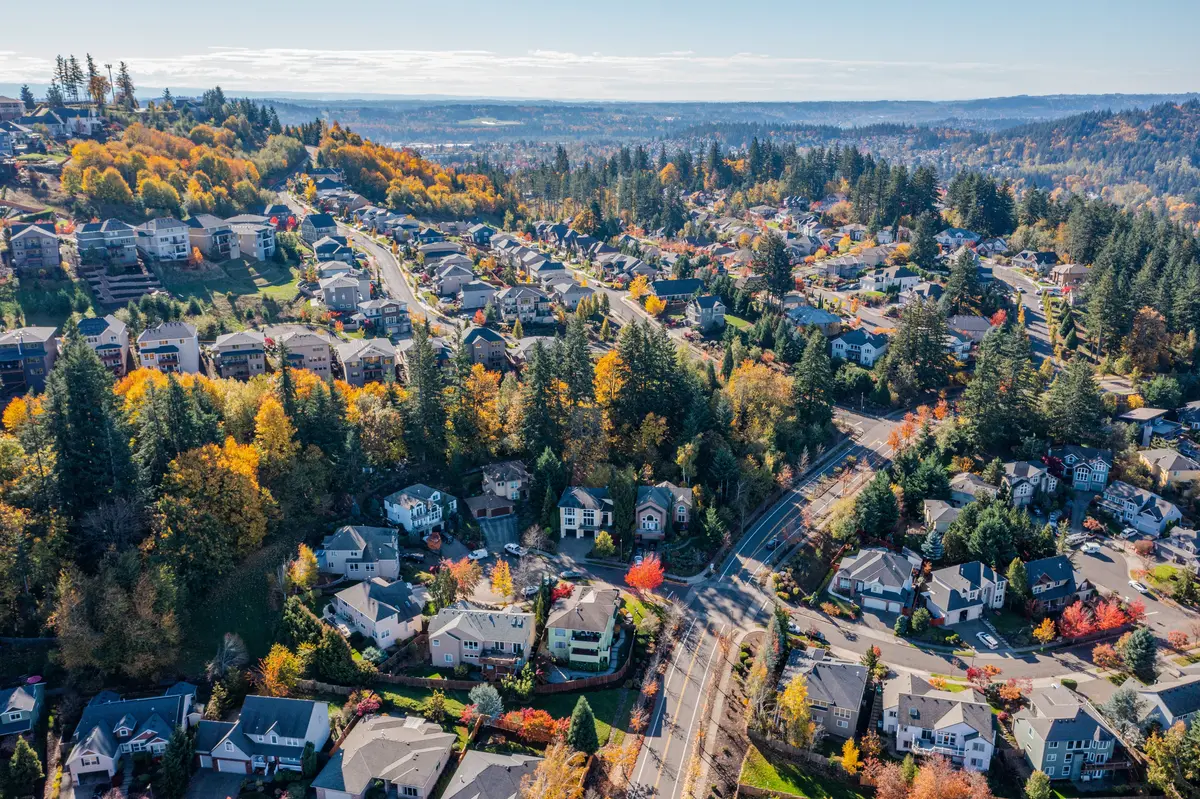
California has been the dominant source of inbound Oregon migrants for years running, and inside Oregon, Happy Valley has absorbed a disproportionate share of those arrivals. That pattern is not accidental.
What Happy Valley offers that most of the Portland metro does not is newer housing stock in a lower-density setting, with direct access to the city and none of Multnomah County's local tax burden. The school district — North Clackamas, with 16,864 students enrolled in 2025-26 — covers the area, and families arriving from California's competitive school-choice landscape tend to find it a reasonable landing spot, though on 2024-25 state assessments, 30.2% of students reached math proficiency and 41.4% reached reading proficiency — figures worth understanding before drawing conclusions in either direction. The schools page has the full breakdown.
The educational profile of the city itself also mirrors the California migration wave. An estimated 46.4% of Happy Valley residents hold a bachelor's degree or higher, compared with Oregon's statewide average closer to 35%. The average household size of 3.2 persons — compared with 2.6 countywide — reflects a city built around families rather than singles or retirees. If you are a two-income household with school-age children who has been priced out of your California market, Happy Valley was essentially designed for your demographic.
The Trade-Off Californians Rarely Talk About
Six months in, the question almost everyone raises is weather. Happy Valley gets 142 sunny days a year. That is not a typo, and it is not a rounding error. The Pacific Northwest's famous gray runs from October through April, and it is more persistent than dramatic — not storms, just overcast. People from Southern California in particular find the adjustment harder than expected. People arriving from the Bay Area or Sacramento tend to adapt more easily, having already dealt with real winters or, in the Bay's case, marine layer that can feel indistinguishable. The lifestyle shift is real; most people who stay more than two years say they adjusted. The ones who leave within eighteen months usually cite the weather before anything else.
Looking to buy in Happy Valley? Estimate your payment.
Enter your numbers to see an estimated monthly mortgage payment.
Estimate only. Excludes HOA fees and mortgage insurance. The interest rate above is a starting point, not a quoted rate — replace it with your own to see real numbers. Insurance is a flat placeholder, not a Happy Valley quote.
Daily Life in Happy Valley: What Changes and What Doesn't
The practical rhythms of Happy Valley will feel familiar to anyone who has lived in a California suburb — because that is essentially what it is, transposed north. Most errands happen by car. The city is oriented around single-family subdivisions, not walkable corridors. Clackamas Town Center sits adjacent to the city and serves as the primary retail anchor for most residents. A serious shopping trip beyond everyday goods means driving, but the greater Portland metro fills in everything else within a reasonable distance.
The commute pattern matters. Most residents who work in Portland proper are looking at about 25 minutes to Downtown Portland under normal conditions, using OR-212 or OR-224. That number is real during off-peak hours; it stretches during weekday mornings and the late-afternoon window. The living in Happy Valley hub covers commute patterns and major employers in detail.
Where People Actually Spend Their Weekends
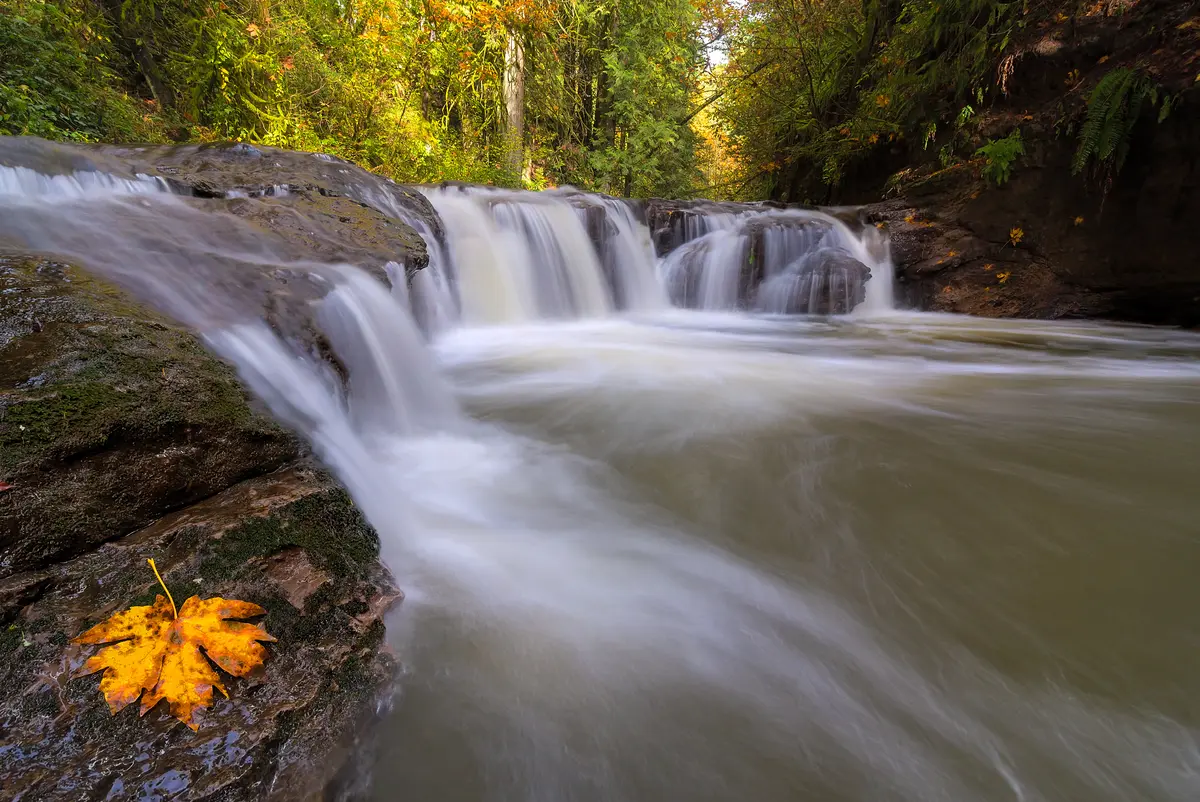
Mount Talbert Nature Park and Scouters Mountain Nature Park are the two anchors of outdoor life here — both within the city, both genuine natural areas with trail networks through Douglas fir forest. Happy Valley Park serves as the social center for youth sports and community events. Hidden Falls Nature Park, quieter and less trafficked, is where longer-time residents tend to go when they want to move without running into a crowd.
Health insurance premiums in Oregon run noticeably below what most Californians were paying, though you will drive farther for specialist care and advanced treatment than you would from most California metro addresses. See the retiring in Happy Valley page for more on healthcare access.
The food and coffee scene is modest by California urban standards and more developed than the city's population might suggest. The Weekends section below covers specific places. The broader point is that Happy Valley is not a dining destination — residents drive to Portland or the Clackamas corridor for that — but day-to-day needs are well covered within the city or immediately adjacent to it.
What Doesn't Change
If you moved from California partly to slow down, Happy Valley delivers that. The pace is suburban and deliberate. The city's parks fill on weekends with the same families who wave to each other in the school pickup line. For households that have already made peace with that trade — and most who choose Happy Valley explicitly have — it is not a compromise. It is the point.
Weekends and Local Favorites
Happy Valley's local scene is smaller than what most Californians are used to, and that is a calibration, not a problem. The businesses that exist here are genuinely local, not chains filling space, and residents talk about them accordingly.
For food, Happy Valley Station Food Carts has built a real following — a rotating set of independent vendors in a food-cart-pod format that feels distinctly Oregon rather than suburban strip mall. Hog Wild BBQ & Catering handles the smoked-meat side of things with the seriousness the format demands. Margarita Factory Happy Valley and Mezcaluna Mexican Cuisine & Lounge cover the Mexican end of the dining spectrum with two distinct registers — the former more casual, the latter leaning lounge. Noodle Man rounds out the options for a quick weeknight bowl.
Coffee and bakeries punch above their weight for a city this size. TOUS les JOURS Bakery Café at Clackamas Town Center is a Korean-French bakery chain with a following that runs well outside Happy Valley. Croffle Crew Cafe has built a loyal regulars base for its croffle format. Cafe Le Fleurs, Le Petit Café Happy Valley, and Plenty European Coffee Shop each offer a different version of the independent café experience — the kind of morning routine that California transplants tend to appreciate most after a few months, when the novelty of no sales tax has settled into the background and the question becomes whether the place has a neighborhood feel. These do.
For outdoor time, Mount Talbert Nature Park and Scouters Mountain Nature Park are the weekend defaults — both within the city, both with well-maintained trails that get busy on dry-weather mornings. Happy Valley Park anchors community gatherings. Hidden Falls Nature Park is the local answer to the question "where do you go when you want fewer people?"
What California transplants find they miss most in year one is density — the sense that a dozen good options are within a mile in any direction. What they find they don't miss is the traffic that comes with it. That trade shows up in small ways every week, and most people land somewhere between "I've adjusted" and "I've decided this is actually what I wanted."
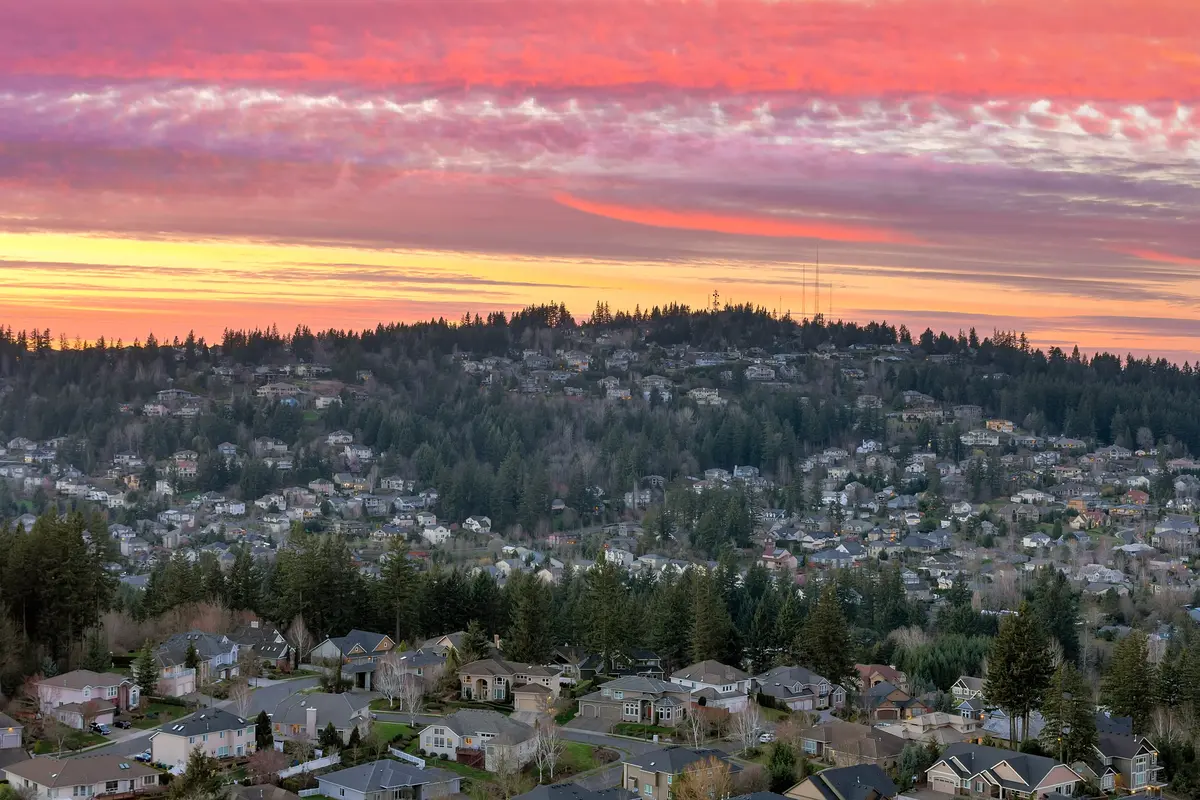
Local Expert Takeaway: Happy Valley is genuinely built for the California professional household that has decided the equity math finally works — newer construction, real trail access out the back of Scouters Mountain, and a Clackamas County address that keeps Multnomah County's income surcharges off your return. The tax story is more complicated than the 'no sales tax' headline suggests, especially for middle-income earners, and the property tax rate runs higher than what Californians are used to under Prop 13. But the cost gap is real, the school district is stable, and the city's average household size of 3.2 tells you exactly who lives here and why they stayed.
Quick Takeaways & FAQs
✅ Happy Valley's typical home value of $686,520 (July 2026) sits below California's statewide typical home value, and Clackamas County addresses avoid Multnomah County's local income surcharges that affect Portland proper residents.
⚠️ Oregon's income tax is not automatically lower for middle-income earners — at $100,000 of taxable income, the effective Oregon state bill can exceed California's equivalent, so running your specific numbers matters more than comparing top rates.
📍 Happy Valley gets 142 sunny days a year — the single most common reason California transplants leave within 18 months, and the most honest thing to calibrate before you sign a purchase agreement.
Is Happy Valley cheaper than California for housing?
Does Oregon really have no income tax advantage over California?
What is the property tax situation in Happy Valley compared with California?
How does the commute from Happy Valley to Portland actually work?
Will Oregon's estate tax affect me as a California transplant?
Moving to Oregon?
Tell us what you need help with and we'll connect you with local resources.
