
Gladstone sits at the confluence of the Clackamas and Willamette rivers in Clackamas County, about 20 minutes from downtown Portland via OR-99E (McLoughlin Boulevard). It is a city of 11,898 — genuinely small by metro standards — and that size shapes the cost picture in ways newcomers rarely anticipate. Housing is the dominant line item, as it is everywhere in the Portland metro, but Gladstone lands at a noticeably lower price point than the suburbs that tend to come up in the same breath: West Linn, for example, or Happy Valley. The trade-off is a city with fewer retail options and a commercial strip rather than a walkable downtown, which is exactly the exchange a lot of buyers decide they are willing to make.
The economic backbone here is public-sector and healthcare-adjacent. The Gladstone School District, the City of Gladstone, and Clackamas County together anchor the local employment picture, and a significant share of residents commute out to Portland or to the broader Clackamas County employment base. The school district — with 1,564 students enrolled in 2025-26 — holds a B- rating, according to Niche, which is honest middle ground: a functioning community district without the magnet-program depth of larger systems. For families weighing schools, the Gladstone schools page goes deeper on what that grade actually means in practice.
Oregon's cost of living runs noticeably above the national average — housing in particular runs well above national norms — but utilities trend slightly below, and there is no statewide sales tax. Gladstone's median household income of $91,250 is a reasonable number for the region, though it sits below what most lenders would want to see against the typical home price here. The gap is real and worth understanding before you run the numbers. Grocery costs in the Portland metro run above the national baseline, and the commute arithmetic depends on whether you are driving or occasionally catching TriMet's Line 34 along OR-99E toward the broader transit network.
Whether you are deciding between Gladstone and Oregon City, comparing it against Milwaukie, or just trying to understand how far a household income goes here, the sections below break down housing, everyday costs, the nearby-city comparison, and the tax picture — everything you need to size up what living here actually costs.
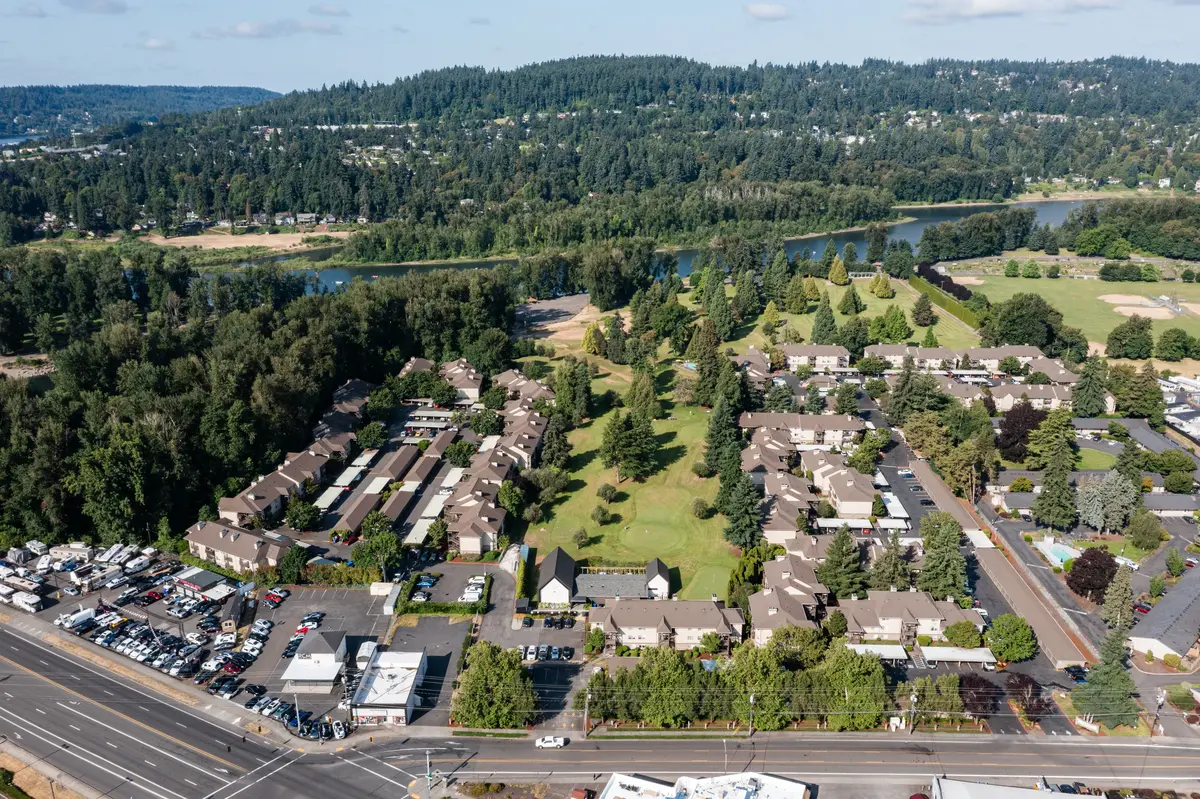
What It Really Costs to Live in Gladstone
Gladstone is not a budget suburb, but it is one of the more accessible price points left in the Portland metro at this level of livability. The typical home price stood at $518,084 (Zillow Home Value Index, July 2026) — meaningfully below West Linn and noticeably below Oregon City, though roughly in line with Milwaukie. Housing is what drives virtually every Oregon metro cost comparison, and Gladstone's position on that spectrum is its main financial argument.
Oregon's overall cost structure runs above the national average, pushed there almost entirely by housing. Non-housing costs — utilities, transportation, everyday goods — are closer to or slightly below national norms. For a Gladstone buyer, that means the down payment and monthly payment are the challenge; the grocery run and the power bill are not.
The city also sits inside a no-sales-tax state, which provides a quiet, consistent discount on every retail purchase. That does not change the housing math, but it does matter for families comparing Oregon to Washington or California. For a more granular read on how Gladstone compares city to city, the table in section four lays it out directly.
Housing: Rent vs Buy in Gladstone
Buying in Gladstone means entering at a price point that is competitive for the inner Clackamas County area, but the affordability picture has real friction. The median household income of $91,250 falls short of what most lenders expect to see against a home at the typical price — by a meaningful margin. That gap pushes a lot of households toward renting longer than they planned, or toward smaller homes on the entry end of the market, where older construction offers the lowest price points in the city.
Renting carries its own costs. The typical 2-bedroom runs $1,610–$1,950 per month, with the city-wide typical rent sitting at $1,745/month (Zillow ZORI, July 2026). That range is more manageable for a single earner or a couple early in a saving plan, but it is not a dramatic discount against owning — particularly when you factor in that rent in this corridor has followed the broader metro upward over the past several years.
The effective property tax rate in Gladstone is approximately 0.96%. That sits slightly above the Oregon statewide average but well below the rates common in comparable suburban markets nationally. It is not a budget-breaking number, but it is a real carrying cost that the mortgage calculator below can help you fold into a complete monthly picture. Do not ignore it when comparing rent versus ownership.
Renting makes most sense here for households still building a down payment, those on shorter time horizons (under three years), or buyers not yet sure which part of the metro fits their life. Buying makes sense for households with stable income and a long enough runway to absorb transaction costs. For a deeper look at which parts of the city offer different housing types and price postures, the best neighborhoods guide covers that terrain.

Everyday Costs Beyond Housing in Gladstone
| Category | Typical Monthly Cost | Notes |
|---|---|---|
| Housing (typical rent) | $1,745/mo | City-wide typical rent. Buying? Use the calculator above for a mortgage estimate. |
| Utilities | $210–$290/mo | Electricity, gas, water, sewer, trash |
| Groceries | $600–$800/mo | Food at home, household of 2–3 |
| Transportation & Gas | $200–$360/mo | Fuel, and transit where it is a real option |
| Phone & Internet | $110–$180/mo | Mobile plan plus home broadband |
| Misc / Discretionary | $250–$480/mo | Dining out, entertainment, subscriptions |
Non-housing figures are estimates for a household of two to three, not a sourced index; housing is the city-wide typical rent (Zillow ZORI, July 2026). Refreshed with the rest of the city data.
Gladstone's utility picture has a local twist most suburbs lack: the city runs its own municipal electric service rather than relying on a regional investor-owned utility. Because the municipal system draws heavily on Pacific Northwest hydropower, electricity rates here run below the national average — a genuine advantage in a city where electric heat and air conditioning draw real load in both the rainy winters and the increasingly warm summers. Rates did rise modestly in August 2025 following a city commission decision, so expect the directional advantage to persist, but not widen.
Garbage collection rose alongside electricity in 2025, with the new rate including a surcharge supporting composting, street sweeping, and alley maintenance — the kind of municipal service cost that is easy to overlook when comparing cities. Oregon grocery prices run roughly 7% above the national average, and the Portland metro grocery index sits noticeably above the Eugene market and below Seattle. Most Gladstone residents drive for grocery shopping, as OR-99E is the commercial spine here. TriMet's Line 34 serves the Gladstone corridor for those commuting without a car, but this is a city where most errands still require a vehicle, and a serious shopping trip — for anything beyond everyday staples — typically means driving out of the immediate area. The full sample monthly budget for this city, with current figures, is rendered directly below this section.
Looking to buy in Gladstone? Estimate your payment.
Enter your numbers to see an estimated monthly mortgage payment.
Estimate only. Excludes HOA fees and mortgage insurance. The interest rate above is a starting point, not a quoted rate — replace it with your own to see real numbers. Insurance is a flat placeholder, not a Gladstone quote.
Gladstone vs Nearby Cities: Cost Comparison
| City | Typical Home Price | Typical Rent | Cost vs Gladstone |
|---|---|---|---|
| Gladstone (this city) | $518,084 | $1,745/mo | — |
| Oregon City | $605,330 | $1,955/mo | 17% higher |
| Milwaukie | $522,702 | $1,749/mo | About the same |
| West Linn | $779,602 | $2,376/mo | 50% higher |
Source — home prices: Zillow ZHVI, July 2026; rent: Zillow ZORI, July 2026. Nearby-city figures are the same series, refreshed together.
Gladstone's price position relative to its nearest neighbors is one of the clearest arguments for or against choosing it — the table below shows how home prices and rent stack up across the cities most buyers weigh against it.
Taxes & the Bottom Line for Gladstone
Oregon's state income tax is the headline number most out-of-state buyers underestimate. The rate is progressive, running from 4.75% at the low end to 9.90% at the top bracket for the 2025 tax year — one of the higher top rates in the country. For a household earning near or above $91,250, the effective state income-tax bite is real and should be part of any honest relocation budget.
The offsetting factor is Oregon's complete absence of a statewide or local sales tax. Every price you see is the price you pay — no mental math at the register, no additional percentage layered on furniture, appliances, or a car purchase. For households that spend heavily on goods, this offset is meaningful. For households whose spending is dominated by housing, it matters less.
Property taxes in Gladstone run at approximately 0.96% effective rate — slightly above the Oregon statewide average of roughly 0.81%, but well below the rates buyers relocating from states like Texas, Illinois, or New Jersey would typically be carrying. On a home at the price point described in section one, that rate produces a carrying cost the mortgage calculator above can model precisely.
The honest bottom line: Gladstone fits comfortably for dual-income households whose combined earnings clear the income gap against the typical home price, or for buyers coming in with substantial equity from a prior sale. Single-income households at or near the median will find the buy-side math tight, and the rent-to-own path longer than expected. Remote workers relocating from higher-cost coastal markets — particularly California — tend to find the value case straightforward; the California comparison page addresses that specifically. For buyers weighing the 55-plus budget, the retiring in Gladstone page covers the retiree cost picture including Oregon's treatment of Social Security income at the state level.
Local Expert Takeaway: Gladstone's cost story is simple but easy to misread: the home price looks accessible by Portland metro standards, and it is — compared to West Linn or Oregon City. But the income-to-price gap is real, and buyers who build their budget around the median household income without closing that gap often find the numbers tighter than expected once property taxes, utilities, and Oregon's income tax are folded in. The city's municipal electric service and no-sales-tax environment both help on the margins. The household that wins here is the one that comes in with a clear down payment plan, has steady income above the local median, and values the Clackamas River proximity and OR-99E access to Portland over a longer list of local retail options.
Quick Takeaways & FAQs
✅ Gladstone's typical home price of $518,084 (July 2026) sits noticeably below West Linn and is among the more accessible entry points left in inner Clackamas County.
⚠️ The median household income in Gladstone falls short of what most lenders want to see against the typical home price — by a meaningful amount — making the path to ownership genuinely stretched for many buyers.
📍 Gladstone operates its own municipal electric utility drawing on Pacific Northwest hydropower, which keeps residential electricity rates below the national average — a real, if modest, advantage over metro neighbors served by investor-owned utilities.
Is Gladstone, Oregon cheaper than Oregon City?
What is the property tax rate in Gladstone?
Does Gladstone have a sales tax?
How much does a 2-bedroom apartment cost to rent in Gladstone?
Can a Gladstone household income realistically afford to buy a home there?
Moving to Oregon?
Tell us what you need help with and we'll connect you with local resources.
