
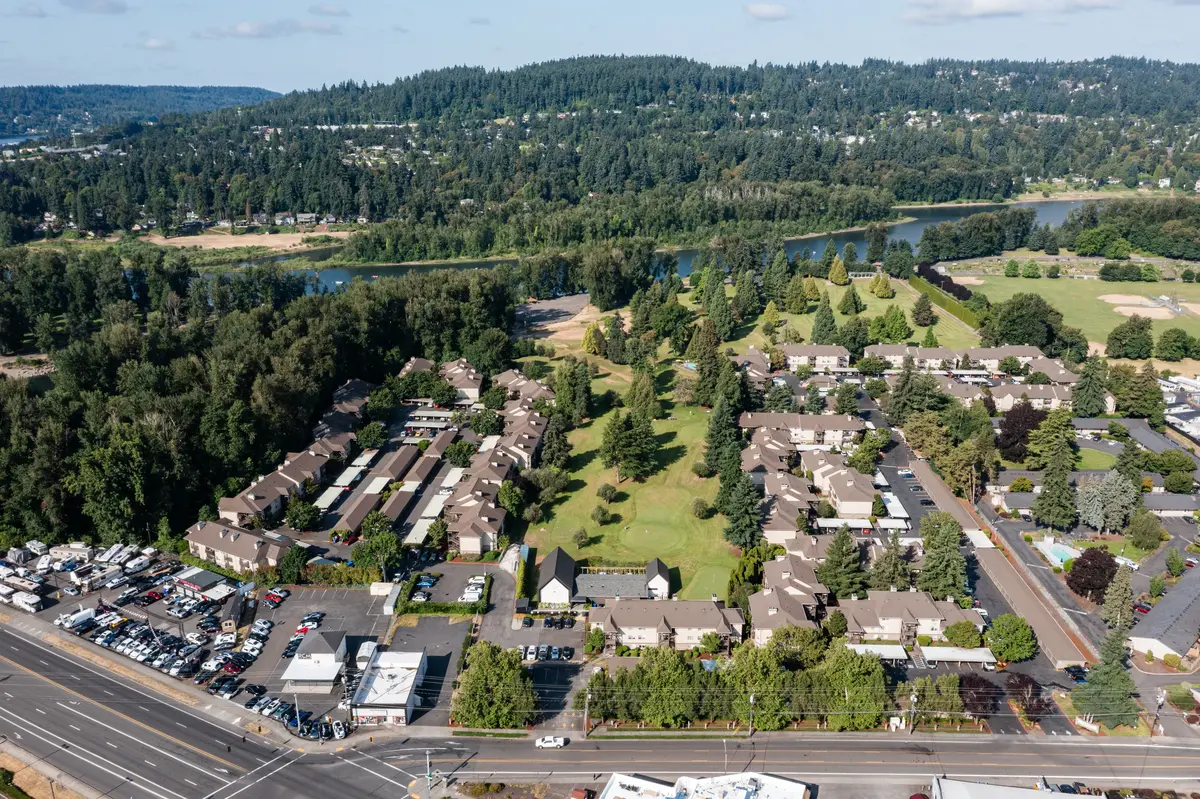
Gladstone doesn't show up on most Oregon retirement shortlists, and that's part of what makes it worth a serious look. It's a small city — population 11,898 — wedged between the Clackamas and Willamette Rivers at the southern edge of the Portland Metro. OR-99E (McLoughlin Boulevard) runs through it, keeping Portland about 20 minutes north without the city's congestion, noise, or price tag. For retirees who want proximity to a major metro without living inside one, that geography does real work.
The economic picture here is modest and unhurried. The city's largest employers are the school district, the city government, and Clackamas County — institutions that don't boom or bust. Providence Milwaukie Hospital anchors the healthcare corridor in adjacent Milwaukie, and Legacy Willamette Falls Medical Center sits about 3 miles away in Oregon City. That cluster of hospitals at Gladstone's doorstep is, frankly, one of the strongest arguments for retiring here. Healthcare access at this proximity for a city this small is unusual.
The typical home price in Gladstone is $518,084 (Zillow Home Value Index, July 2026) — noticeably below what you'd pay in West Linn and meaningfully more manageable than most of the inner Portland market. Oregon's property tax rate here runs approximately 0.96%, which is relatively low by Pacific Northwest standards. The catch: Oregon taxes most retirement income aggressively, and the state averages only 140 sunny days a year, which genuinely affects quality of life for retirees weighing the Pacific Northwest against sunnier alternatives. For the full cost picture, see the cost of living in Gladstone page.
This guide covers what retirees specifically need to know about Gladstone: who it genuinely fits, what the healthcare corridor looks like in practice, how Oregon's tax structure affects a typical retirement income, where the social and active-adult life actually happens, what the downsizing inventory looks like, and how it stacks up against nearby retirement-relevant towns.
Why Retirees Are Choosing Gladstone
Gladstone fits a specific kind of retiree well: someone who wants a quiet, small-city feel within easy reach of a genuine metro, values outdoor access on flat river terrain, and doesn't need an active 55+ social campus to feel at home. If that describes you, the confluence of the Clackamas and Willamette Rivers, the Trolley Trail, and a pair of hospitals within a few miles starts to look like a serious package.
The city also suits retirees who are downsizing from larger Portland-area homes and want to capture equity without moving to a rural county. The typical home price of $518,084 (July 2026) means a sale in West Linn or Lake Oswego can translate into a meaningful equity release here — sometimes enough to substantially reduce or eliminate a mortgage payment, which matters a great deal on a fixed income. Oregon has no sales tax, which helps every grocery run and hardware-store purchase.
Be honest about who Gladstone doesn't fit. Retirees who want a walkable downtown full of coffee shops, galleries, and evening dining will find the options limited; this is not Oregon City's historic district or Lake Oswego's waterfront. Those who need specialist medical care beyond what a community hospital offers will be driving to OHSU or another major Portland-area system regularly. And anyone relocating from Arizona or California for the weather may be genuinely surprised — 140 sunny days a year is the reality, and the gray months are long. Come for the rivers and the proximity; don't come expecting a climate that isn't here.
Healthcare & Medical Access in Gladstone
For retirees, hospital proximity is not a nice-to-have — it is often the deciding factor in a relocation. Gladstone clears that bar clearly. Legacy Willamette Falls Medical Center in Oregon City is the nearest hospital, about 3 miles away. For a city of 11,898, that is exceptional proximity.
Providence Willamette Falls Medical Center, also in Oregon City, adds meaningful depth — a Joint Commission-accredited acute care facility with a full-service emergency department and a broad specialist bench for a community hospital of its size. That level of credentialing and specialist range at a community hospital — rather than a small critical-access facility — matters when you're thinking about cardiac care, orthopedics, or emergency response. Providence Milwaukie Hospital is in adjacent Milwaukie, giving Gladstone residents a third hospital anchor within a very short drive.
The honest limitation is what sits above community-hospital level. For oncology, advanced cardiac intervention, neurosurgery, or major transplant services, retirees will be heading to Portland — specifically to OHSU or one of the larger Providence system campuses. That drive is manageable and, in most cases, represents care you'd plan in advance rather than reach in an emergency. But retirees with complex ongoing conditions should map those specialty clinics before committing to a home here, not after.
Clackamas County Social Services and Oregon's Medicaid Long-Term Care program provide financial assistance to eligible Gladstone seniors for long-term care needs. The Senior Citizens Council also offers assistance for seniors who need specialized equipment or services. These programs are worth researching early, before you need them, because eligibility windows and application timelines matter.
The Retiree Budget in Gladstone
Oregon's tax posture toward retirees is genuinely split, and understanding which side of the line your income falls on changes the picture significantly. The strong news: Oregon does not tax Social Security or Railroad Retirement benefits at all. The state fully subtracts them from Oregon taxable income regardless of how much other income you have — no phaseout, no threshold, no partial exclusion. For retirees whose primary income is Social Security, Oregon is meaningfully more favorable than many states.
The harder news is everything else. Pensions, traditional IRA withdrawals, and 401(k) distributions are taxed as ordinary income at Oregon's graduated rates — from 4.75% at the lower end up to 9.9% at the top. Those are among the highest rates in the country for retirement income of this type. If you're drawing heavily from pretax retirement accounts, run the numbers carefully before assuming Oregon is tax-friendly for your specific situation.
One meaningful safety valve for homeowners: Oregon's property tax deferral program allows homeowners age 62 or older with household income below $60,000 (2025 threshold) to defer property taxes until the home is sold. The state pays the county directly; the deferred amount accrues 6% simple interest and is repaid at sale or death. For retirees on tighter fixed incomes who own their home outright or nearly so, this can provide real cash-flow relief in the earlier retirement years.
The effective property tax rate in Gladstone runs approximately 0.96% — relatively modest by Oregon metro standards and well below what you'd face in many neighboring states. Oregon also has no sales tax, which meaningfully reduces the daily cost of groceries, home supplies, and incidentals on a fixed income. For a full breakdown of how taxes and living costs stack up, the cost of living in Gladstone page covers it in detail.
One estate-planning note worth raising with a tax advisor: Oregon has its own estate tax with a $1 million exemption — not indexed for inflation and unchanged since 2012 — with graduated rates from 10% to 16% on the taxable portion above that threshold. Given rising home values, retirees with significant home equity and other assets should review whether their estate crosses that threshold under Oregon law, which is far more stringent than the federal threshold.
Looking to buy in Gladstone? Estimate your payment.
Enter your numbers to see an estimated monthly mortgage payment.
Estimate only. Excludes HOA fees and mortgage insurance. The interest rate above is a starting point, not a quoted rate — replace it with your own to see real numbers. Insurance is a flat placeholder, not a Gladstone quote.
Walkability, Community & Staying Active in Gladstone
Gladstone's walkability reality is this: most daily errands require a car, and the terrain — while not mountainous — is hilly in several directions. Retirees who rely on being able to walk to a grocery store, pharmacy, or coffee shop will find the city does not deliver that consistently across most of its neighborhoods. That is worth knowing before you buy.
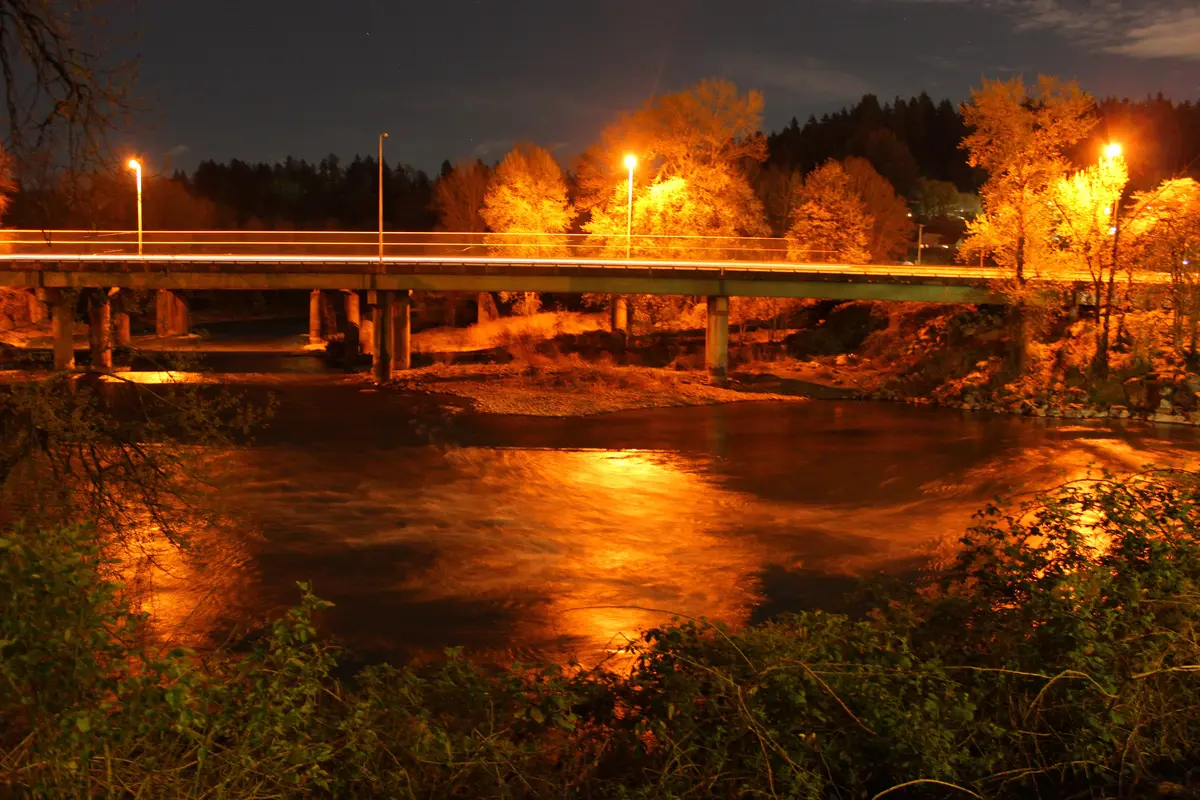
What the city does deliver, credibly, is low-impact outdoor access that is genuinely suited to retirees. The Trolley Trail runs roughly six miles along a historic streetcar corridor, paved and gravel, connecting Gladstone to Milwaukie close to the river. It is flat enough to be welcoming for older walkers and cyclists, and it is used that way. Meldrum Bar Park offers about a mile of paved waterfront paths along the Willamette, with community gardens, fishing access, picnic areas, and the river beach at Dahl Beach. The pace there on a weekday morning is exactly what you'd hope for from a park anchoring a retirement in a small river city.
The social infrastructure for older adults is more substantive than Gladstone's size might suggest. The Gladstone Senior Center has operated continuously since 1981 — a real, established community hub, not a nominal program. The Gladstone Community Center adds a competition-grade aquatic facility and a full fitness floor, which is an unusual resource for a city of this size and one that retirees with active routines will use regularly.
For those who want to keep learning, the Gladstone School District's Community School program offers adult classes in sports, languages, art, investing, and gardening — open to all residents. It is a quiet amenity that longtime locals already know about and newcomers consistently discover in the first year. Volunteer opportunities through the Friends of Gladstone Nature Park (FOGNAP) give nature-oriented retirees a structured way to stay engaged with the community and the land at the same time.
Right-Sizing: Downsizing in Gladstone
No 55+ communities were found in Gladstone. That is a meaningful gap for retirees who specifically want an age-restricted neighborhood with built-in social structure, and it is worth naming plainly. The cities immediately around Gladstone — Oregon City, West Linn, and Milwaukie — have more senior-oriented housing options, and a retiree whose top priority is a 55+ community should explore those markets rather than anchoring to Gladstone specifically.
Somerset Lodge Gracious Retirement Living is an independent senior living community in Gladstone, with on-site management, included transportation to medical appointments and outings, and activity programming. It is not age-restricted; it functions as a managed independent living option for those who want a supported environment without assisted care. That distinction matters, and it is worth understanding before touring.
For retirees who simply want to right-size into a smaller, more manageable home — a single-level ranch, a townhome, or a low-maintenance property near the river — Gladstone does have inventory in that shape, though it is not abundant. The city's housing stock skews toward modest mid-century single-family homes, many of which are single-level or have a main-floor primary bedroom. Buyers who are patient and specific about their must-haves — no stairs, attached garage, manageable yard — can find what they're looking for, but should expect to move quickly when the right property surfaces. For neighborhood-level context on housing character and fit, the best neighborhoods in Gladstone page breaks down each area's feel and stock in detail.
One friction moment that surprises downsizers: Gladstone has almost no condo inventory compared to what you'd find in Milwaukie or Oregon City. Retirees who assume they can lock-and-leave for extended travel without the burden of a yard often find the condo options here don't materialize. If that lifestyle is central to your retirement plan, it changes which city should be at the top of your list.
Gladstone vs Nearby Retirement Destinations
| City | Cost vs Gladstone | Primary Hospital | Walkability | Senior Living Depth | Overall Retirement Fit |
|---|---|---|---|---|---|
| Gladstone | Anchor | Legacy Willamette Falls (3 mi) | Car-dependent; flat river trails | Senior center; one independent living community | Strong for outdoorsy, low-key retirees near Portland |
| Oregon City | Noticeably higher | Legacy Willamette Falls & Providence Willamette Falls (on-site) | Historic downtown walkable; hills elsewhere | Multiple senior living and assisted-living options | Best for those wanting a walkable historic core and more senior housing variety |
| Milwaukie | About the same | Providence Milwaukie Hospital (in city) | Moderate; improving with trail connections | More condo and senior housing inventory than Gladstone | Good fit for retirees prioritizing a hospital in-city and lock-and-leave options |
| West Linn | Noticeably higher | Close to Legacy Meridian Park (Tualatin) | Hilly; car-dependent for most errands | Limited dedicated senior communities | Better for retirees prioritizing upscale neighborhoods and top school districts for grandchildren |
| Happy Valley | Noticeably higher | Providence Milwaukie and Portland-area systems | Suburban; very car-dependent | Growing but still limited senior-specific inventory | Fits retirees who want newer construction and a suburban feel, at a premium |
| Lake Oswego | Noticeably higher | Legacy Meridian Park (nearby Tualatin) | Strong downtown core; walkable retail and dining | Several established senior and assisted-living communities | Best overall walkability and senior living depth in the metro, at significantly higher cost |
Oregon City is the most direct comparison to Gladstone for retirement purposes: the hospitals are essentially shared, the price gap is real but not enormous, and the historic downtown delivers walkability and dining that Gladstone simply doesn't match. For retirees who put social walkability high on the list, Oregon City edges ahead.
Milwaukie is the closest in price and adds the advantage of a hospital actually located within city limits — meaningful if in-city emergency response is a priority. It also has more condo inventory for lock-and-leave lifestyles. Gladstone wins primarily on value: a real river setting, credible hospital proximity, and a functioning senior center, at a price point that protects retirement savings better than most of its neighbors.
Local Expert Takeaway: Gladstone's retirement case rests on three things that are harder to find together than they look: hospital proximity that would be impressive in a city twice its size, river-trail access that stays usable year-round, and a price point that lets retirees downsize from costlier Portland-area markets without leaving the metro behind. The Gladstone Senior Center, the Trolley Trail, and the aquatic facility at the Community Center form a social and physical infrastructure that punches above what a city of 11,898 usually delivers. The honest caveats — limited condo inventory, no 55+ communities, aggressive Oregon income taxes on non-Social-Security income — are real, but they're manageable gaps, not deal-breakers for the right buyer.
Quick Takeaways & FAQs
✅ Legacy Willamette Falls Medical Center sits about 3 miles away — unusually strong hospital proximity for a city of Gladstone's size.
⚠️ Oregon does not tax Social Security, but pensions and IRA withdrawals face graduated rates up to 9.9% — run the numbers before assuming Oregon is tax-friendly for your income mix.
📍 No 55+ communities were found in Gladstone; retirees who specifically want an age-restricted neighborhood should look at Oregon City or Milwaukie first.
Does Oregon tax Social Security income for retirees in Gladstone?
What is the closest hospital to Gladstone for retirees?
Are there 55+ communities or senior apartments in Gladstone?
Can I use Oregon's property tax deferral program if I retire in Gladstone?
How walkable is Gladstone for day-to-day retirement living?
Moving to Oregon?
Tell us what you need help with and we'll connect you with local resources.
