About Gary

What the Market Really Looks Like in Bandon
The first thing I tell buyers is this: Bandon is not priced like a small fishing town of 3,311 people. It's priced like a coastal resort community, because in many respects that's exactly what it's become. The typical home price stood at $488,995 as of July 2026 — a figure that reflects years of appreciation driven by resort demand, not local wage growth.
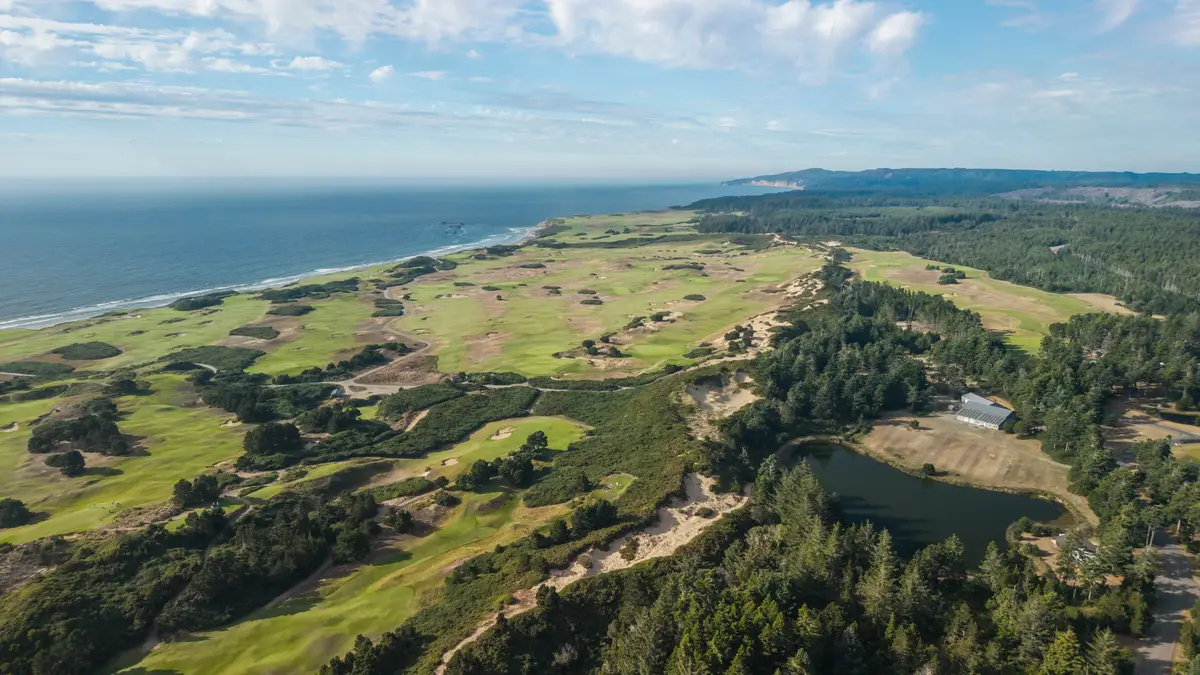
What's pushing those numbers? Bandon Dunes Golf Resort is the single biggest force. It draws a global clientele, employs hundreds of workers year-round and seasonally, and generates demand for second homes and vacation rentals that competes directly with buyers who simply want a place to live. When someone in Silicon Valley or the Portland West Hills decides they want a coastal retreat, they're bidding against the same inventory a local nurse or teacher is looking at.
The result is an affordability gap that I don't sugarcoat. The median household income in Bandon is $49,469, and the typical home price is well above what that income can carry. That gap matters whether you're a first-time buyer, a retiree on a fixed income, or a worker in one of the city's anchor industries. If you're relocating with remote income or equity from a higher-cost market, you'll find Bandon genuinely accessible. If you're planning to earn locally and buy locally, the math deserves a hard look before you start touring.
Single-family detached homes make up roughly 75% of the housing stock, which means this is overwhelmingly a house market — not a condo market. Inventory along the Beach Loop Drive corridor stays tight because vacation-rental demand competes with permanent buyers. If you want oceanfront or near-oceanfront, build in time and patience.
Bandon's Neighborhoods — Who Lives Where and Why
Old Town
Old Town sits along the south bank of the Coquille River and spans roughly ten walkable blocks. This is the most genuinely walkable part of Bandon — the boardwalk, the boat basin, independent galleries, and restaurants are all on foot from a front door here. Buyers who want to feel connected to community life without getting in a car gravitate here. The trade-off is that Old Town real estate is in high demand from both permanent residents and vacation-rental investors, so available inventory can be thin.
Bandon Heights
On the elevated east side of town, Bandon Heights delivers some of the most commanding views in the city — the Coquille River, the jetty, Old Town, and the Pacific all visible from the right lot. A wood chip-lined walking path runs through the neighborhood and sees steady local foot traffic. Buyers here tend to prioritize the view and the quiet residential feel over proximity to the waterfront shops.
South Jetty and Ocean Trails
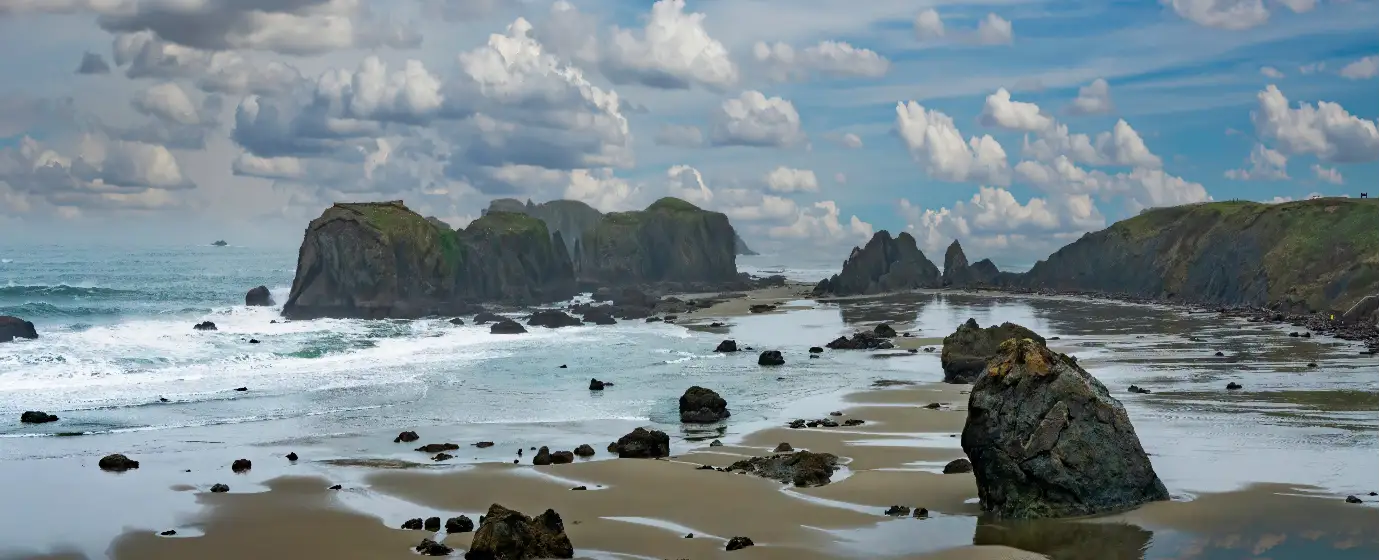
These neighborhoods attract buyers with direct coastal access on their minds. South Jetty puts you close to the river mouth and the characteristic wind-sculpted dunes of this stretch of coast. Ocean Trails pulls buyers who want to be near the bluff trails and the dramatic rock formations that define Bandon's shoreline character. Both areas carry meaningful natural hazard considerations — more on that shortly.
Seabird Village, Sea Pines, and Sea Turtle Terrace
These neighborhoods offer a quieter, more suburban feel relative to Old Town. Families with school-age children tend to be drawn here — larger lots, less tourist traffic, and easier parking. Sea Pines in particular appeals to buyers who want a permanent residence with room to breathe rather than a vacation-rental asset.
Bandon Coast Village
Bandon Coast Village rounds out the options for buyers who want a more established residential setting with relatively easy access to US-101. This neighborhood suits commuters making regular trips toward Coos Bay, as it sits well for that drive.
Best for: Old Town and South Jetty draw Walkable and Investment buyers; Bandon Heights and Sea Pines attract Families and Views seekers; Ocean Trails suits Nature and Privacy buyers.
Natural Hazard Disclosure — What Coastal Buyers Must Know
This is the section that separates agents who know this coast from agents who don't. Bandon sits on one of the most geologically active coastlines in North America, and any serious buyer needs to understand two distinct mapping systems before making an offer on anything low-lying or waterfront.
Oregon's state geology agency has completed detailed tsunami inundation mapping for Bandon and the southern Oregon coast. That mapping tells you which areas would be reached by a major subduction zone earthquake event. FEMA Flood Insurance Rate Maps are a completely separate system, measuring flood risk from storms and river overflow rather than seismic events. A property can fall inside a tsunami inundation zone without being in a high-risk FEMA flood zone, and vice versa. Buyers sometimes assume one map covers both risks. It doesn't.
My practice is to review both the state tsunami inundation maps and the FEMA maps with every buyer considering property near the water or in low-elevation areas. This is not a reason to avoid Bandon — many of the most beautiful and desirable homes in the city are in areas that require this review. It is a reason to do it carefully and with full information, before you fall in love with a specific address.
Flood insurance is a real line item for some coastal properties here. The rate varies significantly by zone and elevation. I always recommend buyers get an insurance quote specific to the property address early in the process — not after the offer is accepted.
Looking to buy in Bandon? Estimate your payment.
Enter your numbers to see an estimated monthly mortgage payment.
Estimate only. Excludes HOA fees and mortgage insurance. The interest rate above is a starting point, not a quoted rate — replace it with your own to see real numbers. Insurance is a flat placeholder, not a Bandon quote.
Schools in Bandon
Bandon School District 54 serves the city and the surrounding rural area. The district is small — 617 students enrolled in 2025-26, according to figures the Oregon Department of Education publishes — which means a tight-knit school community where teachers and families tend to know each other, and where a student who wants to participate in something can usually make it happen. School athletics programs, the Bandon Tigers, and the kind of Friday night football that actually draws a crowd are part of the texture here.
On academic measures, the Oregon Department of Education reports that on 2024-25 state assessments, 35.9% of students reached math proficiency and 48.6% reached reading proficiency. Those figures sit below state averages, which is something I mention plainly rather than gloss over. Small districts often show more volatility in these numbers from year to year than larger ones, and a single cohort can move the percentages meaningfully.
My honest advice: anyone seriously considering a move to Bandon with school-age children should do their own due diligence. Confirm the assigned school for any specific address directly with the district — boundaries matter in a small town — and review the full data the Oregon Department of Education publishes themselves. What I can tell you is the community context; the academic specifics are yours to evaluate with current, firsthand information.
Bandon vs Nearby Cities
| City | Typical Home Price | Typical Rent | Cost vs Bandon |
|---|---|---|---|
| Bandon (this city) | $488,995 | — | — |
| Coquille | $326,135 | $1,700/mo | 33% lower |
| Coos Bay | $330,015 | $1,603/mo | 33% lower |
| North Bend | $362,945 | $1,533/mo | 26% lower |
Source — home prices: Zillow ZHVI, July 2026. Nearby-city figures are the same series, refreshed together.
The comparison below shows how Bandon sits relative to its neighbors. What the numbers alone won't tell you is what the actual decision feels like for buyers who are weighing their options, so let me walk through each one in plain terms.
Coos Bay and North Bend are both noticeably lower in typical home price than Bandon. These are working port cities with a more diverse local economy — timber, shipping, healthcare, retail — and a greater supply of workforce housing. Buyers who need to buy on local wages, or who want more square footage for the money, often end up in Coos Bay or North Bend. The commute from either city to Bandon runs about 25 minutes in the other direction, so the same commute reference flips: you'd be driving south to Bandon for the waterfront and golf resort amenities, rather than north to Coos Bay for services.
Coquille is noticeably lower than Bandon, and it's inland — sitting up the Coquille River valley, away from the coast. Buyers who prioritize affordability over ocean proximity and don't mind a longer drive to the beach sometimes find Coquille a practical base. The pace and character of the town are distinctly different from coastal Bandon.
Langlois sits between Bandon and the next communities to the south and suits buyers who specifically want rural privacy and proximity to cranberry country. Buyers priced out of Bandon who still want an authentic, rugged Oregon coast experience sometimes land there. It's a smaller and quieter setting with prices that have historically run lower than Bandon's.
My overall read: if the resort energy, the Old Town waterfront, and the Bandon Dunes gravitational pull are part of why you're considering this area, Bandon is worth the premium. If you're here for the Oregon coast in a broader sense and affordability is driving the decision, the neighboring cities give you options worth understanding before you anchor on Bandon specifically.
Weekends and Local Favorites in Bandon
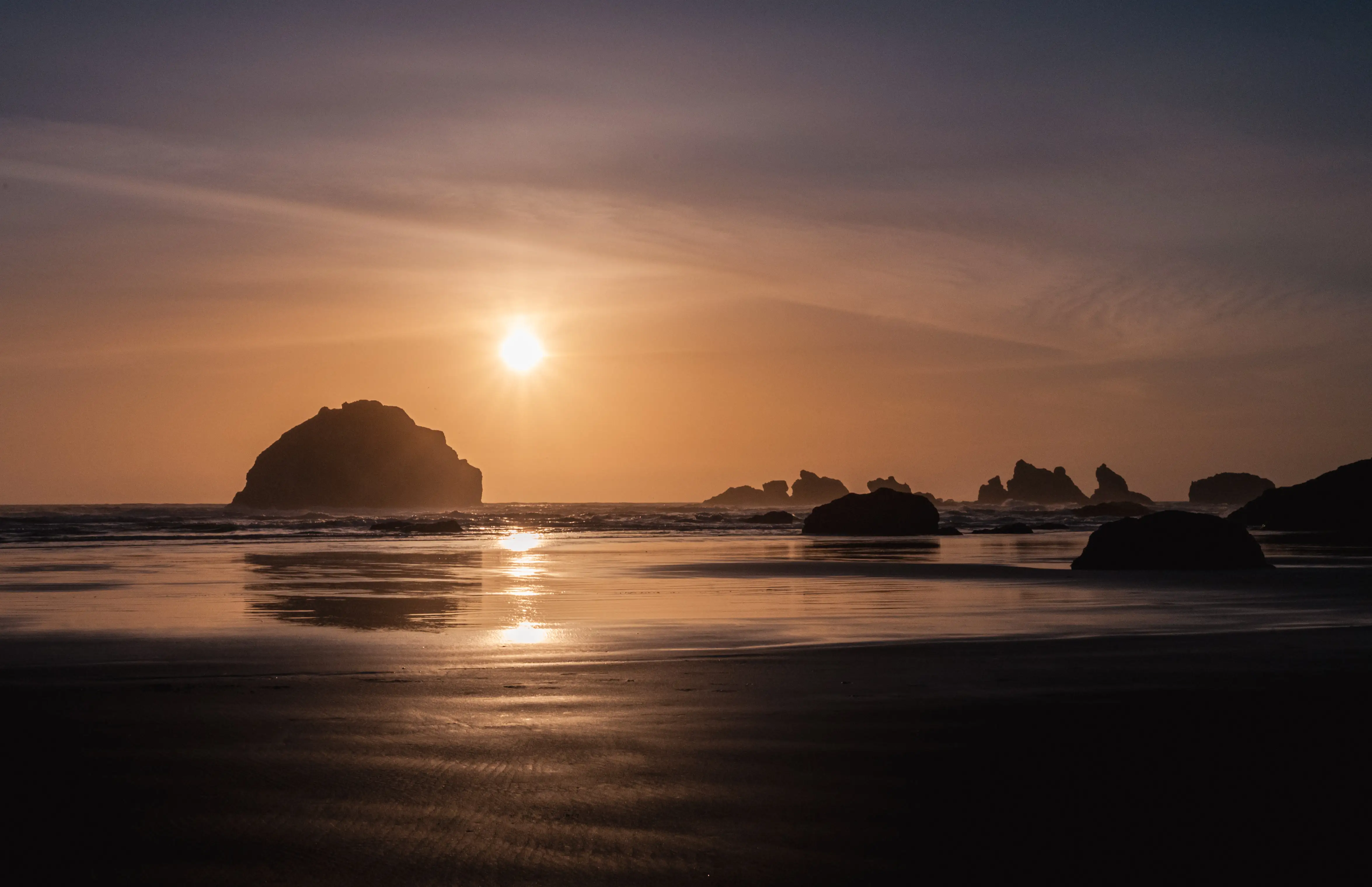
The rhythm of a Bandon weekend is shaped by the coast, not by a commercial strip. Face Rock State Scenic Viewpoint is where I bring buyers who've never walked this stretch of shoreline — the sea stacks and the offshore rocks have a scale that photographs don't quite capture, and the trail system connects to the broader Bandon State Natural Area. Coquille Point sits at the north end of town where the river meets the ocean, and Bullards Beach State Park on the north bank of the river draws campers, equestrians, and beachcombers in roughly equal measure.
The Coquille River Lighthouse, standing inside Bullards Beach, is one of those landmarks that Bandon residents reference casually and visitors make a specific trip to see. It's the kind of thing that makes you realize how much layered history is folded into a town this size.
Old Town is where people actually gather. The waterfront boardwalk and boat basin have a year-round energy that exceeds what you'd expect from a small coastal city — in part because the resort draws visitors who spill into town, and in part because the Bandon Cranberry Festival, now an official Oregon Heritage Tradition, pulls the whole region together each fall. Cranberry farming is not a tourist backdrop here — it's a genuine agricultural economy, with more than 500,000 barrels harvested in 2025 across the bogs concentrated around Bandon and neighboring towns.
For coffee, Bandon Coffee Cafe and The Human Bean both have their regulars, and Coastal Mist, The Rolling Pin Bake & Brew, and Bandon Baking Co & Deli round out the morning options. On the food side, Tony's Crab Shack is the name that comes up most often — it sits in Old Town and draws a line on busy weekends for a reason. Bandon Fish Market is where locals buy fresh catch. The Wheelhouse & Crowsnest, Broken Anchor Bar and Grill, and Foley's Irish Pub fill out a dining and drinking scene that punches above the city's size, partly because the resort economy supports a year-round visitor base willing to spend on a good meal.
Final Advice From Gary
Quick Takeaways & FAQs
✅ Bandon's Old Town waterfront is one of the most genuinely walkable and community-centered downtowns on the southern Oregon coast, with year-round energy that a small coastal city rarely sustains.
⚠️ The typical home price reflects resort-driven demand from Bandon Dunes Golf Resort, creating a meaningful affordability gap for buyers planning to earn locally rather than bring outside income or equity.
📍 Low-lying and waterfront properties in Bandon require review of two separate hazard-mapping systems — state tsunami inundation maps and FEMA flood maps — which measure different risks and don't overlap the way buyers often assume.
What is the commute like from Bandon to Coos Bay, and is it realistic to do daily?
What do the Bandon schools actually look like for families moving here?
Which part of Bandon is best for a family buying a permanent residence versus an investment property?
What does $488,995 actually buy in Bandon today?
What surprises buyers most after they've lived in Bandon for six months?
How does the natural hazard situation affect buying decisions in Bandon?
How should I think about Bandon versus Coos Bay if I'm trying to decide where to buy?
Is Bandon a realistic option for retirees, and what should they know going in?
Moving to Oregon?
Tell us what you need help with and we'll connect you with local resources.
