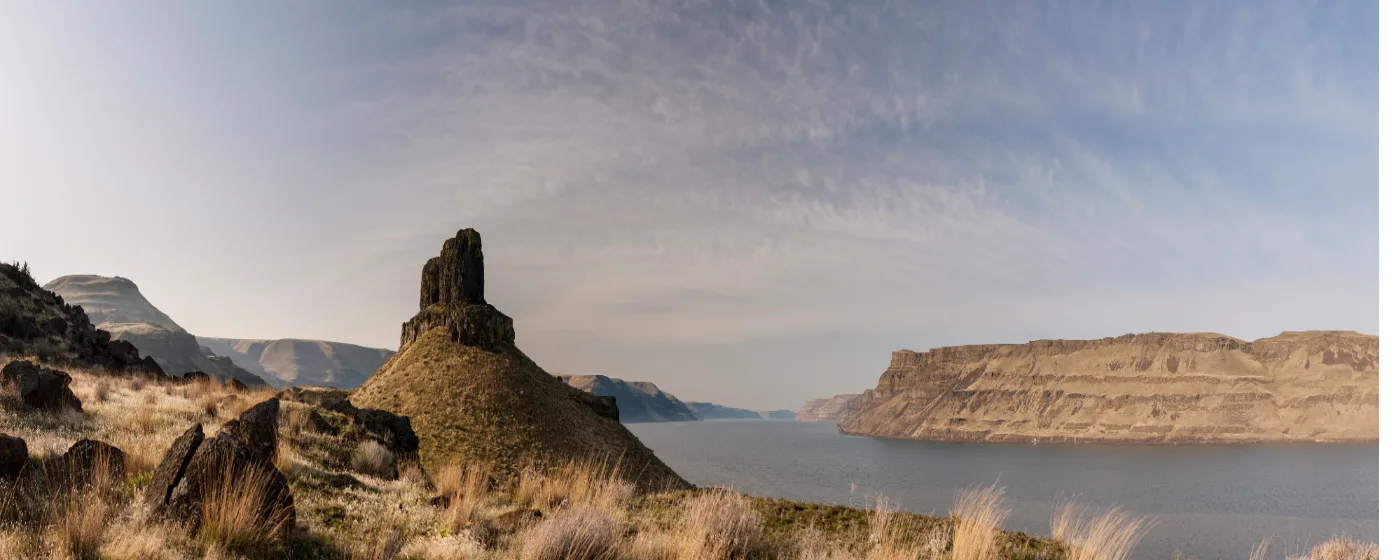
Maybe you've been priced out of the Bay Area or Sacramento and someone mentioned a small city in southeast Washington surrounded by wheat fields and wineries. Maybe your company went remote and you finally have options. Either way, Walla Walla tends to surprise Californians — not because it undersells itself, but because nothing in the California experience quite prepares you for a city of 34,000 where the commute averages about 10 minutes, the wine scene punches well above its weight, and you can actually afford to buy a house without a second income and a decade of saving. The city sits at the base of the Blue Mountains along the Washington-Oregon border, about 45 minutes east of the Tri-Cities metro (Kennewick, Richland, and Pasco), and its daily rhythms are shaped by Whitman College, a serious agricultural economy, and over 100 wineries producing Cabernet Sauvignon and Syrah that earn consistent national recognition.
The economic backbone here is more institutional than tech-driven. Whitman College, Walla Walla University, Walla Walla Public Schools, and the county government collectively anchor stable, mid-range employment. Walla Walla Public Schools holds a B+ rating, according to Niche, which families relocating from California's coastal metros tend to find reassuring — see the full picture on the schools page. What draws Californians specifically is the combination: a real downtown with independent restaurants and a bakery-café on S Colville Street that could hold its own in any California city, a wine and food culture that has drawn genuine culinary investment, and a pace of life that doesn't require a 90-minute commute to access any of it.
The overall cost of living runs approximately 6.8% below the U.S. national average — and food costs come in roughly 14.8% below the national average, which you will notice immediately at the grocery store. For the full breakdown on utilities, groceries, and day-to-day costs, the dedicated page goes deep. The honest trade-off: Walla Walla is genuinely small and genuinely remote by California standards. Portland is four hours west. Seattle is nearly five. If you need a major airport, a specialist, or a large urban amenity on short notice, you will drive. For people whose California life was spent in traffic, that distance feels like freedom — until it doesn't.
Whether you're already under contract or still researching from a Sacramento living room, the sections below break down the home prices, taxes, cost of living, and lifestyle differences between California and Walla Walla — plus the specific things Californians tend to get wrong before they move.
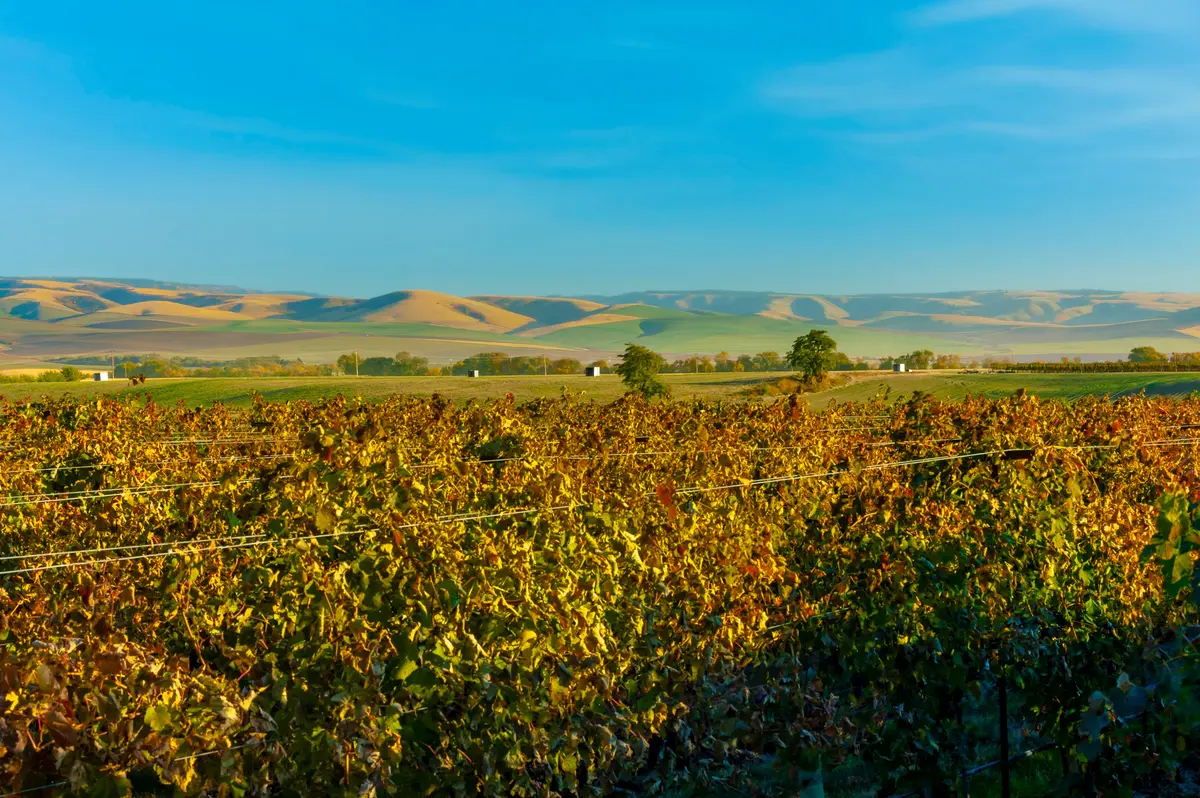
The Home Price Reality: What Your California Equity Actually Buys Here
The median sale price in Walla Walla County was $486,000 (3-month average through April 2026, per Redfin). That figure is already a meaningful story for most Californians — but the real story is what it buys.
In most Bay Area counties, $486,000 gets you a fraction of a condo. In Sacramento's more affordable zip codes, it's a starter home in a competitive market. In Walla Walla, that same number puts you in a genuine single-family house — often with a yard, a garage, and enough room that you stop converting dining rooms into offices.
What California Equity Unlocks Here
Californians who have owned for five or more years frequently arrive with equity that covers a substantial down payment, sometimes outright. That changes the math entirely. A buyer rolling Bay Area equity into a Walla Walla purchase can often target well-equipped homes in the Pioneer Park area, the College District near Whitman, or the historic Downtown core — areas with real walkable character — at prices that would be entry-level in even a mid-tier California city.
Entry-level homes — older construction, smaller lots, less updated — start below $350,000 in some parts of the city. The upper range of the Walla Walla market, the larger homes in the Blue Mountain area or renovated Craftsmans near Pioneer Park, runs noticeably higher than the county median, but still well below what comparable square footage would cost in most California metros. For neighborhood-by-neighborhood character, the neighborhoods page breaks down each area in detail.
The Property Tax Nuance Californians Miss
Walla Walla's effective property tax rate is 0.89% of assessed value annually. California's nominal rate is higher, but Proposition 13 caps assessed value at purchase price plus 2% per year — so a long-term California homeowner may be paying a rate that looks very low on paper, even as their home's market value climbed past $1 million.
When you buy in Walla Walla, the 0.89% rate applies to what you actually paid. That's a straightforward calculation — and for buyers coming from California who were already paying market-rate taxes on a recent purchase, the effective annual bill will often be meaningfully lower on a less expensive home. What you give up is Prop 13's future protection: Washington assesses at current market value each year, so if Walla Walla continues to appreciate, your bill will follow.
| Factor | California (typical metro) | Walla Walla, WA |
|---|---|---|
| Median home price | Significantly higher (varies by metro) | $486,000 (county median, April 2026) |
| Effective property tax rate | ~0.74% avg (Prop 13 suppressed for long-term owners) | 0.89% of current assessed value, annually |
| Assessment basis | Purchase price + 2%/yr cap (Prop 13) | Current market value, reassessed annually |
| Entry-level single-family | Well above Walla Walla's median in most metros | Below $350,000 for older construction |
| Equity leverage potential | High accumulation, but needed to stay in-state | California equity often covers large down payment or full purchase |
| Market competition | Intense in most metros; cash offers common | Competitive but not Sacramento-level bidding wars |
The Tax Shift: Zero State Income Tax and What It Actually Means
Washington levies no individual income tax on wages or salaries. For 2025 and 2026, residents pay 0% state income tax on earned income. Full stop.
California's top marginal rate is 13.3% — the highest of any U.S. state — and the effective rate hits most professional-class earners well before the top bracket. A household earning $200,000 in California pays a meaningful share of that to Sacramento every April. The same household in Walla Walla pays nothing to Olympia.
What the Numbers Mean for a Typical Relocating Household
The difference is not symbolic. For a dual-income household that was paying California income tax at effective rates in the 7–10% range, the annual savings can easily cover a car payment, a vacation, or — relevant to this conversation — a materially larger mortgage payment on a more expensive home than they could otherwise afford.
Retirees get a compounded benefit: Washington also does not tax Social Security benefits, pension distributions, 401(k) withdrawals, or IRA distributions. California taxes most of that income. For someone moving in retirement, the income-tax delta between the two states can represent thousands of dollars per year that simply stay in their account.
The One Caveat Worth Knowing
Washington's legislature passed a 9.9% income tax on individual adjusted gross income exceeding $1 million annually (Senate Bill 6346, the so-called millionaires' tax), taking effect January 1, 2028. The law is widely expected to face legal challenges. For nearly every relocating Californian, this is irrelevant — wage earners below the $1 million threshold are entirely unaffected, and the zero-income-tax advantage remains fully intact through at least 2027 regardless.
Sales Tax: The One Area Where Washington Looks Less Favorable
Washington funds a significant portion of its government through sales tax rather than income tax, and that shows up at the register. The base state rate is 6.5%; Walla Walla has a combined state and local sales tax rate of 9.1%, which is above California's 7.25% base rate. Groceries and prescription drugs are exempt in both states, which softens the daily impact considerably — but on large discretionary purchases, Walla Walla's combined rate will cost more than California's base.
| Tax Category | California | Washington / Walla Walla |
|---|---|---|
| State income tax on wages | 1%–13.3% (graduated brackets) | 0% (no state income tax on wages) |
| Income tax on retirement distributions | Taxable (most retirement income) | 0% (not taxed) |
| Income tax on Social Security | Taxable above thresholds | 0% |
| State sales tax base rate | 7.25% base | 6.5% base |
| Combined state and local sales tax (Walla Walla) | N/A | 9.1% (effective July 1, 2026) |
| Groceries subject to sales tax? | No (most food exempt) | No (exempt in WA) |
| Capital gains tax (state) | Taxed as ordinary income | 7% on long-term gains above $270K threshold (2024+) |
| Effective property tax rate | ~0.74% avg (Prop 13 suppressed) | 0.89% on current assessed value |
Note: Washington's capital gains tax applies only to long-term gains above the annual threshold; it does not apply to real estate sales or retirement account withdrawals. Verify current thresholds with a tax professional.
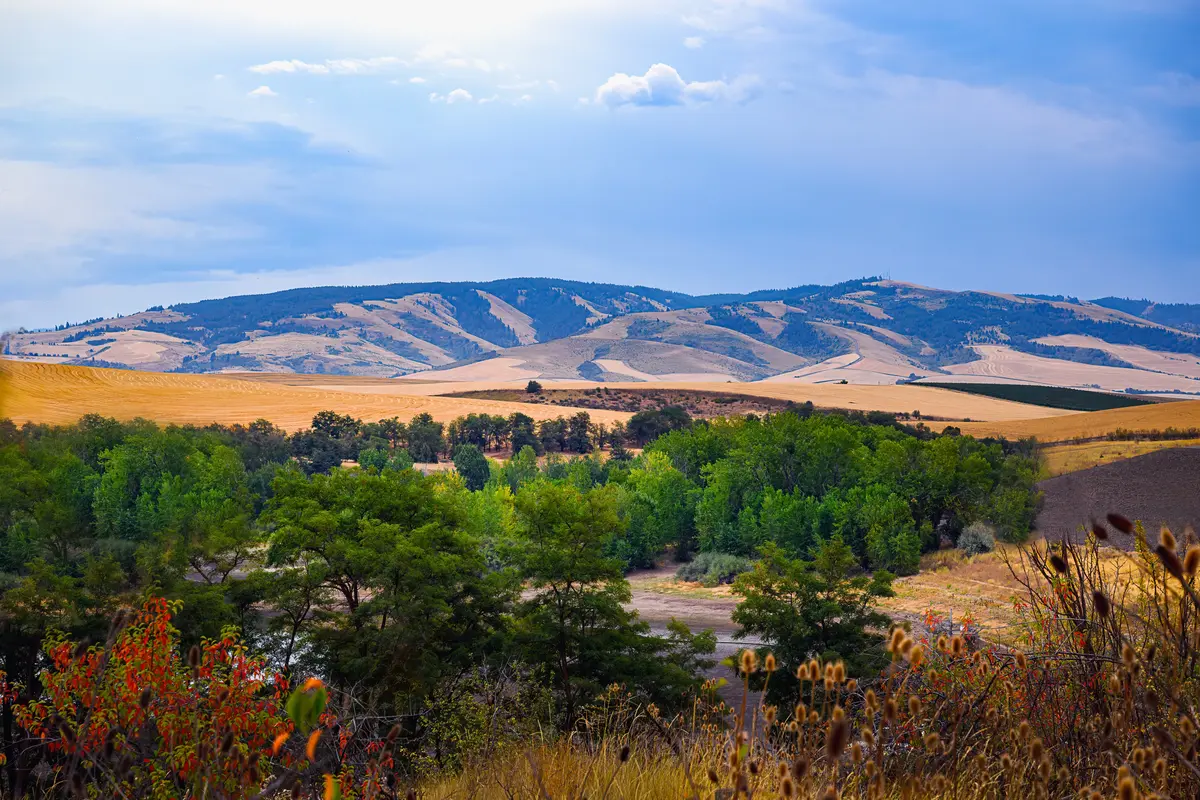
Cost of Living Beyond Housing: The Day-to-Day Difference
Housing and taxes are the headline numbers, but the cost shift goes deeper. Walla Walla's overall cost of living runs approximately 6.8% below the U.S. national average — and in a city this size, that gap shows up in concrete, everyday ways that California living doesn't prepare you for.
Groceries and Food
Food costs run roughly 14.8% below the national average. At a practical level, this means your weekly grocery bill — same brands, same quantities — will be noticeably lower than what you paid in the Bay Area or Southern California. The Saturday farmers market on the south end of downtown draws serious local produce, especially during harvest season when the Walla Walla sweet onion (a genuine regional product, not a marketing claim) is at its peak.
The restaurant scene has benefited from the wine industry's growth in ways that surprise people expecting a small Eastern Washington city to have limited options. Saffron Mediterranean Kitchen on W Alder Street has been a downtown anchor for years. Colville Street Patisserie on S Colville Street turns out pastry that would draw lines in any California neighborhood. The wine economy brought real culinary investment to a city of 34,000, and it shows.
Getting Around and What You Give Up
The average in-city commute is roughly 10 minutes. That figure, more than any other, describes what daily life actually feels like here. You will not spend 45 minutes on I-80 to reach work. You will not circle a parking garage. You will, however, drive an hour round-trip to reach a Costco or a large-format sporting goods store — Walla Walla's retail footprint is limited by its size, and the nearest significant shopping center is in the Tri-Cities.
Health insurance premiums tend to run noticeably below what you were paying in California, though the honest trade-off is fewer specialists locally and farther drives for advanced care. This is a real consideration for anyone managing a complex chronic condition, and worth factoring into the full cost picture alongside the savings.
The Harvest Season Trade-Off
One thing Californians don't anticipate: harvest season and major wine events bring genuine tourist traffic into a small city. The February craft beer festival drew 30 breweries and cideries spread across 18 downtown businesses in 2026. During major spring events or the crush season in October, downtown parking and restaurant waits behave like a different city. It's not Napa-level congestion, but for someone who moved here specifically to escape crowds, the seasonal pulse takes adjustment.
Looking to buy in Walla Walla? Estimate your payment.
Enter your numbers to see an estimated monthly mortgage payment.
Estimate only. Excludes HOA fees and mortgage insurance. The interest rate above is a starting point, not a quoted rate — replace it with your own to see real numbers. Insurance is a flat placeholder, not a Walla Walla quote.
What California Life Prepares You For — and What It Doesn't
People who move here from California tend to get the wine culture immediately. They understand good Cabernet, they know what a tasting room is supposed to feel like, and Walla Walla's downtown — the historic brick storefronts along Main, the converted warehouse tasting rooms, the independent restaurants — reads as comfortable rather than foreign. The Walla Walla Valley appellation has grown from virtually no commercial producers in 1980 to over 100 wineries today. Californians don't need a cultural translation guide for any of that.
What Actually Surprises People After Six Months
The isolation surprises almost everyone, but not in the way they expected. It's not that Walla Walla lacks things to do — Pioneer Park's rose garden, the trails along Mill Creek, the Fort Walla Walla Museum, Bennington Lake for summer weekends — it's that reaching anything outside the valley requires genuine planning. A specialist appointment, a concert at a major venue, a weekend in a city with an international airport: all of these involve a real trip, not a drive.
The second surprise is social. California metro culture runs on loose, transactional acquaintance networks. Walla Walla is small enough that your neighbors, your kid's teacher, and the person pouring your wine on Saturday may all know each other. For introverts, that density can feel warm. For people who preferred the anonymity of a large city, it takes deliberate adjustment.
Why People Move Back to California
It happens. The most common reasons are predictable in retrospect: extended family is still in California and the distance compounds over time, especially with aging parents. Career advancement in specialized fields is limited in a city this size — Walla Walla's employer base rewards stability more than acceleration. And some people find that the slower pace, which felt like relief at first, eventually feels like stagnation.
None of those are reasons not to move. They are reasons to move with clear eyes rather than assuming the lifestyle shift will solve problems that aren't geographic.
What You Would Not Do Here
If you are buying, don't skip the due-diligence step on irrigation and water rights if you're looking at properties with acreage east of the city — this is agricultural country and water access has legal complexity that California real estate didn't require you to think about. The first-time homebuyer page covers the buying process mechanics specific to Washington state.
And don't assume that because the city is small, you can get away with skipping a real estate agent who knows the local market. The neighborhood dynamics here — the difference between Mill Creek's established feel and Eastside's more working-class character — are things a California agent's license cannot tell you. Local knowledge matters in a market this specific.
The California-to-Walla Walla Comparison at a Glance
If you're still building your decision spreadsheet, this table is designed to give you the direct comparison without having to read five tabs simultaneously. The qualitative observations are honest — including the ones that favor California.
| Category | Typical California Metro | Walla Walla, WA | Verdict for the Relocating Buyer |
|---|---|---|---|
| State income tax | Up to 13.3%; most professional earners pay 7%+ | 0% on wages and salary | Strong WA Advantage |
| Retirement income tax | Most distributions taxed as income | 0% — SS, pension, IRA all untaxed | Strong WA Advantage |
| Home prices | Significantly higher in most metros | $486,000 county median (April 2026) | Strong WA Advantage |
| Property tax rate | ~0.74% avg (Prop 13 suppressed for long-term owners) | 0.89% on current assessed value annually | Slight CA advantage for long-term owners; roughly even for recent buyers |
| Sales tax (combined) | 7.25% base; groceries often exempt | 9.1% combined rate; groceries exempt | CA Advantage |
| Cost of living overall | Above national average in most metros | ~6.8% below national average | WA Advantage |
| Food costs | Above national average | ~14.8% below national average | WA Advantage |
| Average commute | 30–60+ min in most metros | ~10 minutes in-city | Strong WA Advantage |
| Urban amenities / access | Abundant; major airports, specialists nearby | Limited locally; Tri-Cities ~45 min, Seattle ~5 hrs | CA Advantage |
| Wine and food culture | Well-developed in most metros | Serious wine appellation; 100+ producers | Surprisingly close; WA overdelivers for its size |
| School district quality | Varies widely; strong districts in high-cost areas | Walla Walla Public Schools; consistently strong for the market | Solid for the market; see schools page |
| Outdoor recreation | Depends on location | Blue Mountains, Bennington Lake, Mill Creek trails | Strong local access; see parks page |
The pattern is consistent: Walla Walla wins decisively on taxes and housing costs, runs close on day-to-day expenses, and gives ground on urban access and career options. The question is whether the things California wins on are the ones that actually matter to your daily life — or the ones you've simply been paying for by default.
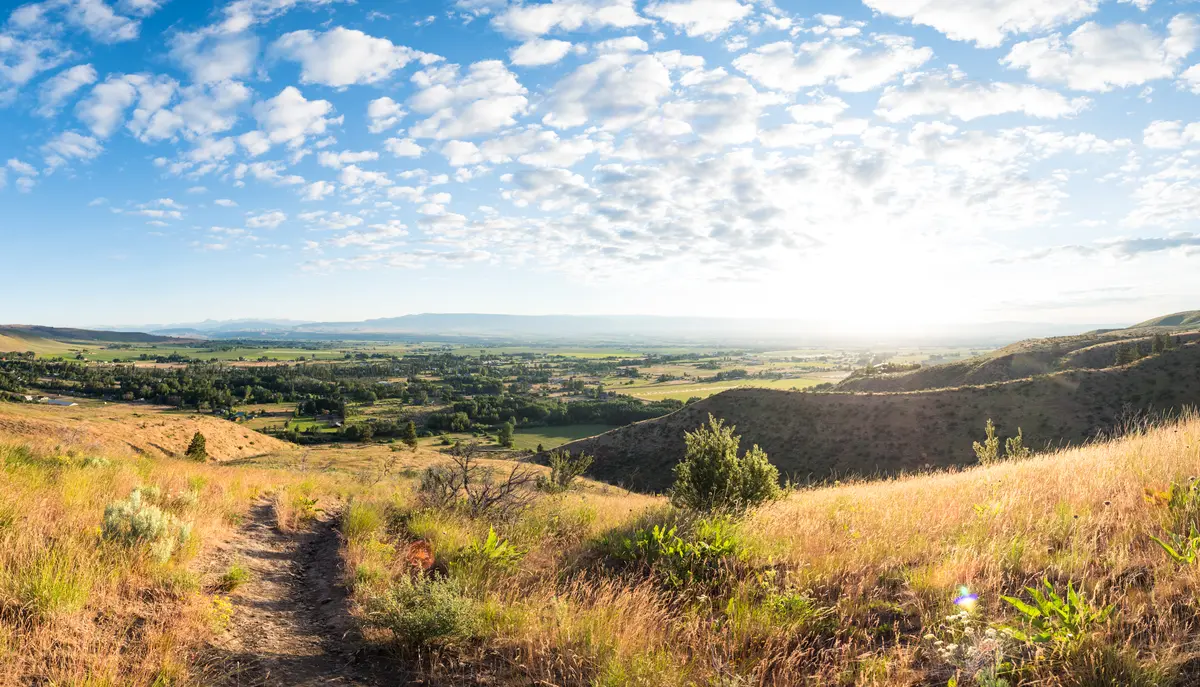
Local Expert Takeaway: Most Californians underestimate how much the income tax elimination changes the monthly math — and overestimate how much they'll miss urban amenities in the first year. The first month you file a Washington return and owe nothing to the state, while walking your dog past the rose garden in Pioneer Park with 10 minutes before a meeting you'll get to without sitting in traffic, the trade-offs crystallize quickly. The ones who struggle are usually the ones who moved for the numbers alone without accounting for the smaller social world and the real distance to everything outside the valley.
Quick Takeaways & FAQs
✅ Washington's zero state income tax on wages and salaries — compared to California's rates that can reach 13.3% — represents one of the most immediate financial shifts for relocating Californians.
⚠️ Walla Walla is genuinely small and genuinely remote: Portland is four hours west, Seattle is five, and specialist care or major-airport access requires a real trip, not a drive.
📍 The Walla Walla Valley wine appellation has grown to over 100 producers since 1980, and that culinary investment means the city's restaurant scene punches well above what most California transplants expect from a city of 34,000.
Is Walla Walla actually affordable for someone moving from the Bay Area?
Will I really pay zero state income tax in Washington?
How does Washington's property tax compare to California's Prop 13?
What do Californians find hardest about adjusting to Walla Walla?
Is Washington's sales tax higher than California's?
Moving to Washington?
Tell us what you need help with and we'll connect you with local resources.
