What Is Living in Richland, Washington Like?
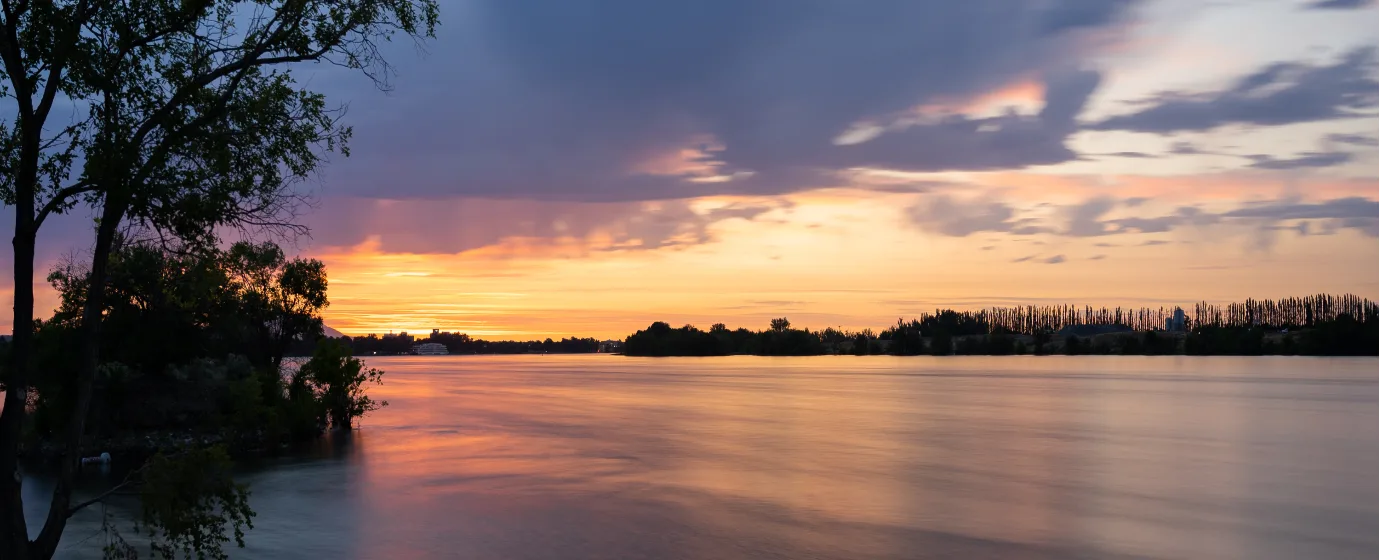
Maybe your company is sending you to the Hanford Site, or Pacific Northwest National Laboratory just extended you an offer. Maybe you've been priced out of the Seattle metro and someone mentioned a city in Eastern Washington with 300 sunny days a year and a median household income close to six figures. Richland sits at the confluence of the Yakima and Columbia Rivers in Benton County, about 200 miles east of Seattle on I-82. What surprises people who do their research from the west side of the Cascades: this is not a sleepy agricultural town. It is a mid-sized science city of 62,753 residents that was literally built from scratch by the U.S. Army in 1942 — when fewer than 250 farmers lived here — to house the workers who produced plutonium for the Manhattan Project. That origin story still shapes everything: the workforce, the wages, the identity, and even the high school mascot (the Bombers).
The economic spine of Richland runs through two federal installations. The Hanford Site, one of the largest nuclear cleanup projects in the world, and Pacific Northwest National Laboratory (PNNL), a research lab managed by Battelle under a federal contract, together account for a significant share of local employment. Washington State University Tri-Cities adds an educational anchor and a pipeline of graduate researchers. The workforce is unusually credentialed for a city this size — engineers, nuclear scientists, and federal contractors make up a substantial slice of the population — which is why the median household income of $95,813 sits well above the national average. The Richland School District holds an A- rating, according to Niche, and parents with school-age children consistently cite it as a primary reason they chose Richland over the neighboring cities of Kennewick and Pasco.
Cost of living here runs close to the U.S. average — a cost of living index of 95.9 as of late 2024 — which feels like a genuine bargain to anyone arriving from Seattle or the Bay Area. Washington state has no personal income tax, adding real take-home impact for high earners. The Columbia River waterfront at Howard Amon Park and the Sacagawea Heritage Trail give daily life a recreational quality that bigger cities charge a premium for. Badger Mountain offers hiking minutes from most neighborhoods. The Tri-Cities metro as a whole — Richland, Kennewick, and Pasco combined — has grown to roughly 303,500 residents, giving the area enough retail, dining, and cultural infrastructure to feel self-sufficient without the congestion of a major metro.
Whether you're weighing a PNNL relocation offer or just wondering whether Richland holds up as a long-term home, the sections below break down who the city suits, what daily life actually looks like, where the housing market stands right now, how the commutes work, and what locals do on weekends.
Richland at a Glance
Looking to buy in Richland? Estimate your payment.
Enter your numbers to see an estimated monthly mortgage payment.
Estimate only. Excludes HOA fees and mortgage insurance. The interest rate above is a starting point, not a quoted rate — replace it with your own to see real numbers. Insurance is a flat placeholder, not a Richland quote.
Why Are People Moving to Richland?
Seattle homebuyers searched Richland more than any other destination in Redfin's recent migration analysis — not because it's exotic, but because the math finally stopped working on the west side. The combination of strong science-sector wages, no state income tax, and a housing market priced well below the major coastal metros has made Richland one of the most rational relocation decisions in Washington state.
The Federal Science Engine
PNNL and the Hanford Site are the reason most professional relocators end up here. PNNL employs thousands of scientists, engineers, and support staff in energy research, national security science, and environmental cleanup technology. Battelle manages PNNL under its federal contract, adding another layer of institutional stability. Hanford itself represents decades of ongoing remediation work — federal contract positions that are not going away on any short timeline.
The honest caveat: PNNL saw approximately 400 positions cut in late 2025, tied to federal spending pressures. That is a real number worth factoring into your decision if your household's income depends on a federal research contract. It doesn't change the long-term structural argument for Richland's economy, but prospective buyers who want to understand risk should know it.
Who Actually Moves Here
| Buyer Type | What Draws Them | Best Fit |
|---|---|---|
| PNNL / Hanford contractors | Direct employment; strong wages relative to local costs | Commuter Value |
| Families with school-age children | Top-rated school district; safe, low-traffic neighborhoods | Families School |
| Seattle / Puget Sound refugees | Same state, no income tax, fraction of the home price | Value First-Time |
| Outdoor recreation buyers | Badger Mountain, Hanford Reach, 80+ miles of paved trail | Nature Views |
| Remote workers priced out elsewhere | Cost of living near U.S. average; fast internet infrastructure | Value Quiet |
| WSU Tri-Cities faculty and researchers | Campus proximity; educated peer community | School Walkable |
The profile that tends to struggle here: buyers expecting urban density, walkable dining corridors, or a vibrant arts scene on par with Spokane or Seattle. Richland is a suburban science city, and it makes no apology for that.
Why People Leave
The most common exit story is federal contract non-renewal — when the work ends, so does the reason to stay. The second is summers: July and August temperatures routinely push past 100°F, and newcomers from the Pacific Northwest coast are rarely prepared for how relentless the heat feels when it stacks week after week. A smaller but real segment leaves after a few years simply because there is no professional sports team, no major concert venue, and no large airport — the regional airport serves limited direct routes, and most people fly through Portland, Seattle, or Spokane for anything long-haul.
What Daily Life Feels Like in Richland
On a Tuesday morning in October, Richland feels genuinely quiet in a way that mid-sized cities rarely do. The streets around George Washington Way move without the anxiety of a metro commute. The Columbia River is right there — not a postcard backdrop but a genuine part of everyday life, accessible from Howard Amon Park within minutes of most central neighborhoods.
The Sunny Side Nobody Talks About
Approximately 300 sunny days a year sounds like a tourism brochure claim until you live through your first winter here and realize you haven't worn rain gear since October. Eastern Washington's high desert climate is legitimately different from the grey drizzle that defines the west side of the Cascades nine months a year. For people who moved from Portland or Seattle, this alone changes daily mood in a way that's hard to anticipate.
Summer is the honest flip side. When the heat arrives in late June and holds through August — triple-digit days are the norm, not the exception — outdoor life shifts to early mornings and evenings. Locals who bought treadmills or gym memberships for July are ahead of the curve. The Columbia River becomes the social center during heat waves, with boating, paddleboarding, and swimming pulling people to the water most weekends.
Where People Actually Gather
The Thursday Richland Farmers Market, running June through October, draws a consistent crowd to downtown and functions as a genuine weekly gathering point rather than a tourist attraction. Atomic Ale Brewpub & Eatery on Lee Boulevard is one of the oldest craft breweries in the state — open since 1997 — and operates as a neighborhood anchor for the after-work crowd. La Bella Vita Kitchen and Bar on George Washington Way fills a similar role for dinner; Miss Tamale on The Parkway is where locals go when they want something reliably good and unpretentious.
John Dam Plaza in the heart of downtown hosts outdoor events through the warmer months. The REACH Museum — which documents the Columbia River and the Hanford story — is the kind of local institution that newcomers visit once and then bring every out-of-town guest to thereafter. It is genuinely worth the trip.
The Seasonal Quirk Newcomers Miss
Late July brings the Tri-City Water Follies hydroplane races to the Columbia River — roughly 50,000 spectators, road closures along the waterfront, and a parking situation that stuns people who moved here from quieter markets. If you live near Howard Amon Park or Columbia Point and haven't planned around Water Follies weekend, you will learn to the following year.
The parks and trails guide covers the Sacagawea Heritage Trail, Badger Mountain, and the Hanford Reach in detail — they are core to daily life here in a way that deserves its own page.
The Richland Housing Market Right Now
The Zillow Home Value Index for Richland sits at $457,354 as of June 2026, essentially flat year-over-year. Closed transaction data from Redfin tells a more active story: the median sale price reached $505,000 over the three months ending May 2026, up noticeably from the same period a year prior. The gap between those two figures reflects methodology — the Zillow Home Value Index smooths across the full housing stock, while the Redfin figure captures what actually sold. Both are worth knowing.
Inventory moves fast at the entry level. Homes were going to pending in roughly 13 days on the Zillow measure, though Redfin's days-on-market figure runs longer when you include homes that sat before finding a buyer. The practical read: well-priced homes in good condition in established neighborhoods attract multiple offers quickly; overpriced or condition-challenged homes linger.
What the Market Signals for Buyers
Some areas of Richland command a meaningful premium over the city-wide figures — the neighborhoods guide breaks down where prices cluster and why. At the city-wide level, Richland prices are noticeably below the Seattle metro while sitting above smaller Eastern Washington cities, which is exactly the value proposition that has driven Seattle-area migration here.
Rental inventory is tighter than buyers expect. The median gross rent runs approximately $1,524 per month — more detail on the full cost of living breakdown — which has pushed some renters toward ownership faster than they originally planned.
The effective property tax rate is approximately 0.93%, which is close to the Washington state average. Washington has no personal income tax, which affects total housing cost in ways that a headline price alone doesn't capture.
One Honest Risk to Price In
Richland's housing market is more tied to federal employment than almost any other Washington city its size. The PNNL staffing reductions in late 2025 didn't crater prices, but they are a reminder that a significant portion of local purchasing power runs through federal budget decisions made far from Benton County. Buyers whose own income is federally sourced should think about what two households with similar exposure looks like in a down cycle.
Richland Neighborhoods
Richland has several distinct areas — each with its own character and appeal. Here’s a breakdown to help you narrow down where to focus your home search.
🏡 Meadow Springs
Meadow Springs sits in south Richland along the Highway 240 corridor and draws families with school-age children drawn to its quiet cul-de-sacs and proximity to Meadow Springs Country Club. The housing stock skews toward well-maintained 1990s and 2000s construction, and the neighborhood feeds into schools that consistently perform at the top of the district.
🏠 Columbia Point
Columbia Point is Richland's waterfront neighborhood — a peninsula bordered by the Yakima and Columbia Rivers that commands some of the city's highest prices and most dramatic views. Residents here can walk to Columbia Point Marina Park and Howard Amon Park, making it the most walkable and lifestyle-forward area in the city.
🌳 Badger Heights
Badger Heights occupies the elevated terrain south and east of Badger Mountain Centennial Preserve, offering territorial views and direct trail access that most Richland neighborhoods can't match. The area attracts outdoor-oriented buyers who want to step onto a summit trail without getting in a car first.
🏘 South Richland
South Richland is a broad, established area that catches buyers who want proximity to the newer commercial development along Queensgate Drive without the premium of the waterfront or Meadow Springs. The housing mix is diverse in age and style, and the area offers some of the city's more attainable entry points.
🏔 Horn Rapids
Horn Rapids sits at Richland's northern edge near the Horn Rapids Off-Road Vehicle Area and the Yakima River, giving it an outdoor-adjacent character that appeals to recreational buyers and families who want newer construction with more elbow room. Bombing Range Brewing Company anchors the local social scene for the neighborhood.
🌆 Queensgate
Queensgate is Richland's fastest-growing commercial and residential corridor, running along the southern edge of the city where newer retail, restaurants, and medical offices have clustered in the last decade. The neighborhood draws buyers who want new-construction convenience and don't mind trading the waterfront for walkable access to everyday services.
Pros & Cons of Living in Richland
The Pros
- Abundant sunshine and dry climate for year-round outdoor recreation
- strong STEM/research job base anchored by PNNL and Hanford
- lower property taxes and cost of living than Seattle-area cities
- extensive riverfront parks and the 23-mile Sacagawea Heritage Trail
The Cons
- Extremely hot
- dry summers with highs regularly near 90-100°F
- low walkability (Walk Score around 34) requiring a car for most errands
- property crime rates run higher than national and state averages
Getting Around & Commuting in Richland
Richland is a car city. That is not a complaint — it is an accurate description of how daily life here is structured, and understanding it before you move saves real frustration.
The Commute That Defines the City
The Hanford Site and PNNL campus sit north of the city, and the commute runs roughly 25 minutes each way under normal conditions. That figure holds up reasonably well because traffic volumes in the Tri-Cities are a fraction of what Seattle commuters are accustomed to — but it assumes you're not hitting the Van Giesen Street or Highway 240 interchange during peak shift-change windows. Hanford operates on shift schedules, and the morning surge of contractor vehicles heading north on Highway 240 is real and predictable. Locals plan around it; newcomers discover it in week two.
Getting Between the Three Cities
Richland, Kennewick, and Pasco are connected by two river crossings along Highway 182 and US 395. Crossing between cities is a daily reality for many residents — Kennewick has retail that Richland lacks, Pasco has the regional airport. Neither crossing is particularly difficult, but the highway bridge on the Kennewick side backs up during events and the afternoon commute out of Kennewick can add meaningful time if you're heading south.
The Transit Reality
A regional transit system operates bus routes across the Tri-Cities. Coverage exists, but frequency and routing are built around a community where car ownership is nearly universal. If you're coming from a city where you went car-free, Richland will require an adjustment — the distances between destinations and the routing gaps make daily errands genuinely difficult without a vehicle.
Air Travel
The regional airport in Pasco serves a handful of direct routes to Seattle, Portland, Las Vegas, Phoenix, Denver, and a few others — enough for routine travel, not enough for everything. Most residents make the 3.5-hour drive to Portland or the roughly 4-hour drive to Seattle for international flights or heavily discounted fares. If frequent long-haul travel is part of your life, build that drive into your calculus.
| Destination | Typical Drive Time | Notes |
|---|---|---|
| Hanford Site / PNNL | ~25 min | Highway 240 north; shift-change traffic a factor |
| Kennewick (downtown) | ~10–15 min | River crossing on Highway 182; backs up during events |
| Pasco / regional airport | ~15–20 min | US 395 crossing; limited direct routes |
| Yakima | ~1 hr | I-82 west through the canyon |
| Spokane | ~2 hrs | US-395 north; larger airport option |
| Portland, OR | ~3.5 hrs | Most common choice for international flights |
| Seattle | ~3.5–4 hrs | I-82 to I-90; mountain pass conditions matter in winter |
Winter driving through the Cascades to Seattle deserves a mention: conditions can close or restrict I-90 for stretches in January and February. Most locals keep a set of chains or invest in all-weather tires — not because Richland itself gets much snow, but because the pass does.
Schools in Richland
Families relocating to Richland have public, private, and higher-education options nearby. Here’s a quick overview.
🎓 School District
Richland School District serves K–12 students across Richland and the surrounding area. Rated A- (source: Niche.com district rankings, 2026).
🏆 Graduation Rate
The 4-year high-school graduation rate here is approximately 86.2%.
📚 Higher Education
Washington’s public universities — the University of Washington, Washington State University, and Western Washington University — offer four-year degrees statewide, with a network of 34 community and technical colleges (SBCTC) providing two-year and workforce programs.
🌐 Online Learning
University of Washington Continuum College and Washington State University Online offer fully accredited online degrees for remote learners across the state.
Safety in Richland
A quick look at how Richland compares on the numbers that matter most when weighing a neighborhood or a move.
🛡 Violent Crime
Approximately 2.56 per 1,000 residents.
🔒 Property Crime
Approximately 37.1 per 1,000 residents.
Compared to the FBI’s most recent national data (2024), Richland’s violent crime is below the national average (about 3.6 per 1,000), and property crime is above the national average (about 17.6 per 1,000).
Against Washington as a whole, Richland’s violent crime is somewhat below the state average, and property crime is about one and a half times the state average (Bureau of Justice Statistics, Crime Known to Law Enforcement, 2024 (tables 2 and 3)).
Crime rates can vary a lot within a single city, so the citywide numbers above are only a starting point. Some neighborhoods in Richland run well below these averages, while others run higher — the kind of block-by-block detail that matters most when you’re actually choosing where to live. The full guide below breaks it down neighborhood by neighborhood.
Working in Richland
Richland’s largest employers span several industries — here are some of the anchors of the local job market.
💼 Pacific Northwest National Laboratory
Scientific research
💼 Hanford Site
Nuclear cleanup/federal contracting
🏥 Kadlec Regional Medical Center
Healthcare
🎓 Washington State University Tri-Cities
Education
💼 Battelle
Research management
Parks & Recreation in Richland
Some of the outdoor spaces that shape everyday life in Richland.
🌱 Hanford B Reactor (Manhattan Project National Historical Park)
🌱 Howard Amon Park
🌱 Columbia Point Marina Park
🌱 Sacagawea Heritage Trail
Richland residents don’t have to go far for green space — spots like Hanford B Reactor (Manhattan Project National Historical Park) and Howard Amon Park are part of everyday life here, whether that’s a morning walk, a weekend hike, or just somewhere to unwind outside. The full guide below covers more of what Richland has to offer for parks and outdoor recreation.
Retiring in Richland
Richland draws retirees for its balance of amenities, outdoor access, and cost. Here’s what to weigh.
🌤 Climate
Richland's roughly 300 sunny days per year make it one of the most sun-drenched cities in Washington state — a meaningful lifestyle factor for retirees who want to be outdoors year-round. Winters are mild compared to inland cities further north, with infrequent snow in the city itself. Summers run hot, with July and August regularly exceeding 100°F, so a home with good air conditioning is less optional than it sounds.
🍴 Lifestyle
The Columbia River waterfront at Howard Amon Park and the Sacagawea Heritage Trail provide accessible daily recreation without requiring a car or a trail pass. The REACH Museum and the Manhattan Project National Historical Park at the Hanford B Reactor offer genuine cultural depth. The Thursday Farmers Market and a well-established independent dining and brewery scene — anchored by places like Atomic Ale Brewpub & Eatery on Lee Boulevard — give retirees plenty of reasons to stay local.
🏚 55+ Communities
The Tri-Cities area has a range of active-adult and senior-living options spread across Richland and neighboring Kennewick. Independent living communities, assisted living facilities, and age-restricted neighborhoods are available at price points that reflect the region's more moderate cost base. The full picture on healthcare options and senior living in the area is covered on the <a href="/washington/richland/retiring">retiring in Richland page</a>.
✈ Getting Around
Richland is comfortably navigable by car with relatively light traffic compared to Washington's western cities — most errands stay within a 10-15 minute drive. The regional airport in Pasco serves several direct routes for snowbirds and family visits, though most residents use Portland or Seattle for international travel. Walkability within specific neighborhoods near the riverfront and downtown core is reasonable, but a car remains essential for daily life across most of the city.
🏛 Washington Taxes for Retirees — What to Know
- No state income tax — Washington does not tax personal income, so Social Security, pensions, and 401(k)/IRA withdrawals are all untaxed at the state level. There is no state return to file and no retirement exclusion to claim — the rate is simply zero.
- Military and public pensions — Because there is no income tax, military retirement pay and public-employee pensions are untaxed at the state level along with everything else.
- Sales tax is the tradeoff — The state sales tax is 6.5%, and local add-ons bring the combined rate in Richland to 8.8% (Washington State Department of Revenue, Q3 2026 local sales & use tax rate table, July 2026). Groceries and prescription drugs are exempt.
- Property taxes, with senior relief — The effective property tax rate is roughly 0.9%. Homeowners 61+ (or unable to work due to disability, or a qualifying disabled veteran) who own and occupy their home may qualify for a reduction. Income limits are set against each county’s median household income, so the threshold differs by county — check with your county assessor. A separate deferral program is available for those who don’t qualify for the exemption.
- Capital gains tax — but not on retirement income — Washington taxes 7% on long-term capital gains above a $278,000 standard deduction for 2025, rising to 9.9% on gains above $1,000,000. Retirement accounts and real estate sales are both exempt. It therefore does not reach ordinary retirement income or the sale of a home.
- Estate tax — the one to plan for — Unlike most no-income-tax states, Washington has its own estate tax. For deaths on or after July 1, 2026, the exemption is $3 million with graduated rates topping out at 20%. Retirement accounts count toward the taxable estate, so long-time homeowners with sizable balances can cross the line without expecting to.
- No inheritance tax — Washington has no inheritance tax, and no gift tax.
- WA Cares payroll premium — Working Washingtonians pay 0.58% of gross wages into the WA Cares Fund, the state long-term care program, with no income cap. It applies to W-2 wages, so retirees who have stopped working do not pay it — but anyone relocating while still employed will see it. The private-insurance opt-out closed at the end of 2022 and is not available to new applicants; the remaining exemptions are narrow (living outside Washington, military spouses, certain visa holders, and veterans with a 70%+ service-connected rating).
- The Oregon border effect — Oregon has no sales tax, so Washington residents near the river — Vancouver, Camas, Washougal, Longview — often cross over for large purchases. Washington use tax technically applies to goods brought back for use in-state, though it is rarely enforced on ordinary personal purchases.
Tax laws change frequently and individual situations vary. This is general information, not tax advice — always consult a qualified Washington tax professional or CPA for personalized retirement tax planning.
Weekends & Local Favorites in Richland
Six months after moving to Richland, people tend to say the same thing: they spend more time outside than they expected, and they spend more time in the water than they planned. The Columbia River is not scenery here — it is infrastructure for the weekend.
On the Water
Columbia Point Marina Park and Howard Amon Park are the two main launch points for river life. Kayaking, paddleboarding, and motorboating are legitimately accessible — not aspirational. The Hanford Reach, just north of the city, is one of the last free-flowing stretches of the Columbia and draws anglers and wildlife watchers year-round. The Sacagawea Heritage Trail runs along the riverbank for miles and is the default weekday-evening walk for a significant portion of the population.
Trails and Outdoors
Badger Mountain Centennial Preserve offers the most visible hiking in the city — the summit trail gives clear views of all three cities and the Columbia on a good day, and the trailhead parking fills up on weekend mornings faster than newcomers expect. Horn Rapids Off-Road Vehicle Area serves a completely different outdoor crowd: dirt bikes, ATVs, and off-road enthusiasts who have a dedicated space that most cities their size don't provide.
The roughly 80 miles of paved trail across the Tri-Cities means that cycling between cities is genuinely possible, not just theoretical. A growing number of residents commute by bike to destinations within Richland proper.
Food, Drink, and the Weekend Routine
Atomic Ale Brewpub & Eatery on Lee Boulevard has been part of Richland's social fabric since 1997 — the kind of place where you'll recognize faces within a month of living here. Bombing Range Brewing Company near the Horn Rapids area draws a different crowd, slightly farther from the core. Ethos Bakery operates as the morning gathering spot for a certain segment of the population — the kind of place you build a Saturday morning routine around. La Bella Vita Kitchen and Bar on George Washington Way handles date nights. Miss Tamale on The Parkway handles Tuesday cravings.
The Tri-City Water Follies hydroplane races in late July are the city's signature event — 50,000 people on the Columbia River waterfront, races running all weekend, and a party atmosphere that feels outsized for a city this size. First-timers are usually shocked at the scale. Plan for it, and it's genuinely one of the best things about living here.
Day Trips Worth Building Into the Calendar
Wine country is not a metaphor — Benton County sits inside one of Washington's most productive wine-growing regions, and the stretch of wineries along the Red Mountain AVA and out toward Prosser is accessible in under an hour. Yakima is about an hour west through the canyon and offers a larger retail footprint if you need something Richland's commercial corridor doesn't carry. The Columbia River Gorge is a few hours south and genuinely spectacular in spring.
Top Things Locals Say About Richland
The best intel about a city comes from the people who actually live there. Here’s what Richland residents say when newcomers ask the questions everyone’s thinking.
“I knew it would be sunny, but I didn't know I'd be on the river almost every weekend by month two. What I didn't expect was how much the Hanford commute shapes the whole city's rhythm — once you figure out when Highway 240 moves and when it doesn't, everything else falls into place.”
— Recent Richland home buyer
“What's the most surprising thing about living in Richland?”
Most people are surprised by how educated the general population is — you're at a backyard barbecue and half the conversation turns out to be nuclear engineers and data scientists. The other surprise is how quickly the Columbia River becomes part of your actual routine, not just something you admire from a distance. Howard Amon Park on a weekday evening is busier than most city parks on a weekend.
“What do locals love most about Richland?”
The sunshine is the obvious answer, but the real answer is the combination: strong schools, serious wages, a waterfront you can actually use, and housing that doesn't require a second income just to keep the lights on. The Sacagawea Heritage Trail along the river is where you'll find half the city on a nice Saturday morning. And the food and brewery scene — Atomic Ale has been part of this community for nearly 30 years — is better than people expect from a city this size.
“What should newcomers to Richland know?”
Two things catch people off guard. First, the shift-change traffic on Highway 240 heading north toward Hanford is real — it doesn't last long, but if you're in it, you're in it. Build your morning timing around it in week one, not week six. Second, July is not summer the way people from the coast understand summer. It is heat, sustained and serious, and your first August will recalibrate your relationship with air conditioning permanently. The Thursday Farmers Market running June through October is genuinely worth working into your week.
“Can you live in Richland without a car?”
Technically, a regional transit system connects Richland to Kennewick and Pasco. Practically, almost nobody here goes car-free. The distances between everyday destinations, the limited route frequency, and the layout of most neighborhoods make a car essentially necessary for daily life. The paved trail network is excellent for recreation and short trips within the city, but for groceries, errands, and work commutes, a vehicle is the realistic assumption.
Cities Near Richland
Other communities near Richland worth a look — each with its own character and price point.
| City | Distance | Best For | Vibe | Median Rent | Median Buy |
|---|---|---|---|---|---|
| Kennewick | 8 mi | Retail access & established families | Commercial, accessible, mixed-vintage | $1,450 | $413,860 |
| Pasco | 12 mi | Affordability & new construction | Fast-growing, diverse, value-driven | $1,350 | $405,732 |
| West Richland | 9 mi | Privacy & larger lots | Quiet, semi-rural, owner-proud | $1,600 | $459,725 |
More Helpful Guides for Richland
Going deeper on Richland? Our blog series covers everything from first-time buying to retiring here — explore the guides below.
Local Expert Takeaway: Richland's identity is more tightly tied to federal science than almost any other city in Washington — which means the lifestyle is stable, the schools are strong, and the wages are real, but your long-term calculus should include some honest thinking about what federal budget cycles mean for local employment. If your household isn't directly dependent on a federal contract, Richland offers one of the best quality-of-life-to-cost ratios in the Pacific Northwest: 300 sunny days, a Columbia River waterfront you can use every week, a genuinely top-rated school district, and housing still priced well below the major metros. Grab a seat at Atomic Ale on Lee Boulevard on a Friday evening and you'll understand quickly why the city's own tagline is 'Where the Cool People Go.'
Quick Takeaways & FAQs
✅ The Richland School District holds an A- rating according to Niche, and the median household income above $95,000 make it one of the most economically stable mid-sized cities in Eastern Washington.
⚠️ The local economy leans heavily on federal contracts — PNNL cut approximately 400 positions in late 2025, a real risk factor for buyers whose income runs through federal research budgets.
📍 The Tri-City Water Follies hydroplane races draw roughly 50,000 spectators to the Columbia River waterfront every late July — if you live near Howard Amon Park, plan around it.
Is Richland, WA a good place to live?
What is the average home price in Richland, WA?
What are the major employers in Richland, WA?
How does Richland compare to Kennewick and Pasco?
Does Richland, WA get a lot of snow or rain?
Helpful Links for Moving to Richland
Moving to Washington?
Tell us what you need help with and we'll connect you with local resources.
