
Most Californians who end up in Richland say some version of the same thing: they ran the numbers expecting to find a compromise, and instead found a straight upgrade on nearly every budget line. Richland sits at the confluence of the Columbia, Snake, and Yakima rivers in South Central Washington — a high-desert city of about 63,000 that looks nothing like the Pacific Northwest of coastal imagination. No rain, no evergreens crowding the skyline. What you get instead is 300 days of sun per year, a genuine river waterfront along Howard Amon Park, and a local economy built almost entirely around federal science and nuclear-site work at Pacific Northwest National Laboratory and the Hanford Site. That backstory matters: it makes Richland one of the most STEM-dense small cities in the country, which is part of why the wages, the schools, and the housing stock here skew noticeably upward from what you'd find in a comparably sized Eastern Washington town.
The workforce profile shapes everything about who moves here and why. Pacific Northwest National Laboratory, Hanford Site, Battelle, and Washington State University Tri-Cities collectively draw scientists, engineers, federal contractors, and university staff from across the country — and increasingly from California, where many of the same employers recruit. The Richland School District holds an A- rating, according to Niche, making it one of the stronger public school districts in Eastern Washington and a genuine draw for parents with school-age children. For more on specific schools and boundary details, the Richland schools page goes deep on this. The community is educated, civic-minded, and not particularly transient — most people who come here for a PNNL or Hanford posting find reasons to stay.
For the full cost-of-living picture — utilities, groceries, transportation — the Richland cost-of-living page breaks it all down. The short version: the Tri-Cities Composite Cost of Living Index sits at 95.9 against a national average of 100, and utilities run approximately 18% below the national average. For Californians accustomed to triple-digit electricity bills, that line item alone registers as a tangible monthly relief. Health insurance premiums generally run noticeably below what you were paying in California, though you will drive farther for specialist and advanced care — a trade-off worth knowing before you arrive.
Whether you're being recruited to PNNL, cashing out Bay Area equity, or simply looking for somewhere your paycheck actually stretches, the sections below break down the California-to-Richland comparison on home prices, state taxes, day-to-day costs, lifestyle shifts, and the honest catches that the moving-company brochures leave out.
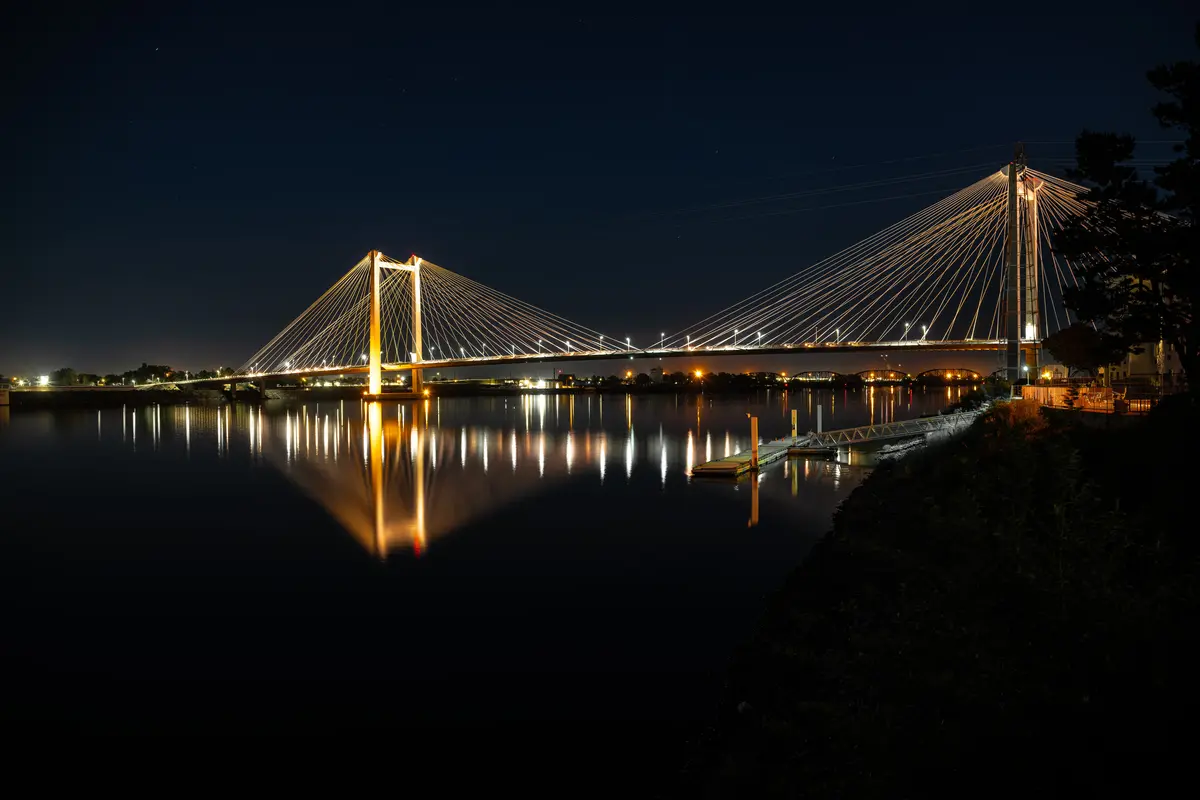
The Home Price Reality: What California Equity Buys Here
The number that stops most Californians mid-sentence: Richland's typical home value is $457,354 (Zillow Home Value Index, June 2026). California's median home price, by contrast, sits well above $800,000 in most metro markets — and that figure climbs past $1.3 million in the Bay Area and well past $900,000 across much of Los Angeles and San Diego.
What that delta means practically: the equity from a median California home frequently purchases a Richland property outright, with cash left over. Buyers arriving from the Bay Area with substantial proceeds often find themselves in a position they did not expect — a larger home than they've ever owned, in an established neighborhood, with a lower monthly payment than they carried on a California condo.
What the Money Buys
A $457,354 budget in Richland gets you a real house — typically three to four bedrooms, a garage, and a yard. For neighborhood character and geographic context, the best neighborhoods page maps these distinctions clearly.
The effective property tax rate here is 0.93%. On a home at the city median, that translates to roughly $4,250 annually — a figure that California homeowners in high-cost counties will immediately recognize as dramatically lower than what they were paying, even under Proposition 13 caps on older California properties. California's effective rates in Bay Area and Los Angeles counties tend to run meaningfully higher once you factor in Mello-Roos and local assessments on newer construction.
The One Budget Line That Goes Up
Richland has a combined state and local sales tax rate of 8.8%, which applies to most goods. That is higher than the base rate in most California cities, and Californians moving from a lower-rate county should budget for this adjustment. The meaningful offset: groceries and prescription drugs are fully exempt from Washington sales tax, which softens the impact on everyday spending.
A sidebar worth knowing if you're liquidating a large California investment portfolio before the move: Washington taxes 7% on long-term capital gains above a $278,000 standard deduction for 2025, rising to 9.9% on gains above $1,000,000. For most relocating homeowners this will not apply, but it is worth a conversation with a tax advisor before you close on the California sale.
Washington's Tax Structure vs. California's — Side by Side
The income tax comparison is the clearest win in the entire California-to-Richland analysis. Washington has no individual state income tax, full stop. California's top marginal rate is 13.3% — the highest of any state in the country. For a household earning $150,000, that gap is worth roughly $10,000–$15,000 per year in take-home pay, depending on deductions and filing status.
| Tax Category | California | Washington / Richland | Practical Impact for Relocators |
|---|---|---|---|
| State income tax | 1%–13.3% marginal; 9.3% at $100K+ | None (2026) | Immediate, significant take-home increase for most earners |
| Effective property tax rate | Varies; typically 1.1%–1.5% in high-cost counties | 0.93% | Lower annual bill even on a higher-value CA home |
| State sales tax | 7.25% base + local | Combined state and local rate of 8.8% in Richland; groceries and prescriptions exempt | Broadly comparable; WA exempts groceries and prescriptions |
| Tax on retirement income | Fully taxed as ordinary income | Not taxed — pensions, 401(k), IRA withdrawals all exempt | Major advantage for early retirees and career-changers |
| Tax on Social Security | Not taxed by CA | Not taxed by WA | Neutral — no change for retirees on this line |
| Capital gains tax | Taxed as ordinary income up to 13.3% | 7% on long-term capital gains above a $278,000 standard deduction for 2025, rising to 9.9% on gains above $1,000,000 | Lower for most; worth planning if liquidating large portfolio |
| Future income tax (2028) | N/A — already exists | 9.9% on income over $1,000,000 effective Jan 1, 2028 | No effect for the vast majority of relocating households |
One nuance worth flagging: Washington's new 9.9% tax on income above $1,000,000 takes effect January 1, 2028. If your household income approaches that threshold, a conversation with a Washington-licensed tax professional before you file your first WA return is worthwhile — but for the overwhelming majority of people reading this, it changes nothing.
What Californians Actually Feel in Month Three
The income tax relief shows up in the first paycheck. What surprises people after six months is how much the combination of factors compounds: lower housing costs, lower utility bills, no state income tax, and — if you carry a mortgage — a smaller monthly payment on a larger home. It is a different financial baseline, not just a single line-item improvement.
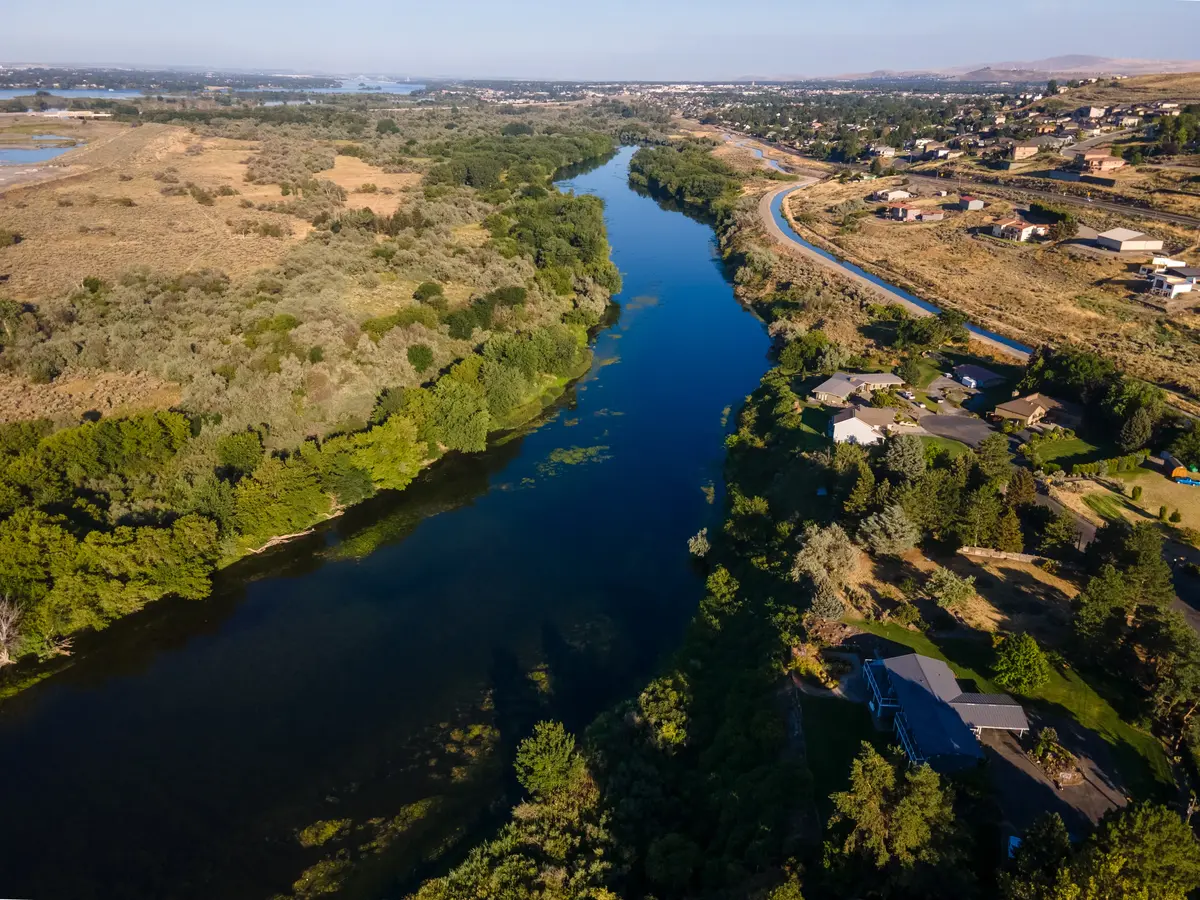
Day-to-Day Cost Differences Beyond Housing
Housing and taxes get all the attention, but the everyday budget shift matters too. The Tri-Cities area's overall cost of living index sits at 95.9 against the national average of 100 — meaning the broader metro is slightly cheaper than average across the board, not just on housing.
Utilities: The Immediate Win
Utilities run approximately 18% below the national average in Richland. For Californians who spent years managing tiered electricity rates and drought surcharges, this registers fast. Richland draws power from the Columbia River system, which keeps rates structurally lower than California's grid. You will likely run the air conditioning all summer — July highs regularly top 100°F — but the cost of doing so is far lower than what your California bill suggested was possible.
Groceries and Transportation
Grocery prices in the Tri-Cities run close to the national average. You will not find a Trader Joe's in Richland — the nearest is in Kennewick — but the full range of national grocery chains is represented across the metro. Transportation costs vary significantly by where you're coming from: Richland is a car-dependent city, and if you're arriving from a Bay Area zip code where you managed without a car, budget for one.
What Doesn't Get Cheaper
Dining out is not dramatically less expensive than California — a sit-down dinner for two at a mid-range restaurant tracks broadly with national averages. Atomic Ale Brewpub & Eatery on Lee Blvd and Bombing Range Brewing Company on Logston Blvd are reliable local spots, but the price per plate is not the 1990s bargain some Californians imagine when they picture Eastern Washington. The trade-off is variety: the dining scene is smaller than a California city of comparable size, and there is no equivalent to the concentrated restaurant corridors you may be leaving behind.
The cost comparison is not a trick. Richland genuinely is materially less expensive on the lines that matter most — housing, taxes, and energy. The lifestyle adjustment is real, but the financial case is not inflated.
Looking to buy in Richland? Estimate your payment.
Enter your numbers to see an estimated monthly mortgage payment.
Estimate only. Excludes HOA fees and mortgage insurance. The interest rate above is a starting point, not a quoted rate — replace it with your own to see real numbers. Insurance is a flat placeholder, not a Richland quote.
Lifestyle Shifts: What California Didn't Prepare You For
Richland is not a suburb that happens to be in Washington. It is a specific kind of place — a mid-sized, science-economy city in a high desert river corridor — and understanding what it is before you arrive saves significant adjustment friction.
The Climate Reversal
If you moved from coastal California expecting Washington's famous grey skies and perpetual drizzle, Richland will correct that assumption within the first week. Eastern Washington sits in the rain shadow of the Cascade Range. Richland averages fewer than eight inches of precipitation per year. The summers are long, genuinely hot, and reliably sunny — and winters are cold and occasionally icy in a way coastal Californians underestimate, but snowfall is light and the sun returns quickly. Most people who move here from the Bay Area say the weather is the first surprise, and usually a welcome one.
The Outdoor Access
The Columbia River is not a backdrop — it is the organizing feature of daily life. Howard Amon Park runs along the riverfront in a way that pulls families, runners, and kayakers out of the house on weekday evenings. The Sacagawea Heritage Trail offers paved walking and cycling for miles along the river system. The Columbia Basin's wine country is within an hour's drive, and the regional wine scene is genuine enough that it doesn't read as a consolation prize for people leaving Napa behind. For a full picture of what outdoor life looks like here, the parks and recreation page covers it in detail.
Why People Move Out
The honest reason people leave Richland after a few years: they miss the density of options that California cities offer. A city of 63,000 anchored by federal science employment has limited late-night dining, a modest arts calendar, and a restaurant scene that is good but finite. People who moved from San Francisco or Los Angeles for the financial relief sometimes find themselves driving to Portland or Seattle for a weekend of the cultural density they gave up. That is a real trade-off, not a minor one — name it before you sign the lease or the purchase agreement.
Where Families Actually Gather
The real community hub for families with younger children is Howard Amon Park on weekend mornings and the Columbia Point Marina area on summer evenings. Richland's STEM-heavy demographic means your neighbors are often engineers and researchers — highly educated, community-involved, and oriented toward outdoor recreation over nightlife. The district's strong academic standing isn't accidental; it reflects a parent base that shows up. If that community profile resonates, it is one of Richland's genuine strengths. If you're arriving from a diverse, dense, culturally varied California neighborhood, the adjustment is real and worth factoring honestly.
The Honest Catches: What the Spreadsheet Doesn't Show
The financial case for moving from California to Richland is legitimate and not overstated. But there are specific friction points that Californians routinely underestimate, and naming them is more useful than glossing over them.
You Will Need a Car. Possibly Two.
Richland is not walkable in the way most California cities — even suburban ones — manage to be. Grocery runs, errands, and restaurant dinners all require driving. If you're arriving from a San Francisco neighborhood where you logged 4,000 miles per year, budget for a significant increase in vehicle costs and plan your neighborhood choice around proximity to your most frequent destinations. The neighborhoods page breaks down which areas offer the most on-foot access and which are purely car-dependent.
The Employment Base Is Concentrated
Richland's economy is heavily dependent on Pacific Northwest National Laboratory, the Hanford Site, and related federal contracting. That concentration produces strong, stable wages — the city's median household income of $95,813 reflects it — but it also means the local job market is narrow outside of STEM and government-adjacent fields. If you're not arriving with a position at one of these employers, or in education or the trades, the private-sector job market is thinner than in a comparably sized California city. For a fuller look at employment and commute patterns, the living in Richland page covers this in detail.
The Cultural Calendar Is Smaller
The REACH Museum and the Manhattan Project National Historical Park at the B Reactor are genuinely interesting institutions — the Hanford B Reactor is the world's first full-scale plutonium production reactor, and the National Park Service tour is not a tourist-trap experience. But the broader arts and entertainment calendar is a fraction of what California cities of comparable population offer. John Dam Plaza hosts a summer concert series; the local theater scene exists but is modest. Californians who built their social life around live music, gallery openings, or a restaurant-a-week habit will need to recalibrate expectations or accept the drive to Portland or Seattle as a regular fixture.
The Safety Profile
For Californians moving from higher-crime urban areas, Richland's crime numbers are genuinely favorable — but for more context on specific areas and what the statistics actually mean for your neighborhood choice, the safety page is the right place to read further.
None of these catches disqualify the move for the right buyer. They are the things worth knowing before you close — not after.
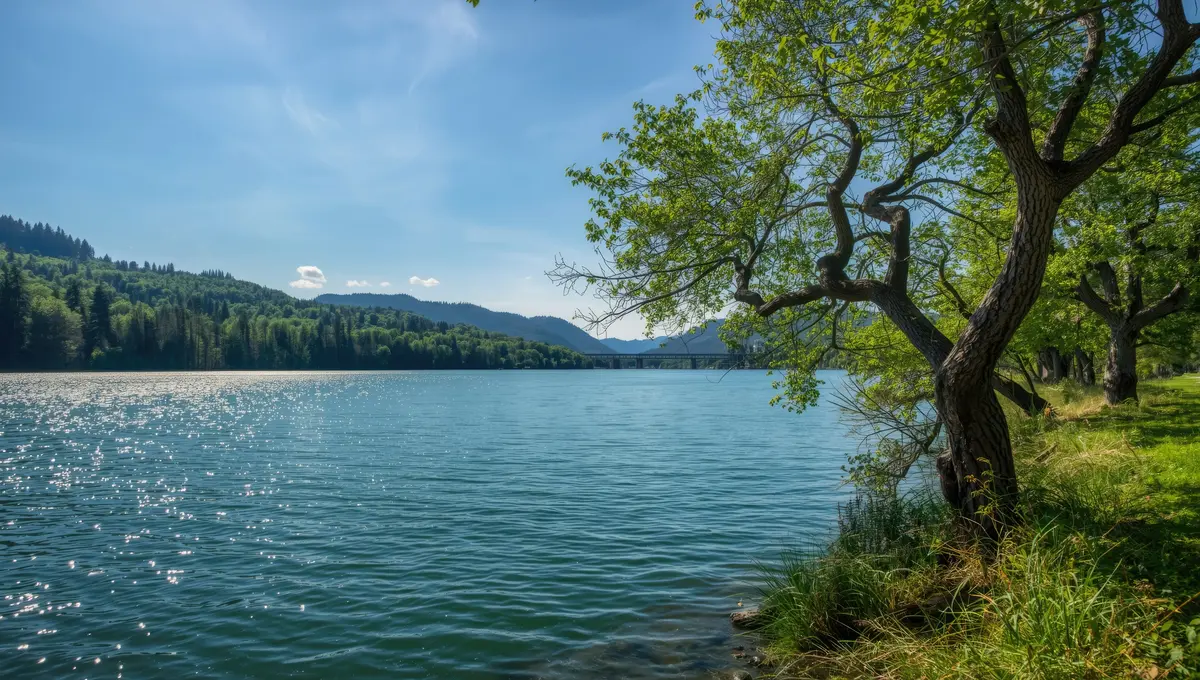
Local Expert Takeaway: The financial math for a California-to-Richland move is real, not marketing: no state income tax, a typical home value of $457,354 against California metro medians that frequently double or triple that, utilities running 18% below the national average, and a 0.93% effective property tax rate. What the numbers don't show is that Richland is a specific place with a specific community — a river-town science economy that rewards people who came for a PNNL or Hanford position and found themselves staying for the Howard Amon Park sunrise runs, the Columbia Basin wine country day trips, and a school district that actually delivers. The buyers who struggle are the ones who expected California density at Eastern Washington prices. The ones who stay are the ones who ran the honest comparison, visited in July when the river is at its best, and made peace with the trade-off before the moving truck arrived.
Quick Takeaways & FAQs
✅ Washington's zero state income tax means most Californians keep thousands more per year from the moment their first Richland paycheck clears.
⚠️ Richland's dining and cultural calendar is genuinely limited for its size — people who built their California social life around restaurant variety and live music will feel the gap.
📍 Atomic Ale Brewpub & Eatery on Lee Blvd has been a Richland institution since 1997 and is where you'll find the PNNL crowd on a Friday evening — a useful social on-ramp for newcomers.
How much cheaper is it to buy a home in Richland compared to California?
Does Washington State have an income tax? What does that mean for someone leaving California?
What is Richland's property tax rate, and how does it compare to California?
What should Californians know about the job market in Richland before moving?
Is Richland a good fit for Californians with school-age kids?
Moving to Washington?
Tell us what you need help with and we'll connect you with local resources.
