
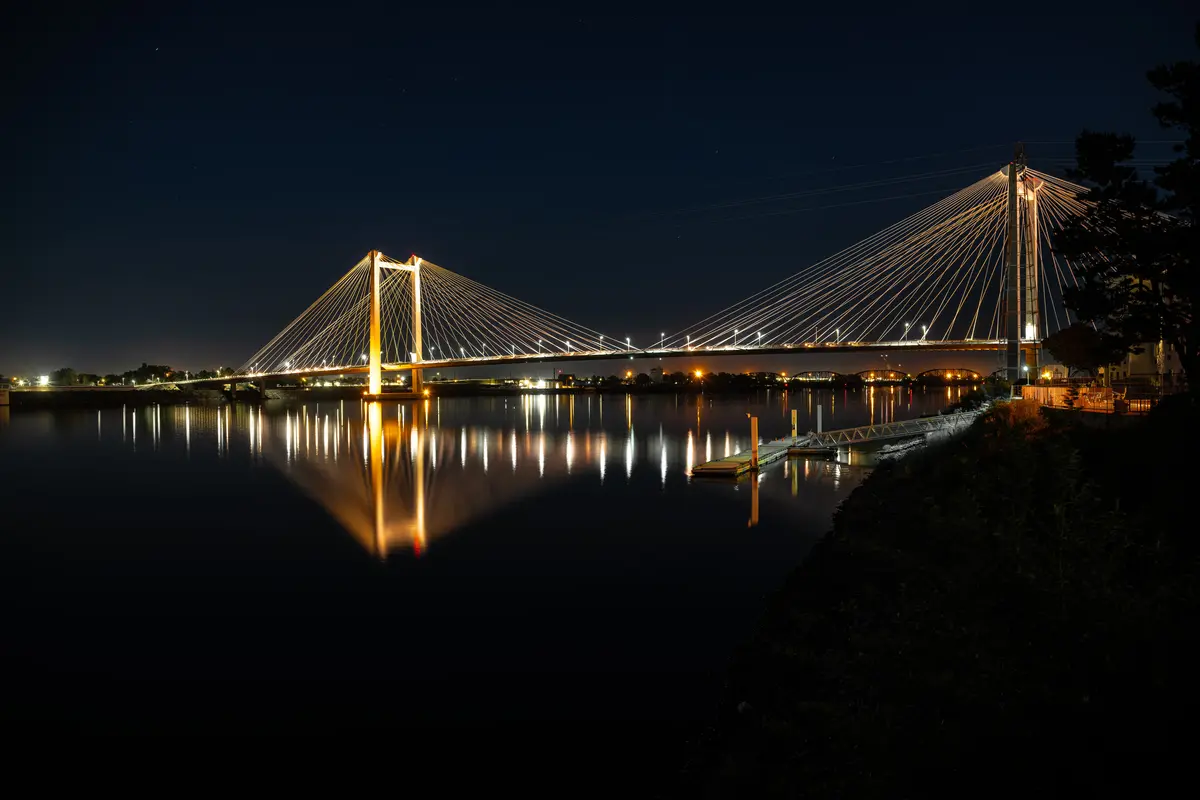
Maybe your company relocated you here decades ago — to work at Hanford or Pacific Northwest National Laboratory — and now retirement is approaching and the question isn't whether you love the Tri-Cities, it's whether Richland specifically makes sense for your next chapter. Or maybe you're arriving cold, drawn by Washington's no-income-tax posture and prices that still look reasonable compared to the west side of the Cascades. Either way, Richland has a case to make. Sitting at the confluence of the Columbia and Yakima rivers in Benton County, it's the most affluent and highest-educated of the Tri-Cities, with a flat, sunny climate and a riverside trail system that retirees actually use year-round.
The economic backbone here is federal science: Pacific Northwest National Laboratory and the Hanford Site together employ thousands and have built a community that skews toward professionals with advanced degrees. That shapes retirement life in practical ways — the intellectual and civic culture is a step above what you'd find in a comparably priced city elsewhere in Eastern Washington. Washington State University Tri-Cities adds a genuine academic presence, including continuing-education and community programming that active retirees tap regularly. Kadlec Regional Medical Center anchors local healthcare and, critically for retirees, runs a dedicated Senior Clinic staffed by board-certified geriatricians.
On cost, Richland sits in an interesting middle zone. The typical home value is $457,354 (Zillow Home Value Index, June 2026) — well below Seattle or Spokane's premium neighborhoods, but not a bargain market either. The full cost-of-living breakdown shows where Richland saves you money and where it doesn't. Washington's zero state income tax means every dollar of Social Security, pension, or IRA withdrawal stays intact at the state level — a structural advantage that compounds meaningfully over a 20- or 30-year retirement. The trade-off is a higher sales tax and a cost-of-living profile that reflects a prosperous, growing community rather than an affordable backwater.
Whether you're seriously considering a move or just stress-testing the idea, the sections below cover Richland's healthcare depth, retiree tax posture, walkability reality, downsizing options, and how the city stacks up against the other retirement-relevant towns within an hour's drive.
Why Retirees Are Choosing Richland
Richland genuinely suits a specific kind of retiree: someone who wants a mid-sized city with real amenities, doesn't need to walk everywhere, values outdoor access over urban buzz, and would rather have $457,354 buy a decent single-level home than a condo in a more expensive market. If that sounds like your shortlist, Richland consistently delivers.
The city's scientific heritage makes for an unusually engaged retirement community. Docent programs at the REACH Museum and ranger-led tours of the Hanford B Reactor — part of the Manhattan Project National Historical Park — draw retirees who want intellectual stimulation, not just pickleball. The year-round sunshine (Richland averages over 300 sunny days annually) makes the outdoor lifestyle sustainable in a way that rainy-side Washington simply isn't.
Be honest with yourself about the downsides before you commit. If you're hoping to sell your car entirely, Richland will frustrate you — the city-wide Walk Score is 34, and most errands require driving. If world-class medical subspecialties matter to you now (not just potentially), Seattle's academic medical centers are a four-to-five-hour drive, and that distance is real when you need it. Retirees who moved here primarily for low cost and later needed complex cardiac or oncology care sometimes find themselves regretting the geography. For most healthy, active retirees in their 60s and early 70s, those concerns stay theoretical. For others, they become the reason to look at alternatives in Eastern Washington or on the west side instead.
Healthcare & Medical Access in Richland
Kadlec Regional Medical Center
Kadlec Regional Medical Center at 888 Swift Blvd is Richland's flagship hospital — a full-service regional system now operating under the Providence umbrella. For day-to-day retiree healthcare needs, it covers most bases: emergency services, cardiac care, orthopedics, oncology, and primary care are all available locally. The facility is large enough to handle a genuine medical crisis without immediate transfer.
The standout for retirees specifically is the Kadlec Senior Clinic at 560 Gage Blvd, a dedicated geriatric practice accepting Medicare-eligible patients 65 and older. Physicians there carry two additional years of training in geriatrics and focus on the complexity that older adults actually face — polypharmacy management, cognitive assessment, mobility issues — rather than treating seniors as adult patients with faster appointments. Finding a board-certified geriatrician who's accepting new patients is harder than it sounds in most mid-sized cities; having one in your own backyard is a meaningful quality-of-life factor.
Veterans and Specialty Care
Senior veterans have a dedicated VA Clinic at 825 Jadwin Ave, Suite 250, offering primary care, mental health services, dermatology, and select specialty care without a trip to a larger VA facility.
The honest limitation is subspecialty depth. For complex neurosurgery, advanced cancer protocols, or major transplant work, Kadlec transfers patients to Seattle (typically to large academic medical centers there) or occasionally Portland. That's a practical reality of any city Richland's size. Kennewick and Pasco have additional clinics and urgent care options, expanding the effective footprint of local care, but the regional hub for anything truly advanced remains Seattle — plan your retirement healthcare strategy around that reality, not against it.
The Retiree Budget in Richland
Washington's Tax Advantage Is Real
Washington levies no personal income tax — full stop. Your Social Security check, pension distributions, 401(k) or IRA withdrawals, and annuity payments are all untaxed at the state level. For a retiree drawing $60,000 to $80,000 a year in retirement income, that's a structurally different starting point than retiring in Oregon, Idaho, or most other Western states.
Washington does have a capital gains tax, but it is specifically carved out for retirement accounts and real estate sales. A retiree living on Social Security and retirement-account withdrawals — the most common income profile here — will almost certainly never owe it. The caveat applies only to large taxable brokerage accounts with gains above roughly $270,000 in a single year; if that describes your situation, consult a tax advisor, but for most retirees it's a non-issue.
Property Taxes on a Fixed Income
Richland's effective property tax rate runs approximately 0.93% — moderate by Washington standards and noticeably lower than most of Western Washington. On a median-priced home, that rate is manageable on a fixed income, and Washington offers a property-tax exemption program for senior homeowners who meet income thresholds, which can reduce the burden further.
The honest cost pressure for retirees on fixed incomes is sales tax — Washington's combined state and local rate in Benton County is among the higher ones in the region, and it applies to most purchases. Groceries are exempt, but restaurants, home repairs, and big-ticket purchases feel it. Day-to-day grocery and dining costs in Richland are generally in line with other Eastern Washington cities — lower than the Seattle metro, higher than rural alternatives like Prosser or Benton City. See the complete cost-of-living breakdown for full detail on what a monthly budget actually looks like here.
Looking to buy in Richland? Estimate your payment.
Enter your numbers to see an estimated monthly mortgage payment.
Estimate only. Excludes HOA fees and mortgage insurance. The interest rate above is a starting point, not a quoted rate — replace it with your own to see real numbers. Insurance is a flat placeholder, not a Richland quote.
Walkability, Community & Staying Active in Richland
The Walkability Reality
A Walk Score of 34 means Richland is, plainly, a driving city. You will need a car for grocery runs, medical appointments, and most errands regardless of where in the city you live. That said, the Downtown/Uptown core and the Columbia Point area offer the most concentrated on-foot access — if walkability matters to you, those pockets are where to focus your home search.
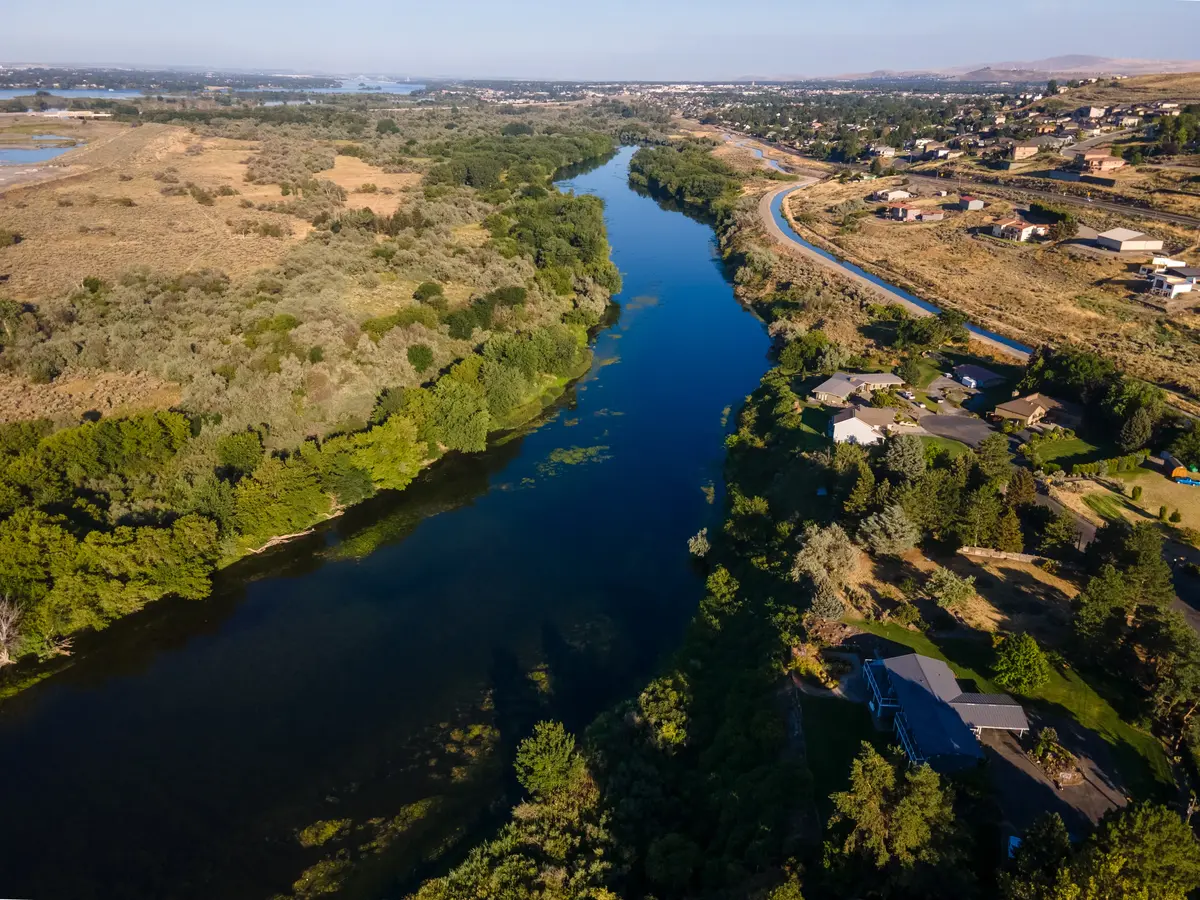
What Richland does exceptionally well is trail access. The Sacagawea Heritage Trail is a paved, relatively flat 23-mile loop along the Columbia River connecting Richland, Kennewick, and Pasco. For retirees who walk or bike regularly, this is the city's single best physical asset — it's accessible, scenic, and genuinely used year-round thanks to Richland's dry climate. Howard Amon Park, right along the river, is where locals actually gather on weekend mornings: dog walkers, cyclists stretching their legs before the trail, and families occupying the picnic areas. The full parks and recreation guide covers the trail network in more depth.
Social Life and Community Engagement
The Tri-Cities area supports a robust senior center network. Richland's own senior programs draw retirees from across Benton County for fitness classes, social events, and volunteer coordination. For retirees who came out of PNNL or Hanford careers, the scientific and civic culture here tends to produce unusually active community boards, docent programs, and nonprofit involvement — there's no shortage of places to put your time.
Evening culture is modest but genuine. Atomic Ale Brewpub & Eatery on Lee Boulevard is a longtime local gathering spot where you'll find retirees as easily as anyone else on a Thursday evening. The REACH Museum hosts rotating exhibits tied to the Manhattan Project and regional history that feel like something you'd find at a much larger institution. Retirees who moved here from California or the Seattle suburbs sometimes need six months to recalibrate their expectations — the social scene is quieter and less curated, but the people who stay consistently describe it as more authentic.
Right-Sizing: Downsizing in Richland
What the Market Offers
Single-level living is achievable in Richland, but you'll need to be deliberate about it. The newer subdivisions in South Richland and Queensgate include ranch-style homes and patio homes built in the last decade — these are the most practical downsizing targets for buyers who want low-maintenance living without stairs. Meadow Springs, in the southwest corner of the city, is popular with active adults for its proximity to the golf course and its mix of established ranch homes.
Condos are a smaller slice of the Richland market than in larger cities, but the Downtown/Uptown and Columbia Point areas have the highest concentration of lower-maintenance attached options. Inventory can be thin in any given month, so buyers downsizing from a larger family home sometimes find the transition takes longer than expected — plan for a 3-to-6-month search rather than assuming a quick swap.
Named Senior Living Communities
Richland has a meaningful range of dedicated senior living options. Brookdale Meadow Springs in the Meadow Springs neighborhood operates 108 units spanning independent and assisted living tiers. Bonaventure of the Tri-Cities offers independent living, assisted living, and memory care. Three Rivers Retirement Apartments at 651 McMurray St serves 40 residents in a more modest, affordable-independent format. Vintage at Richland accommodates 150 residents and covers multiple care levels.
What you won't find in Richland is a large-scale 55+ active-adult master-planned community of the Del Webb or Sun City variety — that format simply doesn't exist here. If that specific model is what you're after, the Tri-Cities area doesn't currently have an equivalent, and you'd need to look at purpose-built active-adult markets. What Richland does have is a distributed set of purpose-built communities with real geriatric services nearby — a different model, but a functional one.
Richland vs Nearby Retirement Destinations
| City | Cost vs Richland | Primary Hospital | Walkability | Senior Living Depth | Overall Retirement Fit |
|---|---|---|---|---|---|
| Richland, WA | Anchor | Kadlec Regional Medical Center + dedicated Senior Clinic | Car-dependent (Walk Score 34); excellent trail system | Strong — 4 named communities, geriatric medicine on-site | Nature Quiet Solid overall for active retirees |
| Kennewick, WA | About the same | Trios Health (regional hospital) | Slightly more commercial walkability in older core areas | Moderate — several assisted living options | Value More affordable pockets; less polished feel than Richland |
| Pasco, WA | Noticeably cheaper | Lourdes Medical Center | Car-dependent; less trail-connected than Richland | Growing — newer senior developments | Budget Lower entry cost; less established senior infrastructure |
| West Richland, WA | About the same | Relies on Kadlec (Richland) | More rural and spread out; car essential | Limited — fewer dedicated senior communities | Privacy Quieter, more rural character; no independent medical base |
| Prosser, WA | Noticeably cheaper | Prosser Memorial Health (small critical-access hospital) | Small-town walkable core; limited services | Very limited — minimal senior living options | Nature Wine-country lifestyle; medical infrastructure is a real concern |
| A nearby college town in Eastern Washington | About the same to slightly pricier | A larger regional Providence-affiliated hospital | Genuinely walkable downtown; best of this group | Good — multiple communities; established senior services | Walkable Lifestyle Best walkability and downtown culture in the region |
Kennewick is the closest alternative and shares Richland's medical infrastructure, making it a reasonable swap for buyers who find Richland's prices too high in a given neighborhood. Pasco costs less but offers fewer services and a less developed senior living ecosystem. Prosser's wine-country setting is genuinely appealing, but its critical-access hospital is not the right foundation for retirees with complex medical needs — the compromise matters more with every passing year.
For retirees who prioritize walkability and downtown culture above all else, a handful of smaller Eastern Washington cities offer more pedestrian-friendly cores and comparable hospital infrastructure. If you can live without the Columbia River trail system and don't need Richland's scientific-community culture, those alternatives deserve a serious look. For most retirees who already have roots in the Tri-Cities, or who are drawn specifically by healthcare access and the Sacagawea Heritage Trail, Richland remains the strongest overall package in this corner of Eastern Washington.
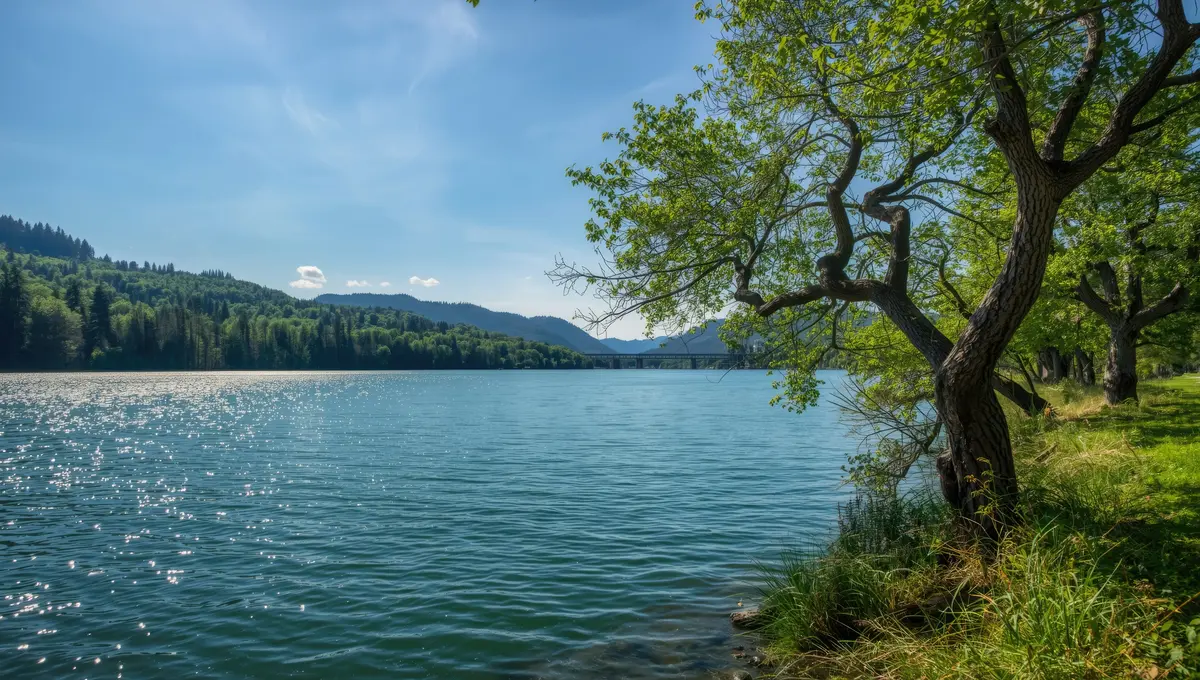
Local Expert Takeaway: Richland's retirement case rests on three things working together: Washington's zero income tax on retirement income, a dedicated geriatric clinic at Kadlec Regional Medical Center that actually accepts new Medicare patients, and a flat riverside trail system you can use 300 days a year. The catch is that you'll drive everywhere for errands, and advanced subspecialty care in Seattle is genuinely far away. Retirees who thrive here tend to be active, self-sufficient, and connected — the kind who end up as docents at the REACH Museum or regulars on the Sacagawea Heritage Trail by month three.
Quick Takeaways & FAQs
✅ Washington levies zero state income tax on Social Security, pensions, and retirement-account withdrawals — every dollar of retirement income stays intact at the state level.
⚠️ Richland's city-wide Walk Score is 34, meaning you'll need a car for virtually all errands; retirees who want to age without driving should look at cities with more walkable downtowns instead.
📍 The Kadlec Senior Clinic at 560 Gage Blvd is a board-certified geriatric practice accepting new Medicare patients — a rarer local amenity than it sounds.
Is Richland, WA a good place to retire?
Does Washington State tax Social Security or pension income?
What hospitals and senior medical clinics are in Richland?
What 55+ or active-adult communities exist in Richland?
How does Richland compare to other Eastern Washington cities for retirement?
Moving to Washington?
Tell us what you need help with and we'll connect you with local resources.
