
What Is Living in Kennewick, Washington Like?
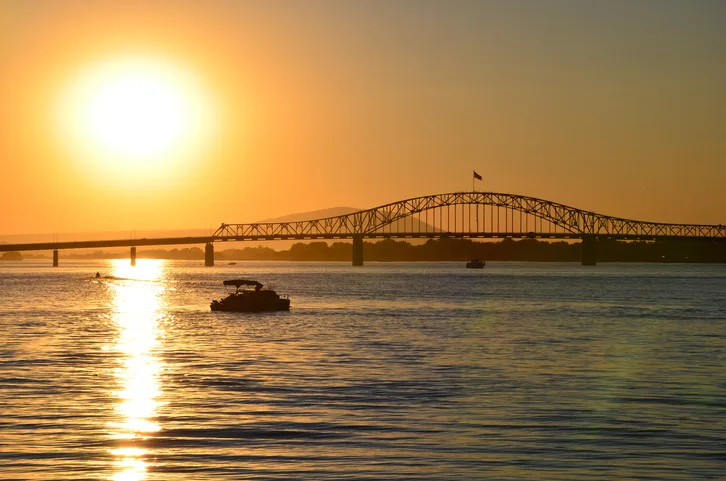
If you're choosing between Kennewick and staying on the west side of the Cascades, the decision usually comes down to one thing: how much of Seattle's cost of living you're still willing to absorb. Kennewick sits at the confluence of the Columbia, Snake, and Yakima Rivers in south-central Washington, about 200 miles east of the Cascade Range. A cable-stayed bridge connects it to Pasco to the north; Highway 395 and I-182 run through the city, shaping where people live and how they move. What surprises people who relocate here from the Seattle metro is not the size — it's how complete the infrastructure feels for a city of 86,000. The arena, the wineries, the river trail: none of it feels like a consolation prize for leaving the coast.
The economic engine here is more diversified than the skyline suggests. Lamb Weston and Tyson Fresh Meats anchor the food-processing and agricultural side of the economy, while Numerica Credit Union and the Kennewick School District fill out the professional and public-sector employment picture. But the gravitational center of the regional economy is actually just across the river in Richland: a major federal research complex draws thousands of engineers, scientists, and contractors who often choose to live in Kennewick for its lower price points and its position at the commercial heart of the Tri-Cities. That commute — roughly 15 minutes to Richland — is one of the most common reasons buyers end up here.
Kennewick's cost-of-living index sat at 95.7 as of late 2024, slightly below the U.S. average, and Washington's lack of a personal income tax stretches paychecks noticeably further than they would go in Oregon or California. The Zillow Home Value Index put the city median at $433,734 as of June 2026 — a figure that reads as genuinely attainable compared to the Seattle or Portland markets. Outdoor life runs along the Columbia River Riverfront Trail, through the 400-plus acres of Columbia Park, and out onto a 23-mile paved heritage trail that loops through all three Tri-Cities. Summers are long, dry, and hot — 300 days of sun per year is a local boast that holds up — and more than 200 wineries sit within an hour's drive, making weekend plans easy to fill.
Whether you're being relocated here, priced out of western Washington, or simply curious after driving through, the sections below break down Kennewick's neighborhoods, housing market, employers, commuting patterns, and what daily life here is actually like.
Kennewick at a Glance
Looking to buy in Kennewick? Estimate your payment.
Enter your numbers to see an estimated monthly mortgage payment.
Estimate only. Excludes HOA fees and mortgage insurance. The interest rate above is a starting point, not a quoted rate — replace it with your own to see real numbers. Insurance is a flat placeholder, not a Kennewick quote.
Why Are People Moving to Kennewick?
Seattle-area buyers searched to move into Kennewick more than any other metro on Redfin in 2026. That single data point tells you most of what you need to know about why people are arriving here: they've done the math on western Washington housing, found it unworkable, and started looking east.
The Employment Pull
A major federal research complex and its associated national laboratory in Richland collectively represent one of the largest concentrations of science and engineering employment in the Pacific Northwest. Many of those workers settle in Kennewick — it offers a shorter drive than Pasco for certain corridors and more established commercial amenities than West Richland. That federal-adjacent economy insulates the Tri-Cities from the volatility that hits purely private-sector markets.
On the Kennewick side of the river, Lamb Weston's food-processing operations and Tyson Fresh Meats represent significant blue-collar and mid-level management employment. Numerica Credit Union has a meaningful presence in financial services. The Kennewick School District itself is one of the larger employers in the city, which matters for educators and administrators relocating from elsewhere in Washington.
The No-Income-Tax Reality
Washington's lack of a personal income tax is not a small thing for households moving from Oregon or California. Combined with a cost-of-living index below the national average, the effective purchasing power gain for a mid-income household relocating here from Portland or Sacramento is real and immediate.
The 8.8% combined sales tax rate in Kennewick is on the higher side, so the trade-off is real — but for homeowners and salary earners, the income-tax absence tends to win the calculation. See the full breakdown on the Kennewick cost of living page.
Vista Field and the Growth Trajectory
One signal that Kennewick is not a city coasting on its current infrastructure: Vista Field, a 103-acre new-urbanism development near the Toyota Center, cleared its final environmental hurdle in June 2026 when the Port of Kennewick received a clean letter from the Washington State Department of Ecology. The Port simultaneously approved lot sales to BlueChart Homes for nearly 300 single-family homes in multiple phases. The Port describes the BlueChart deal as the largest in its 110-year history. Full build-out is expected to take more than 20 years — which means buyers arriving now are getting in early on what the city will become.
| Reason to Move | What It Actually Means in Kennewick | Best For |
|---|---|---|
| No state income tax | Washington levies no personal income tax; effective take-home is higher than in Oregon or California | Commuter Value |
| Federal research complex proximity | ~15-min drive to Richland; thousands of science and engineering roles accessible without living in Richland | Tech Commuter |
| Housing affordability | Median well below Seattle or Portland; entry points exist for first-time buyers | First-Time Families |
| Vista Field development | 103-acre walkable town center underway; adds long-term density and amenities | Walkable First-Time |
| Columbia Valley wine region | 200+ wineries within an hour; a genuine lifestyle draw, not a weekend novelty | Luxury Views |
| Tri-Cities commercial core | Kennewick holds the retail and entertainment center of the metro — Toyota Center, major retailers, restaurant row | Families Renter |
| Clover Island waterfront | Active marina, restaurants, and hotel on the Columbia; Port investing in additional activation in 2026 | Views Luxury |
What Daily Life Feels Like in Kennewick
Most people moving here from a major metro spend the first few months recalibrating what "getting somewhere" means. There is no traffic situation in Kennewick that resembles Seattle's I-5 at 5 p.m. That is not a small thing when you price out what that hour of your day is actually worth.
The River as a Backyard
Columbia Park is not a neighborhood park. At roughly 400 to 600 acres along the Columbia River, it contains a golf course, tennis courts, a campground, a boat launch, a waterpark, and — as of October 2025 — Kennewick's first dedicated off-leash dog park, a feature locals had been requesting for years. The park is large enough that it doesn't feel crowded even when it's busy.
A 23-mile paved heritage trail extends the river access into a loop connecting Kennewick, Pasco, and Richland. Cyclists, runners, and walkers use it year-round — the desert climate means ice closures are rare. If you move here and don't end up spending time on that trail, that's on you.
Where People Actually Gather
Downtown Kennewick along East Columbia Drive has a cluster of diners and local restaurants that draw a regular weekend crowd. Independent breakfast spots on the west side of the city are the kind of places where regulars know each other's orders. Ice Harbor Brewing Company on East Bruneau Avenue handles the evening crowd; their second location — a brewpub on Clover Island Drive — puts you on the water while you drink. Swampy's BBQ on East Columbia Drive is the kind of place where you'll run into the same neighbors twice a month.
Clover Island itself is in an active phase of improvement: the Port of Kennewick is investing in the marina, the hotel, and the restaurant scene there through 2026, with the goal of making the waterfront a genuine daily destination rather than an occasional outing.
The Honest Seasonal Reality
Summers here are genuinely hot — temperatures routinely reach the high 90s and push past 100°F in July and August. Newcomers from the Pacific Coast frequently underestimate this. The dry heat is more manageable than humid heat, but you will want central air conditioning, and you will use it heavily for three months. The flip side: winters are mild by Pacific Northwest standards, with far less rain than Seattle and only occasional snow that rarely sticks.
What surprises most people after six months is the wind. The Columbia River corridor funnels consistent westerly winds through the valley, particularly in spring. It's not violent weather — it's more of a persistent presence that becomes part of how you think about outdoor plans.
Schools and Family Infrastructure
The Kennewick School District holds a B rating, according to Niche, and added school resource officers in middle schools in 2025 as part of a broader safety initiative. For a full picture of boundary quirks and individual school performance, the Kennewick schools page covers the detail. The city's park infrastructure gives families real outdoor options that don't require a 45-minute drive.
The Kennewick Housing Market Right Now
The Zillow Home Value Index for Kennewick sits at $433,734 as of June 2026 — up just 0.1% over the prior year, which means prices have stabilized after the sharper run-up of earlier years. Homes are going to pending in around 24 days, which is active but not frantic.
Across the broader Tri-Cities metro, the June 2026 median sale price came in at $445,000, with active listings up 8.2% year-over-year and a median days-on-market of 20 days — the fastest pace of 2026. That slight gap between Kennewick's index figure and the metro median reflects the mix of housing stock: Kennewick contains both older, more affordable inventory and newer construction that pulls the metro figure higher. Some pockets of the city run noticeably below the city-wide median; others exceed it. For neighborhood-by-neighborhood detail, the best neighborhoods page covers that breakdown.
What the Market Pace Means for Buyers
Twenty-four days to pending is fast enough that serious buyers need to be decisive. Homes that are priced correctly and show well are not sitting. That said, the inventory increase — up more than 8% over last year — means buyers have more options than they did in 2024, and the leverage dynamic has shifted modestly toward the buyer side.
The Tri-Cities market is on pace to outperform 2025 overall, with sales activity up nearly 9% at the mid-2026 mark. The Vista Field development adds a longer-term supply dimension: nearly 300 new single-family homes from BlueChart Homes are planned across multiple phases, which will expand options in the city's newer construction segment over the coming years.
The Tax Environment
Kennewick's effective property tax rate is approximately 0.80% — below the national average for a market at this price point. Washington's no-income-tax structure means the overall tax burden for homeowners here compares favorably to neighboring states. The cost-of-living page has a full summary of the tax picture, including the 8.8% sales tax rate that is the main offset.
Kennewick Neighborhoods
Kennewick has several distinct areas — each with its own character and appeal. Here’s a breakdown to help you narrow down where to focus your home search.
🏡 Canyon Lakes
Canyon Lakes is one of Kennewick's more established upscale enclaves, built around a golf course and rolling terrain in the city's southwest quadrant. It draws buyers who want newer construction with some architectural variation and room to spread out, and the on-site golf course gives the area an amenity that keeps property values anchored.
🏠 Meadow Springs
Meadow Springs sits at the south end of Kennewick near the border with Richland, making it a natural fit for households that split their time between both cities. The housing stock leans toward established single-family homes on larger lots, and the area has a quieter, more settled character than some of the newer developments further south.
🌳 Southridge
Southridge is where most of Kennewick's newer construction has concentrated, with subdivisions spreading south along the ridge above the city. It's the go-to for buyers who want a brand-new or near-new home with modern floor plans, and its proximity to South Kennewick's retail corridor on Clearwater Avenue makes daily errands efficient.
🏘 Hansen Park
Hansen Park offers a more central location than the southern neighborhoods, with a mix of mid-century and updated homes that tend to come in below the city-wide median. It suits buyers who want an established neighborhood feel with reasonable proximity to Downtown Kennewick and the river trail system.
🏔 Downtown Kennewick
Downtown Kennewick along East Columbia Drive is the city's most walkable corridor, anchored by independent diners, the Historic Downtown Kennewick district, and proximity to Clover Island and the riverfront. Buyers who prioritize on-foot access to restaurants, the river trail, and community events will find Downtown the most functional neighborhood for car-light living.
🌆 West Hill
West Hill sits on elevated terrain west of the commercial core, offering views across the Columbia River valley that aren't available in the flatter neighborhoods below. The housing mix is varied — everything from modest ranches to larger custom homes — and the area attracts buyers who value the view and the slight remove from the city's busier corridors.
Pros & Cons of Living in Kennewick
The Pros
- Lower cost of living than Western Washington with no state income tax
- Sunny
- dry climate with over 190 sunny days a year
- Growing Tri-Cities job market anchored by Hanford
- food processing
- and healthcare
The Cons
- Property crime rates run above the national average
- Hot
- dry summers with triple-digit heat spikes
- School district test scores and graduation rates trail state averages
Getting Around & Commuting in Kennewick
Kennewick is a car city. That is not a criticism — it is a planning reality you should absorb before assuming that proximity to downtown means walkable access to daily errands. The commercial core along East Columbia Drive and the retail corridors on Clearwater Avenue are designed around surface parking, not foot traffic.
The Bridge Dynamic
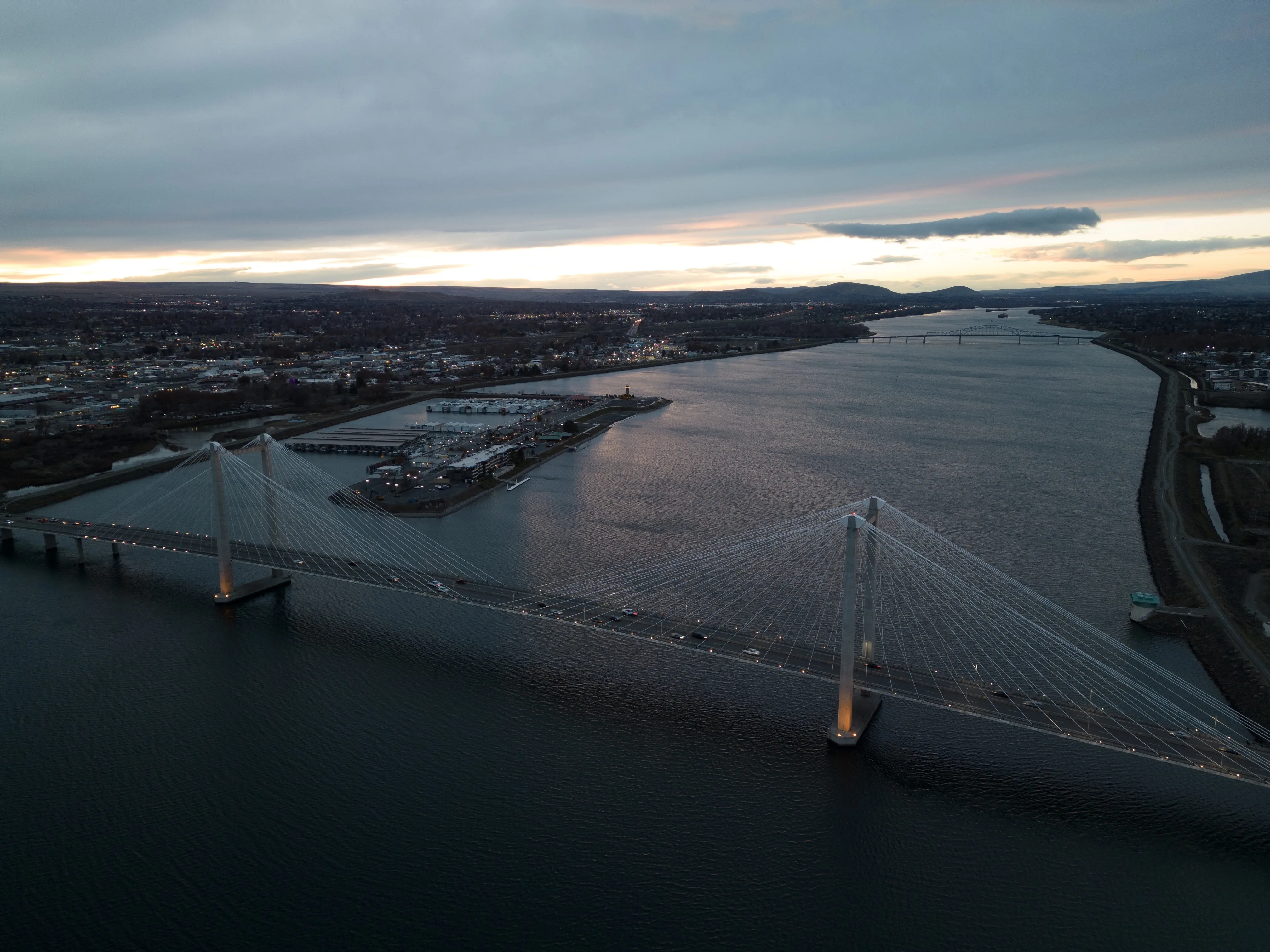
The cable-stayed bridge connecting Kennewick to Pasco is one of the Tri-Cities' most recognizable landmarks — and one of its most reliable bottlenecks during peak commute hours. If your daily route crosses the river, you learn quickly which bridge to take and when. An older crossing provides an alternate route, but both converge into the same limited interchange geometry on the Pasco side.
The Richland Commute
For the large percentage of Kennewick residents who work at the federal research complex or the national laboratory in Richland, the commute runs roughly 15 minutes under normal conditions via Highway 240. That corridor tightens meaningfully during shift changes — the federal workforce operates on schedules that concentrate outbound traffic in predictable windows. Longtime commuters know to leave early or build in buffer time during those windows.
Internal Kennewick Movement
Within the city, the Columbia Drive and Clearwater Avenue corridors carry most of the daily traffic load. The interchange at Highway 395 and Canal Drive can back up during the afternoon peak, particularly in the sections near the major retail developments on the south end of town. The northern approach to the cable bridge from Columbia Drive is the chokepoint most people learn the hard way in their first week.
| Destination | Typical Drive Time | Primary Route | Key Friction Point |
|---|---|---|---|
| Richland (research complex / downtown) | ~15 min | Hwy 240 West | Shift-change windows on Hwy 240 |
| Pasco (downtown) | ~10 min | Cable bridge / US-395 | Bridge peak-hour backup |
| West Richland | ~20 min | Hwy 240 / Van Giesen St | Minimal — lightly traveled |
| Tri-Cities Airport | ~12 min | US-395 North to Pasco | Airport Rd intersection |
| Yakima | ~1 hr | I-82 West | Mountain pass in winter |
| Spokane | ~2 hr | US-395 North | Construction zones vary |
| Seattle | ~3.5–4 hr | I-90 West | Cascade Range pass in winter |
Transit and Walkability
The regional transit authority operates bus service connecting Kennewick, Pasco, and Richland, with routes covering the main commercial corridors. It is usable for some commutes and errand trips, but most residents find that a car is required for anything resembling a practical daily schedule. Cycling is viable along the river trail system and on some residential streets, but the arterial roads are built for vehicles and crossing them on foot or by bike requires attention.
The one genuine exception to the car-dependency picture is the riverfront corridor: if you live near Columbia Park or Downtown Kennewick, a meaningful number of errands and social outings are reachable on foot or by bike, particularly in the long, dry summer months.
Schools in Kennewick
Families relocating to Kennewick have public, private, and higher-education options nearby. Here’s a quick overview.
🎓 School District
Kennewick School District serves K–12 students across Kennewick and the surrounding area. Rated B (source: Niche.com).
🏆 Graduation Rate
The 4-year high-school graduation rate here is approximately 82%.
📚 Higher Education
Washington’s public universities — the University of Washington, Washington State University, and Western Washington University — offer four-year degrees statewide, with a network of 34 community and technical colleges (SBCTC) providing two-year and workforce programs.
🌐 Online Learning
University of Washington Continuum College and Washington State University Online offer fully accredited online degrees for remote learners across the state.
Safety in Kennewick
A quick look at how Kennewick compares on the numbers that matter most when weighing a neighborhood or a move.
🛡 Violent Crime
Approximately 4 per 1,000 residents.
🔒 Property Crime
Approximately 34 per 1,000 residents.
Compared to the FBI’s most recent national data (2024), Kennewick’s violent crime is above the national average (about 3.6 per 1,000), and property crime is above the national average (about 17.6 per 1,000).
Against Washington as a whole, Kennewick’s violent crime is somewhat above the state average, and property crime is somewhat above the state average (Bureau of Justice Statistics, Crime Known to Law Enforcement, 2024 (tables 2 and 3)).
Crime rates can vary a lot within a single city, so the citywide numbers above are only a starting point. Some neighborhoods in Kennewick run well below these averages, while others run higher — the kind of block-by-block detail that matters most when you’re actually choosing where to live. The full guide below breaks it down neighborhood by neighborhood.
Working in Kennewick
Kennewick’s largest employers span several industries — here are some of the anchors of the local job market.
🛒 Lamb Weston
Food processing
💼 Tyson Fresh Meats
Meat processing
🏥 Trios Health
Healthcare
🎓 Kennewick School District
Education
🏦 Numerica Credit Union
Finance
Parks & Recreation in Kennewick
Some of the outdoor spaces that shape everyday life in Kennewick.
🌱 Columbia River Riverfront Trail
Kennewick residents don’t have to go far for green space — spots like Columbia River Riverfront Trail are part of everyday life here, whether that’s a morning walk, a weekend hike, or just somewhere to unwind outside. The full guide below covers more of what Kennewick has to offer for parks and outdoor recreation.
Retiring in Kennewick
Kennewick draws retirees for its balance of amenities, outdoor access, and cost. Here’s what to weigh.
🌤 Climate
Kennewick averages close to 300 sunny days per year, with hot, dry summers and mild winters that see only occasional snow. Spring brings persistent wind off the Columbia corridor, but fall — long, warm, and still — is widely considered the best season by longtime residents. The desert climate means far less joint-aching damp than the western side of Washington.
🍴 Lifestyle
The Columbia River waterfront, the 23-mile paved heritage trail, and Columbia Park's golf course and recreational amenities give retirees genuine outdoor infrastructure without requiring a car for every outing. The Columbia Valley wine region — more than 200 wineries within an hour — offers a built-in social calendar, and the Toyota Center hosts regular entertainment so most evenings out don't require a long drive.
🏚 55+ Communities
The Tri-Cities area has a range of active-adult and senior-living options, with several age-restricted communities in and around Kennewick and Richland. The regional medical infrastructure includes a major health system serving the area; the full healthcare picture is covered on the Kennewick retiring page.
✈ Getting Around
A car remains essential for most of daily life in Kennewick, though the flat riverfront areas are bikeable and walkable for those in proximity to Columbia Park or Downtown. The Tri-Cities Airport in Pasco is roughly 12 minutes away and offers direct service to Seattle, Portland, and Las Vegas, making it practical for retirees who travel frequently.
🏛 Washington Taxes for Retirees — What to Know
- No state income tax — Washington does not tax personal income, so Social Security, pensions, and 401(k)/IRA withdrawals are all untaxed at the state level. There is no state return to file and no retirement exclusion to claim — the rate is simply zero.
- Military and public pensions — Because there is no income tax, military retirement pay and public-employee pensions are untaxed at the state level along with everything else.
- Sales tax is the tradeoff — The state sales tax is 6.5%, and local add-ons bring the combined rate in Kennewick to 8.8% (Washington State Department of Revenue, Q3 2026 local sales & use tax rate table, July 2026). Groceries and prescription drugs are exempt.
- Property taxes, with senior relief — The effective property tax rate is roughly 0.9%. Homeowners 61+ (or unable to work due to disability, or a qualifying disabled veteran) who own and occupy their home may qualify for a reduction. Income limits are set against each county’s median household income, so the threshold differs by county — check with your county assessor. A separate deferral program is available for those who don’t qualify for the exemption.
- Capital gains tax — but not on retirement income — Washington taxes 7% on long-term capital gains above a $278,000 standard deduction for 2025, rising to 9.9% on gains above $1,000,000. Retirement accounts and real estate sales are both exempt. It therefore does not reach ordinary retirement income or the sale of a home.
- Estate tax — the one to plan for — Unlike most no-income-tax states, Washington has its own estate tax. For deaths on or after July 1, 2026, the exemption is $3 million with graduated rates topping out at 20%. Retirement accounts count toward the taxable estate, so long-time homeowners with sizable balances can cross the line without expecting to.
- No inheritance tax — Washington has no inheritance tax, and no gift tax.
- WA Cares payroll premium — Working Washingtonians pay 0.58% of gross wages into the WA Cares Fund, the state long-term care program, with no income cap. It applies to W-2 wages, so retirees who have stopped working do not pay it — but anyone relocating while still employed will see it. The private-insurance opt-out closed at the end of 2022 and is not available to new applicants; the remaining exemptions are narrow (living outside Washington, military spouses, certain visa holders, and veterans with a 70%+ service-connected rating).
- The Oregon border effect — Oregon has no sales tax, so Washington residents near the river — Vancouver, Camas, Washougal, Longview — often cross over for large purchases. Washington use tax technically applies to goods brought back for use in-state, though it is rarely enforced on ordinary personal purchases.
Tax laws change frequently and individual situations vary. This is general information, not tax advice — always consult a qualified Washington tax professional or CPA for personalized retirement tax planning.
Weekends & Local Favorites in Kennewick
The Columbia Valley wine region is not incidental to life here — it is woven into how people spend their weekends. With more than 200 wineries accessible within an hour's drive, tasting rooms become a default Saturday activity in a way that people moving from Portland or Seattle find immediately familiar, just without the two-hour drive.
On the Water
Columbia Park is the centerpiece. Fishing, boating, and paddleboarding are standard weekend activities from May through September. The off-leash dog park that opened inside the park in October 2025 has become a genuine neighborhood gathering point — one of those spots where you'll see the same faces enough times to learn names. The 23-mile paved heritage trail loops through all three Tri-Cities along the river; Sunday mornings on that trail are as close as Kennewick gets to a shared civic ritual.
Clover Island and the Waterfront
Clover Island, connected to the Kennewick shore and visible from the cable bridge, holds a marina and a brewpub on Clover Island Drive with Columbia River views — the kind of place you end up bringing every out-of-town visitor. The Port of Kennewick is actively investing in additional waterfront activation through 2026, so the island is more interesting now than it was two years ago and will continue to develop.
Downtown and Local Dining
The Historic Downtown Kennewick corridor along East Columbia Drive is where the independent food scene lives. Swampy's BBQ on East Columbia Drive is a reliable lunch spot with a loyal local following. For evenings, Ice Harbor Brewing Company on East Bruneau Avenue draws a consistent crowd and has become one of the anchors of the downtown social scene. None of these are destination restaurants in the food-media sense, but they're the places you actually go.
Events and Entertainment
The Toyota Center hosts concerts, ECHL hockey, and arena events that make it unnecessary to drive to Spokane for most of what you'd want to see. The convention center expansion funded in the 2025–2026 city budget signals additional event capacity coming. A major hydroplane race weekend on the river in late July draws significant crowds and marks the peak of Kennewick's summer event calendar — newcomers who haven't experienced that weekend should know it affects traffic and accommodation availability across the city for several days.
Day Trips Worth Knowing
Yakima is an hour west, useful for produce and a different wine scene. The Palouse country to the northeast — rolling wheat hills and the college towns of Pullman and Moscow — makes for a compelling fall drive. The Cascade Range is reachable in a long day. The geographic position of Kennewick means you're genuinely close to a lot without being inside any of it.
Top Things Locals Say About Kennewick
The best intel about a city comes from the people who actually live there. Here’s what Kennewick residents say when newcomers ask the questions everyone’s thinking.
“I knew the commute to Richland was supposed to be short, but I didn't really believe it until I'd done it a few times — fifteen minutes on a Tuesday morning and you're at your desk. What I didn't expect was how much of my social life would end up centered on the river trail and Columbia Park rather than anywhere in the city proper.”
— Recent Kennewick home buyer
“What's the most surprising thing about living in Kennewick?”
Most people say it's the wind. Everyone mentions the heat before they move here, but the consistent westerly wind off the Columbia — especially in March and April — is something you have to experience to understand. It's not dangerous, but it's constant, and it changes how you think about outdoor plans in spring. The other surprise: how much the river actually anchors daily life once you're here. The heritage trail and Columbia Park stop feeling like weekend destinations and start feeling like your backyard.
“What do locals love most about Kennewick?”
The access to the river and the wine country, with almost none of the traffic or cost that comes with the Puget Sound side of the state. You can be on the paved heritage trail in ten minutes from most of the city, reach a winery in the Columbia Valley in thirty, and still have a mortgage payment that leaves room for a life. The Toyota Center also means you're not driving to Spokane every time you want to see a concert or a hockey game.
“What should newcomers to Kennewick know?”
Learn the bridge situation before you need to use it. The cable bridge backs up during the morning commute toward Pasco, and the Kennewick side of the approach along Columbia Drive can stack up in the afternoon. If you're headed to Richland for work, Highway 240 is generally the cleaner route than cutting through Pasco. Also: buy a quality air conditioner before July. The houses that list in June and don't have central air sell slower for a reason.
“Can you live in Kennewick without a car?”
Realistically, no — not for most people's daily needs. The regional transit authority runs bus routes connecting the Tri-Cities, and coverage along the main commercial corridors is workable for some commutes. But the retail, the schools, and most of the employment centers are spread across a footprint that isn't designed for walking. The exception is if you live near Downtown Kennewick or right along the river, where daily life on foot is genuinely possible, especially in summer.
Cities Near Kennewick
Other communities near Kennewick worth a look — each with its own character and price point.
| City | Distance | Best For | Vibe | Median Rent | Median Buy |
|---|---|---|---|---|---|
| Richland | 8 mi | Research complex workers, quieter suburbs | Planned, quiet, science-community feel | $1,600 | $457,354 |
| Pasco | 8 mi | Value buyers, growing families | Affordable, fast-growing, diverse | $1,450 | $410,952 |
| West Richland | 12 mi | Space, privacy, newer construction | Suburban, low-traffic, semi-rural edges | $1,700 | $499,865 |
More Helpful Guides for Kennewick
Going deeper on Kennewick? Our blog series covers everything from first-time buying to retiring here — explore the guides below.
Local Expert Takeaway: Kennewick is the commercial and social hub of the Tri-Cities, which means it has the best retail, the arena, the most restaurant options, and the most established infrastructure of the three cities — but it also has the traffic that comes with that role. The cable bridge approach along Columbia Drive and the Highway 395 interchange are the chokepoints you'll learn in week one. Buy near Columbia Park or Downtown Kennewick and your daily life can be genuinely walkable; buy out toward Southridge and you're in full car-dependent suburban mode. The river is always free and always there — the brewpub on Clover Island, the heritage trail on a Sunday morning, Columbia Park's new dog park — and that access is what longtime residents say they'd never trade.
Quick Takeaways & FAQs
✅ Kennewick sits at the commercial center of the Tri-Cities, giving residents access to the region's best retail, dining, and entertainment without leaving the city.
⚠️ Summers regularly push past 100°F — central air conditioning is a necessity, not an upgrade, and the spring wind off the Columbia catches nearly every newcomer off guard.
📍 Vista Field, a 103-acre walkable development near the Toyota Center, began its first residential phase in mid-2026 and will reshape the city's housing and amenity landscape over the next two decades.
Is Kennewick a good place to live?
How far is Kennewick from Richland and the federal research complex?
What is the housing market like in Kennewick right now?
What are the best neighborhoods in Kennewick?
Does Kennewick get a lot of rain or snow?
Helpful Links for Moving to Kennewick
Moving to Washington?
Tell us what you need help with and we'll connect you with local resources.
