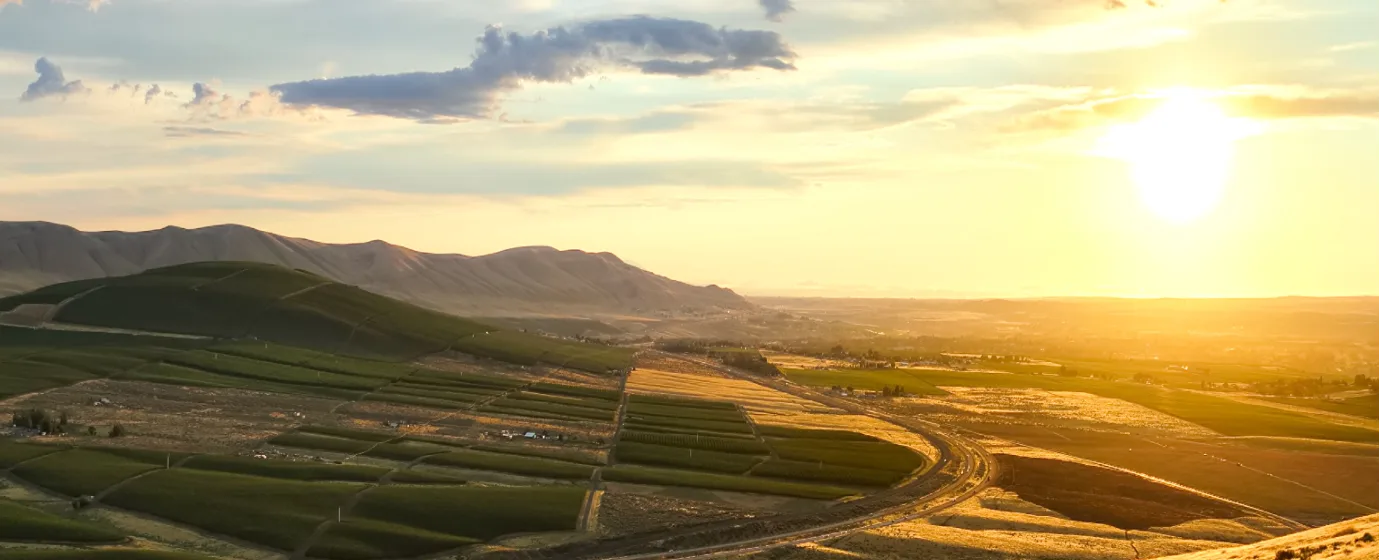
What Is Living in Pasco, Washington Like?
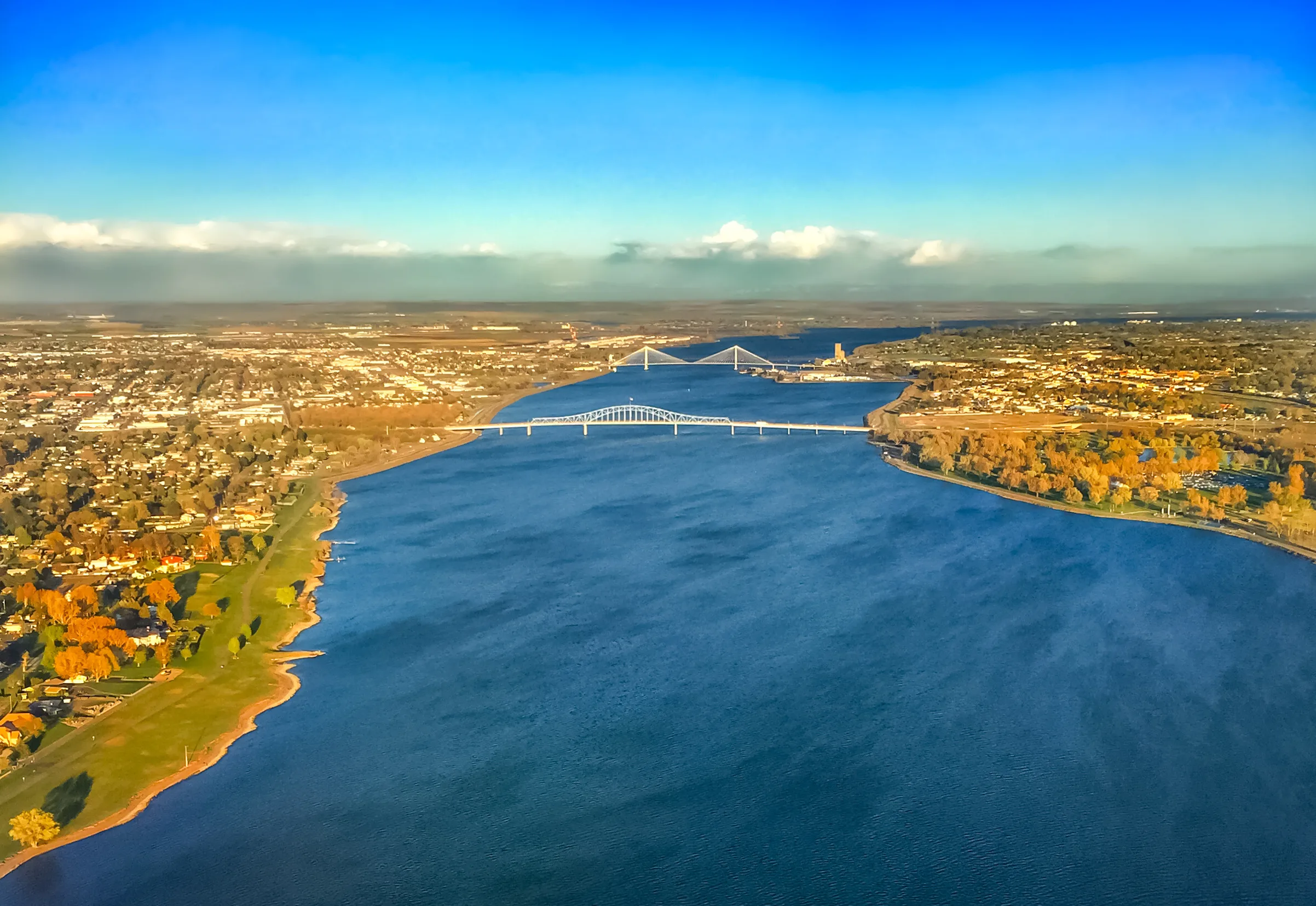
Maybe you've been priced out of the Seattle metro and someone mentioned the Tri-Cities. Maybe your employer is relocating you to the Hanford Site or one of the food-processing plants that anchor Franklin County's economy. Either way, Pasco surprises people — and the surprise is usually a good one. Pasco sits at the confluence of the Columbia, Snake, and Yakima rivers in south-central Washington, connected to I-182 and US-395, with Kennewick across the river to the south and Richland a short drive west. It's the youngest, fastest-growing, and most culturally distinct of the three Tri-Cities — and that distinction shapes everything from where you'll grab coffee to where your kids will go to school.
The economic backbone here is food processing and public-sector employment. Lamb Weston, a major food-manufacturing employer, and Reser's Fine Foods collectively employ thousands in and around the city, and the Pasco School District is one of the larger institutional employers in Franklin County. A major regional health system and Franklin County Government round out the public-sector base. What that means for residents: the local labor market is more blue-collar and industrial than Richland's research-and-engineering economy, wages are competitive for the region, and the median household income sits at $85,586. The median resident age is just 30.3 years — notably younger than most Washington cities — and Hispanic and Latino residents make up more than half the population, giving Pasco a cultural identity that's genuinely its own, especially along Lewis Street in East Pasco.
Housing here is, by Washington state standards, accessible. The Zillow Home Value Index stood at $421,685 in May 2026 — noticeably below comparable mid-sized cities on the west side of the Cascades — and the market has stabilized since its post-COVID peak, which is good news for buyers who don't want to chase a runaway market. Day-to-day life is car-dependent, the summers are long and scorching (expect weeks of 100°F-plus heat), and the trade-off for low housing costs is a city still building out its retail and dining infrastructure. The Broadmoor District near Road 100 is mid-development, and downtown is in genuine transition — new apartment projects are planned, and the Pasco Farmers Market draws steady crowds each spring.
Whether you're seriously considering a move or just starting your research, the sections below break down Pasco's neighborhoods, housing market, daily commute, major employers, and what life here actually feels like once you're living it.
Pasco at a Glance
Looking to buy in Pasco? Estimate your payment.
Enter your numbers to see an estimated monthly mortgage payment.
Estimate only. Excludes HOA fees and mortgage insurance. The interest rate above is a starting point, not a quoted rate — replace it with your own to see real numbers. Insurance is a flat placeholder, not a Pasco quote.
Why Are People Moving to Pasco?
The simplest answer: Pasco is one of the few places in Washington where a household earning a regional median income can still buy a house without a multi-year savings sprint. That draws people from western Washington, from California, and increasingly from out of state — but the reasons they stay go beyond the price tag.
The Employment Reality
Pasco's largest employers are industrial, and that's not a caveat — it's a feature for the right buyer. Lamb Weston's potato-processing operations and a major meat-processing facility are among the largest private employers in Franklin County, offering hourly and salaried roles with competitive pay. Reser's Fine Foods adds another major food-manufacturing anchor. For families where one partner works at one of these facilities and the other commutes to Richland or the Hanford Site, Pasco's central location in the Tri-Cities metro is a genuine advantage.
The Pasco School District employs a significant portion of the local workforce and is actively hiring — a fact worth noting if you're in education. Franklin County Government rounds out the public-sector picture. Together, these employers create a labor market that rewards trades, logistics, operations, and public administration alongside the engineering and science roles that dominate Richland's economy.
Who Moves Here — and Why They Stay
| Buyer Type | What Draws Them | Best Fit In Pasco |
|---|---|---|
| First-Time Buyers | Entry-level prices well below the state median | Road 68 Corridor, East Pasco |
| Families | New construction, space, proximity to employers | West Pasco, Canyon Lakes, Broadmoor |
| Commuters | I-182 access to Richland and Kennewick; Hanford Site ~25 min | West Pasco, Road 68 Corridor |
| Value Seekers | Significantly lower prices than Richland or West Richland | East Pasco, Riverview |
| Renters Transitioning to Ownership | Rental costs below the regional average; starter homes available | Road 68 Corridor, West Pasco |
| Outdoor-Oriented Buyers | River access, Sacagawea Heritage Trail, Sacajawea State Park | Riverview, Canyon Lakes |
One thing longtime residents consistently mention: Pasco has a genuine sense of community momentum. The city is growing, visibly investing in infrastructure, and drawing younger households who want space and affordability without the isolation of a truly rural town.
The Honest Trade-offs
Growth comes with friction. Road 68 — the city's primary commercial spine — backs up badly during school pickup hours and at the end of workday shifts. The summer heat is not a soft-pedaled talking point: July and August routinely push above 100°F, and air conditioning is non-negotiable, not a luxury. And while the Broadmoor District is developing, Pasco still lacks the density of dining and retail options that Kennewick or Richland offer — something newcomers from larger metros notice within the first few weeks.
What Daily Life Feels Like in Pasco
Pasco is a city of early mornings. Shift work at the food-processing plants, long commutes to Hanford, school drop-offs — the roads move by 6 a.m. and the pace doesn't let up until evening. That rhythm shapes everything from when the coffee shops fill up to when the Farmers Market lines are shortest.
East Pasco vs. West Pasco: Two Different Cities
The divide between East Pasco and the newer west side is the single most important thing to understand before you move here. East Pasco — anchored by Lewis Street — is the cultural and commercial heart of Pasco's Latino community. Carnicerias, taquerias, and family-owned restaurants line the corridor; the neighborhood feels lived-in, dense, and walkable by Pasco's car-dependent standards. West Pasco, by contrast, is newer construction, wider streets, and a suburban feel that could be transplanted to any fast-growing western city.
Neither is objectively better, but they suit different buyers entirely. Buyers who want community walkability and lower entry prices often prefer East Pasco. Families prioritizing new construction and quieter streets trend toward the west side and the Road 68 Corridor.
Where Locals Actually Gather
On Saturday mornings in spring and summer, the Pasco Farmers Market in historic Downtown Pasco is the closest the city gets to a central gathering point. It opened its 2026 season on May 9 and draws a reliable mix of longtime residents and newer arrivals. Cafe con Arte on W Columbia St doubles as a gallery and coffee shop — one of the few spots in downtown where you can linger over an espresso and feel like the neighborhood is becoming something.
For weekend food, Angels Family Restaurant on Burden Boulevard near the HAPO Center draws local families for sit-down meals. The Lewis Street corridor in East Pasco is where residents who know the city eat — the kind of street where the best options don't always have English-language signage out front, and that's not an accident.
The Seasonal Surprise Nobody Mentions
Newcomers from the Pacific Northwest's west side consistently underestimate the wind. The Columbia Basin is a wind corridor — spring afternoons can kick up dust storms that reduce visibility and coat everything in a fine layer of silt. It's not a once-a-season curiosity; it's a recurring reality from March through June. If you're buying a home with a large yard, budget time for cleanup after windy weeks.
The flip side: fall in the Tri-Cities is genuinely beautiful. Temperatures drop to the 60s and 70s, the rivers are calm, the Sacagawea Heritage Trail is uncrowded, and the harvest season at nearby wineries (less than an hour into the Columbia Valley wine country) is a regional ritual that newcomers quickly adopt as their own.
The Pasco Housing Market Right Now
Pasco's housing market has settled into a calmer rhythm after the volatility of 2021–2022. The Zillow Home Value Index was $421,685 in May 2026, essentially flat — down just 0.3% over the prior year. That stability is a feature for buyers who watched Tri-Cities prices spike to a post-COVID peak of around $490,000 in early 2022 and then pull back.
Redfin's March 2026 median sale price of $418,000 tells a similar story, with homes spending an average of 78 days on market — up from 64 days the prior year. That longer market time means buyers have more room to negotiate than they did two years ago, and multiple-offer situations, while not gone, are less automatic on mid-priced listings. Some price points and neighborhoods move faster; others sit.
The Rental Side
For renters, average monthly rent sat at $1,508 as of January 2026, with one-bedrooms averaging $1,346 and two-bedrooms averaging $1,669. That's relatively accessible compared to larger Washington metros, and it's part of why Pasco attracts renters who are building toward ownership rather than renting indefinitely. For a full breakdown of housing and living costs, see the Pasco cost-of-living page.
What's Being Built
Construction activity slowed in 2025 relative to 2024's pace, with permit values through mid-year running at roughly half of the prior year's $387 million total — a reflection of labor shortages, supply chain gaps, and tariff-driven cost increases. That slowdown matters for buyers hoping that new inventory would ease prices: it hasn't, and it won't in the short term.
The Broadmoor District near Road 100 is the city's biggest development story, leveraging Tax Increment Funding under the Broadmoor Master Plan to attract retail and residential projects simultaneously. Downtown is also seeing planned investment: the Rio Vida Apartments project would add 82 units near the intersection of Marie Street and Third and Fourth avenues, adding needed density to the urban core. The effective property tax rate in Pasco is approximately 0.71% — one of the lower rates in the state for a city of this size.
Pasco Neighborhoods
Pasco has several distinct areas — each with its own character and appeal. Here’s a breakdown to help you narrow down where to focus your home search.
🏡 West Pasco
West Pasco is where most of the city's newer single-family construction has landed — wider streets, larger lots, and a suburban feel that suits families with school-age children looking for space. It's the most car-dependent part of the city, but I-182 access makes westward commutes manageable.
🏠 Canyon Lakes
Canyon Lakes is one of Pasco's more established west-side neighborhoods, known for its golf course setting and slightly larger homes on winding streets. It draws buyers who want a quieter, more finished neighborhood feel without moving all the way to Richland.
🌳 Broadmoor
Broadmoor is Pasco's development story in real time — the district near Road 100 is actively adding retail, housing, and infrastructure under the city's master plan, making it the right entry point for buyers who want to get in before prices reflect the finished product.
🏘 Road 68 Corridor
The Road 68 Corridor is the practical center of west-side Pasco daily life — grocery stores, restaurants, and services line the commercial stretch, with established subdivisions on either side. It's convenient but not quiet, and afternoon traffic near school zones is a real consideration.
🏔 East Pasco
East Pasco is the city's most culturally distinct neighborhood, anchored by the Lewis Street corridor with its carnicerias, taquerias, and Latino-owned businesses — it's where longtime residents eat and where the city's deepest sense of community lives. Entry prices are generally lower than the west side, attracting first-time buyers and renters transitioning to ownership.
🌆 Riverview
Riverview sits along the Columbia and Snake river corridors, giving residents the closest thing to a nature-adjacent address within Pasco city limits. It's a mixed neighborhood in character, suiting buyers who prioritize outdoor access and river proximity over proximity to the commercial corridor.
Pros & Cons of Living in Pasco
The Pros
- Relatively affordable housing compared to Seattle-area markets
- strong job base in food processing
- agriculture
- and nearby Hanford/energy sector
- sunny
- dry climate with over 190 sunny days a year
The Cons
- Property and overall crime rates run above national and state averages
- hot
- dry summers with highs near 90°F and limited tree cover
- school district test scores and graduation rate trail Washington state averages
Getting Around & Commuting in Pasco
A car is not optional in Pasco — it's the primary infrastructure of daily life. The city's layout rewards drivers: I-182 provides fast east-west access across the Tri-Cities, and US-395 connects north toward Kennewick. Most errands, school runs, and commutes are 10–25 minutes by car under normal conditions.
The Tri-Cities Commute Pattern
The most common commute from Pasco is westward — across the US-395 river crossing or via I-182 toward Richland and the Hanford Site corridor. That drive runs approximately 25 minutes in normal conditions, which for a federal research campus drawing thousands of workers daily is genuinely competitive. Kennewick, to the south across the Columbia River, is similarly close for retail, healthcare, and employment.
The US-395 crossing is the chokepoint everyone who commutes westbound learns to respect. During morning peak hours — roughly 7 to 8:15 a.m. — and afternoon return traffic, the crossing backs up. Locals heading to Richland often experiment with the I-182 bridge as an alternative, depending on where exactly they're going. It's a small inconvenience in the grand scheme, but it's the one piece of the commute puzzle that surprises people who drove the route on a Saturday afternoon before making an offer.
Road 68: The City's Commercial Artery
Road 68 is where you'll do most of your shopping, most of your fast-casual dining, and — if you're not careful — most of your afternoon sitting in traffic. It's the closest thing Pasco has to a traditional suburban commercial strip, and it runs through the heart of the west-side neighborhoods. School pickup hours at the Road 68 schools are a recurring bottleneck that west-side residents build their afternoon schedules around.
Transit and Walkability
Ben Franklin Transit (BFT) operates bus service across the Tri-Cities, including routes that connect Pasco to Kennewick and Richland. Service is functional for commuters near major corridors but thin in newer subdivisions. On-foot access is limited outside of downtown Pasco and the Lewis Street corridor — most of the city was designed around car ownership, and that hasn't changed meaningfully with new development.
| Destination | Typical Drive Time | Primary Route |
|---|---|---|
| Kennewick (downtown) | 10–15 min | US-395 south |
| Richland (downtown) | 15–20 min | I-182 west |
| Hanford Site (main gate) | ~25 min | I-182 west to Stevens Drive |
| Tri-Cities Airport (PSC) | 10–15 min | US-395 south |
| Yakima | ~1 hr 15 min | US-97 north |
| Spokane | ~2 hrs | I-90 east |
Tri-Cities Airport in Kennewick serves daily nonstop flights to Seattle, Portland, Los Angeles, Denver, Las Vegas, Phoenix, and San Francisco — enough connectivity that most residents don't need to drive to SeaTac for routine travel.
Schools in Pasco
Families relocating to Pasco have public, private, and higher-education options nearby. Here’s a quick overview.
🎓 School District
Pasco School District serves K–12 students across Pasco and the surrounding area. Rated C+ (source: Niche.com).
🏆 Graduation Rate
The 4-year high-school graduation rate here is approximately 80.1%.
📚 Higher Education
Washington’s public universities — the University of Washington, Washington State University, and Western Washington University — offer four-year degrees statewide, with a network of 34 community and technical colleges (SBCTC) providing two-year and workforce programs.
🌐 Online Learning
University of Washington Continuum College and Washington State University Online offer fully accredited online degrees for remote learners across the state.
Safety in Pasco
A quick look at how Pasco compares on the numbers that matter most when weighing a neighborhood or a move.
🛡 Violent Crime
Approximately 3 per 1,000 residents.
🔒 Property Crime
Approximately 22 per 1,000 residents.
Compared to the FBI’s most recent national data (2024), Pasco’s violent crime is below the national average (about 3.6 per 1,000), and property crime is above the national average (about 17.6 per 1,000).
Against Washington as a whole, Pasco’s violent crime is about the same as the state average, and property crime is somewhat below the state average (Bureau of Justice Statistics, Crime Known to Law Enforcement, 2024 (tables 2 and 3)).
Crime rates can vary a lot within a single city, so the citywide numbers above are only a starting point. Some neighborhoods in Pasco run well below these averages, while others run higher — the kind of block-by-block detail that matters most when you’re actually choosing where to live. The full guide below breaks it down neighborhood by neighborhood.
Working in Pasco
Pasco’s largest employers span several industries — here are some of the anchors of the local job market.
🛒 Lamb Weston
Food processing
💼 Tyson Fresh Meats
Meat processing
🛒 Reser's Fine Foods
Food manufacturing
🎓 Pasco School District
Education
🏛 Franklin County Government
Public sector
Parks & Recreation in Pasco
Some of the outdoor spaces that shape everyday life in Pasco.
🌱 Sacagawea Heritage Trail
🌱 Sacajawea State Park
Pasco residents don’t have to go far for green space — spots like Sacagawea Heritage Trail and Sacajawea State Park are part of everyday life here, whether that’s a morning walk, a weekend hike, or just somewhere to unwind outside. The full guide below covers more of what Pasco has to offer for parks and outdoor recreation.
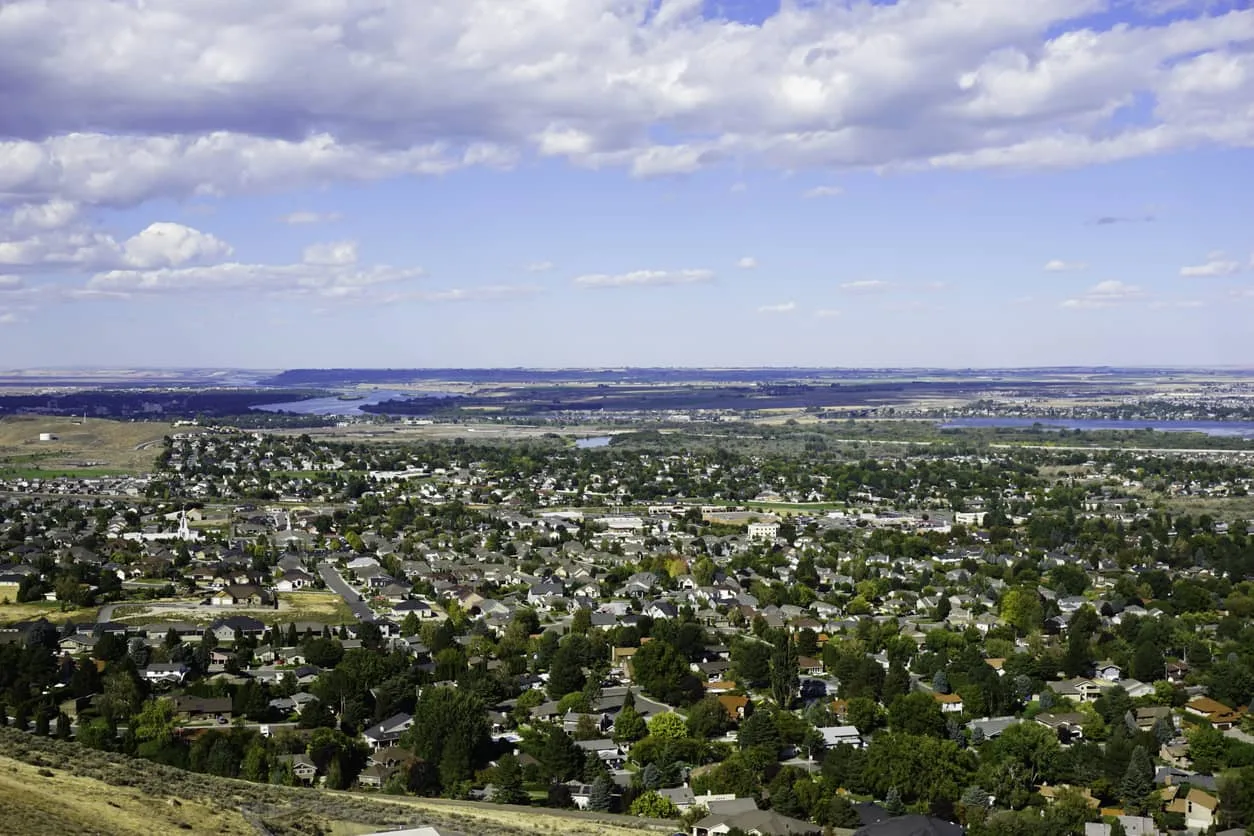
Retiring in Pasco
Pasco draws retirees for its balance of amenities, outdoor access, and cost. Here’s what to weigh.
🌤 Climate
Pasco gets roughly 200 sunny days per year, with mild springs and crisp, dry falls that retirees who've spent decades in rainy climates often find transformative. Summers are hot — expect sustained weeks above 100°F in July and August — and winters are mild by Washington standards, with occasional light snow but rarely the prolonged cold snaps that affect eastern Idaho or Montana.
🍴 Lifestyle
The Sacagawea Heritage Trail gives retirees 23 miles of paved riverside path for walking, cycling, and birdwatching along the Columbia. The Pasco Farmers Market runs through the summer in historic downtown, and the Columbia Valley wine country is under an hour away — a weekend ritual many Pasco retirees adopt quickly. The HAPO Center brings concerts and cultural events to the city year-round.
🏚 55+ Communities
The Tri-Cities area has an established and growing active-adult housing market, with several age-restricted and 55-plus communities accessible from Pasco in both Kennewick and Richland. Within Pasco itself, newer west-side developments have attracted retirees seeking single-story construction and low-maintenance lots. For a full look at retirement living in the area, see the Pasco retiring page.
✈ Getting Around
A car remains essential for most errands and appointments in Pasco, though the city's compact layout keeps most destinations within a 15-minute drive. Tri-Cities Airport in Kennewick — roughly 10 to 15 minutes from central Pasco — offers daily nonstops to Seattle, Portland, Denver, and several other major hubs, which retirees with family elsewhere consistently cite as a major advantage.
🏛 Washington Taxes for Retirees — What to Know
- No state income tax — Washington does not tax personal income, so Social Security, pensions, and 401(k)/IRA withdrawals are all untaxed at the state level. There is no state return to file and no retirement exclusion to claim — the rate is simply zero.
- Military and public pensions — Because there is no income tax, military retirement pay and public-employee pensions are untaxed at the state level along with everything else.
- Sales tax is the tradeoff — The state sales tax is 6.5%, and local add-ons bring the combined rate in Pasco to 8.9% (Washington State Department of Revenue, Q3 2026 local sales & use tax rate table, July 2026). Groceries and prescription drugs are exempt.
- Property taxes, with senior relief — The effective property tax rate is roughly 0.9%. Homeowners 61+ (or unable to work due to disability, or a qualifying disabled veteran) who own and occupy their home may qualify for a reduction. Income limits are set against each county’s median household income, so the threshold differs by county — check with your county assessor. A separate deferral program is available for those who don’t qualify for the exemption.
- Capital gains tax — but not on retirement income — Washington taxes 7% on long-term capital gains above a $278,000 standard deduction for 2025, rising to 9.9% on gains above $1,000,000. Retirement accounts and real estate sales are both exempt. It therefore does not reach ordinary retirement income or the sale of a home.
- Estate tax — the one to plan for — Unlike most no-income-tax states, Washington has its own estate tax. For deaths on or after July 1, 2026, the exemption is $3 million with graduated rates topping out at 20%. Retirement accounts count toward the taxable estate, so long-time homeowners with sizable balances can cross the line without expecting to.
- No inheritance tax — Washington has no inheritance tax, and no gift tax.
- WA Cares payroll premium — Working Washingtonians pay 0.58% of gross wages into the WA Cares Fund, the state long-term care program, with no income cap. It applies to W-2 wages, so retirees who have stopped working do not pay it — but anyone relocating while still employed will see it. The private-insurance opt-out closed at the end of 2022 and is not available to new applicants; the remaining exemptions are narrow (living outside Washington, military spouses, certain visa holders, and veterans with a 70%+ service-connected rating).
- The Oregon border effect — Oregon has no sales tax, so Washington residents near the river — Vancouver, Camas, Washougal, Longview — often cross over for large purchases. Washington use tax technically applies to goods brought back for use in-state, though it is rarely enforced on ordinary personal purchases.
Tax laws change frequently and individual situations vary. This is general information, not tax advice — always consult a qualified Washington tax professional or CPA for personalized retirement tax planning.
Weekends & Local Favorites in Pasco
Pasco punches above its size for weekend options, mostly because of the rivers. Three of them converge here, and that geography defines how residents spend their off hours from April through October.
On the Water
Sacajawea State Park at the confluence of the Snake and Columbia rivers is the anchor. On summer weekends, the boat launches fill early — by 8 a.m. on hot Saturdays, parking is competitive. The Sacagawea Heritage Trail runs roughly 23 miles along the Columbia's banks from Pasco into Kennewick, and it's where the serious cyclists, joggers, and dog walkers spend weekend mornings before the heat sets in. In July and August, those morning hours matter: by noon, the trail is an endurance test rather than a leisure activity.
Downtown and the Food Scene
Downtown Pasco has real momentum right now, even if it's still mid-arrival. The Pasco Farmers Market draws consistent crowds each spring and summer Saturday at its historic downtown location. Cafe con Arte on W Columbia St is a gallery café where you can get coffee and see rotating local art — the kind of neighborhood spot that signals a district is taking itself seriously. For sit-down dining, Angels Family Restaurant on Burden Boulevard near the HAPO Center has drawn local families since it opened in 2026.
East Pasco's Lewis Street corridor remains the city's most distinctive dining district. The taquerias, carnicerias, and Latin American restaurants here are the real thing — this is where residents who grew up in the city eat, not where they take out-of-town guests for a curated experience.
Sports and Events
The Tri-City Dust Devils play at Gesa Stadium on the Pasco waterfront — it's one of the more scenic minor league ballparks in the Pacific Northwest, and a summer evening game there with $5 tickets and a river view is a reliable local ritual. The HAPO Center hosts concerts, conventions, and regional sporting events throughout the year, giving the city an events calendar that keeps weekends varied.
Day Trips That Make Pasco's Location Click
The Columbia Valley wine country begins less than an hour from Pasco, and many residents treat weekend winery visits as a standard part of the fall calendar rather than a special occasion. The Yakima Valley — Washington's agricultural backbone — is reachable in just over an hour. For hiking and outdoor recreation at elevation, the Cascade Range to the west and ranges to the east are both under three hours, depending on conditions. For more on Pasco's parks, trails, and recreation options, the parks and recreation page has the full breakdown.
Top Things Locals Say About Pasco
The best intel about a city comes from the people who actually live there. Here’s what Pasco residents say when newcomers ask the questions everyone’s thinking.
“I did the drive on a Sunday afternoon and thought the commute to Richland would be easy. What I didn't account for was the US-395 crossing at 7:30 on a Tuesday morning — that's a completely different animal. Once I adjusted my schedule, it was fine, but I wish someone had told me to test it on a weekday first.”
— Recent Pasco home buyer
“What's the most surprising thing about living in Pasco?”
The cultural richness along Lewis Street in East Pasco catches a lot of newcomers off guard in the best way. People move here expecting a generic eastern Washington town and find a neighborhood with genuine depth — authentic food, strong community anchors, and a sense that this part of the city has been here long before the west-side subdivisions arrived.
“What do locals love most about Pasco?”
The rivers. Having three of them converge here means there's always somewhere to go on a weekend — whether that's a Dust Devils game at Gesa Stadium on the waterfront, a morning ride on the Sacagawea Heritage Trail, or launching a boat at Sacajawea State Park before the heat sets in. It's the kind of outdoor access that people from bigger cities pay a much higher premium for.
“What should newcomers to Pasco know?”
Budget for air conditioning before anything else — July and August are not mild, and a home without reliable cooling is a genuine problem here, not a minor inconvenience. Also plan your grocery and errand runs around Road 68: late afternoon on weekdays, especially around school pickup time, that corridor slows to a crawl. Morning errands or late-evening runs are the move.
“Can you live in Pasco without a car?”
Realistically, no — not comfortably. Ben Franklin Transit runs routes connecting Pasco to Kennewick and Richland, and service along major corridors is functional, but newer subdivisions on the west side have minimal transit access and the distances between daily destinations make car-free living genuinely difficult. Downtown Pasco and the Lewis Street corridor are the most walkable areas, but even there, a car is a practical necessity for most households.
Cities Near Pasco
Other communities near Pasco worth a look — each with its own character and price point.
| City | Distance | Best For | Vibe | Median Rent | Median Buy |
|---|---|---|---|---|---|
| Kennewick | 4 mi | Established families, retail access | Suburban, commercial, more walkable | $1,500 | $390,000 |
| Richland | 10 mi | STEM workers, top-rated schools | Planned, polished, science-town feel | $1,650 | $470,000 |
| West Richland | 15 mi | Quiet living, newer construction | Low-density, spacious, semi-rural | $1,600 | $480,000 |
More Helpful Guides for Pasco
Going deeper on Pasco? Our blog series covers everything from first-time buying to retiring here — explore the guides below.
Local Expert Takeaway: Pasco rewards buyers who do their homework before crossing into Kennewick and assuming the whole Tri-Cities market is the same. The Lewis Street corridor in East Pasco and the Road 68 commercial strip in the west are genuinely different cities within one city limits — and the right choice between them depends on your commute direction, your school priorities, and whether you want new construction or established character. The Broadmoor District near Road 100 is the one to watch for buyers who want in early on Pasco's next chapter.
Quick Takeaways & FAQs
✅ Pasco's Zillow Home Value Index of $421,685 (May 2026) is noticeably below comparable Washington cities, making ownership realistic for households earning regional median incomes.
⚠️ Road 68 and the US-395 river crossing back up predictably during morning and afternoon rush — west-side residents should test their actual commute route before committing to a neighborhood.
📍 Cafe con Arte on W Columbia St and the Pasco Farmers Market (opens each May in historic downtown) are the two best early signals of downtown Pasco's ongoing revitalization.
Is Pasco, WA a good place to live?
How far is Pasco from the Hanford Site?
What is the median home price in Pasco, WA?
What is Pasco's school district like?
What are Pasco's biggest employers?
Helpful Links for Moving to Pasco
Moving to Washington?
Tell us what you need help with and we'll connect you with local resources.
