
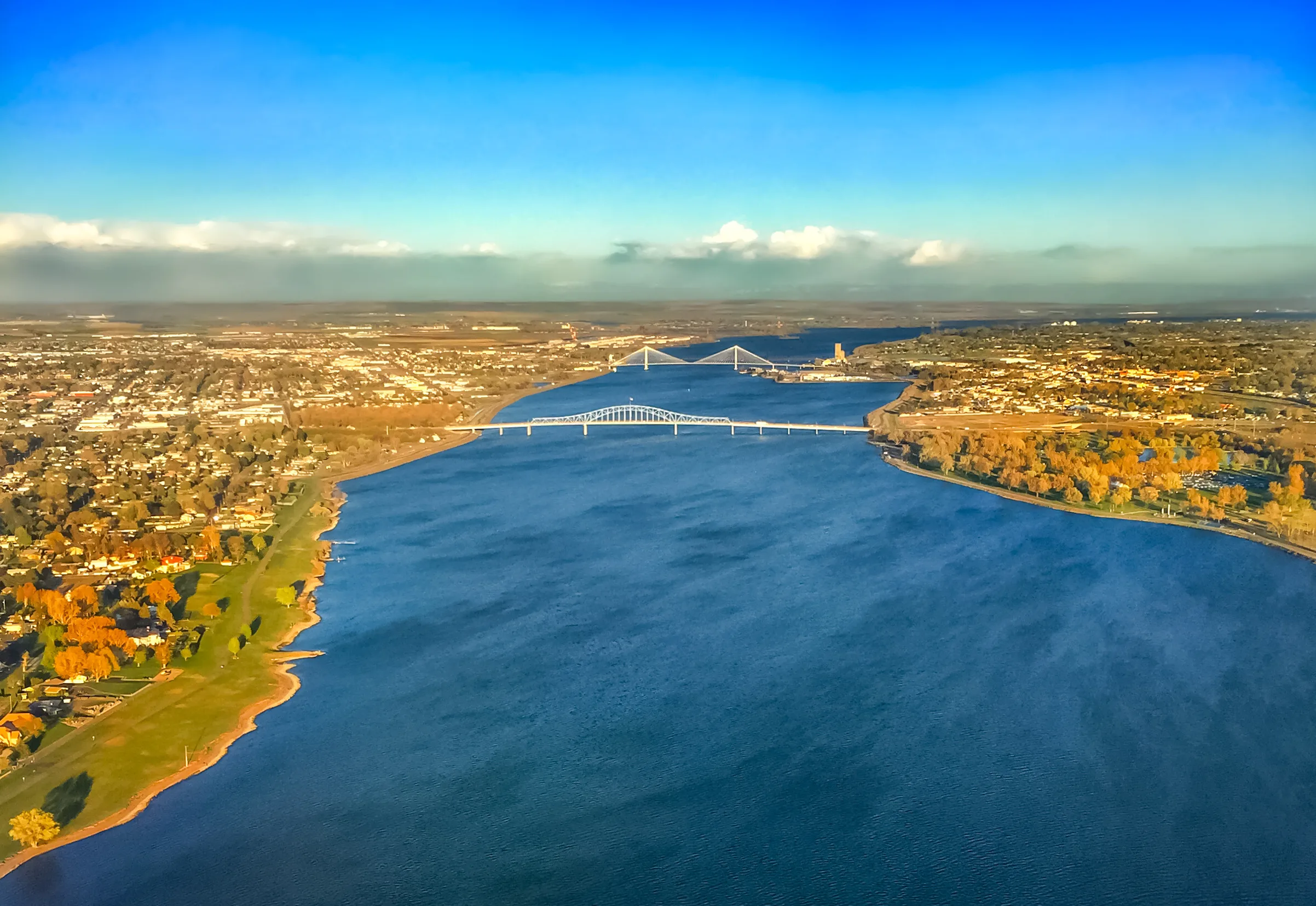
Most Californians who land in Pasco for the first time are struck by the same thing: the Columbia River is enormous, the sky is wide open, and the price tags on homes look like a different country. That's not an accident — Pasco sits at the confluence of the Columbia, Snake, and Yakima rivers in south-central Washington, anchored by I-182 and US-395, and the regional economy runs on food processing, agriculture, federal science, and a school district that employs thousands. The Tri-Cities metro (Pasco, Kennewick, Richland) functions as one interconnected labor market, which means your housing dollar goes further without necessarily sacrificing your commute or career options.
The economic engine here is worth understanding before you move. Lamb Weston, Tyson Fresh Meats, and Reser's Fine Foods are major employers on the production side. The Pasco School District and Franklin County Government anchor the public sector. And roughly 25 minutes west in Richland, the U.S. Department of Energy's Hanford Site draws a steady pipeline of science and engineering workers — many of whom choose Pasco for its lower home prices and newer construction. The city's population of 81,724 is growing fast, and its cultural diversity is reflected in the food scene along 4th Avenue, where Ciao Trattoria on N 4th Ave sits alongside taqueries and international grocery options that would feel familiar to anyone from the Central Valley or the Inland Empire.
The cost-of-living gap between California and Washington is real and measurable. The overall cost-of-living index sits at 110.7 for Washington versus 142.2 for California (both against a U.S. baseline of 100), a gap of roughly 22 percentage points. Pasco's typical home value is $421,685 (Zillow Home Value Index, May 2026) — well below California's statewide median of approximately $785,000. See the full local cost breakdown on the Pasco cost of living page. Health insurance premiums run noticeably below what most Californians pay, though you will drive farther for specialist care than you would from most Bay Area or Southern California zip codes.
Whether you're being relocated for a Hanford contract, escaping Bay Area prices, or retiring somewhere your pension actually goes the distance, the sections below break down Pasco's California-to-Washington tax comparison, home price reality, what daily life shifts to expect, and what most Californians get wrong before the moving truck arrives.

The Tax Difference: What You Stop Paying the Day You Cross the State Line
Washington has no individual state income tax. Your wages, salary, and self-employment income are not taxed at the state level — full stop. That's the single biggest financial change for most California transplants, and it lands immediately.
California's top marginal state income tax rate is 13.3%, the highest of any U.S. state. Even at middle incomes — say, a household earning $120,000 — California's blended rate can run 6–9% on the state return alone. In Washington, that line on your tax return simply doesn't exist.
What the Numbers Actually Mean
A dual-income household earning $150,000 in California might owe $10,000–$13,000 in state income tax annually, depending on deductions and filing status. In Pasco, that bill goes to zero. The take-home pay difference is immediate and doesn't require any restructuring of your budget to realize.
Retirement income gets the same treatment. Washington does not tax Social Security benefits, pension distributions, 401(k) withdrawals, or IRA income at the state level. For Californians retiring on a state pension or drawing down tax-deferred accounts, the contrast with California — which taxes most of those income streams — is significant.
The One Footnote Worth Knowing
Washington's legislature passed a 9.9% income tax on individuals earning over $1 million annually, effective January 1, 2028. If you're not in that bracket, this change is irrelevant to your relocation math.
Sales Tax: Closer Than You'd Expect
| Tax Category | California | Pasco, WA | Practical Note |
|---|---|---|---|
| State income tax | 1%–13.3% | 0% | Largest single difference for most earners |
| Combined sales tax | 7.25%–10.25% (varies by city) | 8.9% | Groceries and Rx drugs exempt in WA |
| Property tax (effective rate) | ~0.76% | 0.71% | Pasco runs below both CA and WA state averages |
| Retirement income tax | Taxed as ordinary income | $0 | Social Security, pensions, 401(k) all untaxed |
| Capital gains (state) | Up to 13.3% | 7% on gains over $270K (investments only) | Home sales are excluded from WA capital gains tax |
| Estate / inheritance tax | None | WA estate tax applies above ~$2.2M | Relevant for high-net-worth transfers only |
Pasco's combined sales tax rate of 8.9% (6.5% state plus 2.4% local) sits in a range broadly comparable to major California metro areas, so don't expect a dramatic change at the register on non-exempt purchases. The meaningful exemption is groceries — most food and prescription medications are exempt from Washington's sales tax, which softens the impact on everyday spending considerably.
Home Prices: What $421,685 Actually Buys Here
Pasco's typical home value is $421,685 (Zillow Home Value Index, May 2026). California's statewide median runs approximately $785,000. That gap is not a rounding error — it's the reason many Californians can move here and buy outright what they couldn't afford in Sacramento, let alone San Jose.
What the California Equity Unlocks
A buyer arriving with equity from a California sale — even a modest one — often finds that the proceeds cover a substantial down payment or eliminate the need to stretch on financing entirely. Someone who sold a median-priced California home and cleared $300,000–$400,000 after paying off their mortgage is frequently looking at full-price purchase territory in Pasco, or at minimum a position where their monthly payment drops dramatically compared to what they carried on a California mortgage.
That dynamic is real, but it comes with a practical wrinkle: Pasco's inventory moves. When California equity buyers enter the market with strong down payments, they can compete aggressively against first-time buyers who are stretching to get in. If you're buying without a firm timeline, you'll have more negotiating room. If you're on a relocation deadline, be ready to move within days of a listing going live.
Property Tax: A Genuine Advantage
Pasco's effective property tax rate is 0.71%, which actually runs slightly below California's statewide effective rate of approximately 0.76%. This surprises most California buyers, who assume Washington taxes property more aggressively to compensate for the absence of income tax. In Franklin County, that assumption is wrong — Pasco's rate is below both the California benchmark and Washington's own state average of around 0.87%.
Neighborhood Character and Price Context
Pasco's areas vary significantly in age, density, and feel — from the newer master-planned development along the Road 68 Corridor to the older, more urban grid of East Pasco and the riverfront character of Riverview. For a full breakdown of what each part of the city offers buyers, see the Pasco neighborhoods guide. The key takeaway for California buyers: you will find meaningful differences in lot size, construction year, and community feel depending on which part of the city you target.
What You're Giving Up on the Price Side
Pasco is not an appreciation machine in the same way coastal California was over the past two decades. Buyers who move here expecting 8–10% annual appreciation are working from the wrong baseline. The market has grown, but it tracks a regional mid-size metro pattern, not a supply-constrained coastal one. If your plan involves buying as an investment vehicle and selling into a hot market in five years, temper those expectations before you sign.

Daily Life Shifts: What Changes After the Move Truck Leaves
The tax math is the easy part to explain. What California transplants consistently underestimate is how different the physical and social texture of daily life feels after six months in Pasco.
The Climate Is Not What Anyone Expects
Pasco sits in the high desert of south-central Washington — not the rainy Pacific Northwest of television and stereotype. Average annual rainfall is under eight inches. Summers routinely hit 100°F for stretches in July and August, and a dry, dusty wind called the Palouse blow-through can hit without warning. Californians from inland areas (Sacramento, Fresno, Bakersfield) adapt quickly. Those arriving from coastal San Francisco or San Diego find the summer heat genuinely shocking and the brown landscape hard to reconcile with their mental picture of Washington state.
The winters are cold but typically dry, with occasional ice and light snow rather than the heavy snowfall people associate with the northern Rockies. Plan for heating costs that are real but manageable, and a spring that arrives slowly.
The Social Fabric Is Different Here
Pasco is one of the most culturally diverse cities in Washington — roughly two-thirds Latino, with a food and community culture that reflects that. Café con Arte near the Franklin County Courthouse in downtown Pasco is the kind of place where you'll find community art installations alongside espresso and Spanish-language conversation at the next table. For Californians arriving from diverse metro areas, this aspect of Pasco often feels more familiar than expected.
What feels less familiar: the scale. Pasco has 81,724 people and essentially no high-rise density. The restaurant and entertainment options are solid for a city this size but thin by Bay Area or greater Los Angeles standards. If you relied on having 200 dining choices within a mile, you'll adjust. The Tri-Cities as a whole offer more variety than Pasco alone — Kennewick and Richland are genuinely close — but weekend trips to Portland (about 3.5 hours) or Seattle (about 3 hours) become a natural part of life for people craving larger-city amenities.
Outdoor Access Is the Trade You Make Instead
The Sacagawea Heritage Trail stretches along the Columbia River and connects Pasco to Kennewick and Richland by bike or on foot — a 23-mile multi-use path that becomes a daily ritual for many residents. Sacajawea State Park at the confluence of the Columbia and Snake rivers is a five-minute drive from central Pasco. The wine country accessible from the Tri-Cities — vineyard regions to the west and southwest — is close enough for a day trip. What Pasco offers in outdoor access, it genuinely delivers — it's just a different category than urban amenity.
One Thing People Get Wrong in Month Three
The driving. Pasco is built for cars, full stop. There is no meaningful transit option for most residents, and the distances between things — even within the Tri-Cities — assume you have a vehicle and are comfortable using it. Californians who lived in walkable neighborhoods in Oakland, San Francisco, or Pasadena sometimes find the car-dependence more jarring than the heat. If walkable streets matter to you, this is an honest trade-off to price in before you buy.
Looking to buy in Pasco? Estimate your payment.
Enter your numbers to see an estimated monthly mortgage payment.
Estimate only. Excludes HOA fees and mortgage insurance. The interest rate above is a starting point, not a quoted rate — replace it with your own to see real numbers. Insurance is a flat placeholder, not a Pasco quote.
The Full Cost-of-Living Comparison: California vs. Pasco Side by Side
The 22-point gap in overall cost-of-living index (Washington at 110.7, California at 142.2, both against a U.S. baseline of 100) shows up in more than just housing and taxes. Here's where Californians typically notice the difference — and where it's smaller than expected.
| Cost Category | California (General) | Pasco, WA | Verdict for Transplants |
|---|---|---|---|
| State income tax | High — up to 13.3% | None for wage earners | Significant annual saving |
| Home prices | ~$785,000 statewide median | $421,685 typical (ZHVI, May 2026) | Meaningfully lower in Pasco |
| Property tax rate | ~0.76% effective | 0.71% effective | Slight Pasco advantage |
| Sales tax on groceries | Generally exempt (state level) | Exempt | Similar |
| Sales tax on other goods | 7.25%–10.25% depending on city | 8.9% combined | Broadly comparable |
| Gasoline | Among highest in U.S. | Noticeably lower | Pasco wins; WA gas tax lower than CA |
| Health insurance premiums | Among highest in U.S. | Noticeably lower | Pasco advantage; fewer local specialists |
| Utilities (electricity/gas) | High, especially coastal CA | Moderate; summer cooling costs real | Pasco generally lower, varies by use |
| Childcare / private school | Very high in most metros | Lower, but options more limited | Pasco lower cost, narrower selection |
* ZHVI = Zillow Home Value Index.
Where the Savings Actually Land
For a household earning $120,000 annually, the combined effect of eliminating state income tax and buying at a lower home price point typically represents $15,000–$25,000 in annual savings over what the same lifestyle cost in a California metro — before accounting for any investment of California equity into the purchase. That's a meaningful number, not a rounding error, and it compounds year over year.
Groceries, everyday dining, and services run noticeably below California metro pricing — but the gap is smaller than the housing headline suggests. Expect to pay less, but don't expect to feel like everything is cheap. Pasco is an affordable mid-size market, not a low-cost rural one.
What Doesn't Automatically Get Cheaper
Internet and mobile service pricing in the Tri-Cities is comparable to most U.S. markets. Car insurance rates in Washington can actually run close to California's, depending on your record and coverage level — so don't assume that line item drops significantly. And if you have children in activities that require travel to regional competitions, you'll discover that Pasco's geography means driving to Spokane, the Yakima Valley, or the Portland metro for tournaments, meets, and events is just part of the calendar.
What Californians Get Wrong Before the Move (and What to Do Instead)
Relocating from California to Pasco is genuinely one of the stronger financial moves available to a middle-income or upper-middle-income household right now. But the people who struggle in year one almost always made the same three mistakes.
Mistake 1: Buying the First House That Feels Affordable
When a $400,000 home looks like a steal after years of staring at California prices, it's easy to move fast and skip due diligence steps you would have taken seriously at home. Pasco has a significant range in quality between newer construction in West Pasco and Canyon Lakes versus older housing stock in East Pasco. Skipping an inspection, overbidding out of California-market reflex, or not understanding HOA structures in master-planned communities are consistent first-year regrets. Slow down. The market rewards preparation. See the buying process guide for what the purchase steps look like in Washington state specifically.
Mistake 2: Assuming the Schools Are Equivalent
Pasco School District holds a C+ rating, according to Niche — a real limitation that families with school-age children need to factor honestly into their decision. Some California transplants arrive expecting a school system comparable to higher-performing suburban districts they left behind and find the adjustment harder than anticipated. The district has strong programs and dedicated teachers, but resources and outcomes vary considerably by campus. Read the Pasco schools breakdown before you choose a neighborhood specifically because of school boundaries.
Mistake 3: Underestimating the Isolation Gradient
The Tri-Cities is not isolated by any objective measure — it's a metro area of roughly 340,000 people with solid regional amenities. But it is genuinely far from a major city. Portland is roughly 3.5 hours west. Seattle is about 3 hours north. Spokane, at about 1.5 hours, is the most accessible larger city. Californians who relocate for the financial advantages and then find themselves missing the density, cultural programming, or professional networks of a large metro sometimes move back within two to three years. That's not a failure — it's a mismatch that honest self-assessment before the move can prevent.
What the People Who Stay Love About It
The residents who land in Pasco and stay are usually the ones who actively wanted out of the pace and cost of California life, not just the price tag of their mortgage. They value the ability to buy a larger home, maintain a reasonable commute to Richland or Kennewick, walk the Sacagawea Heritage Trail on a weekday morning, and actually afford their life on one income if they need to. The financial math is real. So is the trade-off in scale and density. The people who thrive here made peace with that trade before they arrived.
Local Expert Takeaway: The case for moving from California to Pasco is mostly about what stops: the state income tax line on your return, the mortgage payment that consumed 40% of your take-home, the sensation of being one car repair from financial stress. Pasco's typical home runs $421,685 against California's statewide median near $785,000, and Washington takes nothing from your paycheck in state income tax. The catch is honest: Pasco is a mid-size high-desert city, car-dependent, far from any major metro, and with a school district that requires research before you pick a neighborhood. Walk the Sacagawea Heritage Trail, grab a coffee at Cafe con Arte near the Franklin County Courthouse, eat dinner at Ciao Trattoria on N 4th Ave, and spend a full weekend in the Tri-Cities before you decide — the financial math looks great on paper, but the lifestyle is something you need to feel before you sign.
Quick Takeaways & FAQs
✅ Washington has no state income tax on wages, meaning a California household earning $120,000 keeps thousands more annually the moment they establish residency in Pasco.
⚠️ Pasco is car-dependent with limited transit, and the nearest large city (Spokane) is about 1.5 hours away — Californians from walkable urban neighborhoods find this adjustment harder than the climate.
📍 Pasco's effective property tax rate of 0.71% runs below California's statewide effective rate of approximately 0.76%, defying the common assumption that Washington taxes property heavily to compensate for no income tax.
Do I really pay zero state income tax if I move from California to Pasco, WA?
How does Pasco's sales tax compare to what I was paying in California?
Will my California home equity go a long way in Pasco's housing market?
What surprises California transplants about Pasco after they've been there six months?
Is moving from California to Pasco a good financial decision for retirees specifically?
Moving to Washington?
Tell us what you need help with and we'll connect you with local resources.
