What Is Living in Walla Walla, Washington Like?
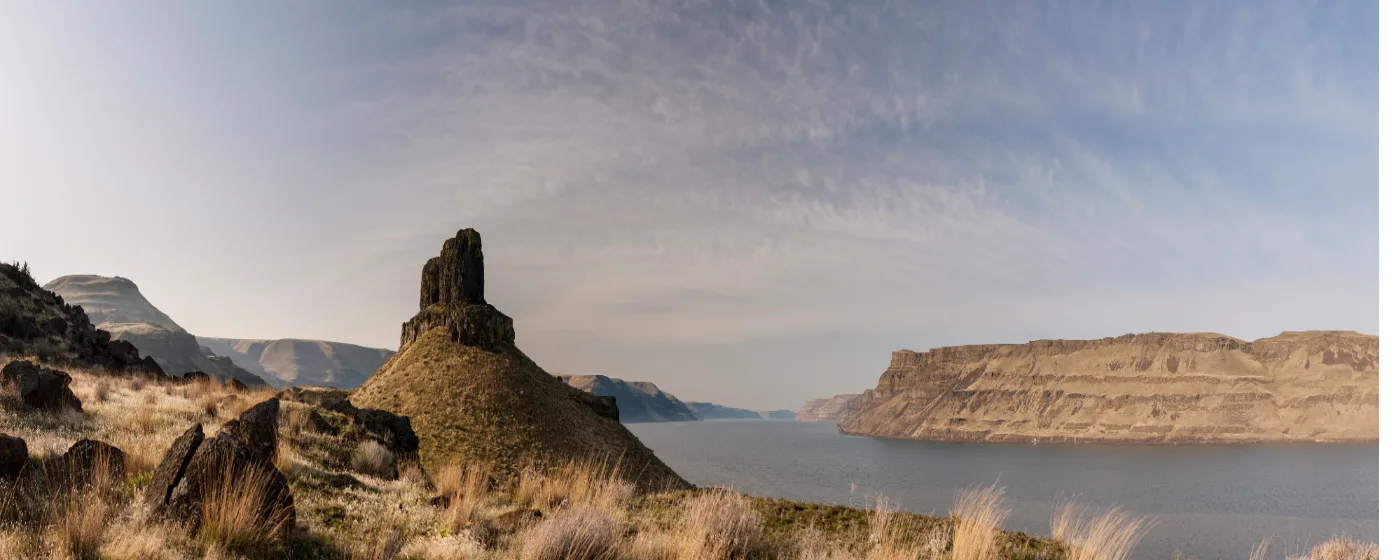
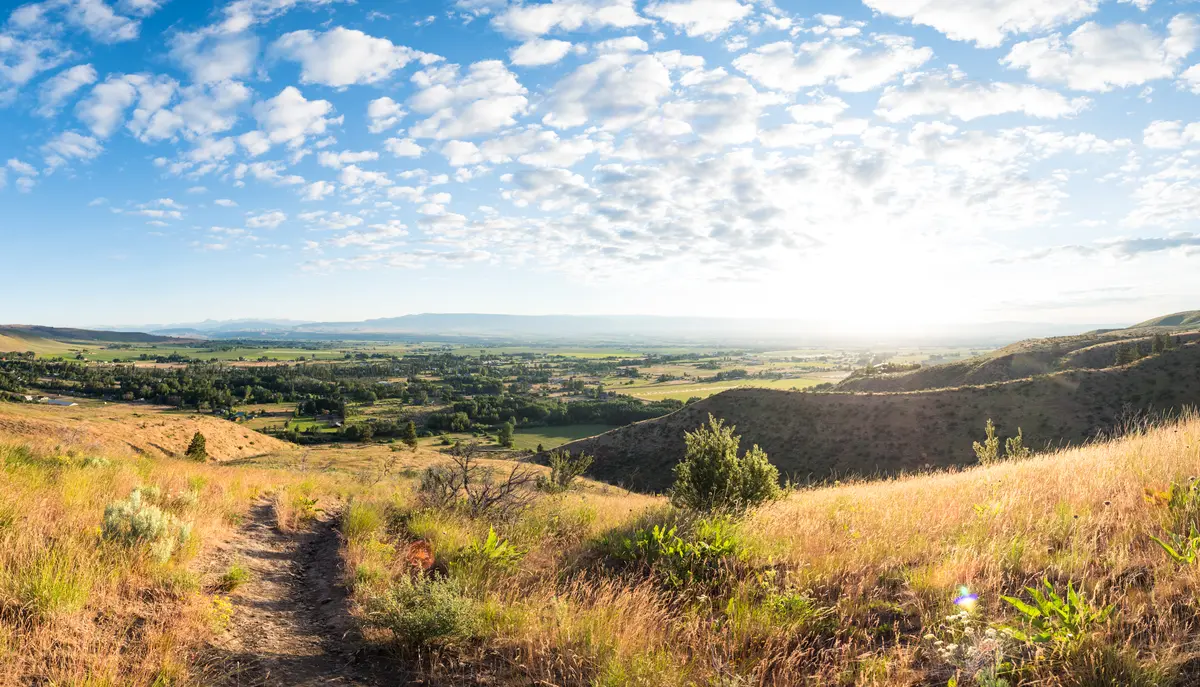
Everyone who moves here from west of the Cascades says the same thing in month three: they didn't expect to love it this much. Walla Walla sits in the far southeast corner of Washington state, roughly 45 miles north of the Oregon border, surrounded by wheat fields and the Blue Mountains. US Route 12 is your main artery in and out. What surprises people isn't the wine — they knew about the wine — it's how genuinely livable the city is: tree-lined streets in an otherwise arid landscape, a walkable historic downtown, and a sense of community you can actually feel.
The economic backbone here runs through three sectors that reinforce each other in unexpected ways. A major regional health system anchors healthcare employment. Whitman College and Walla Walla University together bring thousands of students and faculty into a city of just under 34,000 people, giving the downtown an energy that most rural trade centers lack. The wine industry — more than 130 wineries across the Walla Walla Valley American Viticultural Area — supports nearly 3,500 regional jobs and has transformed the downtown into one of the most restaurant- and tasting-room-dense small-city cores in the Pacific Northwest. Even Walla Walla Community College runs its own accredited winemaking and viticulture program with an on-site winery, which tells you how deeply that industry has woven itself into the workforce here. Walla Walla Public Schools holds a B+ rating, according to Niche, drawing families who want a genuine small-city life without sacrificing educational quality.
Housing sits well below what buyers are fleeing in Seattle or Portland, with a Redfin county median sale price of $486,000 (3-month average, April 2026) — still meaningful for a market this size, but a different conversation than the western Washington coast. The Zillow Home Value Index for the city of Walla Walla stood at $415,910 as of June 2026, up 3.2% year-over-year, reflecting steady but not frenzied appreciation. Day-to-day life here means farmers markets at 4th and Main from May through October, summer evenings at Borleske Stadium watching the Walla Walla Sweets play collegiate wood-bat baseball, and a downtown that — thanks to the wine-tourism boom — punches well above its weight for restaurants, boutiques, and independent cafés. Pioneer Park's rose garden is a genuine local gathering point, not a tourist afterthought.
Whether you're weighing a relocation offer, getting priced out of a larger market, or simply ready for a different pace, the sections below break down Walla Walla's neighborhoods, housing market, commute realities, major employers, and what daily life here is actually like.
Walla Walla at a Glance
Looking to buy in Walla Walla? Estimate your payment.
Enter your numbers to see an estimated monthly mortgage payment.
Estimate only. Excludes HOA fees and mortgage insurance. The interest rate above is a starting point, not a quoted rate — replace it with your own to see real numbers. Insurance is a flat placeholder, not a Walla Walla quote.
Why Are People Moving to Walla Walla?
The short version: people move here because it's a real city that still feels like a small town, and the price of admission is still within reach — for now.
The Economic Anchors
Walla Walla's employer base is more diversified than its wine reputation suggests. The city's largest employers span healthcare, higher education, and public sector — a combination that creates relative economic stability even when commodity prices or tourism fluctuate.
| Employer | Sector | Role in the City |
|---|---|---|
| Providence St. Mary Medical Center | Healthcare | Largest single private employer; regional referral center for SE Washington |
| Whitman College | Higher Education | Nationally recognized liberal arts college; significant cultural and economic driver |
| Walla Walla University | Higher Education | Seventh-day Adventist university; major employer in neighboring College Place |
| Walla Walla Public Schools | Education (K–12) | District-wide employer; consistently among the stronger districts in the region |
| Walla Walla County | Public Sector | Government operations, courts, and public services |
| Wine industry / tourism | Hospitality & Agriculture | ~3,500 regional jobs; anchors the downtown economy |
Whitman College, in particular, shapes the city's cultural texture in ways that go beyond employment: it brings a steady stream of visiting academics, performers, and speakers, and its campus on Boyer Avenue functions as one of the city's most walkable public green spaces.
Who Actually Moves Here
Four distinct groups show up consistently among new arrivals. Healthcare professionals recruited by the regional medical center. Faculty and staff drawn to Whitman or Walla Walla University. Wine-industry workers — vineyard managers, winemakers, hospitality staff — who want to live where they work. And remote workers, often from Seattle or the Bay Area, who discovered that a stable internet connection makes the Blue Mountains a reasonable backdrop for a home office.
The median age of 37.4 years and a median household income of $66,748 reflect a mixed community: long-established agricultural families, college-town demographics, and a growing professional class that arrived on the coattails of wine tourism.
The Honest Trade-Off
What you give up is proximity to a major metro. Portland is roughly four hours west; Seattle is closer to five. If your career requires regular face-time in either city, that's a real cost to factor in — not a deal-breaker, but not something to discover after closing.
What Daily Life Feels Like in Walla Walla
The Downtown Reality
Two decades of wine-tourism investment have turned Walla Walla's downtown into something genuinely rare for a city this size. The core blocks around Main Street hold tasting rooms, farm-to-table restaurants, boutiques, and independent cafés — including Colville Street Patisserie on S Colville Street, a French bakery that anchors the kind of unhurried Saturday morning that longtime residents consider one of the city's best features.
The BrewFest each February turns the whole downtown into a venue: 30 breweries and cideries pour from 18 businesses across the district, using bookstores and boutiques as pour sites. It's a format that works because the downtown is actually walkable, not just theoretically so.
Farmers Markets and Sweet Onions
From May through October, the corner of 4th and Main hosts a Saturday and Sunday farmers market running 9 AM to 1 PM. Asparagus, cherries, strawberries, corn, and the city's most famous export — the Walla Walla Sweet Onion, Washington's official state vegetable — show up in season. The onion's low sulfur content gives it a sweetness that has made it a genuine regional identity marker; the annual Sweet Onion Festival every July draws visitors from across the Pacific Northwest.
The Seasonal Surprise
New residents from western Washington consistently underestimate the summer heat. Temperatures regularly reach the upper 80s and push into the 90s through July and August — warm by any measure, though lower humidity makes it more tolerable than the numbers suggest. The flip side is that the valley's climate produces some of the best stone fruit and wine grapes in the country, so the trade-off is legitimate. Winters are mild relative to the latitude, but occasional ice on residential side streets catches newcomers off guard.
Where Families Actually Gather
Pioneer Park and its rose garden is the consistent answer — a genuine community anchor that draws everyone from toddlers to retirees on weekend afternoons. Borleske Stadium on summer evenings, when the Walla Walla Sweets are in town for a home collegiate wood-bat game, functions as an informal neighborhood gathering that costs almost nothing and feels nothing like watching minor-league baseball in a larger city. The Whitman College campus is a third gathering point that's open to the community and provides a quiet, tree-shaded alternative to the more tourist-heavy downtown blocks.
What Surprises People After Six Months
The thing most newcomers don't expect is how much the wine-tourism calendar shapes the rhythm of the city. Spring release weekend in May draws visitors from across the region, turning parking downtown into a genuine challenge and hotel rates into something unrecognizable. Long-term residents simply plan around it — some leave town, others lean in. Either way, knowing the calendar before you move beats discovering it on your first May weekend as a homeowner.
The Walla Walla Housing Market Right Now
Walla Walla is not a bargain market anymore, but it is still an accessible one. The Redfin county median sale price stood at $486,000 (3-month average, April 2026) — a figure that reflects the full Walla Walla County, including rural parcels and the neighboring city of College Place. For the city of Walla Walla itself, the Zillow Home Value Index registered $415,910 as of June 2026, up 3.2% year-over-year. Both figures point to a market that has appreciated steadily without the volatility that defined larger Washington metros over the same period.
Market pace is measured, not frenzied. Homes averaged roughly 77 days on market as of February 2026, with a sale-to-list ratio of approximately 98% and about 3.5 months of supply — conditions that analysts broadly characterize as balanced. That means buyers typically have time to do proper due diligence, and sellers are getting close to asking price without needing bidding wars to get there.
Some areas within the city command noticeably more than the city-wide figures suggest, while other pockets remain more accessible — that breakdown belongs in the neighborhood detail on the best neighborhoods page. The broader cost picture, including property tax rates, utility costs, and how rents compare, is covered on the cost of living page.
The effective property tax rate of 0.89% is notably lower than the Washington state average and keeps carrying costs meaningful but manageable on a mid-range home. Inventory in Walla Walla is genuinely limited compared to larger metros, and well-priced homes in established neighborhoods do move — the 98% sale-to-list ratio reflects a market where sellers don't need to discount, even in a balanced environment.
Walla Walla Neighborhoods
Walla Walla has several distinct areas — each with its own character and appeal. Here’s a breakdown to help you narrow down where to focus your home search.
🏡 Downtown Historic District
The most walkable part of the city, with tasting rooms, independent restaurants, and restored Victorian storefronts concentrated within a few blocks of Main Street — best suited to buyers who want to live close to everything and don't mind weekend tourist foot traffic.
🏠 Mill Creek
A mid-city corridor running alongside the Mill Creek greenway, offering a quieter residential character than downtown with easy access to the Mill Creek Sportsplex and the city's growing network of paths and bike lanes.
🌳 Eastside
The most car-dependent part of Walla Walla proper, with larger lots and proximity to the eastern retail corridor along Isaacs Avenue — a practical choice for families who prioritize space over on-foot access.
🏘 Wa-Hi/College area
Anchored by Walla Walla High School and the Whitman College campus on Boyer Avenue, this area draws parents with school-age children and faculty who want to walk to work — one of the city's most stably in-demand residential zones.
🏔 Pioneer Park area
Homes here sit within easy walking distance of Pioneer Park's rose garden and open lawns, giving the neighborhood a green-space quality that distinguishes it from the denser downtown blocks nearby.
🌆 Blue Mountain area
The southeastern edge of the city where development gives way to the foothills, offering views of the Blue Mountains and a quieter, more rural feel while still being within a short drive of downtown.
Pros & Cons of Living in Walla Walla
The Pros
- Renowned wine region with 140+ wineries and tasting rooms right in town
- historic
- walkable downtown with independent shops and restaurants
- strong sense of community and small-town charm
- home to Whitman College bringing cultural and educational amenities
The Cons
- Limited job market outside agriculture
- education
- and healthcare
- higher-than-average property crime rate for a city its size
- car-dependent with no nearby major metro for a quick commute
Getting Around & Commuting in Walla Walla
The Geographic Reality
Walla Walla is a driving city. US Route 12 is the main east-west highway, and State Route 125 connects south toward Milton-Freewater, Oregon. Within city limits, most destinations are reachable in under 15 minutes by car — which means traffic, while real, rarely rises to the level of a genuine daily burden.
That changes on a handful of specific corridors. Isaacs Avenue, which functions as the city's commercial spine between downtown and the eastern retail corridor, backs up predictably during afternoon school dismissal and on weekend evenings. Rose Street in the core downtown can slow considerably during wine-tourism weekends in spring and fall. These are friction points worth knowing about, not reasons to reconsider a particular neighborhood — but if your daily commute routes through either corridor at 4:30 PM, add a realistic buffer.
Getting Out of Town
The Tri-Cities metro (Kennewick, Richland, and Pasco) sits approximately 45 minutes west on US-12 — the closest concentration of big-box retail, major medical specialists, and regional airport connections at Pasco's Tri-Cities Airport (PSC). Many Walla Walla residents make the drive quarterly for shopping or appointments, and it's worth factoring into your lifestyle math.
For regular travel, Walla Walla Regional Airport (ALW) sits about three miles from downtown and offers commercial service — a genuine convenience that saves the 45-minute drive to Pasco for many trips. The Grape Line intercity bus provides a connection to Pasco for those who prefer not to drive US-12.
Local Transit
Valley Transit operates local bus routes within Walla Walla and neighboring College Place, with additional service to Milton-Freewater, Oregon. The system is functional for riders near major corridors, but frequency and coverage mean that most working residents rely on a personal vehicle for daily errands and commuting. Poplar Street is scheduled for full reconstruction from 5th Avenue to 14th Avenue between 2026 and 2027, adding dedicated bike lanes — a signal that the city is investing in non-car infrastructure, even if it's incremental.
Biking and Walking
The flat terrain of central Walla Walla makes cycling genuinely practical for trips within the core neighborhoods — Whitman College students have long treated bikes as a primary mode of transportation. The downtown historic district itself is walkable in a meaningful way: the concentration of tasting rooms, cafés, and restaurants along Main Street is dense enough that residents close to downtown can handle most leisure errands on foot. The further east or south you live, the more car-dependent daily life becomes.
| Destination | Approximate Drive Time | Route |
|---|---|---|
| Tri-Cities (Kennewick/Richland/Pasco) | ~45 min | US-12 West |
| Milton-Freewater, OR | ~15 min | SR-125 South |
| College Place | ~5 min | SR-125 / City streets |
| Waitsburg | ~25 min | US-12 West |
| Walla Walla Regional Airport (ALW) | ~8 min | Airport Way |
| Portland, OR | ~4 hrs | US-12 / I-82 / I-84 |
| Seattle, WA | ~4.5–5 hrs | US-12 / I-82 / I-90 |
Schools in Walla Walla
Families relocating to Walla Walla have public, private, and higher-education options nearby. Here’s a quick overview.
🎓 School District
Walla Walla Public Schools serves K–12 students across Walla Walla and the surrounding area. Rated B+ (source: Niche.com).
🏆 Graduation Rate
The 4-year high-school graduation rate here is approximately 93.3%.
📚 Higher Education
Washington’s public universities — the University of Washington, Washington State University, and Western Washington University — offer four-year degrees statewide, with a network of 34 community and technical colleges (SBCTC) providing two-year and workforce programs.
🌐 Online Learning
University of Washington Continuum College and Washington State University Online offer fully accredited online degrees for remote learners across the state.
Safety in Walla Walla
A quick look at how Walla Walla compares on the numbers that matter most when weighing a neighborhood or a move.
🛡 Violent Crime
Approximately 3 per 1,000 residents.
🔒 Property Crime
Approximately 23 per 1,000 residents.
Compared to the FBI’s most recent national data (2024), Walla Walla’s violent crime is below the national average (about 3.6 per 1,000), and property crime is above the national average (about 17.6 per 1,000).
Against Washington as a whole, Walla Walla’s violent crime is about the same as the state average, and property crime is about the same as the state average (Bureau of Justice Statistics, Crime Known to Law Enforcement, 2024 (tables 2 and 3)).
Crime rates can vary a lot within a single city, so the citywide numbers above are only a starting point. Some neighborhoods in Walla Walla run well below these averages, while others run higher — the kind of block-by-block detail that matters most when you’re actually choosing where to live. The full guide below breaks it down neighborhood by neighborhood.
Working in Walla Walla
Walla Walla’s largest employers span several industries — here are some of the anchors of the local job market.
🏥 Providence St. Mary Medical Center
Healthcare
🎓 Whitman College
Higher education
🎓 Walla Walla Public Schools
Education
🎓 Walla Walla University
Higher education
🏛 Walla Walla County government
Public sector
Parks & Recreation in Walla Walla
Some of the outdoor spaces that shape everyday life in Walla Walla.
🌱 Pioneer Park and Rose Garden
🌱 Bennington Lake
Walla Walla residents don’t have to go far for green space — spots like Pioneer Park and Rose Garden and Bennington Lake are part of everyday life here, whether that’s a morning walk, a weekend hike, or just somewhere to unwind outside. The full guide below covers more of what Walla Walla has to offer for parks and outdoor recreation.
Retiring in Walla Walla
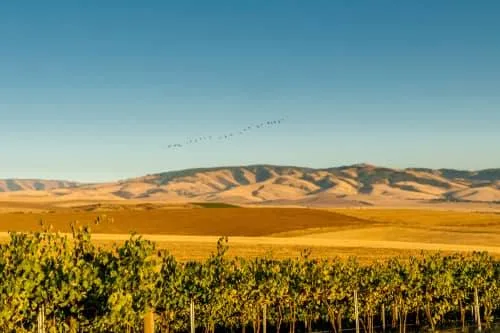
Walla Walla draws retirees for its balance of amenities, outdoor access, and cost. Here’s what to weigh.
🌤 Climate
Walla Walla has a warm, dry summer climate with average highs pushing into the upper 80s and low 90s from June through August — lower humidity than you'd expect makes it more comfortable than the numbers suggest. Winters are mild relative to the latitude, with lows rarely dropping below the mid-20s, though icy side streets occasionally catch newcomers off guard. Spring and fall are genuinely pleasant, with long stretches of clear skies and cool evenings.
🍴 Lifestyle
Retirement in Walla Walla comes with a walkable downtown full of tasting rooms, independent restaurants, and boutiques that feel nothing like a strip-mall suburb. The Saturday and Sunday farmers market at 4th and Main runs May through October, Pioneer Park's rose garden is a year-round gathering point, and Whitman College hosts a steady calendar of lectures, performances, and cultural events open to the community.
🏚 55+ Communities
Walla Walla has a range of senior-living options from independent and assisted-living communities to in-home care services, primarily clustered near the healthcare corridor on the south side of the city. The overall community skews toward owner-occupied homes rather than purpose-built active-adult developments, which suits retirees who want to age in a mixed, multigenerational neighborhood rather than a gated age-restricted campus.
✈ Getting Around
Most retirees in Walla Walla rely on a personal vehicle for day-to-day life, though the compact downtown is genuinely walkable for residents who live nearby. Walla Walla Regional Airport (ALW) sits about three miles from the city center and offers commercial service, making it practical to fly rather than drive when visiting family. The Tri-Cities metro and its broader medical and retail options are roughly 45 minutes west on US-12.
🏛 Washington Taxes for Retirees — What to Know
- No state income tax — Washington does not tax personal income, so Social Security, pensions, and 401(k)/IRA withdrawals are all untaxed at the state level. There is no state return to file and no retirement exclusion to claim — the rate is simply zero.
- Military and public pensions — Because there is no income tax, military retirement pay and public-employee pensions are untaxed at the state level along with everything else.
- Sales tax is the tradeoff — The state sales tax is 6.5%, and local add-ons bring the combined rate in Walla Walla to 9.1% (Washington State Department of Revenue, Q3 2026 local sales & use tax rate table, July 2026). Groceries and prescription drugs are exempt.
- Property taxes, with senior relief — The effective property tax rate is roughly 0.9%. Homeowners 61+ (or unable to work due to disability, or a qualifying disabled veteran) who own and occupy their home may qualify for a reduction. Income limits are set against each county’s median household income, so the threshold differs by county — check with your county assessor. A separate deferral program is available for those who don’t qualify for the exemption.
- Capital gains tax — but not on retirement income — Washington taxes 7% on long-term capital gains above a $278,000 standard deduction for 2025, rising to 9.9% on gains above $1,000,000. Retirement accounts and real estate sales are both exempt. It therefore does not reach ordinary retirement income or the sale of a home.
- Estate tax — the one to plan for — Unlike most no-income-tax states, Washington has its own estate tax. For deaths on or after July 1, 2026, the exemption is $3 million with graduated rates topping out at 20%. Retirement accounts count toward the taxable estate, so long-time homeowners with sizable balances can cross the line without expecting to.
- No inheritance tax — Washington has no inheritance tax, and no gift tax.
- WA Cares payroll premium — Working Washingtonians pay 0.58% of gross wages into the WA Cares Fund, the state long-term care program, with no income cap. It applies to W-2 wages, so retirees who have stopped working do not pay it — but anyone relocating while still employed will see it. The private-insurance opt-out closed at the end of 2022 and is not available to new applicants; the remaining exemptions are narrow (living outside Washington, military spouses, certain visa holders, and veterans with a 70%+ service-connected rating).
- The Oregon border effect — Oregon has no sales tax, so Washington residents near the river — Vancouver, Camas, Washougal, Longview — often cross over for large purchases. Washington use tax technically applies to goods brought back for use in-state, though it is rarely enforced on ordinary personal purchases.
Tax laws change frequently and individual situations vary. This is general information, not tax advice — always consult a qualified Washington tax professional or CPA for personalized retirement tax planning.
Weekends & Local Favorites in Walla Walla
The Wine World (and How Locals Actually Use It)
More than 130 wineries operate across the Walla Walla Valley American Viticultural Area — a figure that spans the full AVA into Umatilla County, Oregon, not the city limits alone. What matters for residents is that a concentrated cluster of tasting rooms sits within walking distance of downtown, organized across six distinct districts. Locals learn to treat the tasting rooms the way people in other cities treat neighborhood bars: a familiar place to take out-of-town guests, a spot to catch up with neighbors, a low-key Friday evening option. The tourist version of the wine scene and the resident version coexist without much friction most of the year.
Markets, Bakeries, and Main Street
Saturday morning at the 4th and Main farmers market, May through October, is the closest thing Walla Walla has to a mandatory local ritual. The seasonal produce calendar runs from asparagus in spring through corn and Sweet Onions in July and into fall squash and apples — and the market draws a genuine cross-section of the city, not just tourists. A stop at Colville Street Patisserie on S Colville Street fits naturally into the same morning; the French bakery has become a reliable anchor for the kind of slow weekend that residents cite when explaining why they haven't left.
Outdoor Life
Pioneer Park's rose garden draws residents year-round, but the park's real value is as a gathering point: open lawns, mature trees, and enough space that a busy summer Saturday doesn't feel crowded. Bennington Lake, managed by the Army Corps of Engineers a few miles east of downtown, provides swimming, fishing, and trail access without requiring a long drive. The Blue Mountains to the southeast offer hiking, mountain biking, and winter recreation for residents willing to make a 30-to-45-minute drive — a compromise many consider worthwhile given what they can access.
For those who prefer to stay in the city, the Whitman College campus trails are a genuinely pleasant walk that most visitors don't know about. The Fort Walla Walla Museum and the Kirkman House Museum round out the historical and cultural calendar for residents who want to understand the city they've moved into.
Live Sports and Community Events
The Walla Walla Sweets bring collegiate wood-bat baseball to Borleske Stadium throughout the summer — affordable, unpretentious, and well-attended by local families. The annual BrewFest in February, where 30 breweries and cideries pour from 18 downtown businesses including bookstores and boutiques, has become one of the city's signature winter events and a good introduction to how Walla Walla's downtown actually works at its best.
Top Things Locals Say About Walla Walla
The best intel about a city comes from the people who actually live there. Here’s what Walla Walla residents say when newcomers ask the questions everyone’s thinking.
“I thought the wine thing was mostly for tourists — I figured I'd ignore it and just live here. Six months in, I'm at a tasting room on a Tuesday evening like it's completely normal, because it is. That part of the culture seeps in whether you plan for it or not.”
— Recent Walla Walla home buyer
“What's the most surprising thing about living in Walla Walla?”
How genuinely walkable the downtown actually is. You read about a wine city in southeast Washington and imagine something spread out and car-dependent, but the historic district is compact enough that you can park once on a Saturday and spend the whole morning at the farmers market, stop into a tasting room, grab something from Colville Street Patisserie, and never move the car. Most people don't expect that.
“What do locals love most about Walla Walla?”
The combination of a real downtown and real outdoor access without the crowds of a larger city. Pioneer Park on a weekend afternoon, a Sweets game at Borleske in July, the farmers market at 4th and Main in May when the asparagus is just coming in — those things feel genuinely local, not curated for visitors. The Blue Mountains being 30 minutes away doesn't hurt either.
“What should newcomers to Walla Walla know?”
Learn the wine-event calendar before your first spring. Release weekend in May turns downtown parking into something unrecognizable, and hotel rates spike enough that out-of-town guests need to plan months ahead. Also: Isaacs Avenue backs up more than you'd expect for a city this size during afternoon school pickup — if your daily route runs through there around 3:30 PM, give yourself extra time.
“Can you live in Walla Walla without a car?”
Technically possible if you live close to downtown and work within the core, but practically difficult for most households. Valley Transit covers the main corridors between Walla Walla and College Place and runs to Milton-Freewater, but frequency is limited. The downtown itself and the Whitman College campus area are genuinely walkable for errands and leisure — anywhere further east or south, you'll want a car.
Cities Near Walla Walla
Other communities near Walla Walla worth a look — each with its own character and price point.
| City | Distance | Best For | Vibe | Median Rent | Median Buy |
|---|---|---|---|---|---|
| College Place | 4 mi | Families seeking newer construction | Quiet, residential, Adventist roots | $1,400 | $400,851 |
| Milton-Freewater, OR | 11 mi | Budget-conscious buyers, Oregon proximity | Small-town, agricultural, unhurried | $1,200 | $283,592 |
| Waitsburg | 20 mi | Rural lifestyle, acreage buyers | Historic, tight-knit, very quiet | $1,150 | $372,096 |
More Helpful Guides for Walla Walla
Going deeper on Walla Walla? Our blog series covers everything from first-time buying to retiring here — explore the guides below.
Local Expert Takeaway: Walla Walla rewards residents who lean into what it actually is: a small, walkable wine-country city with a serious college presence, a genuine farmers market culture at 4th and Main from May through October, and a downtown dense enough with tasting rooms and independent restaurants that you can go weeks without feeling like you're missing a larger city. The catch is isolation from major metros — Portland is four hours west, Seattle closer to five. If your life runs on quick flights or spontaneous road trips to a big city, build that cost into your decision. If it doesn't, you'll likely spend less time on those drives than you expected.
Quick Takeaways & FAQs
✅ The Walla Walla Valley wine industry has directly transformed the downtown into one of the most walkable and restaurant-dense small-city cores in the Pacific Northwest, with more than 130 wineries across the valley AVA and a concentrated cluster of tasting rooms within the historic district.
⚠️ Walla Walla is genuinely isolated from major metros — Portland runs about four hours west and Seattle closer to five — which is the most common reason people ultimately leave.
📍 Wine-tourism weekends in May (spring release) and fall turn downtown parking and hotel inventory upside down; residents quickly learn to plan around the valley's wine-event calendar.
What is the cost of living like in Walla Walla compared to Seattle or Portland?
Is Walla Walla a good place to raise a family?
What are the main employers in Walla Walla, WA?
How far is Walla Walla from the Tri-Cities and other major cities?
Is the Walla Walla housing market competitive right now?
Helpful Links for Moving to Walla Walla
Moving to Washington?
Tell us what you need help with and we'll connect you with local resources.
