If you're narrowing down where to retire along the North Puget Sound corridor, you've probably already noticed that this stretch of western Washington packs a surprising range into a relatively compact geography. From Whidbey Island to the foothills east of Everett to the Canadian-border towns of Whatcom County, these 13 cities share the same gray-winter skies and salt-air proximity to the water — but they diverge sharply on the things that matter most in retirement: how close a hospital actually is, whether you can walk to coffee and a pharmacy, and whether the home prices leave room in your budget for everything else.
Bellingham leads this group with a composite score of 7.89 out of 10, driven by a perfect walkability score, an on-site hospital, and one of the richest concentrations of restaurants and outdoor landmarks in the region. Mukilteo lands at the other end of the list at 4.69 — not because it lacks scenery or dining options, but because its car-dependent layout, the absence of a local hospital, and a median home price approaching $864,000 stack up unfavorably against retirement priorities. The rankings below weigh all five dimensions together, so a city that aces healthcare but scores poorly on affordability won't artificially float to the top.
How This Ranking Was Built
Each city is scored 1-10 on every dimension below against a fixed statewide scale — never against the other cities in this region — then combined into one weighted Composite score out of 10.
Healthcare — 25%Weighted contribution to the composite score, graded 1-10 against a fixed statewide scale.
Walkability — 20%Weighted contribution to the composite score, graded 1-10 against a fixed statewide scale.
Affordability — 20%Weighted contribution to the composite score, graded 1-10 against a fixed statewide scale.
Climate — 15%Weighted contribution to the composite score, graded 1-10 against a fixed statewide scale.
Quality of Life — 20%Weighted contribution to the composite score, graded 1-10 against a fixed statewide scale.
Top 13 Cities: Best Places to Retire Snapshot
Ranked by overall composite score. Click any city to jump to the full breakdown.
| # | City | Composite | Healthcare | Walkability | Median Price |
|---|
| 1 | Bellingham
Whatcom County | 7.9/10 | 8 | 10 | $633,071 |
| 2 | Arlington
Snohomish County | 7.7/10 | 10 | 6 | $598,417 |
| 3 | Anacortes
Skagit County | 7.6/10 | 10 | 6 | $690,991 |
| 4 | Marysville
Snohomish County | 7.5/10 | 6 | 10 | $574,733 |
| 5 | Everett
Snohomish County | 7.2/10 | 8 | 6 | $619,916 |
| 6 | Mount Vernon
Skagit County | 7.1/10 | 8 | 6 | $590,838 |
| 7 | Lynden
Whatcom County | 6.9/10 | 6 | 6 | $568,224 |
| 8 | Ferndale
Whatcom County | 6.8/10 | 6 | 6 | $600,714 |
| 9 | Lake Stevens
Snohomish County | 6.6/10 | 6 | 8 | $707,767 |
| 10 | Oak Harbor
Island County | 6.4/10 | 4 | 6 | $485,449 |
| 11 | Burlington
Skagit County | 6.3/10 | 6 | 4 | $489,679 |
| 12 | Stanwood
Snohomish County | 5.3/10 | 4 | 4 | $656,789 |
| 13 | Mukilteo
Snohomish County | 4.7/10 | 4 | 2 | $863,937 |

Walkability
10/10
out of 10
Affordability
5.9/10
out of 10
Quality of Life
8.8/10
out of 10
Median Price
$633,071
2026 market price
Bellingham earns the top spot in this group by stacking strengths where they count most for retirement. Its perfect walkability score reflects a city large enough — nearly 100,000 residents — to support a real urban core around the Fairhaven historic district, with independent shops, waterfront trails, and everyday services reachable on foot. A full-service hospital right in town removes the worry many smaller North Puget Sound cities can't avoid, and 17 combined landmarks, restaurants, and outdoor gems means retirement here rarely feels idle. The trade-off is price: a $633,071 median home is a real stretch, and cloudy winters that deliver only around 157 sunny days a year are simply part of life this far north.
Bellingham is the right fit for retirees who want a walkable, amenity-rich lifestyle and aren't depending on a tight housing budget to make it work. Among the cities in this group, it most closely resembles a small college city — Western Washington University gives it consistent energy — rather than a sleepy retirement town, which suits active retirees well and tends to underwhelm those seeking quiet and low overhead.

Affordability
6.3/10
out of 10
Quality of Life
8.8/10
out of 10
Median Price
$598,417
2026 market price
Arlington's top-of-group healthcare score is the anchor here: Cascade Valley Hospital serves residents locally, and a 20-minute drive south reaches additional major facilities in Everett — a combination that outperforms most cities this size. 160 sunny days a year is a modest but genuine improvement over the cloudiest spots in this group, and Old Town's walkable historic core means daily errands don't always require a car. At a $598,417 median home, it's not inexpensive, but it lands below Bellingham and well below the group's priciest entries, giving buyers a bit more financial breathing room.
Arlington suits retirees who want strong healthcare close to home, a genuine small-town downtown feel, and access to the Snohomish County trail and outdoor network — without paying Bellingham or Anacortes prices. It tends to appeal more to buyers who want a full-service community rather than those prioritizing maximum walkability, where Bellingham still holds a clear edge.

Affordability
5.2/10
out of 10
Quality of Life
9.2/10
out of 10
Median Price
$690,991
2026 market price
Anacortes punches well above its size for retirement living. A full-service hospital right in town is rare among smaller Washington cities and removes a real logistical concern, while a 9.2 out of 10 quality-of-life score — the highest in this entire group — reflects an exceptional concentration of waterfront dining, maritime landmarks, San Juan Islands ferry access, and outdoor recreation packed into a compact island-gateway town. The cost of entry is the honest caveat: at a $690,991 median home, Anacortes is among the pricier cities in this group, and the overall walkability is mid-range — a car is still part of daily life outside the Old Town core.
Anacortes is a strong fit for retirees who prioritize a rich, place-specific lifestyle — ferries to the islands, waterfront walks, a real arts and dining scene — and have the housing budget to match. Buyers who need maximum walkability or lowest possible price will find other cities in this group serve them better.

Walkability
10/10
out of 10
Affordability
6.7/10
out of 10
Quality of Life
5.6/10
out of 10
Median Price
$574,733
2026 market price
Marysville's 200-plus sunny days per year is genuinely exceptional for western Washington — it leads this entire group on climate by a meaningful margin, and for retirees who've spent years under Puget Sound clouds, that alone can be a deciding factor. A perfect walkability score reflects a city that has grown large enough, past 75,000 residents, to support a historic downtown where daily errands are actually doable on foot. At a $574,733 median home, it's more reachable than Bellingham or Anacortes without sacrificing the population-scale amenities that make a city livable. Healthcare is the honest gap: no hospital in town means relying on the Providence facility about 8 miles south in Everett.
Marysville is the best choice in this group for retirees who put sunshine and walkability at the top of their list and can accept a short drive for hospital care. Its quality-of-life score is the one area where it lags — there are fewer listed restaurants and gathering spots than cities like Anacortes or Everett — so buyers who want a packed social calendar may find those cities a better fit.
Affordability
6.1/10
out of 10
Quality of Life
9.2/10
out of 10
Median Price
$619,916
2026 market price
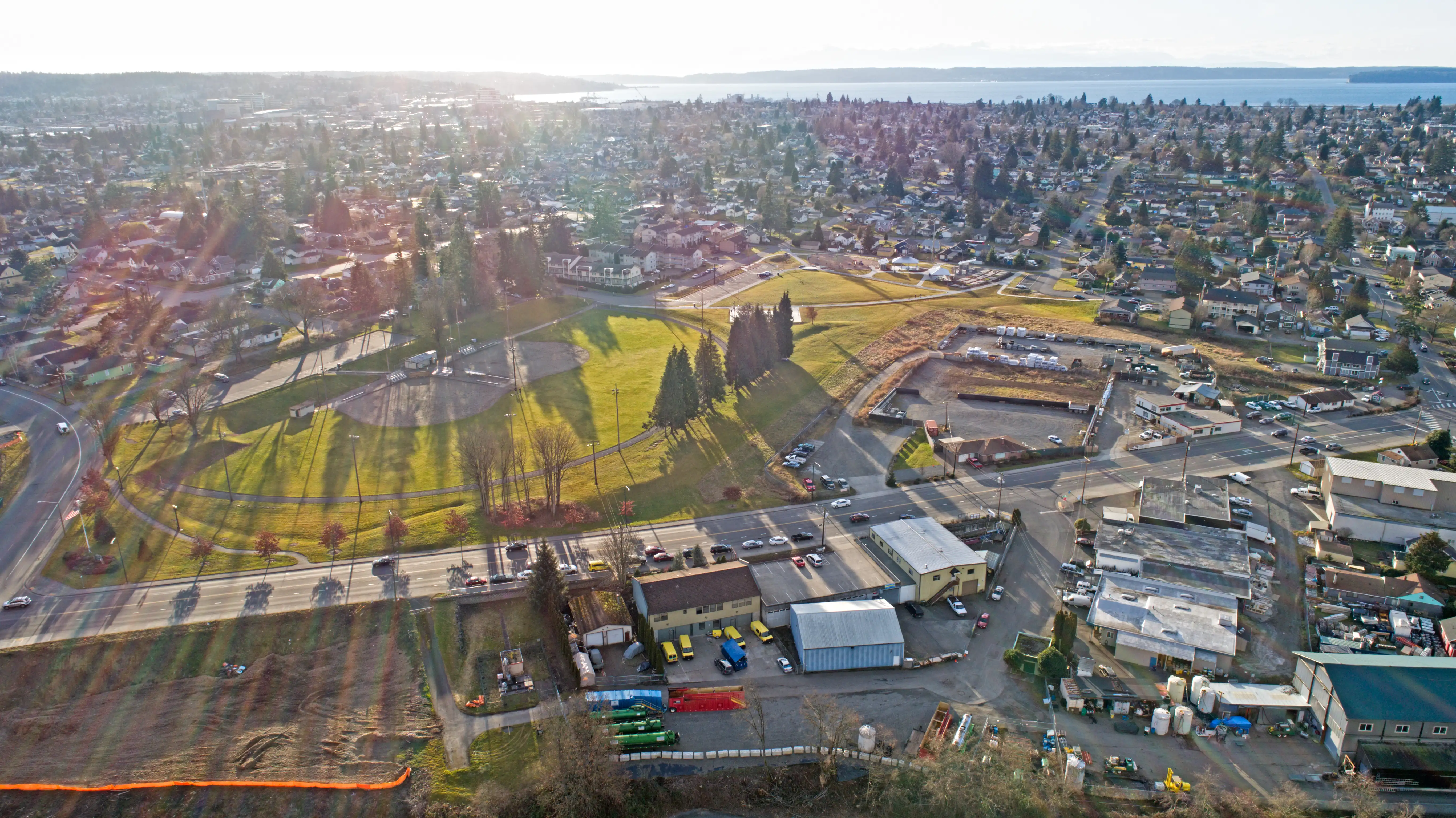
Everett is the largest city in this group and it shows in the lifestyle numbers: an 18-item combined count of landmarks, restaurants, and outdoor venues puts it at the top of the quality-of-life column, and a full-service regional medical center right in town gives retirees the kind of healthcare proximity that smaller cities in this group simply can't match. At a $619,916 median home, prices are firmly mid-range for the group — notably more reachable than Mukilteo or Lake Stevens, though not as affordable as Oak Harbor or Burlington. Walkability is the acknowledged trade-off: Everett's downtown is growing but the city's scale means you'll drive more than you would in Bellingham.
Everett fits retirees who want urban-level amenities, strong healthcare, and a lower price point than Seattle without giving up waterfront access and cultural activity. Those who prioritize a compact, walkable lifestyle over variety and access will likely feel more at home in Bellingham or Marysville.

Affordability
6.5/10
out of 10
Quality of Life
8.4/10
out of 10
Median Price
$590,838
2026 market price
Mount Vernon holds a comfortable middle-of-the-group position built on three consistent strengths: a full-service hospital right in town, a real downtown core along the Skagit River, and an affordability score that reflects a $590,838 median home — meaningfully more reachable than Anacortes or Lake Stevens. The Skagit Valley Tulip Festival anchors a quality-of-life profile that also includes strong dining and outdoor options, giving retirees genuine daily variety. Climate is the honest limitation: with only about 156 sunny days per year, Mount Vernon sits at the cloudier end of this group, sharing that distinction with neighboring Burlington.
Mount Vernon suits retirees who want an in-town hospital, a riverfront small-city downtown, and access to Skagit County's agricultural landscape and arts scene — without stretching to Anacortes prices. Buyers who need more sunshine should look toward Marysville or Lake Stevens, both of which log noticeably more sunny days.

Affordability
6.8/10
out of 10
Quality of Life
9.2/10
out of 10
Median Price
$568,224
2026 market price
Lynden earns its place in the top half of this group primarily through quality of life: its 9.2 out of 10 lifestyle score reflects a density of museums, parks, local restaurants, and outdoor spots that is genuinely outsized for a city this compact. The Dutch-influenced Downtown Front Street core gives it a walkable character that most cities of similar size don't have. At a $568,224 median home, it's among the more affordable Whatcom County options, though no hospital in town means a 20-minute drive to Bellingham for serious medical care is part of the trade-off.
Lynden is well-suited to retirees who want small-town character, a tight-knit community feel, and proximity to both Bellingham's amenities and the Canadian border — and who are comfortable with that short drive for healthcare. It's a noticeably different pace from Bellingham, and buyers who want walkable urban energy will find that city more satisfying.

Affordability
6.3/10
out of 10
Quality of Life
9.2/10
out of 10
Median Price
$600,714
2026 market price
Ferndale's retirement case rests on a 9.2 quality-of-life score that feels almost implausibly high for a city its size — parks, restaurants, and landmarks combine to give everyday life here more texture than the population count would suggest. Downtown Ferndale is genuinely walkable within its core, though the city's modest footprint means you'll reach its limits quickly. At a $600,714 median home, it lands right at the group's mid-range, and PeaceHealth in Bellingham is only 9 miles away — close enough to be practical, though not as reassuring as having a hospital in town.
Ferndale suits retirees who want a quieter, smaller-community feel within the Whatcom County corridor, with Bellingham's full urban amenities a short drive away when needed. Buyers who prioritize in-town healthcare or maximum walkability will find Bellingham itself a stronger fit.

Affordability
5.0/10
out of 10
Quality of Life
7/10
out of 10
Median Price
$707,767
2026 market price
Lake Stevens carries the highest median home price among the Snohomish County cities in this group at $707,767, and that affordability gap is the primary reason it ranks ninth despite a respectable showing across other dimensions. Its walkability score is genuinely solid — a real downtown core and a population above 40,000 make it more walkable than most suburban Snohomish County towns — and 164 sunny days per year is among the better climate scores in this group. Healthcare requires a drive to Providence Everett about 8 miles away, which is manageable but not the same as in-town access.
Lake Stevens tends to suit retirees who are drawn to the lake itself as a lifestyle anchor — kayaking, waterfront walks, recreational access — and whose housing budget can absorb pricing at the higher end of this group. Buyers who want similar Snohomish County access at a lower price point will find Marysville or Arlington more forgiving.

Affordability
7.9/10
out of 10
Quality of Life
8.4/10
out of 10
Median Price
$485,449
2026 market price
Oak Harbor is the affordability standout in the Island County portion of this group, with a $485,449 median home that is among the more reachable entry points for retirees comparing North Puget Sound options. Old Town and Pioneer Way give it a genuine walkable downtown core — a real distinction for a Whidbey Island city — and its quality-of-life profile of landmarks, restaurants, and outdoor spots is strong for its size. The limiting factor is healthcare: no local hospital means a drive of 11 miles or more for serious medical care, which is a meaningful consideration when ranking retirement cities specifically.
Oak Harbor fits retirees who prioritize affordability and Whidbey Island's island lifestyle — ferries, shoreline, and a military-community culture that shapes the town's character — and who are comfortable planning around a drive for hospital-level care. Those for whom healthcare proximity is non-negotiable should look first at Arlington, Bellingham, or Mount Vernon.

Affordability
7.8/10
out of 10
Quality of Life
7.5/10
out of 10
Median Price
$489,679
2026 market price
Burlington's retirement case is almost entirely built on its affordability relative to its neighbors: a $489,679 median home is one of the lowest entry points in this group, and Skagit Valley Hospital is only 5 miles away in Mount Vernon — close enough to function nearly as well as in-town access. The walkability score is this city's honest weakness; a population under 15,000 limits how much daily life can happen on foot, even along its charming downtown retail strip. Climate is also at the cloudier end of the group, with roughly 156 sunny days per year.
Burlington suits retirees who want genuine affordability within Skagit County, proximity to Mount Vernon's fuller amenity set, and a quiet small-town pace — without needing everything within walking distance. Buyers who want more walkability or a richer in-town lifestyle will find Mount Vernon, just up the road, a step up on both counts.

Affordability
5.6/10
out of 10
Quality of Life
7/10
out of 10
Median Price
$656,789
2026 market price
Stanwood's composite score reflects the compounding effect of several mid-range or below-average dimensions landing together. A $656,789 median home is notably high for a semi-rural Snohomish County town, the walkability is limited by a small population and car-essential layout, and the nearest hospital is 13 miles away in Arlington — further than any other city in the group for which hospital access is not local. Its climate is slightly better than some western Washington neighbors at around 162 sunny days, and the lifestyle variety — 13 combined landmarks, restaurants, and outdoor spots — is decent for its size.
Stanwood tends to suit buyers who are drawn to its rural, small-town feel and Stillaguamish estuary proximity, and who are less dependent on walkability or immediate hospital access. Retirees for whom those two factors are priorities will find Arlington or Marysville a meaningfully stronger fit at similar or lower price points.

Affordability
3.4/10
out of 10
Quality of Life
8/10
out of 10
Median Price
$863,937
2026 market price
Mukilteo ranks last in this group, and the numbers explain why clearly. A $863,937 median home — the highest in the group by a wide margin — combines with a Walk Score of roughly 25, making it explicitly car-dependent for virtually every daily errand. There is no local hospital, and the nearest is over 10 miles away in Everett. The quality-of-life score is genuinely solid at 8 out of 10, reflecting real dining and recreation options including ferry access to Whidbey Island, and the climate is typical for western Snohomish County. But those lifestyle positives don't offset the retirement-specific gaps.
Mukilteo fits buyers who are prioritizing Puget Sound views, Whidbey Island ferry access, and proximity to Boeing's Paine Field corridor — and who have the budget to absorb premium pricing without depending on walkability or nearby hospital access. For retirement specifically, nearly every other city in this group offers a more practical combination of healthcare access, walkability, and affordability.
Bellingham and Arlington offer the strongest all-around retirement packages in this group, combining on-site hospital access with genuinely walkable cores — but buyers who prioritize affordability over walkability will find Oak Harbor and Burlington meaningfully more reachable, even if healthcare requires a short drive.
Want to see what's for sale in these neighborhoods?
Sign up for listing alerts — get notified when homes hit the market.
Get Listing Alerts →
Frequently Asked Questions
Which North Puget Sound city has the best healthcare access for retirees?
Arlington and Anacortes both earn the top healthcare score in this group, each with a full-service hospital located right in town. Bellingham, Everett, and Mount Vernon also have in-town hospitals and score well. Cities like Stanwood, Oak Harbor, and Mukilteo require drives of 10 to 13 miles for hospital-level care — a meaningful consideration when healthcare proximity is a retirement priority.
Where is the most affordable place to retire in North Puget Sound?
Oak Harbor and Burlington have the lowest median home prices in this group, at approximately $485,000 and $490,000 respectively. Both are meaningfully more reachable than Bellingham or Anacortes. The trade-off in both cases is that healthcare requires a drive — about 11 miles from Oak Harbor and 5 miles from Burlington to the nearest hospital.
Which city gets the most sunshine for retirees tired of Puget Sound grey?
Marysville is the clear leader here, logging more than 200 sunny days per year — far ahead of the group's cloudier entries like Mount Vernon and Burlington, which average around 156. Lake Stevens and Mukilteo come in with roughly 162 to 164 sunny days, which is decent for western Washington but still a significant step below Marysville's count.
Is Bellingham actually a good place to retire, or is it overrated for the price?
Bellingham earns its top ranking in this group for concrete reasons: a walkability score of 10 out of 10, a full-service hospital in town, and a quality-of-life count that reflects 17 combined landmarks, restaurants, and outdoor venues. The honest caveat is the median home price of $633,071, which is real money for a mid-size city. Retirees whose budget is more constrained may find Arlington or Mount Vernon offer a comparable hospital-and-downtown combination at a somewhat lower entry price.
Why does Mukilteo rank last for retirement despite its location and views?
Mukilteo's ranking reflects the specific lens of retirement priorities. Its median home price of approximately $864,000 is the highest in the group by a wide margin, its Walk Score sits around 25 making it explicitly car-dependent, and there is no local hospital — the nearest is over 10 miles away in Everett. The city does score well on quality of life and has genuine dining and recreation options, including Whidbey Island ferry access. But when healthcare access, walkability, and affordability are weighted together, those gaps are difficult to offset.
Moving to Washington?
Tell us what you need help with and we'll connect you with local resources.

Todd Davidson
About the Author
Todd Davidson is the founder of The Move Genie, a premier digital resource offering in-depth city guides, neighborhood profiles, and localized market insights for communities nationwide. Drawing on an extensive background in home financing and real estate, he established the platform to streamline the relocation process, helping families make confident, data-driven decisions when comparing new areas.