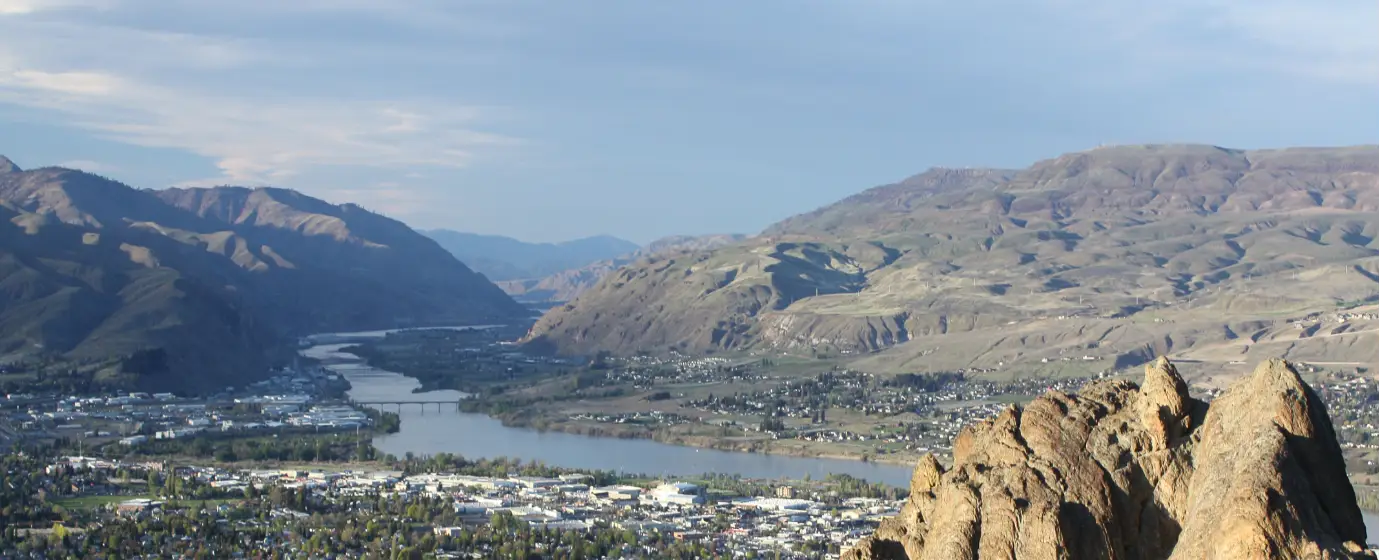
What Is Living in East Wenatchee, Washington Like?
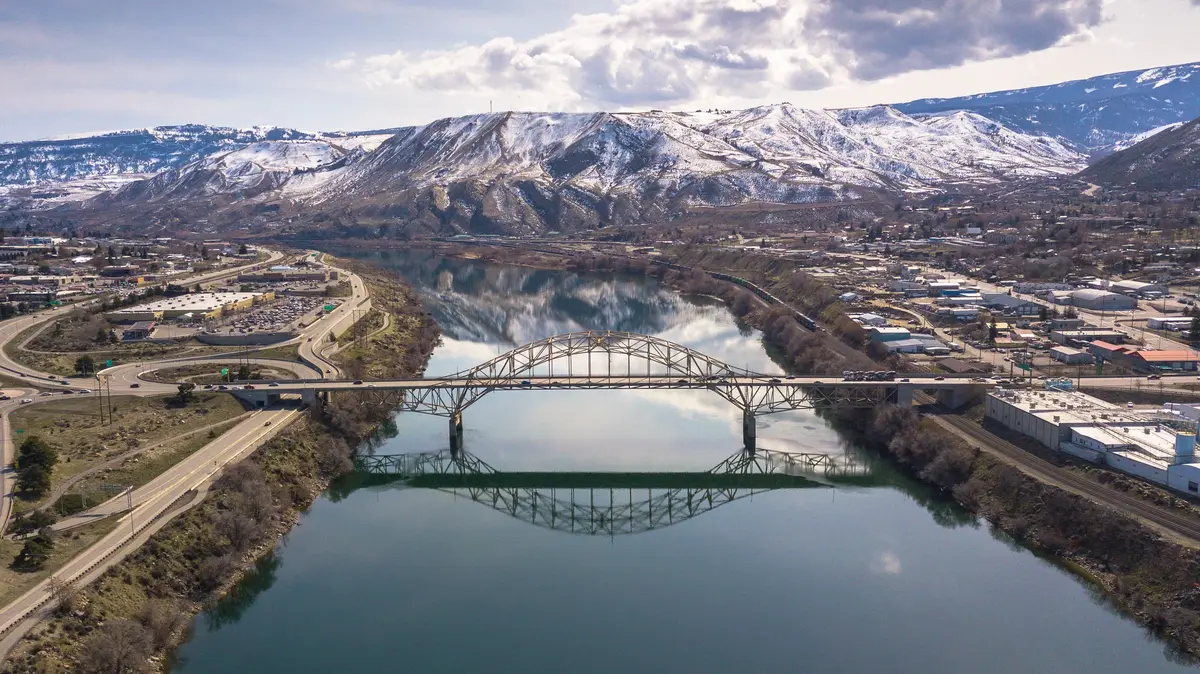
Maybe you've been priced out of Western Washington and someone mentioned the Wenatchee Valley. Maybe your employer has a presence here and you pulled up a map for the first time. Either way, East Wenatchee tends to surprise people — not because it's flashy, but because it's genuinely functional in a way that mid-size Western Washington cities stopped being years ago. Sitting on the east bank of the Columbia River in Douglas County, roughly 150 miles east of Seattle, East Wenatchee is physically inseparable from Wenatchee across the water but administratively, culturally, and economically its own place. Two bridges — the Odabashian and the George Sellar — tie the cities together, and most of daily life flows freely between them. What you get on the East Wenatchee side is more land, lower density, Pangborn Memorial Airport at your edge of town, and a cost-of-living index that sits just below the national average.
The economic backbone here is less dramatic than a single anchor employer and more resilient for it. A major regional health system drives a significant share of local employment across both cities, but the Eastmont School District, Douglas County government, the Chelan Douglas Health District, and a network of agriculture and food-processing firms tied to the region's apple industry all add depth to the job market. The Eastmont School District holds a B rating, according to Niche, and serves families across East Wenatchee with a genuine community-school culture — Friday nights at Eastmont High School carry real weight here. The median household income of $78,544 and a median resident age of 35.4 years paint a picture of a working-age city still raising its kids rather than watching them leave.
The Zillow Home Value Index for East Wenatchee stood at $518,973 in June 2026 — meaningfully below what buyers face in most Puget Sound markets, and within reach for households at or above the local median income. The Apple Capital Recreational Loop Trail, a roughly 10-mile paved path circling both sides of the Columbia, functions as East Wenatchee's unofficial town square: runners, cyclists, and families with strollers use it year-round, with orchard views on the uphill stretches and river views along the banks. Skiing at Mission Ridge is under an hour. The outdoor access here isn't incidental — it's what keeps people once they arrive.
Whether you're seriously considering a move or just mapping out your options, the sections below break down East Wenatchee's job market, what daily life actually feels like, the current state of the housing market, how commuting works, and where locals spend their weekends.
East Wenatchee at a Glance
Looking to buy in East Wenatchee? Estimate your payment.
Enter your numbers to see an estimated monthly mortgage payment.
Estimate only. Excludes HOA fees and mortgage insurance. The interest rate above is a starting point, not a quoted rate — replace it with your own to see real numbers. Insurance is a flat placeholder, not a East Wenatchee quote.
Why Are People Moving to East Wenatchee?
The short version: people come for the price gap relative to Western Washington, and they stay because the quality of life holds up in ways they didn't fully expect. The longer version involves orchards, a real airport, and a job market anchored in sectors that don't evaporate when tech hiring slows.
The Employer Landscape
A major regional health system is the dominant healthcare employer in the Wenatchee Valley, with facilities and staff on both sides of the river. Beyond healthcare, the Eastmont School District is one of the city's largest public employers, which matters both for job-seekers in education and for families evaluating the district from the outside. Douglas County government and the Chelan Douglas Health District round out the public-sector anchor institutions.
Agriculture and food processing add a layer most mid-size Washington cities don't have. The apple orchards extending beyond the city limits aren't just scenery — they represent a legitimate regional industry that creates year-round employment in processing, logistics, and supply chain, with a concentration of firms on the Wenatchee side that draw East Wenatchee workers daily.
Who Actually Moves Here
| Buyer Type | What Draws Them | Best Fit |
|---|---|---|
| Western WA transplants | Home prices noticeably below Puget Sound markets; no income tax in Washington | Value Families |
| Remote workers | More space per dollar, Pangborn Airport for Seattle trips, outdoor access | Nature Commuter |
| Healthcare & education professionals | Regional health system and Eastmont SD as stable, local employers | Commuter |
| Families with school-age children | Eastmont School District's strong community ties; lower density than Wenatchee proper | Families School |
| Outdoor enthusiasts | Columbia River trail, Mission Ridge skiing, orchard-country cycling | Nature Views |
| First-time buyers priced out elsewhere | Entry-level inventory in the $400K–$599,900 range; cost-of-living index below 100 | First-Time Value |
The city's cost-of-living index of 96.4 (December 2024) is modest but real — groceries, utilities, and services run slightly below U.S. averages, which compounds meaningfully over years.
What People Don't Expect After Six Months
Newcomers from Western Washington consistently underestimate the heat. Summers in the Columbia Basin run dry and regularly push into the high 90s — the same climate that makes the apples so good makes July and August genuinely intense. It's not Seattle uncomfortable; it's a different kind of uncomfortable, and houses without central air conditioning are not unheard of in older stock.
The other surprise is how much of life crosses the river. East Wenatchee has real retail, services, and restaurants of its own, but the gravitational pull of Wenatchee's downtown dining and its public market means you'll be on one of those two bridges almost every day. That's not a complaint locals make — it's just the reality of a twin-city geography that the address lines don't capture.
What Daily Life Feels Like in East Wenatchee
East Wenatchee has a median age of 35.4, which means the dominant rhythm here is working-household life — morning school drop-offs, weekend trail runs along the Columbia, and the kind of neighborly density that comes from a city of just over 14,000 people that hasn't been overrun yet.
The Geographic Reality
Pangborn Memorial Airport sits on East Wenatchee's eastern edge — a genuine convenience that changes the calculus for remote workers and frequent travelers. Alaska Airlines operates scheduled service with connections through Seattle, which means a work trip to Seattle-Tacoma International Airport doesn't require a 2.5-hour drive over Stevens Pass. That airport access is one of the city's most underappreciated assets.
The Columbia River is not background scenery. It is the organizing feature of daily life here, and the Apple Capital Recreational Loop Trail — roughly 10 miles of paved path connecting East Wenatchee and Wenatchee via two pedestrian and cycling bridges — is where the city's social life happens on weekends. On a Saturday morning in October, with the orchards turning and the river low, it's one of the better places to live in North Central Washington.
The Agricultural Identity
The apple industry isn't just economic context — it shows up in daily life in ways that feel specific to this valley. Harvest season brings a particular kind of energy to the roads east of town, the farm stands along the highway are genuinely good, and the regional food culture reflects a working agricultural economy rather than a curated one. That's a different vibe from a suburb built around retail corridors, and most people who move here either love it immediately or quietly find it underwhelming.
What Schools and Community Feel Like
The Eastmont School District serves East Wenatchee with strong extracurricular programs — WIAA athletics carry real community weight here, and Eastmont High School events draw the kind of Friday night crowd that signals a genuinely rooted school community. For a deeper look at boundary maps, test scores, and school-by-school breakdowns, see the East Wenatchee schools page.
The city's safety profile is among the more reassuring in North Central Washington — for specifics on crime statistics, see the safety page. What locals actually notice day-to-day is that the city feels manageable: traffic is real but not crushing, parking is rarely a problem, and the pace is noticeably slower than anything west of the Cascades.
Where People Actually Gather
On weekday mornings, the trail along the Columbia sees a predictable rotation of dog walkers, commuters on bikes, and parents burning off energy before the school bell. On weekends, Wenatchee Confluence State Park — directly adjacent to East Wenatchee — is the meeting point. The handful of casual dining spots on the east side fill up on weekday afternoons with orchard workers and after-trail crowds looking for a meal without crossing the river.
The East Wenatchee Housing Market Right Now
The Zillow Home Value Index for East Wenatchee stood at $518,973 as of June 2026, up 2.3% over the prior year. That figure puts the city well below the Seattle metro and most Western Washington markets, while still reflecting real appreciation pressure from sustained demand in the Wenatchee Valley.
How Fast Things Move
Homes went to pending in approximately 12 days as of June 2026 — that's a genuinely competitive pace. A February 2026 Pacific Appraisal Associates report covering the broader Wenatchee–East Wenatchee market showed total sales up 14% year-over-year, active listings up 31%, and sellers receiving approximately 95% of asking price over the prior six months. More inventory has come to market, but demand has absorbed it.
The most active price band in the combined Wenatchee–East Wenatchee market runs between $401,000 and $600,000, with roughly a two-and-a-half-month supply of inventory in early 2026. Some parts of East Wenatchee command meaningfully more than the city median — but that level of detail belongs on the best neighborhoods page.
What the Growth Pipeline Looks Like
East Wenatchee's Comprehensive Plan projects a need for 5,377 additional housing units in the Urban Growth Area by 2050. That's not a small number for a city of 14,000, and it signals that the city is actively planning for density and new construction rather than treating its current footprint as fixed. For buyers, that means both opportunity and the likelihood of continued construction activity in and around the city's edges over the next two decades.
For a full breakdown of property tax rates, rent ranges, and how East Wenatchee's cost of living compares across categories, see the cost of living page. The effective property tax rate of 0.87% is worth noting — it sits below the Washington state average and is one of the factors that keeps monthly ownership costs more manageable than the median home price alone suggests.
East Wenatchee Neighborhoods
East Wenatchee has several distinct areas — each with its own character and appeal. Here’s a breakdown to help you narrow down where to focus your home search.
🏡 Downtown East Wenatchee
The commercial spine of the city along Valley Mall Boulevard, where retail corridors and service businesses cluster closest to the George Sellar Bridge — convenient for daily errands and an easy shot to Wenatchee, but not a quiet residential enclave.
🏠 East Wenatchee Bench
The elevated plateau above the river valley that defines much of the city's residential character, offering broader lots, orchard-adjacent settings, and views down toward the Columbia — a good fit for families wanting space without sacrificing city services.
🌳 Fairview Heights
A quieter residential pocket on the upper Bench with established single-family homes and a neighborhood feel that attracts families with school-age children looking for stability and lower traffic than the commercial corridors below.
🏘 Grant Road corridor
The primary east-west arterial connecting the Bench to the river crossings, lined with a mix of retail, services, and residential streets branching off on either side — centrally located but among the busier stretches of daily East Wenatchee traffic.
🏔 Sunnyslope
A neighborhood that extends into the hillside above the city proper, known for larger lots and a more rural edge — appealing to buyers who want more distance from commercial noise while still being within a short drive of both downtowns.
🌆 Devon Avenue area
A mid-Bench residential area with a mix of housing vintages and a generally suburban character, situated close enough to Grant Road for convenience but set back enough to feel like a genuine neighborhood rather than an arterial corridor.
Pros & Cons of Living in East Wenatchee
The Pros
- Sunny
- dry climate with over 190 sunny days a year
- more affordable homes than across the river in Wenatchee
- close-knit small-town feel with easy access to Columbia River recreation
- short commute to Wenatchee's jobs and hospital
The Cons
- Property crime rate runs somewhat above the national average
- limited nightlife/dining compared to larger cities
- hot
- dry summers with wildfire smoke risk
Getting Around & Commuting in East Wenatchee
East Wenatchee is a car-dependent city. That statement isn't a criticism — it's simply the operational reality of a North Central Washington city spread across a bench above the Columbia River, with services and employers distributed across two cities connected by two bridges.
The Wenatchee Commute
The most common commute pattern in East Wenatchee is the 10-minute cross-river trip to Wenatchee. Both the Odabashian Bridge and the George Sellar Bridge carry this traffic, and for most of the day they handle it without significant delay. The chokepoints are predictable: school drop-off times, the US-2 interchange during the morning rush, and the brief window in late afternoon when eastbound Grant Road backs up from the signal. None of this is Seattle-level friction — but newcomers from lower-density markets occasionally underestimate it.
Pangborn Airport as a Lifestyle Asset
Pangborn Memorial Airport (airport code: EAT) sits on the eastern edge of East Wenatchee, not across the river — which means residents of East Wenatchee have a shorter drive to departures than their Wenatchee counterparts. Alaska Airlines provides scheduled service with connections through Seattle-Tacoma International Airport. For remote workers who need to be in a Seattle conference room once a month, or families traveling for the holidays, this changes the calculus in a real way.
Longer Trips and Highway Access
Seattle is roughly 150 miles west via US-2 over Stevens Pass — a scenic highway that is genuinely beautiful in summer and genuinely challenging in winter. The pass closes for avalanche control, sometimes on short notice, and that is not an abstract risk for someone who needs to reach Sea-Tac reliably in January. Spokane is approximately 175 miles east via US-2 and I-90, a more reliable winter route. Locals who need consistent westside access year-round tend to budget Pangborn into their plans rather than counting on the highway.
Within-City Movement
Walking to errands is possible in a narrow band around the Valley Mall Boulevard corridor, but it's the exception rather than the rule. The Apple Capital Loop Trail provides excellent non-motorized connectivity along the river, but it's a recreational asset, not a commuting network. Most daily errands — grocery runs, school pickups, medical appointments — require a car. For anyone prioritizing on-foot access or transit as a primary mode, East Wenatchee will require adjustment.
| Destination | Typical Drive Time | Notes |
|---|---|---|
| Wenatchee (downtown) | ~10 min | Via Odabashian or George Sellar Bridge; rush-hour adds 5–10 min |
| Pangborn Memorial Airport | ~5 min | Located in East Wenatchee — a genuine local advantage |
| Cashmere | ~20 min | West on US-2; quick on a clear day |
| Rock Island | ~15 min | South on Highway 28 |
| Waterville | ~30 min | North on US-2/97 into Douglas County highlands |
| Stevens Pass / Seattle | ~2.5 hrs (Seattle) | US-2; subject to winter closures — plan around Pangborn for reliability |
| Spokane | ~2.5 hrs | East via US-2 to I-90; more reliable in winter than the pass |
Schools in East Wenatchee
Families relocating to East Wenatchee have public, private, and higher-education options nearby. Here’s a quick overview.
🎓 School District
Eastmont School District serves K–12 students across East Wenatchee and the surrounding area. Rated B (source: Niche.com).
🏆 Graduation Rate
The 4-year high-school graduation rate here is approximately 88.7%.
📚 Higher Education
Washington’s public universities — the University of Washington, Washington State University, and Western Washington University — offer four-year degrees statewide, with a network of 34 community and technical colleges (SBCTC) providing two-year and workforce programs.
🌐 Online Learning
University of Washington Continuum College and Washington State University Online offer fully accredited online degrees for remote learners across the state.
Safety in East Wenatchee
A quick look at how East Wenatchee compares on the numbers that matter most when weighing a neighborhood or a move.
🛡 Violent Crime
Approximately 1 per 1,000 residents.
🔒 Property Crime
Approximately 20.6 per 1,000 residents.
Compared to the FBI’s most recent national data (2024), East Wenatchee’s violent crime is below the national average (about 3.6 per 1,000), and property crime is above the national average (about 17.6 per 1,000).
Against Washington as a whole, East Wenatchee’s violent crime is roughly a third of the state average, and property crime is somewhat below the state average (Bureau of Justice Statistics, Crime Known to Law Enforcement, 2024 (tables 2 and 3)).
Crime rates can vary a lot within a single city, so the citywide numbers above are only a starting point. Some neighborhoods in East Wenatchee run well below these averages, while others run higher — the kind of block-by-block detail that matters most when you’re actually choosing where to live. The full guide below breaks it down neighborhood by neighborhood.
Working in East Wenatchee
East Wenatchee’s largest employers span several industries — here are some of the anchors of the local job market.
🏥 Confluence Health
Healthcare
🎓 Eastmont School District
Education/public sector
🛒 Pybus Public Market-area retail & food processing firms
Agriculture/food
🏛 Douglas County government
Public sector
🏥 Chelan Douglas Health District
Public health
Parks & Recreation in East Wenatchee
Some of the outdoor spaces that shape everyday life in East Wenatchee.
🌱 Wenatchee Confluence State Park (adjacent)
East Wenatchee residents don’t have to go far for green space — spots like Wenatchee Confluence State Park (adjacent) are part of everyday life here, whether that’s a morning walk, a weekend hike, or just somewhere to unwind outside. The full guide below covers more of what East Wenatchee has to offer for parks and outdoor recreation.
Retiring in East Wenatchee
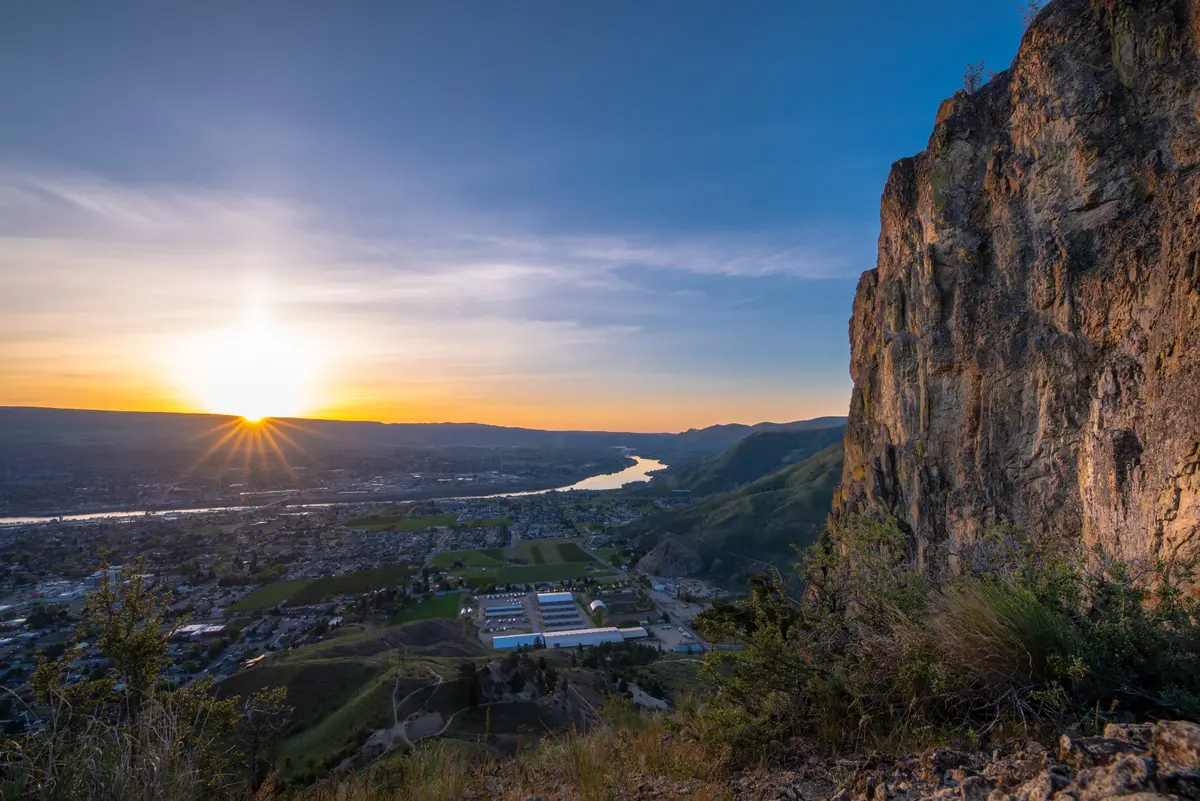
East Wenatchee draws retirees for its balance of amenities, outdoor access, and cost. Here’s what to weigh.
🌤 Climate
East Wenatchee sits in the rain shadow of the Cascade Range, which means roughly 300 days of sunshine and very little of Western Washington's persistent gray. Summers are hot and dry — high 90s are common in July and August — while winters are mild by inland Northwest standards, with occasional snow that typically doesn't linger. The dryness is a genuine adjustment for anyone arriving from the coast.
🍴 Lifestyle
The Apple Capital Recreational Loop Trail along the Columbia River is a year-round amenity that retirees use heavily — flat, paved, and scenic in every season. The Rocky Reach Dam Discovery Center offers free admission and is an easy, unhurried afternoon outing. For a wider dining and cultural scene, Wenatchee is a 10-minute bridge trip, with farmers markets, live music venues, and a downtown public market all within easy reach.
🏚 55+ Communities
The East Wenatchee and broader Wenatchee Valley area has a growing selection of active-adult and senior-living options, reflecting the valley's appeal to retirees from Western Washington seeking lower costs and more sunshine. Options range from independent 55+ communities on the bench above town to assisted-living facilities on both sides of the river. For specific facilities and healthcare infrastructure, see the retiring page.
✈ Getting Around
A car is essential here — the city is spread across a hillside bench and flat river corridor that doesn't support much walking for errands. The major asset for retirees is Pangborn Memorial Airport, just minutes from most East Wenatchee addresses, with Alaska Airlines service connecting through Seattle for trips to see family or seek specialized medical care. Wenatchee's full retail and medical corridor is 10 minutes across the river.
🏛 Washington Taxes for Retirees — What to Know
- No state income tax — Washington does not tax personal income, so Social Security, pensions, and 401(k)/IRA withdrawals are all untaxed at the state level. There is no state return to file and no retirement exclusion to claim — the rate is simply zero.
- Military and public pensions — Because there is no income tax, military retirement pay and public-employee pensions are untaxed at the state level along with everything else.
- Sales tax is the tradeoff — The state sales tax is 6.5%, and local add-ons bring the combined rate in East Wenatchee to 8.8% (Washington State Department of Revenue, Q3 2026 local sales & use tax rate table, July 2026). Groceries and prescription drugs are exempt.
- Property taxes, with senior relief — The effective property tax rate is roughly 0.9%. Homeowners 61+ (or unable to work due to disability, or a qualifying disabled veteran) who own and occupy their home may qualify for a reduction. Income limits are set against each county’s median household income, so the threshold differs by county — check with your county assessor. A separate deferral program is available for those who don’t qualify for the exemption.
- Capital gains tax — but not on retirement income — Washington taxes 7% on long-term capital gains above a $278,000 standard deduction for 2025, rising to 9.9% on gains above $1,000,000. Retirement accounts and real estate sales are both exempt. It therefore does not reach ordinary retirement income or the sale of a home.
- Estate tax — the one to plan for — Unlike most no-income-tax states, Washington has its own estate tax. For deaths on or after July 1, 2026, the exemption is $3 million with graduated rates topping out at 20%. Retirement accounts count toward the taxable estate, so long-time homeowners with sizable balances can cross the line without expecting to.
- No inheritance tax — Washington has no inheritance tax, and no gift tax.
- WA Cares payroll premium — Working Washingtonians pay 0.58% of gross wages into the WA Cares Fund, the state long-term care program, with no income cap. It applies to W-2 wages, so retirees who have stopped working do not pay it — but anyone relocating while still employed will see it. The private-insurance opt-out closed at the end of 2022 and is not available to new applicants; the remaining exemptions are narrow (living outside Washington, military spouses, certain visa holders, and veterans with a 70%+ service-connected rating).
- The Oregon border effect — Oregon has no sales tax, so Washington residents near the river — Vancouver, Camas, Washougal, Longview — often cross over for large purchases. Washington use tax technically applies to goods brought back for use in-state, though it is rarely enforced on ordinary personal purchases.
Tax laws change frequently and individual situations vary. This is general information, not tax advice — always consult a qualified Washington tax professional or CPA for personalized retirement tax planning.
Weekends & Local Favorites in East Wenatchee
East Wenatchee's weekend geography is river-and-ridge: down to the Columbia on Saturday morning, up toward the orchards and high country in the afternoon. The city is small enough that the recreational options are intimate rather than crowded — at least compared to what Western Washington residents are used to.
The Trail That Organizes Everything
The Apple Capital Recreational Loop Trail is the axis around which weekend life rotates. Ten miles of paved path, both sides of the river, two bridges, year-round access, and views that shift from river flats to orchard benches to the dam on the northern stretch. It functions as both a morning-run loop and a family bike outing route, and it's genuinely one of the better urban trail systems in Washington for a city this size.
Rocky Reach Dam and the Discovery Center
Rocky Reach Dam, about 7 miles north on Highway 97A, is an underused asset that most newcomers don't find for the first month. The Discovery Center is free and open Tuesday through Sunday, 9:30 a.m. to 5 p.m., with interactive exhibits on hydroelectric power, salmon habitat, and Pacific Northwest ecology. From May through September, the fish-viewing room lets you watch salmon migrating through a real working dam. It's exactly the kind of place that makes a strong impression on visiting relatives and works just as well for a slow Sunday afternoon.
Food, Drink, and Crossing the River
East Wenatchee's own dining scene is still developing. The casual spots on the east side draw after-trail crowds and weekday lunch regulars who'd rather not cross the bridge — but for a wider range of restaurants, independent coffee shops, and Wenatchee's downtown market hall, most residents make the 10-minute bridge trip, which feels less like leaving your city and more like switching neighborhoods.
Seasonal Rhythms Newcomers Miss
Apple harvest in September and October changes the mood of the whole valley. Traffic on the roads east of city limits picks up, the farm stands get serious, and the smell of the processing facilities carries on the evening air in a way that is either atmospheric or intrusive depending on the wind direction and your perspective. It lasts about six weeks and is genuinely part of what makes this valley feel specific rather than generic.
Winter is quieter than most newcomers expect — not cold in the Spokane sense, but gray and still in a way that surprises people who moved from rainy Western Washington expecting similar overcast. Mission Ridge Ski Area, about 28 miles south of Wenatchee, gives the season purpose; without it, January can feel long. The outdoor access covered in more detail on the parks and recreation page is what keeps most active residents engaged through the slower months.
Top Things Locals Say About East Wenatchee
The best intel about a city comes from the people who actually live there. Here’s what East Wenatchee residents say when newcomers ask the questions everyone’s thinking.
“I knew it was small, but I didn't realize how much of my actual life would happen on the Wenatchee side — and honestly, after a few weeks it stopped feeling like a different city and just felt like the other side of the neighborhood. What I didn't see coming was the airport being five minutes from my front door.”
— Recent East Wenatchee home buyer
“What's the most surprising thing about living in East Wenatchee?”
How much the two cities function as one. You have an East Wenatchee address, but you're on the Odabashian Bridge almost every day — for dinner, for the market, for the hospital. After a month it stops being noticeable, but newcomers who expect a standalone city are surprised by how naturally life crosses the Columbia.
“What do locals love most about East Wenatchee?”
The Apple Capital Loop Trail, without question. On an October morning with the orchards changing and the river low, there's nowhere else in North Central Washington that looks like that. People also genuinely appreciate having Pangborn Airport nearby — it changes the math on whether you can live here and still stay connected to the rest of the state.
“What should newcomers to East Wenatchee know?”
Get familiar with both bridges before you commit to a neighborhood. The George Sellar Bridge and the Odabashian each serve different parts of town, and depending on where you land on the Bench versus the lower streets, one will be significantly more convenient than the other. Also: buy a window AC unit or confirm the house has central air before July. The heat is not a rumor.
“Can you live in East Wenatchee without a car?”
Not really, unless your whole life is within a very tight radius of Valley Mall Boulevard. The Loop Trail is great for recreation, but it doesn't get you to a grocery store or a school pickup. Most people who move here from transit-friendly Western Washington cities try to adapt and give up within a few months. It's a car city — budget accordingly.
Cities Near East Wenatchee
Other communities near East Wenatchee worth a look — each with its own character and price point.
| City | Distance | Best For | Vibe | Median Rent | Median Buy |
|---|---|---|---|---|---|
| Wenatchee | 2 mi | Walkable downtown, arts & dining access | Urban core, culturally richer, denser | $1,695 | $517,000 |
| Cashmere | 10 mi | Small-town quiet, lower price points | Orchard-town, relaxed, tight-knit | $1,885 | $599,900 |
| Waterville | 18 mi | Rural privacy, Douglas County lifestyle | Wheat-country quiet, very small, remote | $1,300 | $464,250 |
More Helpful Guides for East Wenatchee
Going deeper on East Wenatchee? Our blog series covers everything from first-time buying to retiring here — explore the guides below.
Local Expert Takeaway: East Wenatchee rewards buyers who understand that it's a twin city, not a standalone one. The 10-minute bridge trip to Wenatchee is not a commute — it's how the city functions. What you get on the East Wenatchee side is more breathing room, Pangborn Airport within a 5-minute drive, a school district with real community roots in the Eastmont system, and a housing market where the Zillow Home Value Index stood at $518,973 in June 2026 with homes moving to pending in about 12 days. Get on the Apple Capital Loop Trail on your first weekend — it will tell you more about whether this place fits you than any open house will.
Quick Takeaways & FAQs
✅ Pangborn Memorial Airport sits directly in East Wenatchee, giving residents Alaska Airlines service to Seattle without crossing the mountains — a genuine advantage for remote workers and frequent travelers.
⚠️ Stevens Pass on US-2 is the only road to Seattle and closes for avalanche control in winter — anyone who needs reliable westside access should budget Pangborn into their plans rather than counting on the highway year-round.
📍 The Apple Capital Recreational Loop Trail — roughly 10 miles of paved path along both sides of the Columbia River — is where locals actually spend Saturday mornings, and it's the quickest way to understand what daily life in this city feels like.
Is East Wenatchee a good place to raise a family?
How far is East Wenatchee from Seattle?
What is the housing market like in East Wenatchee right now?
Who are the major employers in East Wenatchee?
Can you live in East Wenatchee without a car?
Helpful Links for Moving to East Wenatchee
Moving to Washington?
Tell us what you need help with and we'll connect you with local resources.
