
Maybe you've been priced out of the Seattle metro and someone mentioned the Wenatchee Valley. Maybe your employer is based here and you're running the numbers for the first time. Either way, the honest answer is that East Wenatchee sits in a genuinely unusual position for Washington state: overall costs run roughly 2% below the U.S. national average and approximately 4% below the Washington state average — in a state where most mid-size cities track well above both benchmarks. The Columbia River defines the city's western edge, the Cascades frame its skyline, and US-2 ties it to the broader region, but what shapes the monthly budget more than geography is the combination of mid-range home prices and one of the lowest residential electricity rates in the country.
The city's economic backbone — Confluence Health, Douglas County government, and the agricultural and food-processing firms connected to the Wenatchee Valley's apple and cherry industry — draws a working-professional and trades household rather than a tech-commuter one. That workforce profile keeps the housing market grounded compared to western Washington, even as demand from remote workers and retirees has pushed prices up over the past several years. The median household income here sits at $78,544, which means the $518,973 Zillow Home Value Index figure (June 2026) represents a stretch for some local buyers — but a far more manageable one than in markets like Bellevue or Kirkland.
Day-to-day costs have a few genuine bright spots. Douglas County PUD's hydropower-backed electricity rates are extraordinary by any measure. Fresh produce from the valley's orchards and farmers markets keeps grocery bills below national norms. And Pangborn Memorial Airport, right here in East Wenatchee, means frequent travelers avoid the cost and time of driving three hours to Sea-Tac. The catch, as in most of Washington, is that the absence of a state income tax gets offset by a meaningful combined sales tax rate of 8.8% — something that hits harder if you're a heavy spender rather than a heavy saver.
Whether you're finalizing a relocation decision or pressure-testing a household budget, the sections below break down East Wenatchee's housing costs, everyday expenses, how the city compares to Wenatchee and nearby towns, and the full tax picture so you can build an honest number.
What It Really Costs to Live in East Wenatchee
East Wenatchee is not cheap in the way that rural eastern Washington towns are cheap. It is, however, meaningfully more affordable than most of coastal Washington — and that gap is real enough to drive relocation decisions. The Zillow Home Value Index for East Wenatchee stands at $518,973 as of June 2026, a figure that puts typical homeownership within reach of a dual-income household earning close to the local median, without requiring the six-figure down payments that western Washington markets now demand.
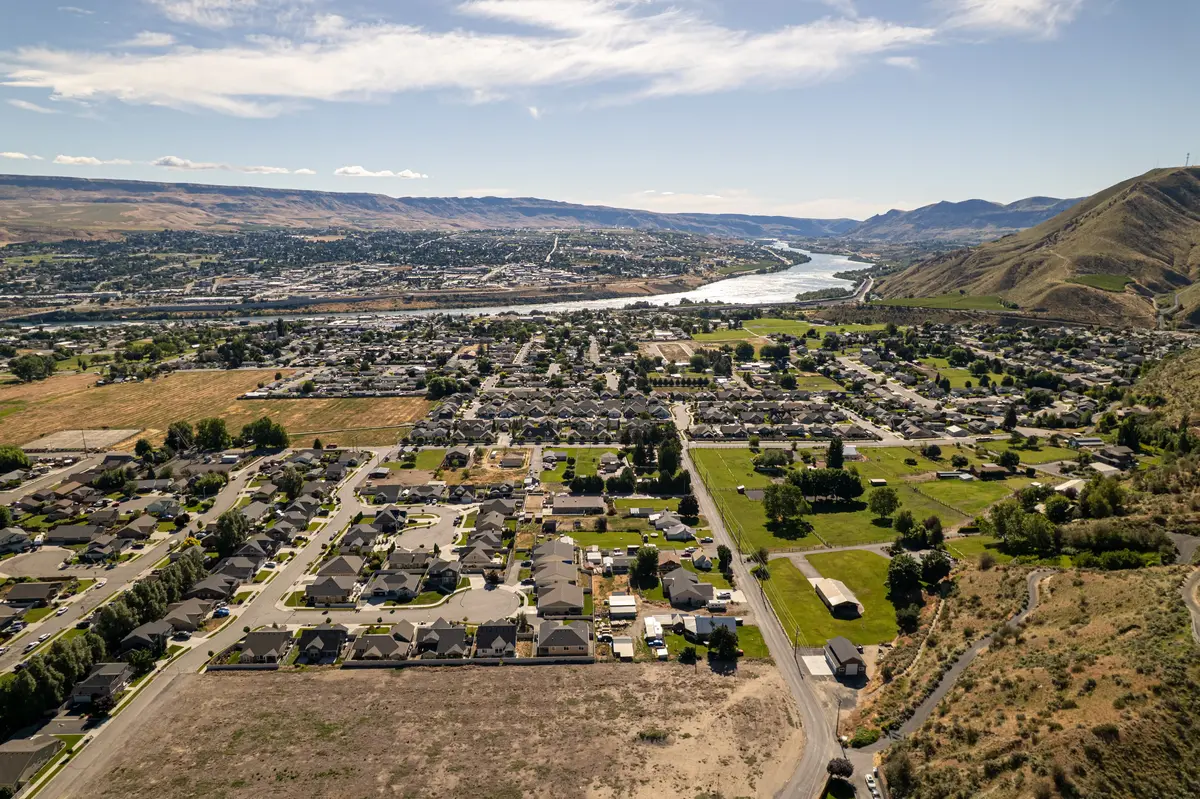
What drives that number is a mix of genuine demand and geographic limits. The Columbia River on one side and the canyon terrain on the other constrain developable land, which puts a floor under prices. At the same time, East Wenatchee isn't drawing the same volume of Bay Area or Seattle remote-worker migration that has pushed mountain resort towns like Leavenworth or Chelan to much higher price points. The result is a market that has appreciated steadily but hasn't gone vertical.
Outside of housing, the cost structure is surprisingly favorable. Electricity bills that run a fraction of what western Washington households pay, grocery costs roughly 4% below the national average, and no state income tax create a monthly budget that tends to feel more comfortable than the sticker price on homes might suggest. The biggest honest caveat: if your income is firmly near the local median and you're buying at the city-wide typical price, the debt-to-income math is tight. Renters and dual-income buyers have more room to work with.
Housing: Rent vs Buy in East Wenatchee
The Buying Side
The Zillow Home Value Index of $518,973 (June 2026) reflects typical homes across the city — newer construction and larger lots push comfortably above that figure, while older single-family stock and smaller footprints can enter the market noticeably below it. Entry-level inventory does exist in East Wenatchee, though those properties move quickly and rarely sit long. For neighborhood-level price breakdowns, the Best Neighborhoods guide has the specifics.
The effective property tax rate in Douglas County runs approximately 0.87% — one of the lower rates in Washington state. That figure is meaningful when you're comparing carrying costs against a Wenatchee or Chelan purchase, where assessed values and local levies can push effective rates higher. The engine below will calculate a full mortgage estimate based on your actual down payment and rate; the property tax rate to plug in is 0.87%.
The Renting Side
Rental inventory in East Wenatchee is limited. The city's relatively small size and owner-occupancy culture mean apartments and rental homes turn over infrequently, and vacancy rates have stayed tight in recent years. Two-bedroom units in the city typically range from roughly $1,400 to $1,900 per month depending on age and condition.
For households newer to the area, renting for a year before purchasing gives you time to understand which parts of the city fit your daily life before committing at this price point. Long-term, the ownership math tends to favor buyers who plan to stay five or more years — appreciation has been consistent, and the low property tax rate reduces the annual carrying cost relative to other Washington markets.
Everyday Costs Beyond Housing in East Wenatchee
The utility bill is where East Wenatchee surprises people most. Douglas County PUD, a customer-owned nonprofit that generates 100% of its electricity from renewable sources — primarily hydropower from Wells Dam on the Columbia River — charges residential customers approximately 3.29 cents per kilowatt hour. The average monthly residential bill runs approximately $80, compared to $200-plus in much of western Washington. A phased rate increase began January 1, 2026, raising the residential basic charge to $17.57 per month as part of a plan running through 2030, but even post-increase the rate remains among the lowest in the country. Water service through the East Wenatchee Water District starts at a base of approximately $41 per month, though actual bills vary by household usage.
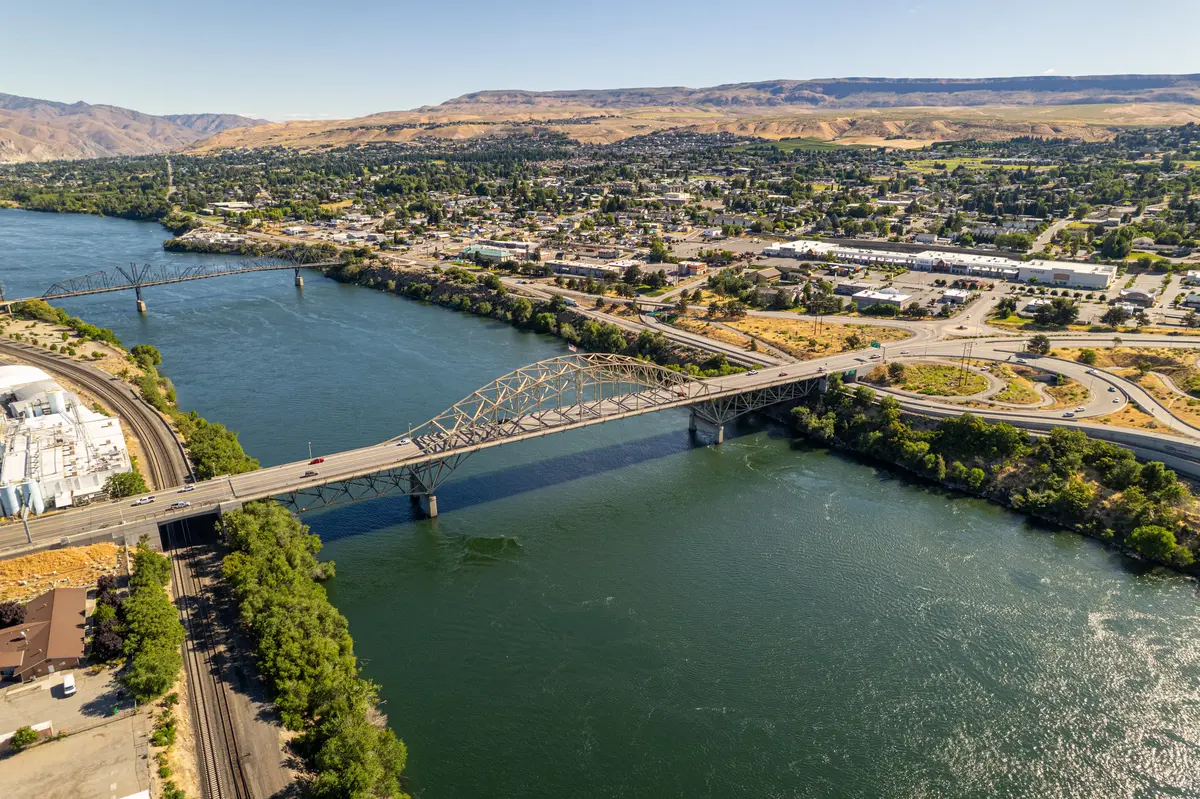
Groceries are another genuine bright spot. Monthly food costs run approximately 4.4% below the national average — estimated at around $382 per month for a single person and around $1,243 for a family of four. Living inside the Wenatchee Valley's apple and cherry growing region means fresh produce at farmers markets and roadside stands is both abundant and competitively priced compared to urban Washington markets. Transportation costs depend heavily on whether you're crossing into Wenatchee daily; the George Sellar Bridge and Odabashian Bridge make that a 10-minute trip, but it still means regular gas expenditure for most households — East Wenatchee is a car-dependent city. Pangborn Memorial Airport sitting inside city limits does reduce the cost of frequent travel by eliminating the long drive to Sea-Tac.
| Category | Typical Monthly Cost | Notes |
|---|---|---|
| Housing (2BR rent) | $1,400 – $1,900 | City-wide rental range; owners: use the mortgage calculator below for a purchase estimate |
| Electricity | ~$80 | Douglas County PUD average; among the lowest residential rates in the U.S. |
| Water | $41+ | East Wenatchee Water District base rate; rises with usage |
| Groceries | $380 – $1,250 | Single person to family of four; ~4.4% below national average |
| Transportation & Gas | $200 – $400 | Car-dependent city; estimate includes gas and routine vehicle costs |
| Phone & Internet | $100 – $180 | Internet service available from regional and national providers; speeds vary by location |
| Misc / Discretionary | $200 – $500 | Dining out, coffee, recreation, and entertainment |
These are estimates for planning purposes; actual costs will vary by household size, usage habits, and specific location within the city.
Looking to buy in East Wenatchee? Estimate your payment.
Enter your numbers to see an estimated monthly mortgage payment.
Estimate only. Excludes HOA fees and mortgage insurance. The interest rate above is a starting point, not a quoted rate — replace it with your own to see real numbers. Insurance is a flat placeholder, not a East Wenatchee quote.
East Wenatchee vs Nearby Cities: Cost Comparison
| City | Median Home Price | Typical 2BR Rent | Cost vs East Wenatchee |
|---|---|---|---|
| East Wenatchee, WA | $518,973 (Zillow Home Value Index, June 2026) | $1,400 – $1,900/mo | — Baseline |
| Wenatchee, WA | ~$490,000 – $530,000 | $1,450 – $1,950/mo | About the same; slight premium for larger units |
| Cashmere, WA | ~$420,000 – $470,000 | $1,100 – $1,500/mo | Noticeably cheaper; smaller inventory |
| Rock Island, WA | ~$380,000 – $440,000 | $1,000 – $1,400/mo | Meaningfully cheaper; very limited listings |
| Waterville, WA | ~$280,000 – $360,000 | $900 – $1,200/mo | Substantially cheaper; rural trade-offs apply |
| Malaga, WA | ~$450,000 – $520,000 | Limited rental market | Comparable; mostly owner-occupied rural parcels |
* Zillow Home Value Index = ZHVI.
Wenatchee and East Wenatchee function as a single housing market in practice — buyers routinely compare both sides of the river, and prices have converged over the past few years. The real savings emerge if you're willing to look at Cashmere or Waterville, though both come with smaller job markets and longer drives to full retail options.
Taxes & the Bottom Line for East Wenatchee
No State Income Tax
Washington levies no personal income tax — your full paycheck arrives without state-level withholding. For a household at the local median income of $78,544, that difference versus high-income-tax states like California or Oregon can represent thousands of dollars annually staying in your pocket rather than going to the state. It is the single biggest structural tax advantage of living anywhere in Washington.
Sales Tax: The Trade-Off
The flip side is a combined sales tax rate of 8.8% in East Wenatchee — Washington's 6.5% statewide base plus a 2.3% local addition. That rate applies to most retail purchases, prepared food, and services. Unprepared groceries are generally exempt under state law, which softens the impact on everyday food spending. Still, 8.8% is a real number on a car purchase, appliances, or a significant home improvement project. Buyers relocating from a low-sales-tax state should factor this in when modeling annual discretionary spending.
Property Tax
The effective property tax rate of approximately 0.87% is genuinely competitive for Washington state, where many western counties run closer to 1.0–1.2%. At the home price discussed earlier in this guide, the annual property tax obligation stays well below what similarly priced homes carry in King or Snohomish counties. That difference shows up directly in the monthly cost of ownership.
Who This Budget Fits
East Wenatchee works well financially for dual-income households, remote workers earning above-median wages, and buyers who specifically want the Washington income-tax advantage without the Seattle-metro price tag. It tends to feel like a stretch for single-income buyers at the local median trying to purchase near the typical home price, and for households moving from significantly lower-cost states who haven't modeled the 8.8% sales tax into their day-to-day spending. The electricity bill savings are real and immediate. The housing costs are manageable if your income is in the right range. The tax structure rewards earners and savers over spenders — which is a fair summary of what living here actually costs.
Local Expert Takeaway: The utility bill is the number that catches newcomers off guard — in a good way. Most households moving from western Washington expect an electric bill in the $150-200 range and end up paying roughly $80 through Douglas County PUD. That gap quietly improves the monthly budget in a way that doesn't show up in any cost-of-living index. Pair that with grocery costs running below the national average and no state income tax, and East Wenatchee's overall budget picture is more favorable than the $518,973 home price alone would suggest. The honest pressure point is the 8.8% sales tax, which adds up fast on big-ticket purchases — plan for it on any major buy, from a vehicle to appliances to a remodel.
Quick Takeaways & FAQs
✅ Douglas County PUD's hydropower electricity averages around $80 per month for typical households — among the lowest residential electric bills in the United States.
⚠️ The combined sales tax rate of 8.8% is a real line item on cars, appliances, and services — Washington's no-income-tax advantage partly offsets it, but heavy spenders will feel it.
📍 Pangborn Memorial Airport sits inside East Wenatchee city limits, which means frequent travelers skip the three-hour drive to Sea-Tac and the associated costs.
What is the typical home price in East Wenatchee in 2026?
Is East Wenatchee cheaper than Wenatchee?
Does Washington state income tax apply in East Wenatchee?
How much are utilities in East Wenatchee?
Is East Wenatchee affordable on a single income?
Moving to Washington?
Tell us what you need help with and we'll connect you with local resources.
