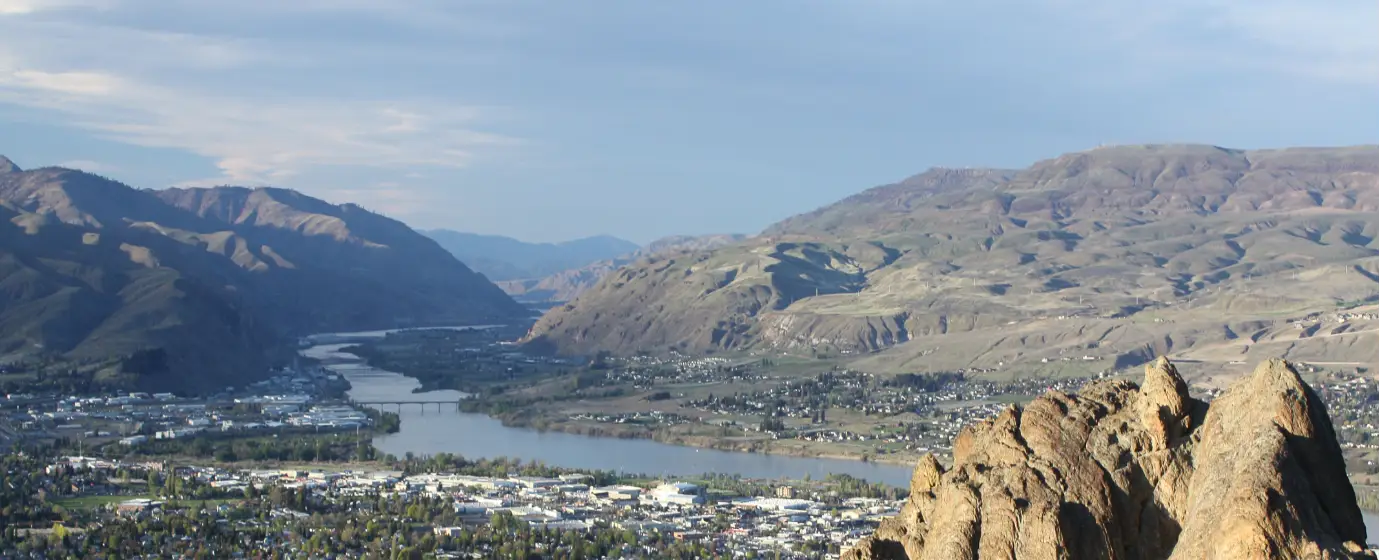
Maybe you've spent time researching Washington State and kept running into its reputation for property crime — the state ranked 3rd worst in the nation for property crime in 2024, and that number follows every Pacific Northwest city around the internet like a shadow. East Wenatchee is different from what that statewide headline implies. Sitting on the east bank of the Columbia River in Douglas County, separated from Wenatchee by the George Sellar Bridge, this city of about 14,330 people posts crime numbers that are meaningfully below both the state and national averages — and the gap is wide enough to matter when you're choosing where to live.
The numbers that define day-to-day safety here: a violent crime rate of 1 per 1,000 residents and a property crime rate of 20.6 per 1,000. Washington State's 2024 violent crime rate was 3.26 per 1,000; nationally it was 3.59 per 1,000. East Wenatchee's violent crime rate is roughly a third of the state figure and less than a third of the national one. That's not a rounding difference — it's the kind of gap that shows up in how residents actually feel walking around at night. The East Wenatchee Police Department, headquartered at 271 9th Street NE, runs community-oriented policing programs and youth engagement initiatives specifically designed to keep those numbers from drifting upward.
Context matters here, and so does the comparison right across the bridge. Wenatchee, roughly ten minutes away, carries a substantially higher overall crime burden — NeighborhoodScout records approximately 30 per 1,000 residents using FBI 2024 data, noticeably higher than East Wenatchee's combined rate. That distinction shapes how locals talk about the two cities and why some families specifically choose the Douglas County side. It also means the two cities aren't interchangeable from a safety research standpoint, even though daily errands frequently cross the river.
Whether you're considering a specific street or just trying to understand what the data means for a family relocating to the North Central Washington region, the sections below break down East Wenatchee's crime statistics, how they compare to state and national benchmarks, what the neighborhood-level picture looks like, what property crime actually looks like on the ground, and what the local police department is doing about it.
The Numbers in Context: How East Wenatchee Compares
Raw crime rates mean very little without a frame of reference. Here's how East Wenatchee sits relative to the benchmarks most people actually care about.
| Geography | Violent Crime (per 1,000) | Property Crime (per 1,000) | vs. East Wenatchee |
|---|---|---|---|
| East Wenatchee | 1.0 | 20.6 | — |
| Washington State (2024) | 3.26 | 24.67 | EW notably safer on both |
| National Average (2024) | 3.59 | ~19.0 est. | EW safer on violent; similar on property |
| Wenatchee (neighbor) | higher est. | higher est. | EW measurably lower overall |
| East Wenatchee Bench (sub-area) | ~1.6 | — | Among the safest nationally (87th percentile) |
| Douglas County overall | below state avg. | below state avg. | EW aligns with county trend |
Note: Violent and property crime figures for East Wenatchee are city-reported. Third-party aggregators may differ slightly due to classification methodology. State and national figures reflect FBI UCR 2024 data.
The violent crime figure is where East Wenatchee's safety profile is strongest. At 1 per 1,000, it's running at less than a third of Washington State's rate — a state that the Washington Association of Sheriffs and Police Chiefs flagged in August 2025 for concerning increases in several key crime categories relative to national trends between 2019 and 2024.
Nationally, 2024 was actually a historically good year: the FBI reported violent crime fell 4.5% and property crime fell 8.1% from 2023, both reaching their lowest recorded rates since 1969. East Wenatchee was already well below those improved national baselines. The property crime side tells a more nuanced story — 20.6 per 1,000 is below the state's 24.67, which is significant given that Washington ranked 3rd worst in the nation for property crime and 2nd worst for larceny theft per capita. Being below the state average in that environment is a real distinction.
What the Percentile Means for Residents
CrimeGrade.org assigns the East Wenatchee Bench sub-area — the residential hillside neighborhoods above the valley floor — an 'A' grade for violent crime and places it in the 87th percentile for safety nationally. That means it's safer than 87% of U.S. cities by that measure. The city-wide picture, while not broken down by sub-area in official data, is consistent with a community where most residents move through daily life without encountering serious crime.
Neighborhood Safety: What the Geographic Divide Means
East Wenatchee isn't uniform in character, and the safety picture shifts depending on where in the city you're looking. Understanding the basic geography is the first step to reading the crime data intelligently. The neighborhoods guide covers the full character breakdown, but here's what matters from a safety-research perspective.
The Bench: The Elevated Residential Core
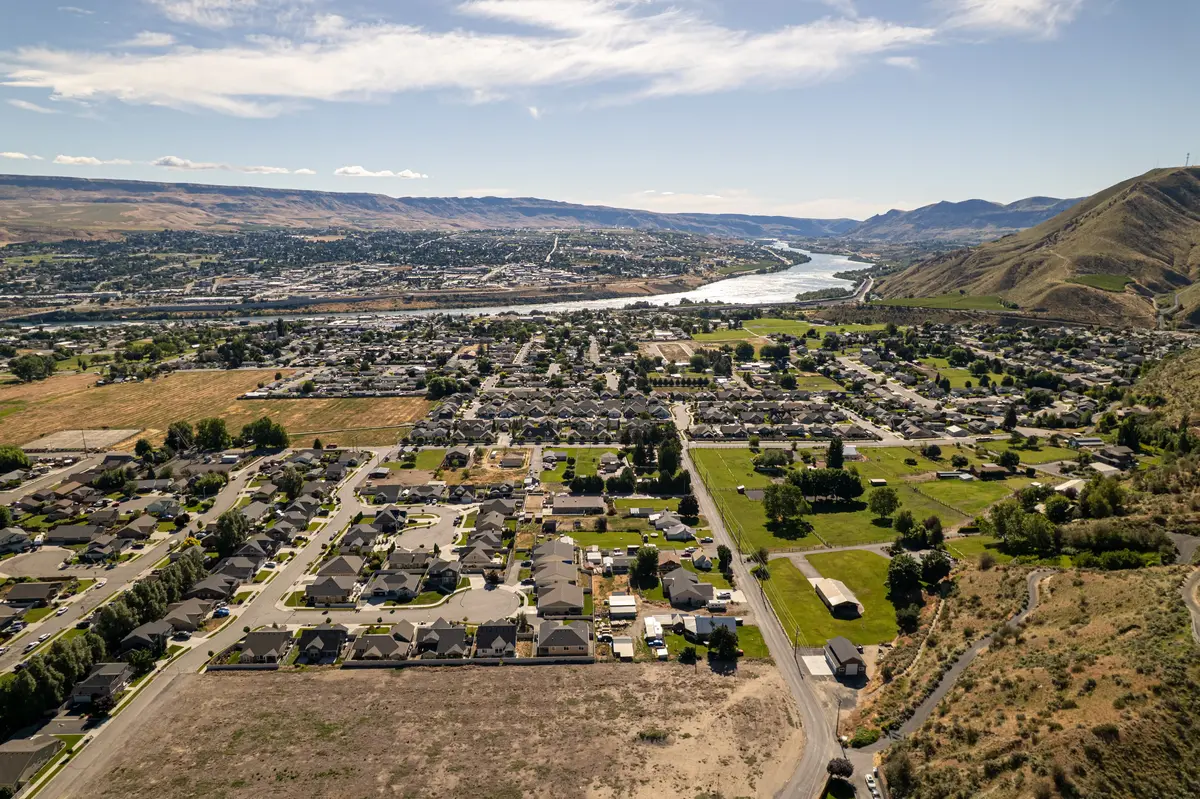
The East Wenatchee Bench — the hillside area rising above Valley Mall Parkway — is where the city's quieter, more established residential streets sit. CrimeGrade.org's sub-area data gives it an 'A' for violent crime and an 87th-percentile safety ranking nationally. Fairview Heights and Briarwood, both situated in this elevated section, share that quieter character. Residents here often cite the relative distance from highway commercial activity as a practical factor.
Grant Road Corridor and Valley Floor
The Grant Road corridor and the commercial stretches along Valley Mall Parkway represent East Wenatchee's busier, more commercially active zones. Retail corridors in any city see a higher share of property incidents — opportunistic theft in parking lots, vehicle break-ins near shopping centers — and East Wenatchee's is no different. The broader retail cluster along Valley Mall Parkway draws foot traffic that changes the ambient activity compared to the Bench neighborhoods above.
Downtown East Wenatchee and Devon Avenue
Downtown East Wenatchee, centered around 9th Street NE near the police department itself, is a mixed zone — light commercial, civic buildings, and older residential blocks. The Devon Avenue area sits at the northern residential fringe of the city and tends toward quiet, lower-density streets. Neither area shows up in local conversation as a place residents actively avoid.
Sunnyslope
Sunnyslope, the northernmost residential section, is predominantly single-family and relatively insulated from the commercial corridors that generate most property crime activity. It's the kind of neighborhood where residents are familiar enough with their neighbors to notice when something looks out of place — a practical community-level deterrent that doesn't show up in any crime rate table.
The practical takeaway: before settling on a specific street, look at what's immediately adjacent — commercial parking lots, high-traffic arterials, and entertainment venues all correlate with higher property incident rates regardless of city. In East Wenatchee's case, the Bench neighborhoods above Valley Mall Parkway consistently read as the most insulated from that dynamic.
Property Crime: The Real Risk to Understand
For most residents of East Wenatchee, the crime category most likely to affect daily life is property crime, not violent crime. At 20.6 per 1,000, the city's property crime rate sits below the state average — but that still means it's real, and it concentrates in predictable ways.
What "Property Crime" Actually Looks Like Here
In a city this size, property crime is largely vehicle-related: items left visible in cars, unlocked vehicles in driveways, and catalytic converter theft — a pattern that has hit communities across the Pacific Northwest regardless of their overall crime profile. Residential burglary also falls under the property crime umbrella, though at a much lower volume than vehicle incidents.
The Washington State context is worth keeping in mind. The state's property crime rate is among the highest in the nation, and the Washington Association of Sheriffs and Police Chiefs has documented that the state's decline in property crime has been more modest than national trends. East Wenatchee tracking below the state average in this environment suggests the city is doing something right — whether that's the smaller-city community familiarity, the police department's community vigilance programs, or simply the demographic differences between a 14,000-person city and the larger regional hubs.
What Newcomers Often Underestimate
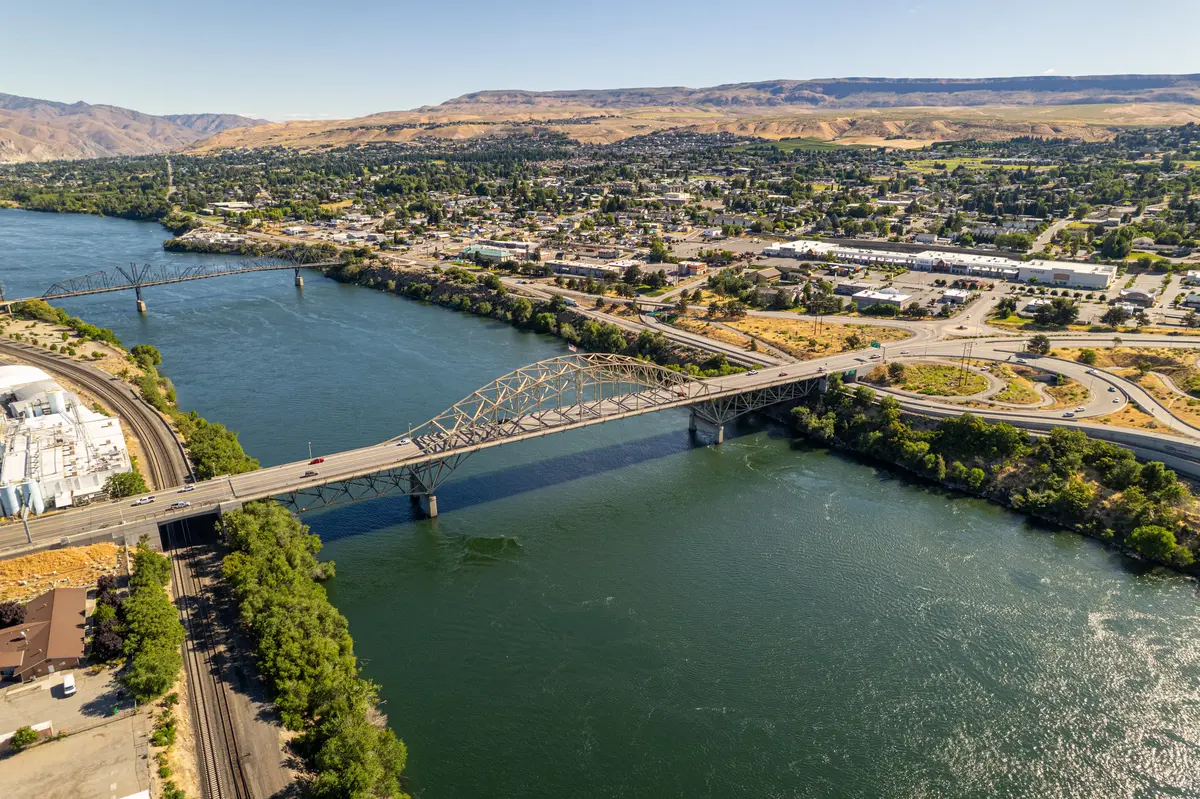
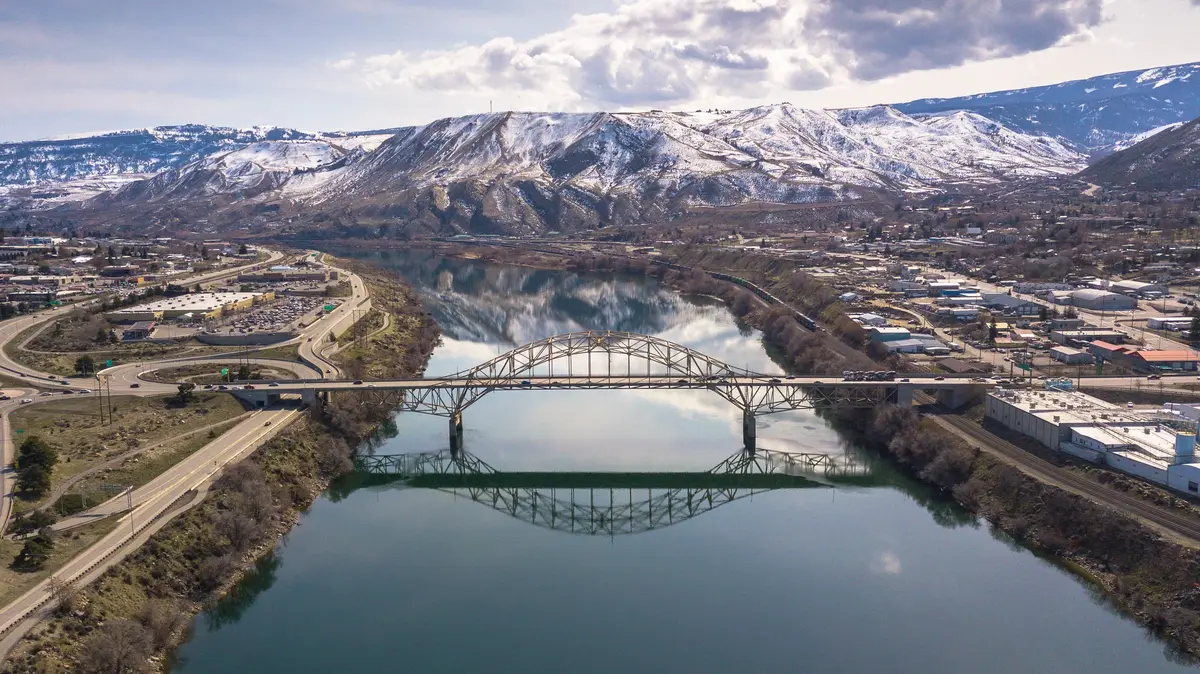
The friction moment no one warns you about: East Wenatchee's proximity to Wenatchee means the two cities share commercial corridors, and incidents near the river crossings don't always feel geographically contained. If you're used to thinking of a city as a clean safety boundary, the Columbia River crossings complicate that instinct. The George Sellar Bridge and the Odabashian Bridge connect two cities with meaningfully different crime profiles, and the commercial strip near both banks is where the difference is most apparent.
The practical response is straightforward: don't leave valuables in your car, use motion-sensitive exterior lighting on residential properties, and get to know your immediate neighbors. None of that is unique to East Wenatchee — but it applies here more than the low violent crime rate alone might suggest.
Is the Property Crime Rate Improving?
Nationally, 2024 marked the lowest property crime rate since 1969. East Wenatchee's own figures align with that improving national backdrop, and the city's rate was already below the state's when that statewide trend was less favorable. There's no data suggesting a worsening trajectory locally, though Washington State's overall property crime picture remains a background concern worth watching year over year.
Looking to buy in East Wenatchee? Estimate your payment.
Enter your numbers to see an estimated monthly mortgage payment.
Estimate only. Excludes HOA fees and mortgage insurance. The interest rate above is a starting point, not a quoted rate — replace it with your own to see real numbers. Insurance is a flat placeholder, not a East Wenatchee quote.
East Wenatchee Police Department: Community Policing in a Small City
The East Wenatchee Police Department operates out of 271 9th Street NE and describes its approach as full-service, community-oriented policing. For a city of 14,330 people, the department's structure reflects what community policing actually looks like when it's not just a marketing phrase — officers who recognize residents, active outreach programs, and a mission centered on strong community partnerships.
Programs That Shape the Safety Environment
The department runs community vigilance initiatives, crime prevention education programs, and youth engagement programming specifically aimed at reducing youth crime and building positive relationships between officers and young residents. Those programs exist because a city this size has the capacity for genuine officer-community familiarity — something harder to replicate in a larger metro department.
For non-emergency contact, the department's line is 509-663-9911. The department maintains a Facebook presence but notes it is not monitored 24/7 — actual urgent matters go to 911, as they should. That's a normal operational reality for a department this size, and worth knowing if you're the type of resident who expects real-time social media responsiveness from local law enforcement.
What a Small-City Department Can and Can't Do
The advantage of a smaller department in a smaller city is response time and community familiarity. Officers tend to know the addresses that generate repeat calls, and community members are more likely to actually call in when something looks wrong. The downside is resource depth — a major incident, a regional surge in a specific crime type, or simultaneous calls across multiple sectors can strain a smaller force in ways a larger department absorbs more easily.
East Wenatchee benefits from Douglas County Sheriff's Office support for county-level incidents, and the proximity to Wenatchee means regional law enforcement cooperation is routine across the bridge. That interagency relationship matters more than most people evaluating city safety statistics tend to realize.
Practical Safety Research: What to Check Before You Decide on a Neighborhood
City-wide crime rates are starting points, not conclusions. Here's how to turn East Wenatchee's data into a decision you'll actually stand behind six months in.
Use Block-Level Tools, Not Just City Averages
CrimeGrade.org's sub-area data already shows meaningful variation within East Wenatchee — the Bench neighborhoods rate in the 87th percentile nationally for violent crime safety, while commercial corridor areas carry higher property incident frequencies. Tools like the Douglas County GIS mapping system and Washington State's public incident log allow you to narrow your research from the city level to the street level before you decide on a neighborhood. Don't skip that step.
Time Your Visit Strategically
East Wenatchee's seasonal rhythm matters for safety assessment in a way newcomers consistently underestimate. The city sits in apple country — the harvest season in September and October brings a significant temporary population increase to the broader Wenatchee Valley, including agricultural labor moving through the corridor. That seasonal shift shows up in regional incident data every year. It doesn't make the city unsafe, but a Saturday afternoon visit in March gives you a different ambient picture than a Friday evening in October. Visit at both a weekday midday and a weekend evening if you can.
Cross-Reference the Adjacent Corridors
The stretches of Valley Mall Parkway nearest the George Sellar Bridge and the Grant Road commercial zone are where East Wenatchee's property crime is most concentrated. If the neighborhood you're considering is within a few blocks of those corridors, check block-level data — not just the city average. If it's up on the Bench, off Sunset Highway toward Fairview Heights or Briarwood, you're in the part of the city where incident rates are consistently lower.
Talk to Neighbors, Not Just Data
The East Wenatchee Police Department's community vigilance programs exist precisely because local awareness fills gaps that official data doesn't capture. Residents in Sunnyslope will tell you which intersection has had car prowling problems recently; residents on the Bench can tell you whether a specific street feels different after dark. That local knowledge is available and worth seeking. Knock on a door or two on the specific street you're considering — in a city this size, people almost always answer.
| Safety Research Step | Tool / Resource | What It Tells You |
|---|---|---|
| City-level crime rate | City fact sheet / FBI UCR | Baseline vs. state and national |
| Sub-area crime grade | CrimeGrade.org | Neighborhood-level violent crime percentile |
| Recent incident mapping | Douglas County GIS / WA public records | Block-level incident concentration |
| Neighbor conversation | Direct outreach | Real-time local pattern awareness |
| Police non-emergency line | 509-663-9911 | Ask about specific streets or patterns |
| Time-of-day / seasonal visit | Personal observation | Ambient activity beyond the data |
The non-emergency line at 509-663-9911 is genuinely useful here — officers familiar with community policing tend to give straight answers about which areas are generating more calls in a given season.
Local Expert Takeaway: East Wenatchee's violent crime rate of 1 per 1,000 is a real standout — it's roughly a third of Washington State's rate and less than a third of the national figure, in a state that ranks among the worst in the country for property crime. Most residents here live without meaningful personal safety concerns. The property crime side requires more nuance: 20.6 per 1,000 is below the state average, but opportunistic vehicle crime along the Valley Mall Parkway corridor and near the river crossings is the realistic risk to manage. If you're choosing between areas of the city, the East Wenatchee Bench neighborhoods — Fairview Heights, Briarwood, and the hillside streets above the commercial strip — consistently show the cleanest safety profile and rank in the 87th percentile nationally for violent crime safety. Do your block-level research, call EWPD's non-emergency line at 509-663-9911 if you have specific questions about a street, and visit at different times of day before you decide on a neighborhood.
Quick Takeaways & FAQs
✅ East Wenatchee's violent crime rate of 1 per 1,000 is less than a third of Washington State's 2024 average, making it one of the safer small cities in North Central Washington for personal safety.
⚠️ Property crime at 20.6 per 1,000 is below the state average but still real — vehicle break-ins near commercial corridors along Valley Mall Parkway are the most common concern residents actually encounter.
📍 The East Wenatchee Bench sub-area ranks in the 87th percentile for safety nationally per CrimeGrade.org, and the police department's non-emergency line (509-663-9911) is a genuinely useful resource for block-level questions before you decide on a neighborhood.
What is East Wenatchee's violent crime rate?
How does East Wenatchee's crime rate compare to Wenatchee across the river?
What type of crime should I actually worry about in East Wenatchee?
Which neighborhoods in East Wenatchee are the safest?
How can I research safety for a specific street in East Wenatchee before moving?
Moving to Washington?
Tell us what you need help with and we'll connect you with local resources.
