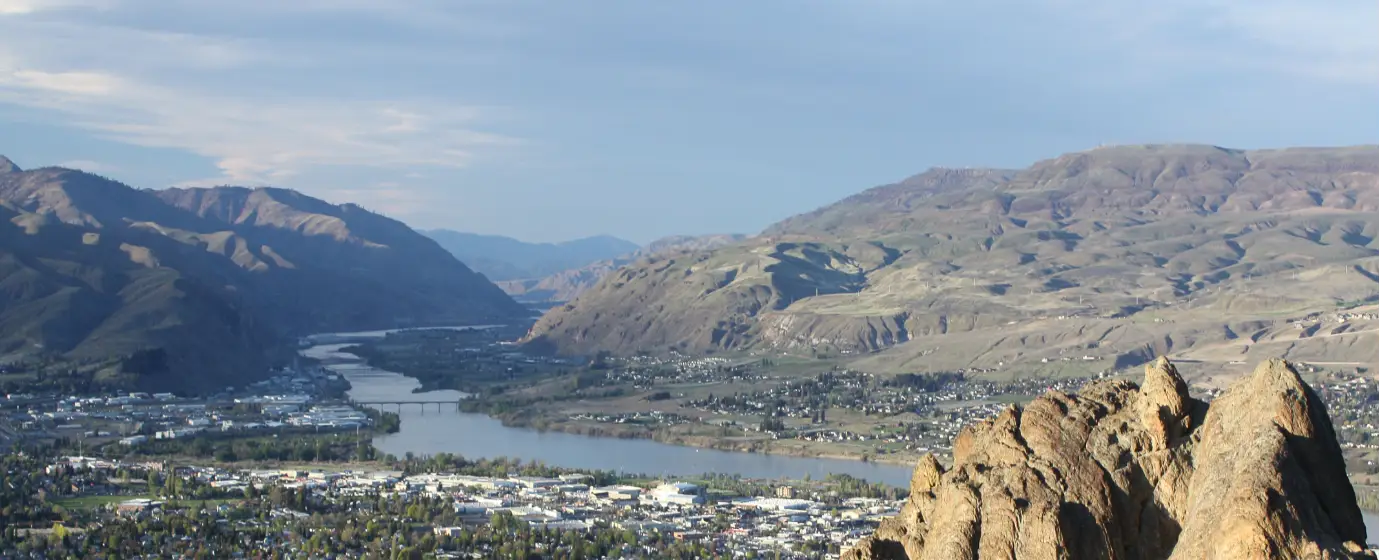
Most Californians who make this move say the same thing in month two: they cannot believe their electric bill. Not because it is high — because it is not. Douglas County PUD, headquartered right on Valley Mall Parkway in East Wenatchee, runs one of the cheapest electricity grids in the country, powered by hydroelectric generation from Wells Dam. That single detail — roughly $75 a month for a typical household — is the first signal that the math here works differently than anything you experienced in Sacramento, the Bay Area, or San Diego. East Wenatchee sits on the east bank of the Columbia River in Douglas County, directly across the George Sellar Bridge from Wenatchee, with US-2 providing the spine of daily life and Pangborn Memorial Airport offering direct regional flights to Seattle.
The economic backbone of the Wenatchee Valley runs on agriculture, healthcare, and public-sector employment. Confluence Health anchors the regional healthcare economy. Eastmont School District holds a B rating, according to Niche, and employs a large share of local residents while serving families with kids across the city. Douglas County government and the Chelan Douglas Health District add stable public-sector jobs, while the agricultural and food-processing firms clustered throughout the valley reflect a region that has been apple country for generations. The people who move here from California tend to fall into two groups: remote workers who discovered they could buy a real house for what they were paying in rent, and families who wanted something smaller, quieter, and closer to the outdoors without giving up a functional downtown ten minutes away.
The overall cost of living in the Wenatchee Valley runs approximately 17% above the national average, driven almost entirely by housing — but that figure lands very differently depending on where you are coming from. For a buyer leaving the Bay Area or coastal Southern California, East Wenatchee's typical home value of $518,973 (Zillow Home Value Index, June 2026) represents a dramatic reset. Utilities run about 16% below the national average, groceries and prescription drugs are exempt from sales tax under Washington law, and — the headline number for any California household — Washington does not tax ordinary wage income at all. Property taxes sit at an effective rate of approximately 0.87%, and there are no Proposition 19 reassessment triggers waiting for you at closing. For a fuller breakdown of the day-to-day cost picture, see the East Wenatchee cost of living page.
Whether you are deep into spreadsheets or just starting to wonder whether the move makes sense, the sections below walk through the California-to-East-Wenatchee financial comparison, the tax picture, what your equity might actually buy here, what surprised people after they arrived, and what the genuine trade-offs look like once the honeymoon is over.
The Home Price Reality: What California Equity Buys Here
The single most clarifying number for a California buyer is this: the typical home value in East Wenatchee is $518,973 (Zillow Home Value Index, June 2026). That figure is not the floor — it is the middle of the market.
California's statewide median sits substantially above that figure. Depending on where you are leaving — the Bay Area, San Diego, the Westside of Los Angeles — you may be looking at a home value gap that runs from several hundred thousand dollars to well over a million. That gap is real equity, and it can be deployed as a cash purchase, a significant down payment, or both.
What That Equity Gap Actually Buys
In practical terms, a California seller who walks away with $800,000 in net equity can buy into East Wenatchee outright, debt-free, and still have capital left over. A buyer coming out of a mid-tier California market with $400,000 in equity can purchase comfortably with a modest loan. Neither scenario is routine in any California coastal market.
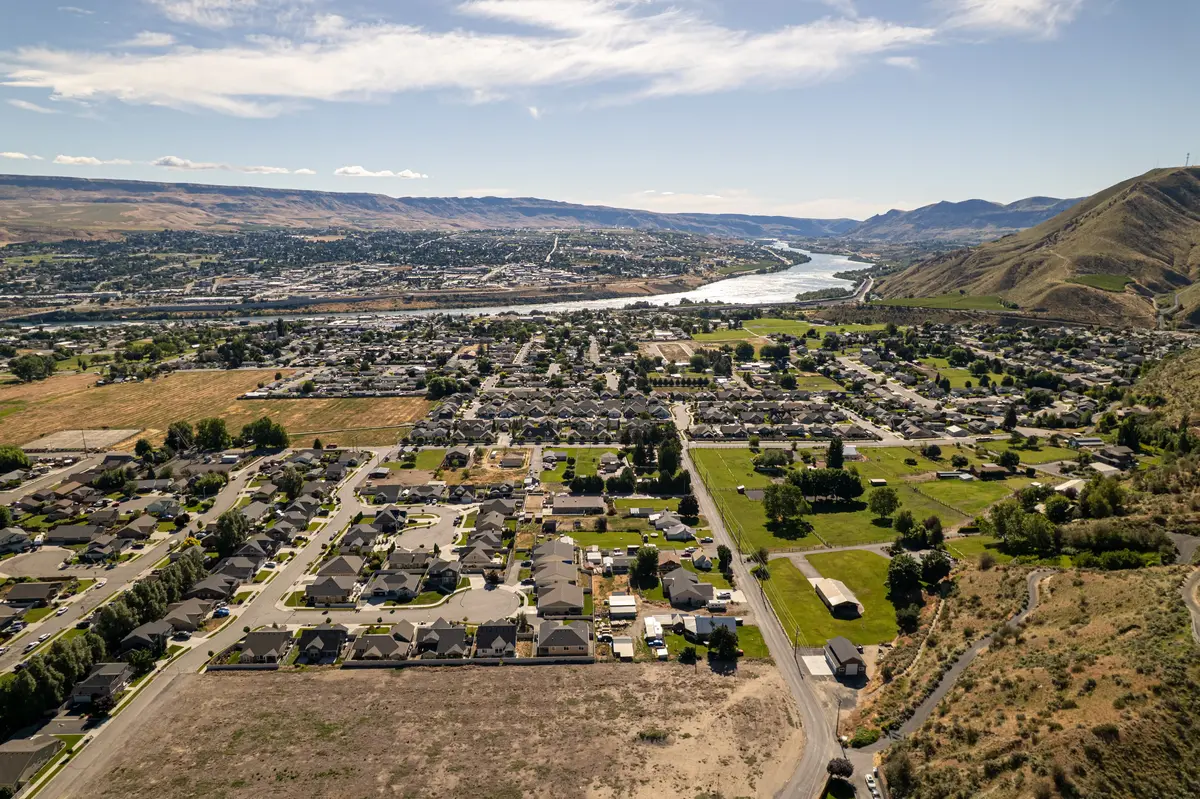
What you get for that price range here is a detached single-family home — often with a garage, a yard, and views of either the Cascades or the Columbia River, depending on the neighborhood. The East Wenatchee Bench, the higher-elevation neighborhoods like Fairview Heights, and the areas around Sunnyslope all offer that kind of geography. For a fuller look at which neighborhoods fit which buyer, see the East Wenatchee neighborhoods guide.
The Property Tax Equation
East Wenatchee's effective property tax rate is approximately 0.87%. California's typical effective rate runs between 1.1% and 1.2% — but that comparison understates the real difference for a new buyer in California, because Proposition 19 means your assessed value resets to purchase price the moment you close. A longtime California homeowner who bought in 2005 may have been paying taxes on an assessed value far below market; that advantage disappears the moment they sell and buy elsewhere in California.
In East Wenatchee, there is no equivalent reassessment trap. You pay the effective rate on your purchase price, full stop. On a $519,000 purchase, that works out to roughly the 0.87% rate applied to your actual home value — no supplemental bills tied to a sale event, no Prop 19 complication.
| Factor | California (typical) | East Wenatchee, WA |
|---|---|---|
| Typical/median home value | Substantially higher (varies by metro) | $518,973 (ZHVI, June 2026) |
| Effective property tax rate | ~1.1–1.2% | ~0.87% |
| Reassessment at sale | Yes — Prop 19 triggers reset to purchase price | No equivalent trigger |
| State income tax (wages) | Up to 13.3% marginal rate | $0 (no wage income tax) |
| Sales tax | Up to 10.75% in some jurisdictions | 8.8% (groceries & Rx exempt) |
| Average monthly electric bill | Varies widely; typically $150–$200+ | ~$75 (Douglas County PUD) |
* ZHVI = Zillow Home Value Index.
The table above is not a complete financial picture — mortgage mechanics, loan programs, and down payment strategy belong on the first-time homebuyer page — but the directional comparison holds: almost every major cost lever moves in your favor when you cross from California into Douglas County.
The Tax Shift: What Washington's No-Income-Tax Reality Means for You
California's top marginal income tax rate is 13.3%. Washington has no personal income tax on ordinary wages or salaries. For someone earning $120,000 a year, that difference alone is worth more annually than what many people spend on groceries.
The income tax gap is the financial story of this move for most households. It is not subtle, it is not a rounding error, and it applies from day one of Washington residency — there is no phase-in period and no minimum tenure requirement.
One Recent Wrinkle Worth Knowing
Washington Governor Bob Ferguson signed SB 6346 on March 30, 2026, imposing a 9.9% tax on household income exceeding $1 million per year, effective January 1, 2028. The law also faces anticipated constitutional challenges. For the overwhelming majority of households relocating from California to East Wenatchee, this is not a relevant number — but if your household income clears seven figures, factor it into your planning with a tax advisor.
Sales Tax: The Trade-Off
Washington funds its public services largely through sales tax, and the combined rate in East Wenatchee is 8.8% as of Q3 2026 — comprising the 6.5% state rate and a 2.3% local rate. That 0.1% local increment, added January 1, 2026, funds local law enforcement programs.
Groceries and prescription drugs are fully exempt from that 8.8% rate under Washington law. Contrast that with parts of California where combined rates reach 10.75% on taxable goods — the sales tax picture is more nuanced than the headline rate suggests, but most families find the net effect of no income tax far outweighs a slightly elevated rate on discretionary purchases.
What You Stop Filing
One thing California transplants consistently underestimate: the administrative relief. No state income tax return. No estimated quarterly payments to the Franchise Tax Board. No California Form 540 for the rest of your working years — assuming you establish clean Washington residency and have no remaining California-source income. For remote workers especially, the paperwork savings are meaningful, though the details of establishing clean residency warrant a conversation with a tax professional in the year of your move.
Utilities and Day-to-Day Costs: The Numbers That Actually Surprise People
Californians who move here almost universally cite the electric bill as their most jarring adjustment — in the best possible way. Douglas County PUD is a nonprofit, customer-owned public utility headquartered at 1151 Valley Mall Parkway in East Wenatchee. Its Wells Hydroelectric Project on the Columbia River generates far more power than local residents consume, and the surplus sold wholesale effectively subsidizes your bill.
The result: residential electricity costs approximately 3.29 cents per kilowatt hour based on 2024–2025 data from Douglas County PUD — a rate dramatically below Washington's state average of 12.39 cents per kWh. The average monthly residential bill runs around $75. If you were paying $180 or $220 a month in a California metro, that difference is real money, every month, compounding over years.
The Clean-Energy Context
In 2025, Douglas County PUD opened a hydrogen production facility in East Wenatchee that uses excess hydropower from Wells Dam — at full capacity, 5 megawatts producing up to 2 metric tons of hydrogen per day. This is not just a curiosity; it signals that the PUD's long-term infrastructure investment is oriented toward continued low-cost, clean-source power rather than fossil fuel exposure. Your utility rates are unlikely to spike in the way that gas-dependent grids do.
The Broader Cost Picture
The Wenatchee Valley area overall runs approximately 17% above the national average in cost of living, with housing as the primary driver. Utilities, by contrast, run about 16% below the national average. Groceries track close to national norms and, as noted, carry no sales tax. Transportation costs reflect a car-dependent region — East Wenatchee is not a walkable city in the way a California urban core might be, and budgeting for a reliable vehicle is non-negotiable for most households.
Health insurance premiums generally run noticeably below what you were paying in California, though the honest trade-off is that you will drive farther for specialist care than you were accustomed to in a major metro. For more on what routine and advanced care access actually looks like, the East Wenatchee retiring guide covers that in detail.
For a complete line-by-line breakdown of utilities, groceries, and transportation costs here, the cost of living page owns those figures.
Looking to buy in East Wenatchee? Estimate your payment.
Enter your numbers to see an estimated monthly mortgage payment.
Estimate only. Excludes HOA fees and mortgage insurance. The interest rate above is a starting point, not a quoted rate — replace it with your own to see real numbers. Insurance is a flat placeholder, not a East Wenatchee quote.
What Californians Get Right — and Get Wrong — About This Move
What People Get Right
The financial case is as strong as the spreadsheet suggests. The income tax savings are real and immediate. The home equity release is often transformational — California sellers who arrive with substantial proceeds find they can purchase outright or close to it, eliminating the mortgage payment that defined their California budget. The outdoors access is genuine: Rocky Reach Dam, Wenatchee Confluence State Park adjacent to the city, and a regional trail network put the Cascades within reach in a way that does not require driving three hours from a suburb.
Pangborn Memorial Airport, just minutes from downtown East Wenatchee, offers direct service to Seattle, reducing the isolation that defines some rural Washington communities. For remote workers whose companies require periodic Seattle trips, this matters more than it sounds on paper.
What People Get Wrong
The most common miscalculation is treating East Wenatchee as a smaller version of a California city. It is a city of about 14,000 people in North Central Washington. The dining scene is not the Bay Area. The cultural calendar is not San Diego's. The Wenatchee Valley Mall, on Valley Mall Parkway in East Wenatchee, is the only regional shopping mall within 80 miles — and that tells you something about the retail landscape. If your California life revolved around a dense urban core, the adjustment is real and worth sitting with before you make an offer.
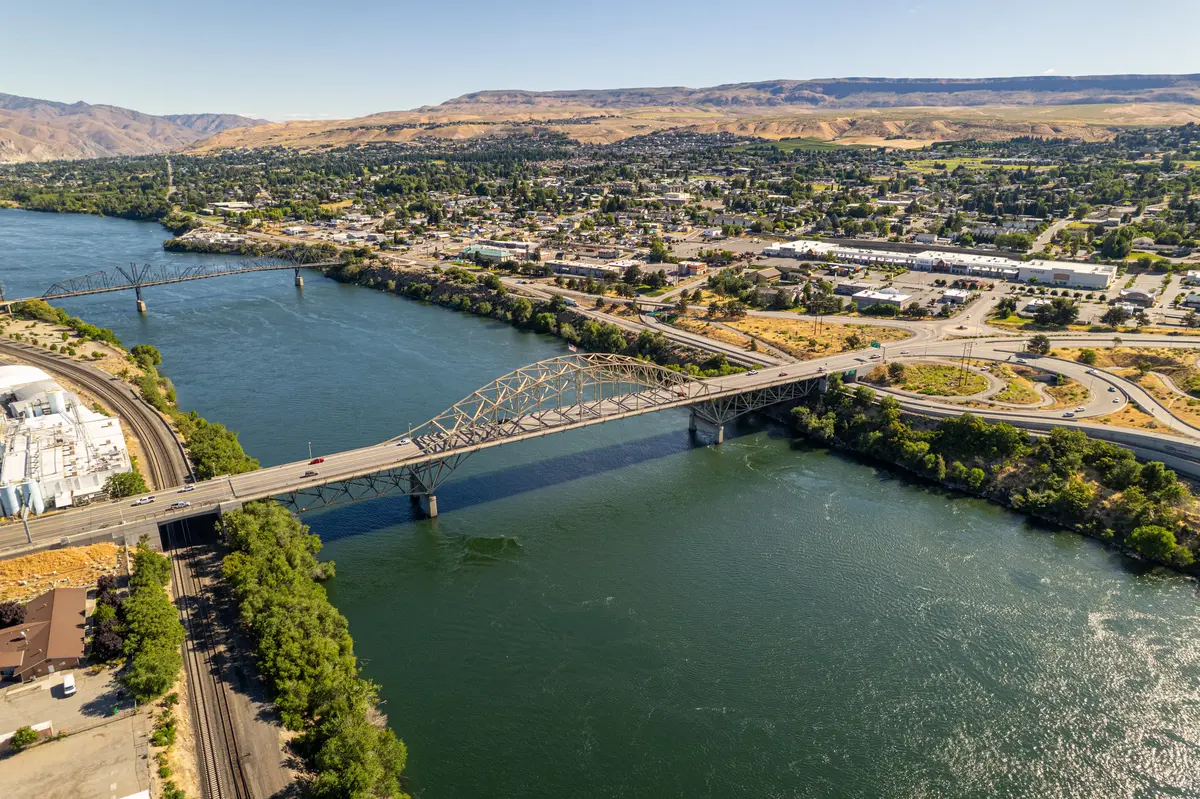
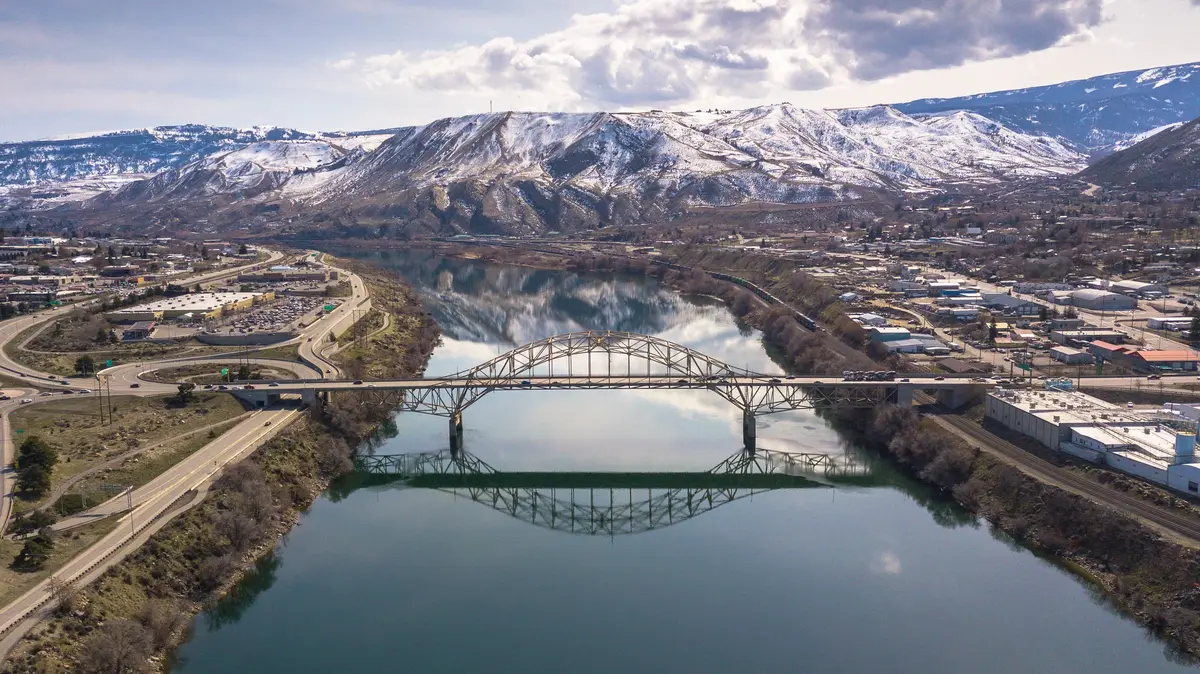
A second miscalculation: assuming the commute story does not apply because the city is small. East Wenatchee and Wenatchee share a geography split by the Columbia River, and crossing either the George Sellar Bridge or the Odabashian Bridge during morning peak hours can add meaningful time to what looks like a short trip on a map. Where you buy relative to your workplace matters in ways that a ten-minute average commute time can obscure. The living in East Wenatchee guide covers commute patterns and neighborhood character in more depth.
The Six-Month Surprise
Longtime Californians consistently report one thing they did not anticipate: the smoke. Wildfire smoke from late July through September can turn the valley hazy for days at a time, grounding outdoor plans and affecting air quality in ways that feel significant if you moved here partly for the mountain setting. It is not every year and not every week, but if clean outdoor air was a major driver of your decision, this seasonal reality belongs in your planning.
The flip side: the summer itself — before smoke season peaks — is genuinely spectacular. The Columbia River corridor in late June and early July, the orchard country between here and Cashmere, the evening light on the Cascades from the East Wenatchee Bench. This is not something California transplants universally expect, and it tends to lock people in for the long term once they experience it.
The Honest Trade-Off: What You Give Up Leaving California
The financial case for this move is strong enough that it is worth being equally direct about what it costs you in non-financial terms. Knowing the downside before you close is how you avoid becoming someone who moves back after eighteen months.
Urban Density and Services
East Wenatchee does not have the service density of a California metro. Specialty retail, a wide range of dining options, and same-day delivery from multiple providers are calibrated to a small city, not a region of millions. The Wenatchee Valley Mall serves a trade population of over 200,000 people across North Central Washington — that sentence is more revealing than it sounds, because it means you are one of 200,000 people relying on a single regional mall for that category of need.
This is not a complaint many longtime East Wenatchee residents make — the adjustment is real but most people stop noticing after a year. It is, however, something that matters during the transition, especially for households with specific dietary, medical, or cultural needs that require specific retail access.
Career Market Depth
If you are not a remote worker and you are leaving a California sector job — tech, entertainment, finance, biotech — the local employer base here will not replicate that. Confluence Health, Eastmont School District, Douglas County government, and agricultural-sector employers anchor the economy. That is a stable and meaningful economic base. It is not a deep market for specialized California industry roles. This matters most if your income situation is two-earner and both careers need local opportunity.
Why People Move Back
The households that return to California within two years tend to cite two things: family proximity and career limits. Distance from aging parents or adult children who stayed in California is something spreadsheets cannot quantify, and it lands differently at year two than it did in the planning phase. And for the partner or spouse who took the leap on "we'll figure out my job later," later sometimes arrives faster than expected in a market this size.
The households that stay — and most do stay — tend to be the ones who made the move with both of those questions already answered. For those households, the financial relief, the outdoor access, the slower pace, and the community around Eastmont schools and the Columbia River tend to accumulate into a life that does not generate much nostalgia for California property tax bills. Safety statistics and school performance data for families evaluating the long-term fit are covered on the safety page and the schools page.
Local Expert Takeaway: The California-to-East-Wenatchee move pencils out financially on almost every axis: no wage income tax, an effective property tax rate of 0.87% with no Proposition 19 reassessment trap, electric bills around $75 a month from Douglas County PUD's hydroelectric grid, and a typical home value of $518,973 that represents a dramatic reset from most California markets. What the spreadsheet won't tell you is that the adjustment is cultural as much as financial — East Wenatchee is a small city of 14,000 people where the regional mall on Valley Mall Parkway is a genuine gathering point, where wildfire smoke reshapes August plans some years, and where the Columbia River and the Cascades are not a weekend destination but a daily backdrop. The people who make this move and stay tend to have gone in clear-eyed about what they were trading, not just what they were gaining.
Quick Takeaways & FAQs
✅ Washington has no personal income tax on wages — California's top marginal rate is 13.3%, making this the single largest annual financial difference for most households making this move.
⚠️ East Wenatchee is a city of 14,000 with a single regional mall serving an 80-mile radius — the dining, retail, and specialist-service density of a California metro does not transfer.
📍 Douglas County PUD's hydroelectric grid means residential electricity bills average around $75 a month — a figure that catches nearly every California transplant off guard when the first bill arrives.
Do I pay Washington state income tax if I move to East Wenatchee from California?
How do home prices in East Wenatchee compare to California?
What is the property tax rate in East Wenatchee, and how does it compare to California?
What is the sales tax rate in East Wenatchee, and are groceries taxed?
What do Californians most commonly regret about moving to East Wenatchee?
Moving to Washington?
Tell us what you need help with and we'll connect you with local resources.
