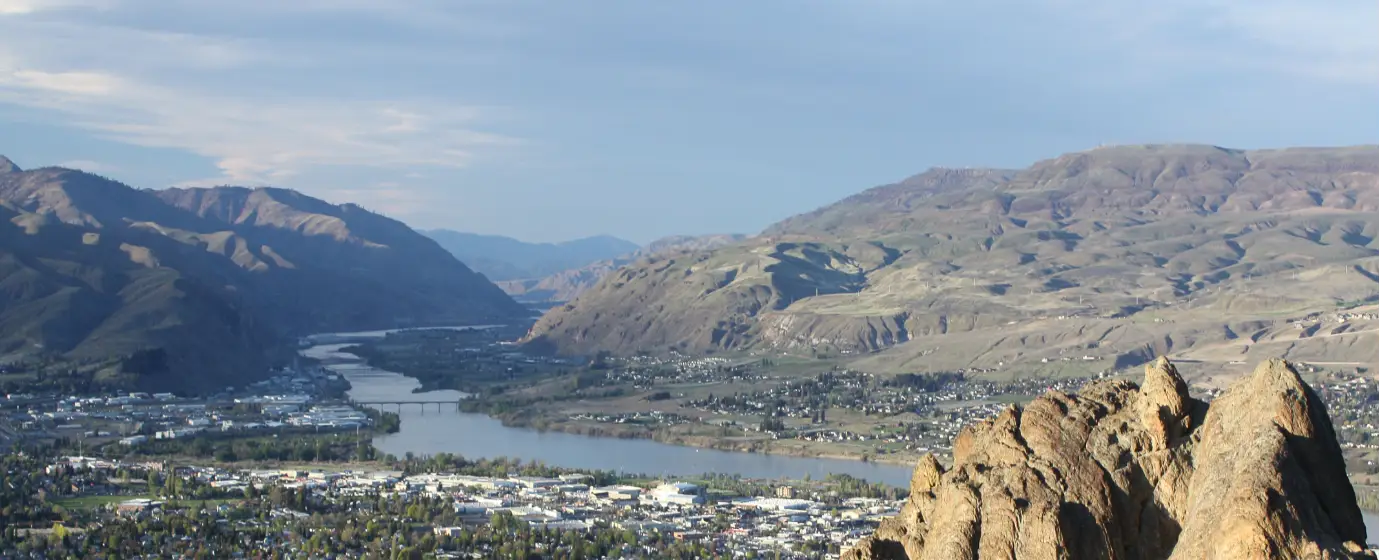
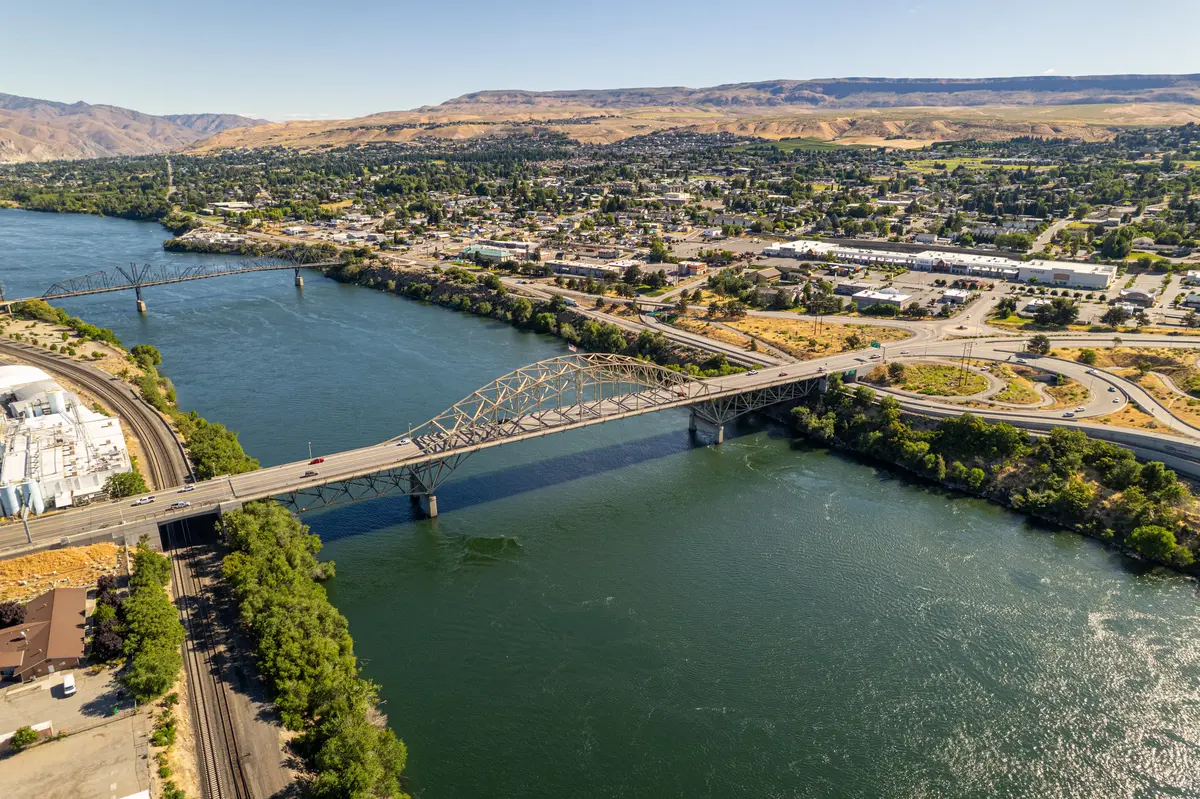
Most people who end up retiring in East Wenatchee didn't plan on it. They came for the apples — or rather, for the wide Columbia River views, the 300 days of sunshine that the Cascades funnel into this high-desert valley, and housing prices that still feel manageable compared to the western side of Washington. What surprised them was how complete the picture turned out to be: a 200-physician healthcare system minutes away across the Odabashian Bridge, a paved riverside trail that doubles as a daily walking habit, and a smaller-city pace that bigger retirement markets charge a premium to imitate.
East Wenatchee sits on the Douglas County side of the Columbia, directly across from Wenatchee — functionally one metro area, with the two cities sharing a hospital system, a transit network, and a cultural calendar. Confluence Health, the region's dominant healthcare provider, anchors the economic and practical reality here in a way that matters deeply to retirees: this is not a town where you're two hours from a specialist. Pangborn Memorial Airport is roughly four miles out, and Seattle-Tacoma International Airport is about 95 miles west over Stevens Pass — close enough for a grandkids trip, far enough that the valley still feels like a world apart.
On a fixed income, the numbers work — though not cheaply. The Zillow Home Value Index placed the typical East Wenatchee home at $518,973 in June 2026, which is noticeably below Seattle-area prices but not the bargain bin retirees from California sometimes expect. Washington's complete absence of a state income tax is the real financial story: Social Security, pension checks, IRA withdrawals, and 401(k) distributions face zero state tax, and a senior property tax exemption program can further reduce the carrying cost for qualifying homeowners 61 and older. The climate runs hot in July — highs around 92°F — and genuinely cold in January, with highs near 35°F, so the roughly 175 comfortable days per year are something to weigh honestly before committing.
Whether you're considering a move or still running the numbers, the sections below cover East Wenatchee's healthcare access, retiree tax picture, walkability, senior community options, downsizing inventory, and how the city stacks up against nearby retirement alternatives in North Central Washington.
Why Retirees Are Choosing East Wenatchee
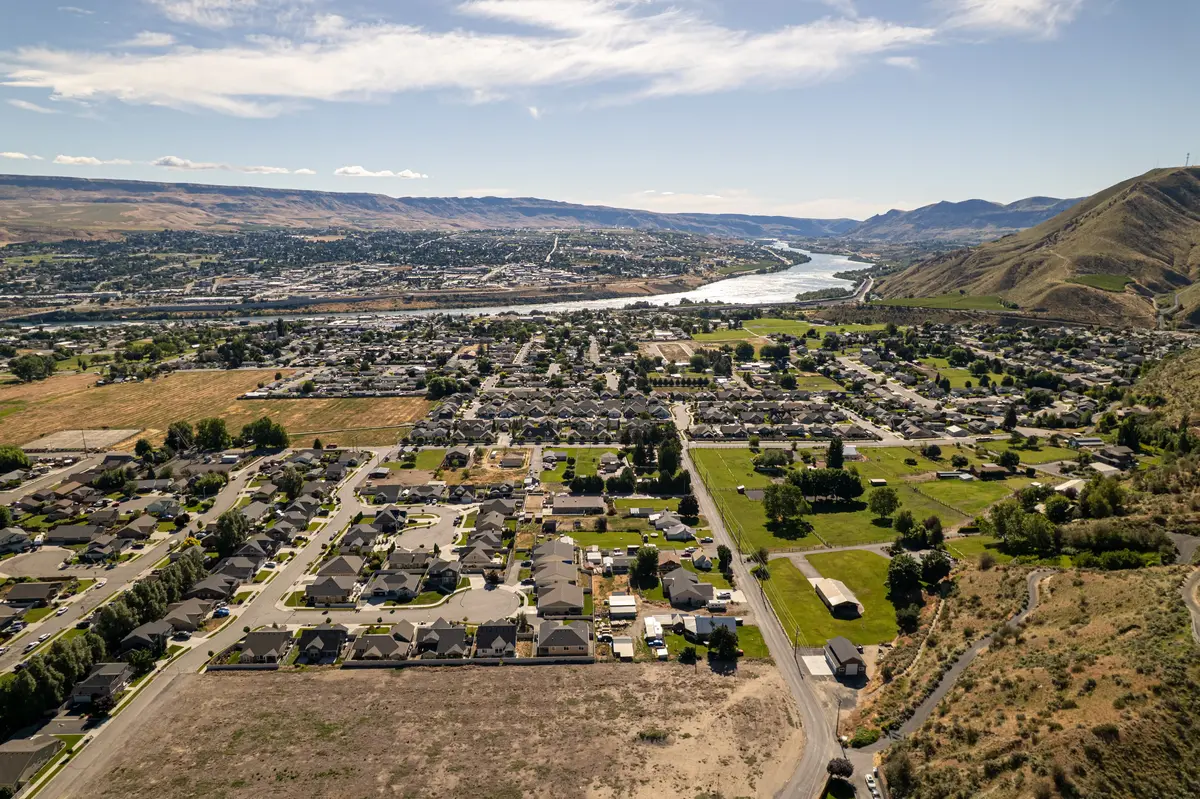
East Wenatchee fits a specific kind of retiree well: someone who wants genuine outdoor access without the isolation of a rural county, a real healthcare system within easy reach, and a cost of living that doesn't require liquidating a portfolio to sustain. The Zillow Home Value Index put the typical home at $518,973 as of June 2026 — meaningful equity for someone selling out of a pricier market, and a realistic entry point for buyers who don't want to stretch. For more detail on what daily expenses look like on a fixed income here, see the full cost-of-living breakdown.
The Columbia River is not a metaphor here — it is the literal backdrop of daily life. The Apple Capital Recreation Loop Trail runs right along it, Wenatchee Confluence State Park sits just across the bridge, and the light on the water in the evening is the kind of thing that keeps people from leaving. Active retirees who walk, cycle, or kayak will find the landscape genuinely feeds that habit rather than requiring a drive to reach it.
The honest case against East Wenatchee in retirement is also short but real. Summers are legitimately hot, and anyone who struggles with heat should spend a July here before committing. The city's walkability for routine errands — groceries, pharmacy, a weekday lunch — is moderate at best outside the downtown corridor; a car remains a practical necessity for most retirees. And if you're relocating from a major metro expecting urban density of restaurants, arts venues, or specialty retail, the valley's smaller scale will require an adjustment. East Wenatchee rewards retirees who move toward something — the river, the healthcare access, the open space — more than those fleeing a prior city's cost.
Healthcare & Medical Access in East Wenatchee
What's Right in the City
Confluence Health operates a full clinic at 100 Highline Drive in East Wenatchee, offering walk-in care, family medicine, internal medicine, behavioral medicine, anticoagulation management, laboratory services, and radiology — without crossing the river. For retirees managing chronic conditions or tracking multiple specialists, having lab draws and imaging handled locally matters more than it sounds on paper.
The Hospital Campus — 10 Minutes Away
Confluence Health's full hospital system — Central Washington Hospital and Wenatchee Valley Hospital — sits approximately 10 minutes across the river in Wenatchee. The system comprises roughly 200 physicians across more than 40 specialties. That depth is what separates this valley from many smaller retirement markets: cardiology, oncology, orthopedics, and neurology are not referral-away services here — they are in the same regional system.
The realistic limitation is that quaternary-level care — complex cardiac surgery, organ transplant, or high-acuity neurosurgery — still routes to Seattle or Spokane. For the vast majority of retirement health needs, Confluence Health handles it. For rarer interventions, the roughly 95-mile drive to Seattle or an air-transport arrangement is the honest answer. Retirees with existing complex cardiac or oncologic conditions should weigh that distance explicitly before choosing East Wenatchee over a city closer to a Level I trauma center.
Transportation to Care
Getting to appointments is a practical concern many retirees underestimate until they can no longer drive. Two programs address this directly. Link Transit runs public bus routes throughout the Wenatchee–East Wenatchee metro area, with a park-and-ride lot in East Wenatchee, and the system explicitly prioritizes seniors and riders with special needs. Aging & Adult Care of Central Washington — the county's dedicated senior services agency — provides free rideshare transportation for Douglas County residents 60 and older to medical appointments, senior centers, shopping, and recreational activities, at a suggested $2 donation per ride. That combination is more robust than what many comparably sized cities offer.
The Retiree Budget in East Wenatchee
Washington's Tax Advantage
Washington has no state personal income tax. That means every dollar of Social Security, pension income, IRA withdrawal, or 401(k) distribution you receive is entirely exempt from state taxation — a structural advantage that compounds meaningfully over a 20- or 30-year retirement. You keep more of each paycheck than you would in Oregon, Idaho, or California.
Washington does impose a 7% capital gains tax on long-term gains above the $278,000 annual standard deduction (2025 figure, indexed for inflation). For most retirees, this is a non-issue: transactions inside retirement accounts — 401(k)s, IRAs, Roth IRAs, defined-benefit plans — are specifically exempt, and real estate sales are also exempt. If you're selling an investment portfolio outside a retirement account as part of your transition plan, it's worth flagging with a tax advisor. For the typical retiree living on Social Security and distributions, the state tax picture is straightforwardly favorable.
Property Taxes and the Senior Exemption
Douglas County's effective property tax rate runs approximately 0.87% — in the context of other carrying costs, the full cost-of-living page has the complete picture. Washington's senior property tax exemption program can further reduce that burden: qualifying homeowners who are 61 or older, own and occupy their home, and fall below the county household income threshold can freeze their assessed value and exempt up to $70,000 of home value from taxation. That's a program worth applying for early, not later.
Daily Cost Reality
Groceries, dining, and services in the Wenatchee valley run close to Washington state averages — not cheap by national standards, but not the premium you'd pay in Bellevue or Bend. The area has enough commercial density that most weekly needs are local, which limits the drive-to-the-city cost that burdens more rural retirement choices. A moderate retirement budget — covering housing, healthcare premiums, groceries, and a vehicle — is realistic here for a couple with combined fixed income in the $55,000–$75,000 range, though individual circumstances vary considerably.
Looking to buy in East Wenatchee? Estimate your payment.
Enter your numbers to see an estimated monthly mortgage payment.
Estimate only. Excludes HOA fees and mortgage insurance. The interest rate above is a starting point, not a quoted rate — replace it with your own to see real numbers. Insurance is a flat placeholder, not a East Wenatchee quote.
Walkability, Community & Staying Active in East Wenatchee
The Honest Walkability Picture
East Wenatchee's walkability depends sharply on where you live. The downtown corridor along Eastmont Avenue — where Moon Bean Cafe on Eastmont Ave represents the kind of independent coffee spot that becomes a weekly anchor — has the most on-foot access: a handful of shops, quick-service dining, and a pharmacy within a reasonable walk for someone comfortable covering a half-mile. Beyond that core, most errands require a car. The East Wenatchee Bench and Grant Road corridor, for instance, are thoroughly car-dependent for grocery runs.
What the city does exceptionally well for active retirees is trail access. The Apple Capital Recreation Loop Trail starts at trailheads on 19th Street NW and at 27th Street NW near Empire Avenue NW — paved, flat along the river, open year-round, and entirely accessible for walkers and cyclists of varying fitness levels. The 10-mile loop (22 miles with spurs) is the kind of infrastructure that genuinely supports a daily walking habit without requiring trail shoes or a mountain-bike budget. In winter, the paved surface handles light snowfall well enough that many retirees keep the habit going through the cold months.
Senior Community and Social Life
Foothills Community Center — the rebranded Wenatchee Valley Senior Activity Center, located at 1312 Maple Street in Wenatchee — is the metro area's primary hub for adults 50 and older, and it explicitly serves Douglas County residents. Annual membership is $50 for an individual or $75 for a couple. The programming is more substantive than a casual reader might expect: daily exercise and music classes, book and writing clubs, arts and crafts, weekly Bingo, monthly dances, and a Tuesday-through-Friday affordable lunch program. It is a genuine community, not just a calendar of events. The catch is the drive: it's across the river, which makes it an easy trip but not a walk-out-the-door convenience.
Link Transit's park-and-ride and the Aging & Adult Care of Central Washington rideshare program both run routes that can get you there without driving. For retirees who don't want to depend on a car, that transportation infrastructure makes the senior center practically accessible even as they age in place. The full parks and recreation guide covers outdoor programming in more depth.
Climate and Seasonal Reality
One thing newcomers underestimate until their first July: the heat is serious. Highs averaging around 92°F, combined with the valley's reflective geography, makes air conditioning non-negotiable — not optional. The flip side is that the shoulder seasons here, particularly May, June, August, and September, are genuinely exceptional: clear skies, dry air, and the kind of warmth that makes the trail an obvious daily choice. Retirees who struggle in persistent cold will find the winters manageable compared to the Pacific Northwest's west side, but anyone who booked a vacation here in August expecting mild coastal temperatures will need to recalibrate.
Right-Sizing: Downsizing in East Wenatchee
What the Inventory Looks Like
East Wenatchee's downsizing market is more limited than a retiree moving from a large metro might expect. Single-level ranch homes exist throughout the city, and they tend to move relatively quickly because demand from older buyers and buyers with mobility considerations is consistent. If single-level living is a firm requirement — not a preference, a requirement — build that into your search timeline and be prepared to act when the right listing appears rather than assuming you'll have weeks to decide.
Patio homes and townhome-style attached housing represent a smaller slice of the market than in purpose-built retirement communities. The city's housing stock skews toward detached single-family homes, which means yard maintenance remains a reality for many downsizers unless they're deliberate about the property type they target.
East Wenatchee Senior Living
For retirees ready to move fully out of homeownership, East Wenatchee Senior Living stands out as the city's primary option. The community earned a Deficiency-Free Rating on its 2025 Washington State Survey — the highest possible outcome — and offers both independent and assisted living with Columbia River views, restaurant-style dining three times daily, a social events calendar, pet-friendly accommodations, and scheduled transportation. A deficiency-free state survey is not a marketing claim; it is a documented inspection result, and it matters when you're evaluating a community for a parent or planning your own future care needs.
Independent living at a community like this typically makes financial sense when the total cost compares favorably to carrying a home plus rising maintenance, healthcare coordination, and isolation risk. That math is deeply personal, but the community's transportation and on-site dining both directly address the two most common friction points for aging-in-place retirees in car-dependent cities.
The Broader Region
Wenatchee, just across the river, has a wider inventory of senior-oriented housing options and several assisted-living and memory-care facilities. Retirees willing to look at the full metro area — rather than strictly East Wenatchee addresses — will find more to choose from, particularly at the assisted-living and memory-care level. The practical distance is five minutes; the psychological distance of "across the bridge" is something buyers from out of state sometimes overweight until they've lived the reality of the commute.
East Wenatchee vs Nearby Retirement Destinations
| City | Cost vs East Wenatchee | Primary Hospital | Walkability | Senior Living Depth | Overall Retirement Fit |
|---|---|---|---|---|---|
| East Wenatchee | Anchor | Confluence Health (10 min, 40+ specialties) | Moderate; trail access excellent | One strong independent/assisted community; broader options in metro | Strong for active, trail-oriented retirees with straightforward health needs |
| Wenatchee | About the same | Confluence Health (on-site) | Noticeably better; walkable downtown core | Deeper — multiple communities, memory care options | Best overall retirement infrastructure in the valley; slightly more urban feel |
| Cashmere | Noticeably cheaper | Confluence Health (20–25 min) | Very limited; small town, car essential | Minimal — limited senior-specific housing | Suits retirees prioritizing quiet, low cost, and rural character over services |
| Waterville | Significantly cheaper | 45–60 min to Confluence Health | Minimal; rural county seat | Very limited | Best for deeply rural retirees comfortable with distance from medical care |
| Leavenworth | Pricier | 30–40 min to Confluence Health | Good in Bavarian Village core; poor outside it | Limited; tourism-driven market, not retirement-built | High lifestyle appeal but premium cost and thinner senior infrastructure |
| Rock Island | Slightly cheaper | Confluence Health (~15–20 min) | Very limited; rural residential | Minimal; relies entirely on Wenatchee metro options | Quiet riverfront living for self-sufficient retirees; limited services locally |
Wenatchee beats East Wenatchee on walkability and senior living depth — if being able to walk to a pharmacy or the farmers market matters to you, the difference is real. Cashmere and Waterville offer meaningfully lower costs but require a genuine comfort with driving farther for healthcare; a routine cardiology follow-up from Waterville is a half-day commitment rather than a quick trip. Leavenworth has obvious appeal but its tourism economy means housing costs run higher and senior-specific infrastructure hasn't followed the lifestyle marketing. For most retirees weighing this valley, the honest choice is between East Wenatchee and Wenatchee themselves — they share the same healthcare system and weather, and the deciding factor usually comes down to whether you want a slightly more walkable downtown or a slightly quieter residential character on the Douglas County side.
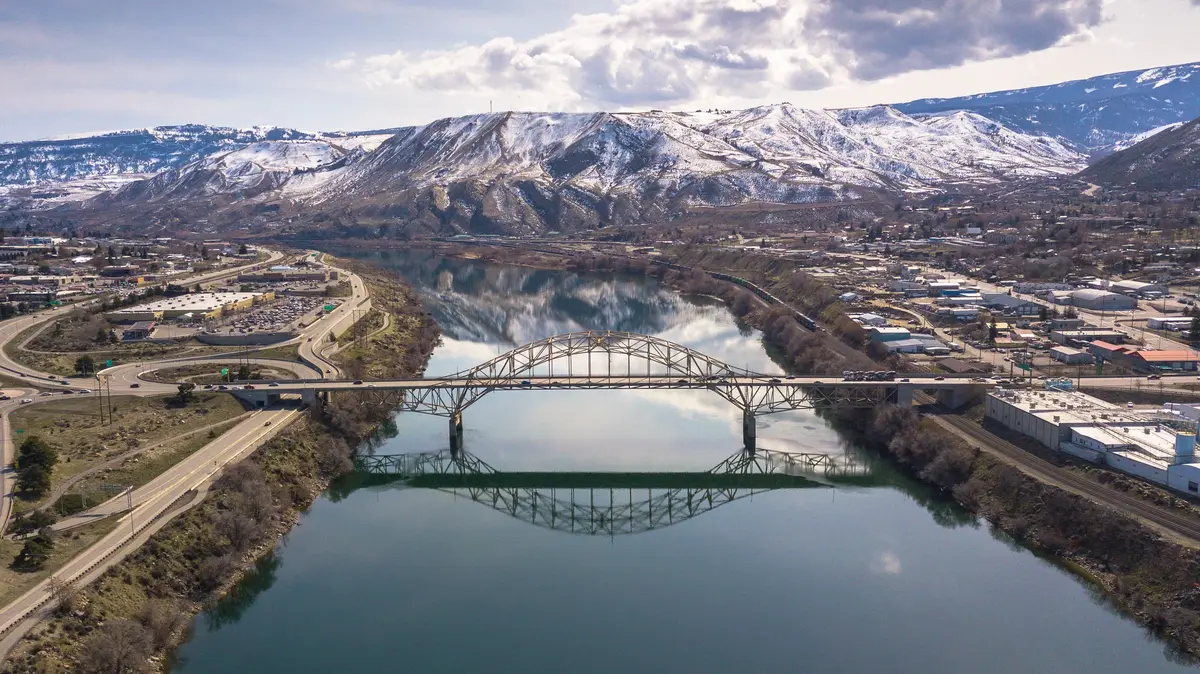
Local Expert Takeaway: East Wenatchee's retirement case rests on three things that hold up under scrutiny: Confluence Health's 40-specialty system is genuinely close (not a 90-minute drive), the Apple Capital Loop Trail along the Columbia gives active retirees a daily walking habit built right into the landscape, and Washington's zero state income tax means every Social Security check and IRA withdrawal goes further than it would across the border in Oregon or Idaho. The honest friction is a car-dependent layout outside the downtown strip and summers that run legitimately hot — plan your July before you commit. The Foothills Community Center across the river and the AACCW's $2-donation rideshare program mean the social and transportation infrastructure is real, even if it requires crossing the bridge to access it.
Quick Takeaways & FAQs
✅ Washington's zero state income tax means Social Security, pension income, and IRA withdrawals face no state taxation — a durable advantage that compounds over a long retirement.
⚠️ Most daily errands in East Wenatchee require a car; the paved Apple Capital Loop Trail is exceptional for walking and cycling, but routine grocery runs outside the downtown core are not walkable.
📍 East Wenatchee Senior Living earned a Deficiency-Free Rating on its 2025 Washington State Survey — the highest outcome possible — and sits within the city with Columbia River views and on-site dining.
Is Social Security taxed in East Wenatchee, Washington?
How close is East Wenatchee to a hospital?
Are there 55+ or active-adult communities in East Wenatchee?
Does East Wenatchee have transportation options for seniors who no longer drive?
What is the property tax rate in East Wenatchee, and is there a senior exemption?
Moving to Washington?
Tell us what you need help with and we'll connect you with local resources.
