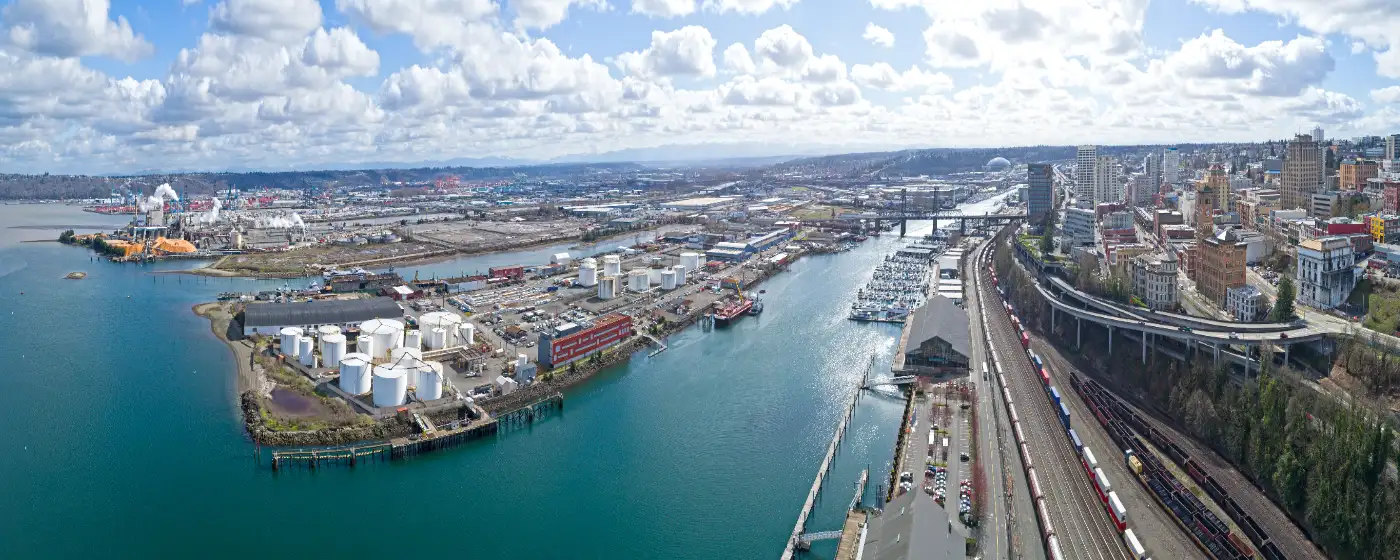
Fife sits at one of the most logistically loaded intersections in the Pacific Northwest — where I-5, Highway 167, and the Port of Tacoma's industrial corridor converge in Pierce County. That geography shapes everything about what it costs to live here. You're paying for access: roughly 40 minutes from Seattle, closer to Tacoma's job market, and planted squarely in a South Puget Sound corridor that has absorbed steady demand from buyers priced out of King County. Fife is not cheap by any national measure, but relative to the metro areas it feeds into, it has historically offered a meaningful entry point.
The city's economic backbone — distribution centers, gaming and hospitality, and a range of logistics-driven employers — draws a workforce that ranges from logistics professionals to hospitality staff. That workforce mix is reflected in a median household income of $90,532, which puts residents in a position to qualify for mid-tier mortgages but leaves little margin at the city's current price levels. Fife has attracted families who want Pierce County affordability without giving up fast highway access to Seattle or Tacoma employers.
Overall, cost of living in Fife runs approximately 27–29% above the national average, with housing costs the primary driver — roughly 66–70% above the national baseline. Day-to-day expenses like groceries and transportation also run above average, partly because Washington state imposes a 10.2% combined sales tax in Fife and taxes groceries at the state rate. The compensating factor nearly every resident mentions: Washington has no individual income tax on wages, which meaningfully offsets the sticker shock on sales and property taxes for most working households.
Whether you're running numbers on renting vs. buying, comparing Fife to Tacoma or Puyallup, or trying to understand what Washington's tax structure means for your take-home pay, the sections below break down every major cost category — housing, utilities, groceries, transportation, and taxes — with specific figures and an honest read on who Fife's budget actually fits.

What It Really Costs to Live in Fife
The median sale price in Fife hit $529,612 in June 2026 (Redfin median sale price). That number puts Fife well above the national median but noticeably below the Seattle-area figures that push buyers toward Pierce County in the first place. The cost posture here is best described as mid-tier South Puget Sound: cheaper than most of King County, roughly competitive with parts of Tacoma's stronger submarkets, and increasingly close to Federal Way as that corridor has appreciated.
What drives Fife's price level is a combination of location premium and limited inventory. The city is small — just under 11,000 residents — with a compact footprint squeezed between major industrial corridors and the Puyallup River. That constraint keeps supply tight. Buyers who commute to Seattle absorb a location discount compared to living in Renton or Kent, but the gap has narrowed as demand has pushed south along I-5.
The home-price-to-income ratio, at approximately 5.8x the median household income, signals real affordability pressure. A household earning $90,532 is not comfortably buying at the median without a significant down payment. That ratio is the honest starting point for any budget conversation in Fife — and it's why many residents, particularly newer arrivals, start as renters while they build equity positioning.
Housing: Rent vs Buy in Fife
The Buying Picture
Entry-level homes in Fife — older construction, smaller square footage, minimal updates — typically start in the low-to-mid $400,000s, with the city-wide median at $529,612. For specifics on which parts of the city tend to concentrate more affordable inventory, the Best Neighborhoods guide covers that breakdown; on this page, the numbers are city-wide only.
Fife's effective property tax rate is approximately 0.94% of assessed value — above Washington's statewide average of roughly 0.75%, and a figure worth factoring carefully into your monthly ownership cost. Use the mortgage calculator below to model full ownership costs at your specific price point and down payment; the tax rate feeds directly into that estimate.
The Renting Picture
Renting in Fife means dealing with a market that has tightened considerably as buyers have been sidelined by rate sensitivity. Typical two-bedroom apartments and townhomes lease in the $1,800–$2,300 per month range, with newer construction or updated units pushing toward the top of that band. Single-family rentals command a premium and move quickly.
When Renting Makes More Sense
If you're relocating for a new job and haven't had time to understand how the different parts of Fife and the surrounding area feel day-to-day, renting for 12 months first is a defensible move. The city is small enough that a year of renting gives you a real read on commute routes, flood-risk zones near the Puyallup River, and which parts of the city feel like a long-term fit — before you're committed to a specific block.
Buyers who plan to stay fewer than four to five years will find the math tight at current price levels and a 10.2% sales-tax environment that makes transaction costs add up. For those with a longer horizon and the down payment to absorb the 0.94% tax rate, ownership still builds equity in a corridor that has shown consistent demand.

Everyday Costs Beyond Housing in Fife
Fife's non-housing expenses carry two consistent surprises for newcomers. The first is the water and sewer bill: Fife bills water, sewer, and storm drainage on a bi-monthly cycle, and the typical single-family residential bill runs $410.67 every two months — that's roughly $205 per month before electricity and gas. Rates jumped at the start of 2026 by about $8.93 per month per household, driven by wholesale rate increases from Tacoma Public Utilities. Electricity and natural gas come through Puget Sound Energy, not the city; Washington's average residential electricity rate of 14.95 cents per kWh is actually below the national average, which softens that piece of the bill.
Groceries land about 9% above the national average, and Washington applies its full 6.5% state sales tax to unprepared food — there is no grocery exemption. Gas stings more than most states: Washington's gas tax sits at 59.04 cents per gallon, among the highest in the country. A household that drives two cars, as most Fife residents do, will feel that figure quickly. Sound Transit's Sounder commuter rail connects the corridor to Seattle and provides a real alternative for weekday commuters, which can offset one car's operating costs for the right household — for a fuller look at commute options, see the Living in Fife guide.
| Category | Typical Monthly Cost | Notes |
|---|---|---|
| Housing (2BR Rent) | $1,800–$2,300 | Owners: use the mortgage calculator above for an ownership estimate at your price point |
| Water, Sewer & Storm | ~$205 | City of Fife bi-monthly billing ($410.67/cycle); rate increased Jan 2026 |
| Electricity & Gas | $120–$180 | Puget Sound Energy serves Fife; WA electricity rate below national average |
| Groceries | $500–$750 | WA state rate ~9% above national avg; groceries taxed at 6.5% state sales tax |
| Transportation & Gas | $250–$450 | WA gas tax 59.04¢/gal; Sounder rail can reduce costs for Seattle commuters |
| Phone & Internet | $130–$200 | Competitive provider options in the Tacoma metro corridor |
| Misc / Discretionary | $300–$500 | Dining, entertainment, personal care; 10.2% sales tax applies to most purchases |
The 10.2% combined sales tax in Fife applies to nearly every discretionary purchase, so households that spend heavily on goods and dining will feel it consistently across that miscellaneous line.
Looking to buy in Fife? Estimate your payment.
Enter your numbers to see an estimated monthly mortgage payment.
Estimate only. Excludes HOA fees and mortgage insurance. The interest rate above is a starting point, not a quoted rate — replace it with your own to see real numbers. Insurance is a flat placeholder, not a Fife quote.
Fife vs Nearby Cities: Cost Comparison
| City | Median Home Price | Typical 2BR Rent | Cost vs Fife |
|---|---|---|---|
| Fife | $529,612 | $1,800–$2,300 | — (baseline) |
| Tacoma | ~$430,000–$470,000 | $1,600–$2,100 | Noticeably cheaper to buy; rents somewhat lower |
| Puyallup | ~$530,000–$560,000 | $1,850–$2,300 | About the same; slight premium in some areas |
| Milton | ~$490,000–$530,000 | $1,700–$2,100 | Marginally cheaper overall; smaller rental market |
| Edgewood | ~$550,000–$600,000 | $1,900–$2,400 | Somewhat higher; more detached single-family stock |
| Federal Way | ~$480,000–$520,000 | $1,700–$2,200 | Slightly cheaper to buy; broader apartment inventory |
Tacoma remains the clearest value alternative for buyers who don't need Fife's specific I-5 access, while Edgewood tends to carry a small premium for its quieter, more residential character.
Taxes & the Bottom Line for Fife
No Income Tax — With Nuance
Washington has no individual income tax on wages or salaries. For most working households relocating from California, Oregon, or any income-tax state, this is the single most significant financial shift — and it's real. A household earning $90,000 keeps meaningfully more of each paycheck here than in most comparable West Coast markets.
The nuance: Washington taxes 7% on long-term capital gains above a $278,000 standard deduction for 2025, rising to 9.9% on gains above $1,000,000. A separate 9.9% tax on household income above $1 million takes effect in 2028. For the median Fife household, those thresholds are not day-to-day concerns — but for high-income earners or those planning to realize large investment gains, they matter.
Sales Tax: The Persistent Line Item
Fife's combined sales tax rate is 10.2% — 6.5% state plus 3.7% local. That rate applies at the Poodle Dog diner on 54th Avenue East, at the drive-through window at PICK-QUICK on Pacific Highway East, and at Warthog Barbeque Pit on 20th Street East. It applies to clothing, electronics, home goods, and restaurant meals. It adds up faster than residents from lower-tax states expect, and it does not exempt groceries at the state level.
Property Tax: Above the State Average
The 0.94% effective property tax rate in Fife sits above Washington's statewide average. At the home price discussed earlier in this guide, that rate produces a meaningful annual obligation — which is why the mortgage calculator exists: use it to model the full ownership cost at your actual purchase price rather than relying on a state-average estimate.
Who Fife's Budget Actually Fits
Fife works best financially for dual-income households, particularly those where at least one partner commutes to Tacoma or uses Sounder rail to reach Seattle without absorbing King County home prices. Single-income buyers at the median price level will find the 5.8x income ratio genuinely tight, and should plan for a down payment well above the minimum to keep monthly obligations manageable. Renters who are building toward a purchase in two to four years will find Fife a reasonable staging point — close enough to the action, without the price ceiling of closer-in submarkets.
The buyers who find Fife a stretch are those coming in solo at or below the median income, or those underestimating what a 10.2% sales tax environment does to a tight discretionary budget. The no-income-tax advantage is real, but it does not fully offset elevated housing, sales tax, and water costs for a household that is already stretched at the purchase price.

Local Expert Takeaway: Fife's no-income-tax advantage is genuine, but the 10.2% sales tax, elevated water and sewer bills (budgeted at roughly $205/month after the January 2026 increase), and a home-price-to-income ratio of about 5.8x mean you need to run a full household budget — not just the mortgage — before you commit. Dual-income households with Seattle or Tacoma commutes tend to make the numbers work most comfortably. If you're coming in solo or near the income median, renting for a year near Pacific Highway East while you build your down payment is the move that keeps your options open.
Quick Takeaways & FAQs
✅ Washington's zero wage income tax delivers a real paycheck advantage for Fife residents — typically the largest single financial benefit of relocating here from any income-tax state.
⚠️ Fife's 10.2% combined sales tax and above-average property tax rate (0.94%) offset the income-tax benefit meaningfully for households with tight discretionary budgets or entry-level purchase prices.
📍 The City of Fife bills water, sewer, and storm drainage together on a bi-monthly cycle — the 2026 typical bill is $410.67 every two months, a figure most newcomers underestimate when budgeting.
What is the median home price in Fife, WA?
What is the sales tax rate in Fife, Washington?
Does Washington state have an income tax — and does that affect Fife residents?
How much are utilities in Fife, WA?
Is Fife cheaper to live in than Tacoma or Federal Way?
Moving to Washington?
Tell us what you need help with and we'll connect you with local resources.
