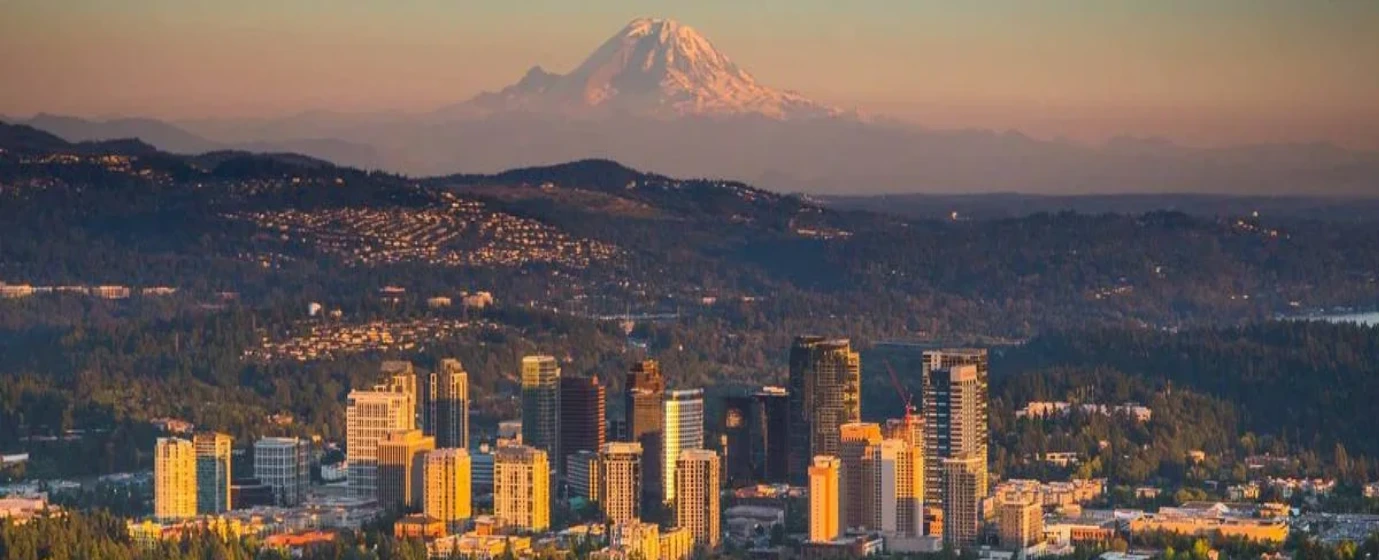
Most people moving to the Eastside assume the parks are decent — maintained, predictable, the kind of green space you'd expect from a prosperous suburb. What they don't expect is the scale. Bellevue Parks & Community Services manages over 2,700 acres of parks and open space, laced together by approximately 98 miles of trails. That's not a number that accumulates slowly — it reflects decades of deliberate land preservation in a city that has grown faster than almost anywhere in the Pacific Northwest, anchored by major tech and telecom employers whose employees have real expectations for outdoor access.
The city sits between Lake Washington to the west and Lake Sammamish to the east, and that geography shapes everything about recreational life here. You can kayak a 2.6-mile paddling trail through a freshwater wetland preserve, walk to a public beach on Lake Washington from downtown, or spend a Saturday morning picking blueberries inside city limits — all within about three miles of each other. The parks aren't scattered amenities. They form a connected system that locals actually use on weekdays, not just summer weekends.
What surprises many newcomers after six months is how much of this is genuinely free. The Bellevue Botanical Garden charges no admission. Mercer Slough's trails and wildlife viewing cost nothing. Even Meydenbauer Bay Park's beach is open to the public — a rarity on Lake Washington, where most shoreline is privately held. Bellevue's park investment is one of the clearest ways the city punches above its size.
Whether you're considering a move or already unpacking boxes, the sections below cover Bellevue's signature parks, its trail network, water recreation on Lake Washington, and how the seasonal calendar shapes outdoor life throughout the year.
Bellevue's Signature Parks: What Each One Is Actually For
Bellevue's landmark parks each serve a distinct purpose, and understanding that distinction helps you pick the right neighborhood — or at least the right Saturday plan.
Bellevue Downtown Park — The Urban Reset
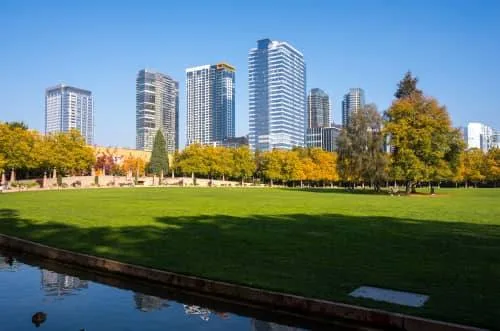
Twenty-one acres in the middle of the city's high-rise core sounds modest until you're standing on the 10-acre central lawn with Mount Rainier framed between office towers. The half-mile promenade rings the park, bordered by a double row of shade trees and a stepped canal that feeds a 240-foot-wide waterfall cascading into a reflecting pond. It's the kind of park that makes downtown living defensible — a genuine counterweight to concrete, not an afterthought.
The Inspiration Playground at the park's edge is one of the most-used all-abilities play spaces on the Eastside, drawing families from Crossroads and West Bellevue alike on weekend mornings. Parents with school-age children who are prioritizing proximity to green space from a neighborhood selection standpoint often weight this park heavily in their decision.
Meydenbauer Bay Park — Public Waterfront That's Actually Public
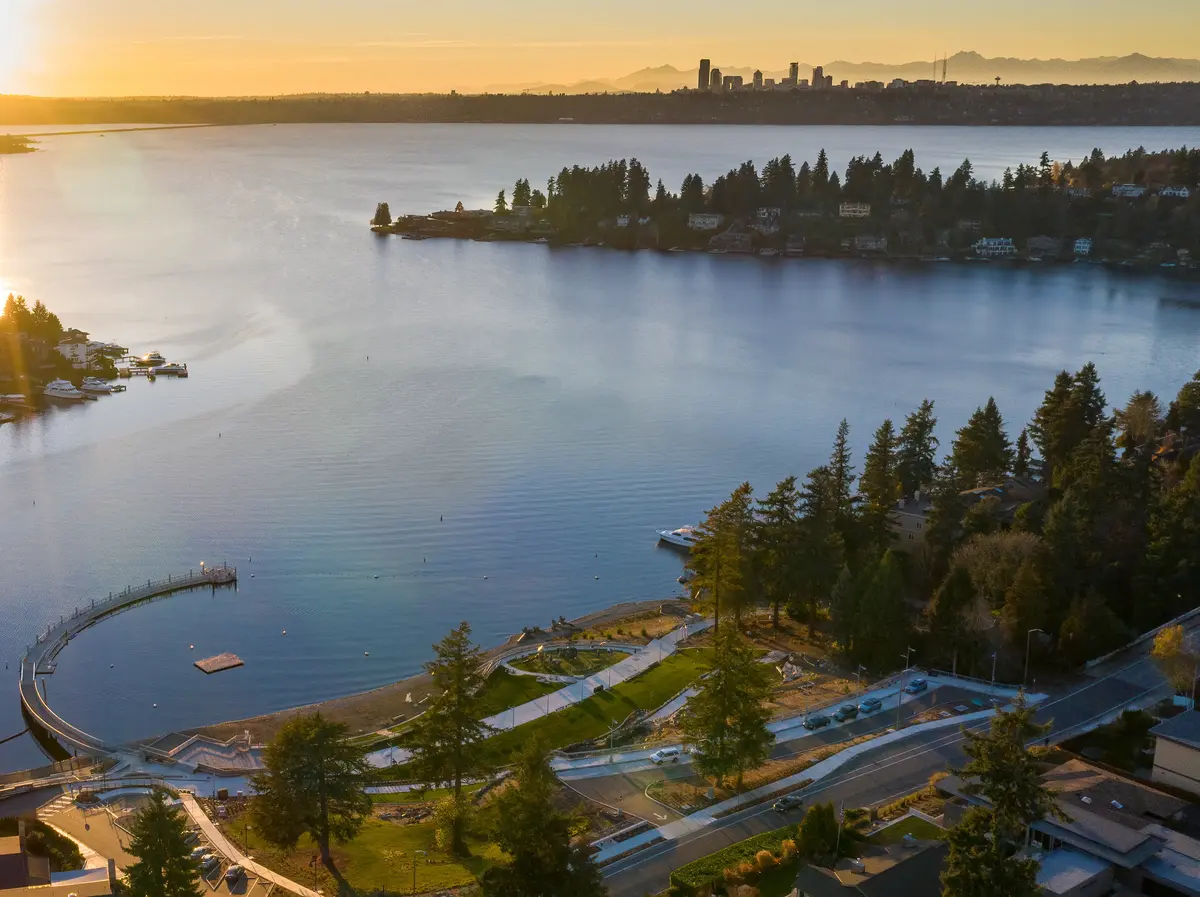
Meydenbauer Bay Park has been part of Bellevue since 1953, when the city incorporated a King County park established in the 1930s — giving it nearly a century of continuous public shoreline access. That longevity matters: on a lake where private ownership dominates, this seven-acre park represents the longest stretch of public waterfront in the city.
The 420-foot floating crescent pedestrian pier extends into the bay and is the first thing most visitors photograph. Seasonal kayak and canoe rentals make it easy to get on the water without owning a boat, and the beach house with restrooms and showers means you can actually spend the whole day here. Seasonal lifeguards are on duty at the sandy beach, which keeps it genuinely family-usable rather than just scenic.
The city is actively planning a Phase 2 expansion that will add a pavilion, plaza, accessible pathways to the water, and a lakeside promenade — deepening the pedestrian connection between downtown and the waterfront that currently requires navigating a short hillside.
Kelsey Creek Farm Park — The One That Surprises People Most
Tucked into a residential section of east Bellevue, Kelsey Creek Farm Park operates as a working farm within city limits — barn animals, equestrian trails, and a creek corridor that feels genuinely rural. It's the park locals mention when out-of-town visitors express skepticism that Bellevue has real character beyond the mall and the towers. The farm draws the kind of steady weekday foot traffic that signals a neighborhood anchor, not a destination.
| Park | Size | Primary Draw | Best For |
|---|---|---|---|
| Bellevue Downtown Park | 21 acres | Waterfall, promenade, skyline lawn | Walkable Families |
| Meydenbauer Bay Park | 7 acres | Lake Washington beach, pier, kayak rentals | Families Views |
| Mercer Slough Nature Park | 320 acres | Wetland trails, paddling, wildlife | Nature Quiet |
| Bellevue Botanical Garden | 53 acres | Curated gardens, free admission | Walkable Families |
| Kelsey Creek Farm Park | — | Working farm, equestrian trails | Families Nature |
| Robinswood Park | — | Sports fields, cricket pitch | Families Commuter |
Robinswood deserves a separate mention: it drew approximately 2,000 field reservations from 35 community groups in a single year, and a 2025 synthetic turf replacement project added a cricket pitch — a concrete signal of how Bellevue's park programming reflects its actual demographics rather than a generic suburban template.
Mercer Slough and the Bellevue Botanical Garden: Two Parks Worth Knowing Deeply
These two are in a different category from the city's sports fields and pocket parks — they're the places that tend to rewire a newcomer's entire mental model of what Bellevue is.
Mercer Slough Nature Park — 320 Acres Nobody Told You About
Most cities at Bellevue's income and density level don't have a 320-acre freshwater wetland preserve inside their borders. Mercer Slough is one of the largest remaining wetlands on Lake Washington, and it operates as a genuine nature corridor: over 7 miles of trails cover boardwalks over open water, soft-surface paths through the slough's interior, and paved walkways accessible to strollers and wheelchairs.
The 2.6-mile paddling water trail is open to human-powered watercraft only — no motorized boats, which is what keeps great blue herons, bald eagles, beavers, and otters reliably present. Wild iris and water lilies bloom along the banks in late spring. The Mercer Slough Environmental Education Center, operated in partnership with Pacific Science Center, runs hands-on programs that bring district school classes here regularly.
Then there's the blueberry farm. A working u-pick blueberry operation has operated inside the park since the 1940s, open to the public from July through September. On a warm August Saturday, the combination of paddling the slough in the morning and picking blueberries in the afternoon is the kind of afternoon that makes people stop asking when they're moving to Seattle.
Bellevue Botanical Garden — Free, 53 Acres, and Genuinely Worth a Weekday Visit
Opened in 1992 through a public-private partnership between the City of Bellevue and the Bellevue Botanical Garden Society, the Botanical Garden has never charged admission — an unusual commitment that holds even as the garden has grown to showcase over 3,000 plant varieties across 15 cultivated acres.
The distinct garden rooms reward multiple visits across seasons. The Yao Japanese Garden and Alpine Rock Garden draw the most first-time visitors, but the Native Discovery Garden and the Waterwise Garden reflect a Pacific Northwest sensibility that the showier spaces don't. A suspension bridge crosses a deep wooded ravine near the garden's center — genuinely dramatic, and easy to miss if you follow only the main loop.
The garden's biggest crowd moment is the annual winter light festival, which runs from just after Thanksgiving through the Christmas season. Three-dimensional plant and animal sculptures assembled from strings of lights fill the cultivated sections of the garden at night. It draws visitors from across the Eastside and is one of those events that locals treat as non-negotiable — newcomers who miss the first year tend to block it on their calendars permanently afterward.
Trails and Active Recreation: What 98 Miles Actually Looks Like
Ninety-eight miles of trails sounds like a marketing number until you start using them. What distinguishes Bellevue's network from a typical suburban greenway system is connectivity — trails link parks to neighborhoods to regional corridors, which means you can build a real commute or a weekend loop without retracing your steps.
The Trail System in Practice
Within Mercer Slough alone, more than 7 miles of paths range from boardwalks inches above the water to firm-surface paths that run dry even in January. The Downtown Park loop and the Coal Creek Trail corridor in the Eastgate area offer paved options popular with road cyclists and runners who want a consistent surface year-round. Bridle Trails State Park, adjacent to the Bridle Trails neighborhood, adds an equestrian dimension — miles of soft-surface paths through second-growth forest that are intentionally kept unpaved to protect the trail character.
Getting on the Water
Meydenbauer Bay Park's seasonal kayak and canoe rentals are the most accessible on-ramp for residents who don't own gear. For more serious paddling, Mercer Slough's 2.6-mile water trail offers a protected, motor-free channel that rewards patience — the wildlife is present year-round, but late spring and early fall tend to produce the best heron and eagle sightings before and after summer boat traffic picks up on the broader lake.
Sports Fields and Community Recreation
Robinswood Park's fields handle the highest volume of organized sport in the city — approximately 2,000 reservations in a single year from 35 distinct community groups before the 2025 synthetic turf replacement was even complete. The addition of a cricket pitch is a practical acknowledgment of Bellevue's South Asian and East African communities, who had been organizing on fields not designed for the sport.
For families exploring youth sports options alongside the parks system, the full picture of organized league activity connects to the schools and community programs page, which covers recreational league infrastructure in more depth.
What People Don't Expect: The Winter Trail Reality
The Pacific Northwest reputation for rain is accurate, and Bellevue's trails reflect it. The soft-surface paths through Mercer Slough can become muddy from November through March in ways that make trail shoes non-negotiable. First-year residents from drier climates often discover in October that a trail they loved in August requires a wardrobe change — waterproof trail runners and a layer system become part of the routine. The paved loops at Downtown Park and the Botanical Garden stay usable year-round without gear upgrades, which is why you'll see those paths busy on weekday lunch breaks even in February.
Looking to buy in Bellevue? Estimate your payment.
Enter your numbers to see an estimated monthly mortgage payment.
Estimate only. Excludes HOA fees and mortgage insurance. The interest rate above is a starting point, not a quoted rate — replace it with your own to see real numbers. Insurance is a flat placeholder, not a Bellevue quote.
Seasonal Recreation: How Bellevue's Outdoor Calendar Actually Works
Bellevue's park system doesn't operate on one uniform season. Understanding when each park peaks — and when it gets genuinely crowded — saves a lot of frustration for people new to the Eastside's weather rhythms.
| Season | What's Best | What to Watch For |
|---|---|---|
| Spring (Mar–May) | Botanical Garden blooms, Mercer Slough iris, Meydenbauer pier opens | Trails can be muddy through April; cherry blossoms at Botanical Garden draw weekend crowds |
| Early Summer (Jun–Jul) | Meydenbauer beach opens with lifeguards, kayak rentals begin, blueberry farm u-pick starts July | Meydenbauer beach fills by mid-morning on sunny weekends; arrive before 10am |
| Peak Summer (Aug) | Blueberry u-pick at Mercer Slough, Downtown Park lawn events, paddling water trail at its best | Parking at Mercer Slough trailheads fills early on weekends; bike or walk in if possible |
| Fall (Sep–Oct) | Blueberry farm closes September; fall color in Botanical Garden and Bridle Trails; fewer crowds | Rain returns mid-October; soft trails get slick by November |
| Winter (Nov–Feb) | Annual winter light festival at Botanical Garden (post-Thanksgiving through Christmas season) | Festival draws large crowds; weeknight visits are significantly quieter than weekends |
The Summer Crowd Reality at Meydenbauer
Meydenbauer Bay Park's beach is the only publicly accessible sandy beach on Lake Washington within Bellevue, and on a hot July or August day the entire Eastside seems to know it. The park's seven acres don't have the scale to absorb a big crowd without feeling full. Residents who live within walking distance of the West Bellevue/Meydenbauer neighborhood treat this as one of the clearest perks of that location — they arrive on foot, avoid the parking scramble, and leave when it gets busy rather than sinking time into finding a spot.
After the Trail: The Spring District Breweries
A practical post-recreation stop worth knowing: two award-winning breweries operate in the Spring District along NE District Way. Bellevue Brewing Company earned a Silver Medal at the 2025 World Beer Cup for its "Bellevue 1882 Lager" in the American-Style Pilsener category, and Resonate Brewery + Pizzeria took a Gold Medal that same year for "Lithium" in the German-Style Altbier category — both recognized by the Brewers Association among dozens of competing entries. Neither is a trail-adjacent tap room in the traditional sense, but both are a reasonable post-hike decompression for residents who drive or bike over from the Mercer Slough or Eastgate corridor.
What People Move Away From Bellevue For — and It's Park-Related
A specific pattern appears among families who eventually leave for Issaquah or Sammamish: they want more mountain-adjacent access without a drive. Bellevue's parks are exceptional at the urban-nature interface — wetlands, urban forests, curated gardens, a lake beach — but they don't offer the alpine or high-elevation recreation that the Cascades deliver. Residents who want to ski, snowshoe, or access technical hiking on a Saturday morning without two hours of planning tend to eventually migrate eastward. That's not a failure of the park system; it's a geographic reality worth naming before you buy.
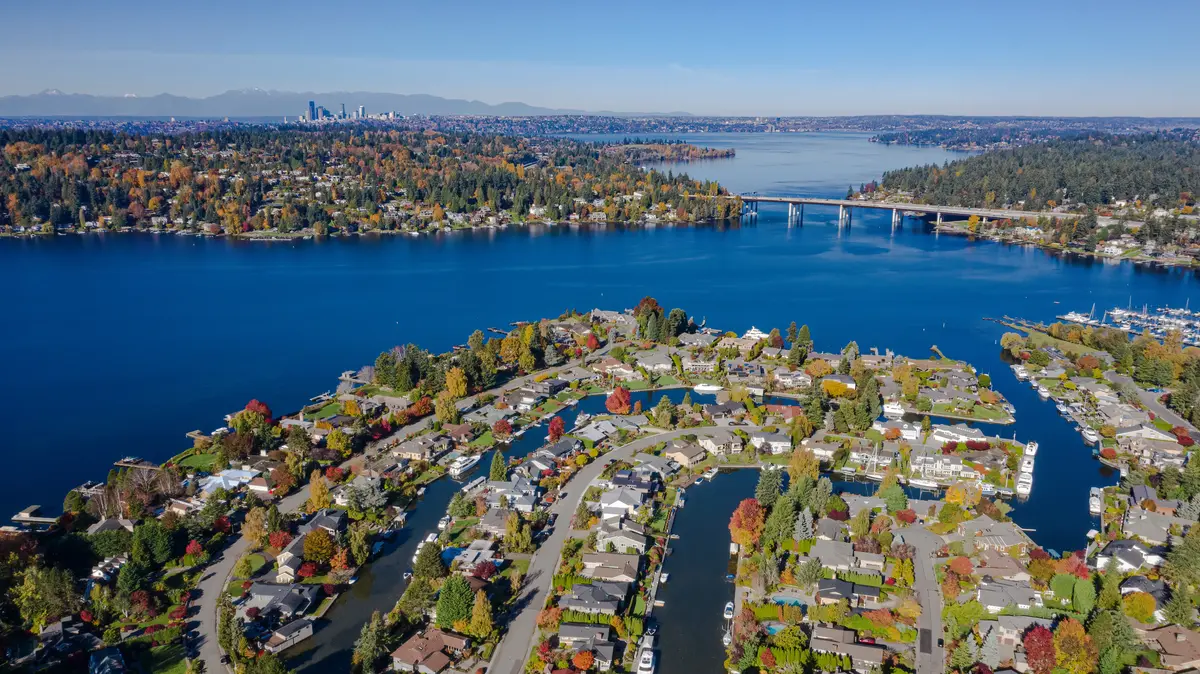
Local Expert Takeaway: Bellevue's parks are genuinely underrated even by people who move here specifically for them. The combination of Mercer Slough's paddling trail, Meydenbauer Bay's public beach, and the Botanical Garden's free admission creates an outdoor infrastructure that most cities at this price point can't match. The catch: peak-season weekends at Meydenbauer fill fast, the soft-surface trails get legitimately muddy from November through March, and if your outdoor life revolves around high-elevation terrain rather than wetlands and lake access, the mountains will always be a drive away. Use the blueberry farm at Mercer Slough in August and the winter light festival at the Botanical Garden in December — both are the kind of recurring local traditions that make a place feel like home rather than a zip code.
Quick Takeaways & FAQs
✅ Bellevue manages over 2,700 acres of parks and 98 miles of trails — including a 320-acre wetland preserve and the longest stretch of public Lake Washington waterfront in the city, all within city limits.
⚠️ The soft-surface trails through Mercer Slough and Bridle Trails become genuinely muddy from November through March — waterproof footwear isn't optional for year-round use.
📍 The u-pick blueberry farm inside Mercer Slough Nature Park has operated since the 1940s and is open to the public July through September — one of the more unexpected things you can do on a Tuesday afternoon in a city of 154,000.
Is Meydenbauer Bay Park actually a public beach anyone can use?
How many miles of trails does Bellevue have?
Is the Bellevue Botanical Garden free?
Can you kayak or canoe at Mercer Slough?
Is there a u-pick blueberry farm in Bellevue?
Moving to Washington?
Tell us what you need help with and we'll connect you with local resources.
