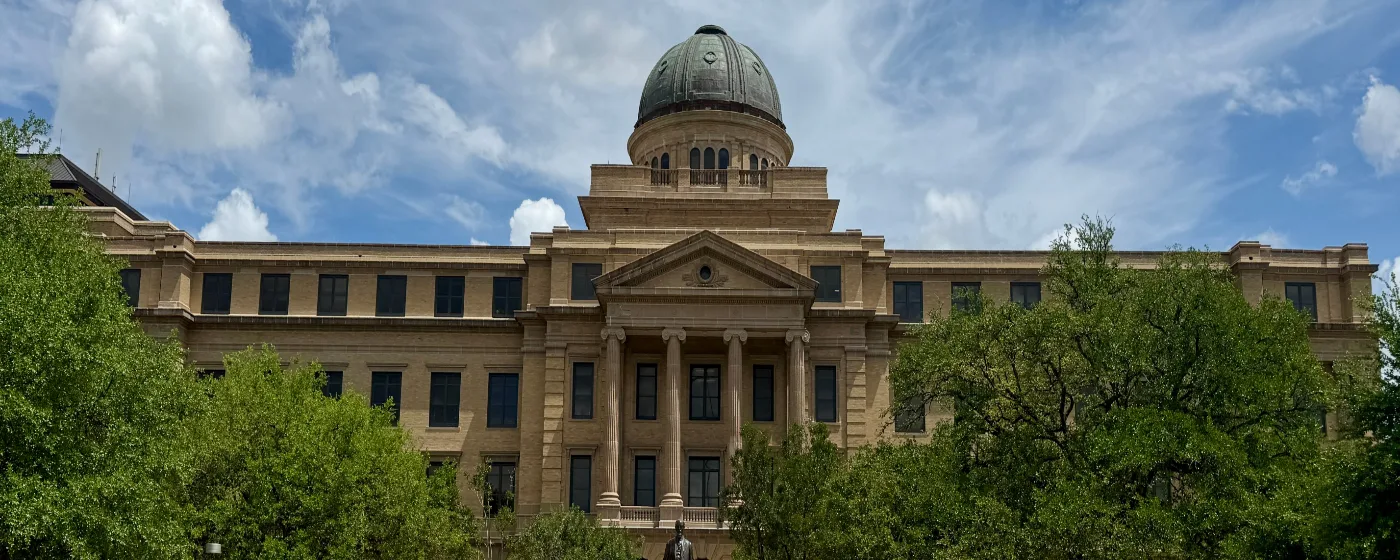
What Is Living in College Station, Texas Like?
Maybe someone mentioned it as an affordable alternative to Austin. Maybe your company has ties to Texas A&M. Either way, College Station has a way of surprising people — it reads on paper like a college town frozen in time, but on the ground it is one of the fastest-growing mid-size cities in Texas. With 127,472 residents and a metro of roughly 287,000, it sits about 100 minutes northwest of Houston in the Brazos Valley, anchored by SH-6 and Texas Avenue. The city's rhythm is set almost entirely by Texas A&M University: the academic calendar shapes the traffic, the economy, and the culture in ways that no spreadsheet fully captures.
Texas A&M is not just a nearby landmark — it is the economic backbone. The university is the dominant employer, and its gravitational pull attracts a constellation of other institutions and companies: Reynolds and Reynolds for automotive software, a major regional health system, a growing roster of biotech and tech firms, and the College Station ISD, which holds a B rating, according to the Texas Education Agency. The population skews young — the median age is around 23, a direct product of a student body that outnumbers the non-student population. Families who move here expecting a quiet suburban routine sometimes find that energy energizing; others find it disorienting. It depends entirely on where you land.
Housing costs sit well below what you would pay in Austin or Houston. The typical home price was $349,346 as of July 2026, and the city-wide typical rent runs noticeably below comparable Texas metros — see the full cost of living breakdown for tax rates and utility costs. The trade-off is that the median household income here is below what it takes to comfortably carry that typical home price, which puts real strain on buyers who work locally rather than remotely. Outdoor life centers on Lick Creek Park, Wolf Pen Creek, and Lake Bryan, and the city logs 209 sunny days a year — just enough to justify the summer heat that runs into the high 90s through August.
Whether you are weighing a move from Houston or Dallas, following a job offer to the A&M corridor, or just doing your first serious research on the area, the sections below break down College Station's neighborhoods, housing market, commute patterns, local economy, schools, and what daily life here is really like.
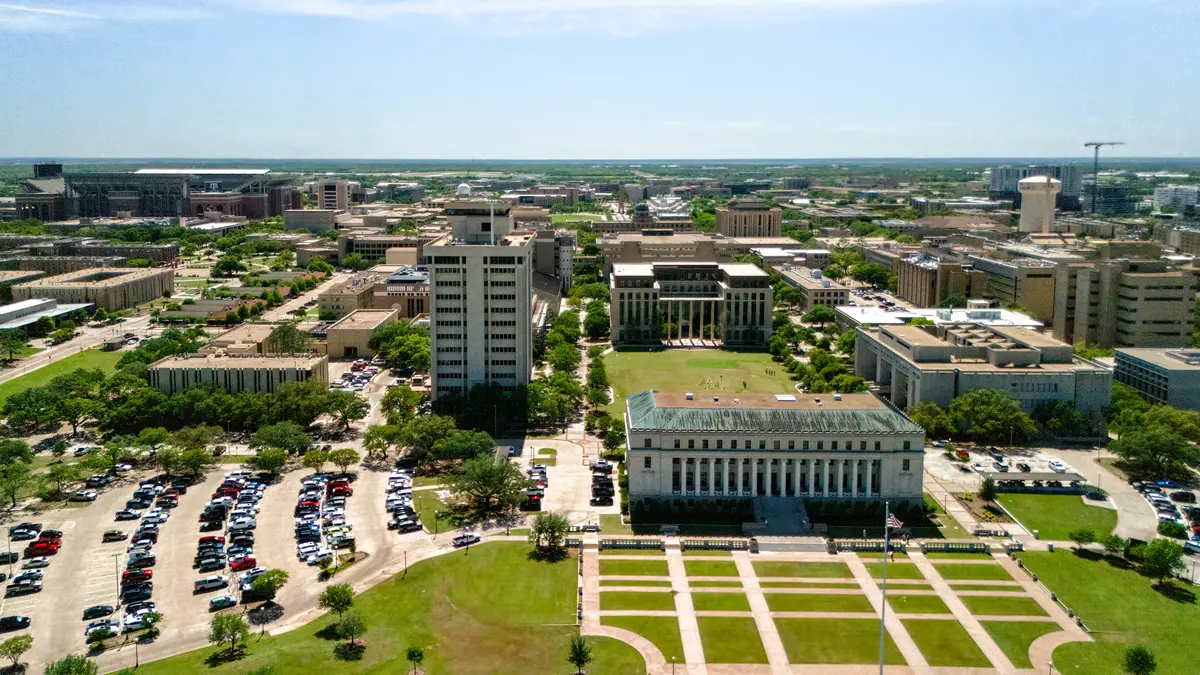
College Station at a Glance
Looking to buy in College Station? Estimate your payment.
Enter your numbers to see an estimated monthly mortgage payment.
Estimate only. Excludes HOA fees and mortgage insurance. The interest rate above is a starting point, not a quoted rate — replace it with your own to see real numbers. Insurance is a flat placeholder, not a College Station quote.
Why Are People Moving to College Station?
The short answer is Texas A&M — but the longer answer is more interesting. The university creates a self-sustaining economic ecosystem that keeps pulling people in: researchers, administrators, healthcare workers, software engineers, and the service industry that supports all of them. Major facilities expansions have drawn companies like FERA Diagnostics, which built a new headquarters and manufacturing facility, StataCorp, which expanded its footprint, and Fujifilm, which deepened a multi-million dollar commitment to the area. The city generated roughly $40 million in annual sales tax revenue, with food and retail at the center — a sign of a local economy that is growing, not just coasting on university momentum.
College Station ISD holds a B rating, according to the Texas Education Agency, which puts it among the stronger school districts in the Brazos Valley. For families with school-age children, that rating paired with housing prices well below the Austin or Houston baseline is often the deciding factor. See the full schools page for campus-level breakdowns and what the district's test results actually mean.
The city has grown at roughly 2 to 3 percent annually, and population projections suggest that pace will continue for decades. That kind of trajectory means new infrastructure, new retail, and new development — but it also means construction noise, traffic on Harvey Road during peak hours, and neighborhoods that feel half-finished while subdivisions catch up to demand. Coming in eyes open on that tension is the first mark of a smart relocation decision here.
Who Is Actually Moving Here
The most common profile is a dual-income household — one partner tied to the university or a university-adjacent employer, one working remotely. Retirees are rarer than you might expect; no dedicated 55+ communities were found in College Station, and the city's energy skews decisively young. The second most common profile is a faculty or staff hire at A&M who wants to own rather than rent and is willing to live a few miles off campus to do it.
Investors are a significant presence too. The student rental market is enormous relative to the city's size, and single-family homes near campus attract buyers who never intend to live there at all. If you are buying to live — not to rent out — that competition shapes the market in ways that are worth understanding before you make an offer.
What Daily Life Feels Like in College Station
The city has two distinct operating modes: when A&M is in session and when it is not. During the fall semester, Kyle Field fills with over 100,000 fans on home game days, Texas Avenue slows to a crawl, and every restaurant in town has a line. In mid-December and again in late May, the traffic evaporates, parking opens up, and College Station feels like a different city entirely — quieter, more manageable, and easier to fall in love with.
Most daily errands need a car. The city is sprawling in the way that most Texas cities are, and the residential neighborhoods that most families buy into — Southwood Valley, Castlegate, Pebble Creek — are designed around driving. The Brazos Transit District does run bus and paratransit service across the city, and Texas A&M's Aggie Spirit campus network covers the university core. The city was also developing a new Active Transportation Master Plan as of mid-2025, focused on improving cycling and pedestrian corridors near campus. But for the overwhelming majority of residents, life here is structured around owning at least one vehicle.
The Seasonal Reality Newcomers Miss
Nobody warns you about August. With average highs near 96°F and humidity that makes the heat feel heavier, late summer in College Station is genuinely oppressive. Newcomers from drier climates describe the first August as a physical adjustment, not just a mild inconvenience. The flip side is that winters are mild — temperatures rarely dip below freezing — and the 209 sunny days a year mean that October through April is genuinely pleasant outdoor-living season.
The social fabric of the city is tightly woven around Aggie identity. Game-day rituals, Muster, Silver Taps — these are not background events here; they are the community's calendar. If you arrive with no connection to A&M, you will not be excluded, but you will notice for a while that almost every gathering eventually turns to something involving the university. Most people who stay more than a year find that endearing rather than exhausting.
Crime context: College Station posts a violent crime rate of 2 per 1,000 residents and a property crime rate of 15 per 1,000 residents — both below state and national figures. The full safety picture, with neighborhood-level context, lives on the safety page.
The College Station Housing Market Right Now
The typical home price in College Station was $349,346 as of July 2026, which puts it well below what comparable university towns in Texas command. That figure reflects genuine affordability relative to Austin or the Houston suburbs — but it also reflects a market where the median household income falls short of what most lenders want to see for that purchase price. Many buyers here either bring outside income, put down a larger down payment, or are purchasing investment properties rather than primary residences.
The market splits roughly into two buyer pools: families and professionals who want a house in an established neighborhood, and investors targeting the student rental corridor closer to campus. Those two pools do not always compete directly, but they do overlap in the mid-range single-family segment. Homes in Pebble Creek and Castlegate tend to attract owner-occupants. The Southside Historic District, which sits above the city-wide typical home price, draws buyers who want walkable access to campus and are willing to pay for older character homes. For a full neighborhood-by-neighborhood look at who each area suits, see the neighborhoods page.
Typical rent runs noticeably below comparable Texas markets — see the full figures on the cost of living page. Some areas of the city will cost noticeably more than others, driven almost entirely by proximity to campus and the quality of the school zone, but those differences play out in character and competition rather than in tidy price brackets.
The construction pipeline is active. New subdivisions are pushing outward along the southern edges of the city, which means buyers can still find new builds at competitive prices if they are willing to trade walkability for square footage. For buyers focused on the buying process itself — how to compete, what local lenders look for, and how the Texas contract process works — the first-time homebuyer page covers that ground.
College Station Neighborhoods
College Station has several distinct areas — each with its own character and appeal. Here’s a breakdown to help you narrow down where to focus your home search.
🏡 Southwood Valley
One of College Station's most established family neighborhoods, Southwood Valley has mature trees, a mix of ranch-style and two-story homes, and a feel that is decisively suburban without being cookie-cutter. It attracts parents with school-age children who want space from the student density near campus.
🏠 Castlegate / Castlegate II
Castlegate is a planned community with a strong homeowners association presence, newer construction, and an active neighborhood culture — one of the more in-demand areas for families relocating for A&M employment. Castlegate II expanded the footprint with additional phases that brought more variety in lot size and floor plan.
🌳 Pebble Creek
Built around a golf course, Pebble Creek draws a mix of established professionals and retirees who want a quieter, more polished neighborhood feel. The homes run larger than much of the city's stock, and the area has a settled, unhurried character that stands apart from the closer-to-campus energy.
🏘 Southside Historic District
The Southside Historic District is the city's most walkable residential area, close to campus and lined with older bungalows and cottages that carry real architectural character. It sits above the city-wide typical home price, reflecting the premium on proximity and the demand from faculty, graduate students, and long-term community members who want to live within the university's orbit.
🏔 Edelweiss / Edelweiss Gartens
Edelweiss and Edelweiss Gartens offer mid-sized single-family homes in a neighborhood that feels more residential than student-focused, making it a comfortable landing spot for families and dual-income households who want predictability and good access to the city's main corridors.
🌆 Emerald Forest
Emerald Forest is a well-established neighborhood with heavily wooded lots that are unusually generous for a city of College Station's density. It appeals to buyers who want more privacy and green buffer than the newer subdivisions offer, and it has held its appeal with long-term residents for decades.
Read the full Best Neighborhoods guide for College Station →
Pros & Cons of Living in College Station
The Pros
- World-class research university brings jobs, culture, and youthful energy
- Below-average cost of living relative to major Texas metros
- Short, easy commutes within the metro
- Strong sense of community around Texas A&M traditions and athletics
The Cons
- Property tax rates run above the Texas state median
- Hot, humid summers with limited relief
- Heavy student population skews rental market and can mean seasonal housing turnover
Getting Around & Commuting in College Station
College Station is built around the car, and SH-6 — the Earl Rudder Freeway — is the city's central artery. It carries the bulk of north-south traffic and is the primary route connecting College Station to Bryan and onward to Houston. Texas Avenue, which runs as Bus. SH-6 through the commercial core, is where you will spend most of your in-city driving time. Harvey Road handles the east-west load, and a newer parkway corridor has become the main route for new development on the southern and western edges of the city.
The Commute Reality
Most people who work at Texas A&M live within a 10- to 15-minute drive of campus under normal conditions. The catch is game days: a home football Saturday turns a 10-minute errand into 45 minutes without much warning, especially if you are trying to cross Texas Avenue between the stadium and campus. Locals learn quickly which routes to avoid and when to simply stay put.
For the minority of residents who commute to Houston, it is about 100 minutes — and that number is almost always accurate outside of weather events and major holiday travel. It is a long commute to run daily, but some buyers in tech or energy make it work on a two-or-three-day-in-office schedule, treating College Station as an affordable base rather than a Houston suburb proper.
Within the city, the Brazos Transit District provides bus service across the major corridors, and Texas A&M runs its own Aggie Spirit network covering the university. These systems are genuinely useful if you live near campus; they are less practical for residents in Southwood Valley or the Castlegate subdivisions, where the density and street layout are built for driving. The city's active transportation planning, which was in progress as of 2025, focuses on corridors closest to A&M rather than the residential fringes.
What I Would Not Do
If daily car-free living matters to you, do not buy in the outer subdivisions expecting transit or walkability to materialize. The planning intent is real, but the timelines are long and the city's footprint already makes walking to most errands impractical for most residents. Buy close to campus or accept that your car is non-negotiable.
Schools in College Station
Families relocating to College Station have public, private, and higher-education options nearby. Here’s a quick overview.
🎓 School District
College Station Independent School District serves K–12 students across College Station and the surrounding area. Rated B (source: Texas Education Agency, 2025 A-F accountability rating (2024-25 school year)).
🏆 Graduation Rate
The 4-year high-school graduation rate here is approximately 94.3%.
📚 Higher Education
Texas’s public universities — the University of Texas at Austin, Texas A&M University, and the University of Houston — offer four-year degrees statewide, with one of the largest community college systems in the country (50+ public community college districts) providing two-year and workforce programs.
🌐 Online Learning
UT Austin Online and Texas A&M University Online offer fully accredited online degrees for remote learners across the state.
Safety in College Station
A quick look at how College Station compares on the numbers that matter most when weighing a neighborhood or a move.
🛡 Violent Crime
Approximately 2 per 1,000 residents.
🔒 Property Crime
Approximately 15 per 1,000 residents.
Compared to the most recent national figures from the Bureau of Justice Statistics (2024), College Station’s violent crime is below the national average (about 3.7 per 1,000), and property crime is below the national average (about 18.4 per 1,000).
Against Texas as a whole, College Station’s violent crime is roughly half the state average, and property crime is roughly two-thirds of the state average (Bureau of Justice Statistics, Crime Known to Law Enforcement, 2024 (tables 2 and 3)).
Crime rates can vary a lot within a single city, so the citywide numbers above are only a starting point. Some neighborhoods in College Station run well below these averages, while others run higher — the kind of block-by-block detail that matters most when you’re actually choosing where to live. The full guide below breaks it down neighborhood by neighborhood.
Working in College Station
College Station’s largest employers span several industries — here are some of the anchors of the local job market.
🎓 Texas A&M University
Higher education, research
🏥 Baylor Scott & White Medical Center – College Station
Healthcare
🏥 CHI St. Joseph Health College Station Hospital
Healthcare
💻 Reynolds and Reynolds
Automotive software, technology
🎓 College Station Independent School District
K-12 education
🏛 City of College Station
Municipal government
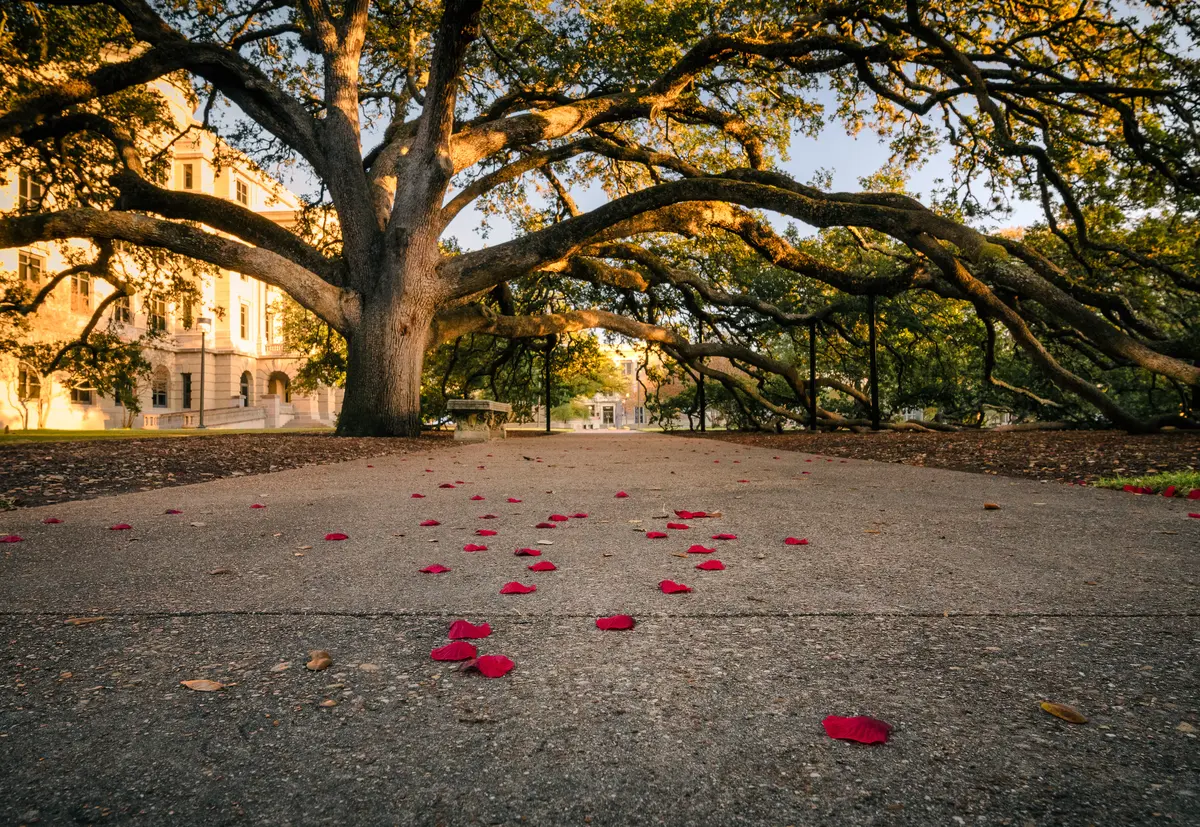
Retiring in College Station
College Station draws retirees for its balance of amenities, outdoor access, and cost. Here’s what to weigh.
🌤 Climate
College Station has a humid subtropical climate with mild winters that rarely see freezing temperatures — a real draw for retirees escaping northern winters. Summers are a different story: August highs near 96°F with heavy humidity make outdoor activity uncomfortable for weeks at a time. The 209 sunny days a year are most enjoyable from October through April.
🍴 Lifestyle
The George H.W. Bush Presidential Library and Museum, The Gardens at Texas A&M, and a maturing restaurant and coffee scene give retirees genuine cultural anchors. The university's performing arts calendar fills gaps that a city this size would otherwise have, and the greenway trails at Wolf Pen Creek offer low-intensity outdoor access year-round.
🏚 55+ Communities
No 55+ communities were found in College Station. Retirees who want a dedicated age-restricted community will need to look at neighboring cities or broader Brazos Valley options. Active-adult buyers here typically purchase in established single-family neighborhoods like Pebble Creek.
✈ Getting Around
Most daily errands and appointments require a car. Easterwood Airport serves the city with regional connections, reducing the need to drive to Houston for every flight. The city's flat terrain is friendly for cycling and walking within specific corridors, though most residential areas are designed around driving.
🏛 Texas Taxes for Retirees — What to Know
- No state income tax — Texas has no personal income tax — constitutionally protected under Article VIII, Section 24. Social Security, pensions, 401(k)/IRA withdrawals, and annuity payments are all untaxed at the state level, with no state return to file.
- Sales tax is the tradeoff — The state sales tax is 6.25%, and local add-ons bring the combined rate in College Station to 8.25% (Texas Comptroller of Public Accounts, city sales and use tax rates, July 2026). Groceries and prescription drugs are exempt.
- Property taxes — the real tradeoff — Texas’s effective property tax rate averages about 1.40%, among the highest in the country, since property tax (not income tax) funds most local government and schools.
- Over-65 homestead exemption and school-tax freeze — Homeowners 65+ (or disabled) get an additional $60,000 exemption from their home’s value for school district taxes, on top of the general homestead exemption — $200,000 off school taxable value combined, following November 2025’s Proposition 11 (SB 23), which raised the over-65 exemption to $60,000, and Proposition 13 (SB 4), which raised the general homestead exemption to $140,000. Once claimed, your school district tax bill is frozen at that year’s amount and cannot increase as home values rise, and the ceiling can transfer if you move to a new home within Texas.
- Deferral option if cash is tight — Homeowners 65+ can defer property tax payment entirely for as long as they live in the home, rather than paying it currently — interest accrues, but no forced sale.
- No estate or inheritance tax — Texas has no estate tax, no inheritance tax, and no gift tax.
- No separate capital gains tax — Because Texas has no state income tax, capital gains — including on investments and home sales — are not taxed at the state level at all, unlike states such as Washington that tax capital gains separately from income.
Tax laws change frequently and individual situations vary. This is general information, not tax advice — always consult a qualified Texas tax professional or CPA for personalized retirement tax planning.
Weekends & Local Favorites in College Station
Weekends in College Station organize themselves around the season. Fall means football — Kyle Field is one of the largest stadiums in the world, and a home game day is a genuine spectacle regardless of your connection to the university. Spring and fall evenings pull people to Wolf Pen Creek Park and the Wolf Pen Creek Amphitheater, which anchors a long greenway trail through the center of the city. Lick Creek Park on the south side offers over five miles of natural surface trails through bottomland hardwood forest — genuinely wild for a city this size, and the place where you are most likely to run into a coyote or a great blue heron on a Tuesday morning.
Aggie Park, adjacent to the Texas A&M campus, opened in recent years as a major gathering space and has become the city's most prominent new civic amenity. The George H.W. Bush Presidential Library and Museum draws visitors from across Texas and is worth a full morning for anyone interested in modern American political history. The Gardens at Texas A&M is a quieter destination — curated botanical collections on campus that most non-students overlook.
The Aggieland Farmers Market runs through the growing season and is a reliable weekend anchor for residents who want locally grown produce and a reason to be outside before the heat settles in.
Where to Eat and Drink
The local food scene is more interesting than the college-town stereotype. Fuego Tortilla Grill has operated for years as a late-night staple with a devoted following. Willie's Grill & Icehouse delivers the Texas roadhouse experience that the city's culture calls for. Napa Flats Wood-Fired Kitchen brings a more polished sit-down option to the mix. Casa do Brasil is the kind of churrascaria that reminds you College Station has genuine culinary range, and the Dixie Chicken — a Texas Avenue institution — is the diviest and most beloved bar in the city, the kind of place that locals take visiting family to specifically so they understand what Aggieland actually feels like.
For coffee, Sweet Eugene's and Stella Southern Cafe are the two spots most locals would mention first. Gogh Gogh Coffee Company has carved out its own following, and 1541 Pastries and Coffee and la Gabriella Coffeeshop & Pastries round out a café scene that punches above the city's size. These are all gathered in one place here because they are genuinely worth knowing about — but they are also spread across the city, so searching before you drive is always the right move.
Local favorites in College Station
Restaurants
- Fuego Tortilla Grill
- Willie's Grill & Icehouse
- Napa Flats Wood-Fired Kitchen
- Casa do Brasil
- Dixie Chicken
Outdoors
- Lick Creek Park
- Wolf Pen Creek Park and Amphitheater
- Veterans Park and Athletic Complex
- Lake Bryan
- Aggie Park
Coffee
- Stella Southern Cafe
- Sweet Eugene's
- Gogh Gogh Coffee Company
- 1541 Pastries and Coffee
- la Gabriella Coffeeshop & Pastries
Farmers Markets
- Aggieland Farmers Market
Top Things Locals Say About College Station
The best intel about a city comes from the people who actually live there. Here’s what College Station residents say when newcomers ask the questions everyone’s thinking.
“I knew game days would be big, but I had no idea the whole city just stops. We scheduled our closing for a home game weekend and the title company had to remind us — they were running a skeleton crew. Once you learn the rhythm, it's actually kind of wonderful. You just have to learn it fast.”
— Recent College Station home buyer
“What's the most surprising thing about living in College Station?”
How much the non-A&M part of the city has grown. People assume it's just a campus and some apartments, but Pebble Creek and Castlegate feel like real established suburban neighborhoods — quiet streets, families out walking dogs, nothing that reads like a college town at all. The surprise is usually that you can live here for months and barely notice the university unless you choose to.
“What do locals love most about College Station?”
The sense of community is unusually strong for a city this size. Aggie culture creates an instant shared identity — you meet someone at a neighborhood event and within five minutes you know if they went to A&M, and if they did, you already have twenty years of shared references. Even people who never attended the university end up adopting the culture because it is genuinely generous and welcoming. That and the fact that you can get to Lick Creek Park in fifteen minutes and feel like you are completely out of the city.
“What should newcomers to College Station know?”
Buy a car and learn the game schedule before you do anything else. Harvey Road between Texas Avenue and the university can back up badly during move-in week in late August and on game days throughout the fall. The other thing newcomers miss is how much better the city gets in October and November — the heat breaks, the campus looks incredible, and the whole community is in the kind of good mood that makes you understand why people stay for decades.
“How much do you need a car in College Station?”
Almost completely. If you live in one of the campus-adjacent neighborhoods and work at A&M, you might manage without one — the Aggie Spirit bus network covers the university core, and the Brazos Transit District runs routes through the main corridors. But for anyone in Southwood Valley, Castlegate, Pebble Creek, or the newer subdivisions along the southern edge of the city, a car is simply part of the cost of living here. Most errands, most restaurants, most parks — they all require driving.
Cities Near College Station
Other communities near College Station worth a look — each with its own character and price point.
| City | Distance | Best For | Vibe | Median Rent | Median Buy |
|---|---|---|---|---|---|
| Bryan | 5 mi | Value buyers, blue-collar families | Working-class, older stock, authentic | $1,451 | $276,528 |
| Navasota | 25 mi | Rural lifestyle, larger lots | Small-town, historic, quiet | $1,567 | $275,180 |
| Caldwell | 25 mi | Acreage buyers, privacy seekers | Agricultural, unhurried, tight-knit | $1,050 | $240,000 |
More Helpful Guides for College Station
Going deeper on College Station? Our blog series covers everything from first-time buying to retiring here — explore the guides below.
Local Expert Takeaway: College Station is one of the few Texas cities where you can buy a house under $350,000, send your kids to a B-rated school district, and work at one of the largest research universities in the country — all at once. The catch is that the city's identity is inseparable from Texas A&M, which means game-day traffic is real, the rental market is investor-heavy near campus, and the energy skews young in ways that can feel electric or overwhelming depending on where you are in life. If you buy in Southwood Valley or Castlegate and work anywhere in the A&M corridor, the daily math works well. If you are hoping to walk to errands or commute to Houston daily, the city will push back.
Quick Takeaways & FAQs
✅ Texas A&M anchors a diversified local economy that has attracted biotech, automotive software, and healthcare employers alongside the university itself — making College Station more recession-resistant than most single-industry college towns.
⚠️ The median household income is below what most lenders want to see for the typical home price here, which means many buyers need a larger down payment, outside income, or a partner also employed in the A&M ecosystem.
📍 Game-day Saturdays in the fall effectively shut down Texas Avenue and the surrounding streets — locals plan errands and appointments around the football schedule the way other cities plan around rush hour.
Is College Station a good place to live if you don't work at Texas A&M?
What is the College Station school district like?
How far is College Station from Houston?
Is College Station affordable compared to other Texas cities?
What are the best neighborhoods for families in College Station?
Helpful Links for Moving to College Station
Moving to Texas?
Tell us what you need help with and we'll connect you with local resources.
