
What Is Living in Bryan, Texas Like?
Maybe someone told you Bryan was just the older, quieter side of College Station. Then you looked at the home prices, drove through Downtown Bryan on a weekend evening, and started reconsidering. Bryan is the county seat of Brazos County, the civic and cultural hub of the Brazos Valley, and — with 91,996 residents — the 46th-largest incorporated city in Texas. It sits at a geographic sweet spot inside the Texas Triangle formed by Austin, Houston, and Dallas, connected by US-190 and SH-6, better known locally as the Earl Rudder Freeway. The freeway is the practical spine of the metro, and understanding which side of it your daily routine falls on shapes almost everything about where you'll want to live.
The economy here runs deeper than most newcomers expect. Bryan Independent School District is one of the largest local employers, with 15,699 students enrolled in 2025-26. The City of Bryan itself employs a significant share of residents through municipal services. A major regional health system anchors healthcare jobs. Wayne-Sanderson Farms represents the food manufacturing side of the economy, and Amazon opened a delivery station here in 2025. Texas A&M University, in neighboring College Station, is close enough that a substantial portion of Bryan's residents work on or around its campus — the drive is about 18 minutes to College Station. That university presence drives housing demand, keeps the rental market active, and pulls a steady flow of faculty, researchers, and administrative staff who choose Bryan for its lower costs and quieter streets.
Home prices in Bryan run noticeably below College Station, and the city's typical home price of $276,528 (July 2026) gives buyers meaningful purchasing power that has largely disappeared from the neighboring market. City-wide rent runs around $1,451 per month, and the effective property tax rate sits at approximately 1.50%. The trade-off is real: the Bryan Independent School District holds a C rating, according to the Texas Education Agency, and that number shapes where families with school-age children end up focusing their search. Day-to-day life leans heavily on a car, but the outdoor options — from the 829-acre Lake Bryan to the trails and greenways woven through established neighborhoods — make the area feel more livable than the suburban sprawl might suggest from the highway.
Whether you're weighing a relocation from a high-cost Texas metro, following a job to the Brazos Valley, or simply priced out of College Station and looking one city over, the sections below break down Bryan's neighborhoods, housing market, employers, commute patterns, schools, and what locals actually do on weekends.

Bryan at a Glance
Looking to buy in Bryan? Estimate your payment.
Enter your numbers to see an estimated monthly mortgage payment.
Estimate only. Excludes HOA fees and mortgage insurance. The interest rate above is a starting point, not a quoted rate — replace it with your own to see real numbers. Insurance is a flat placeholder, not a Bryan quote.
Why Are People Moving to Bryan?
The honest pitch for Bryan is straightforward: you get most of what the College Station metro offers at a meaningfully lower cost of entry, with a downtown that has its own identity rather than borrowing one from a university.
The Historic Downtown Nobody Expected
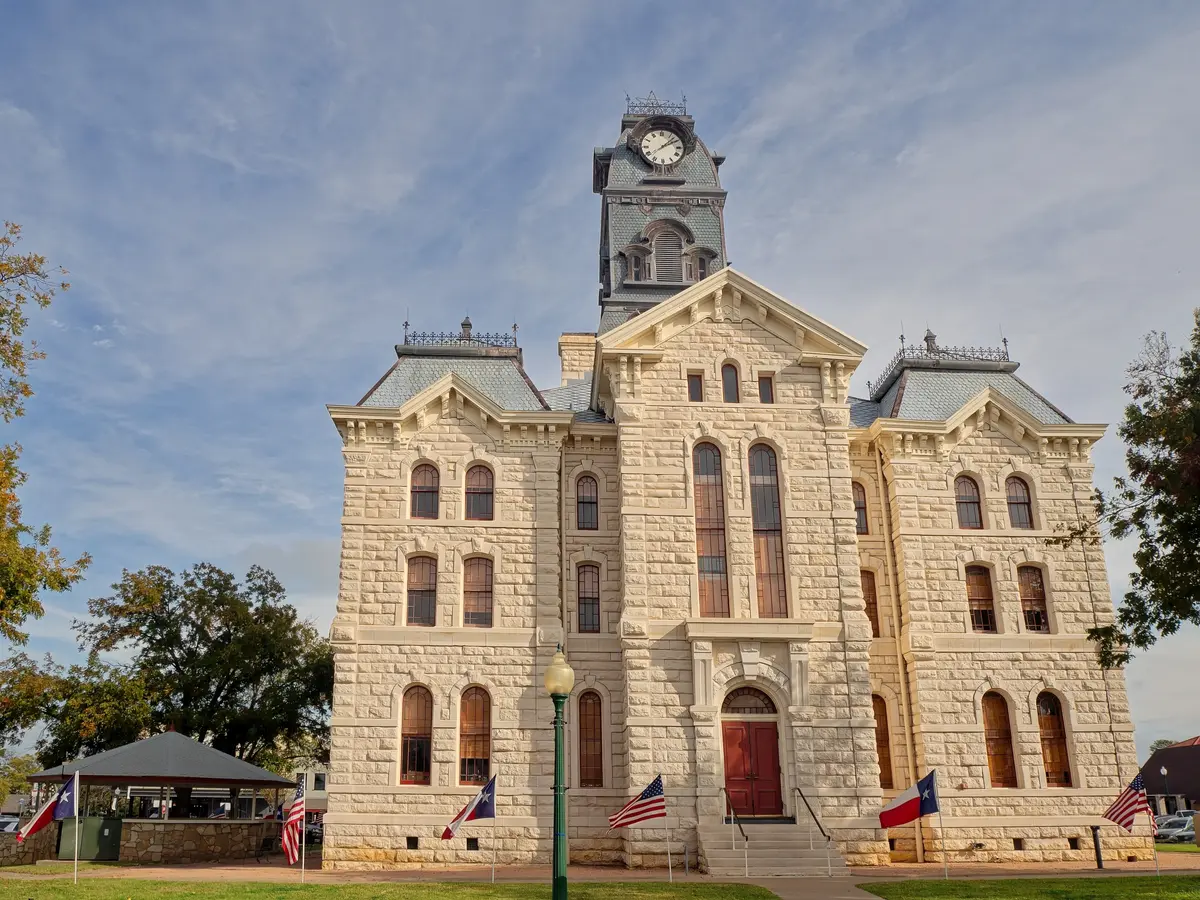
In February 2026, Downtown Bryan was added to the National Register of Historic Places — a 37-acre district platted by the Houston & Texas Central Railroad in 1866, with masonry commercial buildings built largely between 1880 and 1940. The district includes 104 properties, the Carnegie History Center (housed in the oldest operating Carnegie Library in Texas), and a concentration of independent restaurants and retail that has been growing steadily. City officials have noted businesses relocating specifically for the character and feel that the historic district offers. Bryan also holds Film Friendly Texas and Music Friendly Texas designations, which is not nothing in a market this size.
Real Investment, Not Just Renderings
The physical investment in Bryan is concrete and recent. The City Council approved a $4.5 million Signature Park playground at Travis Bryan Midtown Park — 125 play components across more than 32,000 square feet of play space, backed by a $2 million private donation. Lake Walk Town Center, a 350-acre master-planned mixed-use campus in southwest Bryan adjacent to the Traditions neighborhood, is home to life-science and biotech tenants including FujiFilm Diosynth Biotechnologies and BlueForge Alliance. These are not starter-suburb amenities.
Who Actually Moves Here
The buyers and renters landing in Bryan tend to fall into a few recognizable groups. There are university-adjacent workers — faculty, administrators, health system employees, and researchers — who want more square footage and less foot traffic than the College Station side offers. There are families willing to bet on Bryan ISD's improvement trajectory in exchange for getting into a home. And there are remote workers drawn by the Texas Triangle location, who can reach Austin, Houston, or Dallas without committing to any of those markets' costs.
The crime picture is worth understanding directly: Bryan has a violent crime rate of 4 per 1,000 residents and a property crime rate of 14 per 1,000 residents. The state violent rate is 4 per 1,000 and the state property rate is 20.7 per 1,000, meaning Bryan's property crime runs well below the Texas average — context that matters when you're comparing it to larger metros. The full breakdown is on the safety page.
What Daily Life Feels Like in Bryan
The Two Bryanns Inside One City
Longtime residents will tell you that Bryan has at least two different daily rhythms. The established neighborhoods — Copperfield with its tree-lined sidewalks and internal walking paths, Briarcrest with its late-1970s brick homes near the City Course at Phillips Event Center, the Eastside Historic District where preserved homes sit within easy reach of downtown — have a settled, unhurried pace that doesn't feel university-adjacent at all. The southwest corner of the city, where Traditions and Miramont front the Lake Walk Town Center and Texas A&M's Health Science Center campus, feels considerably newer and more planned.
The Seasonal Reality
Bryan averages 215 sunny days a year, which sounds like good news until August arrives. Summers here are genuinely hot, and most residents organize outdoor activity around the early morning or late evening hours from June through September. Newcomers from the Pacific Northwest or the upper Midwest are often caught off guard by how early they start modifying their routines. The upside is that winters are mild enough to keep outdoor spaces usable most of the year, and the spring wildflower season across the Brazos Valley rewards anyone who makes a point to be outside for it.
Where Families Actually Gather
Sue Haswell Park and Travis Park are the neighborhood anchors for parents with younger kids. The approved Signature Park expansion at Travis Bryan Midtown Park will raise the bar considerably when complete. For weekend socializing, Messina Hof Winery & Resort — a 100-acre estate with 42 acres of working vineyard operating since 1977 — has become a genuine community gathering point, not just a tourist draw. The farmers market scene runs through the Farmers' Market in Brazos County and the Rountree Market, giving the city a locally-sourced food culture that punches above its size.
The full picture on parks and outdoor recreation is on the parks page.
What Surprises People After Six Months
The most common thing newcomers report: they underestimated how much they'd use Downtown Bryan. Most people moving here imagine driving to College Station for everything interesting, and then find themselves walking to independent restaurants and live music in the historic district on a Friday and never leaving Bryan at all. The downtown momentum is real enough that some residents who moved here for the price are now genuinely invested in the district's growth.
The Bryan Housing Market Right Now
The typical home price in Bryan sits at $276,528 (July 2026), which gives the city one of the more accessible entry points in the Texas Triangle. College Station runs noticeably higher, which means buyers who want proximity to Texas A&M and the Brazos Valley's economic base without paying the premium increasingly look here first.
The catch is income. The median household income in Bryan is $59,289, which falls short of what most buyers need to carry the typical home at current rates. That gap is real and shapes who can buy without outside equity or a larger down payment. For a full look at what the numbers mean month to month, the cost-of-living page breaks down the math alongside taxes, utilities, and groceries.
What the Inventory Looks Like
Bryan's housing stock is genuinely varied — 1970s brick ranches in Copperfield and Briarcrest, newer construction in Traditions and Miramont, preserved historic homes in the Eastside Historic District, and a smattering of downtown-adjacent bungalows. Briarcrest, Copperfield, Austin's Colony, and Tiffany Park all run above the city-wide typical price; Traditions and Miramont reflect the newer mixed-use southwest corridor. The neighborhoods page maps the character and price tiers in detail.
The rental market is active, partly because of the university-adjacent demand from College Station spillover. The city-wide typical rent runs around $1,451 per month (Zillow ZORI, July 2026), and the effective property tax rate of approximately 1.50% is worth factoring into any ownership calculation. Some areas cost more than others, and the divides are sharper than a single median suggests — but those nuances belong on the neighborhoods page, not here.
Bryan Neighborhoods
Bryan has several distinct areas — each with its own character and appeal. Here’s a breakdown to help you narrow down where to focus your home search.
🏡 Briarcrest
Briarcrest blends late-1970s brick architecture with modern renovations near the City Course at Phillips Event Center, attracting buyers who want an established neighborhood with mature trees and easy access to commercial corridors. It runs above the city-wide typical price and includes Briarcrest Northwest, one of Bryan's three 55+ communities.
🏠 Copperfield
Developed primarily in the early 1980s, Copperfield is characterized by tree-lined sidewalks, internal walking paths, and greenbelts woven through mature landscaping — the kind of neighborhood that looks better in person than in photos. It draws buyers who want a settled, walkable-within-the-neighborhood feel at a price point above the city median.
🌳 Austin's Colony
Austin's Colony is one of Bryan's more established planned communities, suited to buyers looking for a quieter residential setting with consistent housing character. It sits above the city-wide typical price and attracts families and professionals who want a defined neighborhood feel without the newness of the southwest developments.
🏘 Traditions
Traditions anchors the southwest corner of Bryan adjacent to the Lake Walk Town Center and Texas A&M's Health Science Center campus, making it the natural landing spot for biotech and university-adjacent workers who want to minimize their commute. The Traditions Club golf course gives the neighborhood a recreational anchor that few Bryan areas can match.
🏔 Miramont
Miramont sits in the newer, master-planned southwest corridor alongside Traditions, with a residential feel oriented toward the Lake Walk Town Center mixed-use campus. It suits buyers who prefer newer construction and proximity to the College Station boundary without paying College Station prices.
🌆 Tiffany Park
Tiffany Park is an established Bryan neighborhood that runs above the city-wide typical price, appealing to buyers who want a residential address with consistent housing quality and reasonable access to both Downtown Bryan and the commercial corridors along the Earl Rudder Freeway.
Pros & Cons of Living in Bryan
The Pros
- Significantly more affordable housing than College Station or Austin
- Close proximity to Texas A&M University and its job base
- Growing local economy anchored by manufacturing and healthcare
- Small-town, historic downtown charm
The Cons
- Crime rates somewhat higher than state and national averages in some categories
- School district ratings are below average compared to nearby College Station ISD
- Hot, humid summers with a long allergy/pollen season
Getting Around & Commuting in Bryan
The Road Network That Runs Everything
Bryan's primary commute infrastructure runs along US-190 and SH-6 — both designated as the Earl Rudder Freeway — which connect Bryan directly to College Station and serve as the main corridor for regional travel. SH-21, SH-30, and SH-47 carry traffic to the surrounding Brazos Valley communities. The freeway is functional but not always fast: the stretch between Bryan and the Texas A&M main campus gets congested during morning and afternoon rush periods, particularly around game days and university events.
The College Station Commute
For the large share of Bryan residents whose jobs are on the College Station side — at Texas A&M's campus or in the concentrated employment zones along the university's periphery — the drive is about 18 minutes to College Station under normal conditions. That's the number most residents live by, though it stretches noticeably during football Saturdays. Planning your address around that commute direction is one of the most practical things you can do before buying.
Transit and Getting Around Without a Car
The Brazos Transit District — branded locally as "The District" and headquartered in Bryan — operates fixed bus routes connecting Bryan and College Station, along with ADA paratransit and demand-response service across a broader 16-county area. Most daily errands in Bryan require a car, and the residential neighborhoods are not designed for on-foot access to grocery stores or services. The downtown core is genuinely walkable once you're in it, but getting there from most neighborhoods means driving first. A serious regional shopping trip or a run to a major retailer means either driving to a larger commercial corridor or planning around what's available locally.
The Employer Geography
Bryan ISD facilities are spread across the city, and employees whose assignment is at a school near their home have some of the best commute situations in the market. The municipal government offices cluster near downtown. Wayne-Sanderson Farms operates food manufacturing facilities within the city. The regional health system campus serves as both an employer and a daily-errand anchor for residents on the hospital side of town. For anyone whose primary employment destination is Texas A&M's campus, the southwest portion of Bryan — near the Traditions and Miramont areas — cuts the most time off that drive.
| Destination | Typical Drive from Bryan | Main Route |
|---|---|---|
| College Station (central) | About 18 minutes | SH-6 / Earl Rudder Freeway |
| Downtown Bryan | 5–12 min from most neighborhoods | SH-21 / local streets |
| Lake Bryan | Short drive west of the city | SH-30 |
| Easterwood Airport (CLL) | Approximately 6 miles | SH-6 / SH-47 |
| Austin | Roughly 1.5–2 hours | SH-21 to US-290 or SH-6 south |
| Houston | Roughly 1.5 hours | SH-6 south |
Easterwood Airport serves the metro with regional connections, and its proximity — about 6 miles from Bryan — is one of the practical advantages of living here over more distant Brazos Valley communities.
Schools in Bryan
Families relocating to Bryan have public, private, and higher-education options nearby. Here’s a quick overview.
🎓 School District
Bryan Independent School District serves K–12 students across Bryan and the surrounding area. Rated C (source: Texas Education Agency, 2025 A-F accountability rating (2024-25 school year)).
🏆 Graduation Rate
The 4-year high-school graduation rate here is approximately 90.1%.
📚 Higher Education
Texas’s public universities — the University of Texas at Austin, Texas A&M University, and the University of Houston — offer four-year degrees statewide, with one of the largest community college systems in the country (50+ public community college districts) providing two-year and workforce programs.
🌐 Online Learning
UT Austin Online and Texas A&M University Online offer fully accredited online degrees for remote learners across the state.
Safety in Bryan
A quick look at how Bryan compares on the numbers that matter most when weighing a neighborhood or a move.
🛡 Violent Crime
Approximately 4 per 1,000 residents.
🔒 Property Crime
Approximately 14 per 1,000 residents.
Compared to the most recent national figures from the Bureau of Justice Statistics (2024), Bryan’s violent crime is above the national average (about 3.7 per 1,000), and property crime is below the national average (about 18.4 per 1,000).
Against Texas as a whole, Bryan’s violent crime is about the same as the state average, and property crime is roughly two-thirds of the state average (Bureau of Justice Statistics, Crime Known to Law Enforcement, 2024 (tables 2 and 3)).
Crime rates can vary a lot within a single city, so the citywide numbers above are only a starting point. Some neighborhoods in Bryan run well below these averages, while others run higher — the kind of block-by-block detail that matters most when you’re actually choosing where to live. The full guide below breaks it down neighborhood by neighborhood.
Working in Bryan
Bryan’s largest employers span several industries — here are some of the anchors of the local job market.
🎓 Bryan Independent School District
Education
🏛 City of Bryan
Municipal government
🏥 CHI St. Joseph Health Regional Hospital
Healthcare
🛒 Wayne-Sanderson Farms
Food manufacturing
🎓 Texas A&M University
Higher education, located in College Station
Retiring in Bryan
Bryan draws retirees for its balance of amenities, outdoor access, and cost. Here’s what to weigh.
🌤 Climate
Bryan averages 215 sunny days a year, with mild winters that keep outdoor activity comfortable from October through April. Summers are genuinely hot and humid, which is the main adjustment retirees from drier climates need to make. Spring and fall are the seasons most residents organize their calendars around.
🍴 Lifestyle
The historic downtown, Messina Hof Winery & Resort, and Lake Bryan give retirees a range of day-trip and weekend options without leaving the metro. The Carnegie History Center on Main Street is a free cultural resource, and the Brazos Valley's farmers market scene keeps a local-food culture active through the growing months. The pace is unhurried compared to Austin or Houston.
🏚 55+ Communities
Bryan has three established 55+ communities: Briarcrest Northwest, Briar Meadows Creek, and The Cloisters. Each sits within the city limits, and the concentration in the Briarcrest area keeps residents close to established commercial corridors and medical services. More detail on healthcare and retiring in Bryan is on the retiring page.
✈ Getting Around
Most errands require a car, and Bryan is set up for driving. The Brazos Transit District provides bus service connecting Bryan and College Station for residents who prefer transit for that corridor. Easterwood Airport is approximately 6 miles from the city, offering regional connections without a long drive to a major hub.
🏛 Texas Taxes for Retirees — What to Know
- No state income tax — Texas has no personal income tax — constitutionally protected under Article VIII, Section 24. Social Security, pensions, 401(k)/IRA withdrawals, and annuity payments are all untaxed at the state level, with no state return to file.
- Sales tax is the tradeoff — The state sales tax is 6.25%, and local add-ons bring the combined rate in Bryan to 8.25% (Texas Comptroller of Public Accounts, city sales and use tax rates, July 2026). Groceries and prescription drugs are exempt.
- Property taxes — the real tradeoff — Texas’s effective property tax rate averages about 1.40%, among the highest in the country, since property tax (not income tax) funds most local government and schools.
- Over-65 homestead exemption and school-tax freeze — Homeowners 65+ (or disabled) get an additional $60,000 exemption from their home’s value for school district taxes, on top of the general homestead exemption — $200,000 off school taxable value combined, following November 2025’s Proposition 11 (SB 23), which raised the over-65 exemption to $60,000, and Proposition 13 (SB 4), which raised the general homestead exemption to $140,000. Once claimed, your school district tax bill is frozen at that year’s amount and cannot increase as home values rise, and the ceiling can transfer if you move to a new home within Texas.
- Deferral option if cash is tight — Homeowners 65+ can defer property tax payment entirely for as long as they live in the home, rather than paying it currently — interest accrues, but no forced sale.
- No estate or inheritance tax — Texas has no estate tax, no inheritance tax, and no gift tax.
- No separate capital gains tax — Because Texas has no state income tax, capital gains — including on investments and home sales — are not taxed at the state level at all, unlike states such as Washington that tax capital gains separately from income.
Tax laws change frequently and individual situations vary. This is general information, not tax advice — always consult a qualified Texas tax professional or CPA for personalized retirement tax planning.
Weekends & Local Favorites in Bryan
Downtown and the Historic District
Downtown Bryan is the social center on weekends, and the National Register listing that came through in February 2026 only formalized what residents have known for a while: the district has a density of independent restaurants, bars, and venues that few Texas cities this size can match. The Queen Theatre and The LaSalle Hotel anchor the historic character of the district, and the Carnegie History Center on Main Street is worth a visit for anyone curious about the city's railroad-era roots — admission is free.
Where to Eat and Drink
The verified local dining scene covers serious ground. Proudest Monkey and Shipwreck Grill bring different textures to the casual end. Christopher's World Grille is the choice for a proper sit-down dinner. Caffé Capri handles Italian. Sushi Masa College Station rounds out the options for anyone craving something outside the Texas comfort-food canon. On the coffee side, Polite Coffee Roasters is the name that comes up most among locals who take their coffee seriously; Koala Bakery & Cafe, POV, Tavo Coffee Company, and What's The Buzz Specialty Coffee each have their own following and fill different parts of the day.
Outdoors and Beyond the City Limits
Lake Bryan — an 829-acre reservoir with more than 20 miles of hiking and biking trails, plus camping, swimming, and fishing stocked with largemouth bass, crappie, catfish, and redfish — is the main outdoor anchor for Bryan residents on a free weekend. Messina Hof Winery & Resort, the 100-acre estate that has been producing wine since 1977, is where Brazos Valley residents go for something that feels like a getaway without requiring a drive to the Hill Country. The Traditions Club golf course serves the southwest side of the city. Sue Haswell Park and Travis Park handle the neighborhood-level outdoor needs.
Markets and Community Rhythms
The Farmers' Market in Brazos County and the Rountree Market give the city a consistent local-food culture through the growing season. Texas A&M's Century Tree area — just across the Bryan–College Station line — is the kind of campus landmark that draws residents regardless of university affiliation, particularly in the fall. The broader Brazos Valley social calendar fills in around the university's rhythms: home game weekends change the character of every restaurant and road in both cities, and learning to plan around or into that calendar is one of the first habits new residents develop.
Local favorites in Bryan
Restaurants
- Sushi Masa College Station
- Proudest Monkey
- Shipwreck Grill
- Christopher's World Grille
- Caffé Capri
Outdoors
- Lake Bryan
- Traditions Club golf course
- Sue Haswell Park
- Travis Park
- Texas A&M's Century Tree area (nearby)
Coffee
- Polite Coffee Roasters
- Koala bakery & cafe
- POV
- Tavo Coffee Company
- What's The Buzz Specialty Coffee
Farmers Markets
- The Farmers' Market in Brazos County
- Rountree Market
Top Things Locals Say About Bryan
The best intel about a city comes from the people who actually live there. Here’s what Bryan residents say when newcomers ask the questions everyone’s thinking.
“I expected to be driving to College Station for everything — restaurants, coffee, errands. After about three months I realized I was barely leaving Bryan on weekends. The downtown surprised me more than anything else about this move.”
— Recent Bryan home buyer
“What's the most surprising thing about living in Bryan?”
How much the downtown has going on. Most people assume College Station has all the restaurants and nightlife and that Bryan is just the residential overflow. Then they find themselves in the historic district on a Friday and realize they didn't need to cross the city line at all. The independent food and coffee scene concentrated around the historic district genuinely catches people off guard.
“What do locals love most about Bryan?”
The combination of a real sense of place and prices that still make sense. The Eastside Historic District and Copperfield feel like neighborhoods with actual roots, not subdivisions built around a marketing concept. Messina Hof is the kind of anchor that most Texas cities this size don't have, and Lake Bryan gives you an 829-acre outdoor playground without a two-hour drive.
“What should newcomers to Bryan know?”
Game day changes everything. When Texas A&M has a home football game, the traffic on SH-6 and the Earl Rudder Freeway is a different category of congestion than what you deal with the other 360 days of the year. New residents who don't account for this end up frustrated quickly. The other thing worth knowing: August in Bryan is serious heat, and anyone planning outdoor routines needs to reorganize them around early mornings from June through September.
“How much do you need a car in Bryan?”
A car is necessary for almost everything outside the downtown core. Grocery runs, school drop-offs, work commutes — all of it requires driving in most of the residential neighborhoods. The Brazos Transit District runs bus routes connecting Bryan and College Station, and the downtown itself is walkable once you arrive, but getting from a neighborhood like Copperfield or Briarcrest to most daily services means getting in the car first.
Cities Near Bryan
Other communities near Bryan worth a look — each with its own character and price point.
| City | Distance | Best For | Vibe | Median Rent | Median Buy |
|---|---|---|---|---|---|
| College Station | 5 mi | University proximity, newer construction | Energetic, campus-driven, polished | $1,416 | $349,346 |
| Navasota | 30 mi | Small-town feel, rural quiet | Slower pace, historic, tight-knit | $1,567 | $275,180 |
| Hearne | 20 mi | Budget buyers, deep rural lifestyle | Very small, agricultural, affordable | $900 | $150,000 |
More Helpful Guides for Bryan
Going deeper on Bryan? Our blog series covers everything from first-time buying to retiring here — explore the guides below.
Local Expert Takeaway: Bryan is genuinely underpriced relative to the access it offers — to the Texas Triangle, to the Texas A&M economy, and to a downtown that is actively adding restaurants and retail rather than losing them. The school district rating is real, and buyers with school-age children should read the schools page carefully before committing to a neighborhood. But the combination of a $276,528 typical home price, a historic downtown with real momentum, and a drive time of about 18 minutes to College Station makes Bryan one of the more defensible value plays in Central Texas right now.
Quick Takeaways & FAQs
✅ Bryan's typical home price of $276,528 (July 2026) runs noticeably below College Station, giving buyers meaningful purchasing power inside the same metro.
⚠️ Bryan ISD holds a C rating from the Texas Education Agency, which is the most common reason families with school-age children hesitate — read the schools page before choosing a neighborhood.
📍 Downtown Bryan was added to the National Register of Historic Places in February 2026, and the independent dining and retail scene in the historic district has been expanding steadily.
Is Bryan or College Station better to live in?
What are the best neighborhoods in Bryan, TX?
How are the schools in Bryan, TX?
Is Bryan, TX a safe place to live?
What is the cost of living like in Bryan, TX?
Helpful Links for Moving to Bryan
Moving to Texas?
Tell us what you need help with and we'll connect you with local resources.
