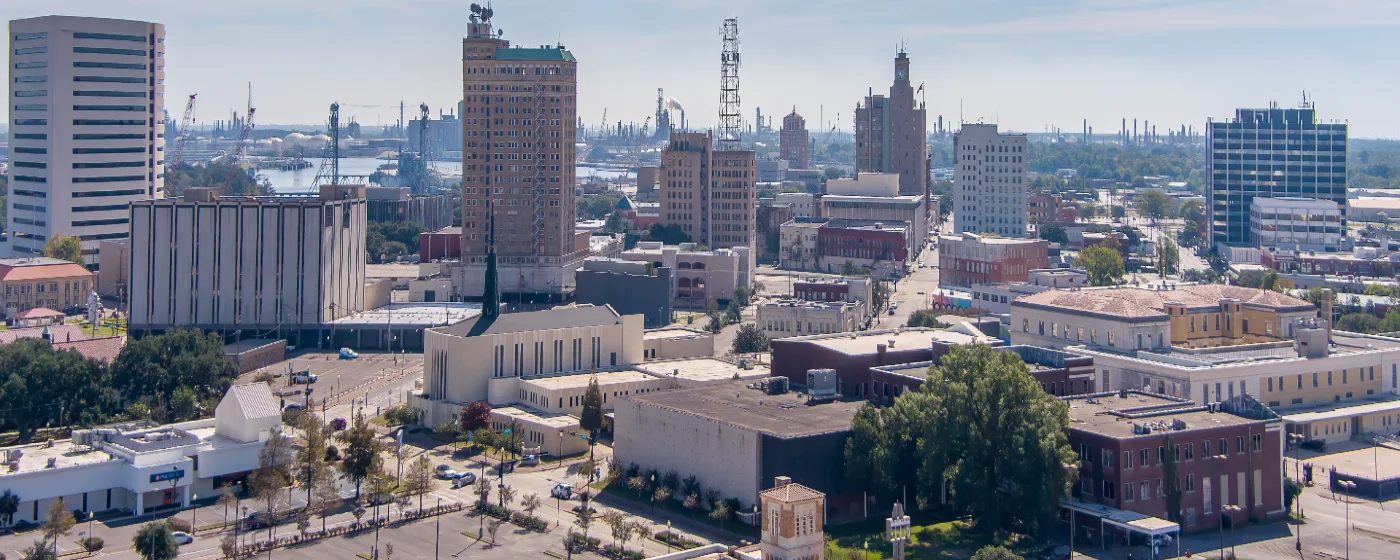
The case for retiring in Beaumont is easy to make on paper: a typical home price of $174,566 (July 2026), no state income tax, two hospital systems inside city limits, and a cost of living that runs roughly 8% below the national average. The case against it is shorter but equally honest — Beaumont is car-dependent, its crime rates run above both state and national averages, and summer heat and humidity along the Texas Gulf Coast are genuinely oppressive for anyone accustomed to a drier climate. Most retirees who thrive here already know Southeast Texas, or they moved specifically for the low cost of entry and the family they have nearby.
Beaumont sits on the Neches River in Jefferson County, anchored by I-10 and about 90 minutes to Houston, TX. The city is the 39th-largest incorporated city in Texas with a population of 112,967, large enough to support real medical infrastructure — CHRISTUS Southeast Texas St. Elizabeth and Baptist Hospitals of Southeast Texas both operate here — but compact enough that a medical appointment or a Saturday errand rarely involves more than a fifteen-minute drive. Lamar University adds a steady calendar of public lectures, arts events, and arboretum access that retirees use far more than they expect to.
The financial picture for retirees is genuinely favorable by Texas standards. Social Security, pension income, and retirement account withdrawals face zero state income tax. Texas seniors benefit from an over-65 homestead exemption that shelters a meaningful portion of assessed value from school district taxes — and a school district tax ceiling that prevents that bill from rising as long as you own and occupy the home. Housing costs run about 19% below the U.S. average, which means a retiree stretching a fixed income can own a solid single-level home in Beaumont for what a condo deposit costs in Austin.
Whether you're weighing a full relocation or comparing Beaumont against Port Arthur, Nederland, or a smaller Gulf Coast town, the sections below break down healthcare access, the retiree budget, walkability and community life, downsizing options, and how Beaumont stacks up against the retirement destinations people most often consider alongside it.
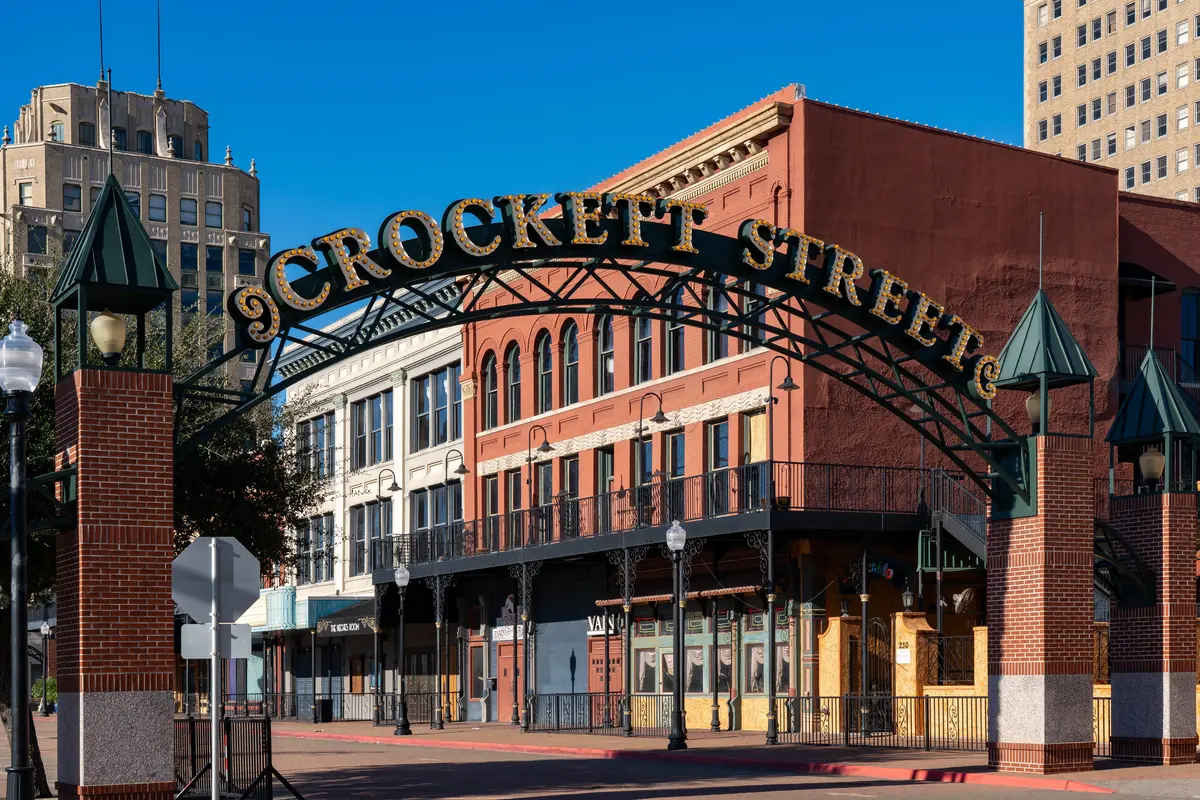
Why Retirees Are Choosing Beaumont
Beaumont makes the most sense for retirees who are already rooted in Southeast Texas — adult children in the Golden Triangle, decades of friendships, a church or community that matters. It also works well for buyers moving from higher-cost Texas metros who want to own outright or close to it: the typical home price of $174,566 (July 2026, Zillow Home Value Index) puts paid-off homeownership within reach of many retirement nest eggs that would only buy a condo in San Antonio or Austin.
The city suits retirees who are comfortable driving everywhere and who have no expectation of a walkable, transit-connected lifestyle. If your retirement picture includes strolling to coffee, walking to a farmers market, or getting around without a car, Beaumont will frustrate you from the first week. The same goes for anyone sensitive to extreme heat — summers here are long, humid, and relentless in a way that the phrase 'hot Texas summer' does not fully prepare you for.
For retirees who want real medical depth without paying Houston prices to live near it, Beaumont is a genuinely strong option. Two Medicare-certified hospital systems, a dedicated rehabilitation hospital, and a metro area of roughly 400,000 people supporting specialty care — that combination is rare at this price point in Texas. Retirees who want that security without a 90-minute commute to Houston's medical center will find Beaumont delivers it. See the neighborhoods guide for a breakdown of where retirees tend to settle within the city.
Healthcare & Medical Access in Beaumont
CHRISTUS Southeast Texas St. Elizabeth is the nearest hospital, sitting inside city limits as part of the nonprofit CHRISTUS Health System. It offers trauma care alongside a broader range of specialized services — a meaningful distinction for retirees who want to know a level of serious emergency care is close rather than an hour away. Baptist Hospitals of Southeast Texas, also inside the city, brings more than 70 years of regional history and runs dedicated cardiology and orthopedics programs. Both systems are Medicare-certified, which matters from day one of most retirees' planning.
PAM Health Rehabilitation Hospital of Beaumont fills a gap that retirees and their families often overlook until they need it: inpatient and outpatient rehab specializing in lymphedema management, vestibular therapy, and cardiac rehabilitation. For anyone managing a chronic condition, recovering from joint replacement, or dealing with the neurological fallout of a stroke, having that level of specialized rehab inside the city — rather than a long drive away — changes the recovery calculus considerably.
The honest limit of Beaumont's medical picture is what lies beyond this city. Quaternary care, certain cancer subspecialties, and leading transplant programs are concentrated in Houston's Texas Medical Center, about 90 minutes away via I-10. That drive is manageable for occasional specialist visits, but retirees with complex, ongoing conditions should think carefully about whether Beaumont's local depth covers their specific needs or whether they'd prefer to be closer to a larger medical hub.
The Retiree Budget in Beaumont
Texas collects no state income tax, full stop. Social Security checks, pension distributions, and IRA or 401(k) withdrawals are all untouched at the state level — a straightforward financial advantage that compounds meaningfully over a fifteen- or twenty-year retirement. There is no state-level clawback of benefits and no partial exemption to calculate around.
Property taxes deserve honest attention. The effective rate in Beaumont is approximately 1.53%, which is real money on an annual basis. What softens that figure for retirees is the over-65 school district tax ceiling, which freezes school property taxes at the level they were when you first claimed the exemption — they cannot rise as long as you own and occupy the home. Texas also offers an enhanced senior homestead exemption that shelters a significant portion of assessed value, which for a home at or near Beaumont's typical price point can effectively eliminate the school district portion of the property tax bill. The full cost-of-living breakdown — including groceries, utilities, and transportation on a fixed income — is covered on the cost-of-living page.
Day-to-day spending in Beaumont runs lean relative to most of Texas. Housing costs about 19% below the U.S. average, groceries roughly 4% less, and entertainment in a similar range. The Beaumont Farmers Market is a regular stop for retirees watching their grocery spend without sacrificing fresh produce. A fixed-income household that would feel squeezed in a higher-cost Texas metro often finds real breathing room here.
Looking to buy in Beaumont? Estimate your payment.
Enter your numbers to see an estimated monthly mortgage payment.
Estimate only. Excludes HOA fees and mortgage insurance. The interest rate above is a starting point, not a quoted rate — replace it with your own to see real numbers. Insurance is a flat placeholder, not a Beaumont quote.
Walkability, Community & Staying Active in Beaumont
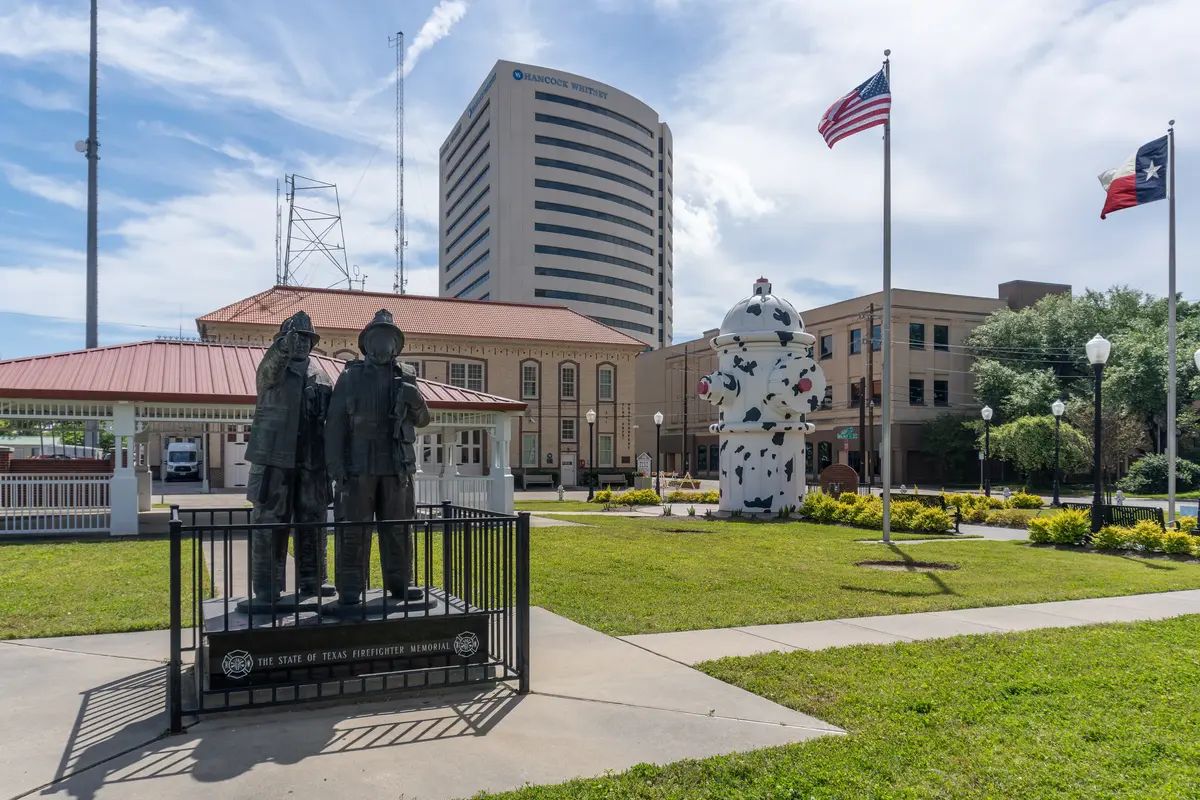
Beaumont is a car-dependent city. Most errands, most medical appointments, and most social outings require driving, and that is the reality regardless of which part of the city you live in. The one genuine exception is the downtown pocket, where Riverfront Park, the museum district — including the Fire Museum of Texas and the Spindletop-Gladys City Boomtown Museum — and a handful of cultural venues sit close enough together for a deliberate walk. Retirees who settle near downtown and choose their errands carefully can build a modest walking life, but it takes planning that most suburban neighborhoods don't reward.
The terrain, at least, is forgiving. Southeast Texas is flat, which means that on days when the heat allows it — roughly October through April — outdoor walking is genuinely accessible for retirees with limited mobility. Tyrrell Park and Cattail Marsh Wetlands give birders and nature walkers a destination worth the drive, and the broader region has 28 birding and nature trails within a 40-mile radius. Village Creek State Park, a short drive from the city, adds mature forest trails that feel nothing like a Gulf Coast industrial city.
The community texture for retirees leans heavily on Lamar University's public programming — lectures, concerts, and events at the Lamar University Arboretum draw a regular crowd of older residents. The Beaumont Botanical Gardens inside Tyrrell Park is another gathering point. Retirees who came here expecting a sleepy, insular city are often surprised by month six: the arts calendar is active for a city this size, and the Golden Triangle's oil-boom history gives Beaumont a specific civic identity that people either connect with quickly or don't connect with at all. For a fuller picture of parks and outdoor recreation options, see the parks and recreation page.
Right-Sizing: Downsizing in Beaumont
No 55+ communities were found in Beaumont. That is the plainest possible statement of what the market offers at that specific product category, and retirees expecting the kind of age-restricted, amenity-rich community common in Phoenix, San Antonio, or The Woodlands will not find it here.
What Beaumont does offer is a substantial inventory of single-level homes at prices that make downsizing financially meaningful rather than just symbolic. Older ranch-style construction from the 1960s through the 1980s is common across neighborhoods like Caldwood and parts of Westchase — typically single-story, solid brick, and on modest lots that reduce yard maintenance without disappearing entirely. Buyers looking for newer construction with single-level layouts generally find them in the Willow Creek and Westchase corridors, both of which run above the city-wide typical home price but remain well below what comparable homes cost in the Houston suburbs.
Patio homes and garden-style condos exist in scattered pockets, though the supply is limited compared to larger metros. Retirees who need zero exterior maintenance and a lock-and-leave lifestyle have fewer choices than they would in Austin or Dallas, and the best units tend to move when they surface. Beaumont does have assisted living and memory care options for retirees planning ahead — Buckner Calder Woods is one campus that consolidates assisted living, memory care, and rehabilitation services in one place, which families often find useful as needs shift over time. For a detailed look at which neighborhoods suit which buyer, the neighborhoods guide covers the geographic and character distinctions in full.
Beaumont vs Nearby Retirement Destinations
| City | Cost vs Beaumont | Primary Hospital | Walkability | Senior Living Depth | Overall Retirement Fit |
|---|---|---|---|---|---|
| Beaumont | Anchor | Two full systems in-city; trauma, cardiology, ortho, rehab | Car-dependent; flat terrain helps | Assisted living and memory care present; no 55+ communities | Strong value; solid medical depth; limited walkability |
| Port Arthur | Noticeably lower | Regional access; fewer specialty services than Beaumont | Car-dependent | Limited senior living options | Tight budget retirees; less medical depth |
| Nederland | Somewhat higher | Relies on Beaumont systems nearby | Car-dependent; quieter residential feel | Small-town options; limited senior-specific housing | Quiet suburban feel close to Beaumont's medical access |
| Lumberton | About the same | Relies on Beaumont systems; short drive | Car-dependent; suburban | Very limited | Retirees who want small-town quiet with Beaumont nearby |
| Vidor | Somewhat lower | Relies on Beaumont systems | Car-dependent | Very limited | Entry-level budget; minimal local amenities |
| Groves | About the same | Relies on Port Arthur and Beaumont systems | Car-dependent; low-density residential | Limited | Quiet neighborhood feel; closer to Port Arthur |
Port Arthur is the one nearby option that consistently beats Beaumont on purchase price, and for retirees whose budget is the binding constraint, that difference is real. The trade-off is medical depth: Beaumont's two-system infrastructure is not replicated in Port Arthur, and retirees with ongoing specialty care needs will find themselves driving to Beaumont anyway.
Nederland offers the closest thing to Beaumont's medical proximity — it sits near enough to use the same hospital systems — with a quieter, more residential character that some retirees prefer. The catch is that home prices run somewhat higher and senior-specific housing options are similarly thin.
Lumberton and Groves suit retirees who want to stay in the Golden Triangle but genuinely want small-town density and pace. Both depend on Beaumont for serious medical access, which is a short drive rather than a problem, but neither offers meaningful local amenities on its own. Vidor is the budget floor of this group; retirees who buy there are essentially choosing Beaumont-adjacent living at lower cost, with the understanding that most of daily life still points toward Beaumont.
Local Expert Takeaway: Beaumont is not a retirement destination in the resort-brochure sense — there are no 55+ communities, the summers are genuinely brutal, and a car is not optional. What it is, honestly, is one of the more financially rational places in Texas to age in place if you already have roots here or family nearby. Two hospital systems inside city limits, a school district tax freeze for seniors, a typical home price well under $200,000, and a flat landscape that keeps walking accessible even for retirees with mobility limits — that combination is harder to find than the price tag suggests. The Beaumont Botanical Gardens, the Tyrrell Park trail system, and Lamar University's public calendar give daily life more texture than first-time visitors expect.
Quick Takeaways & FAQs
✅ Two Medicare-certified hospital systems — CHRISTUS Southeast Texas St. Elizabeth and Baptist Hospitals of Southeast Texas — operate inside Beaumont city limits, giving retirees serious medical depth at a price point far below most comparable Texas cities.
⚠️ Beaumont is car-dependent with above-average crime rates, and summers along the Gulf Coast are long, humid, and demanding — retirees who need walkability or a mild climate should look elsewhere.
📍 Texas seniors benefit from an over-65 homestead exemption and a school district tax ceiling that freezes school property taxes for as long as you own and occupy the home — a significant ongoing savings for Beaumont homeowners aged 65 and older.
Is Beaumont, TX a good place to retire?
Does Texas tax Social Security or pension income for retirees?
What property tax breaks are available to seniors in Beaumont?
What hospitals are in Beaumont, TX for retirees?
Are there 55+ communities or active adult communities in Beaumont?
Moving to Texas?
Tell us what you need help with and we'll connect you with local resources.
