What Is Living in Port Arthur, Texas Like?
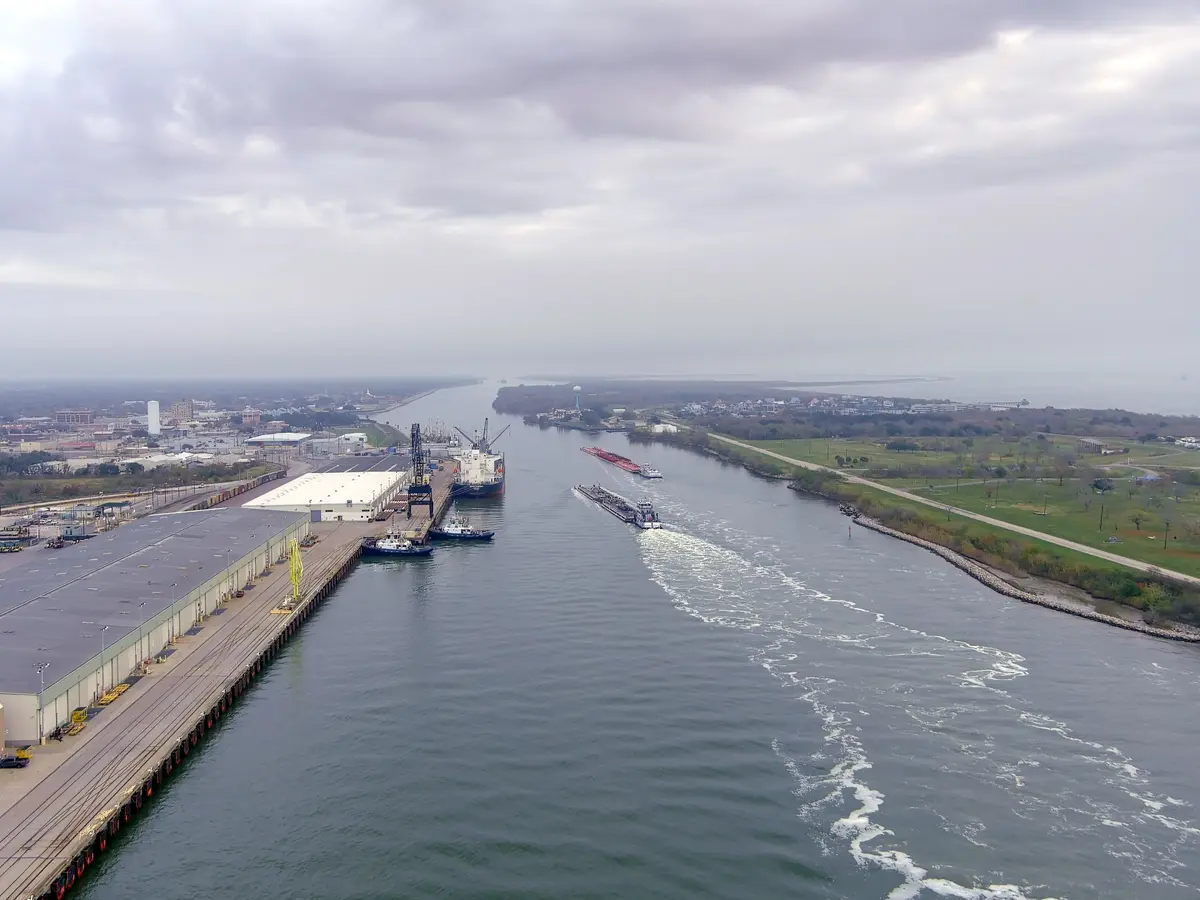
Maybe your employer is transferring you to the Golden Triangle's refinery corridor. Maybe you've been priced out of Houston and someone mentioned southeast Texas. Either way, Port Arthur tends to catch people off guard — not because it's disappointing, but because it doesn't match what they assumed. This is an industrial city, unapologetically so: the skyline at night glows from flare stacks, and the economy is built on the same oil refining infrastructure that dates to the Lucas Gusher at Spindletop in 1901. What surprises people is everything layered underneath that industry — a genuinely multicultural community, a music legacy that produced Janis Joplin and J.P. Richardson, and food traditions that earned Port Arthur its designation as the Cajun Capital of Texas. The city of 55,804 sits on Sabine Lake in Jefferson County, connected to Beaumont, Groves, and Nederland via US-69, US-96, and US-287.
The economic backbone here is petrochemical, full stop. Motiva's Port Arthur refinery is the largest crude oil refinery in the United States — processing 640,500 barrels per calendar day as of January 2025 — and Valero, TotalEnergies, and Chevron Phillips Chemical all maintain major operations in the same corridor. The Port Arthur Independent School District and the City of Port Arthur itself round out the largest employers. The Beaumont–Port Arthur region has drawn $54 billion in broader industrial investment, which means the job market here is specialized but durable. People move to Port Arthur because the refinery pays well and the cost of living is a fraction of the Texas metros they came from.
Housing costs are among the lowest of any city this size in Texas, which is the single most concrete reason people keep choosing Port Arthur over its neighbors. A typical city-wide rent runs $1,270 per month (Zillow ZORI, July 2026), and the median household income of $46,354 is, notably, at or above what's needed to afford the typical home here — a math that simply doesn't work in most Texas cities anymore. Outdoor life centers on Sabine Lake, Pleasure Island's 18.5-mile man-made island with its marina and trails, and the Gulf Coast beaches at nearby Sea Rim State Park. The city logs 211 sunny days a year, which means winters are mild enough that waterfront recreation runs nearly year-round. Crime rates here run above state and national averages, a reality worth understanding before you commit — the safety page has the full breakdown.
Whether you're seriously considering a move or just starting to research the area, the sections below cover Port Arthur's neighborhoods, housing market, commute, school district, local culture, and what daily life actually looks and feels like in the Golden Triangle.
Port Arthur at a Glance
Looking to buy in Port Arthur? Estimate your payment.
Enter your numbers to see an estimated monthly mortgage payment.
Estimate only. Excludes HOA fees and mortgage insurance. The interest rate above is a starting point, not a quoted rate — replace it with your own to see real numbers. Insurance is a flat placeholder, not a Port Arthur quote.
Why Are People Moving to Port Arthur?
The refinery corridor is the answer most people give, and it's largely correct. When a Motiva turnaround or a TotalEnergies maintenance cycle ramps up, it can bring thousands of contract workers to the area — the 2025 TotalEnergies turnaround had up to 2,300 workers on site at peak activity. But permanent relocation is a different calculation, and the people who stay are usually doing so because the employment-to-cost-of-living ratio is genuinely hard to match in Texas.
Petrochemical and refinery jobs in southeast Texas carry wages that would be middle-upper-class income in many markets. Here, that income buys a house, not a rental. That's the core pull. The median household income of $46,354 is modest by statewide standards, but Port Arthur's housing costs sit well below what you'd find in Nederland, Groves, or Port Neches — each of which runs noticeably higher — and in a completely different universe from Houston or Austin.
A second, quieter migration is happening too: remote workers and retirees from more expensive Texas metros who want Gulf Coast proximity without Gulf Coast prices. Port Arthur is about 25 minutes to Beaumont for the regional hospital, big-box retail, and airport access, but the day-to-day pace here is slower and more affordable.
The Cultural Pull
Port Arthur's cultural identity is genuinely unusual for a city its size. The designation as the Cajun Capital of Texas isn't marketing — it reflects a real multicultural community where Vietnamese, Cajun, Mexican, and African American traditions overlap in the food, the music, and the festivals. Crawfish boils, gumbo, zydeco, and blues aren't tourist attractions here; they're Tuesday night. That texture matters to families relocating from Louisiana, south Texas, or anywhere else where that kind of community feels like home.
The music heritage runs deeper than most people expect. Janis Joplin grew up in the Griffing Park neighborhood, and the Museum of the Gulf Coast's Music Hall of Fame documents more than 60 regional legends — J.P. Richardson, Johnny Winter, Edgar Winter among them. International visitors come specifically for the Joplin exhibit. Living here, you don't think about that constantly, but it shapes the city's sense of its own identity in a way that's hard to quantify and easy to feel.
What the City Is Working On
Port Arthur's 2025–2030 strategic plan puts infrastructure, drainage, road safety, and economic development at the top of the priority list. The Port Arthur Economic Development Corporation manages a 450-acre business park with active incentive programs for manufacturing and commercial investment. This is a city that has seen real disinvestment over decades and is working its way back — which is either a risk or an opportunity, depending on your time horizon and which neighborhood you're buying in. See the full neighborhoods breakdown to understand which areas are moving in which direction.
What Daily Life Feels Like in Port Arthur
Port Arthur is not a walkable city by any measure that matters. You will drive to the grocery store, drive to the park, drive to dinner. That's the practical reality of daily life here, and it's worth accepting before you move rather than discovering after. What daily life gives you in return is a slower rhythm, genuinely low costs, and neighbors who tend to have deep roots.
The Neighborhood Experience
Griffing Park, where Janis Joplin grew up, has the feel of an established residential neighborhood with tree cover and a mix of older bungalows and brick homes. Pear Ridge and Lakeview were originally separate communities absorbed over decades, and they still have something of a self-contained character. Sabine Pass, at the southern edge of the city, operates almost independently — it has its own school district, water district, and ZIP code, and residents there often identify more with that community than with Port Arthur proper.
One thing newcomers take a few months to understand: the petrochemical industry doesn't just shape the economy, it shapes the sensory experience of the city. Flare stacks light the horizon at night. Refinery maintenance cycles affect traffic on industrial corridors. The smell, on certain days with certain wind directions, is unmistakable. None of this is a secret, but it's not something you fully absorb until you've lived a few weeks with it.
Where People Gather
Residents frequent neighborhood parks throughout Griffing Park, the Babe Zaharias Golf Course, and the Port Arthur Little Theatre for community performances. Central Mall is the main shopping anchor. The public library draws steady foot traffic from families. For bigger retail runs or a wider restaurant selection, the drive to Beaumont is routine — about 25 minutes, and most longtime residents treat it as an easy errand rather than a trip.
The Seasonal Reality
Southeast Texas heat is not a minor detail. July and August can run well over 90°F with humidity that makes it feel significantly hotter, and the warm season stretches from May through October. Hurricane season brings genuine preparedness requirements — not occasional awareness, but an actual plan for evacuation routes and supplies. Most long-term residents have this dialed in; newcomers from drier climates or inland areas often underestimate it in year one. The upside is that winters are genuinely mild, and the waterfront and outdoor spaces are usable from November through April in a way that most of the country can't claim.
For a full look at schools, the Port Arthur ISD holds a D rating, according to the Texas Education Agency — and many families who work here send children to schools in neighboring districts. See the schools page for the full picture, including what that means in practice for families weighing the move.
The Port Arthur Housing Market Right Now
The typical home price in Port Arthur is $125,021 (Zillow Home Value Index, July 2026). That figure is not a typo, and it is not a reflection of homes in poor condition — it reflects a market where the math of homeownership works in a way that it simply doesn't in most of coastal Texas. The median household income here is at or above the income required to buy the typical home, which makes Port Arthur one of the more genuinely affordable owner-occupied markets in the state.
To put that in context: Nederland, Groves, and Port Neches — all within a short drive — each run noticeably higher. The price gap between Port Arthur and its immediate neighbors is real and consistent. Buyers who want to maximize square footage and lot size for their money will find Port Arthur delivers in a way the surrounding cities don't.
What the Entry-Level Market Looks Like
At the lower end of the market, you can find older wood-frame and brick homes on established lots in neighborhoods like Port Acres and West Port Arthur. These are working-class neighborhoods with deep roots, and the housing stock reflects that — some homes need updating, some are move-in ready. Griffing Park and Tallow Woods tend to attract buyers looking for more established residential character, with the understanding that prices across the city are compressed enough that the range from entry to upper-end isn't dramatic.
The typical city-wide rent of $1,270/month (Zillow ZORI, July 2026) means the rent-vs-buy math strongly favors buying for anyone planning to stay more than a couple of years. At current rates, a mortgage on a home at the city median is competitive with — or cheaper than — renting a comparable unit. That dynamic is unusual enough to be worth taking seriously. See the cost of living page for the full breakdown on property taxes, utilities, and how Port Arthur's overall expenses stack up.
What Buyers Should Know
Flood risk is the underwriting reality that shapes every transaction in Jefferson County. Port Arthur sits on low-lying coastal terrain, and flood insurance is not optional — it's a non-negotiable cost of ownership that varies significantly depending on the specific lot's flood zone designation. Get the flood zone determination and the current FEMA map before you get attached to a property. That step alone separates buyers who are informed from buyers who get a surprise at closing. The first-time homebuyer page covers what that process looks like in practice.
Port Arthur Neighborhoods
Port Arthur has several distinct areas — each with its own character and appeal. Here’s a breakdown to help you narrow down where to focus your home search.
🏡 Griffing Park
Griffing Park is Port Arthur's most recognizable residential neighborhood — tree-lined, established, and home to Janis Joplin's childhood block, marked by a Texas State Historical Marker. It attracts buyers who want a traditional neighborhood feel with mature lots and proximity to the city's civic center.
🏠 Port Acres
Port Acres has a self-contained community identity and tends to attract buyers looking for affordability and a working-class neighborhood with deep local roots. The housing stock is predominantly older single-family homes on modest lots.
🌳 Lakeview
Lakeview was originally an independent community before being absorbed by Port Arthur, and it retains a slightly distinct residential character. It suits buyers who want an established neighborhood on the quieter side of the city.
🏘 Sabine Pass
Sabine Pass sits at the southern edge of the city and operates with considerable independence — it has its own school district, water district, port authority, and ZIP code. Buyers here are choosing a tight-knit waterfront community that happens to carry a Port Arthur mailing address.
🏔 Pear Ridge
Pear Ridge was once a separate community and still feels somewhat self-contained, with a mix of residential housing types that suits buyers looking for a neighborhood with its own character rather than a generic subdivision feel.
🌆 West Port Arthur
West Port Arthur is one of the more affordable entry points into the city's housing market, with older residential stock and a community that has a strong working-class identity. It suits buyers prioritizing value and space over proximity to the waterfront.
Pros & Cons of Living in Port Arthur
The Pros
- Very affordable home prices relative to national and Texas averages
- Strong, high-paying industrial/refinery job base
- Waterfront and Gulf Coast recreation access via Pleasure Island and Sabine Lake
- Rich cultural and musical heritage (birthplace of Janis Joplin)
The Cons
- Higher-than-average crime rates, especially violent crime
- Underperforming public school district by state rankings
- Heavy industrial presence brings air-quality and hurricane/flood exposure concerns
Getting Around & Commuting in Port Arthur
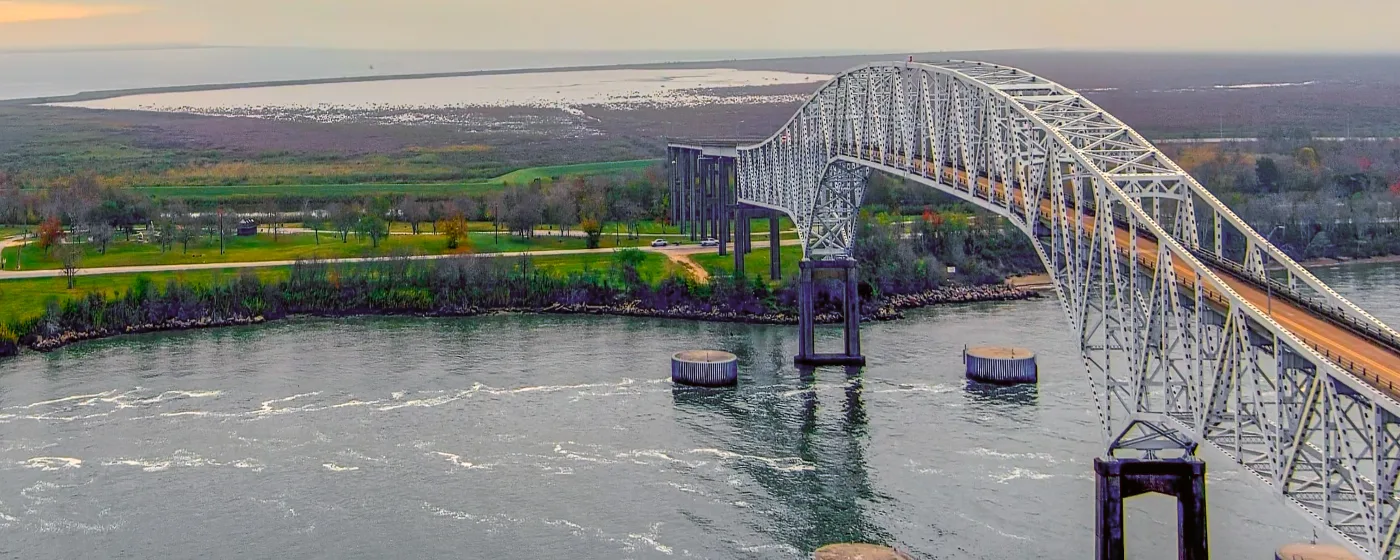
Port Arthur is laid out around water — Sabine Lake to the east, the waterway threading through Pleasure Island, and the Neches River forming the western boundary. That geography is part of what gives the city its character, and it's also part of what shapes every commute. Bridges matter here. The Rainbow Bridge, completed in 1938 and rising 177 feet above the Neches River, is among the tallest on the Gulf Coast — and it's also the chokepoint that slows traffic when an industrial convoy or weather event backs things up.
The Refinery Shift Pattern
If you work a refinery shift, your commute looks nothing like a standard 9-to-5. Shift changes on the industrial corridor — particularly around the Motiva, Valero, and TotalEnergies facilities — create concentrated traffic windows in the early morning and mid-afternoon that people unfamiliar with refinery towns don't expect. During a major turnaround, when contract worker counts spike dramatically, those windows can stretch. Experienced residents plan around them, either leaving earlier or later than the shift change window.
Getting to Beaumont and Beyond
US-69, US-96, and US-287 all carry commuter traffic north toward Beaumont. The drive is about 25 minutes under normal conditions, which makes Beaumont a realistic destination for work, regional medical appointments, and shopping without feeling like a significant commute. TX-87 runs the coastal corridor and is the primary route connecting Port Arthur to Sabine Pass at the south end of the city.
Jack Brooks Regional Airport (BPT) is 11 miles from the city and serves the region with commercial service, though most residents flying to major domestic hubs connect through Houston's airports — a drive that most people budget at roughly 90 minutes. Having a reliable vehicle is non-negotiable for daily life here; there is no regional rail, and transit options are limited to basic bus service that covers core routes but does not extend to most suburban or industrial areas.
The Industrial Corridor
TX-73 and TX-82 handle significant industrial and freight traffic connecting the refinery corridor to adjacent communities. If your daily route crosses one of these corridors during a shift change or a refinery maintenance cycle, build in buffer time. Residents who've been here a few years know instinctively which windows to avoid; newcomers typically learn by sitting through a backup once or twice.
Schools in Port Arthur
Families relocating to Port Arthur have public, private, and higher-education options nearby. Here’s a quick overview.
🎓 School District
Port Arthur Independent School District serves K–12 students across Port Arthur and the surrounding area. Rated D (source: Texas Education Agency, 2025 A-F accountability rating (2024-25 school year)).
🏆 Graduation Rate
The 4-year high-school graduation rate here is approximately 84.8%.
📚 Higher Education
Texas’s public universities — the University of Texas at Austin, Texas A&M University, and the University of Houston — offer four-year degrees statewide, with one of the largest community college systems in the country (50+ public community college districts) providing two-year and workforce programs.
🌐 Online Learning
UT Austin Online and Texas A&M University Online offer fully accredited online degrees for remote learners across the state.
Safety in Port Arthur
A quick look at how Port Arthur compares on the numbers that matter most when weighing a neighborhood or a move.
🛡 Violent Crime
Approximately 7.18 per 1,000 residents.
🔒 Property Crime
Approximately 15.4 per 1,000 residents.
Compared to the most recent national figures from the Bureau of Justice Statistics (2024), Port Arthur’s violent crime is above the national average (about 3.7 per 1,000), and property crime is below the national average (about 18.4 per 1,000).
Against Texas as a whole, Port Arthur’s violent crime is about double the state average, and property crime is roughly two-thirds of the state average (Bureau of Justice Statistics, Crime Known to Law Enforcement, 2024 (tables 2 and 3)).
Crime rates can vary a lot within a single city, so the citywide numbers above are only a starting point. Some neighborhoods in Port Arthur run well below these averages, while others run higher — the kind of block-by-block detail that matters most when you’re actually choosing where to live. The full guide below breaks it down neighborhood by neighborhood.
Working in Port Arthur
Port Arthur’s largest employers span several industries — here are some of the anchors of the local job market.
💼 Motiva Port Arthur Refinery
Oil refining
💼 Valero Port Arthur Refinery
Oil refining
💼 TotalEnergies Port Arthur Refinery
Petrochemicals, refining
💼 Chevron Phillips Chemical
Petrochemicals
🎓 Port Arthur Independent School District
Education
🏛 City of Port Arthur
Municipal government
Retiring in Port Arthur
Port Arthur draws retirees for its balance of amenities, outdoor access, and cost. Here’s what to weigh.
🌤 Climate
Port Arthur logs 211 sunny days a year, with mild winters that make outdoor activity comfortable from November through April. Summers are hot and humid — temperatures regularly exceed 90°F, and the heat index pushes significantly higher. Hurricane season runs June through November and requires genuine preparedness, not just awareness.
🍴 Lifestyle
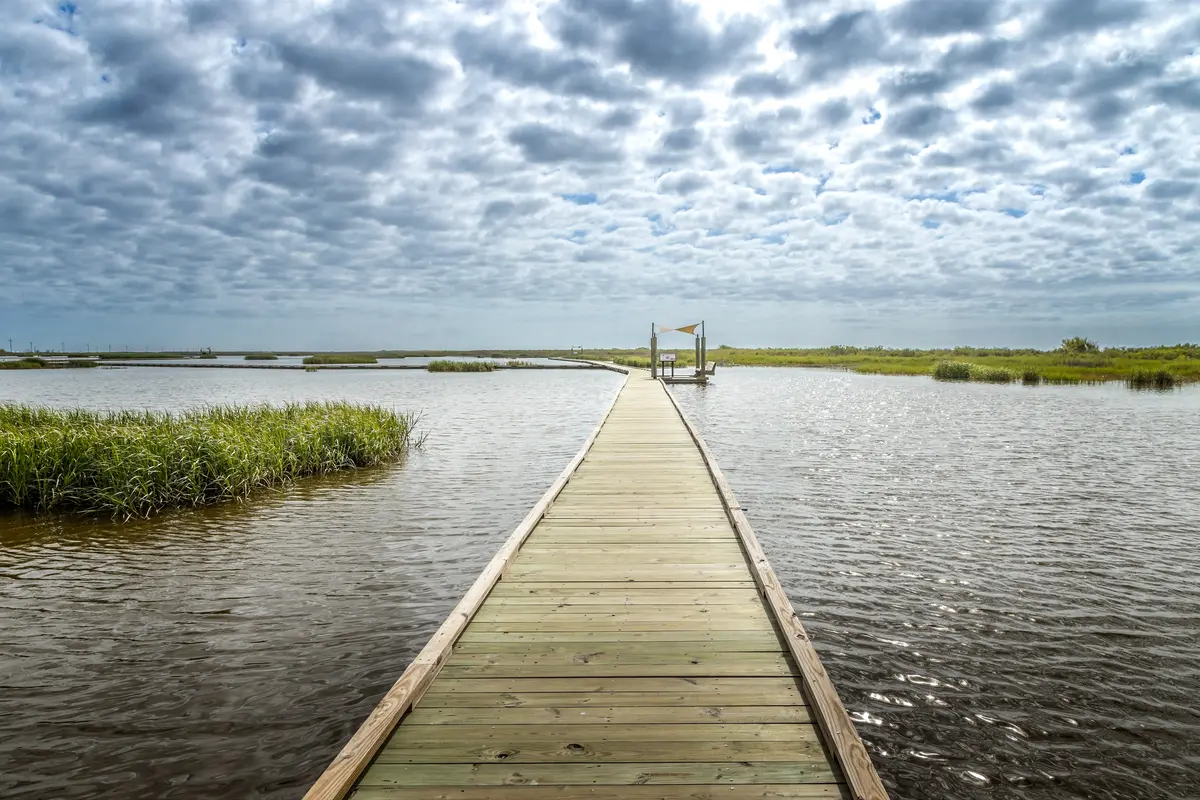
Daily life for retirees centers on the waterfront — fishing on Sabine Lake, walking and biking on Pleasure Island, and day trips to nearby Sea Rim State Park's Gulf Coast beaches. The Museum of the Gulf Coast and the Port Arthur Little Theatre anchor the cultural calendar, and the Cajun food tradition means the local dining scene has genuine character for a city of its size.
🏚 55+ Communities
No 55+ communities were found in Port Arthur. Retirees who want a structured 55+ setting typically look to Beaumont or further into the Houston metro. The low cost of homeownership here does make independent retirement in a single-family home financially accessible for many buyers.
✈ Getting Around
A personal vehicle is necessary for all practical daily needs in Port Arthur. Jack Brooks Regional Airport (BPT) is 11 miles from the city and serves the regional travel market. Most longer-haul flights connect through Houston, which is approximately 90 minutes by car.
🏛 Texas Taxes for Retirees — What to Know
- No state income tax — Texas has no personal income tax — constitutionally protected under Article VIII, Section 24. Social Security, pensions, 401(k)/IRA withdrawals, and annuity payments are all untaxed at the state level, with no state return to file.
- Sales tax is the tradeoff — The state sales tax is 6.25%, and local add-ons bring the combined rate in Port Arthur to 8.25% (Texas Comptroller of Public Accounts, city sales and use tax rates, July 2026). Groceries and prescription drugs are exempt.
- Property taxes — the real tradeoff — Texas’s effective property tax rate averages about 1.40%, among the highest in the country, since property tax (not income tax) funds most local government and schools.
- Over-65 homestead exemption and school-tax freeze — Homeowners 65+ (or disabled) get an additional $60,000 exemption from their home’s value for school district taxes, on top of the general homestead exemption — $200,000 off school taxable value combined, following November 2025’s Proposition 11 (SB 23), which raised the over-65 exemption to $60,000, and Proposition 13 (SB 4), which raised the general homestead exemption to $140,000. Once claimed, your school district tax bill is frozen at that year’s amount and cannot increase as home values rise, and the ceiling can transfer if you move to a new home within Texas.
- Deferral option if cash is tight — Homeowners 65+ can defer property tax payment entirely for as long as they live in the home, rather than paying it currently — interest accrues, but no forced sale.
- No estate or inheritance tax — Texas has no estate tax, no inheritance tax, and no gift tax.
- No separate capital gains tax — Because Texas has no state income tax, capital gains — including on investments and home sales — are not taxed at the state level at all, unlike states such as Washington that tax capital gains separately from income.
Tax laws change frequently and individual situations vary. This is general information, not tax advice — always consult a qualified Texas tax professional or CPA for personalized retirement tax planning.
Weekends & Local Favorites in Port Arthur
Weekends in Port Arthur tend to center on water, food, and the kind of outdoor recreation that a Gulf Coast location makes possible even in the heat. The city's designation as the Cajun Capital of Texas is most visible on a Saturday — in the seafood joints, the backyard crawfish boils, the music drifting out of local spots.
Food Worth Knowing
Tia Juanita's Fish Camp is the kind of place locals bring out-of-town guests to make a point about what Gulf Coast seafood actually tastes like. Dylan's on 9th has earned a following for its dining experience in a city where sit-down options are selective. Rock'n Crab delivers exactly what the name promises — fresh Gulf shellfish in a casual setting that doesn't take itself too seriously. Hamilton's Restaurant & Bar offers a more relaxed atmosphere with consistent food. The Toasted Yolk Cafe is a reliable morning stop when you want a full breakfast without driving to Beaumont.
For coffee, Kimmy's Cafe and Rao's Bakery Coffee Cafe are the local anchors — both independently operated and both the kind of places where regulars are regulars in the actual sense of the word. Milan Bakery rounds out the coffee and pastry options for morning routines that don't involve a drive-through chain.
Outdoors and the Waterfront
Pleasure Island is where Port Arthur's outdoor recreation concentrates. The 18.5-mile man-made island has a marina, hiking and biking trails, a windsurfing beach, and a disc golf course that draws competitors from well outside the region. Sabine Lake itself is a serious fishing destination — redfish, speckled trout, and flounder draw both local anglers and visitors who make the trip specifically for the water. Keith Lake Fish Camp is the local access point for serious freshwater and brackish-water fishing without heading further afield.
Nearby Sea Rim State Park offers 5.2 miles of Gulf Coast beach and 4,000 acres of marshland with paddle trails ranging from under 2 miles to nearly 10 miles — enough variety that it doesn't feel like the same outing twice. Sabine Pass Battleground State Historic Site gives the area's Civil War history a tangible anchor point at the southern end of the city.
Culture and Community
The Museum of the Gulf Coast is the cultural anchor that most people discover on a first visit and return to with out-of-town guests. The 39,000-square-foot facility's Music Hall of Fame covers more than 60 regional legends, anchored by a Janis Joplin exhibit that includes a replica of her psychedelic 1965 Porsche. The Sports Hall of Fame and the Robert Rauschenberg art gallery fill out a museum that punches well above its weight for a city this size. The Pompeiian Villa — a 1900-era mansion that survived Spindletop-era oil wealth intact — is the kind of historical oddity that makes Port Arthur genuinely interesting to explore. The Port Arthur Little Theatre keeps community arts alive for residents who want live performance without driving to Beaumont.
Local favorites in Port Arthur
Restaurants
- Tia Juanita's Fish Camp
- Dylan's on 9th
- Rock’n Crab ( Port Arthur )
- Hamilton's Restaurant & Bar
- The Toasted Yolk Cafe
Outdoors
- Pleasure Island
- Sabine Lake
- Sea Rim State Park
- Keith Lake Fish Camp
- Sabine Pass Battleground State Historic Site
Coffee
- Kimmy's Cafe
- Rao's Bakery Coffee cafe
- Milan Bakery
Top Things Locals Say About Port Arthur
The best intel about a city comes from the people who actually live there. Here’s what Port Arthur residents say when newcomers ask the questions everyone’s thinking.
“I knew the cost of living was low, but I didn't expect how much the shift-change traffic near the refinery corridor would shape my mornings. Once I adjusted my schedule by about 45 minutes, the commute basically disappeared. The other thing nobody told me: September in Port Arthur is hotter than anything I'd experienced before, and it lasts longer than the calendar suggests it should.”
— Recent Port Arthur home buyer
“What's the most surprising thing about living in Port Arthur?”
Most newcomers are surprised by how distinct the neighborhoods feel from each other. Sabine Pass, at the far south end, barely feels like Port Arthur at all — it has its own zip code, its own school district, and residents there have a strong independent identity. Griffing Park has tree cover and an established residential feel that people don't expect when they picture an industrial Gulf Coast city. The multicultural food scene also catches people off guard in the best way — the Cajun Capital of Texas designation turns out to be earned.
“What do locals love most about Port Arthur?”
The water access is the honest answer for a lot of people. Sabine Lake, Pleasure Island, and the proximity to Sea Rim State Park mean that fishing, boating, and getting out on the water is a regular part of life, not a special occasion. The cost of ownership means that people who would be renters forever in Houston or Austin can actually build equity here. And the food — the crawfish, the gumbo, the Gulf seafood — is genuinely the best version of that cuisine in Texas.
“What should newcomers to Port Arthur know?”
Get serious about flood insurance before you buy, not after. It's not bureaucratic paperwork — it's a real financial protection in a city that has seen significant storm events, and the cost varies enough between properties that the flood zone designation should factor into which house you choose. Also: give yourself a full year before you decide whether the city is for you. The first summer is the hardest. By the second year, most people either leave or settle in for the long term.
“How much do you need a car in Port Arthur?”
A car is essential for every aspect of daily life in Port Arthur. Grocery runs, school pickups, getting to work, and weekend errands all require driving. Bus service exists along core routes but doesn't cover most residential areas or industrial corridors in a practical way. For anything beyond the immediate neighborhood — a bigger shopping run, a regional medical appointment, or a night out with more options — most residents drive to Beaumont, which is about 25 minutes away and is where most residents plan longer errands and appointments.
Cities Near Port Arthur
Other communities near Port Arthur worth a look — each with its own character and price point.
| City | Distance | Best For | Vibe | Median Rent | Median Buy |
|---|---|---|---|---|---|
| Nederland | 10 mi | Families seeking stronger schools | Quiet, suburban, well-kept | $1,350 | $195,000 |
| Groves | 8 mi | Budget buyers wanting suburb feel | Residential, established, low-key | $1,250 | $163,000 |
| Port Neches | 12 mi | Families prioritizing school districts | Small-town, tight-knit, riverside | $1,388 | $247,291 |
More Helpful Guides for Port Arthur
Going deeper on Port Arthur? Our blog series covers everything from first-time buying to retiring here — explore the guides below.
Local Expert Takeaway: Port Arthur is the city where the Gulf Coast affordability math actually works — but it's not a city that hides what it is. The refinery skyline, the humidity, the flood zone realities, and the school district challenges are all part of the picture. What you get in return is a home you can actually own on a working wage, a food and music culture that's genuinely unlike anywhere else in Texas, and waterfront access at Sabine Lake and Pleasure Island that residents from Houston pay weekend-trip money to visit. The people who thrive here are the ones who came in clear-eyed rather than expecting Port Arthur to be something it's not.
Quick Takeaways & FAQs
✅ Port Arthur's typical home price of $125,021 (July 2026) is among the lowest of any city its size in Texas, and the median income here is at or above what's needed to buy.
⚠️ The school district holds a D rating from the Texas Education Agency, and many families in the area research neighboring districts before committing to a specific neighborhood.
📍 Pleasure Island's disc golf course draws competitors from well outside the region — a detail that tells you something about the waterfront infrastructure Port Arthur has built around Sabine Lake.
Is Port Arthur, TX a good place to live?
How affordable is housing in Port Arthur compared to the rest of Texas?
What are the job opportunities in Port Arthur?
What should I know about flood risk before buying in Port Arthur?
How are the schools in Port Arthur, TX?
Helpful Links for Moving to Port Arthur
Moving to Texas?
Tell us what you need help with and we'll connect you with local resources.
