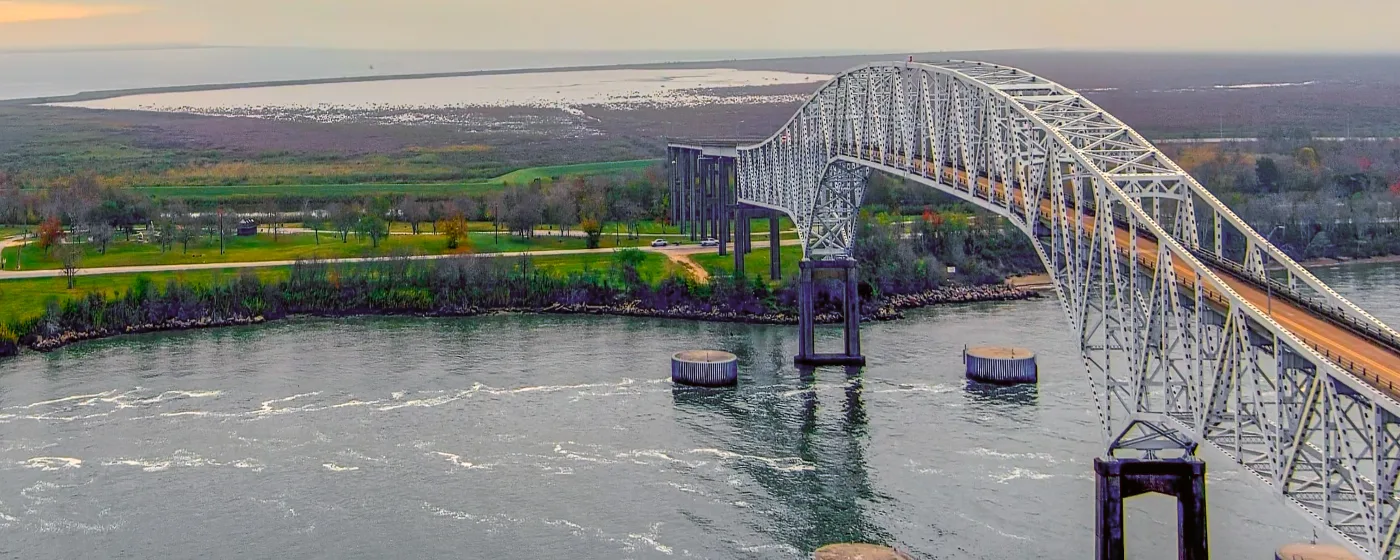
Port Arthur surprises buyers in the same way every time. The price — a typical home at $125,021 (Zillow Home Value Index, July 2026) — reads as almost impossibly low for 2026, and that low number immediately raises the obvious question: what's the catch? The honest answer is that there isn't a single catch; there are a few specific ones, and they are all geographic. Port Arthur sits at the edge of the Gulf Coast petrochemical corridor in Jefferson County, bisected by refineries and waterways, and the neighborhood you choose determines your daily air quality, your flood risk, your morning commute, and whether your kids are in a school closer to the district's stronger buildings or its weaker ones. Understanding those divides is the whole game here.
The economy that built this city and still employs a large share of its 55,804 residents is petrochemical refining. Motiva, Valero, TotalEnergies, and Chevron Phillips Chemical all maintain major operations here, drawing engineers, operators, and tradespeople into a labor market that pays well above the city's $46,354 median household income for people in the right seats. The Port Arthur Independent School District, with 7,841 students enrolled in 2025-26, holds a D rating, according to the Texas Education Agency — a real constraint for families with school-age children that shapes which neighborhoods command buyer interest and which ones struggle to hold value. For buyers who either work in the refinery industry, remote-work independently, or plan to send kids to private or charter schools, that rating matters less than it does for others.
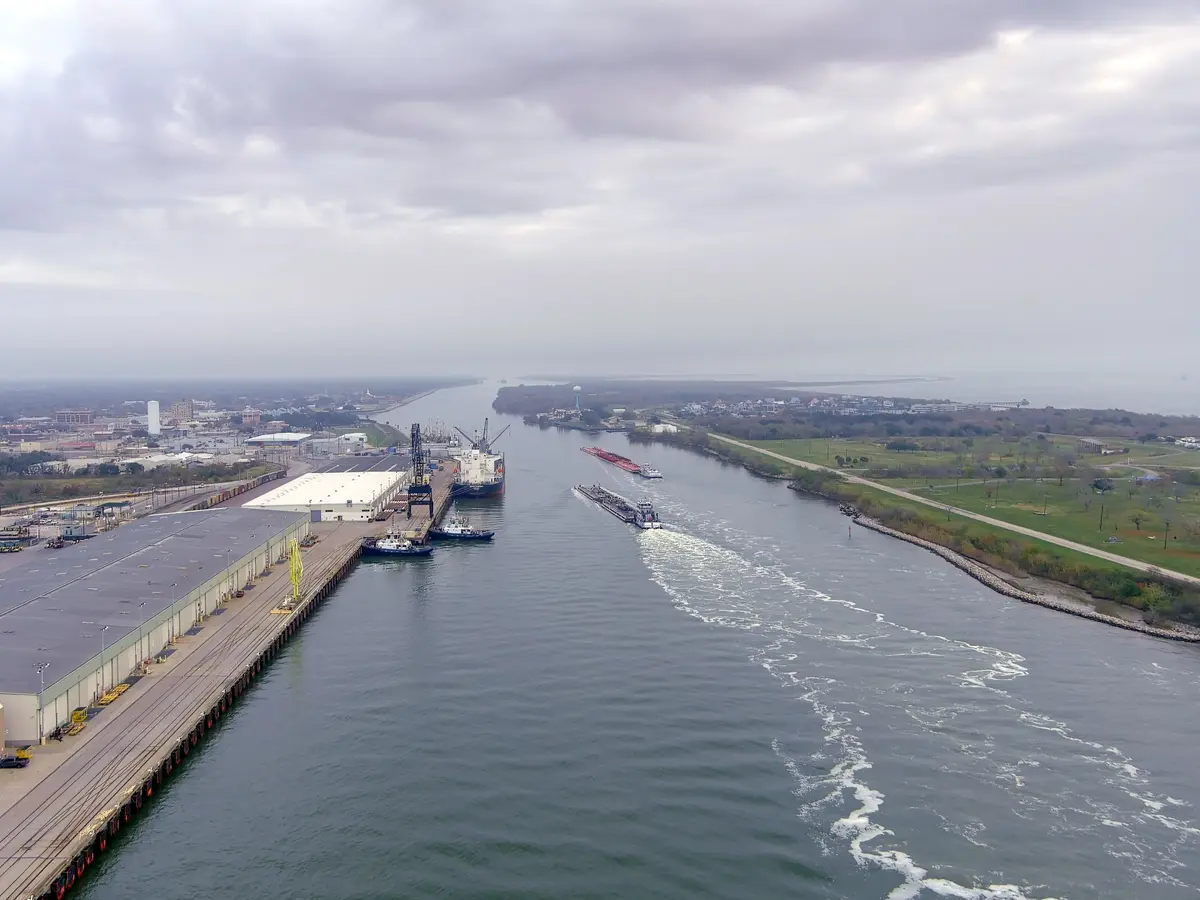
What Port Arthur offers in exchange for its challenges is genuine affordability that the neighboring cities of Nederland, Groves, and Port Neches — all noticeably higher in home price — simply cannot match, plus a coastline, a lake, and an outdoor identity that most industrial cities don't have. Pleasure Island sits on 70,000-acre Sabine Lake. Sea Rim State Park is a short drive south. The Rainbow Bridge is the kind of landmark that makes people feel like they live somewhere specific rather than somewhere generic. The city gets 211 sunny days a year, and the fishing culture here is not a weekend hobby — it is part of how the community defines itself.
Whether you are relocating for a refinery job, buying your first home on a tight budget, or simply looking for a foothold in Southeast Texas, the sections below break down Port Arthur's neighborhoods, what each one costs relative to the city, who each one suits, and the honest trade-offs that most listing descriptions leave out.
The Port Arthur Reality
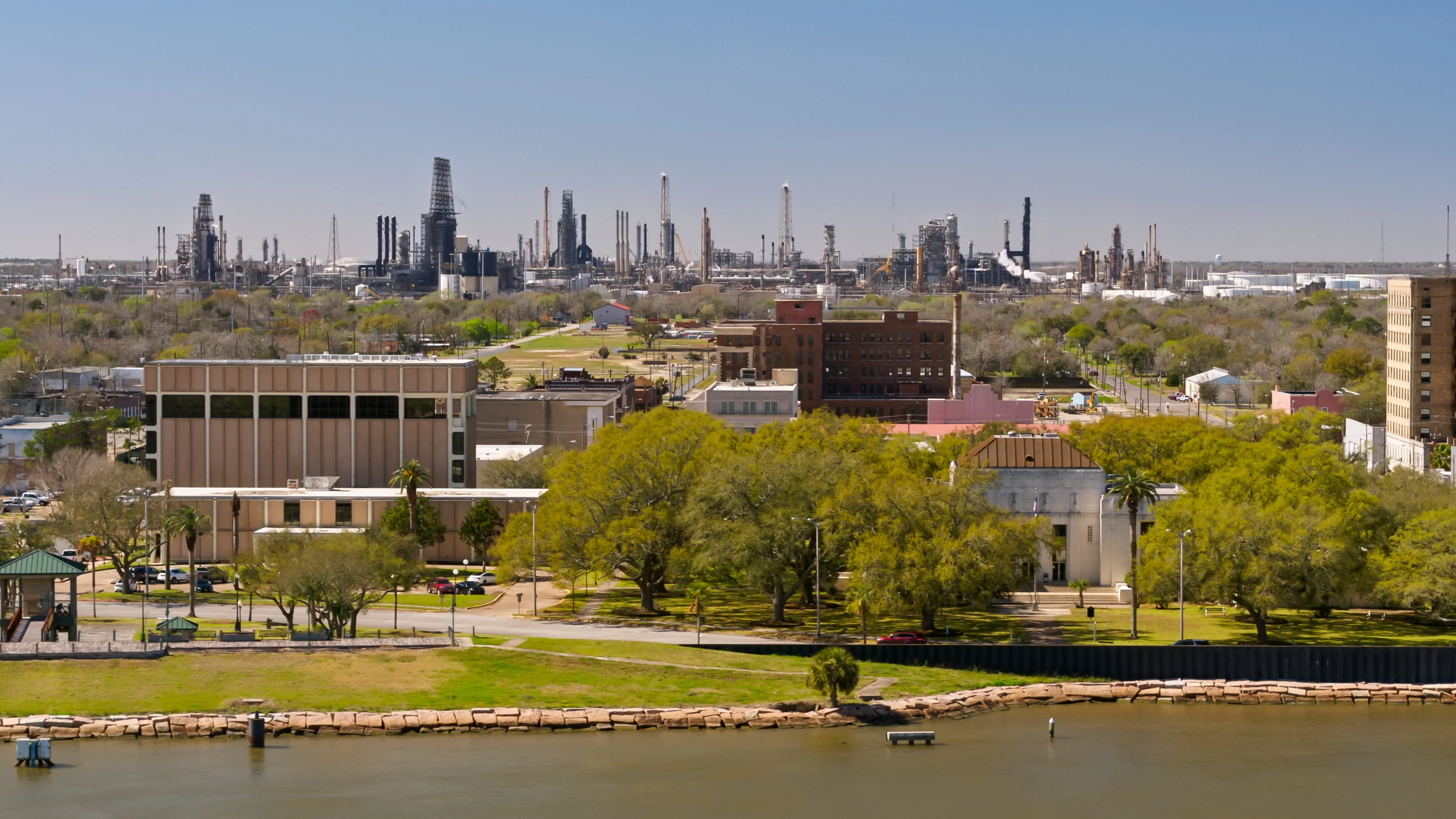
The single most important line in Port Arthur is the refinery corridor. The industrial complex running along the city's core creates a physical and psychological divide that shapes property values, air quality, and daily life in ways that no amount of square footage per dollar can fix. Buyers who treat the city as a uniform market — low prices everywhere, pick a house — almost always end up in a neighborhood that surprised them six months later, for reasons that were knowable in advance.
The second divide is water. Port Arthur is built on low-lying Gulf Coast terrain where flooding is not an edge-case risk — it is a baseline planning condition. Neighborhoods closer to the ship channel, the bayous, and the open lake carry meaningful flood insurance costs that do not show up in the list price. The effective property tax rate of 1.57% is already higher than the Texas average for most price points, and flood insurance on top of that can shift the real monthly cost substantially. Checking the FEMA flood zone designation for a specific parcel is not optional; it is the first step.
School boundaries are the third divide, and the one buyers most often underestimate. The Port Arthur Independent School District holds a D rating, according to the Texas Education Agency, and on 2024-25 state assessments, 26% of students reached math proficiency and 35% reached reading proficiency. Those figures apply district-wide, but individual campuses vary. Buyers with school-age children who do not intend to use private or charter school options should map the specific campus assignment for any address they are considering — and factor in whether a boundary change, which happens periodically, could shift that assignment. For the full school picture, see the Port Arthur schools guide.
Neighborhoods at a Glance
| Neighborhood | Best For | Vibe |
|---|---|---|
| Griffing Park | Families First-Time | Tight-knit, post-war residential with a fierce independent streak and very low vacancy |
| Port Acres | Privacy Nature | Sprawling ranch lots with deep Cajun roots; feels more rural than city |
| Lakeview | Value Renter | Dense, multicultural, working-class; close to the refinery corridor |
| Sabine Pass | Nature Quiet | Historic Gulf Coast outpost; birding, fishing, and genuine solitude |
| Pear Ridge | First-Time Families | Former independent city; owner-occupied, modest, and stable |
| West Port Arthur | Value Commuter | Working-class residential close to industrial employers; practical, not polished |
| Downtown Port Arthur | Walkable Transit | Oil-boom architecture, cultural anchors, and ongoing revitalization |
| Tallow Woods | Families School | Quieter, more suburban feel; the closest Port Arthur gets to a conventional subdivision |
Port Arthur typical home price: $125,021 (Zillow ZHVI, July 2026). Typical rent: $1,270/mo (Zillow ZORI, July 2026). Neighborhood tiers on this page are relative to these figures.
Best Neighborhood by Buyer Type
| Buyer Type | Best Neighborhood | Why |
|---|---|---|
| First-Time Buyer | Griffing Park | Low vacancy and mostly owner-occupied stock signal a stable community where entry-level buyers aren't competing with heavy investor flipping. |
| Luxury Buyer | Tallow Woods | The most conventional subdivision feel in the city, with newer construction and larger footprints that represent the upper end of the local market. |
| Walkability Seeker | Downtown Port Arthur | The Museum of the Gulf Coast, the Pompeiian Villa, and Pleasure Island nearby give Downtown the densest concentration of on-foot destinations in the city. |
| Families with Kids | Tallow Woods | Quieter streets and a more suburban character make it one of the more family-oriented pockets in a city where school and safety research matters a great deal. |
| Commuters | Port Acres | Positioned along TX-73 with straightforward access to refinery campuses and about 25 minutes to Beaumont, TX for anyone with obligations in both directions. |
| Large-Lot Buyers | Port Acres | Ranch-style bungalows on spacious lots give buyers room that no other Port Arthur neighborhood consistently offers at this price point. |
| Renters | Lakeview | Higher rental density and refinery-adjacent location keep turnover active, giving renters more options without the premium of quieter neighborhoods. |
Looking to buy in Port Arthur? Estimate your payment.
Enter your numbers to see an estimated monthly mortgage payment.
Estimate only. Excludes HOA fees and mortgage insurance. The interest rate above is a starting point, not a quoted rate — replace it with your own to see real numbers. Insurance is a flat placeholder, not a Port Arthur quote.
Most Popular Neighborhoods
Griffing Park
Griffing Park has a civic identity that most annexed neighborhoods never develop: residents voted 87–2 to resist annexation before Port Arthur finally absorbed it in 1983, and that independent streak still shows in how tightly the community holds together. The housing stock — mostly medium to small single-family homes built between 1940 and 1969 — is owner-occupied at a high rate, and the vacancy rate of 3.3% is lower than roughly 77% of U.S. neighborhoods, which tells you something real about demand. The trade-off is that you are buying older bones, and deferred maintenance on mid-century construction in a high-humidity Gulf Coast climate is a genuine budget item.
Best for: First-time buyers and families who want a neighborhood with actual social cohesion rather than an investment-driven market.
Port Acres
Port Acres is the city's quietest pocket of Cajun culture — one of the highest concentrations of French and French-Canadian ancestry of any neighborhood in America, according to NeighborhoodScout data — and it feels more like a rural community that happened to get absorbed by a city than a traditional urban neighborhood. Bungalows and ranch-style homes on spacious lots along TX-73 give buyers room to breathe, and Jack Brooks Regional Airport (BPT) is roughly six miles away for anyone who travels for work. The catch is that the trade for space and quiet is distance from almost everything else, and the rural feel also means fewer services, fewer walkable destinations, and roads that require a car for every errand.
Best for: Buyers who want large lots, Cajun cultural community, and a self-contained neighborhood feel at prices well below the Texas coastal average.
Lakeview
Lakeview is the most culturally diverse neighborhood in the city, with roughly 74.5% of residents identifying Mexican ancestry and approximately 46.6% born outside the United States — a profile that reflects decades of immigration tied to the refinery and port labor economy. About 53% of working residents are employed in manufacturing and laborer occupations, which tells you exactly where this neighborhood sits relative to the industrial corridor: close. That proximity is the core trade-off. The neighborhood runs below the city median in pricing, making it one of the more accessible entry points in an already affordable city, but buyers should do serious due diligence on flood zones and air quality monitoring data before committing.
Best for: Buyers and renters looking for the lowest entry point in the city and proximity to refinery employment, in a community with a strong Latino cultural character.
Sabine Pass
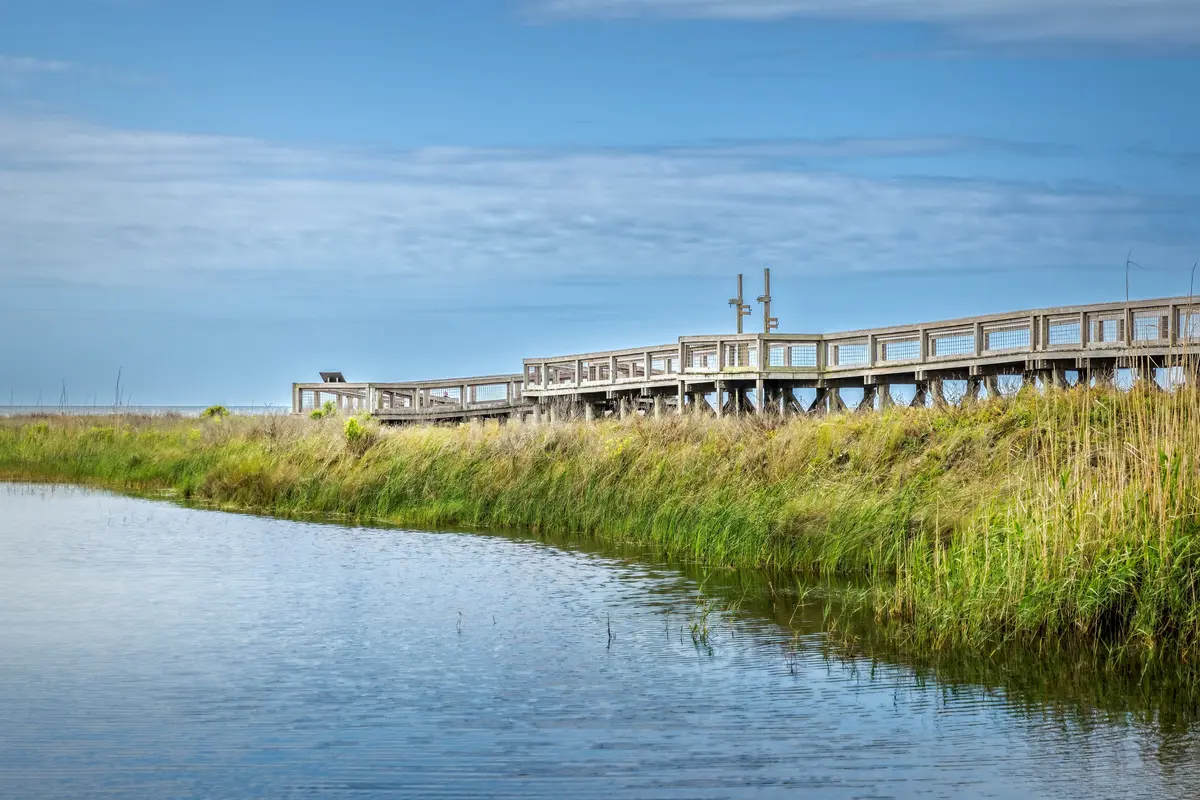
Sabine Pass is the oldest neighborhood in Port Arthur's footprint — settled in 1832, incorporated in 1861, and still operating with its own school district, post office, and port authority after being annexed in 1978. That institutional independence is rare and tells you how distinctly separate this community feels from the rest of the city. Its position on two migratory flyways makes Sabine Woods one of the most significant neotropical-migrant stopover sites on the entire Texas Coast, and Sea Rim State Park and McFaddin National Wildlife Refuge are close by. The honest downside is isolation: Sabine Pass is Port Arthur's southernmost point, services are minimal, and anyone who needs the city's core for work or errands faces a meaningful daily drive.
Best for: Birders, anglers, outdoor enthusiasts, and buyers seeking a historically distinct Gulf Coast community willing to trade urban convenience for genuine solitude.
Pear Ridge
Pear Ridge has the same former-independent-city DNA as Griffing Park — it was incorporated in 1935 before Port Arthur annexed it in 1986 — and shares a similar housing profile: mostly owner-occupied single-family homes built between 1940 and 1969, with a second wave from 1970 to 1999. The stock is modest and relatively stable, which at Port Arthur's price level means buyers looking for a straightforward, low-drama purchase without the flood risk of neighborhoods closer to open water. The trade-off is that "stable" also means limited upside; this is not a neighborhood where buyers expect meaningful appreciation, and the school boundary situation deserves the same research it does anywhere else in the district.
Best for: First-time buyers and owner-occupant families who want a predictable, established neighborhood at the low end of the market.
West Port Arthur
West Port Arthur is the city's working-class core in the most direct sense — residential blocks built to house refinery and port workers, with post-WWII housing stock that prioritized function over form. The neighborhood sits at prices consistent with the city's overall typical home price, and its practical location gives refinery commuters straightforward access to industrial campuses. There is not much to dress this one up: West Port Arthur is honest about what it is, and buyers who need proximity to the petrochemical employers and aren't prioritizing neighborhood amenities will find it delivers exactly that. Buyers expecting something more polished tend to feel that mismatch within a few months.
Best for: Petrochemical industry workers, value-focused buyers, and anyone who needs to be close to the refinery corridor without paying neighboring-city prices.
Downtown Port Arthur
Downtown Port Arthur carries the bones of an oil-boom city — the Museum of the Gulf Coast, the Pompeiian Villa, and a commercial grid built during the early-20th century when this was the economic center of Southeast Texas. Pleasure Island, with its fishing pier, marina, disc golf, boardwalks, and birding along Sabine Lake, is the recreational anchor closest to Downtown. The Rainbow Bridge spans the Neches River nearby, giving the area a landmark that genuinely defines the city's skyline. The honest trade-off is that Downtown revitalization is still a work in progress; the cultural assets are real but the day-to-day retail and dining density lags, and buyers who expect a fully activated downtown core may find the current reality short of that.
Best for: Buyers interested in historic architecture, cultural proximity, and a walkable urban footprint — with realistic expectations about where revitalization currently stands.
Tallow Woods
Tallow Woods is the closest Port Arthur gets to a conventional Texas suburb, with a quieter residential character and a housing stock that skews more recent than most of the city's other neighborhoods. For buyers relocating from larger Texas metro areas who want some version of a conventional subdivision experience without paying Nederland or Port Neches prices, Tallow Woods is the most direct answer the city has. The trade-off is that the city's overall school district rating applies here too, so families who are drawn by the quieter character still need to research specific campus assignments before making an offer. At the city's price level, this is the upper-end option — above the typical city median — for buyers who want the best Port Arthur has to offer in terms of housing condition and neighborhood feel.
Best for: Families with kids, buyers coming from larger metro areas who want a more suburban feel, and anyone seeking Port Arthur's most conventional residential experience.
Common Mistakes Buyers Make in Port Arthur
Skipping the Flood Zone Check
Buyers who focus on the list price and skip the FEMA flood map are the ones who call their agent six months in with sticker shock on their insurance premium. Port Arthur's low-lying Gulf Coast terrain means flood zone designations vary dramatically by parcel — a home on one side of a street can carry a significantly different risk profile than the one across from it. Pull the specific flood zone designation for any address before submitting an offer, not after.
Treating the Whole City as the Same School District
The Port Arthur Independent School District holds a D rating, according to the Texas Education Agency, but that rating is an average across very different campuses. Buyers with school-age children who assume the district is uniformly weak — and therefore stop researching — miss the fact that individual campus assignments matter, and that a boundary line can put two houses on the same block in different attendance zones. Chasing square footage over school-boundary research is the single most common mistake families make in this market. The schools guide breaks this down in full.
Confusing Refinery-Adjacent with Refinery-Impacted
Not every neighborhood in Port Arthur sits under the same air quality conditions. Lakeview and West Port Arthur are significantly closer to active industrial operations than Griffing Park, Tallow Woods, or Sabine Pass. Buyers who treat the city's geography as uniform and then pick based purely on square footage or list price often end up in a neighborhood where the refinery's presence is not an abstraction — it is a daily reality of flare stacks visible from the backyard and industrial odor on certain wind days. Where you land relative to the corridor matters.
Underestimating the Drive from Sabine Pass
Sabine Pass is genuinely appealing for the right buyer — birding, fishing, historic character, and Gulf Coast solitude at prices that barely register. But buyers who fall in love with it without mapping their actual daily routine often find that the commute to Port Arthur's commercial core, to Beaumont for medical appointments, or to school drop-off is longer and more isolated than they expected. This is a neighborhood for buyers who have decided the trade-off is worth it, not for buyers who haven't thought it through yet.
Best Areas to Rent in Port Arthur
| Area | Ideal For | Trade-off |
|---|---|---|
| Griffing Park | Renters who want an owner-occupied community feel with low vacancy and stable neighbors | Fewer rental units available; competition for the good ones is real |
| Lakeview | Refinery workers, new arrivals, and budget-focused renters who need proximity to industrial employers | Denser, noisier, and closest to the industrial corridor — air quality and flood risk warrant extra scrutiny |
| Downtown Port Arthur | Renters who want walkable access to cultural anchors and Pleasure Island without owning | Revitalization is ongoing, which means some blocks feel vibrant and others feel like they're waiting for investment to arrive |
| Port Acres | Renters who want a more rural feel, larger lots, and Cajun community character | A car is non-negotiable; every errand is a drive, and rental inventory is thin compared to denser neighborhoods |
| Tallow Woods | Renters relocating for work who want a quieter, more suburban experience during a transitional period | Rental supply here is limited — this area skews heavily toward owner-occupied homes, so availability can be sparse |
The city-wide typical rent is $1,270 per month (Zillow ZORI, July 2026), which is among the most affordable rental markets in Southeast Texas. For a full breakdown of how that compares to nearby cities and what your dollar actually buys, see the cost of living guide.
Local Expert Takeaway: Port Arthur's neighborhood map is really three different decisions stacked on top of each other: How close do you want to be to the refineries? What is your actual flood risk tolerance for this specific parcel? And are you buying for school boundary proximity or buying despite the district rating? Griffing Park is the most stable, cohesive neighborhood for owner-occupants. Tallow Woods is the closest thing to a conventional suburb the city offers. Sabine Pass is for buyers who have genuinely decided that birding, fishing, and Gulf Coast solitude matter more than urban convenience. Get those three questions answered before you look at a single listing, and the price-per-square-foot conversation becomes a lot easier.
Quick Takeaways & FAQs
✅ Port Arthur's typical home price of $125,021 (July 2026) is noticeably below every neighboring city — Nederland, Groves, and Port Neches all run significantly higher — making it the most affordable entry point into Jefferson County homeownership.
⚠️ The Port Arthur Independent School District holds a D rating, according to the Texas Education Agency, and on 2024-25 state assessments, 26% of students reached math proficiency — a real constraint that should drive neighborhood research for families with school-age children.
📍 Several of Port Arthur's neighborhoods — including Griffing Park, Pear Ridge, and Sabine Pass — were once fully independent incorporated cities before annexation, and that independent civic identity still shows up in how distinctly each one feels from the others.
What is the safest neighborhood in Port Arthur, TX?
Which Port Arthur neighborhood is best for families?
How does flooding affect Port Arthur neighborhoods?
Is Sabine Pass a good place to live?
What is the cheapest neighborhood in Port Arthur to buy a home?
Moving to Texas?
Tell us what you need help with and we'll connect you with local resources.
