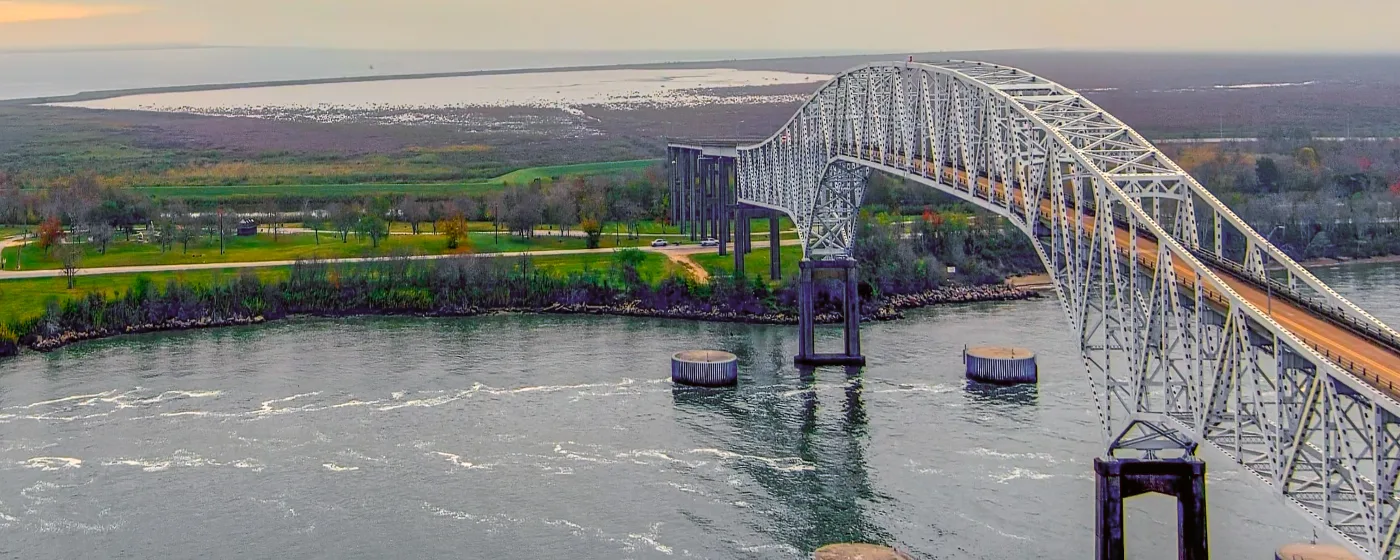
Maybe you've been priced out of California entirely. Maybe a refinery job brought you to Southeast Texas and you're trying to figure out what life here actually looks like. Either way, the first thing Californians notice about Port Arthur is the price of a house — and then, usually, they have to look it up again to make sure it's real. The typical home value here was $125,021 as of July 2026 (Zillow ZHVI). That is not a typo and it is not a bad neighborhood. It is the citywide figure, and it sits in a different universe from California's statewide typical home value of $773,735. Port Arthur sits at the southeastern tip of Texas, right on the Gulf of Mexico, where US-69, US-96, and TX-87 (Gulfway Drive) converge in Jefferson County's Golden Triangle — a cluster of refining cities that together form one of the heaviest concentrations of petrochemical infrastructure in North America.
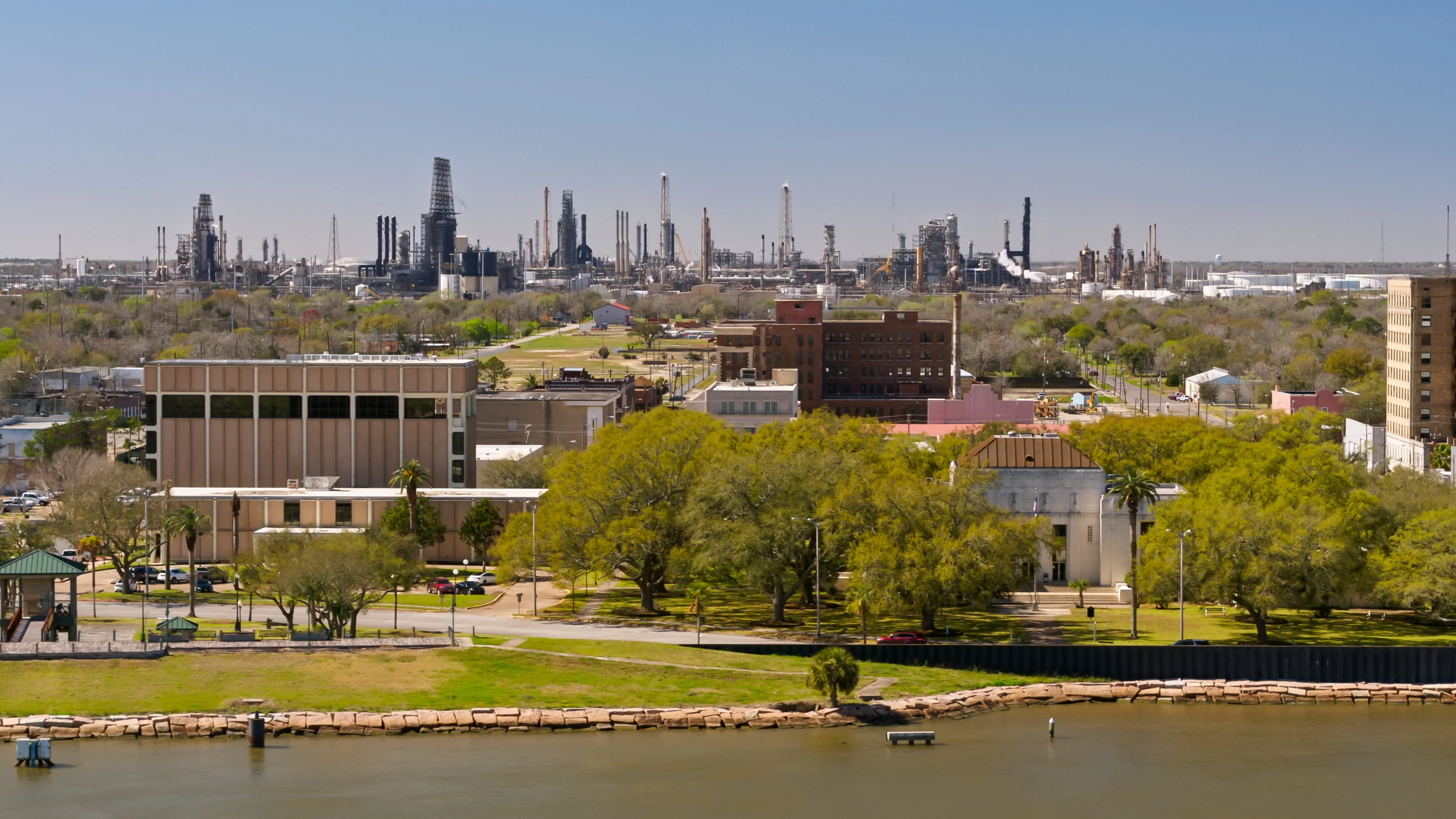
The city of 55,804 runs on that industrial backbone. Motiva Port Arthur Refinery — the largest oil refinery in the United States — anchors the employment landscape, alongside Valero Port Arthur Refinery, TotalEnergies, and Chevron Phillips Chemical. The Port Arthur Independent School District is the major public employer outside the industrial sector. This is not a white-collar tech corridor. About 19% of residents ages 25 and older hold a bachelor's degree, a figure well below the Texas state average — which makes the city particularly accessible for trade and technical workers who found California's cost structure punishing relative to the salaries available there.
The overall cost of living runs well below the U.S. national average, with housing costs leading that gap by a significant margin. Texas collects no state income tax — it is constitutionally prohibited — which reshapes the monthly budget math for anyone arriving from California. The tradeoffs are real too: the Gulf Coast climate brings serious humidity, more than 65 inches of rainfall annually, and genuine hurricane exposure that Californians from drier inland areas need to plan for. Day-to-day life is car-dependent, Beaumont is the nearest larger city at about 25 minutes away, and the dining and retail scene reflects a working-class Gulf Coast city rather than a metro amenity hub.
Whether you're weighing an industrial job offer or simply trying to stretch a budget that California has squeezed dry, the sections below break down Port Arthur's tax picture, home prices, neighborhood character, climate realities, and what daily life here is genuinely like for someone arriving from the West Coast.
The Home Price Gap: California vs. Port Arthur
The arithmetic here is almost disorienting at first. California's statewide typical home value of $773,735 represents what a median buyer encounters across the state — and in coastal metros, the number climbs considerably higher. Port Arthur's typical home value of $125,021 as of July 2026 means you are looking at a fraction of that figure, not a modest discount.
What that gap translates to in practice: a buyer who sells a California home and arrives with even a modest amount of equity can often purchase in Port Arthur outright, or carry a very small mortgage. The median household income in Port Arthur is $46,354, and that figure is at or above the income needed to buy the typical home here — a condition that barely exists in most California markets.
For context within the region, neighboring Nederland, Groves, and Port Neches all come in noticeably higher than Port Arthur's typical price. If you want the lowest entry point in the Golden Triangle, Port Arthur is it. Griffing Park and Pear Ridge tend to attract families with school-age children who want more established residential streets; the neighborhoods page breaks down the character of each area in more detail.
What the Property Tax Rate Actually Means Here
California's effective property tax rate of 0.71% sounds lower than Texas's 1.57% effective rate in Port Arthur — and as a percentage, it is. But the dollar math runs the other direction. Applying California's rate to California's statewide typical home value produces a very different annual bill than applying Port Arthur's higher rate to a $125,021 home. The absolute annual amount you pay in Port Arthur will, for most buyers coming from California, be dramatically less in real dollars despite the higher rate.
Proposition 13 in California caps assessment increases for existing owners, which protects long-term residents but doesn't help a buyer entering the market at today's prices. Texas has no equivalent cap, so your assessed value can move with the market — but when the market value itself is this low, that exposure is far more manageable. For a full breakdown of what property taxes, utilities, and groceries look like month to month, see the cost of living page.
Homeowners Insurance: The Line Item California Doesn't Warn You About
This is where some of the price advantage narrows. Texas homeowners insurance averaged roughly $4,380 to $5,216 per year in 2025, driven by hurricane, hail, and flooding exposure. Californians from lower-risk inland areas will find this a genuine sticker shock — though anyone who has renewed a wildfire-zone policy recently in California will recognize the number.
Port Arthur sits in a FEMA-designated flood zone in many areas, which means a separate flood insurance policy is typically required in addition to standard homeowners coverage. Budget for both before you finalize what you can afford, because the combined insurance line is one of the real costs of Gulf Coast homeownership that the purchase price alone doesn't reveal.
The Tax Comparison: What Californians Actually Save
The income tax shift is the one that reshapes a budget most immediately. California's top state income tax rate of 13.3% applies only to the highest earners, but the brackets below it are still among the steepest in the country. Texas collects zero state income tax — constitutionally. The day your first Texas paycheck arrives, that line disappears entirely.
At $100,000 of income for a single filer, the difference works out to approximately $5,208 per year saved in state income tax compared to a California resident. That is money that goes directly toward the cost of living rather than into a state treasury. For dual-income households, the savings scale accordingly.
Sales Tax: Closer Than You Expect
California's statewide base sales tax rate of 7.25% is the floor — many California localities stack local additions on top, pushing combined rates above 10% in some cities. Texas's state base is 6.25%, with local additions capped at 8.25% combined. In practice, the difference between what you pay at the register in Port Arthur versus a typical California city is real but not dramatic. The bigger tax wins are in income and, in dollar terms, property.
The Overall Tax Picture for a California Transplant
| Tax Type | California | Port Arthur, TX | What It Means for You |
|---|---|---|---|
| State Income Tax | California's top state income tax rate of 13.3% (progressive; brackets start at 1%) | None — constitutionally prohibited | Immediate paycheck increase; most meaningful for middle and upper earners |
| Effective Property Tax Rate | California's effective property tax rate of 0.71% (Prop 13 capped) | 1.57% | Higher rate, dramatically lower base — absolute dollars usually favor Texas at Port Arthur prices |
| State Sales Tax Base | California's statewide base sales tax rate of 7.25% (local additions can exceed 10%) | 6.25% state base, capped at 8.25% combined | Modest advantage for Texas; depends on locality |
| Capital Gains (State) | Taxed as ordinary income — up to 13.3% | None | Significant advantage if you are selling California real estate or other appreciated assets |
| Estate / Inheritance Tax | None at state level | None at state level | No difference |
| Homeowners Insurance | Varies widely; wildfire zones now see high premiums | $4,380–$5,216/yr average (2025) | A real cost in Port Arthur; budget it before comparing raw home prices |
The tax picture strongly favors Texas for most earners, with income tax being the clearest and most immediate benefit. The property tax rate looks worse on paper than it plays out in dollars, given Port Arthur's price level.
Climate: The Thing California Didn't Prepare You For
Southeast Texas is not a gentle climate. Californians moving here from coastal or inland communities consistently name the humidity as the adjustment they underestimated most. Summer highs in the low 90s°F sound manageable — until you factor in overnight lows that stay in the upper 70s and air that feels like a warm wet towel from May through September.
The Beaumont–Port Arthur area receives more than 65 inches of rainfall annually, the highest of any major Texas metro. That moisture comes from the Gulf of Mexico, and it does not stop at rain showers. It means mold risk in homes, rusted metal, and a driving relationship with air conditioning that is not optional — it is survival infrastructure. Budget your electricity bills accordingly, because summer utility costs in Southeast Texas are a genuine line item.
Hurricane and Flood Exposure
This is the part of the climate conversation that requires the most honest preparation. Port Arthur sits directly on the Gulf Coast, and tropical systems are not hypothetical here — they are a recurring feature of Gulf life. The city has seen significant hurricane and tropical storm impacts, and a 2026 tropical storm illustrated exactly the kind of flood, infrastructure, and school-closure disruption that Gulf Coast residents plan for rather than being surprised by.
If you are buying here, flood zone status of the specific property is as important as the price. FEMA maps show large portions of the city in designated flood zones, and separate flood insurance is a real and recurring cost for many homeowners. Ask about flood history for any specific property before you make an offer — this is not the kind of due diligence you can skip.
What the Climate Does Well
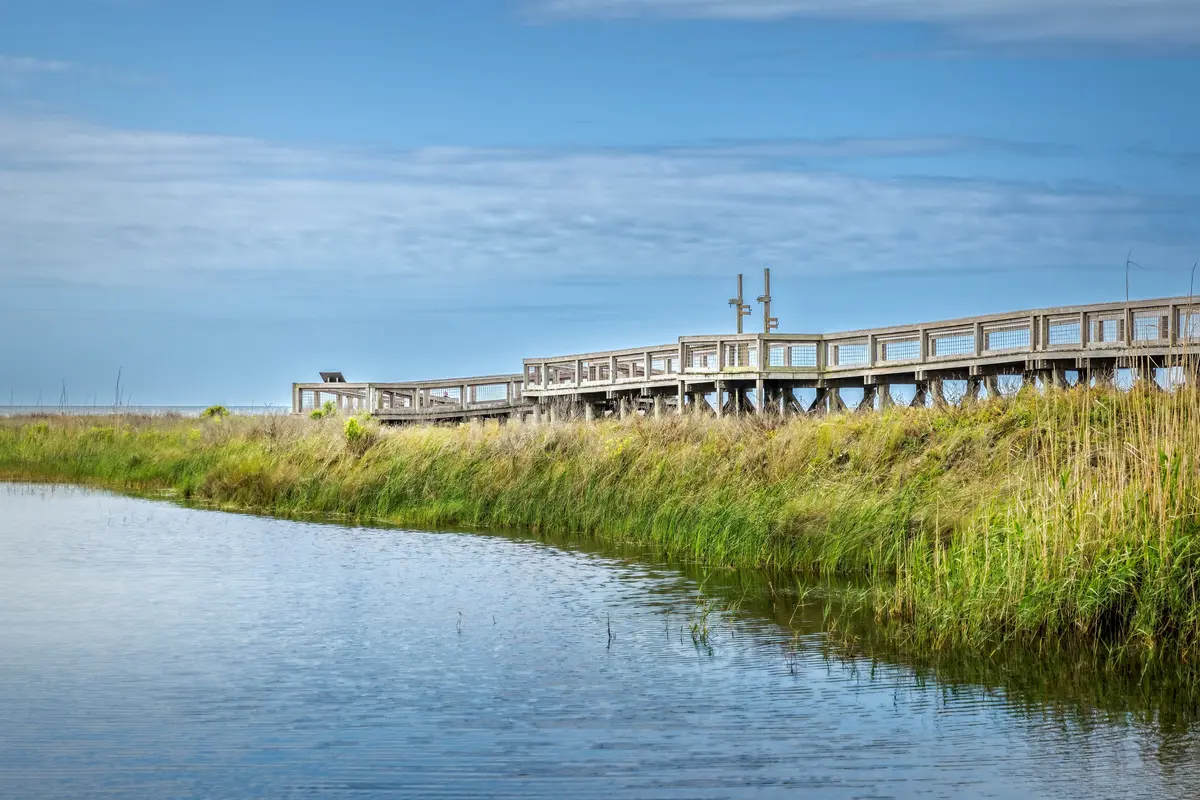
Winters are genuinely mild. January highs average around 62°F, and hard freezes are unusual. Port Arthur gets 211 sunny days a year, which is meaningful for anyone leaving a gray or foggy California coastal climate. Fishing, boating on Sabine Lake, and outdoor time at Sea Rim State Park are year-round possibilities rather than seasonal ones. The Gulf of Mexico proximity that drives the weather risk also drives the lifestyle that keeps long-term residents here.
Looking to buy in Port Arthur? Estimate your payment.
Enter your numbers to see an estimated monthly mortgage payment.
Estimate only. Excludes HOA fees and mortgage insurance. The interest rate above is a starting point, not a quoted rate — replace it with your own to see real numbers. Insurance is a flat placeholder, not a Port Arthur quote.
Daily Life in Port Arthur: What the Move Actually Looks Like
Port Arthur is a car city. This is not a criticism — it is the ground truth of daily life here, and Californians from car-dependent suburbs will recognize the rhythm immediately. US-69 and TX-87 (Gulfway Drive) handle most of the daily traffic, and the nearest regional amenity hub is Beaumont, about 25 minutes away. For anything the local retail scene does not carry, a serious shopping trip means driving out of town.
The city's population of 55,804 supports a working-class commercial landscape centered on the refinery economy. The dining scene is stronger than the city's profile might suggest from the outside — Port Arthur has a well-documented Cajun and Vietnamese food tradition rooted in its Gulf Coast and Southeast Asian communities, and that culinary identity shows up in the local restaurant scene in ways that regularly surprise newcomers. See the local favorites section below for specifics.
Schools: An Honest Assessment
The Port Arthur Independent School District holds a D rating, according to the Texas Education Agency (2025 A-F accountability, 2024-25 school year). It is not a large district. On 2024-25 state assessments, students reached math and reading proficiency at rates below state averages — figures worth understanding clearly before making a housing decision around the schools. The district does maintain active UIL athletics programs; Friday night football is a genuine community event here. Families with school-age children who are weighing the district carefully will find more detail on the schools page.
Safety: Reading the Numbers
Port Arthur carries a violent crime rate of 7.18 per 1,000 residents and a property crime rate of 15.4 per 1,000 residents, which sit above both state and national benchmarks. The state violent crime rate is 4 per 1,000 and the national figure is 3.7 per 1,000; state property crime is 20.7 per 1,000 and the national figure is 18.4 per 1,000. The property crime rate is actually below the state figure, which surprises some newcomers. Neighborhood choice matters considerably here — Griffing Park reads differently from parts of West Port Arthur, and the safety page breaks down what those numbers look like at a more granular level.
Health Insurance and Routine Care
Health insurance premiums in Texas run noticeably below what most Californians were paying, which adds to the monthly budget relief of the move. The trade-off is real: for routine care the local options are adequate, but specialist care and advanced treatment options are more limited than what a large California metro provides, and you may find yourself driving to Beaumont or farther for certain appointments.
Weekends and Local Favorites
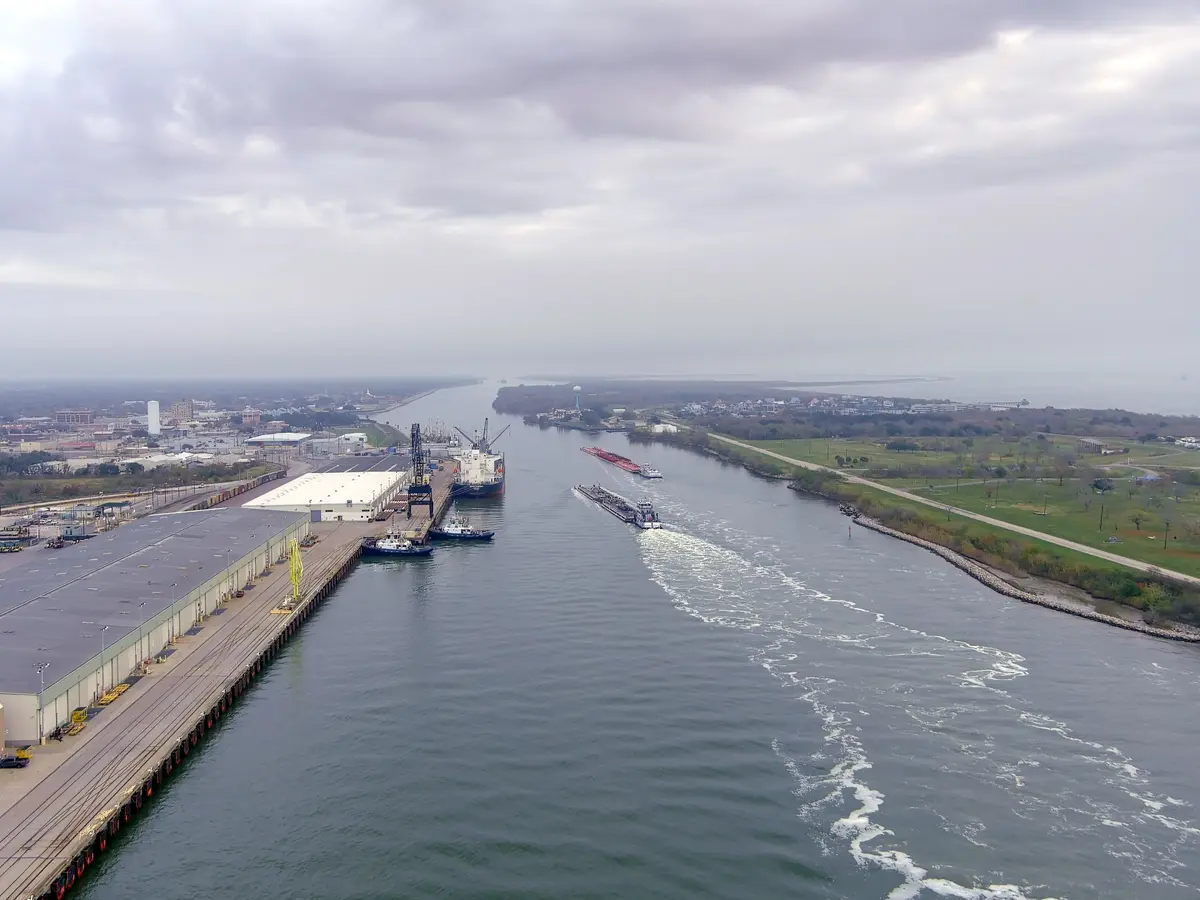
The Museum of the Gulf Coast anchors the city's cultural identity — its music hall of fame section is a genuine draw and covers a surprisingly deep roster of Southeast Texas artists. Pleasure Island gives you waterfront access and a marina feel that is uniquely Port Arthur. The Rainbow Bridge over the Neches River is one of the more striking pieces of infrastructure in Southeast Texas, and locals barely notice it anymore — newcomers stop and look every time.
For food: Tia Juanita's Fish Camp is the place locals point to for Gulf seafood in the Cajun tradition. Dylan's on 9th draws a broader crowd. Rock'n Crab brings the boil-style Gulf Coast seafood experience. Hamilton's Restaurant & Bar is the more polished end of the local dining spectrum. The Toasted Yolk Cafe handles the breakfast crowd. For coffee and pastries, Kimmy's Cafe, Rao's Bakery Coffee Cafe, and Milan Bakery give you genuine independent options rather than chain defaults. For time outdoors, Keith Lake Fish Camp is the spot serious anglers and weekend fishers gravitate toward, and Sabine Pass Battleground State Historic Site adds a Civil War history dimension that most newcomers do not expect from a Gulf Coast industrial city.
Who Port Arthur Is Right For — and Who Should Look Elsewhere
Port Arthur makes a compelling case for a specific kind of California transplant: someone arriving with an industrial job offer, a trade credential, or enough equity from a California sale to buy outright and restructure their financial life around a dramatically lower cost base. The income tax elimination and the home price gap are not marginal improvements — they are structural changes to your monthly budget.
The city also works well for remote workers whose income is tied to California or another high-wage market. Earning California-scale income while paying Port Arthur-scale housing costs and zero state income tax produces a financial picture that is genuinely hard to replicate anywhere else at this price point. The compromise is accepting a smaller city's amenity set and a Gulf Coast climate that requires ongoing adaptation.
Who Tends to Leave
The people who move out of Port Arthur after a short stay tend to fall into a recognizable pattern: they underestimated the climate — specifically the humidity and storm exposure — or they overestimated how much the low housing cost would offset the absence of metropolitan amenities and a school district that will require either private school costs or close attention to boundary choices. Families with school-age children in particular sometimes find the district's performance figures a harder trade than the home price makes worth it.
If your relocation is about lifestyle quality rather than cost restructuring — if what you want is a walkable city with strong schools, a diverse economy, and easy access to cultural amenities — Port Arthur is probably not the right match. The city is honest about what it is: a Gulf Coast industrial city with extraordinary affordability and a community built around one of the most economically productive industrial corridors in the country.
The Honest Summary
The case for Port Arthur is the most straightforward affordability argument in Texas. The case against it is shorter but worth sitting with: the schools, the storm risk, and the distance to metropolitan services are real variables, not minor footnotes. Buyers who go in with clear eyes on all three tend to stay. The ones who focused only on the price sometimes don't.
For a broader look at how Port Arthur compares on commuting, employers, and who the city tends to attract, see the living in Port Arthur hub.
Local Expert Takeaway: Port Arthur's affordability argument is real and not exaggerated — a typical home at $125,021 (July 2026) paired with zero Texas state income tax produces a financial reset that most California transplants find more dramatic than they expected. The catch is equally real: flood zone exposure requires serious due diligence on any specific property, the school district's D rating from the Texas Education Agency is the honest number, and the Gulf humidity in July is nothing like a California summer. Come for the refinery economy or the equity play; stay for Tia Juanita's Fish Camp and a waterfront sunset on Sabine Lake. Just buy flood insurance.
Quick Takeaways & FAQs
✅ Port Arthur's typical home value of $125,021 (July 2026) sits dramatically below California's statewide typical home value of $773,735 — the gap is large enough to change the financial math of an entire household.
⚠️ The Gulf Coast climate brings more than 65 inches of annual rainfall, genuine hurricane exposure, and flood zone risks that require separate flood insurance — a meaningful ongoing cost that the low purchase price does not eliminate.
📍 Texas has no state income tax, which means an immediate paycheck increase the day you arrive — particularly significant for anyone who was paying California's progressive brackets at a professional or dual-income salary.
Is it really worth moving from California to Port Arthur just for the lower home prices?
How does Texas property tax compare to California for a Port Arthur home?
What is the school district like in Port Arthur?
Does Port Arthur flood? What should California buyers know about hurricane risk?
What is the job market like in Port Arthur for someone relocating from California?
Moving to Texas?
Tell us what you need help with and we'll connect you with local resources.
