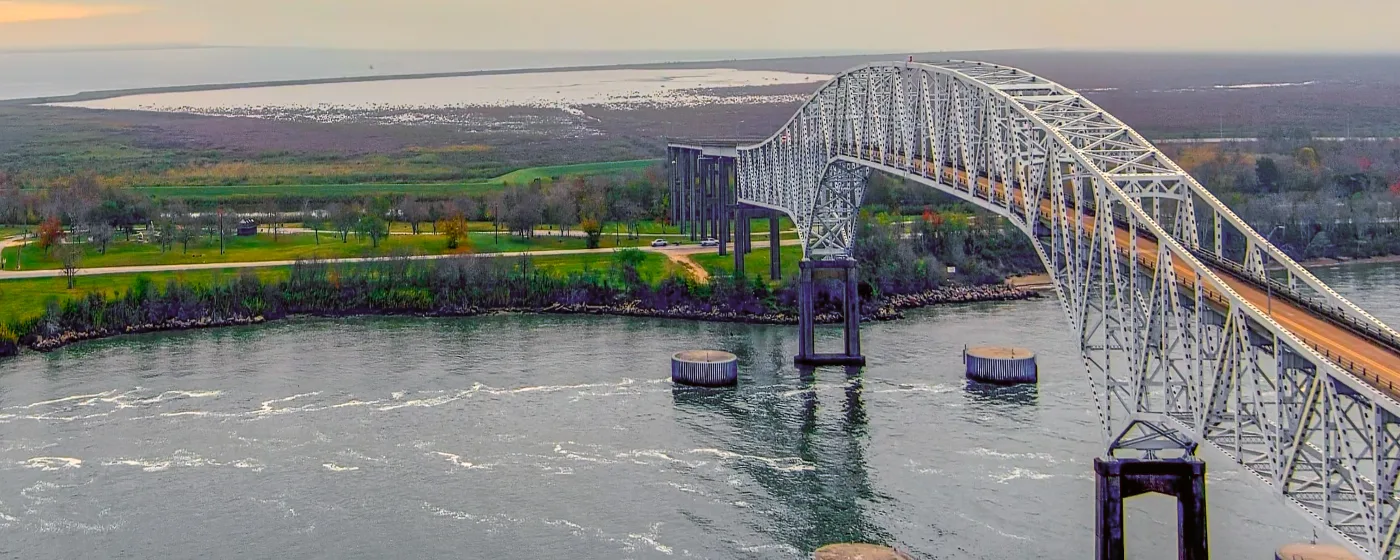
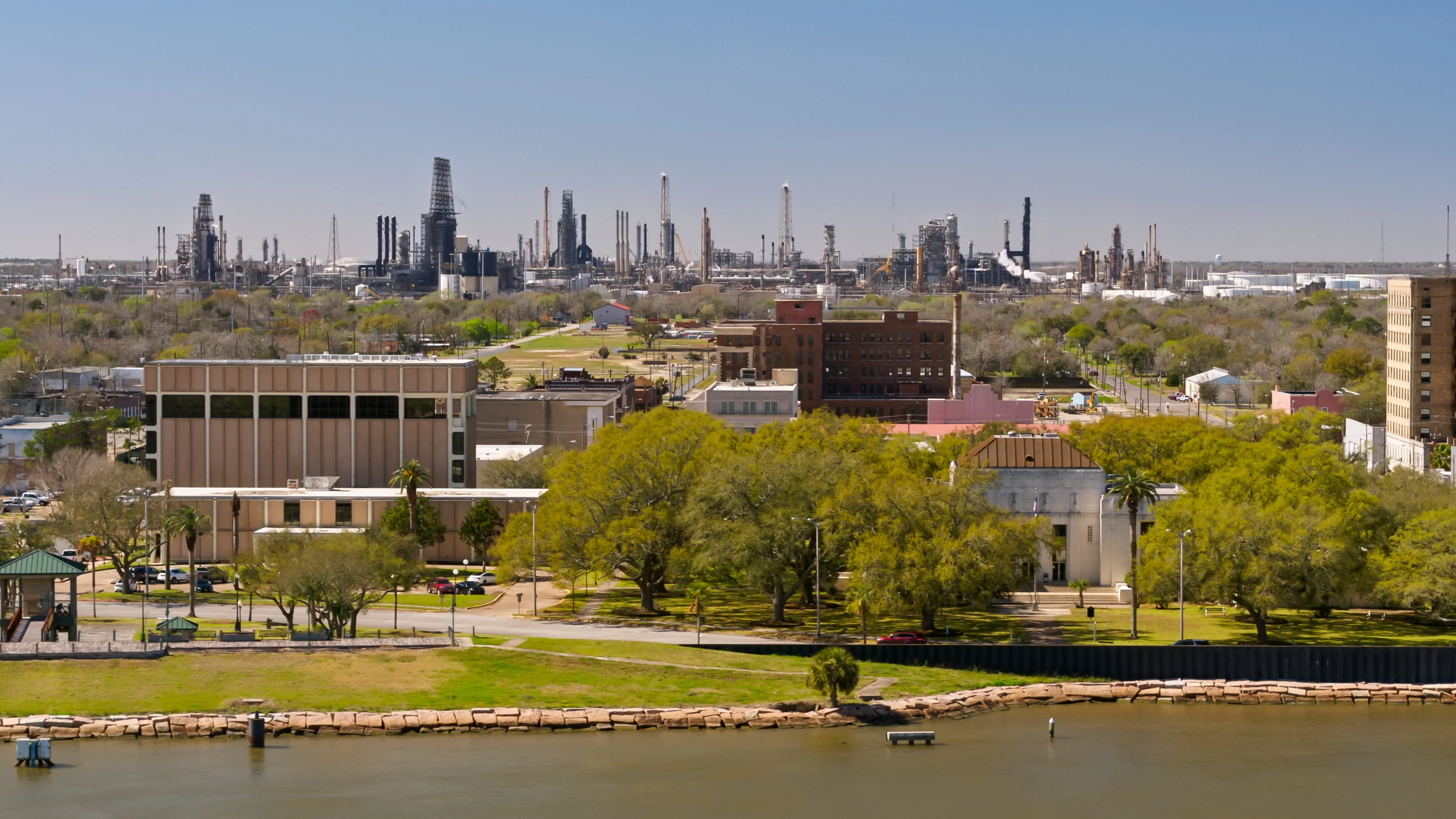
Most first-time buyers who come to Port Arthur from Houston or Dallas expect to be disappointed. Then they see the price. The typical home here sits at $125,021 (Zillow Home Value Index, July 2026) — a number that sounds like a typo to anyone who has spent six months losing offers in bigger Texas markets. Port Arthur is a Gulf Coast industrial city of 55,804 people in Jefferson County, anchored by the largest concentration of oil refining capacity in the country. Motiva, Valero, TotalEnergies, and Chevron Phillips Chemical define the skyline and the economy. That industrial backbone keeps housing demand steady without pushing prices into territory that shuts first-timers out.
The median household income here is $46,354, and the fact sheet confirms that figure is at or above the income needed to qualify for the typical home — which means a buyer with a steady refinery-sector or municipal job, a reasonable credit score, and a few thousand dollars saved is genuinely positioned to own here. The school district, Port Arthur ISD, holds a D rating, according to the Texas Education Agency, which matters to families with kids and is worth reading about in detail on the schools page. For buyers without children in the district, or those focused on value and stability above all else, that rating changes the calculation less.
The Gulf Coast location creates one cost that catches nearly every first-timer off guard: flood insurance. Port Arthur is in a hurricane- and flood-prone region, and lenders will typically require a separate flood policy — on top of standard homeowners insurance — for homes in designated Special Flood Hazard Areas. That adds a real line item to your monthly budget. The effective property tax rate of 1.57% is another figure worth folding into your numbers early; the full cost-of-living picture is on the cost-of-living page. Compared with Nederland, Groves, or Port Neches — all noticeably higher in typical home price — Port Arthur is where the entry point into Southeast Texas homeownership actually sits.
Whether you are a refinery worker buying your first place, a remote worker drawn by low prices, or a first-generation buyer looking for a foothold, this guide walks through what your budget realistically buys here, the step-by-step process as it actually works in Port Arthur, a budget snapshot table, and the specific mistakes first-timers most often make in this market.
The Port Arthur First-Time Buyer Reality
The numbers here are real. The typical home in Port Arthur is priced at $125,021 (July 2026) — well below what most Texas metros consider entry-level. That figure means a buyer using an FHA loan with 3.5% down is looking at roughly $4,400 in down payment before closing costs, which puts ownership within reach of households that have spent years assuming they would be renters indefinitely.
What that price actually buys depends heavily on the neighborhood. Griffing Park — tree-lined streets, owner-occupied bungalows and ranch homes, most built between the 1940s and 1960s — is the neighborhood first-timers most often target when they want stability and pride of ownership. Port Acres and West Port Arthur historically sit at the lower end of the city's price range and have drawn both first-time buyers and investors; the tradeoff is that these areas require more due diligence on condition and flood zone status. Lakeview, with its Sabine Lake frontage and larger properties, attracts a different buyer profile than the entry-level bungalow market. For a full read on neighborhood character, see the neighborhoods page.
Competition in this market is not the frenzied bidding-war dynamic of Austin or Dallas. That is genuinely good news for first-timers, who have more room to negotiate and more time to complete due diligence. The catch is condition: at this price point, a meaningful share of the inventory will need work, and the cost of that work must be budgeted alongside the purchase. First-timers who fixate on the sticker price and ignore renovation estimates often find their affordable home becoming less affordable by the month. Go in clear-eyed about what the inspection will find.
The Homebuying Process in Port Arthur, Step by Step
Step 1: Get Pre-Approved Before You Tour Anything
This is the step Port Arthur first-timers most often skip or defer. Pre-approval is not a formality — it tells you exactly what loan amount a lender will actually commit to, based on your credit score, income, and debt load. It also tells sellers you are a serious buyer, which matters even in a less competitive market.
FHA loans are the most common entry point here: they accept credit scores as low as 580 with a 3.5% down payment, and they allow higher debt-to-income ratios than most conventional products. Conventional loans typically require a 620 credit score or higher. Veterans and active-duty service members should ask specifically about VA financing, which requires no down payment. Get pre-approval before you set foot in a house — not after you find one you love.
Step 2: Confirm Flood Zone Status on Every Property
This is the step that surprises people most after they are already emotionally attached to a house. Port Arthur has significant flood exposure — roughly 4,920 properties face meaningful risk in a major flood event, and that kind of event carries a 26% chance of occurring at least once during a 30-year mortgage. Standard homeowners insurance covers almost none of that. Ask your agent to pull the FEMA flood map for every property before you make an offer, and factor the flood insurance premium into your monthly budget from day one.
Step 3: Make the Offer and Negotiate
Work with an agent who knows Port Arthur's inventory. At this price point, offers routinely include an inspection contingency — do not waive it. Homes in the lower price bands especially may have deferred maintenance, aging roofs, or foundation concerns that are only visible after a professional inspection. The inspection contingency is your exit ramp if the findings change the math.
Step 4: Inspection and Appraisal
The inspection happens first, paid by the buyer and scheduled within the option period your contract specifies. Do not skip it to save money. The appraisal is ordered by your lender and confirms the home's value supports the loan amount. If the appraisal comes in below your purchase price, you will need to renegotiate, cover the gap in cash, or walk away — another reason the inspection contingency matters.
Step 5: Closing
Closing costs in Texas typically run 2% to 5% of the purchase price, covering lender fees, title insurance, prepaid taxes, and insurance escrow. At Port Arthur's price point, that range is manageable, but it must be saved separately from your down payment — both are due at the closing table. Budget for both from the start.
How Much Home Can You Afford in Port Arthur
The table below gives you a plain-language budget snapshot at several realistic purchase prices in Port Arthur. Closing cost estimates use the 2%–5% Texas range; actual figures vary by lender, title company, and loan type. These are estimates only — the interactive calculator below this section builds your specific monthly payment.
| Scenario | Purchase Price | Down Payment | Est. Closing Costs | Cash Needed at Table |
|---|---|---|---|---|
| FHA (3.5%) — entry-level | $80,000 | ~$2,800 (3.5%) | ~$2,400–$4,000 | ~$5,200–$6,800 |
| FHA (3.5%) — city typical | $125,021 | ~$4,376 (3.5%) | ~$3,750–$6,251 | ~$8,126–$10,627 |
| Conventional (3%) — city typical | $125,021 | ~$3,751 (3%) | ~$3,750–$6,251 | ~$7,501–$10,002 |
| FHA (3.5%) — move-up range | $160,000 | ~$5,600 (3.5%) | ~$4,800–$8,000 | ~$10,400–$13,600 |
| Conventional (3%) — move-up range | $160,000 | ~$4,800 (3%) | ~$4,800–$8,000 | ~$9,600–$12,800 |
| Conventional (20%) — no PMI | $125,021 | ~$25,004 (20%) | ~$3,750–$6,251 | ~$28,754–$31,255 |
Private mortgage insurance applies to conventional loans with less than 20% down but can be cancelled once you reach 20% equity — at Port Arthur's price point, that threshold is a realistic savings goal. The 20%-down row above illustrates that getting there requires a smaller total dollar figure here than in most Texas markets.
One line item not in this table: flood insurance. Get a quote specific to the property's flood zone designation before you finalize your budget — it is a real monthly cost that the standard calculator does not include by default.
Looking to buy in Port Arthur? Estimate your payment.
Enter your numbers to see an estimated monthly mortgage payment.
Estimate only. Excludes HOA fees and mortgage insurance. The interest rate above is a starting point, not a quoted rate — replace it with your own to see real numbers. Insurance is a flat placeholder, not a Port Arthur quote.
Common First-Time Buyer Mistakes in Port Arthur
Skipping Pre-Approval and Touring Anyway
It feels harmless to look before you are pre-approved. It is not. Port Arthur's lower price point means some properties move before buyers who are mid-approval process can catch up. More importantly, touring without pre-approval means you may fall in love with a home you cannot actually finance — and discover that only after you have started imagining where the furniture goes.
Waiving the Inspection Contingency
At the lower end of Port Arthur's inventory, deferred maintenance is common. Roofs, HVAC systems, and older plumbing deserve professional eyes before you commit. The inspection contingency costs nothing to include and protects your earnest money if the findings are serious. Buyers who waive it to look more competitive on a low-priced home routinely end up absorbing repair costs that erase the purchase-price savings entirely.
Not Checking Flood Zone Status Before the Offer
This is the Port Arthur-specific mistake that stings hardest. A buyer who discovers a property's flood zone designation and insurance cost after going under contract faces a difficult choice: absorb a budget line they did not plan for, renegotiate under time pressure, or walk away and restart. Confirming the FEMA flood zone designation before the offer — not after — keeps that decision in your hands, not the calendar's.
Underbudgeting the Cash Needed at Closing
Port Arthur's low purchase prices make it easy to think the cash requirement is equally low. It is not. Closing costs are calculated as a percentage of the purchase price, but flood insurance prepayment, homeowners insurance escrow, and property tax escrow are calculated on actual policy and tax amounts — which do not scale down proportionally the way a sticker price does. First-timers who save only for the down payment and arrive at the closing table short on closing cash cause delays, renegotiations, or deal failures that could have been avoided with an honest budget conversation at the pre-approval stage. Save both figures separately and confirm the final closing disclosure number at least three business days before closing.
Local Expert Takeaway: Port Arthur's $125,021 typical home price (July 2026) is not a distressed-market anomaly — it reflects a real, stable Gulf Coast industrial city where the median household income is sufficient to buy the typical home. The practical obstacle for first-timers here is not the purchase price; it is the flood insurance requirement, the closing cash math, and the condition of older inventory. Buyers who get pre-approved first, confirm flood zone status on every property before making an offer, and keep a realistic contingency budget for repairs are the ones who close without surprises. Griffing Park is the neighborhood most first-timers target for a reason — stable owner-occupancy, solid bones, and prices that leave room for the work a 1950s bungalow sometimes needs.
Quick Takeaways & FAQs
✅ The typical Port Arthur home price of $125,021 (July 2026) means a 3.5% FHA down payment is under $4,400 — one of the lowest real entry points in Southeast Texas.
⚠️ Flood insurance is not optional in most of Port Arthur: it is a mandatory, separately priced policy that lenders require for homes in Special Flood Hazard Areas, and it must be budgeted before you fall in love with a house.
📍 Legacy CDC, a HUD-approved housing counseling agency based in Port Arthur, offers one-on-one counseling sessions with a certified housing counselor — a free resource worth using before you start shopping.
What credit score do I need to buy a home in Port Arthur with an FHA loan?
Is flood insurance required for all homes in Port Arthur?
How much cash do I actually need to close on a home in Port Arthur?
Which Port Arthur neighborhoods are most realistic for a first-time buyer's budget?
What is the homebuying process timeline in Port Arthur?
Moving to Texas?
Tell us what you need help with and we'll connect you with local resources.
