What Is Living in Beaumont, Texas Like?
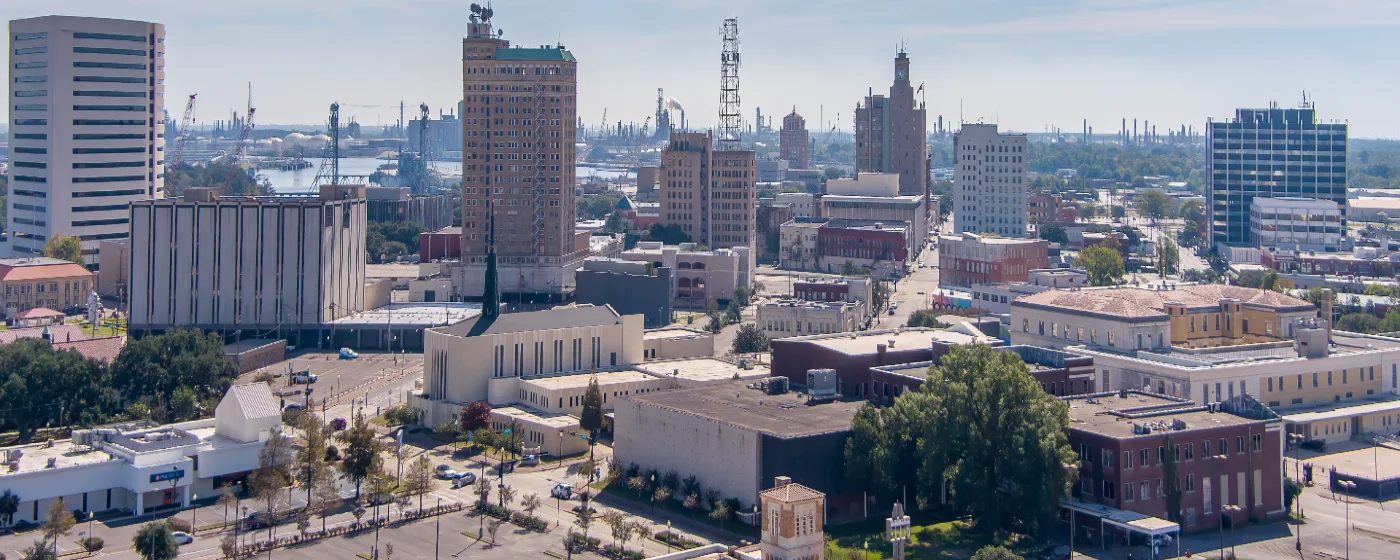
You've done the research and Beaumont keeps showing up — affordable, employed, and sitting on one of the most strategically important stretches of industrial real estate in the United States. What the spreadsheet won't tell you is that Beaumont is a city shaped almost entirely by oil. The 1901 Spindletop gusher didn't just launch the American petroleum industry; it built this city's streets, funded its institutions, and created a job market that still runs on refinery and petrochemical wages a century later. Beaumont sits on the Neches River in Jefferson County, about 35 miles from the Gulf of Mexico and about 90 minutes to Houston, TX — close enough to the metro to draw on its services, far enough to feel like its own world. I-10 is the spine that holds everything together.
The economic backbone here is the industrial corridor — one of the nation's largest concentrations of refineries, petrochemical plants, and port operations, anchored by ExxonMobil's Beaumont complex alongside operations from BASF, Chevron, Dow, and LyondellBasell. The Port of Beaumont generated $23 billion in trade during 2024, a figure that ripples across the local economy in construction, logistics, and support services. Beyond the industrial sector, Beaumont Independent School District, the City of Beaumont, Lamar University, and two major regional health systems together form the largest institutional employer base in the region. Lamar University draws a significant student population and a steady pipeline of graduates who sometimes stay — adding a younger demographic to what is otherwise a working-class, blue-collar community with deep roots.
Cost of living is the number that gets people's attention. Housing here runs well below the national average, and the overall cost of living tracks noticeably below U.S. norms across nearly every category. The full cost-of-living breakdown has the details, but the short version is that Beaumont is one of the more affordable mid-sized Texas cities for buyers who want a real house in a real neighborhood without a decade-long savings plan. The tradeoff is that public school performance is a legitimate concern — Beaumont ISD holds a D rating, according to the Texas Education Agency, and that shapes where families with school-age children tend to focus their housing search. The city has 213 sunny days a year, summers that are genuinely hot and humid, and a Gulf-influenced climate that takes some adjustment for anyone moving from a drier region.
Whether you're being relocated for a refinery job, leaving a more expensive Texas market, or simply evaluating Southeast Texas for the first time, the sections below break down Beaumont's neighborhoods, housing market, commute patterns, local employers, schools, and what day-to-day life here is actually like.
Beaumont at a Glance
Looking to buy in Beaumont? Estimate your payment.
Enter your numbers to see an estimated monthly mortgage payment.
Estimate only. Excludes HOA fees and mortgage insurance. The interest rate above is a starting point, not a quoted rate — replace it with your own to see real numbers. Insurance is a flat placeholder, not a Beaumont quote.
Why Are People Moving to Beaumont?
The Industrial Pull
Most people who move to Beaumont do so because a job brought them here — and that's not a knock. The Beaumont–Port Arthur industrial corridor offers something increasingly rare: high-wage, trade-skill employment that doesn't require a tech degree or a coastal cost of living. ExxonMobil's Beaumont complex is one of the largest refinery operations in the country. The surrounding cluster of petrochemical plants means that contract workers, engineers, pipefitters, and operations staff move through this city regularly, many of whom eventually put down roots.
The Port of Beaumont's $23 billion in 2024 trade volume — and the approximately $54 billion in regional industrial investment that has been highlighted by the Southeast Texas Economic Development Foundation — signals that the industrial base here is not static. Logistics, construction, and maintenance trades have all benefited from that activity, and the employment picture extends well beyond the refinery gates.
The Institutional Base
For residents not working in the industrial sector, the anchor employers are Beaumont ISD, the City of Beaumont, Lamar University, and two major regional health systems. These institutions employ teachers, administrators, public safety workers, healthcare professionals, and support staff — a more stable, recession-resistant employment layer sitting alongside the cyclical energy industry.
Lamar University also matters for a reason beyond employment: it gives the city a small but genuine higher-education energy, with arts programming, athletic events, and a campus that anchors the central part of the city.
The Honest Tradeoffs
Population has declined modestly from a peak around 2017, tied to a stretch of slower job growth, hurricane recovery costs, and the winding down of some major construction cycles. That context matters for buyers: Beaumont is not a city experiencing speculative demand pressure. Prices are low partly because demand is measured. That's neither a catastrophe nor a hidden gem — it's the realistic picture of a working city in a slow-growth region.
The school district's performance is the most common reason families with children think carefully before committing. Beaumont ISD holds a D rating, according to the Texas Education Agency, and that shapes where parents with school-age children focus their housing search. The schools page covers the picture in full, including individual campus options. Crime is the other variable buyers weigh: the city carries a violent crime rate of 7.8 per 1,000 residents and a property crime rate of 43.5 per 1,000 residents — both above state and national averages. The safety page breaks down which neighborhoods account for the bulk of that activity, because the city is not uniformly high-risk.
| Buyer Type | Why Beaumont Works | What to Watch |
|---|---|---|
| Commuter | Industrial wages, I-10 access to Houston corridor | Long haul to Houston proper for office-based work |
| First-Time Buyer | Entry-level prices well below national averages | School district ratings and neighborhood selection matter |
| Families | Affordable single-family homes, Lamar University nearby | Private/charter school research required for many families |
| Renter | City-wide typical rent is among the lowest for Texas mid-sized cities | Rental stock varies widely by neighborhood |
| Value Buyer | Cost of living noticeably below national average | Resale appreciation is modest compared to high-growth Texas markets |
| Energy/Industrial Worker | Direct access to one of the largest refinery clusters in the U.S. | Industry cyclicality affects contract stability |
What Daily Life Feels Like in Beaumont
The Rhythm of the City
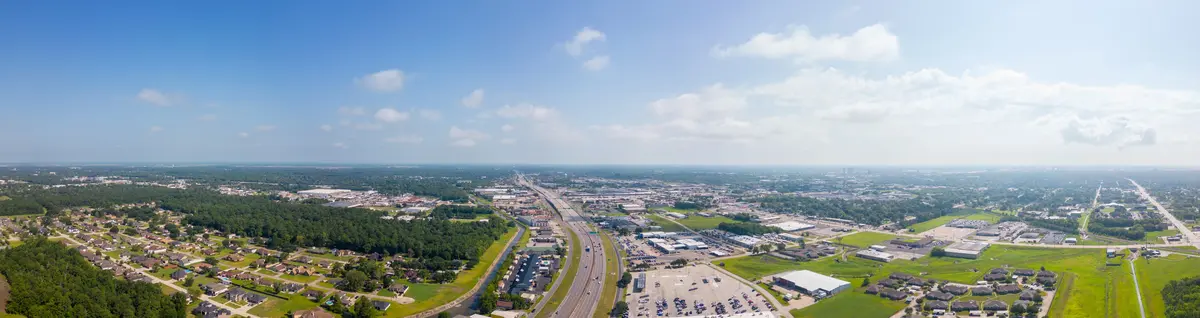
Beaumont is a driving city. Most residents commute by car, run errands by car, and structure their day around a vehicle — this is Southeast Texas, not a walkable urban core. That said, the city is not sprawling in the way of newer Sun Belt suburbs; many neighborhoods have a genuine sense of place, with mature trees, established street grids, and local institutions that have been around for decades.
Beaumont Municipal Transit (BMT ZIP) operates fixed-route bus service covering approximately 77% of the urbanized area population, and the city was actively reviewing proposed route changes as of mid-2026. For most residents, though, the bus is a backup rather than a primary option. Amtrak's Sunset Limited also stops here, connecting to Houston and New Orleans — useful for occasional travel, not a daily commute tool given its schedule.
Where People Gather
The Beaumont Botanical Gardens inside Tyrrell Park is a genuine community anchor — locals use the park for weekend walking, the stables draw an equestrian crowd, and the gardens themselves are maintained at a level that surprises newcomers who expect a mid-sized Texas city to have more modest public green space. Riverfront Park along the Neches River provides a downtown gathering point, particularly during the Neches River Festival and other seasonal events. The South Texas State Fair and the Kaleidoscope Arts and Crafts Festival give the calendar some recurring social landmarks.
After six months, most people who move here from larger cities say the same thing: Beaumont has a slower, more neighbor-facing quality to daily life that they didn't expect. You know your street. People wave. The city is large enough — 112,967 residents — to have real infrastructure and a range of dining and services, but small enough that the anonymity of a major metro isn't really part of the experience.
Weather and Seasonal Realities
The Gulf-influenced climate is the adjustment most newcomers underestimate. Summers are long, humid, and genuinely hot — not Phoenix dry-heat hot, but the kind of humid heat that follows you indoors. Hurricane season is a real consideration, and Beaumont's history includes significant storm damage. Residents here don't ignore that risk; they track storms, have plans, and many have invested in generators. The upside is that winters are mild, the city logs 213 sunny days a year, and spring and fall are legitimately pleasant.
The flooding risk is real and worth understanding before you buy. Southeast Texas is low-lying, and some neighborhoods have flooded repeatedly. This is a topic the cost-of-living page touches on in the context of insurance, and it's one of the first things a local agent will walk you through in any serious neighborhood conversation.
The Beaumont Housing Market Right Now
What Your Money Gets Here
The typical home price in Beaumont is $174,566 (Zillow Home Value Index, July 2026). For most buyers arriving from coastal markets or even from Austin or Dallas, that number requires a mental reset — it means a 3-bedroom house in a real neighborhood, not a condo or a starter townhome. The city-wide typical rent runs $1,285 per month (Zillow, July 2026), which puts Beaumont among the more affordable rental markets in Texas for a city of its size.
Entry-level homes exist well below the city-wide figure, particularly in South Park, Charlton-Pollard, and Pear Orchard. Dowlen West and Westchase run above the city median, and those areas tend to draw buyers who want newer construction or a more suburban feel. Caldwood sits close to the median. The neighborhoods page covers the character and tradeoffs of each area without the rose-colored framing.
Who the Market Suits
One honest note on affordability: the median household income of $56,997 falls short of what's typically needed to buy the city's median-priced home. That gap isn't enormous, but it means that first-time buyers at the income median often need to focus on the lower end of the price range, or work with down payment assistance programs — details covered on the first-time homebuyer page.
For buyers coming from outside Southeast Texas, the effective property tax rate of approximately 1.53% is worth factoring into your monthly budget alongside the purchase price. Texas has no state income tax, which offsets the property tax picture for many buyers, but the annual tax obligation on even a modestly priced home here is meaningful. The full tax comparison is on the cost-of-living page.
The Market in Plain Terms
This is not a market driven by speculative buyers or investor competition. Well-priced homes in desirable neighborhoods do move, but Beaumont rewards careful buyers more than it punishes patient ones. Some areas carry more geographic and insurance risk than others — flood zone status and insurance costs are real variables here, not afterthoughts. That's the due diligence that separates buyers who feel good about their purchase two years later from those who don't.
Beaumont Neighborhoods
Beaumont has several distinct areas — each with its own character and appeal. Here’s a breakdown to help you narrow down where to focus your home search.
🏡 Dowlen West
Dowlen West is Beaumont's most consistently popular suburban-style neighborhood, drawing buyers who want newer construction, good retail access, and a community that skews toward families with school-age children. It runs above the city median in price and tends to move faster than most other parts of the city.
🏠 South Park
South Park is an established, working-class neighborhood with a long history and prices that come in below the city median — making it one of the more accessible entry points for first-time buyers willing to do their due diligence on specific streets.
🌳 Old Town / The Oaks (Old Town on the Oaks)
Old Town on the Oaks offers architectural character that most Beaumont neighborhoods don't — historic homes, mature canopy streets, and a sense of place that appeals to buyers who want something with genuine age and detail rather than tract construction. Prices sit below the city median.
🏘 Caldwood
Caldwood is a mid-century established neighborhood near Lamar University that sits close to the city median in price, with mature trees and a residential calm that attracts buyers looking for value without significant compromise on neighborhood feel.
🏔 Charlton-Pollard
Charlton-Pollard is one of Beaumont's older historic neighborhoods, with prices well below the city median and a mix of housing stock that rewards patient buyers — though it requires careful street-by-street research and a clear-eyed look at the surrounding area.
🌆 Westchase
Westchase is a newer, suburban development on the western edge of the city, running above the city median and appealing to buyers who prioritize updated housing stock, easy highway access via I-10, and a neighborhood that feels distinctly different from Beaumont's older core.
Pros & Cons of Living in Beaumont
The Pros
- Home prices and overall cost of living well below the national average
- Stable, well-paying industrial and petrochemical job base
- Home to Lamar University, adding culture and youthful energy
- Central Gulf Coast location with quick access to Houston and Louisiana
The Cons
- Crime rates, especially property crime, run well above the national average
- Hot, humid summers with real hurricane and flood risk
- Slower population and job growth than Texas's booming metros
Getting Around & Commuting in Beaumont
The I-10 Corridor
I-10 is Beaumont's primary artery — the route to Houston, the spine of the city's east-west movement, and the road most industrial workers know best. The drive to downtown Houston is about 90 minutes to Houston, TX under normal conditions, but Southeast Texas traffic is not always normal. Refinery shift changes and port truck traffic can stack up, particularly on I-10 near the industrial zones. Commuters who time their drives outside the 6–8 a.m. and 3–5 p.m. windows consistently describe a smoother trip.
US-69 (Eastex Freeway) connects Beaumont northward toward Lufkin and gives residents on the north side a different routing option. US-96 and US-287 handle movement to the southwest and northwest, while US-90 (College Street) serves as a key surface-level east-west route through the heart of the city. TX-105 and TX-124 carry traffic toward the surrounding communities and rural Southeast Texas. A local connector parkway links neighborhoods within the city and matters more once you're navigating day-to-day rather than making the highway run.
Local Commute Patterns
Most Beaumont residents work either within the city itself or at industrial facilities nearby — meaning the commute is often a matter of minutes rather than highway miles. The heaviest local traffic tends to concentrate around College Street and the US-69 interchange during peak hours. For residents who commute regularly to Houston for office-based work, Beaumont functions more like an outer suburb: affordable housing offset by a real daily drive.
Jack Brooks Regional Airport (BPT) is the nearest major airport, approximately 10 miles from the city center, serving regional routes. For broader flight options, Houston's airports are reachable via I-10 in about 90 minutes — which means most residents with heavy travel schedules build that leg into their planning.
Transit and Alternatives
BMT ZIP's fixed-route bus network covers a meaningful portion of the urbanized area, and ADA paratransit serves residents who need curb-to-curb service. For the majority of daily needs, though, a car is not optional — it is the baseline assumption of life in Beaumont. Amtrak's Sunset Limited provides an occasional rail option to Houston or New Orleans, though its schedule is too infrequent for commuter use.
| Destination | Primary Route | Notes |
|---|---|---|
| Houston (city center) | I-10 West | about 90 minutes to Houston, TX; shift-change traffic adds time |
| Port Arthur | US-96 / TX-347 | Short industrial commute; neighboring city in the Golden Triangle |
| Orange / Lake Charles | I-10 East | Quick eastward run; Lake Charles offers casino and entertainment options |
| Lufkin / Nacogdoches | US-69 (Eastex Freeway) | North corridor; less common daily commute |
| Jack Brooks Regional Airport | Local surface roads | Approximately 10 miles; regional flights only |
| Houston airports (Bush / Hobby) | I-10 West | About 90 minutes; most residents drive for major travel |
Schools in Beaumont
Families relocating to Beaumont have public, private, and higher-education options nearby. Here’s a quick overview.
🎓 School District
Beaumont Independent School District serves K–12 students across Beaumont and the surrounding area. Rated D (source: Texas Education Agency, 2025 A-F accountability rating (2024-25 school year)).
🏆 Graduation Rate
The 4-year high-school graduation rate here is approximately 78.2%.
📚 Higher Education
Texas’s public universities — the University of Texas at Austin, Texas A&M University, and the University of Houston — offer four-year degrees statewide, with one of the largest community college systems in the country (50+ public community college districts) providing two-year and workforce programs.
🌐 Online Learning
UT Austin Online and Texas A&M University Online offer fully accredited online degrees for remote learners across the state.
Safety in Beaumont
A quick look at how Beaumont compares on the numbers that matter most when weighing a neighborhood or a move.
🛡 Violent Crime
Approximately 7.8 per 1,000 residents.
🔒 Property Crime
Approximately 43.5 per 1,000 residents.
Compared to the most recent national figures from the Bureau of Justice Statistics (2024), Beaumont’s violent crime is above the national average (about 3.7 per 1,000), and property crime is above the national average (about 18.4 per 1,000).
Against Texas as a whole, Beaumont’s violent crime is about double the state average, and property crime is about double the state average (Bureau of Justice Statistics, Crime Known to Law Enforcement, 2024 (tables 2 and 3)).
Crime rates can vary a lot within a single city, so the citywide numbers above are only a starting point. Some neighborhoods in Beaumont run well below these averages, while others run higher — the kind of block-by-block detail that matters most when you’re actually choosing where to live. The full guide below breaks it down neighborhood by neighborhood.
Working in Beaumont
Beaumont’s largest employers span several industries — here are some of the anchors of the local job market.
🎓 Beaumont Independent School District
Education
🏛 City of Beaumont
Municipal government
💼 ExxonMobil Beaumont complex
Petrochemicals
🏥 Baptist Hospitals of Southeast Texas
Healthcare
🏥 CHRISTUS Southeast Texas St. Elizabeth
Healthcare
🎓 Lamar University
Higher education
Parks & Recreation in Beaumont
Some of the outdoor spaces that shape everyday life in Beaumont.
🌱 Gator Country Adventure Park
Beaumont residents don’t have to go far for green space — spots like Gator Country Adventure Park are part of everyday life here, whether that’s a morning walk, a weekend hike, or just somewhere to unwind outside. The full guide below covers more of what Beaumont has to offer for parks and outdoor recreation.
Retiring in Beaumont
Beaumont draws retirees for its balance of amenities, outdoor access, and cost. Here’s what to weigh.
🌤 Climate
Beaumont logs 213 sunny days a year, with mild winters that rarely see frost and long, humid summers that run from May through October. The Gulf-influenced climate means spring and fall are the most comfortable seasons — warm and manageable — while hurricane season from June through November is a real consideration that longtime residents plan around.
🍴 Lifestyle
The Beaumont Botanical Gardens inside Tyrrell Park, the performing arts calendar at the Julie Rogers Theatre, and a dining scene anchored by Gulf Coast seafood and Cajun flavors give retirees a genuine range of daily options. The Neches River Festival and the South Texas State Fair add seasonal social anchors to the calendar, and the pace of daily life here is unhurried in a way that many retirees find appealing after years in faster-moving metros.
🏚 55+ Communities
No 55+ communities were found in Beaumont. Retirees who want to own in the area typically look at established single-family neighborhoods like Caldwood or Dowlen West, or explore the neighboring communities of Nederland and Groves for additional options.
✈ Getting Around
A car is the practical baseline for daily life in Beaumont — most errands and appointments require driving. Jack Brooks Regional Airport (BPT) is approximately 10 miles from the city center and serves regional routes; residents needing broader flight connections make the approximately 90-minute drive to Houston's major airports.
🏛 Texas Taxes for Retirees — What to Know
- No state income tax — Texas has no personal income tax — constitutionally protected under Article VIII, Section 24. Social Security, pensions, 401(k)/IRA withdrawals, and annuity payments are all untaxed at the state level, with no state return to file.
- Sales tax is the tradeoff — The state sales tax is 6.25%, and local add-ons bring the combined rate in Beaumont to 8.25% (Texas Comptroller of Public Accounts, city sales and use tax rates, July 2026). Groceries and prescription drugs are exempt.
- Property taxes — the real tradeoff — Texas’s effective property tax rate averages about 1.40%, among the highest in the country, since property tax (not income tax) funds most local government and schools.
- Over-65 homestead exemption and school-tax freeze — Homeowners 65+ (or disabled) get an additional $60,000 exemption from their home’s value for school district taxes, on top of the general homestead exemption — $200,000 off school taxable value combined, following November 2025’s Proposition 11 (SB 23), which raised the over-65 exemption to $60,000, and Proposition 13 (SB 4), which raised the general homestead exemption to $140,000. Once claimed, your school district tax bill is frozen at that year’s amount and cannot increase as home values rise, and the ceiling can transfer if you move to a new home within Texas.
- Deferral option if cash is tight — Homeowners 65+ can defer property tax payment entirely for as long as they live in the home, rather than paying it currently — interest accrues, but no forced sale.
- No estate or inheritance tax — Texas has no estate tax, no inheritance tax, and no gift tax.
- No separate capital gains tax — Because Texas has no state income tax, capital gains — including on investments and home sales — are not taxed at the state level at all, unlike states such as Washington that tax capital gains separately from income.
Tax laws change frequently and individual situations vary. This is general information, not tax advice — always consult a qualified Texas tax professional or CPA for personalized retirement tax planning.
Weekends & Local Favorites in Beaumont
The Outdoors Scene
Beaumont's outdoor options are more interesting than the flat Southeast Texas landscape might suggest. Cattail Marsh is a 900-acre wetland with a boardwalk and covered observation platforms — serious birders come specifically for this spot, and it draws casual walkers who didn't expect a wildlife corridor inside city limits. Tyrrell Park is the city's largest green space, home to the Beaumont Botanical Gardens and equestrian stables that have been operating long enough to feel like an institution. Village Creek State Park, just outside city limits, puts hikers and paddlers into the Big Thicket ecosystem — one of the most biologically diverse regions in North America.
Riverfront Park along the Neches River is the downtown gathering point for festivals and warm-weather evenings. The Lamar University Arboretum adds another layer of green space on the academic side of the city.
Culture and History
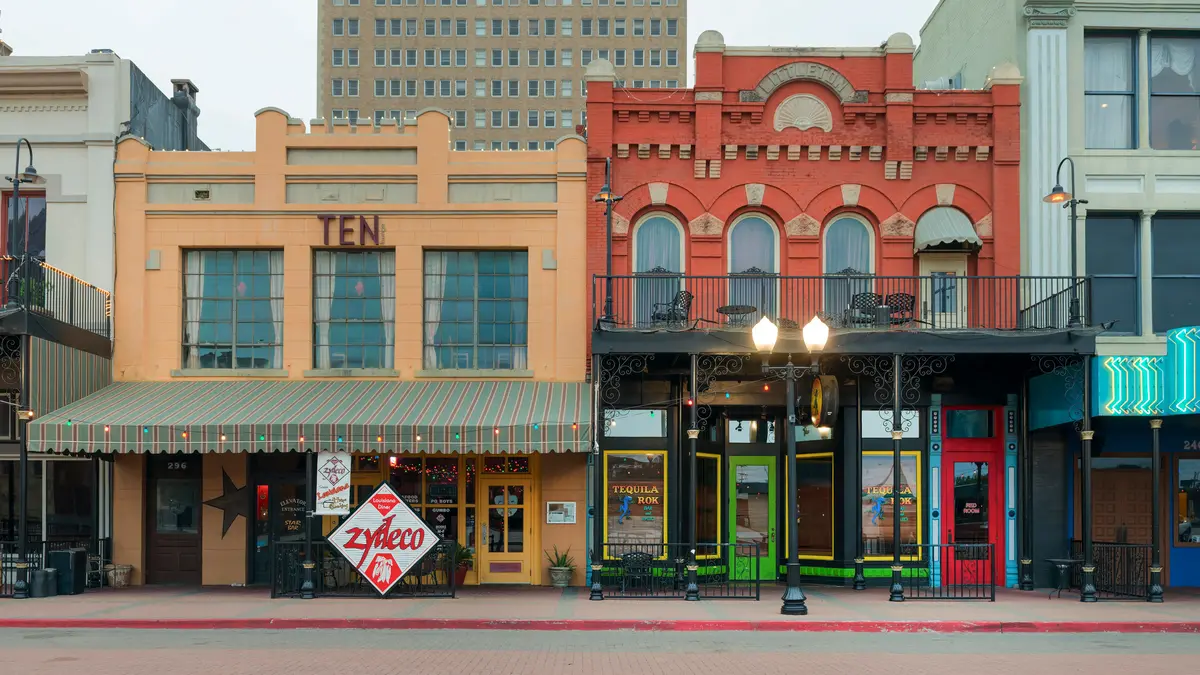
The Spindletop-Gladys City Boomtown Museum brings the 1901 oil discovery to life in a way that genuinely resonates — this is where the modern petroleum industry began, and the museum makes that feel real rather than textbook. The Fire Museum of Texas, housed in the original 1927 Central Fire Station, is the kind of local institution that turns casual visitors into regulars. Gator Country Adventure Park is home to Big Tex, the largest live alligator capture on record at 13 feet 8.5 inches — a Southeast Texas landmark that is exactly as entertaining as it sounds.
The Julie Rogers Theatre anchors the city's performing arts scene, and Edison Plaza provides a historic downtown setting for events and gatherings.
Food, Coffee, and the Local Scene
Beaumont's dining scene skews hard toward Gulf Coast seafood and Cajun influence — which is the right call given what's available locally. Floyds Seafood is the local institution for fresh Gulf catch. Tia Juanita's Fish Camp brings a more casual, Tex-Mex-meets-coastal-Gulf character that regulars swear by. Crazy Cajun Beaumont delivers the kind of Southeast Texas flavor combination that takes some newcomers a few visits to fully appreciate. Sushi Masa Beaumont rounds out the options for those wanting something outside the Gulf Coast lane, and Carrabba's Italian Grill provides a reliable mid-range option for family dinners.
On the coffee and breakfast side, Rao's Bakery is the city's most recognizable local name — a genuine community institution with a devoted following. Rao's Bakery Coffee Cafe extends that presence with a café-forward format. Sertinos Café, Twisted Egg Shack, and Cha Cha Cafe round out a local coffee and breakfast scene that punches above its weight for a city this size.
The Beaumont Farmers Market gives residents a weekly connection to local produce and vendors — one of the consistent gathering points for the community regardless of season.
Annual Events Worth Knowing
The South Texas State Fair is the marquee annual event — a genuine regional draw that brings the whole Golden Triangle together. The Neches River Festival celebrates the city's waterway heritage each spring, and the Kaleidoscope Arts and Crafts Festival gives the local creative community its biggest annual platform. These aren't manufactured amenities — they're the events that fill the calendar and give the city its seasonal rhythm.
Local favorites in Beaumont
Restaurants
- Floyds Seafood - Beaumont
- Sushi Masa Beaumont
- Tia Juanita's Fish Camp
- Carrabba's Italian Grill
- Crazy Cajun Beaumont
Outdoors
- Tyrrell Park
- Cattail Marsh Wetlands
- Village Creek State Park
- Lamar University Arboretum
- Riverfront Park
Coffee
- Rao's Bakery
- Sertinos Café
- Rao's Bakery Coffee Cafe
- Twisted Egg Shack
- Cha Cha Cafe
Farmers Markets
- Beaumont Farmers Market
Top Things Locals Say About Beaumont
The best intel about a city comes from the people who actually live there. Here’s what Beaumont residents say when newcomers ask the questions everyone’s thinking.
“I expected the price to be the main story, and it was — but what I didn't expect was how much I'd use the outdoors. Cattail Marsh is ten minutes from my house and I go out there more than I've ever used a park anywhere I've lived.”
— Recent Beaumont home buyer
“What's the most surprising thing about living in Beaumont?”
The outdoors. Most people moving here from outside Southeast Texas picture a flat industrial city and leave it at that. Then they find out about Cattail Marsh, about Village Creek, about how Tyrrell Park actually functions as a place people genuinely use on weekends. The Gulf Coast and Big Thicket ecosystems create a natural environment that is genuinely interesting if you pay attention to it.
“What do locals love most about Beaumont?”
The cost and the culture, in that order. You can own a real house here — a yard, a garage, a neighborhood — without it consuming your entire financial life. And Southeast Texas has its own food culture, its own pace, its own way of doing things that people who grew up here are genuinely attached to. The Gulf Coast seafood and Cajun influence in the dining scene isn't an afterthought; it's the main event.
“What should newcomers to Beaumont know?”
Do your flood zone research before you make an offer, not after. Southeast Texas is low-lying and some neighborhoods have flooded more than once in recent memory — that affects insurance costs in ways that can significantly change the real economics of a purchase. Also: hurricane season is taken seriously here. New residents who treat the storm prep culture as excessive usually come around after their first major watch.
“How much do you need a car in Beaumont?”
A car is essentially required for daily life. Most errands, most commutes, and most social trips mean driving — BMT ZIP's bus network covers a meaningful share of the city, but the practical reality is that the vast majority of residents drive for everything. The upside is that Beaumont is a city where parking is never a crisis and most destinations are a short drive rather than a long one.
Cities Near Beaumont
Other communities near Beaumont worth a look — each with its own character and price point.
| City | Distance | Best For | Vibe | Median Rent | Median Buy |
|---|---|---|---|---|---|
| Port Arthur | 20 mi | Budget buyers & industrial workers | Working-class, refinery-adjacent | $1,270 | $125,021 |
| Nederland | 15 mi | Families & quiet streets | Suburban, established, calm | $1,150 | $194,989 |
| Vidor | 12 mi | Value-seekers & rural feel | Small-town, affordable, rural-adjacent | $1,050 | $162,421 |
More Helpful Guides for Beaumont
Going deeper on Beaumont? Our blog series covers everything from first-time buying to retiring here — explore the guides below.
Local Expert Takeaway: Beaumont rewards buyers who do their homework by neighborhood. The gap between a well-chosen block in Dowlen West or Caldwood and a poorly chosen one closer to the industrial zone or a flood-prone area is significant — in livability, in insurance costs, and in long-term value. The price floor here is genuinely low, the industrial job base is real and stable, and the outdoors scene at Cattail Marsh and Village Creek State Park gives daily life a quality that visitors consistently underestimate. The school district rating is not a reason to skip Beaumont — it is a reason to research individual campuses and private options before you pick your address.
Quick Takeaways & FAQs
✅ Beaumont's typical home price of $174,566 (July 2026) puts real single-family houses within reach for buyers priced out of larger Texas markets.
⚠️ The school district holds a D rating from the Texas Education Agency, which means school research is essential before choosing a neighborhood.
📍 The Spindletop oil discovery in 1901 launched the American petroleum industry here, and that legacy still shapes Beaumont's economy, culture, and job market more than any other single fact.
Is Beaumont, TX a good place to live?
How far is Beaumont from Houston?
What are the best neighborhoods in Beaumont?
How are the schools in Beaumont?
What is there to do in Beaumont, TX?
Helpful Links for Moving to Beaumont
Moving to Texas?
Tell us what you need help with and we'll connect you with local resources.
