
What Is Living in Nacogdoches, Texas Like?
You've probably done the math on Texas affordability and heard East Texas is even more affordable than the metro areas. But Nacogdoches isn't just cheap land and pine trees — it's a genuinely layered small city with a median age of 25.6, a university that set a new enrollment record in fall 2025, and a self-proclaimed identity as the oldest town in Texas, having flown nine flags over its nearly 230-year history. The city sits at the crossroads of US-59 and US-259 in the heart of the Piney Woods, roughly 140 miles from Houston and about 25 minutes to Lufkin, TX. What shapes daily life here is less the distance to a major metro and more how completely the city functions on its own terms — around Stephen F. Austin State University, a walkable historic downtown, and the kind of rolling, forested terrain that feels nothing like the rest of Texas.
Stephen F. Austin State University, known locally as SFA, is the city's economic and cultural spine. The university anchors the largest employment sector in the city and continues to post enrollment growth after years of decline. The Nacogdoches Independent School District, the City of Nacogdoches, a major regional health system, Eaton Cooper Power Systems, and Etech Global Services round out the employer base. The district has 5,527 students enrolled in 2025-26 and holds a D rating, according to the Texas Education Agency — something families with school-age children should weigh carefully before committing. People move here for SFA-connected careers, for the affordability relative to any Texas metro, and increasingly for the intentional pace of life that a small East Texas city in the pines genuinely offers.
The typical home price in Nacogdoches stood at $224,292 as of July 2026 — well below any major Texas metro and a figure that makes homeownership accessible at income levels that would leave buyers priced out almost anywhere else in the state. The typical city-wide rent runs $1,110/mo (July 2026). That affordability has limits: the median household income of $39,281 sits below what's needed to comfortably carry the typical home here, so the math still requires attention. Day-to-day life leans on the outdoors — the LaNana Creek Trail, Lake Nacogdoches, and the SFA Mast Arboretum give residents genuine recreation close to home — and the annual Texas Blueberry Festival, the only state-sanctioned blueberry festival in Texas, draws crowds from across the region to the historic downtown each June.
Whether you're considering a move or just researching the area, the sections below break down Nacogdoches's neighborhoods, housing market, local employers, commute realities, schools, and what daily life here actually feels like.

Nacogdoches at a Glance
Looking to buy in Nacogdoches? Estimate your payment.
Enter your numbers to see an estimated monthly mortgage payment.
Estimate only. Excludes HOA fees and mortgage insurance. The interest rate above is a starting point, not a quoted rate — replace it with your own to see real numbers. Insurance is a flat placeholder, not a Nacogdoches quote.
Why Are People Moving to Nacogdoches?
The case for Nacogdoches is easier to make than most people expect from a city of 32,500 deep in the Piney Woods. It starts with SFA — and not just as a workplace. The university's fall 2025 enrollment record, its first total increase since 2018, signals a city with genuine upward momentum. Faculty hires, administrative positions, and university-adjacent businesses all follow enrollment growth, and that kind of institutional anchor matters in a small city.
Educational services are the largest sector in the local economy, anchoring the job base in a way that insulates the city from the volatility that hits resource-extraction or single-industry towns. Retail trade and accommodation and food services round out the top employment sectors. Eaton Cooper Power Systems brings manufacturing work to the mix, and Etech Global Services adds business process employment — so the economy is more diversified than the university-town label suggests.
About 80% of workers both live and work within the city, which means the community is genuinely rooted. Daytime population swells by roughly 8,100 people from in-commuters, giving downtown and local businesses a built-in customer base beyond just residents. That self-contained quality is either the draw or the dealbreaker depending on what you want from a city.
Who Actually Moves Here
SFA employees and faculty are the most obvious in-movers. But the city also attracts remote workers priced out of larger Texas markets, retirees drawn by the Texas Certified Retirement Community designation and lower costs, and families willing to trade school district ratings for genuine affordability and a slower pace. The historic districts pull buyers who want character housing — not the cookie-cutter construction that defines newer Texas suburbs.
In April 2025, Nacogdoches was designated a Tourism Friendly Texas Certified Community, recognizing the city's strategy of leaning into its history and outdoor assets to build economic growth. That's not just a press release — it reflects real infrastructure investment. Voter-approved bond projects funded $5.9 million in drainage, street, and park upgrades through the city's 2025 State of the City update, and a new Downtown Implementation Plan outlines Festival Park redevelopment and improvements along Bonita Creek.
The honest tradeoff: Nacogdoches is not a place people move to for career variety or cultural breadth. If your industry isn't represented by the city's employer base and remote work isn't your situation, the job market here is thin. That's what you give up for the price point and the pines.
What Daily Life Feels Like in Nacogdoches
The city's median age of 25.6 years tells you immediately that SFA sets the rhythm. During the academic year, downtown has energy — independent coffee shops, live music, and a restaurant scene that punches above its population weight. In summer, the pace drops noticeably. Longtime residents know to enjoy the quieter months; newcomers from larger cities sometimes find the August lull disorienting.
The Geography of It
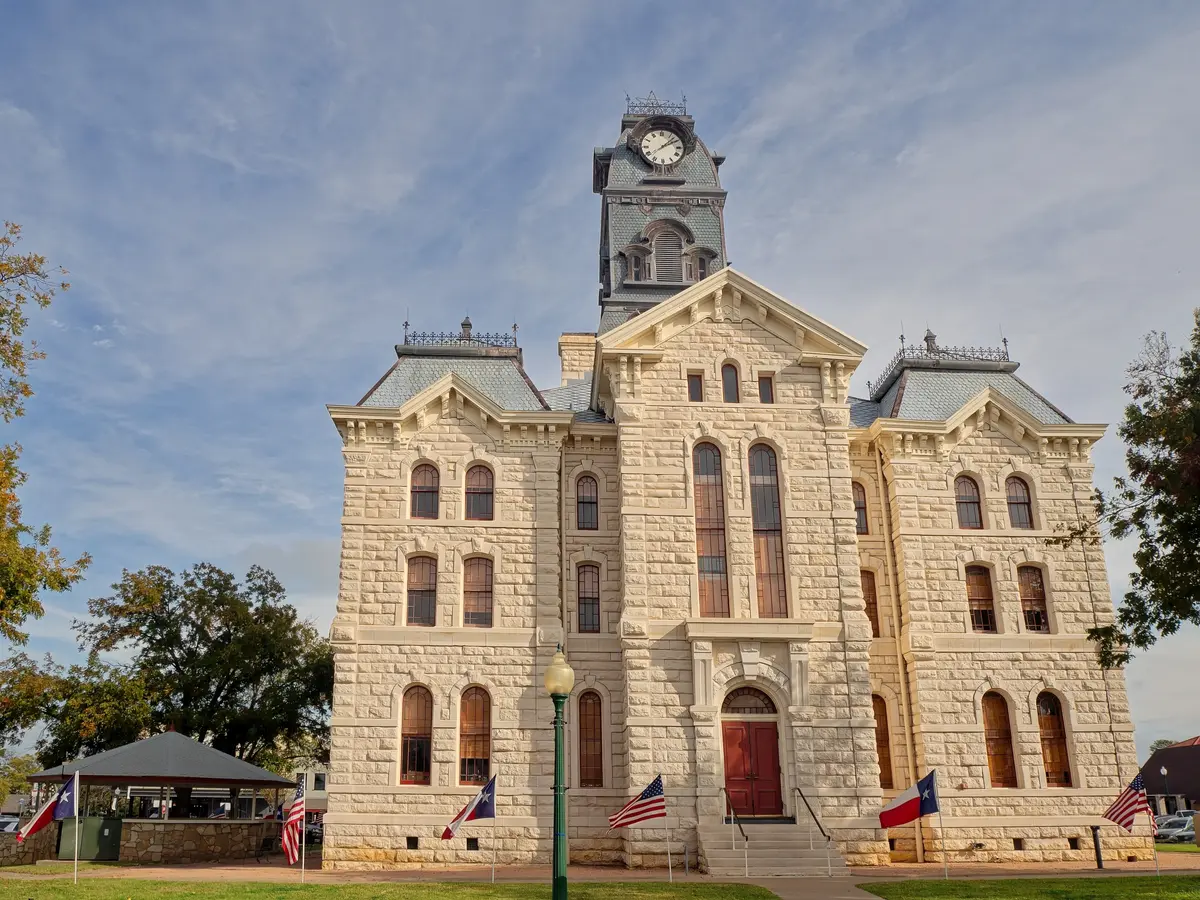
Nacogdoches sits on hilly terrain at about 331 feet of elevation — genuinely rolling by East Texas standards, with pine canopy that shades the older neighborhoods and gives the city a character you don't find in flat, treeless Texas suburbs. The historic downtown core mixes nineteenth-century brick buildings with more recent commercial development and remains an active place to spend time, not a preserved-but-empty museum district.
Most errands need a car. The city received a TxDOT grant in late 2025 for an active transportation plan along the North Street corridor, and regional bus service runs through Brazos Transit District and Greyhound, but the practical reality is that driving is how Nacogdoches works day to day. The LaNana Creek Trail is the exception — it's a genuinely usable multi-use path through the heart of the city that connects neighborhoods to downtown on foot or bike.
The School Question
Nacogdoches ISD holds a D rating, according to the Texas Education Agency — and on 2024-25 state assessments, 24% of students reached math proficiency and 39% reached reading proficiency. That is the honest picture, and families moving here should read the full breakdown on the schools page before making decisions. The district runs active UIL athletics programs; the Golden Dragons fill the stands on Friday nights, and that community ritual is real and matters here. But the academic metrics are what they are.
What surprises people after six months: how genuinely social the city is, especially around SFA events, the Nacogdoches Farmers Market, and the historic sites that generate low-key weekend activity. The Old Stone Fort Museum and Millard's Crossing Historic Village aren't tourist traps — they're places locals actually bring out-of-town visitors, and they reflect a community that takes its own history seriously.
The city has 215 sunny days a year. East Texas is humid and warm — summers are genuinely hot and the humidity is real — but winters are mild compared to northern Texas. The pine canopy helps in summer more than people expect.
The Nacogdoches Housing Market Right Now
The typical home price in Nacogdoches stood at $224,292 as of July 2026 (Zillow Home Value Index). That figure makes it one of the more affordable incorporated cities in Texas at its size, and a meaningful step below what comparable housing costs in the Houston metro or the DFW suburbs.
Entry-level options exist — older construction in established neighborhoods regularly trades well below that figure — while the historic districts and larger lots command a premium. Some areas of the city cost noticeably more than others, and the neighborhoods page breaks down the character and trade-offs of each. The effective property tax rate of 0.76% is low by Texas standards, which meaningfully reduces the total cost of ownership relative to other Texas cities where rates run double that. For a full breakdown of taxes, rent, and cost of living, see the cost of living page.
The one structural tension in the market: the median household income of $39,281 sits below the income needed to comfortably carry the typical home here. That gap is real, and it's worth stress-testing your numbers carefully before making an offer. The affordability looks strong on the surface — and it is, compared to most of Texas — but it's not unlimited, especially at current interest rates. The city-wide typical rent of $1,110/mo gives renters a genuine alternative while they find their footing.
The housing stock in the historic districts — Washington Square, Virginia Avenue, and Raguet — skews toward older construction with larger lots and mature trees. Woodland Hills and Arbor Oaks offer more conventional suburban layouts with newer builds in the mix. First-time buyers should explore what programs apply on the first-time homebuyer page.
Nacogdoches Neighborhoods
Nacogdoches has several distinct areas — each with its own character and appeal. Here’s a breakdown to help you narrow down where to focus your home search.
🏡 Washington Square Historic District
The historic core of downtown Nacogdoches, where nineteenth-century architecture and mature live oaks define the streetscape — a draw for buyers who want character and walkable access to the city's civic and cultural center.
🏠 Raguet
A well-established neighborhood popular with SFA faculty and longtime residents, offering a mix of older bungalows and more substantial homes under heavy pine and oak canopy.
🌳 Spring Creek
A quieter, more spread-out area on the edges of the city that suits buyers looking for more space and a lower-key residential feel away from the university's immediate orbit.
🏘 Woodland Hills
A conventional suburban neighborhood with a mix of construction eras, appealing to buyers who want predictable layouts and proximity to retail corridors without the constraints of a historic district.
🏔 Virginia Avenue Historic District
One of the city's recognized historic corridors, with older homes on tree-lined streets that attract buyers interested in Nacogdoches's architectural heritage and proximity to the downtown core.
🌆 Arbor Oaks
A residential neighborhood with newer construction in the mix, drawing families and buyers who want a more modern floor plan alongside the mature tree cover that defines most of Nacogdoches.
Pros & Cons of Living in Nacogdoches
The Pros
- Affordable cost of living relative to Texas metros
- College-town amenities and culture from SFA
- Historic downtown with deep East Texas character
- Mild climate with abundant sunny days
The Cons
- Below-average household incomes and a high poverty rate
- Limited walkability and public transit (Walk Score around 30)
- Crime rate somewhat higher than the state average for a town this size
Getting Around & Commuting in Nacogdoches
US-59 is Nacogdoches's main artery, and it's actively being upgraded to freeway standard as part of the future I-69 corridor. TxDOT was constructing flyover bridges at the US-59 and US-259 interchange and adding frontage roads as of late 2024 into 2025 — ongoing work that means construction-related delays on that stretch, but a meaningfully improved route once complete. US-259, SH-7, and SH-21 serve the other regional connections.
The Commute Reality
The most common commute out of Nacogdoches is about 25 minutes to Lufkin, TX — the nearest city of any size and a destination for healthcare, retail, and employment that the local market doesn't fully cover. About 80% of workers live and work inside Nacogdoches itself, which means the commute picture for many residents is simply a short drive across town rather than a daily highway haul.
Houston is a realistic day-trip destination but not a practical daily commute — the drive is roughly 140 miles. That distance effectively makes Nacogdoches a self-contained market rather than a bedroom community, which cuts both ways: you're not commuting two hours each way, but you're also not easily accessing metro-area amenities on a weekday evening.
Local Getting Around
Within the city, driving is the default. Regional bus service runs through Brazos Transit District and Greyhound for those who need it. The LaNana Creek Trail provides the most practical non-driving route for short trips and recreation. East Texas Regional Airport (GGG) is 65 miles away — manageable for occasional travel, but a serious shopping trip or a connecting flight means planning ahead. The city's 2025 active transportation grant for the North Street corridor signals that pedestrian infrastructure is improving, but Nacogdoches remains a drive-everywhere city in its current form.
One thing newcomers don't always anticipate: US-59 construction through the city center creates unpredictable delays during peak hours, and locals have learned which surface streets offer the cleaner route when the main corridor backs up. Getting the lay of the land in the first few weeks pays dividends.
Schools in Nacogdoches
Families relocating to Nacogdoches have public, private, and higher-education options nearby. Here’s a quick overview.
🎓 School District
Nacogdoches Independent School District serves K–12 students across Nacogdoches and the surrounding area. Rated D (source: Texas Education Agency, 2025 A-F accountability rating (2024-25 school year)).
🏆 Graduation Rate
The 4-year high-school graduation rate here is approximately 95.5%.
📚 Higher Education
Texas’s public universities — the University of Texas at Austin, Texas A&M University, and the University of Houston — offer four-year degrees statewide, with one of the largest community college systems in the country (50+ public community college districts) providing two-year and workforce programs.
🌐 Online Learning
UT Austin Online and Texas A&M University Online offer fully accredited online degrees for remote learners across the state.
Safety in Nacogdoches
A quick look at how Nacogdoches compares on the numbers that matter most when weighing a neighborhood or a move.
🛡 Violent Crime
Approximately 2 per 1,000 residents.
🔒 Property Crime
Approximately 15 per 1,000 residents.
Compared to the most recent national figures from the Bureau of Justice Statistics (2024), Nacogdoches’s violent crime is below the national average (about 3.7 per 1,000), and property crime is below the national average (about 18.4 per 1,000).
Against Texas as a whole, Nacogdoches’s violent crime is roughly half the state average, and property crime is roughly two-thirds of the state average (Bureau of Justice Statistics, Crime Known to Law Enforcement, 2024 (tables 2 and 3)).
Crime rates can vary a lot within a single city, so the citywide numbers above are only a starting point. Some neighborhoods in Nacogdoches run well below these averages, while others run higher — the kind of block-by-block detail that matters most when you’re actually choosing where to live. The full guide below breaks it down neighborhood by neighborhood.
Working in Nacogdoches
Nacogdoches’s largest employers span several industries — here are some of the anchors of the local job market.
🎓 Stephen F. Austin State University
Higher education
🎓 Nacogdoches Independent School District
Education
🏛 City of Nacogdoches
Municipal government
🏥 Nacogdoches Medical Center
Healthcare
🏭 Eaton Cooper Power Systems
Manufacturing
💼 Etech Global Services
Business process outsourcing
Parks & Recreation in Nacogdoches
Some of the outdoor spaces that shape everyday life in Nacogdoches.
🌱 LaNana Creek Trail
Nacogdoches residents don’t have to go far for green space — spots like LaNana Creek Trail are part of everyday life here, whether that’s a morning walk, a weekend hike, or just somewhere to unwind outside. The full guide below covers more of what Nacogdoches has to offer for parks and outdoor recreation.
Retiring in Nacogdoches
Nacogdoches draws retirees for its balance of amenities, outdoor access, and cost. Here’s what to weigh.
🌤 Climate
Nacogdoches gets 215 sunny days a year, with mild winters that rarely bring hard freezes and long, warm springs and falls. Summers are genuinely hot and humid — the Piney Woods climate means the pine canopy provides real shade, but retirees coming from drier climates should spend a July here before deciding. The overall climate is among the gentler in Texas for most of the year.
🍴 Lifestyle
The historic downtown, SFA performing arts events, the Old Stone Fort Museum, and Millard's Crossing Historic Village give retirees a steady cultural calendar without the scale of a metro. The Nacogdoches Farmers Market, the LaNana Creek Trail, and Lake Nacogdoches round out the outdoor and civic picture. Nacogdoches holds a Texas Certified Retirement Community designation — one of the first cities to receive it — recognizing the city's combination of housing, recreation, and community amenities.
🏚 55+ Communities
No 55+ communities were found in Nacogdoches. Retirees here typically purchase in the established historic neighborhoods or conventional residential areas rather than age-restricted communities. The retiring page has more detail on what the local landscape offers for older buyers.
✈ Getting Around
A car is essential for daily life in Nacogdoches — most errands and medical appointments require driving. The nearest major airport is East Texas Regional Airport (GGG), 65 miles away. Within the city, the LaNana Creek Trail offers walkable access between the downtown core and surrounding neighborhoods for those who want a non-driving option for shorter trips.
🏛 Texas Taxes for Retirees — What to Know
- No state income tax — Texas has no personal income tax — constitutionally protected under Article VIII, Section 24. Social Security, pensions, 401(k)/IRA withdrawals, and annuity payments are all untaxed at the state level, with no state return to file.
- Sales tax is the tradeoff — The state sales tax is 6.25%, and local add-ons bring the combined rate in Nacogdoches to 8.25% (Texas Comptroller of Public Accounts, city sales and use tax rates, July 2026). Groceries and prescription drugs are exempt.
- Property taxes — the real tradeoff — Texas’s effective property tax rate averages about 1.40%, among the highest in the country, since property tax (not income tax) funds most local government and schools.
- Over-65 homestead exemption and school-tax freeze — Homeowners 65+ (or disabled) get an additional $60,000 exemption from their home’s value for school district taxes, on top of the general homestead exemption — $200,000 off school taxable value combined, following November 2025’s Proposition 11 (SB 23), which raised the over-65 exemption to $60,000, and Proposition 13 (SB 4), which raised the general homestead exemption to $140,000. Once claimed, your school district tax bill is frozen at that year’s amount and cannot increase as home values rise, and the ceiling can transfer if you move to a new home within Texas.
- Deferral option if cash is tight — Homeowners 65+ can defer property tax payment entirely for as long as they live in the home, rather than paying it currently — interest accrues, but no forced sale.
- No estate or inheritance tax — Texas has no estate tax, no inheritance tax, and no gift tax.
- No separate capital gains tax — Because Texas has no state income tax, capital gains — including on investments and home sales — are not taxed at the state level at all, unlike states such as Washington that tax capital gains separately from income.
Tax laws change frequently and individual situations vary. This is general information, not tax advice — always consult a qualified Texas tax professional or CPA for personalized retirement tax planning.
Weekends & Local Favorites in Nacogdoches
Nacogdoches has the kind of weekend culture that a university town develops over generations — a mix of outdoor access, genuinely local food and coffee, and civic events that residents actually show up for rather than just photographing for social media.
Food and Coffee
Clear Springs Restaurant has been the go-to for East Texas-style catfish and seafood for decades — the kind of place where the parking lot tells you everything before you walk in. Butcher Boy's draws a loyal crowd for its meat-forward menu. For Italian, Auntie Pasta's Italian Restaurant and Napolis Italian Restaurant (Nacogdoches Tx) both have their regulars and hold their own. Kinfolks Restaurant rounds out the local dining landscape with Southern comfort food that fits the city's character.
Coffee has real options. Java Jacks Coffee House, 1st City Cafe, University Coffee, Aperitivo Café and Gelato, and Thrall's Cafe & Catering give residents a rotation of independent spots — a meaningful contrast to the smaller Texas towns that run entirely on drive-through chains. Aperitivo's gelato in particular gives the coffee scene a distinctive note that shows up in locals' recommendations consistently.
Outdoors and Civic Life
The LaNana Creek Trail is the connective tissue of outdoor life in the city — a multi-use path that runs through town and connects to the Texas Blueberry Festival's 5K/10K route each June. Lake Nacogdoches draws residents for fishing, boating, and the kind of slow-afternoon activity that a pine-canopy lake enables. The SFA Mast Arboretum and Ruby M. Mize Azalea Garden on campus are genuinely impressive — the azalea garden in peak bloom draws people who aren't typically garden visitors.
The Nacogdoches Farmers Market is where a cross-section of the city shows up on weekend mornings. The Texas Blueberry Festival each June is the city's biggest civic moment — live music across multiple stages, hundreds of arts and crafts booths, and blueberry picking in a region that genuinely leads East Texas in production. It's the event that makes longtime residents proud and fills the historic downtown with visitors who'd never thought to look this far into the Piney Woods.
The Old Stone Fort Museum, Sterne-Hoya House Museum, and Millard's Crossing Historic Village aren't heavy tourist infrastructure — they're well-maintained historic sites that reflect how seriously Nacogdoches takes its status as the oldest town in Texas. On a slow Sunday, they're worth the time.
Local favorites in Nacogdoches
Restaurants
- Clear Springs Restaurant
- Butcher Boy's
- Auntie Pasta's Italian Restaurant
- Napolis Italian Restaurant ( Nacogdoches Tx )
- Kinfolks Restaurant
Outdoors
- LaNana Creek Trail
- SFA Mast Arboretum
- Ruby M. Mize Azalea Garden
- Lake Nacogdoches
Coffee
- Java Jacks Coffee House
- 1st City Cafe
- University Coffee
- Aperitivo Café and Gelato
- Thrall's Cafe & Catering
Farmers Markets
- Nacogdoches Farmers Market
Top Things Locals Say About Nacogdoches
The best intel about a city comes from the people who actually live there. Here’s what Nacogdoches residents say when newcomers ask the questions everyone’s thinking.
“I knew the price was right before we moved, but I didn't expect to feel so settled so quickly. The LaNana Creek Trail is ten minutes from the house and I'm on it three times a week — I never had that in Austin.”
— Recent Nacogdoches home buyer
“What's the most surprising thing about living in Nacogdoches?”
How much the university changes the feel of the place. You'd expect a small East Texas town to feel slow and closed-off, but the SFA campus keeps things moving — there are always lectures, games, performances, or farmers market regulars who've been coming for twenty years. The Raguet neighborhood in particular has a mix of longtime faculty and newer arrivals that creates a more eclectic vibe than you'd find in a similar-sized town without a university anchor.
“What do locals love most about Nacogdoches?”
The pines and the history, in roughly equal measure. You can run the LaNana Creek Trail on a weekday morning and have it mostly to yourself, then walk into the Washington Square Historic District and feel like you're in a genuinely old American city — because you are. The Texas Blueberry Festival every June is also the kind of event that makes people who've lived here twenty years still show up and feel good about where they live.
“What should newcomers to Nacogdoches know?”
The US-59 construction through the city is ongoing and creates real delays — learn the surface street alternatives in your first couple of weeks and you'll save yourself frustration. The city is very self-contained, so get your Amazon orders in early for anything the local shops don't carry; a serious shopping run means driving out of town. And don't underestimate the summer humidity — the pine canopy helps, but July in Nacogdoches is genuinely hot and wet in a way that newcomers from drier climates don't always anticipate.
“How much do you need a car in Nacogdoches?”
For almost everything, yes. The LaNana Creek Trail gives you a real non-driving option for recreation and some short trips if you live near it, and downtown is compact enough to cover on foot once you're in it. But most errands — groceries, hardware, anything beyond the immediate core — mean getting in the car. Regional bus service exists through Brazos Transit District, and the city is working on pedestrian improvements along the North Street corridor, but Nacogdoches is fundamentally a driving city right now.
Cities Near Nacogdoches
Other communities near Nacogdoches worth a look — each with its own character and price point.
| City | Distance | Best For | Vibe | Median Rent | Median Buy |
|---|---|---|---|---|---|
| Lufkin | 20 mi | Families, retail access, healthcare | Larger, commercial, regional hub | $1,351 | $200,713 |
| Center | 35 mi | Budget buyers, rural lifestyle | Small, quiet, deep East Texas | $900 | $160,000 |
| San Augustine | 30 mi | Rural buyers, lake access | Very small, historic, wooded | $850 | $140,000 |
More Helpful Guides for Nacogdoches
Going deeper on Nacogdoches? Our blog series covers everything from first-time buying to retiring here — explore the guides below.
Local Expert Takeaway: Nacogdoches is genuinely affordable, genuinely rooted, and genuinely its own thing — not a suburb of Houston, not a placeholder until something better opens up. The SFA campus, the LaNana Creek Trail, the historic downtown, and places like Clear Springs Restaurant and Java Jacks Coffee House give residents real anchor points for daily life. The school district's D rating from the Texas Education Agency is the honest asterisk that families need to weigh. But for remote workers, university employees, retirees, and buyers who want a house with a yard and a pine-canopy neighborhood at a price that doesn't require a six-figure income, Nacogdoches delivers in ways few Texas cities at this price point can match.
Quick Takeaways & FAQs
✅ Stephen F. Austin State University anchors both the job market and the social calendar, giving Nacogdoches the energy of a college town at a small-city price point.
⚠️ Nacogdoches ISD holds a D rating from the Texas Education Agency — families with school-age children should read the full schools breakdown before deciding.
📍 The Texas Blueberry Festival each June — the only state-sanctioned blueberry festival in Texas — fills the historic downtown and is the city's biggest annual civic moment.
Is Nacogdoches, TX a good place to live?
How far is Nacogdoches from Houston?
What are the best neighborhoods in Nacogdoches?
What is the cost of living like in Nacogdoches?
Is Nacogdoches growing?
Helpful Links for Moving to Nacogdoches
Moving to Texas?
Tell us what you need help with and we'll connect you with local resources.
