
If you've been priced out of Asheville, frustrated by Knoxville's rapid appreciation, or simply doing the math on what a paycheck actually buys in different cities, Johnson City has a way of surprising people. The typical home here sat at $295,339 as of August 2026 — a number that looks almost quaint alongside what comparable square footage runs in much of the Southeast. Johnson City is the 8th-largest incorporated city in Tennessee, with a population of 74,943, anchored by East Tennessee State University, Ballad Health, and the James H. Quillen VA Medical Center. Those institutions give the city a steady, if not explosive, economic floor.
The honest caveat is that the local income picture is real: with a median household income of $55,429, the typical family here earns noticeably less than what it takes to comfortably carry the typical home at current rates. That gap is what keeps Johnson City affordable on the surface while still presenting a stretch for many buyers. Most people moving here aren't making that stretch from within the Tri-Cities; they're arriving from higher-cost markets where their savings go considerably further.
Tennessee's tax structure does a lot of the heavy lifting on the affordability side. No state income tax on wages, mid-range utility costs through BrightRidge (the city's not-for-profit public utility), and an effective property tax rate of 0.43% — among the lowest for a Tennessee city of this size — mean the monthly nut is genuinely lower than in most comparable metros. Groceries run several percentage points below the national average, and transportation costs are below it as well. For outdoor access, Tweetsie Trail and Buffalo Mountain Park are free, which matters when you're watching the budget.
Whether you're deciding between renting and buying, figuring out how Johnson City stacks up against Kingsport or Bristol, or just trying to understand what $55,000 a year actually buys here, the sections below break down housing, everyday expenses, taxes, and how the city compares to its neighbors.
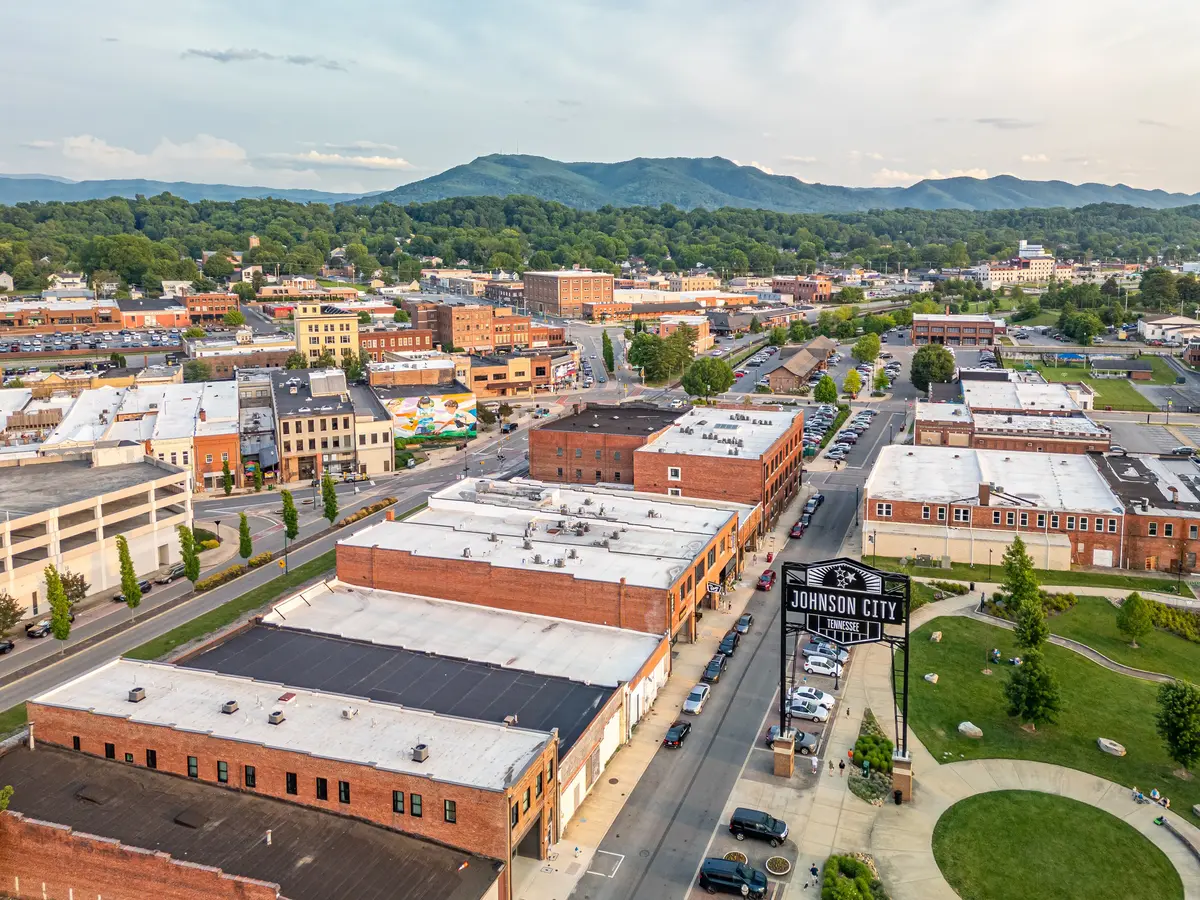
What It Really Costs to Live in Johnson City
Johnson City runs roughly 3–5% below the national average cost of living, depending on the index. That margin isn't dramatic — this isn't a city where everything is half-price — but it's consistent across groceries, transportation, and utilities, and it compounds meaningfully over a decade of living here.
The biggest driver of affordability isn't some single category running dramatically cheap. It's the combination: housing prices that haven't been pushed to Knoxville or Asheville levels yet, a public utility that has raised rates only twice in eight years, a grocery market with genuine competition keeping staple prices down, and a tax structure that doesn't take a state income-tax cut from your paycheck. For buyers comparing costs to higher-cost states, the total picture often feels more like a 20–25% real-dollar savings than the headline 3–5% index suggests, because housing — the biggest line item — is where the gap is widest.
The honest complication is the income side. The median household income of $55,429 is below what's needed to carry the typical home here, which means Johnson City is affordable by national standards but not automatically affordable for everyone who lives here. Buyers arriving with equity from a pricier market, remote workers earning out-of-market wages, and retirees with fixed income tend to find Johnson City genuinely generous. Local earners on median wages may find the math tighter than the headline numbers imply.
Housing: Rent vs Buy in Johnson City
The typical home in Johnson City is $295,339 (Zillow Home Value Index, August 2026). Entry-level homes — older construction, smaller footprints, or locations farther from the university corridor — can be found noticeably below that figure, while anything recently renovated or near the walkable core of the city trends above it. For neighborhood-by-neighborhood character and what different parts of the city feel like day-to-day, the best neighborhoods guide covers that in depth.
The effective property tax rate here is approximately 0.43% — one of the lowest rates for any Tennessee city of comparable size, and well below both the state average and the national average. That rate means property taxes add relatively little to the total cost of ownership compared with most markets. It's one of the structural reasons Johnson City's monthly carrying costs tend to run lower than the purchase price alone would suggest. An interactive mortgage calculator is attached below to run your own numbers.
The city-wide typical rent is $1,449/mo (Zillow ZORI, August 2026). That figure reflects a broad range — smaller apartments near East Tennessee State University compress the average from one direction, while newer apartment construction on the outskirts pushes it up from the other. For most households comparing rent and buying, the decision in Johnson City comes down to two things: how long you plan to stay, and whether you have a down payment that avoids a high loan-to-value ratio on a modest-priced home. At the current typical price and rate environment, buying often pencils out favorably for households planning to stay five or more years, but renting makes sense while you're learning the city — the difference between neighborhoods here is real and worth understanding before you commit.
The Income Reality
The gap between median household income and what's needed to buy at the typical price is real and worth naming plainly. Johnson City's affordability story is strongest for buyers who arrive with existing equity, remote workers earning salaries from higher-wage markets, or retirees whose income doesn't depend on local wages. For households earning at or near the local median, the buy decision benefits from a careful look at the full monthly picture — which the calculator below is designed to help with.

Everyday Costs Beyond Housing in Johnson City
| Category | Typical Monthly Cost | Notes |
|---|---|---|
| Housing (typical rent) | $1,449/mo | City-wide typical rent. Buying? Use the calculator above for a mortgage estimate. |
| Utilities | $190–$270/mo | Electricity, gas, water, sewer, trash |
| Groceries | $520–$700/mo | Food at home, household of 2–3 |
| Transportation & Gas | $160–$280/mo | Fuel, and transit where it is a real option |
| Phone & Internet | $110–$180/mo | Mobile plan plus home broadband |
| Misc / Discretionary | $200–$420/mo | Dining out, entertainment, subscriptions |
Non-housing figures are estimates for a household of two to three, not a sourced index; housing is the city-wide typical rent (Zillow ZORI, August 2026). Refreshed with the rest of the city data.
Northeast Tennessee's climate shapes utility costs in ways that catch some newcomers off guard. Johnson City sits at roughly 1,600 feet elevation, which means winters are genuinely cold — colder than Nashville or Memphis — and heating bills reflect that. Electricity comes through BrightRidge, the city's not-for-profit public utility (formerly Johnson City Power Board), which has raised local rates only twice in the past eight years. After a 2.5% increase effective October 2025, BrightRidge rates still sit in the mid-range among the 153 TVA-affiliated local power companies. Combined monthly utility costs — electricity, water, sewer, and trash at standard usage assumptions — run approximately $230/month as a modeled estimate; your actual bill will vary with house size and heating load, but the estimate gives a reasonable baseline. BrightRidge also offers fiber broadband service to more than 30,000 locations in its service area, so residents can bundle power and internet through the same public utility rather than a national carrier.
Groceries run about 5–6% below the national average — not a transformative difference but a real one over the course of a year. Most errands in Johnson City mean a drive; the city is laid out for cars, and transportation costs here run below the national average, reflecting lower insurance rates and shorter in-city commute distances. The drive to Kingsport is about 30 minutes, and most residents handle that commute by car. Winged Deer Park, Tweetsie Trail, and Founders Park give residents free recreational options that meaningfully reduce the cost of staying active — something that adds up quietly over years of living here.
Looking to buy in Johnson City? Estimate your payment.
Enter your numbers to see an estimated monthly mortgage payment.
Estimate only. Excludes HOA fees and mortgage insurance. The interest rate above is a starting point, not a quoted rate — replace it with your own to see real numbers. Insurance is a flat placeholder, not a Johnson City quote.
Beyond the Monthly Mortgage Payment — What to Factor In
- The property tax rate above — The 0.43% used in the estimate is the median effective rate — tax actually paid as a share of market value — published by Ownwell, 2026. Half of local homes pay more and half pay less: your own bill depends on that property's assessed value and any exemptions it qualifies for, which can differ a lot from its market price. Confirm with the Washington County assessor before you budget.
- Total cost of ownership — Your monthly mortgage payment is just the baseline. Depending on the specific city, county, and service district, homeownership costs also include local utility fees, municipal surcharges, and special assessments (such as water, sewer, storm drainage, or local energy taxes) that vary by location.
- Independent due diligence — Because these recurring local costs and municipal fees change depending on the exact property address, buyers must research them independently during their transaction process.
Tax laws, local municipal fees, and utility costs change frequently and individual situations vary. This page is general information, not tax or legal advice — always consult a qualified tax professional, CPA, or local municipal offices for personalized guidance.
Johnson City vs Nearby Cities: Cost Comparison
| City | Typical Home Price | Typical Rent | Cost vs Johnson City |
|---|---|---|---|
| Johnson City (this city) | $295,339 | $1,449/mo | — |
| Kingsport | $257,154 | $1,294/mo | 13% lower |
| Bristol | $237,878 | $1,392/mo | 19% lower |
| Elizabethton | $233,534 | $1,029/mo | 21% lower |
Source — home prices: Zillow ZHVI, August 2026; rent: Zillow ZORI, August 2026. Nearby-city figures are the same series, refreshed together.
Johnson City is the highest-priced of the main Tri-Cities — Kingsport runs somewhat lower on typical home prices, while Bristol and Elizabethton come in noticeably lower — but what you give up in each case involves trade-offs in employers, amenities, and school district quality that make the price difference only part of the story.
Taxes & the Bottom Line for Johnson City
Tennessee's income-tax situation is straightforward and genuinely favorable: the state levies no personal income tax on wages, salaries, or retirement income — a constitutional prohibition. The Hall Tax on investment dividends and interest was fully eliminated in 2021. For most working households and retirees, that means a paycheck in Johnson City goes to the federal government and stops there, with nothing taken at the state level.
The sales tax is where Tennessee makes up some of that ground. The statewide rate is 7%, and Washington County adds a local rate on top, pushing the combined rate to 9.5% on most purchases. Grocery staples get a break: the state applies a reduced 4% rate to food, rather than the full 7%. Tennessee is not a state that fully exempts groceries, so budget accordingly — but the reduced rate softens the impact compared to what you'd pay on clothing or electronics.
Property taxes at the 0.43% effective rate are among the lowest for any Tennessee city of comparable size. At the home price referenced above, that rate produces a modest annual tax bill relative to most markets — well below what buyers pay in Virginia or North Carolina at comparable home values.
Who Johnson City's Budget Fits
The cost structure here works best for households that don't depend entirely on local wages. Remote workers, retirees, dual-income households, and buyers arriving with equity from higher-cost markets consistently report that the combination of low taxes, modest home prices, and below-average everyday costs makes Johnson City feel genuinely livable on a budget that would be strained in Asheville or Knoxville. The school district holds an A rating, according to Niche, which means families aren't trading quality to get the price. For a deeper look at how the city fits retirees specifically, the retiring guide covers that picture fully.
The households that tend to find it a stretch are single-income earners at or near the local median — a real segment of the population. The income-to-home-price gap isn't insurmountable, but it does mean the first-time buyer path here requires planning. The first-time homebuyer guide walks through the programs and financing mechanics that make that path more realistic.
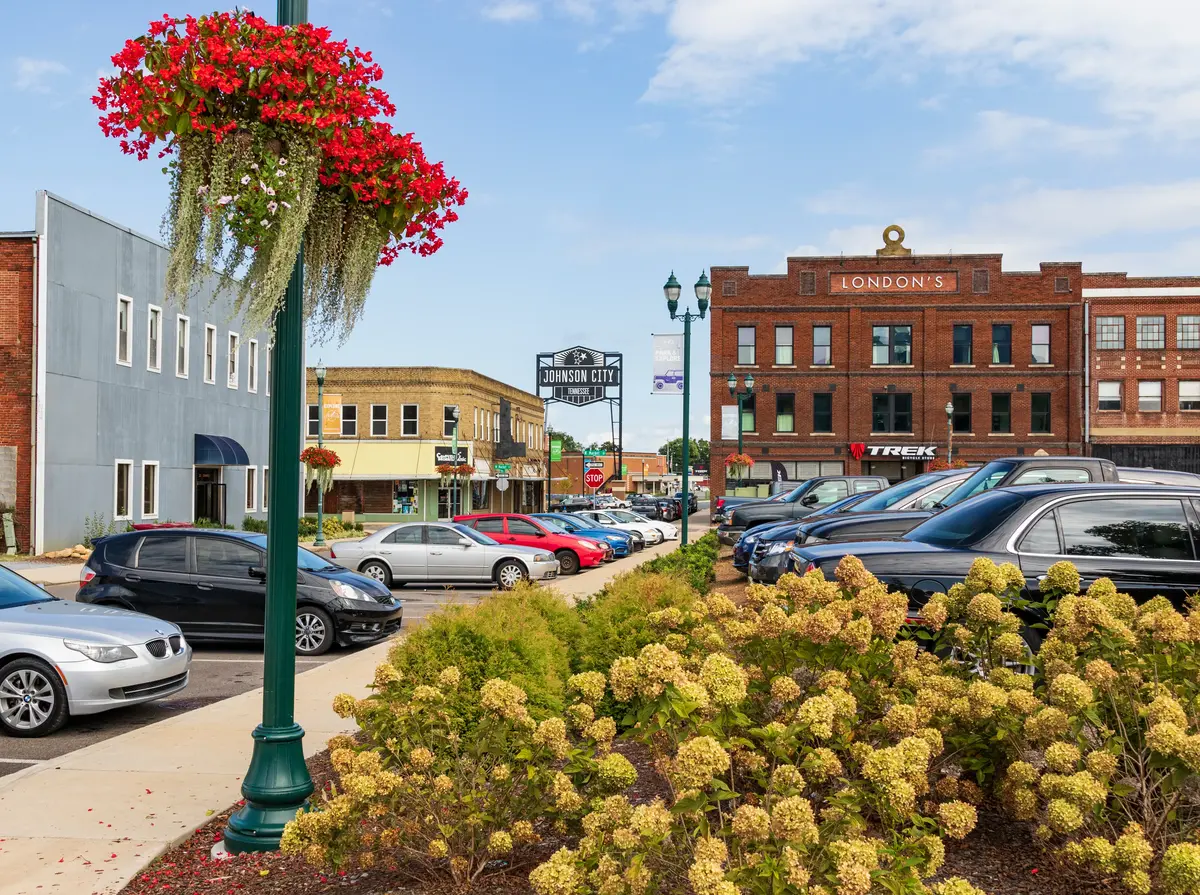
Local Expert Takeaway: Johnson City's cost advantage is real but it's not automatic. The property tax rate at 0.43% and zero state income tax on wages make a meaningful difference month to month, and BrightRidge keeping utility rates stable for most of the past decade is the kind of structural advantage that doesn't show up in headline cost-of-living indices. The catch is the income gap: the typical home price at $295,339 (August 2026) sits above what the median local income can comfortably carry, which is why the buyers who benefit most are either arriving with outside equity or earning remotely. If you're in either of those categories, the math here is hard to argue with.
Quick Takeaways & FAQs
✅ Johnson City's effective property tax rate of 0.43% is among the lowest for any Tennessee city its size, and zero state income tax on wages amplifies the savings further.
⚠️ The median household income of $55,429 falls short of what's needed to comfortably buy the typical home, meaning the affordability story is strongest for buyers arriving with equity from a higher-cost market.
📍 BrightRidge, the city's not-for-profit public utility, has raised local power rates only twice in eight years and also offers fiber broadband — a bundled option most cities can't match.
What is the typical home price in Johnson City, TN?
Is Johnson City cheaper to live in than Knoxville or Asheville?
Does Tennessee have a state income tax?
How much is rent in Johnson City, TN?
Is it cheaper to rent or buy in Johnson City right now?
Moving to Tennessee?
Tell us what you need help with and we'll connect you with local resources.
