
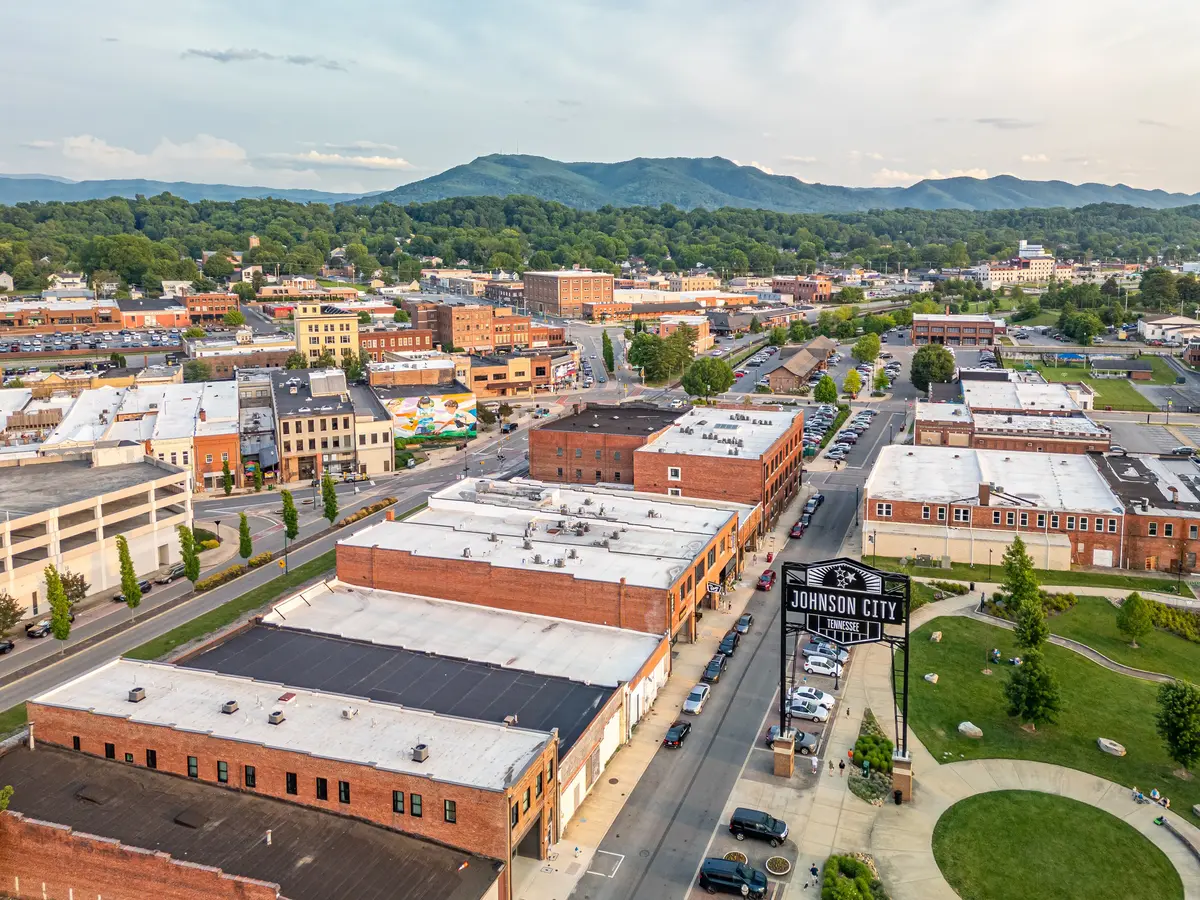
Maybe your company transferred you to Ballad Health or East Tennessee State University. Maybe you've been watching home prices climb in Asheville and someone pointed you toward Johnson City. Either way, the first thing you should know is that Johnson City is not a uniform suburb — it's a city of 74,943 people spread across genuinely distinct zones, and where you land shapes everything from your morning commute to which school your kids attend. The city sits where I-26 and several US routes converge in northeast Tennessee's Ridge and Valley topography, and that geography creates real differences between neighborhoods that look identical on a map.
The economic spine here is clear: Ballad Health, East Tennessee State University, and the James H. Quillen VA Medical Center together anchor the city's employment base and, not coincidentally, shape where people want to live. The Johnson City school district holds an A rating, according to Niche, which makes boundary lines a genuine factor in buying decisions — not an afterthought. Families with school-age children do their homework on which side of I-26 a house falls on, and you should too.
On cost, Johnson City sits well below regional peers like Asheville and Knoxville. The typical home price is $295,339 (Zillow Home Value Index, August 2026) — see the full breakdown on the cost of living page — and the city's effective property tax rate of 0.43% is among the lowest you'll find anywhere in the state. Day-to-day life here includes the Tweetsie Trail for cycling, Founders Park and Winged Deer Park for outdoor gathering, and a downtown that has added independent restaurants and coffee shops faster than most cities its size.
Whether you're narrowing down a neighborhood or trying to understand how this city actually fits together, the sections below break down Johnson City's eight neighborhoods, who each one suits, the trade-offs locals rarely mention upfront, and where renters should focus their search.
The Johnson City Reality
The single most useful thing to understand before buying in Johnson City is what I-26 does to the city. The interstate bisects the northern corridor, and neighborhoods east and west of it — or in the case of Boones Creek, directly straddling it — feel meaningfully different in terms of traffic exposure, lot character, and suburban density. Buyers who shop purely by price and square footage, without factoring in where the interstate sits relative to their chosen street, often end up surprised by the highway noise and commercial buildup that follows the corridor.
The second divide is the one between the university core and the suburban fringe. Neighborhoods ringing East Tennessee State University — Tree Streets, Cherokee / Seminole Woods, and Gump Addition — carry older housing stock, walkable streets, and the energy that comes with a major university next door. That energy is a genuine asset for some buyers and a dealbreaker for others. The outer neighborhoods — Boones Creek, Lake Ridge, North Johnson City — trade that walkability for newer construction, larger lots, and quieter residential streets. Neither side is wrong; they serve different lives.
School boundaries matter here in a concrete way. The Johnson City school district is the jurisdiction that holds an A rating, according to Niche — but individual school assignments follow neighborhood boundaries, and a block or two can put a child in a different school. If a specific school assignment is driving your search, verify the boundary before you make an offer, not after. The schools page covers the district's enrollment and performance figures in full.
Neighborhoods at a Glance
| Neighborhood | Best For | Vibe |
|---|---|---|
| Downtown Johnson City | Walkable Renters | Compact, pedestrian-friendly core with independent dining, Founders Park, and a growing arts presence |
| Tree Streets | Walkable School | National Register historic district adjacent to ETSU; tree-named streets, front porches, mixed owner-renter |
| North Johnson City | Families Commuter | Conventional suburban corridor with easy interstate access and everyday retail nearby |
| Boones Creek | Families Quiet | Mix of midcentury brick ranches and newer subdivisions; historically rooted, one of the city's calmer corners |
| Mountain Home | Value Commuter | VA Medical Center and ETSU medical campus grounds; below-median entry point with mountain views |
| Cherokee / Seminole Woods | Nature School | Ranch-style homes on hilly terrain near Buffalo Mountain Park and the ETSU campus |
| Gump Addition | Luxury Privacy | Tri-Cities' first planned subdivision; Victorian character, mature trees, rolling lots near downtown |
| Lake Ridge | Families Views | North Johnson City pocket near Boone Lake and Winged Deer Park; neighborhood elementary school on-site |
Johnson City typical home price: $295,339 (Zillow ZHVI, August 2026). Typical rent: $1,449/mo (Zillow ZORI, August 2026). Neighborhood tiers on this page are relative to these figures.
Best Neighborhood by Buyer Type
| Buyer Type | Best Neighborhood | Why |
|---|---|---|
| First-Time Buyer | North Johnson City | Conventional suburban stock, newer construction options, and straightforward access to I-26 keep this corridor accessible for buyers entering the market — see the first-time homebuyer page for financing context. |
| Luxury Buyer | Gump Addition | The architectural character, large rolling lots, and historic planning pedigree make Gump Addition the city's most distinctive address for buyers who want something that isn't a standard subdivision. |
| Walkability Seeker | Downtown Johnson City | The downtown core is the only part of the city where you can reach Founders Park, independent coffee, and the Johnson City Farmers' Market without getting in a car. |
| Families with Kids | Boones Creek | Regarded as one of Johnson City's safest residential corridors, with a mix of established brick ranches and newer subdivisions served by Daniel Boone High School. |
| Commuters | North Johnson City | Interstate access is the most direct here, keeping the drive to Ballad Health, ETSU, or out toward Kingsport straightforward on most days. |
| Large-Lot Buyers | Boones Creek | Midcentury ranches here sit on some of the largest residential lots in the city, with half-acre to three-quarter-acre parcels still available among older stock. |
| Renters | Tree Streets | The ETSU-adjacent rental market keeps inventory moving here, with a mix of single-family rentals and smaller multifamily options closer to downtown than anywhere else in the city. |
Looking to buy in Johnson City? Estimate your payment.
Enter your numbers to see an estimated monthly mortgage payment.
Estimate only. Excludes HOA fees and mortgage insurance. The interest rate above is a starting point, not a quoted rate — replace it with your own to see real numbers. Insurance is a flat placeholder, not a Johnson City quote.
Beyond the Monthly Mortgage Payment — What to Factor In
- The property tax rate above — The 0.43% used in the estimate is the median effective rate — tax actually paid as a share of market value — published by Ownwell, 2026. Half of local homes pay more and half pay less: your own bill depends on that property's assessed value and any exemptions it qualifies for, which can differ a lot from its market price. Confirm with the Washington County assessor before you budget.
- Total cost of ownership — Your monthly mortgage payment is just the baseline. Depending on the specific city, county, and service district, homeownership costs also include local utility fees, municipal surcharges, and special assessments (such as water, sewer, storm drainage, or local energy taxes) that vary by location.
- Independent due diligence — Because these recurring local costs and municipal fees change depending on the exact property address, buyers must research them independently during their transaction process.
Tax laws, local municipal fees, and utility costs change frequently and individual situations vary. This page is general information, not tax or legal advice — always consult a qualified tax professional, CPA, or local municipal offices for personalized guidance.
Most Popular Neighborhoods
1. Downtown Johnson City
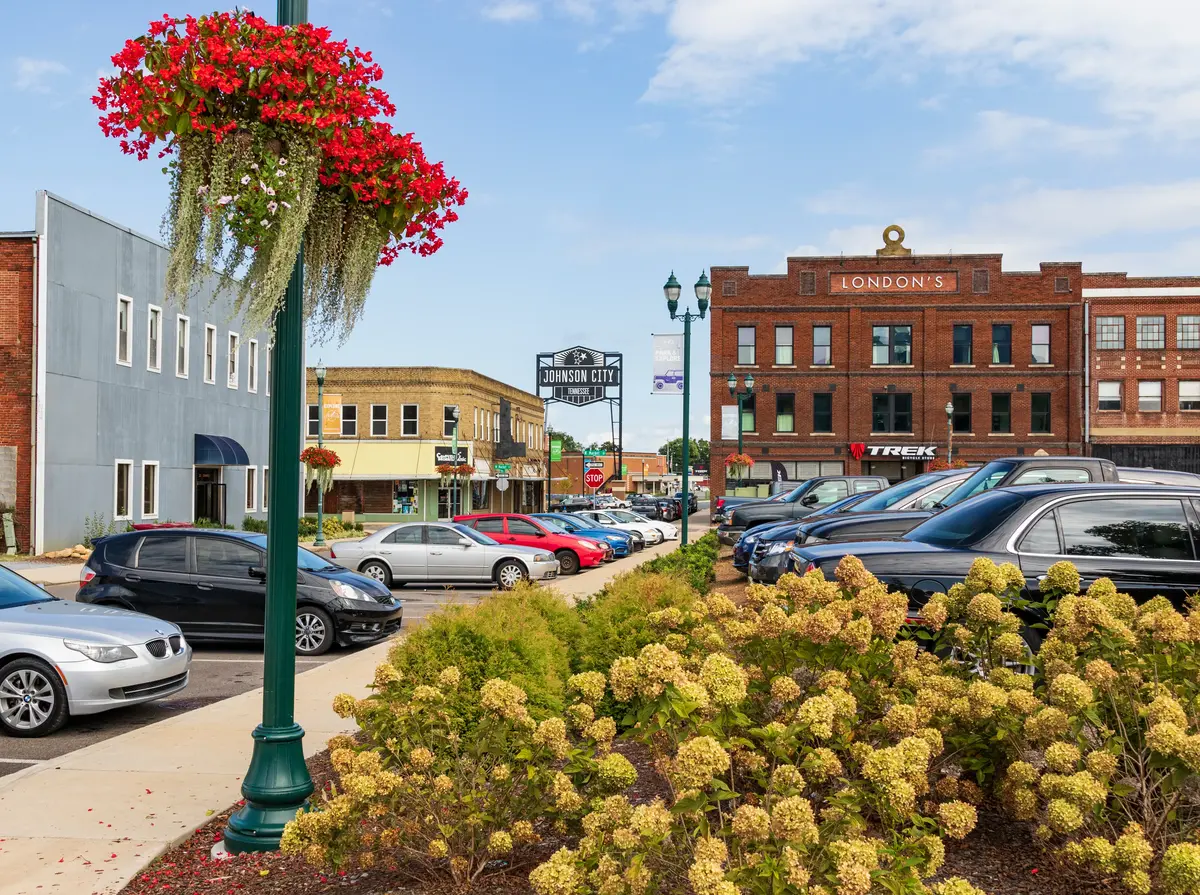
The downtown core is the most genuinely walkable part of Johnson City — the only neighborhood where Founders Park, independent coffee shops, and the Johnson City Farmers' Market are all reachable on foot. The trade-off is that the housing inventory is thin: most of what's available is condos, loft-style units, or older mixed-use buildings, and buyers looking for a detached single-family home with a yard will quickly exhaust the options. Parking logistics and the noise that comes with any active urban core are realities that surprise people who tour on a quiet Tuesday afternoon but move in on a Friday evening.
Best for: Renters, young professionals, and buyers who genuinely want to walk to everything and understand that square footage comes at a premium for the lifestyle.
2. Tree Streets
Listed on the National Register of Historic Places since 1996, the Tree Streets district takes its name from the pattern of streets named for trees — a grid laid out beginning in 1892 and still largely intact. The houses here have front porches, character details, and proximity to the ETSU campus that make them popular with faculty, staff, and longtime Johnson City families alike. The downside is deferred maintenance: some of the most appealing Victorian and Craftsman homes in this neighborhood carry decades of accumulated repair needs, and a pre-purchase inspection here is not optional.
Best for: Buyers who value historic character and on-foot access to downtown, and who go in with eyes open about older construction.
3. North Johnson City
North Johnson City is the city's most conventional suburban corridor — newer subdivisions, retail strip access, and straightforward interstate connections that make the daily commute uncomplicated. It lacks the character of Tree Streets or the natural setting of Cherokee / Seminole Woods, but it delivers predictable construction, easier parking, and the kind of neighborhood where kids ride bikes on low-traffic residential streets. The corridor's growth has also brought more commercial development along its main arteries, which means errands are easy and the character of the area shifts between the quieter residential pockets and the busier commercial stretches.
Best for: Commuters, families prioritizing newer construction, and buyers who want a low-friction suburban experience.
4. Boones Creek
Boones Creek carries real historical weight — it's the site where the first permanent European settlers arrived in northeastern Tennessee — alongside a modern residential character that draws families looking for space and stability. The mix of midcentury brick ranch homes on generous lots and newer subdivisions gives buyers options at different stages of life, though the bisecting presence of I-26 means that lot selection matters: streets closer to the interstate carry noise that streets deeper into the residential pockets do not. Daniel Boone High School serves the area and is a draw for families making boundary-driven decisions.
Best for: Families with kids, large-lot buyers, and buyers who want a quieter residential feel without sacrificing interstate access.
5. Mountain Home
Mountain Home is genuinely unlike any other address in Johnson City — a distinct postal zone built around the 1901 Beaux Arts campus of the James H. Quillen VA Medical Center, the Mountain Home National Cemetery, and ETSU's medical college. The neighborhood comes in below the city median, making it one of Johnson City's more accessible entry points for buyers who want proximity to the VA and ETSU medical campus. The catch is that the neighborhood's identity is inseparable from the institutional campus around it, which shapes both the character and the long-term demand picture in ways that differ from conventional residential areas.
Best for: VA employees, ETSU medical staff, and value-focused buyers comfortable with an institutional neighborhood setting.
6. Cherokee / Seminole Woods
Cherokee and Seminole Woods ring the ETSU campus, putting residents within cycling or walking distance of the university and the VA Medical Center — and just as close to Buffalo Mountain Park, which gives this part of the city a trail-accessible edge that the northern suburbs can't match. The housing stock is mid-to-late 20th century ranch-style, many homes raised on hillside lots to accommodate the terrain, on quarter- to half-acre parcels. The hilly topography means driveways and lot grades vary widely, and buyers should walk the specific parcel rather than assuming flat suburban conditions.
Best for: ETSU faculty and staff, nature-oriented buyers, and anyone who wants park access woven into daily life rather than a weekend destination.
7. Gump Addition
Believed to be the first planned residential subdivision in the Tri-Cities area, Gump Addition was laid out in the 1920s by a landscape architect on what had been a 160-acre farm — and the rolling, tree-lined result still reads as architecturally intentional in a way that later subdivisions don't. Victorian-era homes with generous lots and mature canopy sit close to both downtown and the ETSU campus, giving the neighborhood an unusual combination of character and access. The Johnson City Historic Commission has pursued National Register nomination for the area, though buyers considering this area for its historic designation potential should verify current status before making assumptions.
Best for: Buyers who want the city's most architecturally distinctive housing stock, with lot sizes and tree coverage that newer construction simply can't replicate.
8. Lake Ridge
Lake Ridge sits in North Johnson City near Boone Lake and Winged Deer Park, giving it an outdoor-recreation adjacency that distinguishes it from the rest of the northern corridor. The area centers on Lake Ridge Elementary School, which makes it a logical landing spot for families who want a neighborhood school within walking distance. Shopping and dining access is solid for this part of the city, though the compromise is that Lake Ridge doesn't have the historic character of Gump Addition or the walkability of Downtown — it's a family-oriented suburban pocket that delivers on convenience and recreational access rather than urban energy.
Best for: Families with younger children, buyers who want park and lake access built into the neighborhood, and those prioritizing a walkable elementary school assignment.
Common Mistakes Buyers Make in Johnson City
Assuming the I-26 Corridor Is Uniform
Buyers who shop Boones Creek and North Johnson City by price-per-square-foot alone often don't realize how much the interstate shapes daily life on specific streets. A home backing up to I-26 carries a noise profile that a home three blocks deeper into a residential cul-de-sac does not, and the difference is apparent the first time you open a window. Drive your shortlist on a weekday morning, not just a Sunday afternoon, before deciding.
Skipping the School Boundary Check
The Johnson City school district holds an A rating, according to Niche, and that district-wide grade makes it easy to assume school quality is consistent across every address. It isn't — individual school assignments follow specific boundary lines, and in areas where neighborhoods transition quickly, a two-block difference can mean a different school. The schools page covers the district in full; verify the assignment for your specific address with the district directly before closing.
Treating Tree Streets as a Turnkey Purchase
The historic district is genuinely appealing, and the National Register listing reinforces that appeal — but older homes on tree-named streets routinely carry deferred maintenance that a surface inspection misses. Knob-and-tube wiring, aging foundations, and rooflines that haven't been touched in decades are common finds in a thorough inspection. Budget for the inspection and for what it might uncover, rather than treating it as a formality.
Underestimating What Mountain Home's Address Means
The below-median pricing in Mountain Home reflects the neighborhood's institutional character — the VA campus, the national cemetery, and the medical college are the defining features of the area. That's not a flaw, but it does mean the neighborhood's long-term demand drivers are different from a conventional residential market. Buyers drawn purely by the entry-point price sometimes arrive without fully appreciating that the character of this area is unlikely to shift toward standard suburban development, and they should buy here because the setting genuinely fits their life, not simply because the price is accessible.
Best Areas to Rent in Johnson City
| Area | Ideal For | Trade-off |
|---|---|---|
| Downtown Johnson City | Young professionals, ETSU graduate students, remote workers who want walkable streets | Thinner inventory, older building stock, and weekend foot traffic that can feel loud compared to suburban options |
| Tree Streets | ETSU students and faculty, renters who want historic character without paying downtown premiums | Mixed owner-renter density means quality varies block to block; parking can be tight on narrower streets |
| Cherokee / Seminole Woods | VA and ETSU employees who want a short commute and trail access to Buffalo Mountain Park | Hilly terrain limits some lot types; the area is primarily single-family, so multifamily options are less common |
| North Johnson City | Commuters, families who need straightforward interstate access and everyday retail nearby | Less walkable than the university core; the rental market here skews toward newer single-family homes rather than apartments |
| Boones Creek | Families prioritizing space, quiet residential streets, and proximity to Daniel Boone High School | Fewer dedicated rental properties in the newer subdivisions; most available rentals are single-family homes rather than apartments or smaller units |
For the full rental context, see the cost of living page. Johnson City's rental market is tighter in the ETSU-adjacent zones than the overall city figure suggests, particularly during fall move-in season, so renters targeting Tree Streets or Cherokee / Seminole Woods should start the search earlier than they might expect.
Local Expert Takeaway: Johnson City is a city where the neighborhood decision is actually consequential — not every mid-size Tennessee city can say that. If on-foot access matters to you, Downtown and Tree Streets are the only real answers, and you're trading yard space and parking ease for the ability to walk to Founders Park or the Johnson City Farmers' Market. If school assignment is driving the search, Boones Creek's Daniel Boone High School boundary and the overall district's A rating from Niche make the northern residential corridors a logical target. And if you're drawn to value, Mountain Home's below-median entry point is worth a serious look — just go in understanding what the institutional setting means for the neighborhood's long-term character. The Tweetsie Trail changes the calculus for anyone who cycles: a home near its corridor connects you to 10 miles of flat, paved trail into Elizabethton, which is a genuine quality-of-life asset that doesn't show up on a listing.
Quick Takeaways & FAQs
✅ The Johnson City school district holds an A rating, according to Niche and covers every neighborhood in this guide — one of the stronger district-wide ratings in northeast Tennessee.
⚠️ The I-26 corridor shapes daily life on specific streets far more than a listing photo reveals — buyers who don't drive their shortlist on a weekday morning often regret the oversight after move-in.
📍 The Tweetsie Trail's 10-mile paved corridor into Elizabethton is flat and well-maintained — neighborhoods near its route get a recreational asset that most buyers from outside the region don't know to ask about.
What is the most walkable neighborhood in Johnson City?
Which Johnson City neighborhood is best for families with kids?
Is Mountain Home a real neighborhood in Johnson City?
How does the Johnson City school district affect neighborhood choice?
What's the best Johnson City neighborhood for renters near ETSU?
Moving to Tennessee?
Tell us what you need help with and we'll connect you with local resources.
